

TL;DR — Quick verdict
- Strong first half with engaging story and solid pacing
- Controls feel floaty and unresponsive
- Second half suffers from repetition and frustrating design
- Great atmosphere, music, and world-building
- Overall: promising, but inconsistent
Table of Contents
Story & setup — cheesy, but in a good way
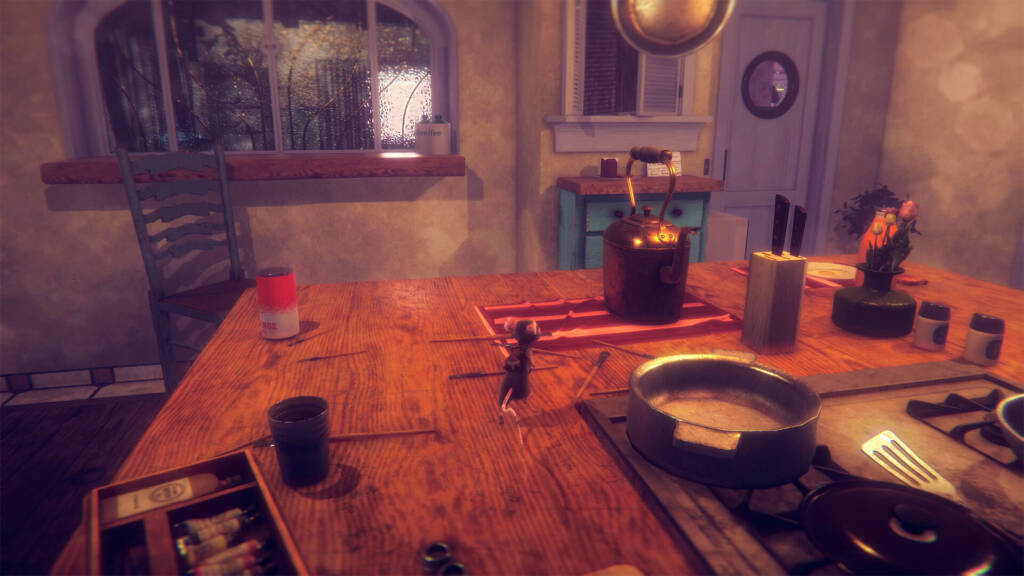
You play as Mat, a young rat who dreams of becoming a scavenger. Partly for the thrill, partly so he can sneak off and spend more time with Nat, a house mouse who clearly means a lot more to him than he’s willing to admit. The dynamic between the two gave me strong Nathan Drake and Elena Fisher vibes.
The story itself isn’t anything groundbreaking, but it works because of how it’s presented. It’s got that “AntZ meets Flushed Away meets The Secret of NIMH meets The Borrowers” energy; slightly whimsical, slightly grounded, and very character-driven. It starts in medias res, and everything else builds toward that opening moment, with flashbacks used to flesh out Mat’s relationships with his friends.
There are quite a few puns along the way—yeah, those kinds of puns. I didn’t love them, because they’re just cheesy (get it? because it’s a game with rats, lol), but they’re more of an occasional eye-roll than a real issue.
What surprised me the most is how well the game handles pacing in the first half. It balances storytelling and gameplay pretty well early on, and some narrative sequences—especially the dream/tutorial segment—are genuinely creative and memorable.
The good stuff — when it works, it really works
Let’s give credit where it’s due, because A Rat’s Quest S1 does a lot of things right. Especially early on.
The first half of the game is genuinely enjoyable. The pacing feels right, the narrative beats land, and the platforming—while not perfect—can actually be pretty fun. You can clearly see the Uncharted influence in how traversal is structured. Climbing, jumping, squeezing through tight spaces, some simple puzzles, even stealth sections thrown in for good measure—it’s all there, even if just not as polished.
This is very much a cinematic platformer, and in that sense, it succeeds more often than it fails.
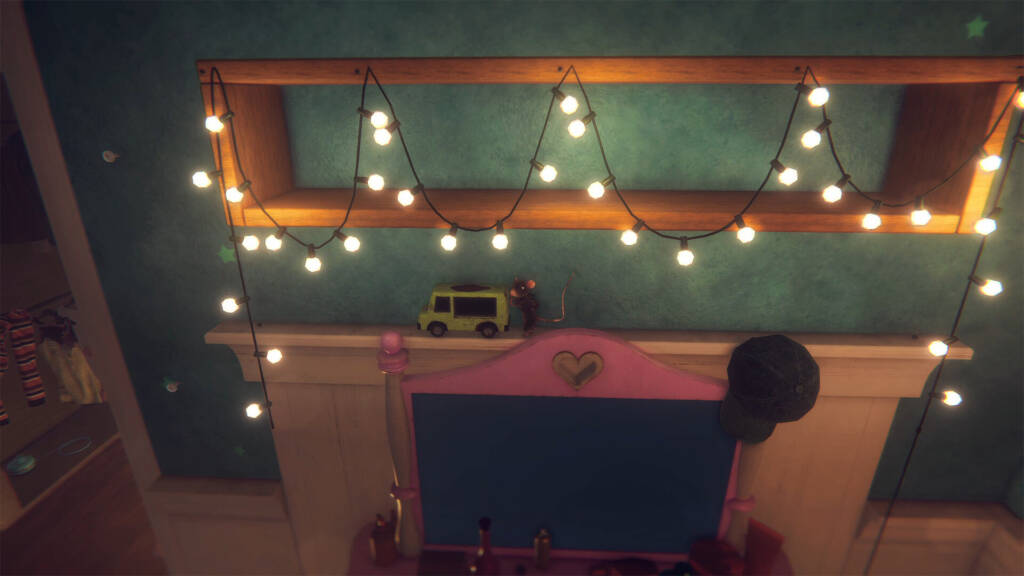
The dream sequence at the beginning is a great example. It acts as a tutorial but doesn’t feel like one. It’s imaginative, slightly surreal, and actually fun to play through. It sets the tone really well.
Even the slower “walk and listen” sections are handled smartly. They’re short, to the point, and often skippable. That’s a small design choice, but it makes a big difference in keeping the pacing from dragging.
Flashbacks—something I usually dislike—are surprisingly decent here. They don’t overstay their welcome and often add context to the characters rather than just padding the runtime.
And at its core, the platforming has potential. Early on, it’s engaging enough to keep things interesting.
There are moments where everything clicks—when the movement feels smooth, the level design flows, and you actually enjoy navigating the environment.
The problem is that those moments don’t last very long.
Looking for alternatives to A Rat’s Quest? Check these out:

The not-so-good — where cracks start to show
Even before things completely fall apart, you start noticing issues creeping in.
The Out of This World (AKA Another World) influence is very noticeable. The game is extremely linear and heavily reliant on trial-and-error. You’re not really “playing” in a creative sense. You’re following a path the developers designed, step by step. Deviate from it, and you fail.
Compared to, say, Uncharted 4, which actually leaves a lot of room for gameplay improv in various sections, A Rat’s Quest S1 feels restrictive and rigid.
The controls — the biggest problem by far
If there’s one thing that really hurts A Rat’s Quest S1, it’s the controls.
They’re just bad.
Not in theory; they should work fine. I played on mouse and keyboard (though gamepads are recommended, but I ain’t doing that) and the layout itself isn’t the issue. The problem is responsiveness.
Inputs sometimes don’t register properly, especially when you’re combining actions. That alone is enough to ruin a platformer.
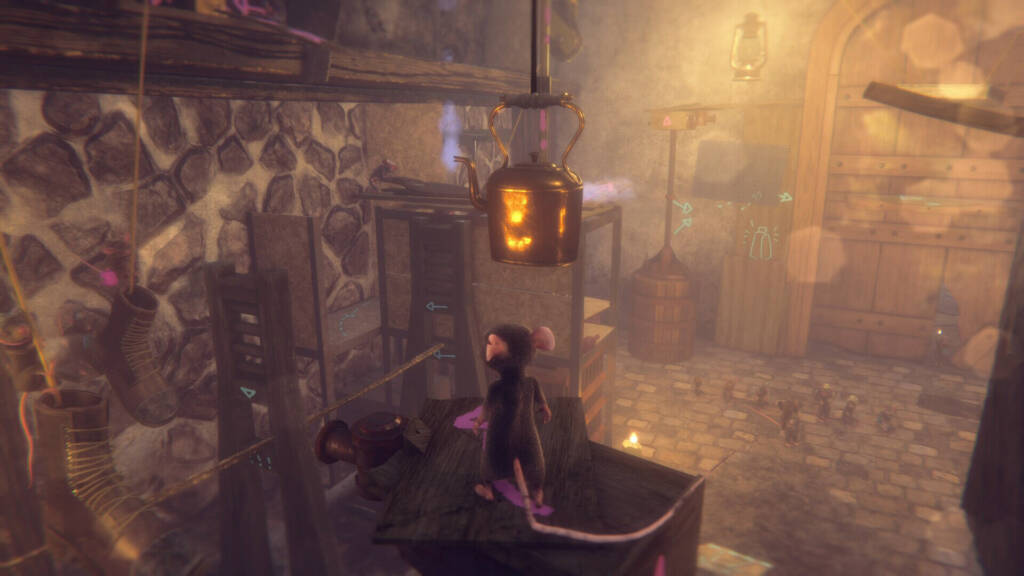
Then there’s the movement itself. Mat feels floaty and gains way too much inertia. You land a jump, think you made it, and then slowly slide off the platform and fall several levels down. It happens way too often.
Even worse, some of this seems intentional. The game hints that certain movement quirks are by design, which just makes it more frustrating.
I have a feeling that this is the biggest issue I had with the game. If the controls were much tighter and polished, all the frustration would be simply gone.
Checkpoints & design decisions — where frustration peaks
Early on, the game is fairly forgiving. You fall, you respawn nearby, you move on. That’s how it should be.
Later? Not so much.
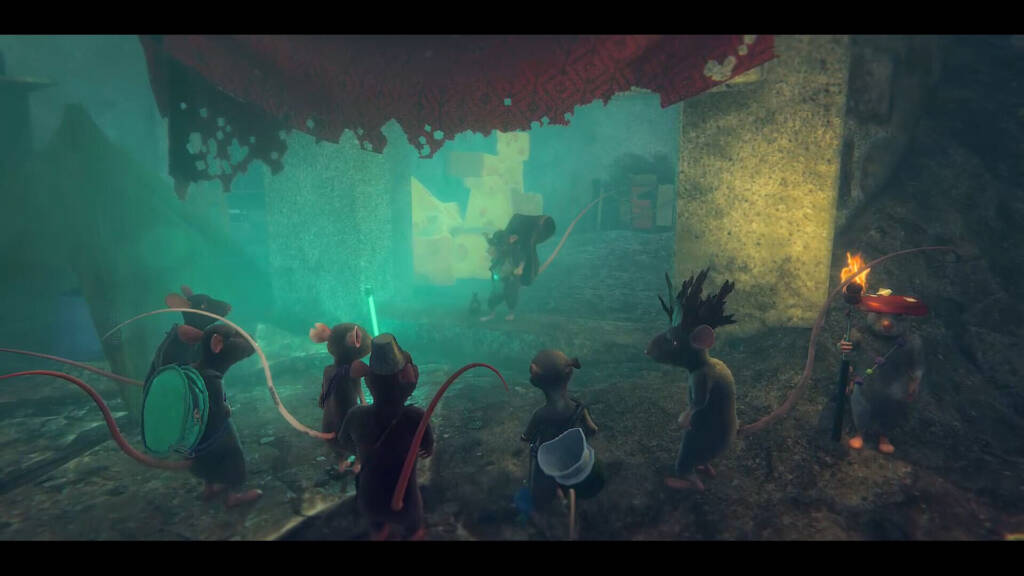
There are sections where failing sends you way back. One of the worst examples is a late-game “training course” where missing a jump (often because of the controls, not your own mistake) means redoing the entire sequence from scratch.
That’s not challenging. It’s just annoying.
Combine that with repetitive backtracking, trial-and-error gameplay, and inconsistent checkpoint placement, and the second half becomes a chore.
The second half — where it all falls apart
This is the biggest disappointment.
The first half shows real promise. The second half feels like the game runs out of ideas.
The second half is where everything comes together in the worst way.
You’ve got:
- Repetitive level design
- Forced backtracking
- Sparse checkpoints
- Janky combat
- More trial-and-error gameplay
It all adds up to a very tedious experience.
At some point, I stopped enjoying the gameplay and started pushing through just to see how the story ends. And that’s never a good sign.
There were moments where I genuinely thought: this would be better as a YouTube playthrough than something I’m actually playing.
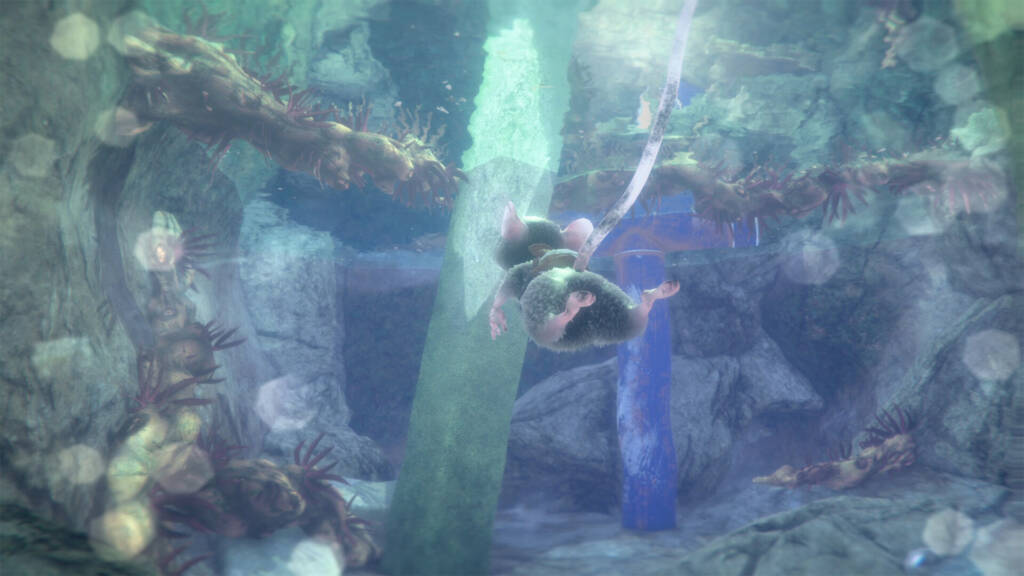
A game should be fun to play first and foremost. If the gameplay becomes a hurdle to the narrative, something’s gone wrong.
And then there’s combat, which shows up very late and feels completely undercooked. It has a bit of a Souls-like flavor, but it’s janky, stiff, and clearly an afterthought. Probably something thrown in to offer some more variety where things started getting really stale.
Audiovisuals
Visually, the game has a lot of personality. The environments are memorable, and the rat commune’s home has this cozy late 80s/early 90s vibe that I really liked. It feels lived-in, nostalgic, and distinct. There’s a sense of scale, too. You’re constantly reminded that you’re a tiny creature navigating a huge, human world.
The soundtrack is another highlight. It leans into orchestral themes with clear inspiration from composers like John Williams. There are hints of Harry Potter, some softer piano pieces, even a jazzy track thrown in for variety.
It adds a lot to the atmosphere and helps elevate scenes that might otherwise feel a bit flat. And it fits the tone of the game really well.
A promising idea held back by execution
A Rat’s Quest has a strong foundation: a charming story, likeable characters, a distinctive world, and some genuinely good ideas. The first half shows what the game could have been.
But the second half exposes its weaknesses: repetition, poor controls, inconsistent design, and gameplay systems that feel unfinished.
It’s basically Uncharted 4, but with rats—with a dash of Out of This World and a whole lot of jank. You can tell it was made with passion and love, and when it works, it’s genuinely enjoyable.
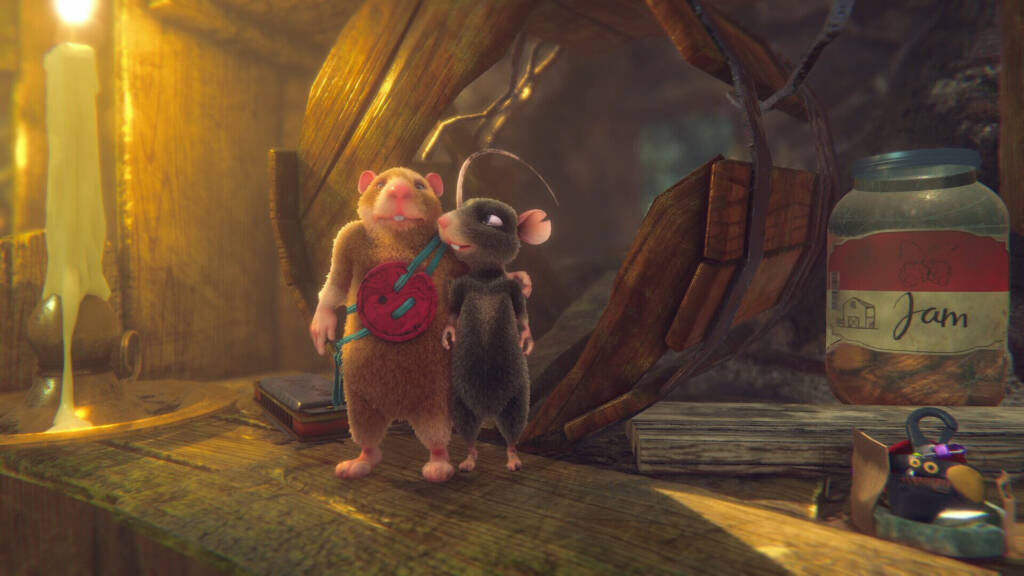
If you’re willing to overlook its flaws and you’re in the mood for a cinematic platformer that comes out of left field, there’s something here worth experiencing. Especially in the first half.
So, Season 1 feels like a lot like a missed opportunity. Still, I can’t bring myself to write it off. There’s passion here. There’s creativity. I just can’t hate it, even if I wanted to.
Based on the ending and what little we’ve seen of Season 2, there’s real potential for something much better. Maybe even an indie take on the Star Wars Jedi formula. If Season 2 leans into stronger combat, better controls, and more refined platforming, it could actually be something special.
I’m cautiously hopeful.
PS If you’re an Amazon Prime subscriber, you can get the game free of extra charge off Amazon Luna right now!
- Platforming is fun when it works
- Likeable characters and a charming story
- Strong orchestral soundtrack
- Memorable environments and a nostalgic vibe
- The first half is genuinely enjoyable
- Horrible, unresponsive controls
- Trial-and-error gameplay gets exhausting
- Questionable design choices (especially checkpoint placement)
- Repetitive structure and forced backtracking
- The second half is significantly worse than the first
- You beat it once and there’s no reason to replay it again