




While browsing May releases, I came across Alabaster Dawn, which at the time of writing these first impressions has nearly 26k followers on Steam.
At first glance, I could tell it was something for me – an Action RPG in a 2.5D style that took me back to the days when we used to take turns playing Sadame on a friend’s Nintendo 3DS in the backyard.
I didn’t wait long, installed the demo, played through the prologue, and got hooked.
I can honestly say that Alabaster Dawn will be one of those hidden gems we’ll talk about in lists of the best ARPGs of recent years, but let’s start from the beginning…
Tiran Sol and the Curse of Nyx
Alabaster Dawn immediately throws us into the middle of the action, presenting an attack on the land of Tiran Sol, where as the Chosen equipped with Divine Gear, we must protect humanity from monsters that bring the Curse of Nyx upon the world.
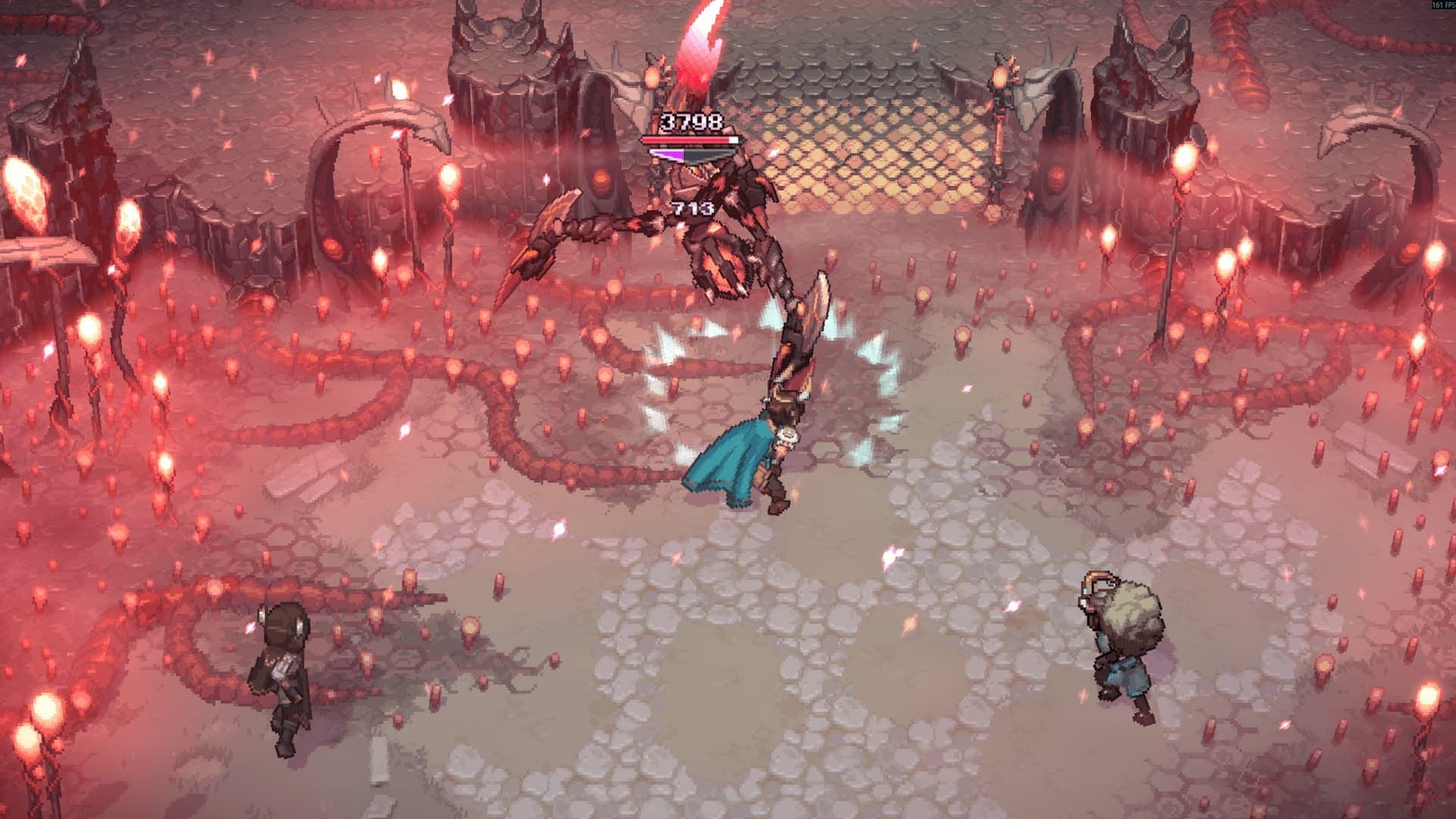
The beginning strongly reminded me of FINAL FANTASY XVI, where the demo also dropped us straight into the action and perfectly showcased what we could expect later in the game.
Unfortunately, during the defense, the Gods abandoned the Chosen, who were stripped of their Divine Gear, and the land fell victim to invaders and the curse.
Shortly after, we meet our main heroine Juno, who for unknown reasons was not awakened by the Gods during the attack, which is why she is the only Chosen who survived. She calls herself the Outcast Chosen.
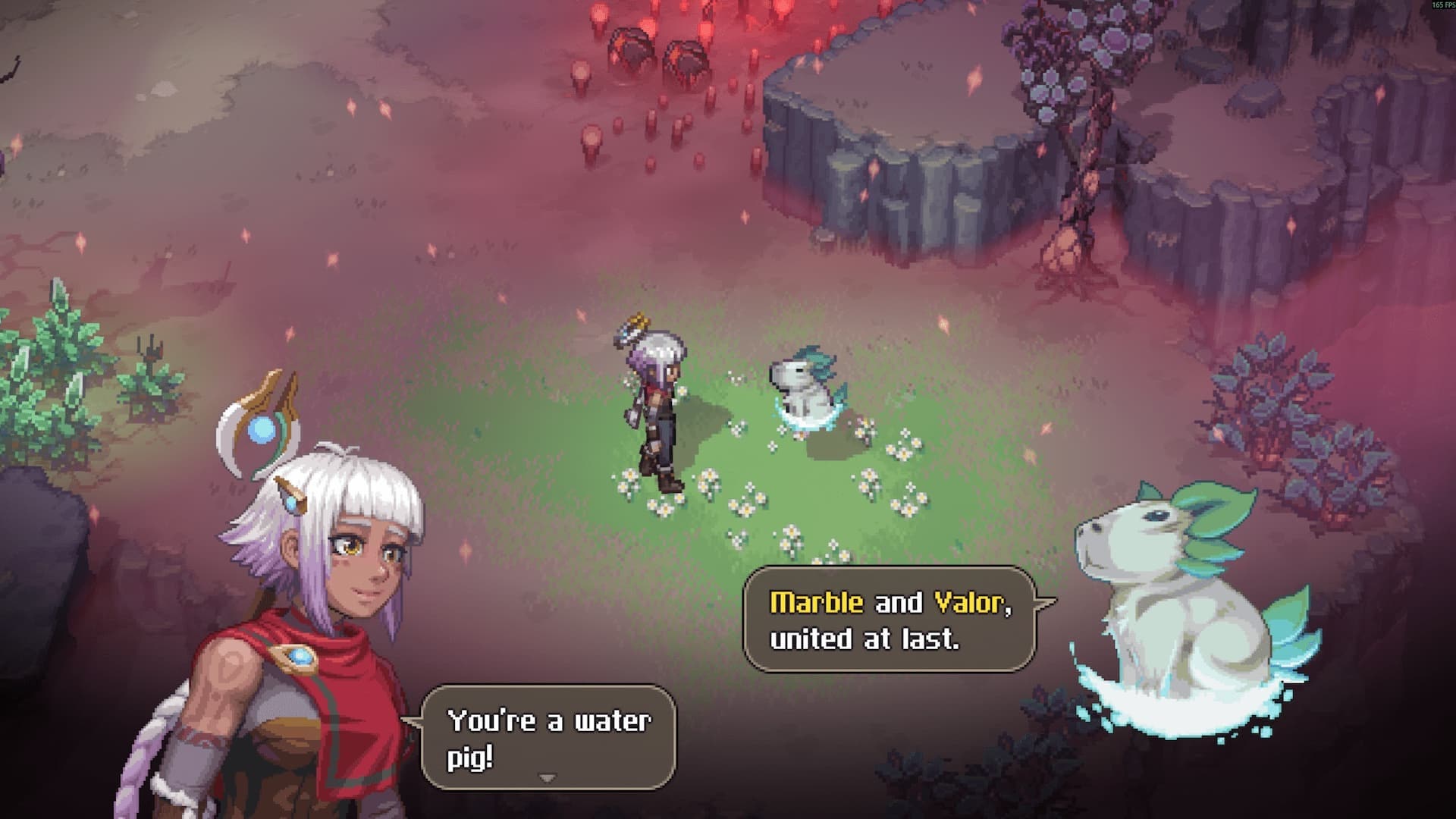
A moment later, we meet our companion, a capybara, whom we name Cabbage (if this part of the game doesn’t tell you we have a contender for Game of The Year here – fear not, it’s only getting started). We briefly go through a tutorial that explains the basics of combat, movement, and survival in Tiran Sol.
Combat System is Pure Dopamine
Radical Fish Games openly state that the combat system is inspired by the Devil May Cry series, Kingdom Hearts, and their previous project CrossCode. But how does that translate on paper… or rather in the demo?
Fantastic.
Combat in Alabaster Dawn is dynamic, responsive, complex, and above all,
a lot of fun.
And you can feel it right from the start, when we have a sword and a bow at our disposal. Each weapon has its own skill tree, which allows us to modify it by embedding gems – somewhat like in Final Fantasy 7 Remake/Rebirth, except here we receive pure stats rather than abilities when inserting Materia into weapons.
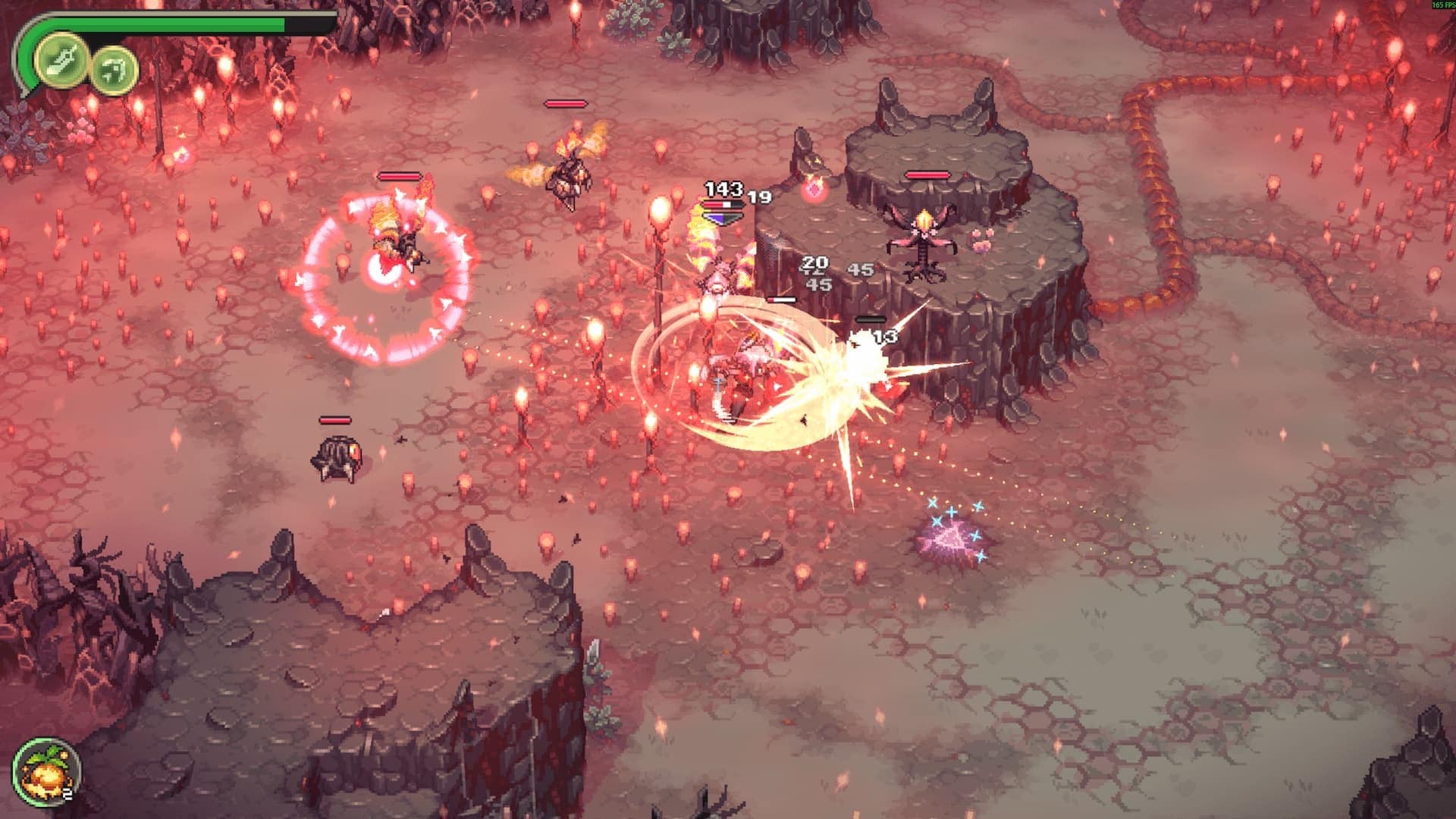
Additionally, we unlock new moves that add even more dynamism and allow us to create combos straight out of DMC – and that’s probably the highest compliment.
What clicked the most for me was when the game introduced the parry/deflect system for projectiles, and Alabaster Dawn does it really well.
There is no “you get 70% damage reduction when parrying” here – this is more like Sekiro: proper parrying allows us to break the Stagger Gauge much faster, which stuns the enemy for a certain time, letting us unleash everything we’ve got.
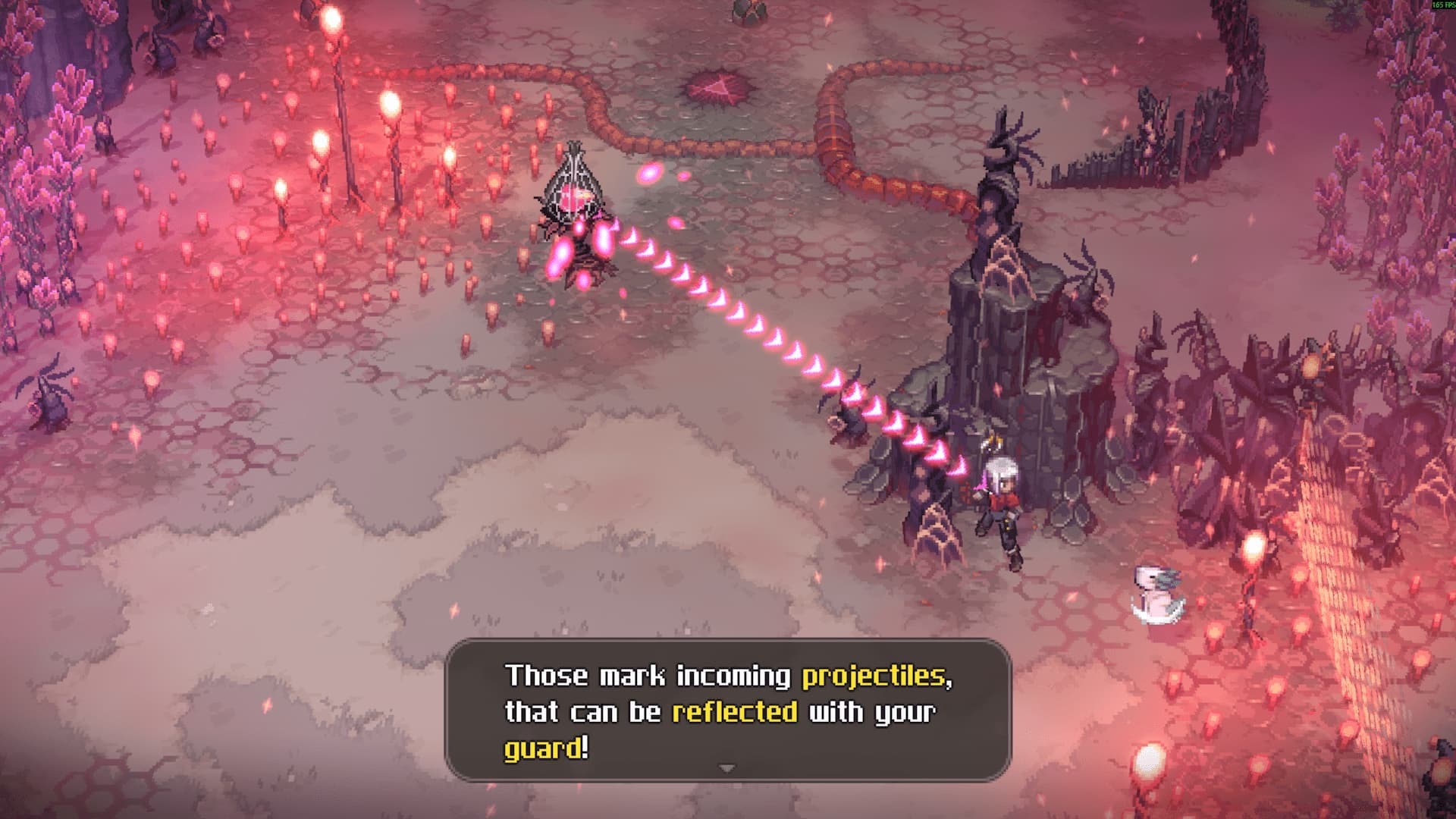
Deflecting projectiles is also a mechanic that allows us to defeat ranged enemies much faster – and it’s a fantastic extension of the combat system.
Every enemy can be defeated simply by hitting them with basic attacks, but the real magic happens when we smoothly combine the right weapon, technique, and parrying to deal with each enemy type in the most optimal way.
Alabaster Dawn does this in a very intuitive way – a flying enemy wants to shoot at you and is charging up a stronger attack? Great – hit it with the same before it does, and you’ve built up its Stagger.
More armored enemies appear, and the sword isn’t enough? We use a hammer, whose heavy attacks you can really feel.
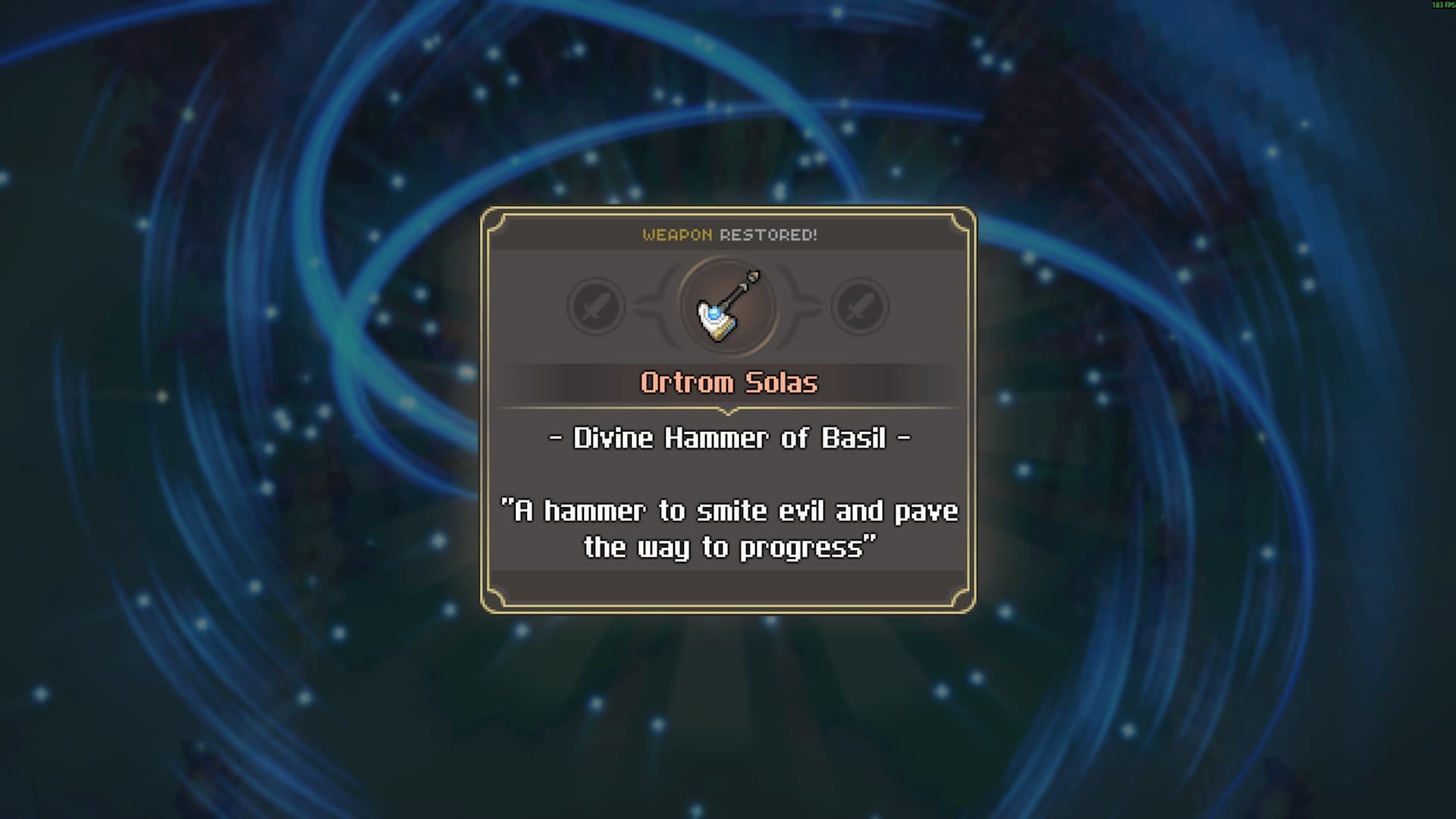
And that’s only 3 out of 8 available weapons!
Just how many combinations we can create using the sword, hammer, and bow already makes you eager to find out “what else will I get.” Additionally, we can expect the ability to use 4 elements, likely fire, water, wind, and earth – and that already screams Eikon powers from FFXVI to me.
Story Demo May Be Short but Builds Curiosity
What we are offered in the demo version of Alabaster Dawn is the prologue – roughly the first hour of gameplay. It doesn’t end on a cliffhanger but leaves us with questions:
- What happened to the other Chosen?
- Why wasn’t Juno awakened during the attack?
- What exactly is the Curse of Nyx and where did it come from?
- Why did the Gods abandon the Chosen during the invasion?
This is probably the best proof that the demo does its job perfectly.
It leaves the player with questions, curiosity, and theories.
It allows us to dive into the game’s systems, get a feel for combat, and grow attached to the characters – and that last part is becoming increasingly difficult in game development.
I quickly felt a connection to Juno; her reactions weren’t exaggerated, and the questions she asked after waking up felt natural.
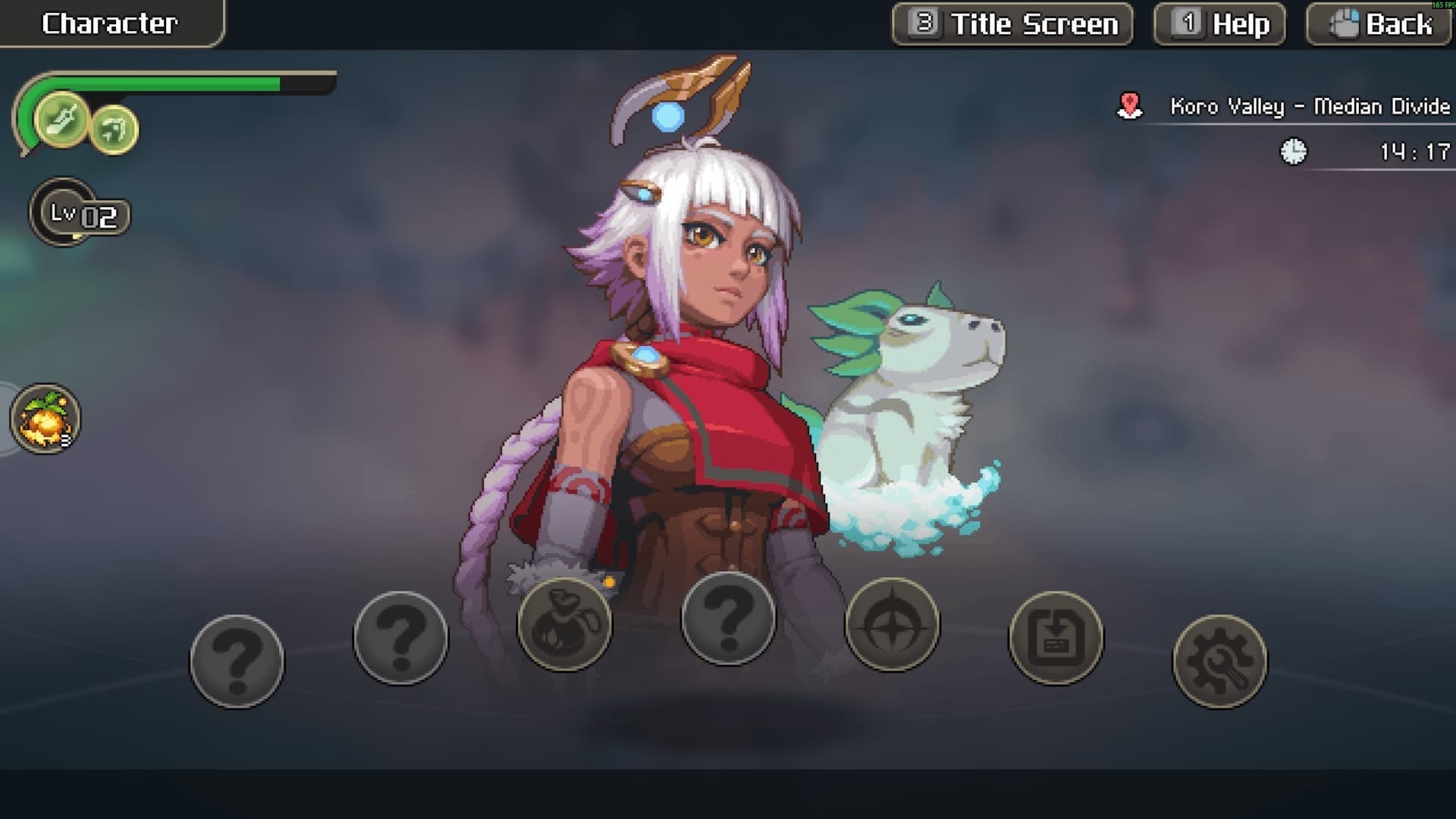
We don’t need more over-the-top characters, because there are plenty of those, and what Alabaster Dawn shows at the beginning fills me with great optimism.
Cabbage is also a really pleasant companion, who at least at the beginning serves as “mental support” and a tutorial – for Juno, that kind of support is exactly what a character would need after such events, and for us, it’s a very natural way to learn the mechanics.
It Looks Beautiful
I love games that go for a 2.5D style – the OCTOPATH TRAVELER series does it wonderfully, and more and more developers are trying their hand at this design.
What sets Alabaster Dawn apart from games like the aforementioned OCTOPATH TRAVELER, REPLACED, or the new Dragon Quest III: HD-2D Remake is character animation. Right from the start, you can see that we don’t just have 3 or 4 running animations depending on direction – there’s something more here.
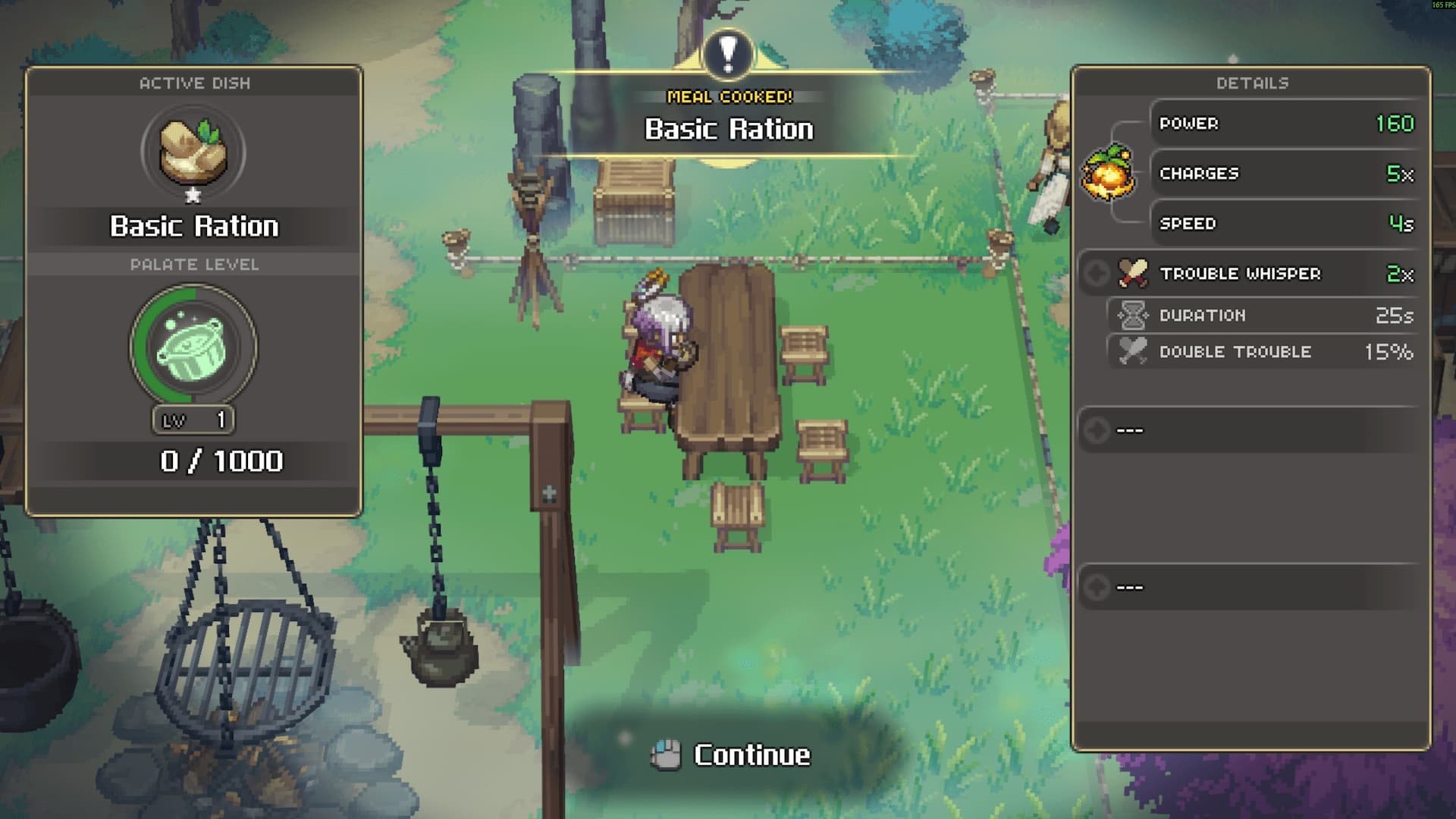
Each limb is a separate part of the character model, making cutscenes and movement feel incredibly smooth. It’s also worth mentioning the cutscenes, which are seamlessly integrated into character dialogues – the transition from 2.5D to 2D cutscenes is masterfully done.
The nostalgic vibe greatly helps in building the world of Alabaster Dawn. All environmental elements feel like they were taken straight from RPG Maker games but don’t come across as “thrown-in assets,” instead feeling like handcrafted parts of the landscape styled with a retro vibe.
Terrain and Platforming Elements
A nice addition is the combination of terrain with exploration – most rocks, elevations, and other areas we see can be explored, and very often they contain materials or valuable items that reward us for exploring Tiran Sol.
Unfortunately, despite being the Chosen, Juno, much like Tommy Vercetti from GTA Vice City, isn’t very good at swimming. You can quickly find that out in platforming segments that require jumping across rocks to get from one side of a river to the other.
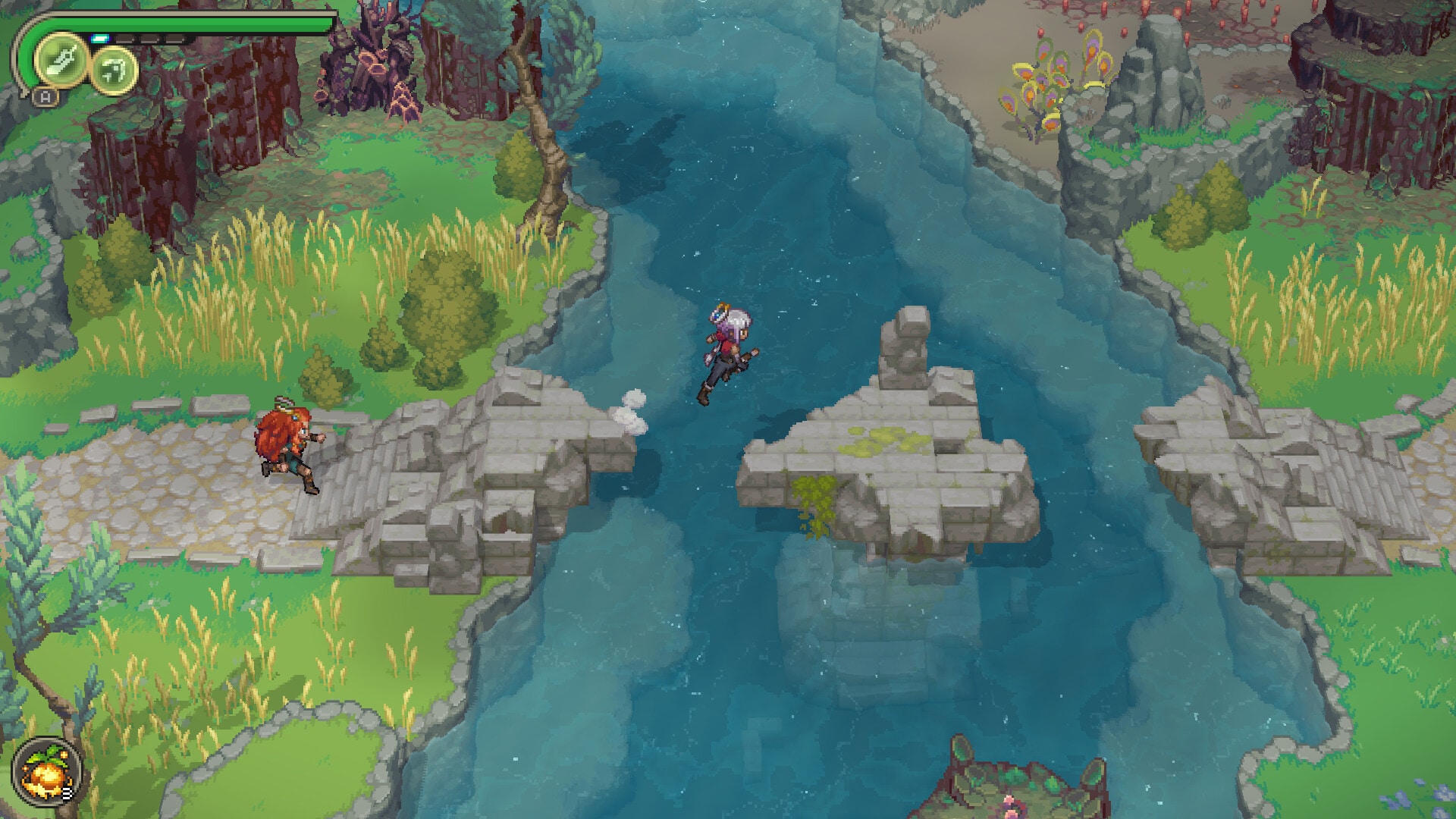
This was probably the only moment where I felt like this mechanic was added a bit forcefully, because what’s the issue with just swimming across the river? Unless it’s explained later in the story, then fine, I get it.
That said, I’ve never been a fan of platforming elements in games that aren’t platformers. Movement feels a bit slippery and occasionally frustrating.
Don’t Let it Be Another “Hidden Treasure”
After what the Alabaster Dawn demo offered me, I will definitely want to check out the full release, which according to the Steam page description plans to offer 30 to 60 hours of gameplay.
Keep this release on your radar, especially if you’re missing good Action RPGs. And for those I’ve convinced – you can find the demo of the game under this link.
If full game delivers as much as demo, I’m sure, we’ve got a new huge entry on ARPG genre.