
Lovecraftian horror is easy to reduce to tentacles, cults, and characters losing their sanity, but the better games understand what actually makes cosmic horror work. Humanity is small, knowledge is dangerous, and whatever waits beyond the edge of perception is not particularly interested in whether we survive discovering it.
Some games go straight to the source and adapt H.P. Lovecraft’s stories, locations, creatures, and Cthulhu Mythos. Others never use Arkham, Innsmouth, or Cthulhu at all, yet capture the same feeling of uncovering something far larger and less comprehensible than the protagonist.
Table of Contents
Games directly based on H.P. Lovecraft
1. The Sinking City series
The Sinking City series is one of the clearest attempts to build full-scale games around Lovecraft’s fictional universe rather than simply borrowing a monster or two. Frogwares takes locations, creatures, themes, and ideas associated with the Cthulhu Mythos and builds original detective and survival-horror stories around them.
The first game follows private investigator Charles Reed through the flooded city of Oakmont, where he investigates visions, disappearances, cults, and increasingly impossible events. It is primarily an open-world detective game, with clue gathering, archives, deductions, exploration, and moral choices at the center of the experience.
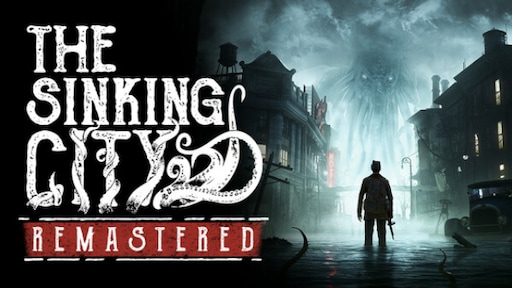
The Sinking City | Remastered
Release Date: January 1, 1970
Genres: Adventure, Horror, Detective
The Sinking City 2 keeps the flooded 1920s New England setting and overt Lovecraftian mythology, but changes the formula considerably. The sequel moves to Arkham, introduces occult adventurer Calvin Rafferty as its protagonist, and shifts the emphasis from open-world detective work toward survival horror, scarce resources, combat, interconnected locations, and optional investigations.
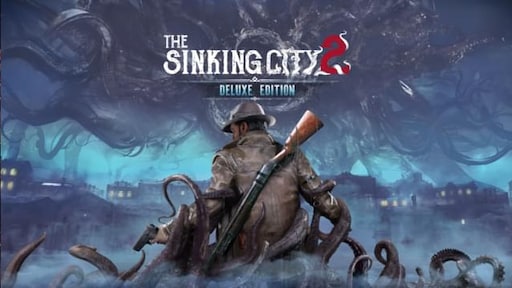
The Sinking City 2 | Deluxe Edition
Release Date: August 18, 2026
Genres: Survival Horror, Adventure
Why play them: Few modern series lean this heavily into Lovecraft’s world while still creating their own protagonists and plots. The first game is stronger if you want investigation and detective work, while the sequel is aimed much more directly at survival-horror players.
2. Call of Cthulhu
If you want a modern game that steps directly into the licensed Cthulhu Mythos, Call of Cthulhu is one of the clearest choices. Set in 1924, it follows private investigator Edward Pierce as he travels to Darkwater Island to investigate the deaths of the Hawkins family and gets pulled into cults, conspiracies, fractured perception, and cosmic horror.
Rather than treating the Mythos as a shooting gallery, Cyanide builds the game around investigation, dialogue, exploration, stealth, RPG-style choices, and a sanity system that makes Pierce’s grasp on reality part of the experience. It is officially inspired by Chaosium’s Call of Cthulhu tabletop RPG, so the connection to Lovecraft’s universe is deliberate rather than simply aesthetic.
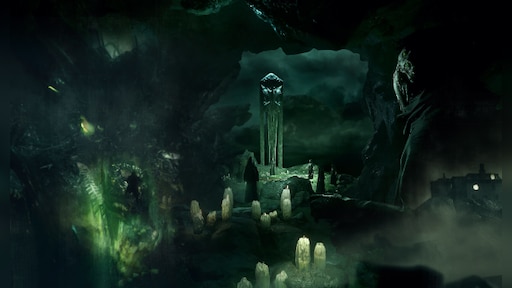
Call of Cthulhu
Release Date: October 29, 2018
Genres: Adventure, RPG, Horror
Why play it: It turns the investigative, sanity-driven side of the Mythos into a full-length first-person horror adventure, making it a strong pick if you want cults, forbidden knowledge, unreliable perception, and a detective protagonist rather than nonstop combat.
3. Dreams in the Witch House
Dreams in the Witch House takes Lovecraft’s story and turns it into something unexpectedly systemic. Walter Gilman arrives in Arkham to study mathematics at Miskatonic University, only for his dreams, the history of his boarding house, and his occult research to begin converging. The game explicitly states that it is based on The Dreams in the Witch House.
Instead of retelling the story scene by scene, it mixes point-and-click adventure design with RPG mechanics, changing weather, a day-night cycle, sanity management, health, money, studies, and several possible outcomes.
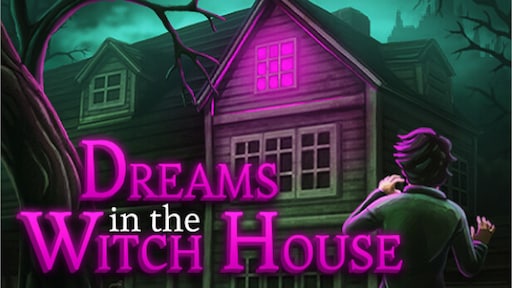
Dreams in the Witch House
Release Date: February 15, 2024
Genres: Point-and-click, RPG, Horror
Why play it: This is one of the best choices if you want a recognizable Lovecraft story expanded into a substantial game rather than a straight interactive reading.
4. Call of Cthulhu: Dark Corners of the Earth
Call of Cthulhu: Dark Corners of the Earth remains one of gaming’s most recognizable trips to Lovecraft country. It combines first-person investigation, stealth, survival horror, and combat, with Innsmouth playing a major role in the story.
The game draws heavily from The Shadow over Innsmouth and incorporates other Cthulhu Mythos material as its mystery expands. Its age shows mechanically, but the gradual shift from suspicious locals and locked doors to full cosmic horror still works remarkably well.
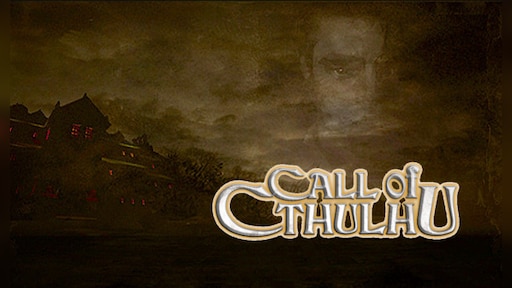
Call of Cthulhu: Dark Corners of the Earth
Release Date: April 25, 2006
Genres: Horror, Adventure, Stealth
Why play it: For the classic Innsmouth experience, complete with investigation, paranoia, Deep One territory, and a protagonist who keeps discovering how badly outmatched he really is.
5. Chronicle of Innsmouth: Mountains of Madness
Chronicle of Innsmouth: Mountains of Madness filters Lovecraft through an old-school point-and-click adventure. It openly draws from works including The Shadow over Innsmouth and At the Mountains of Madness, taking its investigation through locations such as Innsmouth, Arkham, and Antarctica.
The adventure-game structure suits the source surprisingly well. Investigation, puzzles, dialogue, and accumulating forbidden knowledge take priority over turning every Mythos creature into something that needs a health bar.
A Global Steam key for the original Chronicle of Innsmouth is currently available on G2A.COM, although I did not find a live marketplace offer for Mountains of Madness itself.
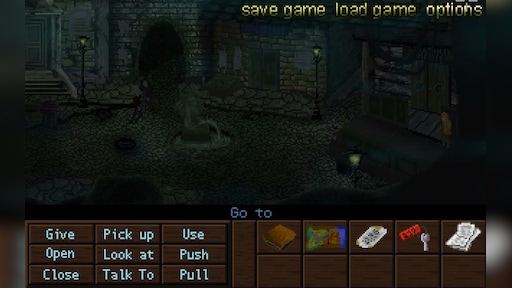
Chronicle of Innsmouth
Release Date: May 5, 2017
Genres: Point-and-click, Adventure, Horror
Why play it: A strong choice for anyone who wants recognizable Lovecraft material but prefers puzzles, investigation, and retro adventure design to survival-horror combat.
Lovecraftian games with original universes
These five games are not direct adaptations of Lovecraft’s stories. They earn the comparison through cosmic dread, dangerous knowledge, unreliable reality, ancient forces, and protagonists discovering that humanity occupies a very small corner of a much stranger universe.
6. Bloodborne
Bloodborne begins as Gothic horror. Yharnam is overrun by beasts, diseased citizens, blood rituals, and deranged hunters, but the further you progress, the more the game’s real concern becomes cosmic rather than merely monstrous.
Ancient beings, impossible dimensions, altered perception, and humanity’s attempts to commune with higher entities gradually replace the simpler beast-hunting premise. Its use of Insight is particularly fitting because gaining knowledge can literally change what the player is able to see.
The only live Global marketplace listing I found is currently a PSN Account, rather than a key or gift.
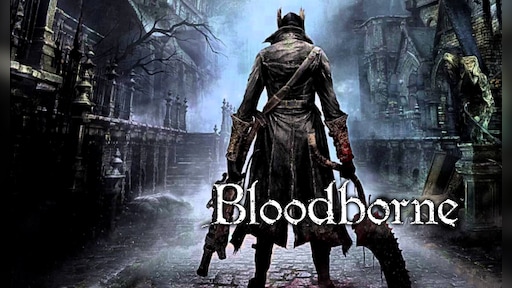
Bloodborne
Release Date: March 24, 2015
Genres: Action RPG, Horror
Why it feels Lovecraftian: Understanding Yharnam does not make it less frightening. It reveals that the nightmare was always much larger than the beasts in the street.
7. SIGNALIS
SIGNALIS replaces Lovecraft’s New England with a dystopian retro-futurist society. Elster, a Replika technician, searches for her missing partner through doomed facilities, corrupted memories, dreamlike imagery, and spaces that become increasingly difficult to interpret literally.
The game uses an original setting, but its fixation on unknowable forces, unreliable perception, obsession, memory, and cosmic dread gives it a very similar emotional texture.
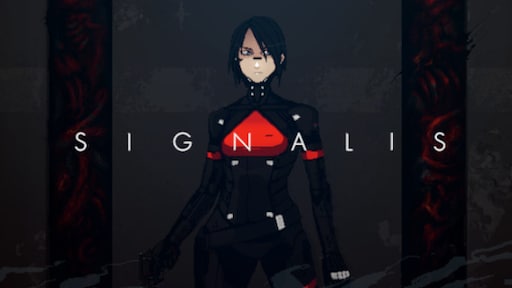
SIGNALIS
Release Date: October 27, 2022
Genres: Survival Horror, Psychological Horror
Why it feels Lovecraftian: Every answer creates another layer of uncertainty, and the game rarely gives the player the comfort of a clean explanation.
8. Darkwood
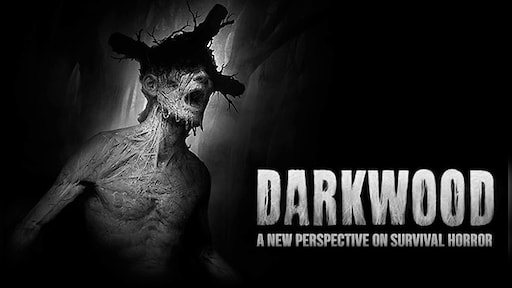
There are no Great Old Ones waiting to introduce themselves in Darkwood, but almost everything about its forest feels fundamentally wrong. During the day you explore and scavenge; at night you barricade yourself inside a hideout and wait for the forest to start pushing back.
The world mutates, characters understand only fragments of what is happening, and the environment itself becomes the source of cosmic unease.
Darkwood
Release Date: July 16, 2017
Genres: Survival Horror, Adventure
Why it feels Lovecraftian: Darkwood makes the environment itself unknowable, and understanding the forest never really means mastering it.
9. Sunless Sea
Sunless Sea sends you across the Unterzee, a vast underground ocean where Victorian captains encounter impossible islands, strange civilizations, monsters, gods, and discoveries that regularly end in madness or death.
It has considerably more black humor than Lovecraft’s fiction, but its structure is pure cosmic unease: leave civilization, sail into darkness, discover something impossible, and decide how much of your sanity and crew you are willing to spend learning more.
Sunless Sea
Release Date: February 6, 2015
Genres: RPG, Exploration, Horror
Why it feels Lovecraftian: The further you travel from familiar shores, the more obvious it becomes that the world follows rules no ordinary human was meant to understand.
10. Amnesia: The Dark Descent
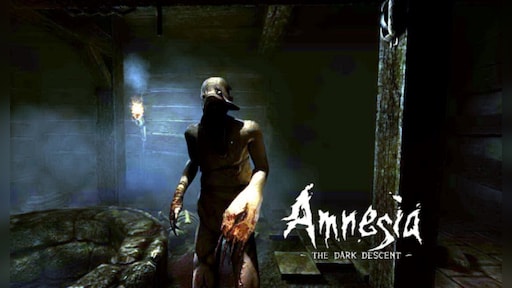
Amnesia: The Dark Descent helped define modern first-person survival horror without adapting a specific Lovecraft story. Daniel awakens in a castle with most of his memories missing and gradually discovers why forgetting may have been considerably safer.
The game builds its horror around vulnerability, sanity, forbidden knowledge, ancient artifacts, and a supernatural force that cannot be understood in simple human terms.
Amnesia: The Dark Descent
Release Date: September 8, 2010
Genres: Survival Horror, Psychological Horror
Why it feels Lovecraftian: The horror comes from discovery. Each recovered piece of Daniel’s past makes his situation worse, and the central supernatural force behaves more like a consequence of forbidden knowledge than a monster waiting to be defeated.
Go a little deeper into the madness with G2A Plus
G2A Plus can unlock lower prices on selected marketplace offers, along with Plus Points, rewards, and additional membership benefits.
Which Lovecraftian horror game should you play first?
If you want the strongest combination of recognizable Lovecraft mythology and a modern full-sized game, start with The Sinking City. The original is the better choice for investigation and detective work, while The Sinking City 2 is much more survival-horror focused.
If you want a first-person investigation built around the licensed Cthulhu Mythos, play Call of Cthulhu. If you want something closer to a specific Lovecraft story, Dreams in the Witch House is the stronger option.
If literary fidelity matters less than atmosphere, Bloodborne is the standout action game, while SIGNALIS is ideal for psychological and science-fiction horror. Sunless Sea is the pick for anyone who likes exploration, strange stories, and the constant temptation to sail somewhere that obviously has “terrible idea” written all over it.
Lovecraftian horror games FAQ
What makes a game Lovecraftian?
Lovecraftian horror usually emphasizes humanity’s insignificance, forbidden knowledge, ancient or incomprehensible forces, unreliable perception, and the danger of learning too much. Tentacles and explicit Cthulhu references are optional.
Which games are actually based on H.P. Lovecraft?
On this list, The Sinking City series, Call of Cthulhu, Dreams in the Witch House, Call of Cthulhu: Dark Corners of the Earth, and Chronicle of Innsmouth: Mountains of Madness directly use Lovecraft’s fiction, the Cthulhu Mythos, or officially licensed Lovecraft-derived material as source material.
Is Bloodborne based on H.P. Lovecraft?
No. Bloodborne has its own mythology and setting. Its cosmic entities, dangerous knowledge, transformed perception, human experimentation, and themes of incomprehensible higher beings are why it is so frequently described as Lovecraftian.
Which game is closest to an actual Lovecraft story?
Dreams in the Witch House is the most straightforward answer because it is explicitly based on Lovecraft’s story of the same name, even though it expands the material with RPG systems and multiple possible outcomes. Call of Cthulhu: Dark Corners of the Earth is another strong pick if you want a game that draws heavily from The Shadow over Innsmouth and the wider Mythos.
Which Lovecraftian game has the best combat?
For action, Bloodborne is the obvious choice. Players looking specifically for shooting and survival-horror combat should also consider The Sinking City 2.
Which games focus more on investigation than fighting?
The Sinking City Remastered, Dreams in the Witch House, and Chronicle of Innsmouth: Mountains of Madness put substantially more emphasis on investigation, puzzles, dialogue, and uncovering information.
The horror is bigger than Cthulhu
The most interesting thing about Lovecraft’s influence on games is how little a developer actually needs to borrow from the Cthulhu Mythos.
A direct adaptation can send you to Innsmouth, Arkham, Antarctica, Darkwater Island, or another place slowly drowning in things humans were never supposed to understand. The Sinking City, Call of Cthulhu, Dreams in the Witch House, Dark Corners of the Earth, and Chronicle of Innsmouth make that connection explicit.
Bloodborne, SIGNALIS, Darkwood, Sunless Sea, and Amnesia reach the same emotional territory without needing those names. The common thread is the moment a character realizes that the world is larger, stranger, and considerably less human than they believed.
Once that door opens, closing it usually is not an option.