




Hotline Miami never got a third game. Something else happened instead: its ideas escaped.
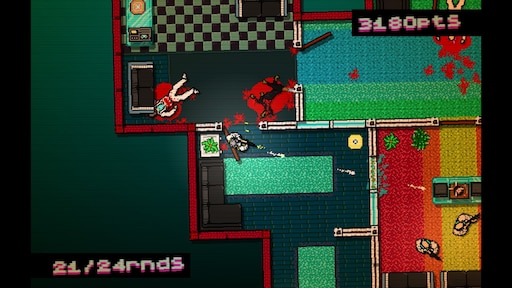
Hotline Miami
Release Date: October 23, 2012
Genres: Action
Nearly fourteen years after Dennaton Games turned kicking doors, dying instantly, restarting, and murdering a room to electronic music into an indie phenomenon, Kusan: City of Wolves has arrived with the same appetite for speed, precision, and catastrophic mistakes. And this is no comparison we had to force. Kusan is now officially bundled alongside Hotline Miami, OTXO, and even Ape Out on Steam.
That makes 2026 a very good moment to look back at what happened after Hotline Miami.
Because its legacy is not really about neon palm trees, animal masks, pixel art, or synthwave. Plenty of later games abandoned all of those things.
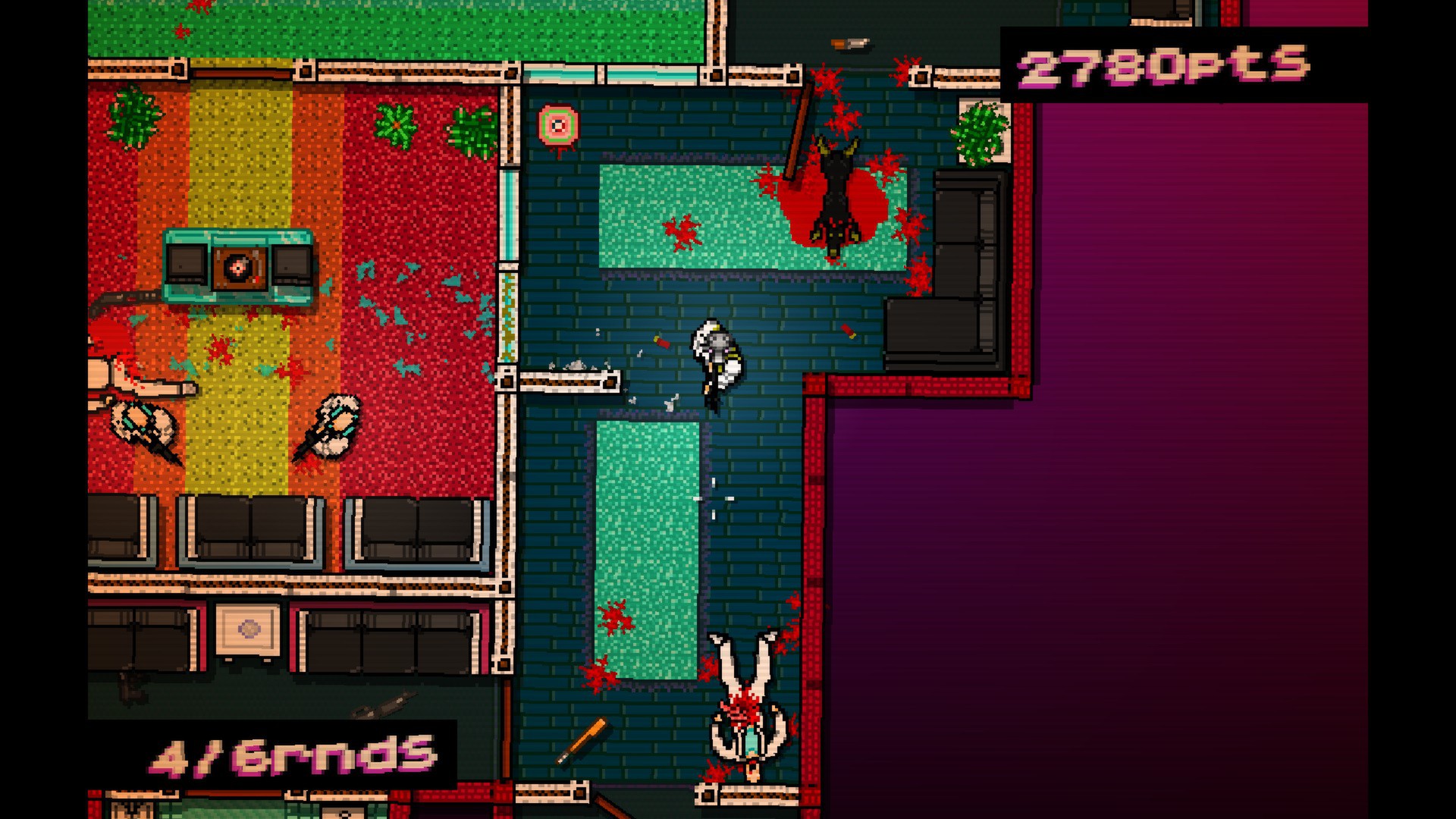
The part that survived was deeper: high lethality, instantly readable spaces, room-clearing as a puzzle, rapid retries, improvisation, aggression, mastery, and violence synchronized with movement and music.
Some games kept the camera. Others moved sideways. Some stepped directly into first person. Police Stories practically inverted Hotline Miami’s morality and asked you to clear rooms without shooting everybody. Ghostrunner turned the restart loop into cyberpunk parkour. I Am Your Beast compressed it into tiny guerrilla sandboxes.
And now some new games are openly citing not only Hotline Miami, but the games that Hotline Miami inspired.
That is when an influence stops being a trend and starts becoming a genre family.
TL;DR – The Hotline Miami Family Tree
Table of Contents
- Why talk about Hotline Miami now?
- What did Hotline Miami actually leave behind?
- Keep the camera, change the formula
- What if Hotline Miami made you think before shooting?
- Hotline Miami turns sideways
- The camera enters the room
- Maybe the real inheritance was rhythm
- The descendants now have descendants
- Who inherited what?
- Hotline-style games on G2A.COM
- Related G2A News reading
- Hotline Miami legacy FAQ
Why talk about Hotline Miami now? Because Kusan just picked up the phone
Kusan: City of Wolves launched on July 30, 2026, and it is one of the clearest recent examples of Hotline Miami’s broader design language surviving intact.
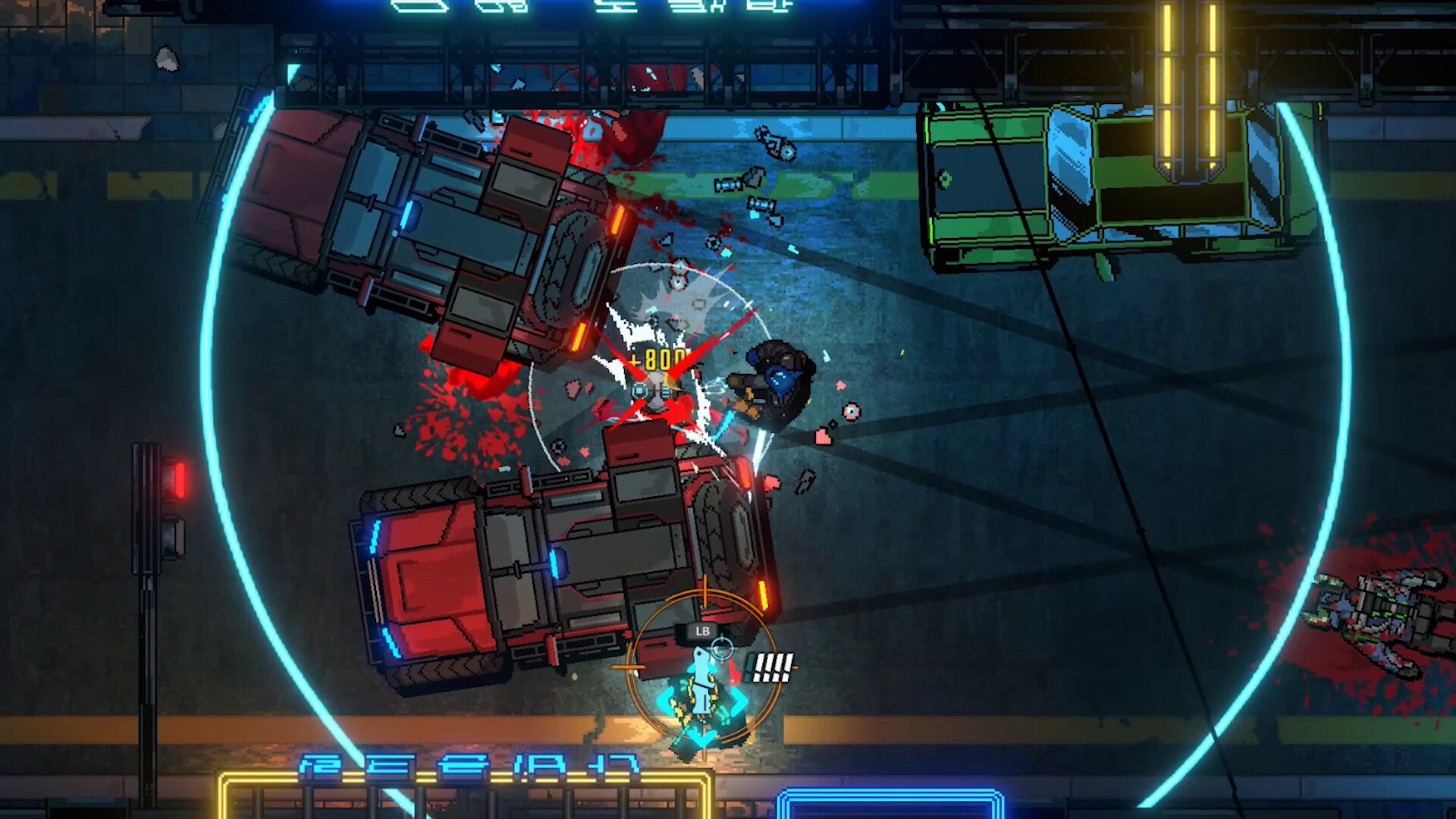
The setup is familiar without being a clone. You enter compact combat arenas, read threats quickly, combine firearms, melee attacks and movement, chase high ranks, and die when execution falls apart. One mistake can end an encounter.
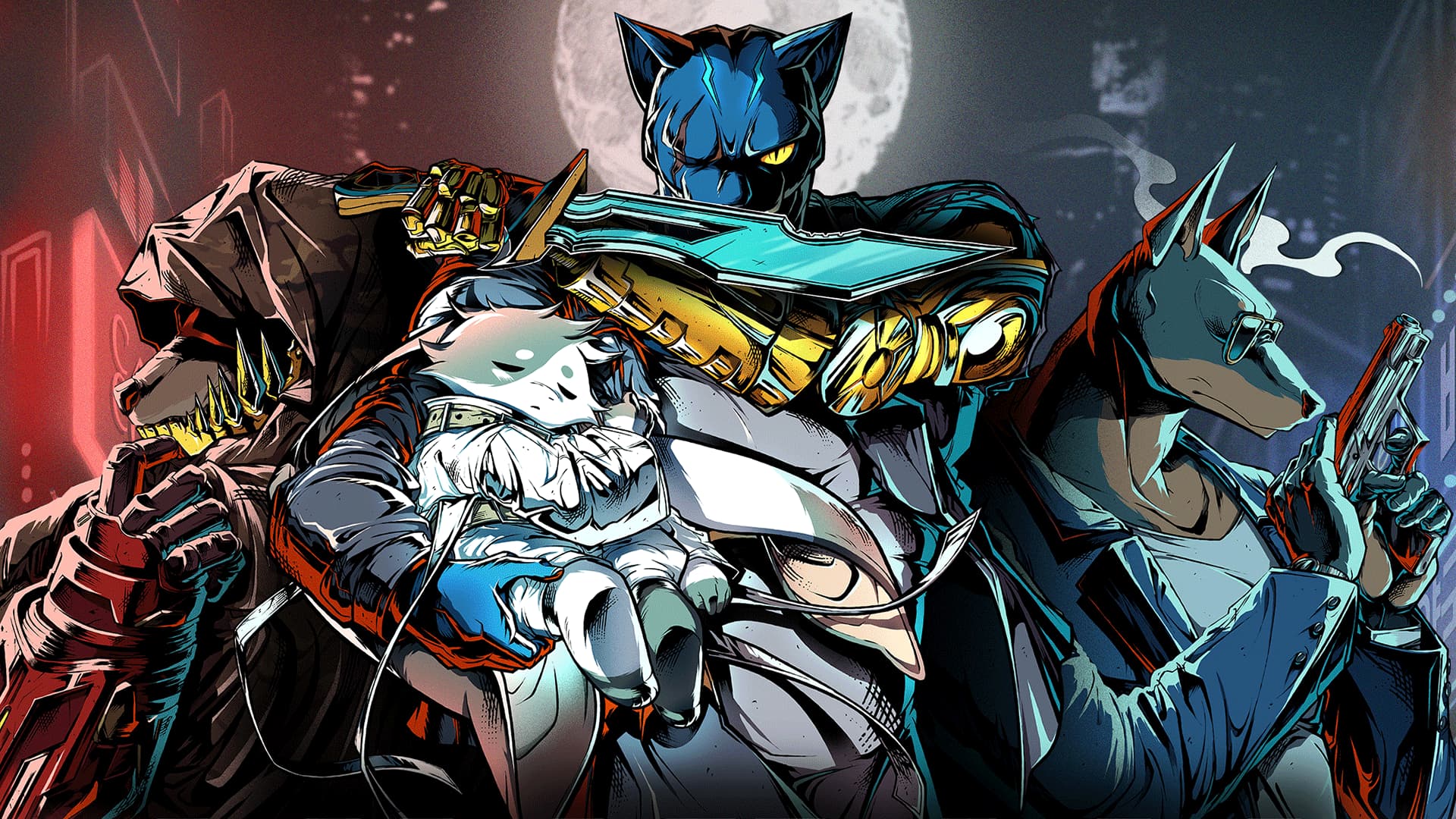
Kusan adds its own identity through cyberpunk worldbuilding, a mechanical War Hand, upgrades, bosses, hand-drawn comic-style storytelling, and a Korean hip-hop soundtrack from Loptimist (though I turned the music off and played OTXO’s OST instead – a much better choice).
But the most revealing thing may be what happened immediately after launch. Kusan is currently featured in official Steam bundles with Hotline Miami, OTXO, and Ape Out.
That is basically a family reunion.
The important part: Kusan does not prove that every violent top-down shooter is a Hotline Miami clone. It proves that there is now a recognizable audience for a specific kind of fast, lethal, restart-heavy action game, and developers and publishers know exactly which games belong in that conversation.
What did Hotline Miami actually leave behind?
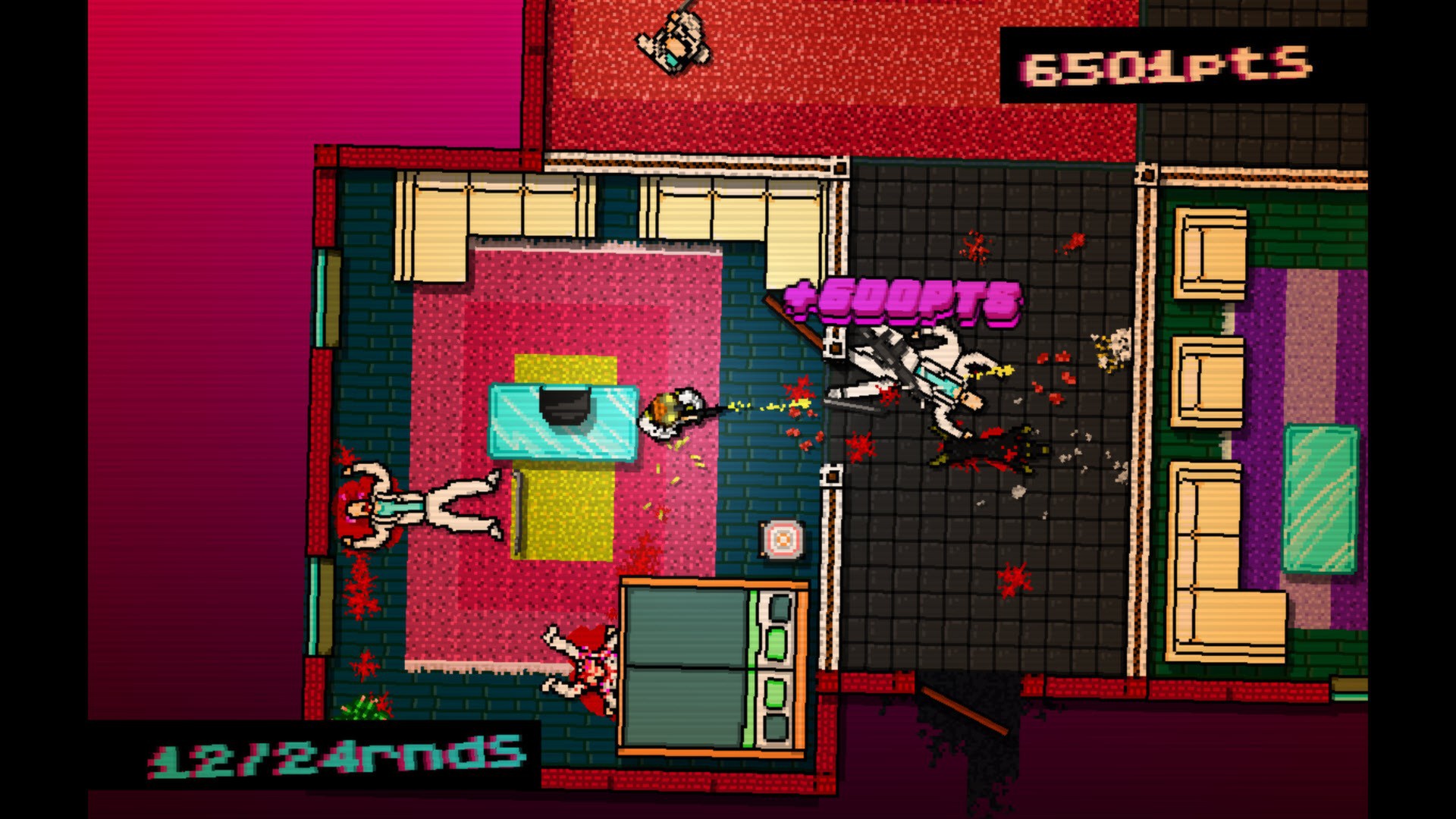
Hotline Miami released in 2012, followed by Hotline Miami 2: Wrong Number in 2015. The second game concluded the story, and no Hotline Miami 3 followed.
Yet the original formula kept spreading because it was remarkably easy to understand and remarkably difficult to master.
That is the important inheritance.
Hotline Miami’s influence is not the neon. It is the room.
Keep the camera, change the formula
The easiest lineage to see is the one that keeps the top-down perspective.
OTXO turns the formula into a roguelite
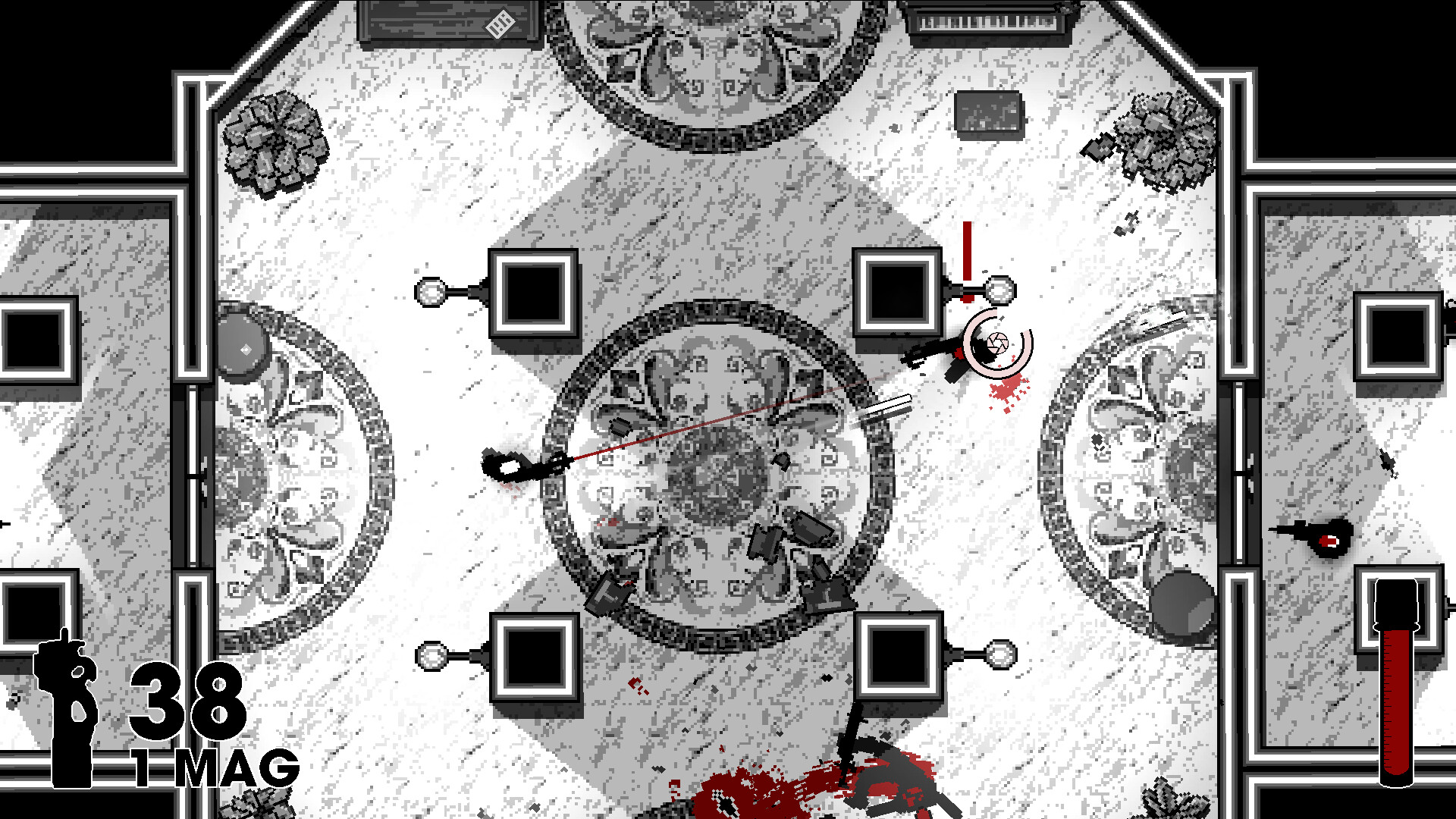
OTXO takes the rapid gunplay, room clearing, slow motion and extreme lethality, then adds randomized runs, drinks that modify your build, a larger pool of weapons, and a mansion that reshuffles the challenge.
Where Hotline Miami asks you to master designed levels, OTXO asks you to master a combat language that survives when the exact layout changes.
That is an important mutation. The retry loop stops being “solve this floor” and becomes “become better at surviving anything the run throws at you.”
Kusan adds progression and modern combat polish
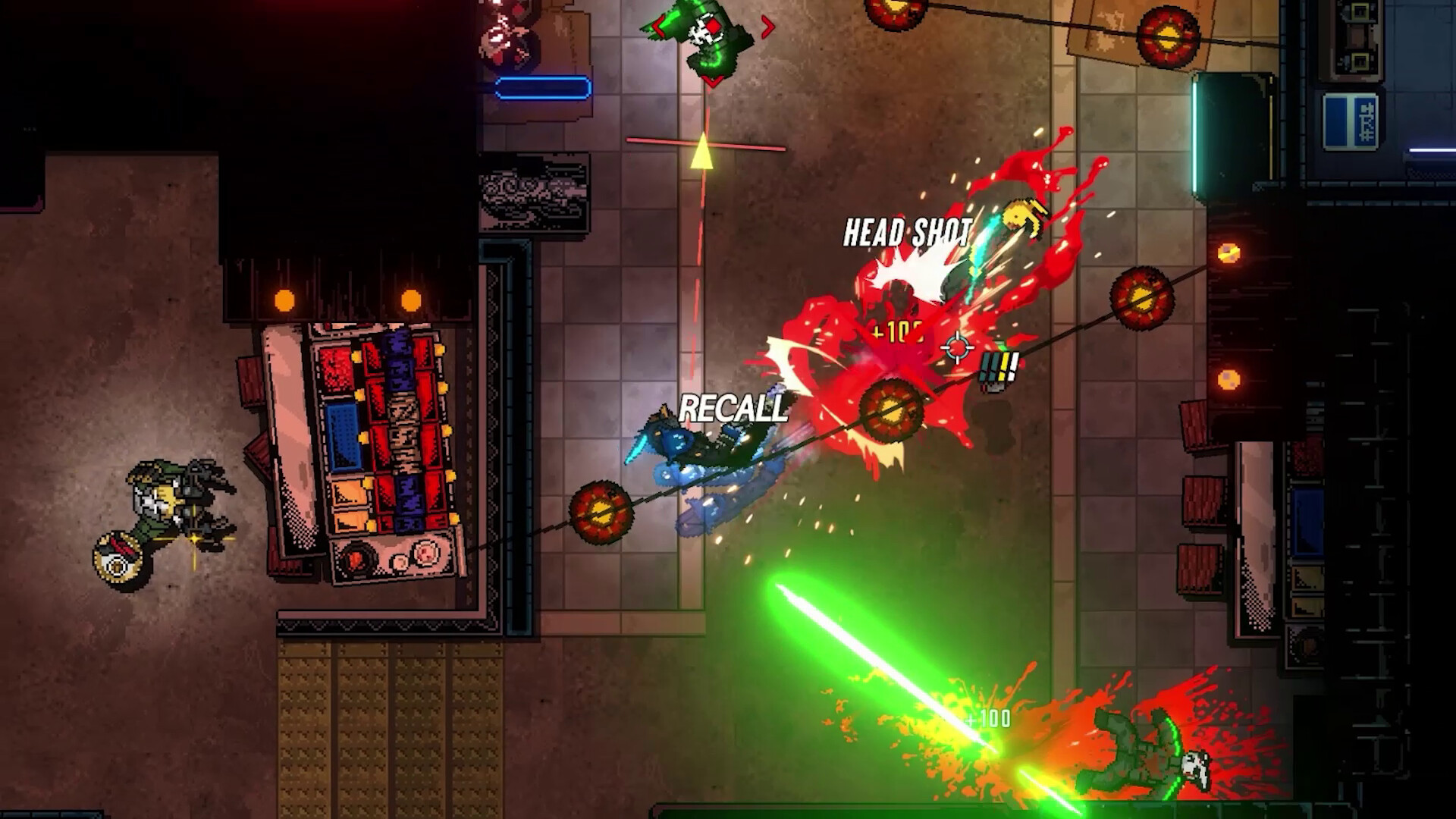
Kusan is more authored. Its 54 stages are built for ranks, clean execution and replay, while its upgrades give the player more tools to fold into that familiar enter-kill-restart rhythm.
It feels like the modern descendant that understands why Hotline Miami worked without pretending it is still 2012.
The Hong Kong Massacre makes the violence cinematic
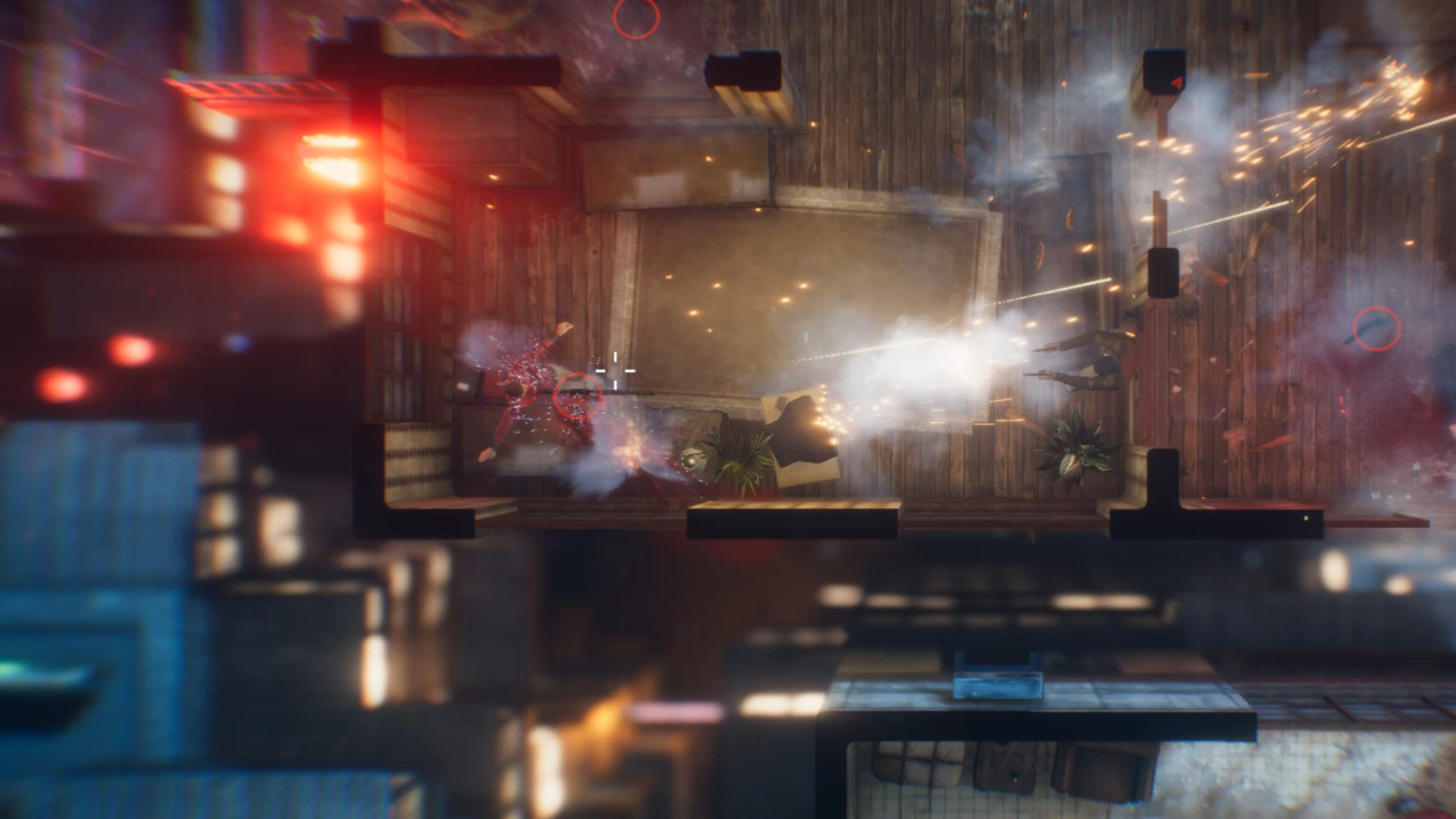
The Hong Kong Massacre takes a similar overhead structure but pushes harder into John Woo-style action cinema. Slow motion, diving through windows, dual-wielding guns and sweeping camera movement make combat feel less like panicked punk violence and more like an action movie somebody forgot to stop filming.
God’s Trigger, Esse Proxy, Suit for Hire and RED HOT VENGEANCE keep remixing the room
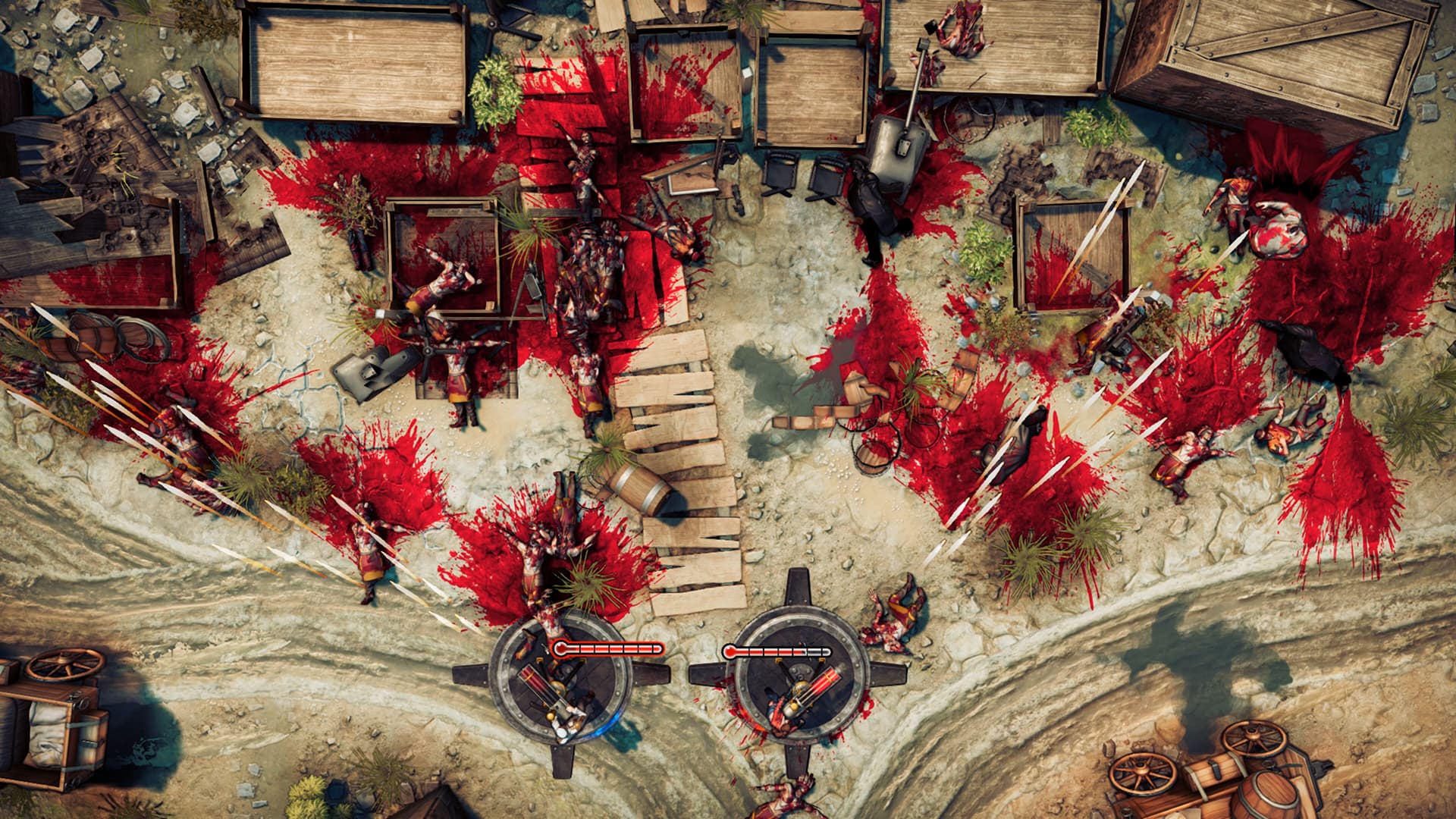
God’s Trigger adds co-op. Esse Proxy turns the formula into glossy cyberpunk 3D. Suit for Hire leans into professional-assassin fantasy. RED HOT VENGEANCE stays closer to the dirty top-down revenge-shooter tradition.
The camera remains familiar. The systems around it keep changing.
What if Hotline Miami made you think before shooting?
This is where the family tree becomes much more interesting.
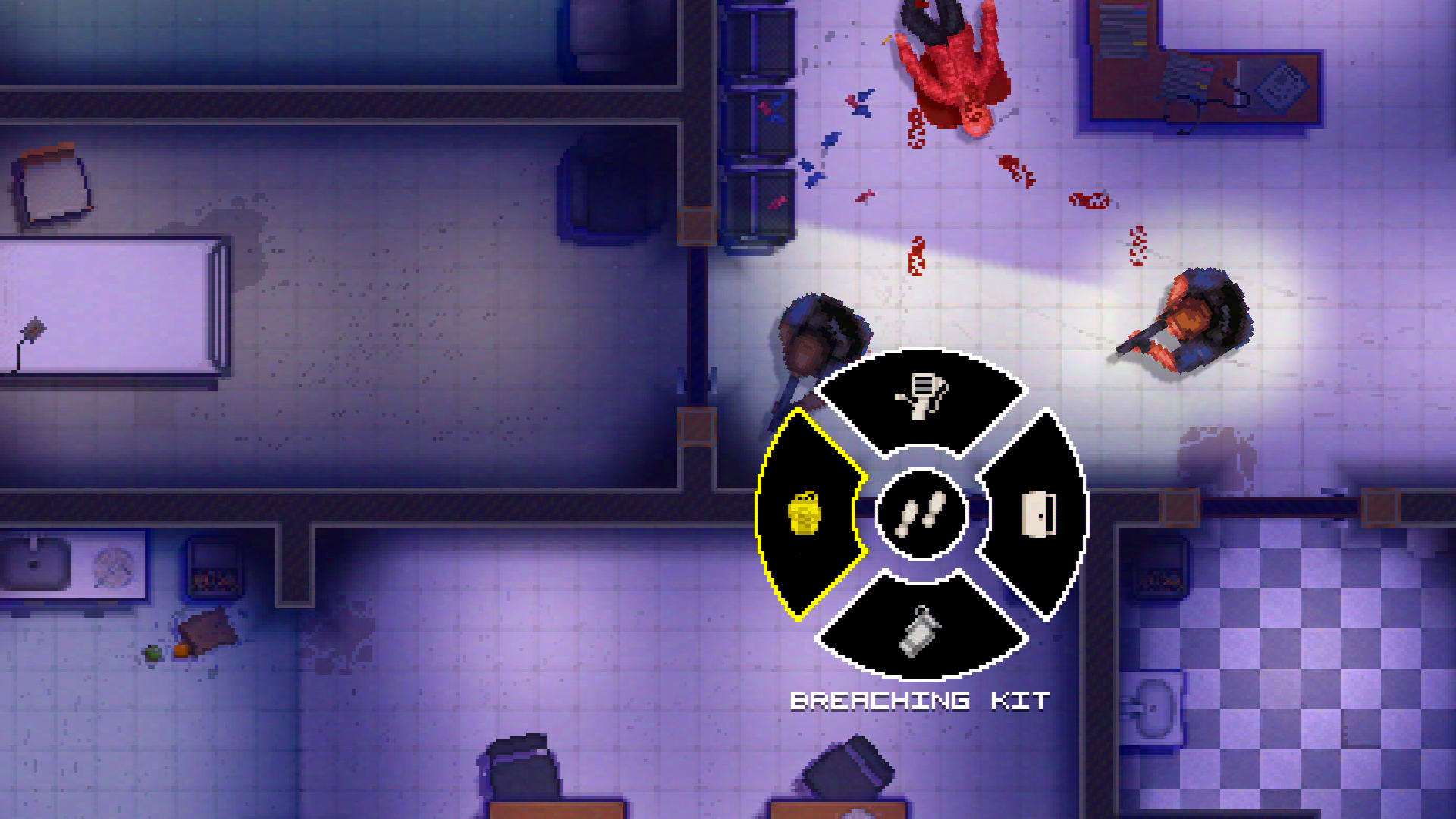
Police Stories is almost Hotline Miami with the moral logic reversed.
You still approach rooms from above. You still read doors, corners, sightlines and threats. One bad decision can still destroy a run.
But now the goal is not to enter and kill everyone.
You are a police officer. Suspects can surrender. Civilians need protection. Warning shots, commands, non-lethal options, equipment and proper identification matter. Shooting first can actively hurt your score and progression.
Same spatial problem. Completely different answer.
Intravenous turns the room into a stealth sandbox
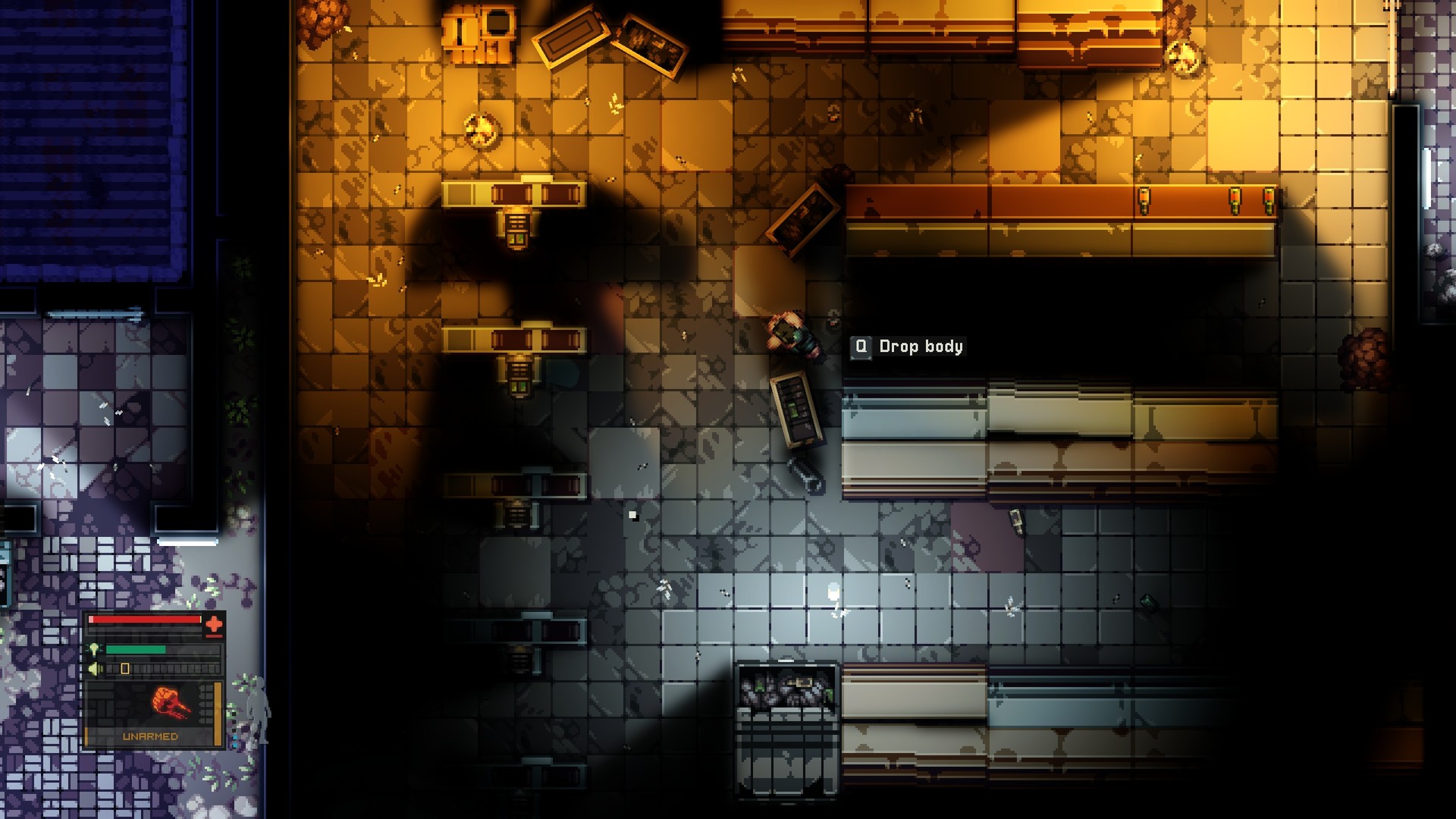
Intravenous and especially Intravenous 2 push the top-down shooter toward old-school stealth simulation.
Light affects visibility. Sound travels. Suppressors matter. Doors, cameras, lockpicking, ammunition, weapon modification, enemy awareness and different approaches turn each location into a more systemic problem.
You can still go loud. It is just no longer the only language the game speaks.
Police Stories 2 takes another step away from the aesthetic
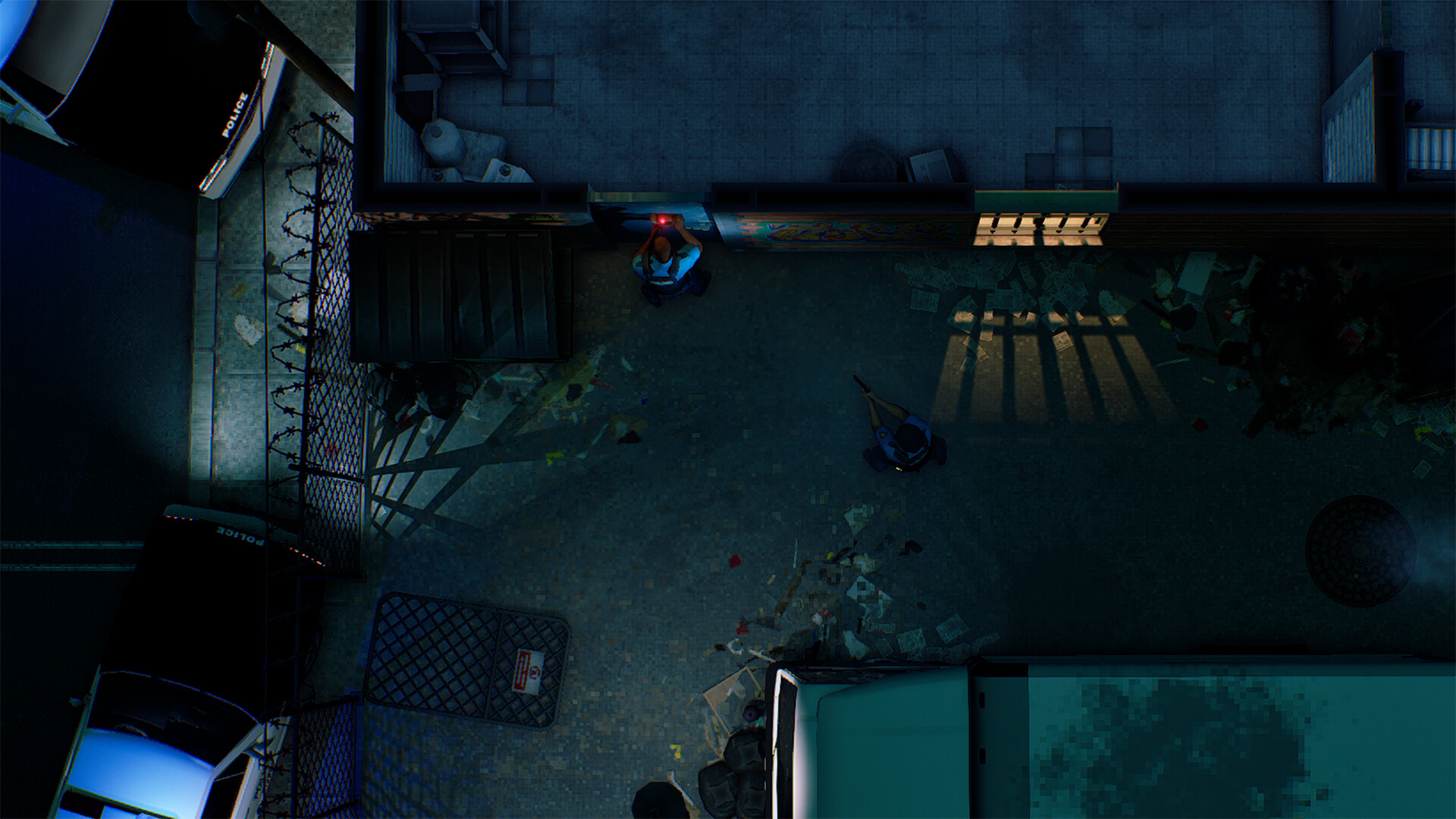
This is why Police Stories 2 matters to the article even though it looks less like Hotline Miami than its predecessor.
The sequel adds officer selection, individual traits, AI partners, two-player co-op, precinct upgrades, limited budgets, equipment investment, surveillance, environmental manipulation and decisions that can push you toward uncomfortable compromises.
The neon is gone.
The basic question remains: you are outside a dangerous room. What is the smartest way to enter it?
Police Stories 2 does not currently have a release date, but active developer updates in 2026 make it a useful example of how far this branch has travelled.
Phantom Squad makes room clearing a team problem
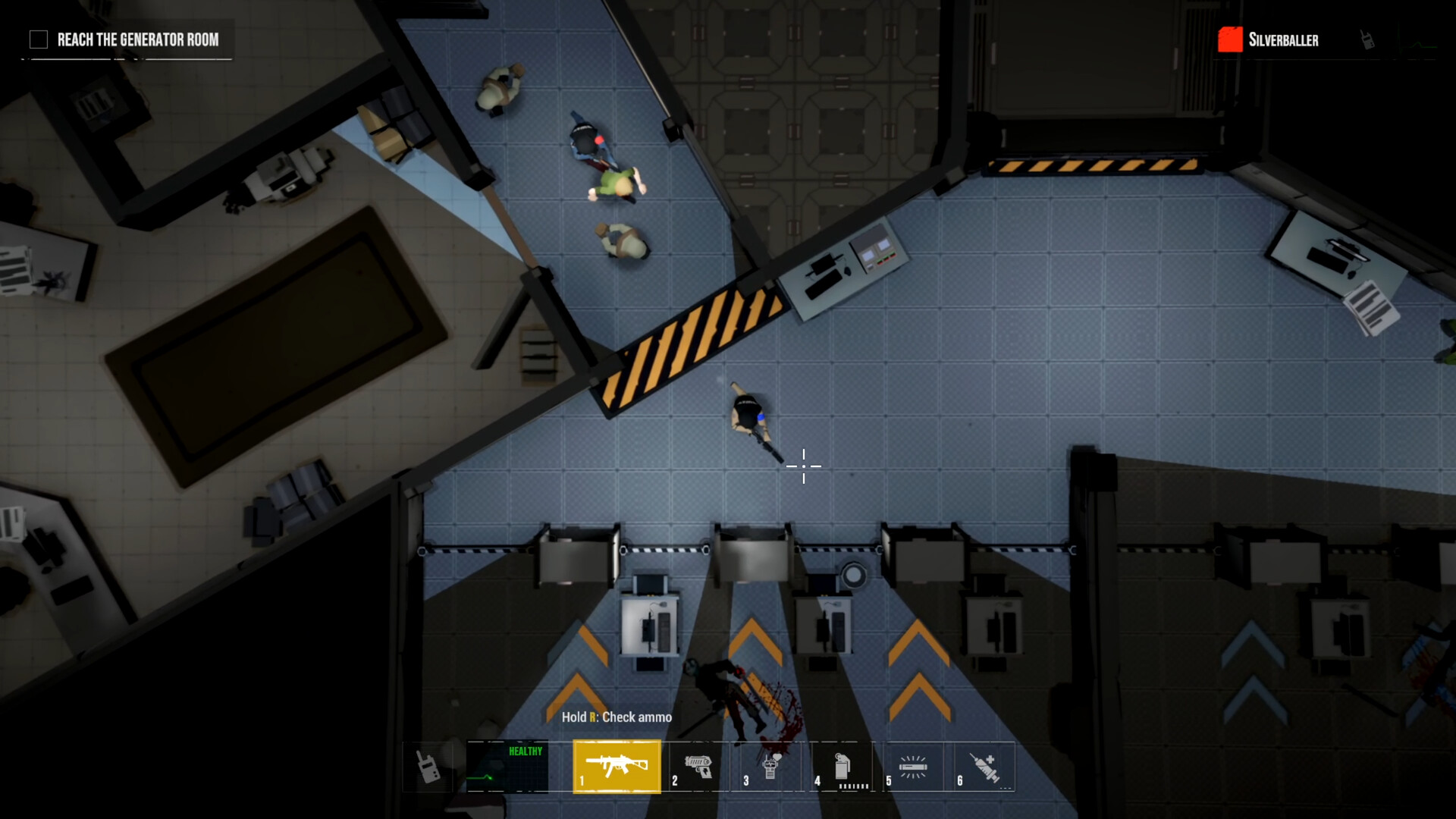
Phantom Squad takes lethal top-down combat into 1-4 player tactical co-op, mixing planning, gadgets, breaches and coordinated execution.
Hotline Miami’s lonely restart loop becomes something much more dangerous: now your friends can ruin the plan too.
Hotline Miami turns sideways
Remove the overhead camera and something surprising happens.
A lot of the formula still works.
Katana ZERO might be the cleanest example
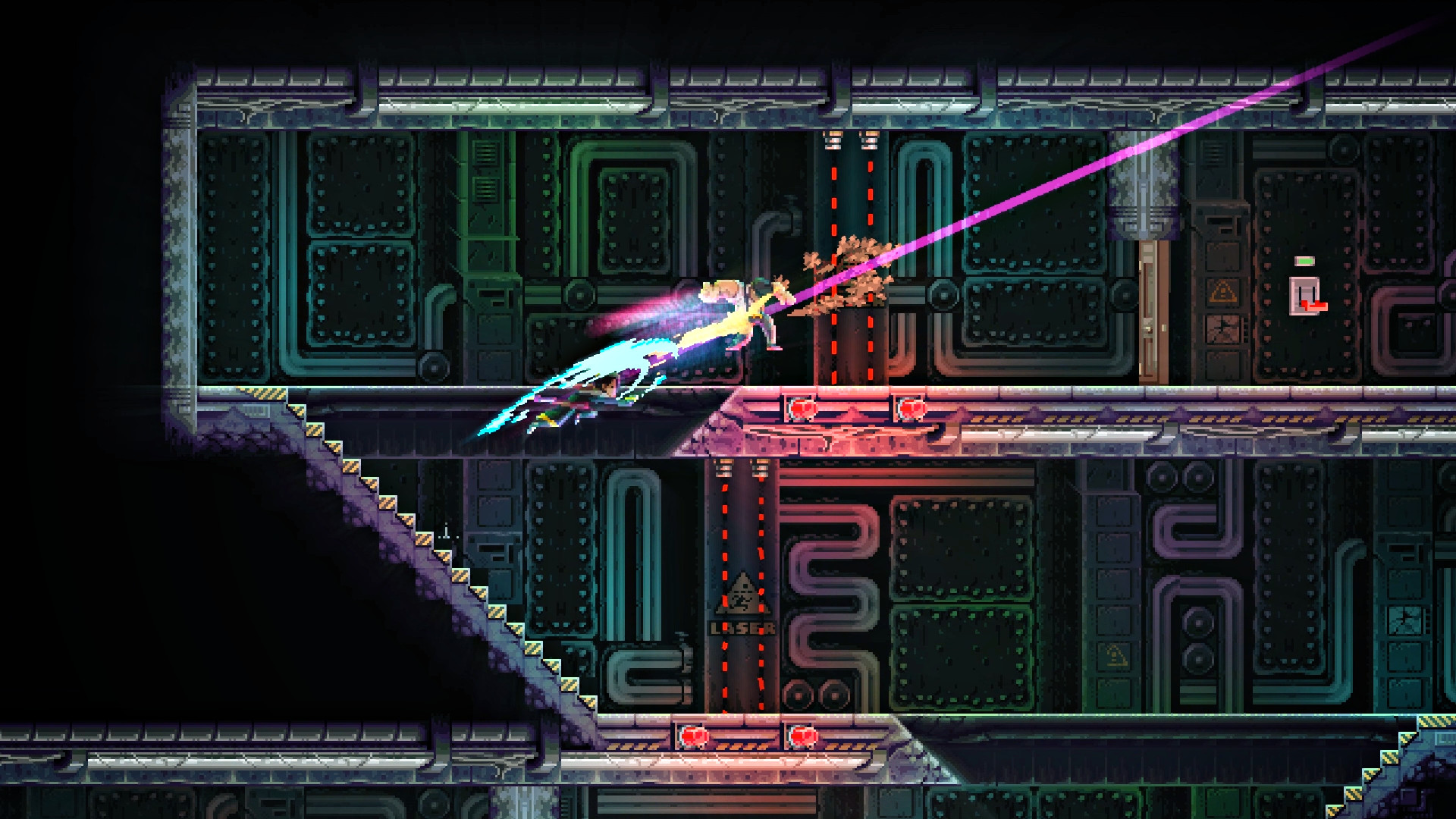
Katana ZERO moves into a side-on perspective, replaces guns as the main tool with a sword, and adds time manipulation.
But the mentality is immediately recognizable. Enemies are deadly. Rooms need to be solved quickly. Failure is cheap. Restarting is almost frictionless. Successful runs eventually look like choreography.
Hotline Miami taught players to see an entire floor as a violent puzzle.
Katana ZERO folds that puzzle into a horizontal strip.
Deadbolt slows it down
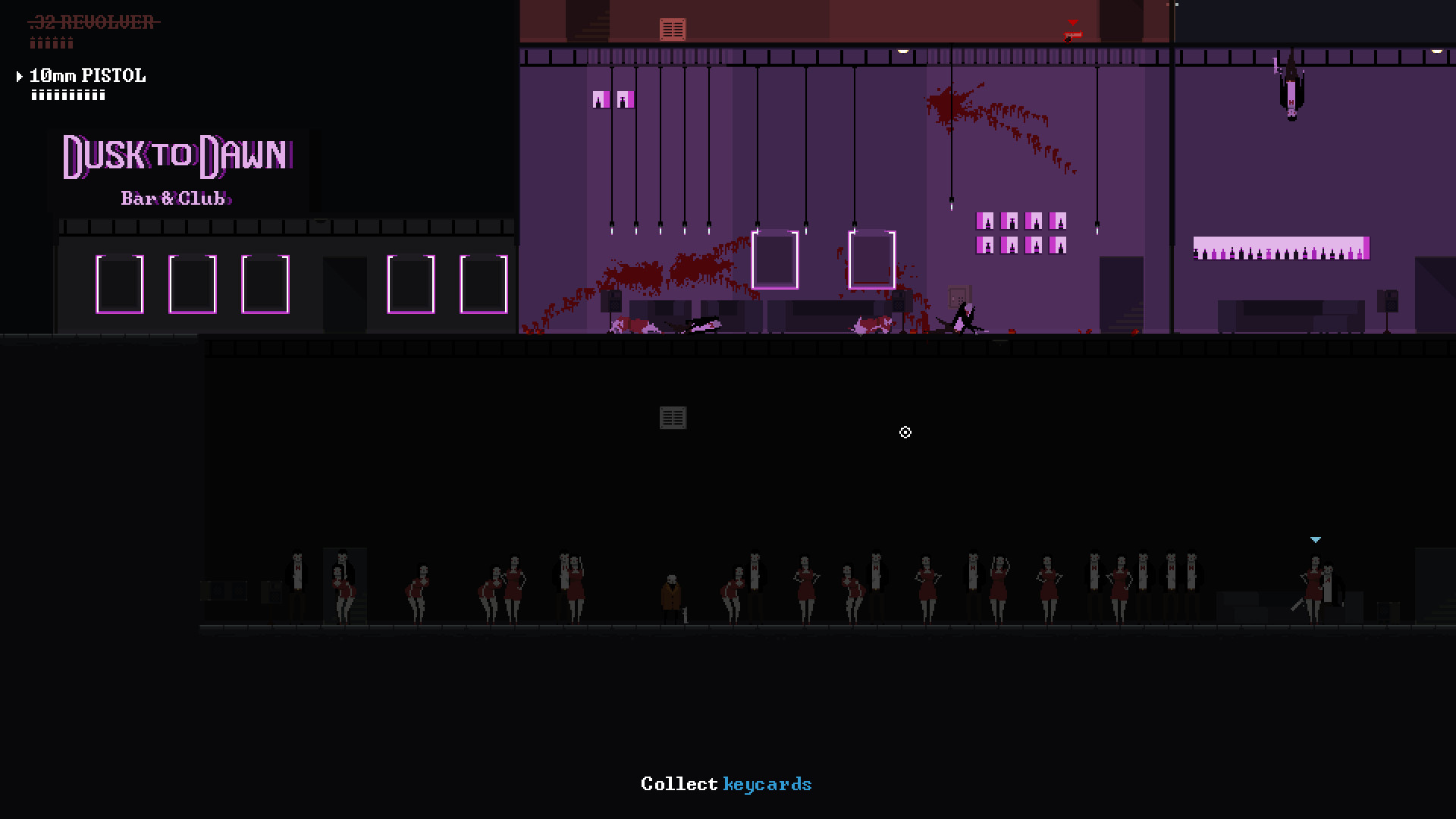
Deadbolt takes the side-view structure in a more deliberate direction, emphasizing assassination, planning, firearms and supernatural targets. It is less frantic, but the idea of repeatedly studying compact spaces until a perfect execution emerges still feels familiar.
Bloodroots turns murder into slapstick improvisation
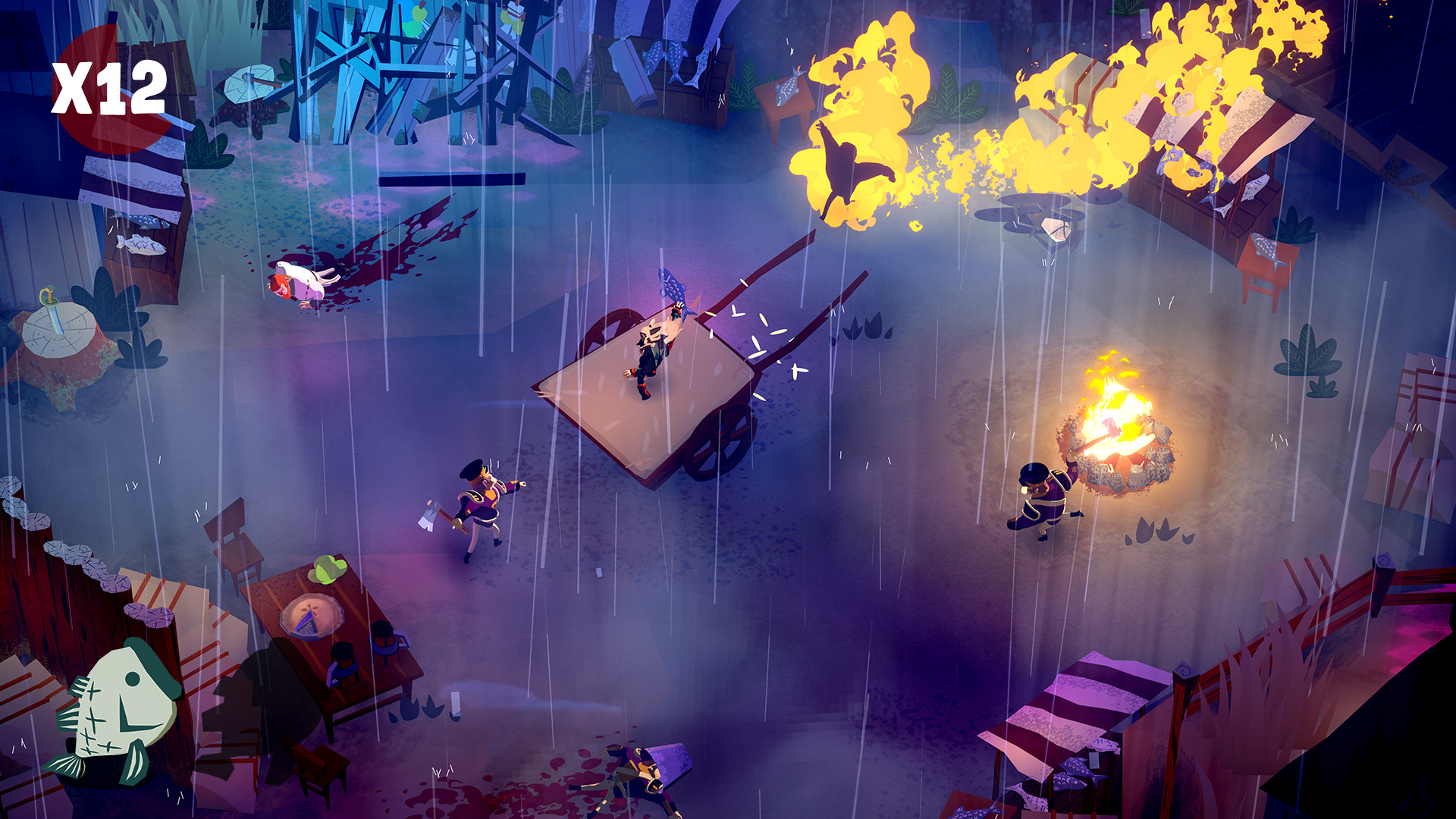
Bloodroots takes the one-hit-kill, die-retry philosophy and asks an important question: what if basically everything could become a weapon?
The result is less nihilistic crime thriller and more murder ballet involving whatever unfortunate object happens to be within reach.
Midnight Fight Express trades guns for fists
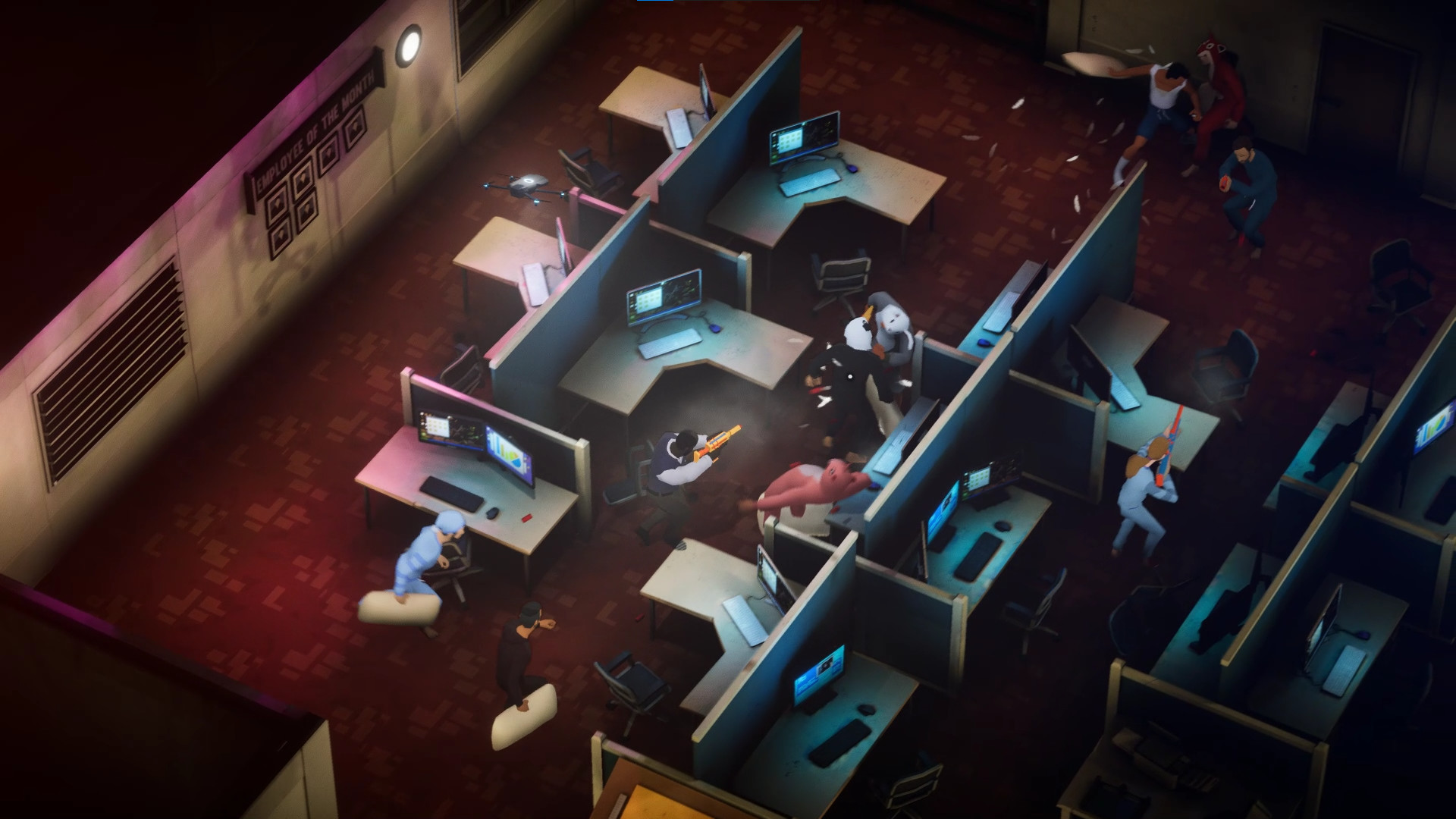
Midnight Fight Express shifts further toward brawling, but keeps handcrafted levels, scoring, challenges, replay and a soundtrack designed to maintain forward momentum.
Again, the specific mechanics changed.
The addiction to performing a level better did not.
The camera enters the room
First-person games lose one of Hotline Miami’s biggest advantages: the ability to see most of the battlefield at once.
So they replace information with movement.
Ghostrunner turns retries into parkour
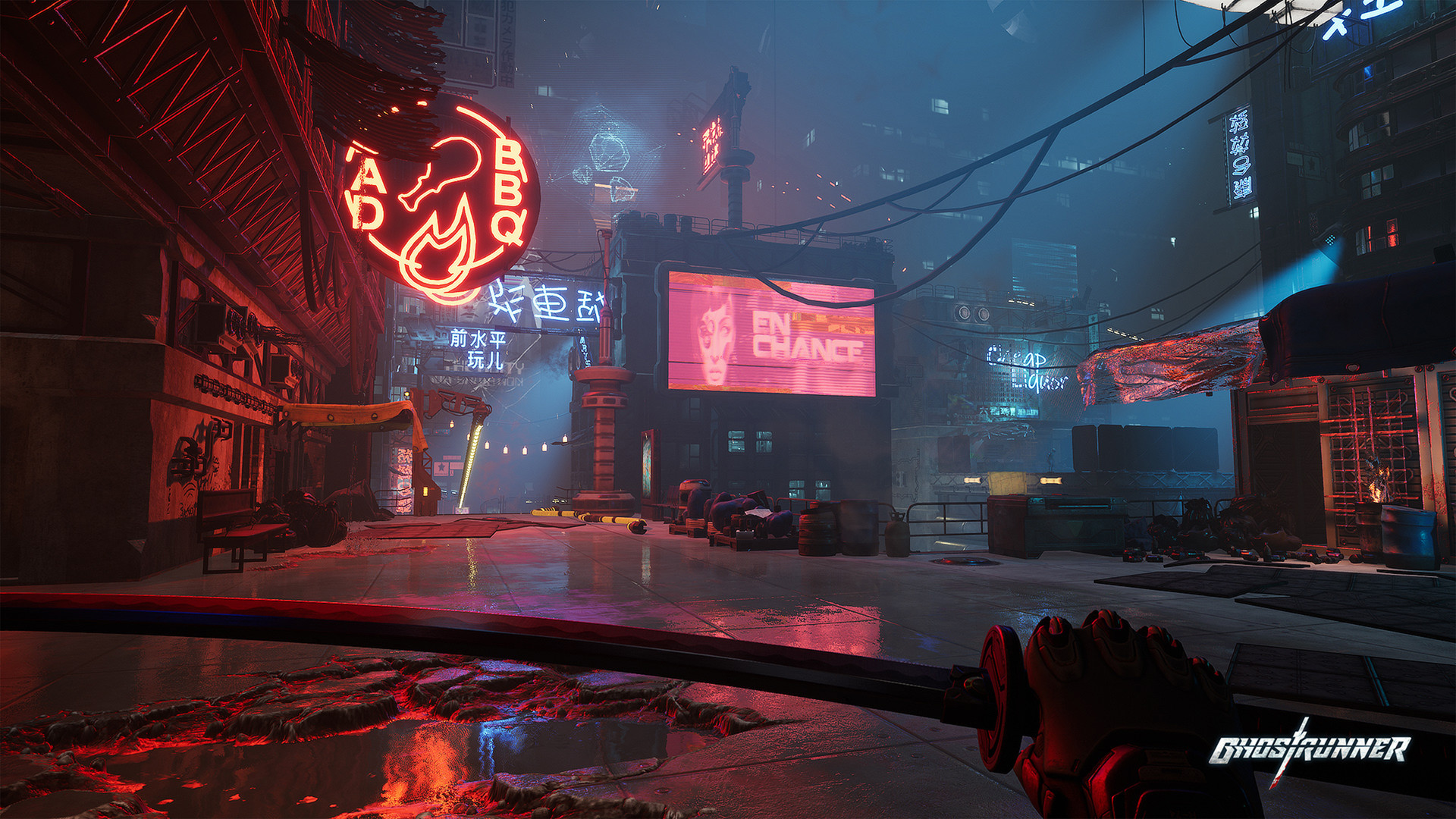
Ghostrunner takes high lethality and instant repetition into a cyberpunk first-person slasher.
Wall runs, grapples, slides and one-hit kills turn encounters into movement puzzles. You die, understand the mistake, restart, find a cleaner route, and eventually pass through enemies like somebody rehearsed the whole sequence.
That psychological loop is deeply Hotline-like even though the camera, world and movement systems are completely different.
Anger Foot turns doors into weapons
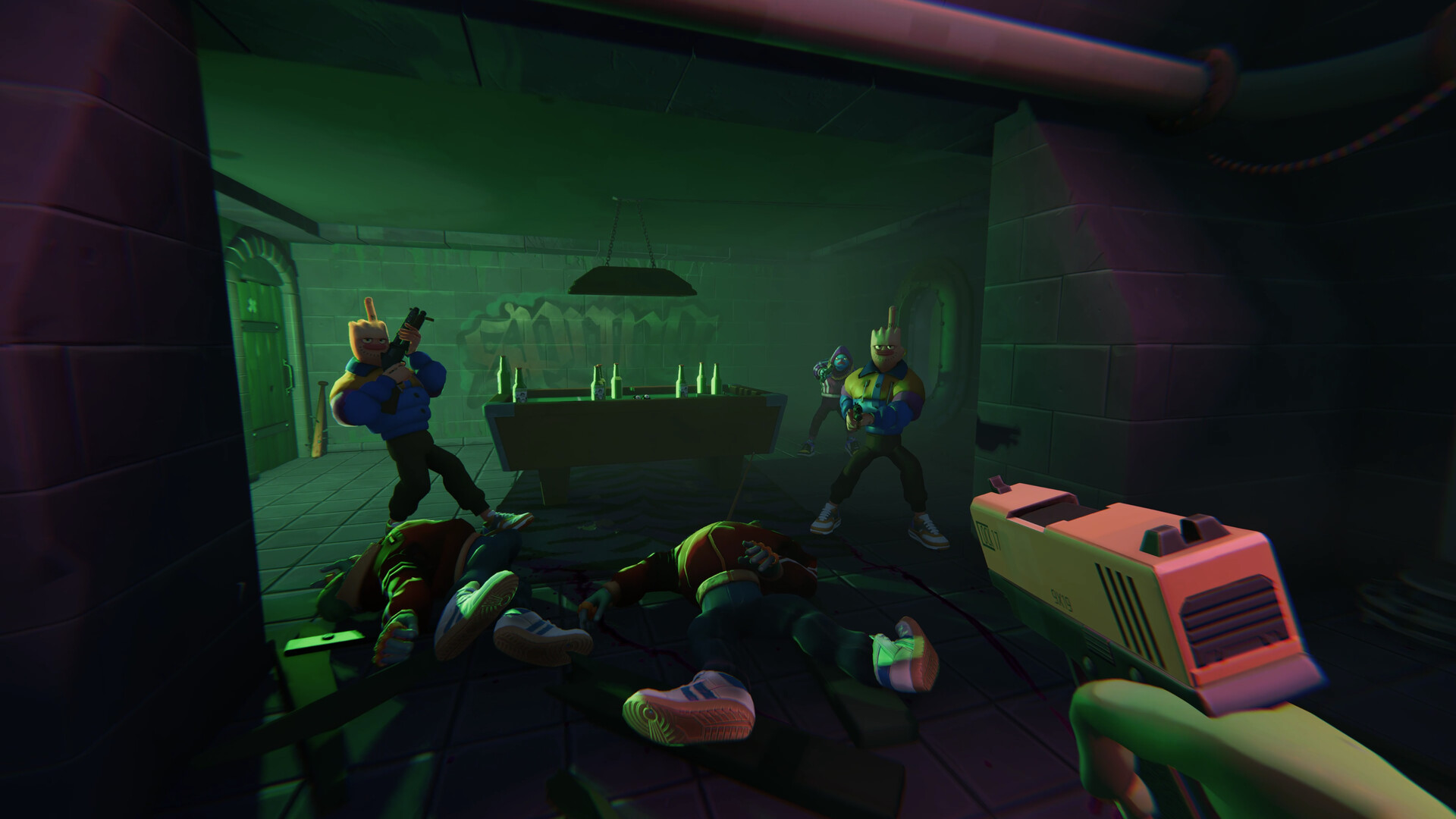
Anger Foot strips the concept down to speed, guns, kicks and architectural disrespect.
Rooms are compact. Doors are tactical tools. Enemies die fast. You die fast. The soundtrack hammers the player forward.
Hotline Miami had a kick button because doors were useful.
Anger Foot seems to have concluded that the door was the entire genre.
Post Void chooses sensory overload
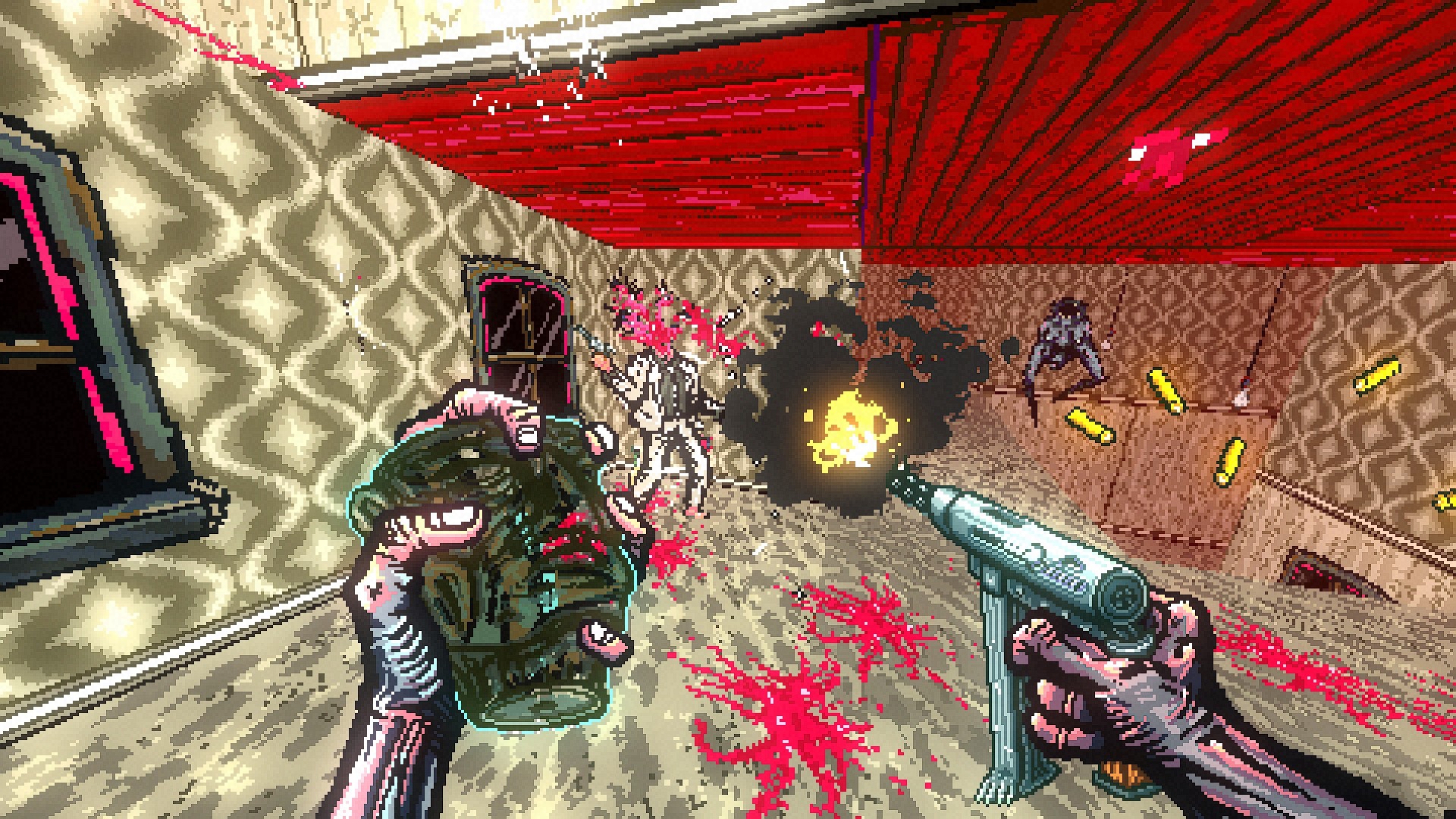
Post Void takes the aggression and distills it into an intentionally hostile FPS sprint. Health drains, movement must continue, kills keep you alive, and every run feels like being chased through a psychedelic album cover.
Severed Steel turns flow into acrobatics
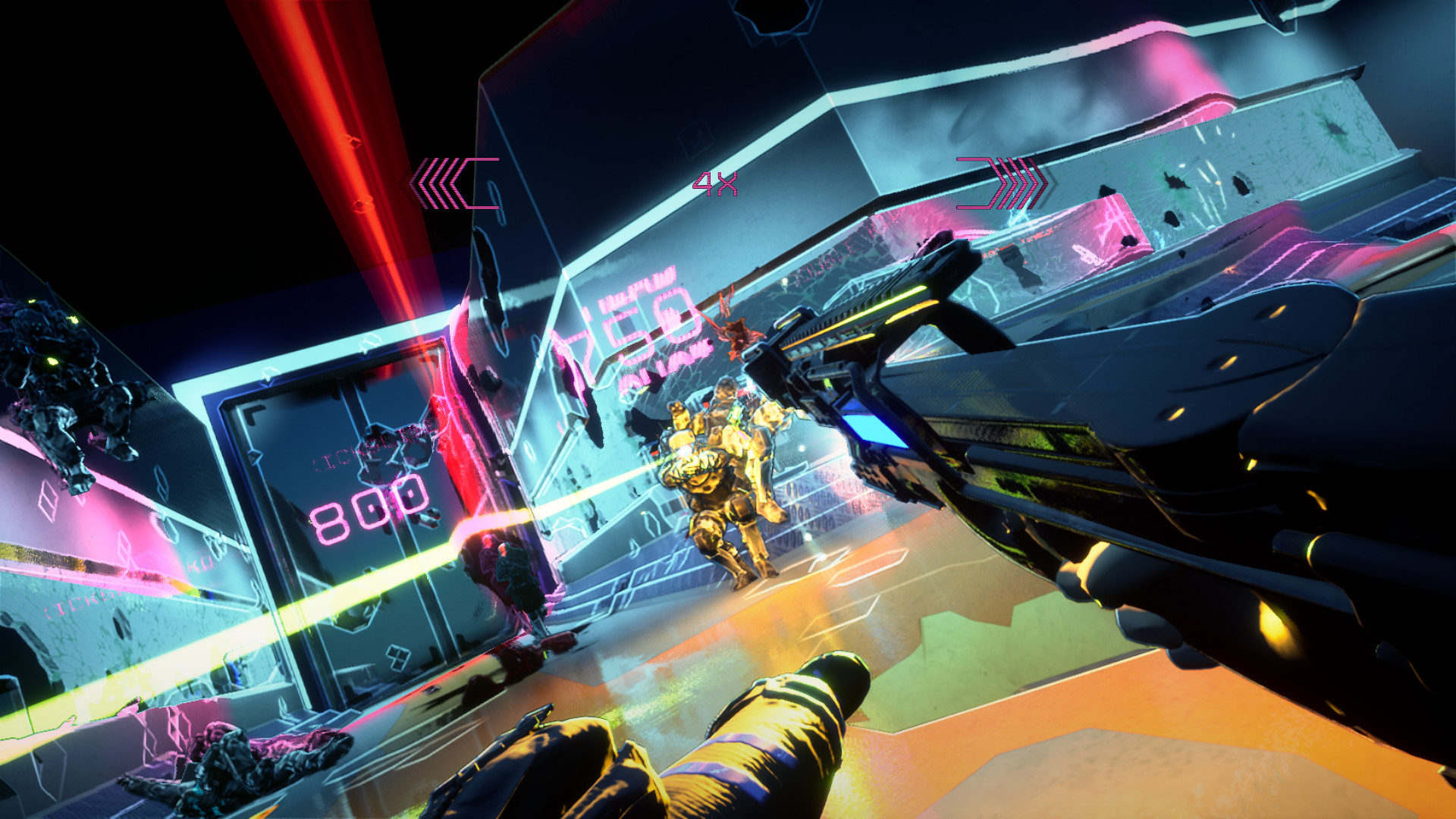
Severed Steel builds its identity around sliding, diving, wall running, bullet time and destructible environments.
You do not calmly clear spaces.
You enter them horizontally.
I Am Your Beast might be the most interesting modern mutation
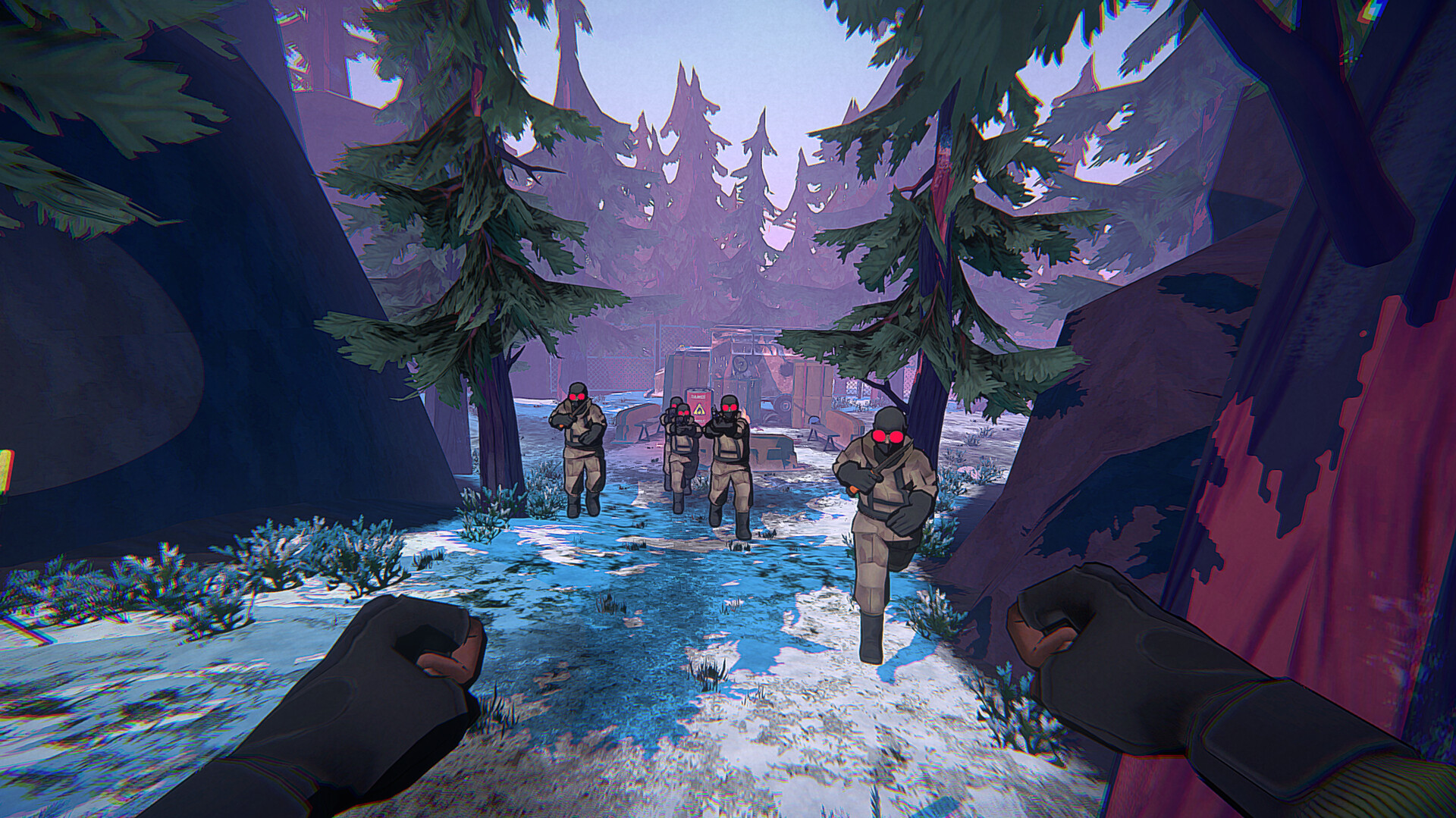
I Am Your Beast is a short-form revenge FPS built around compact, replayable missions in the wilderness.
You move fast, steal enemy weapons, throw empty guns away, improvise, chase secondary objectives, shave seconds from runs and disappear before reinforcements overwhelm you.
It has very little of Hotline Miami’s visual identity.
It understands the same fantasy of turning chaos into a rehearsed performance.
Maximum Action, Neckbreak, and MULLET MADJACK occupy neighboring territory, keeping the emphasis on speed, excess, style and constant forward pressure while moving farther from Hotline Miami’s literal structure.
Maybe the real inheritance was rhythm
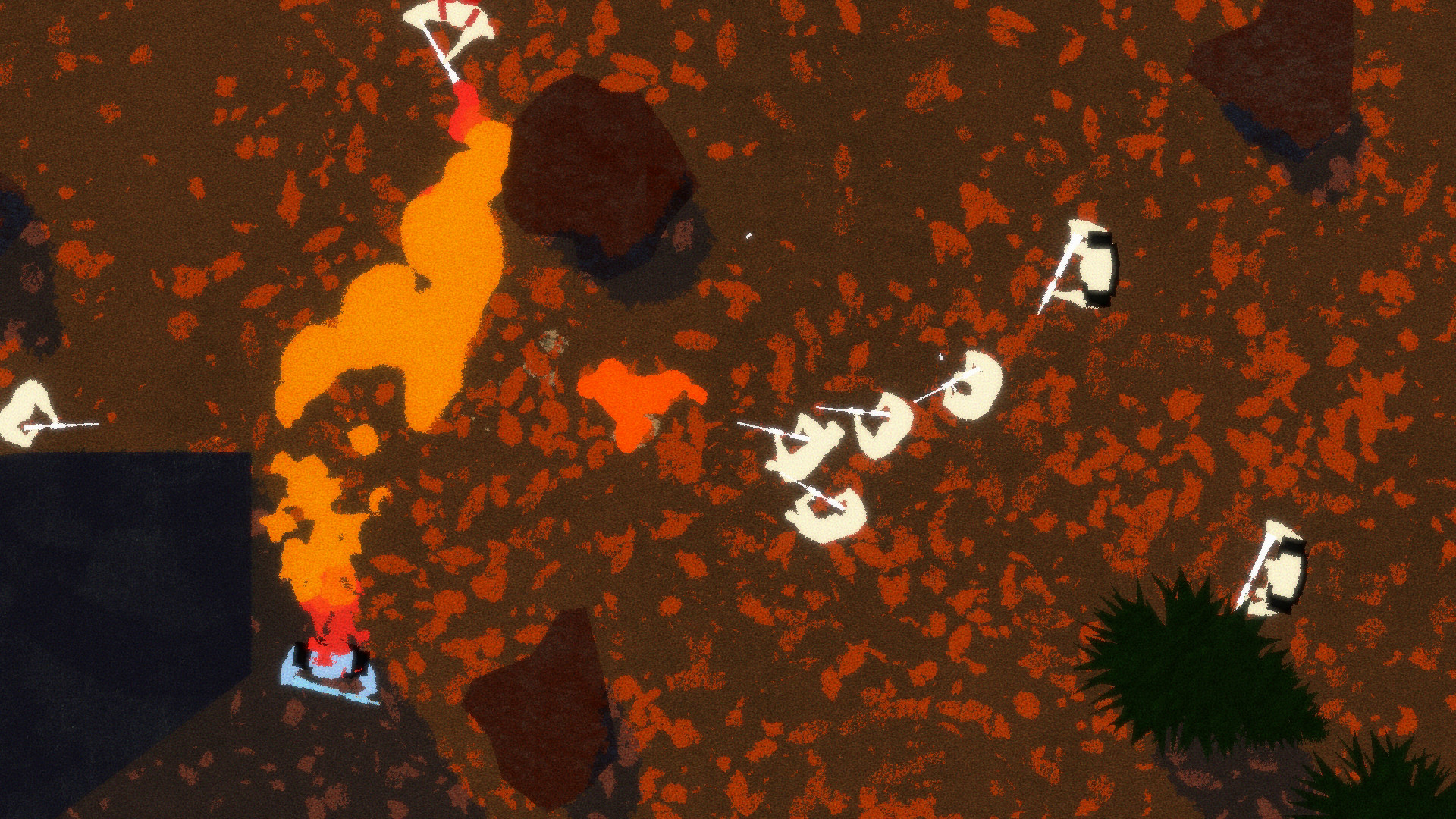
Ape Out is useful because it removes so many obvious Hotline Miami signifiers.
No Miami crime fantasy. No synthwave. No arsenal of firearms as the central gimmick.
You are an ape escaping captivity.
And yet the connection makes perfect sense.
Ape Out is violent, top-down, instantly readable and brutally rhythmic. Its dynamic jazz soundtrack reacts to what happens during play, turning impacts and kills into part of the music.
That exposes something Hotline Miami understood extremely well:
The violence feels different when the game teaches you to hear it as rhythm.
Hotline Miami’s soundtrack was not decoration pasted behind combat.
It controlled mood, tempo and momentum. The player started moving with it.
Ape Out makes that idea almost literal.
The descendants now have descendants
This might be the best evidence that Hotline Miami created a real niche rather than a temporary fashion.
New games are no longer citing Hotline Miami alone.
Jackal: Hotline Miami + OTXO + I Am Your Beast
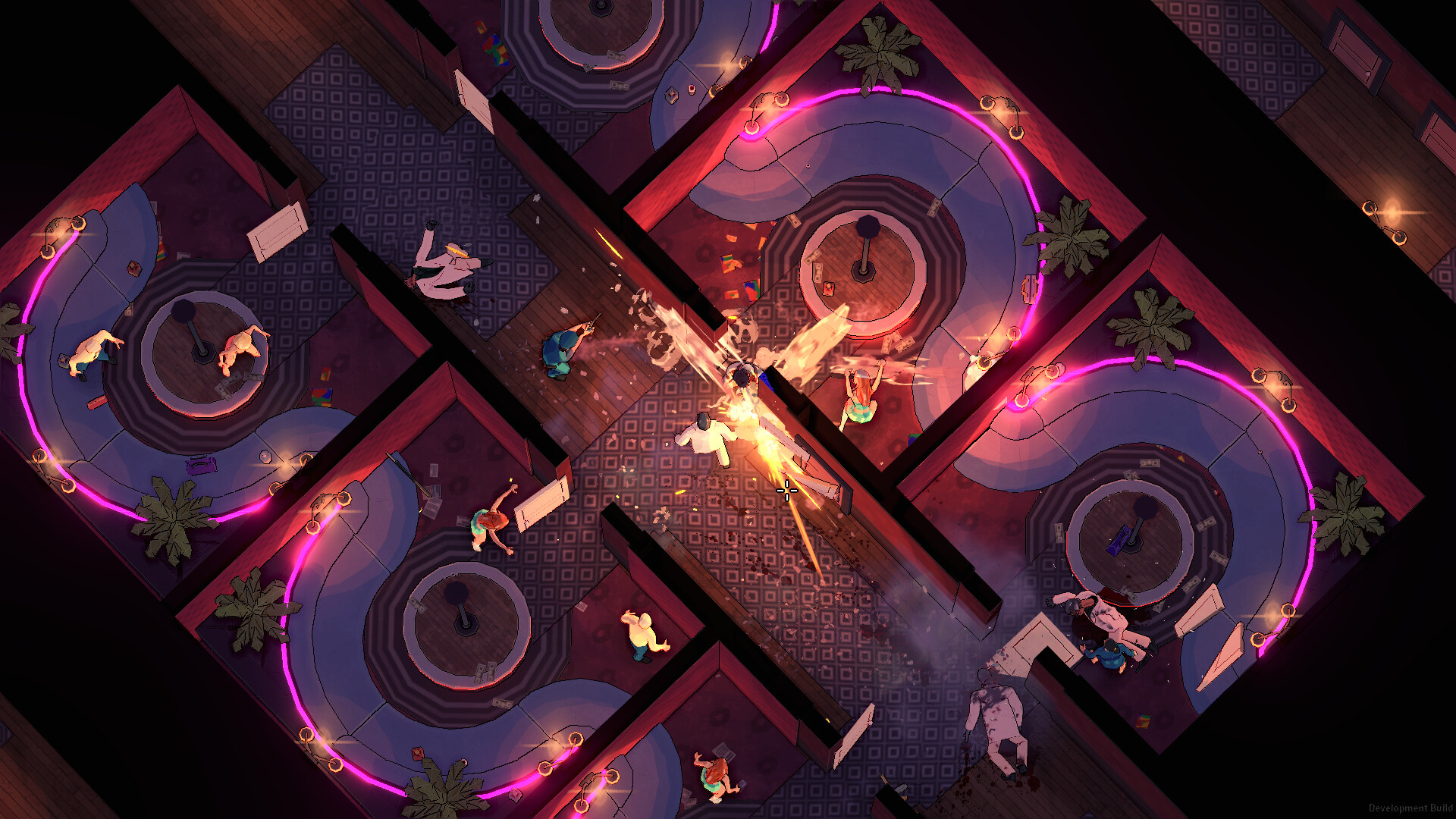
Jackal, released in 2026, explicitly lists Hotline Miami, OTXO and I Am Your Beast among its inspirations, alongside John Wick, Pulp Fiction and other crime-film influences.
That is the lineage happening in public.
OTXO took part of Hotline Miami’s design vocabulary. I Am Your Beast took similar short-form aggression into first person. Jackal can now look at all three and combine the lessons.
Retro Madness DX openly cites Hotline Miami and OTXO
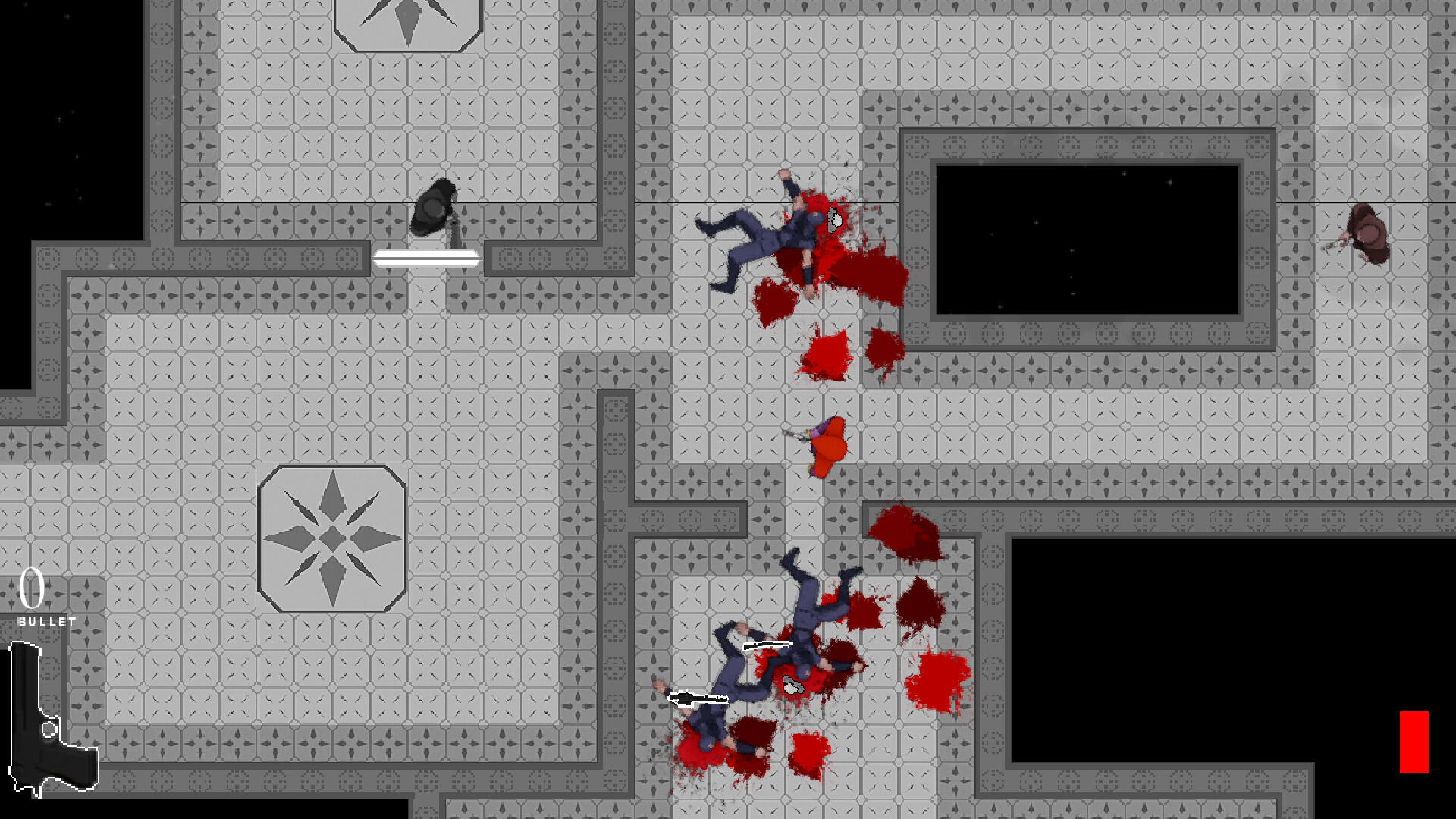
Retro Madness DX has been described as a fast top-down shooter inspired by Hotline Miami and OTXO.
That is second-generation influence in one sentence.
BOILED moves the formula to the 1920s Old West
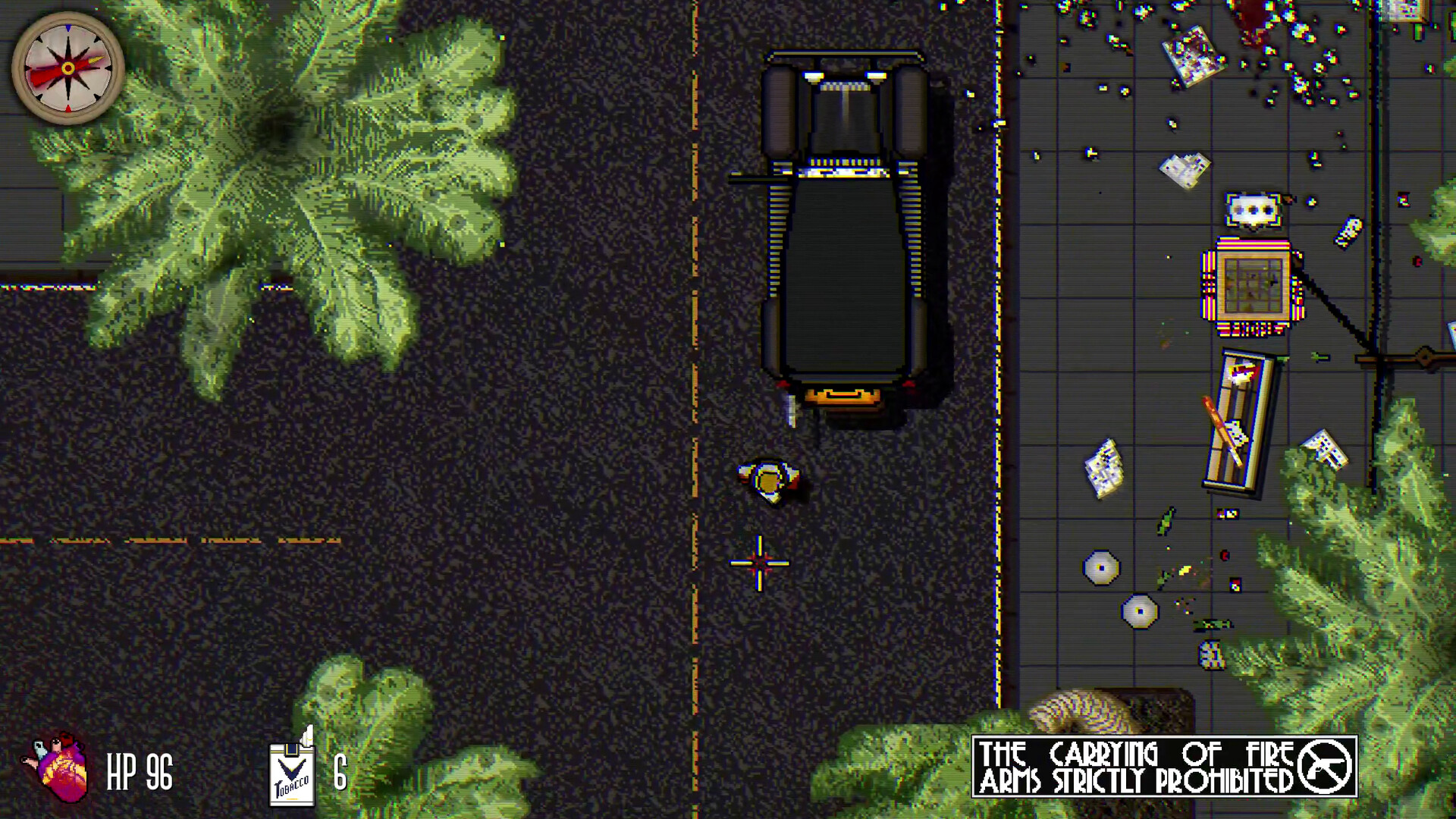
BOILED is another upcoming top-down shooter that directly identifies Hotline Miami as an inspiration, except its setting is America in 1925.
Same basic design language.
Bootleggers instead of neon gangsters.
This is the point where the niche becomes self-sustaining. Hotline Miami inspired games. Those games refined different parts of the formula. New developers can now cite the descendants alongside the original.
Who inherited what from the Hotline Miami formula?
Want to trace the bloodline yourself? Check these games on G2A.COM
Several major games in this lineage have Global PC key offers on G2A.COM. Kusan itself does not currently have a suitable marketplace key listing, so the table focuses on the games you can use to explore how the formula evolved.
Make the body count cheaper with G2A Plus
G2A Plus gives you bonus discounts on top of existing ones, Plus Points, monthly bonuses, and other benefits across eligible action, indie, and PC game offers.
Related G2A News reading
- Kusan: City of Wolves Is Out Today – Gameplay, Story, Trailers and Similar Games
- Games Like Hotline Miami
- Games Set in Miami
- The Best of Polish Gaming: How We Got Here
Hotline Miami legacy FAQ
Is Kusan: City of Wolves similar to Hotline Miami?
Yes. Both use fast top-down action, compact combat spaces, lethal mistakes, replay and precision. Kusan adds its own progression, bosses, cyberpunk story, upgrades and modern combat systems. The connection is strong enough that the two games are currently sold together in an official Steam bundle.
What is the closest modern game to Hotline Miami?
OTXO is one of the closest mechanically, especially if you want violent top-down gunplay, slow motion and fast reactions. Kusan is another strong modern choice, while The Hong Kong Massacre emphasizes cinematic slow-motion action.
What games are like Hotline Miami but more tactical?
Intravenous 2 and Police Stories are excellent options. Both preserve dangerous top-down room clearing but add stealth, planning, equipment and more deliberate decision-making.
What games feel like Hotline Miami in first person?
Ghostrunner, Anger Foot, Post Void, Severed Steel and I Am Your Beast all carry parts of the same aggressive, restart-heavy design philosophy into first-person action.
When is Police Stories 2 coming out?
Police Stories 2 is still listed with a release date to be announced. Development remains active, with new developer updates published in 2026.
Did Hotline Miami create its own genre?
Not in the strict sense of inventing every mechanic involved. Its bigger achievement was crystallizing a recognizable combination of high lethality, instant retries, room-based combat, aggression, scoring and audiovisual rhythm. Later games have repeatedly recombined those ideas in ways that now form a recognizable niche.
The hotline never went dead
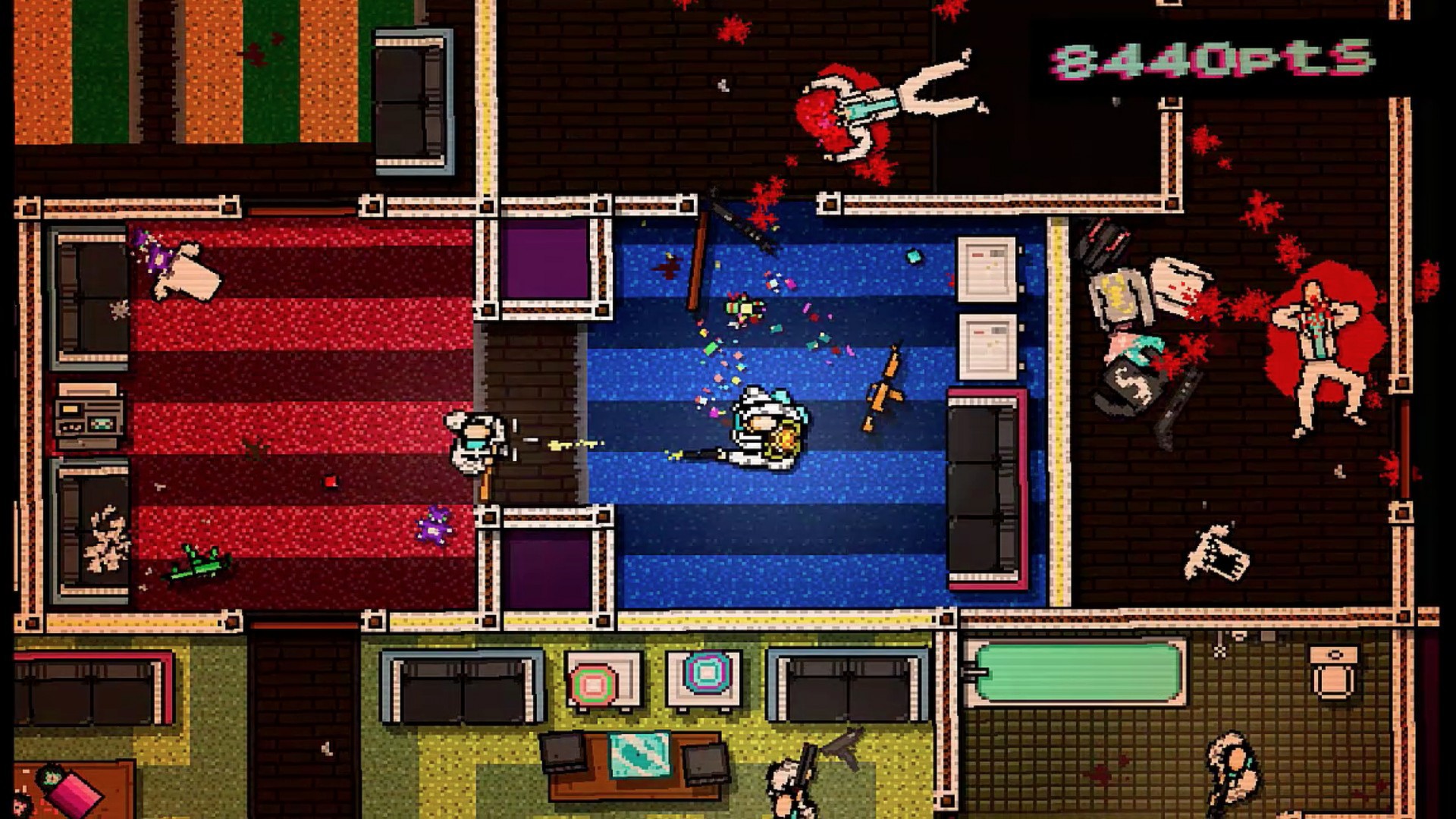
Hotline Miami’s strangest legacy is that very few of its best descendants actually look exactly like Hotline Miami.
OTXO became a roguelite. Intravenous became a stealth sandbox. Police Stories put rules around violence. Katana ZERO moved sideways. Ghostrunner added parkour. Anger Foot moved into first person and weaponized footwear. I Am Your Beast carried the short-form mastery loop into a forest.
Now Jackal can openly cite Hotline Miami, OTXO and I Am Your Beast together. Retro Madness can cite Hotline Miami and OTXO. Kusan can launch in 2026 and immediately find itself bundled with the games that define the niche.
That is probably the best evidence of Hotline Miami’s influence.
It did not create an army of clones.
It gave other developers a language they could keep rewriting.