





Open-world games keep getting bigger, but some developers have found an easier solution: use the actual world.
From surviving a zombie outbreak in your hometown to redesigning its railway network, fighting over local landmarks, driving its roads, or simply flying over your house, these games turn real geography into part of the gameplay.
The trick is that they do it in very different ways. Some generate playable maps from geographic databases such as OpenStreetMap. Others use your phone’s GPS and make you physically move through the world. Microsoft Flight Simulator goes several steps further and tries to build a digital version of the entire planet.
TL;DR – Games Where Your Real Location Becomes the Map
Table of Contents
1. Infection Free Zone – survive the apocalypse in your hometown
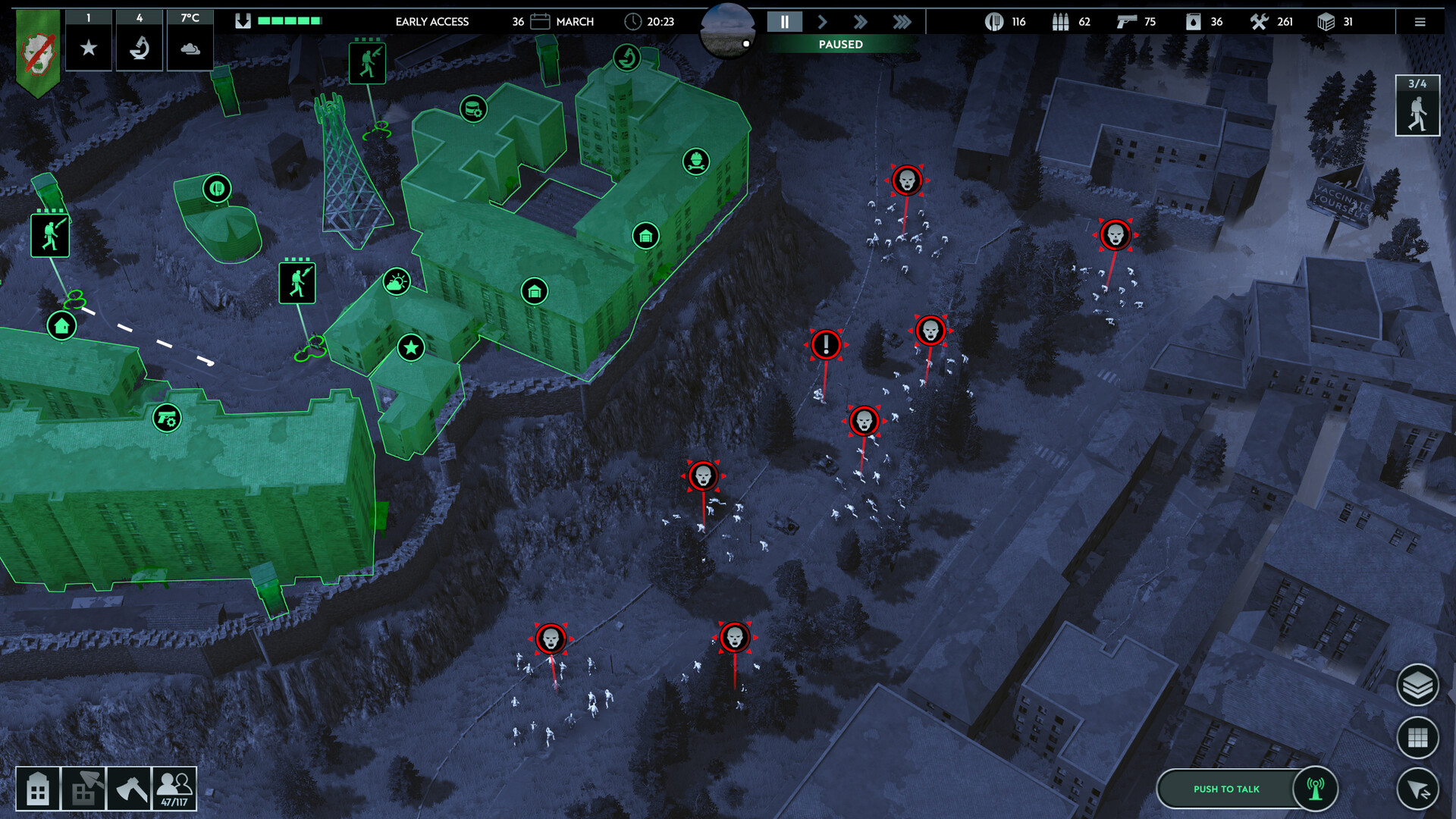
Infection Free Zone is probably the purest version of this idea. Type in a city or town, download its map, and real-world geographic data becomes the foundation of a zombie survival strategy game.
Roads and existing buildings matter. That supermarket you pass every morning might become a source of food. A school could become a shelter. A warehouse might be worth fortifying, while an awkward road layout can suddenly become a defensive advantage.
The result is one of those games where local knowledge feels suspiciously useful. Instead of asking whether a fictional district looks defensible, you can wonder whether your actual apartment block would survive the apocalypse.
2. 112 Operator – congratulations, your commute is now an emergency
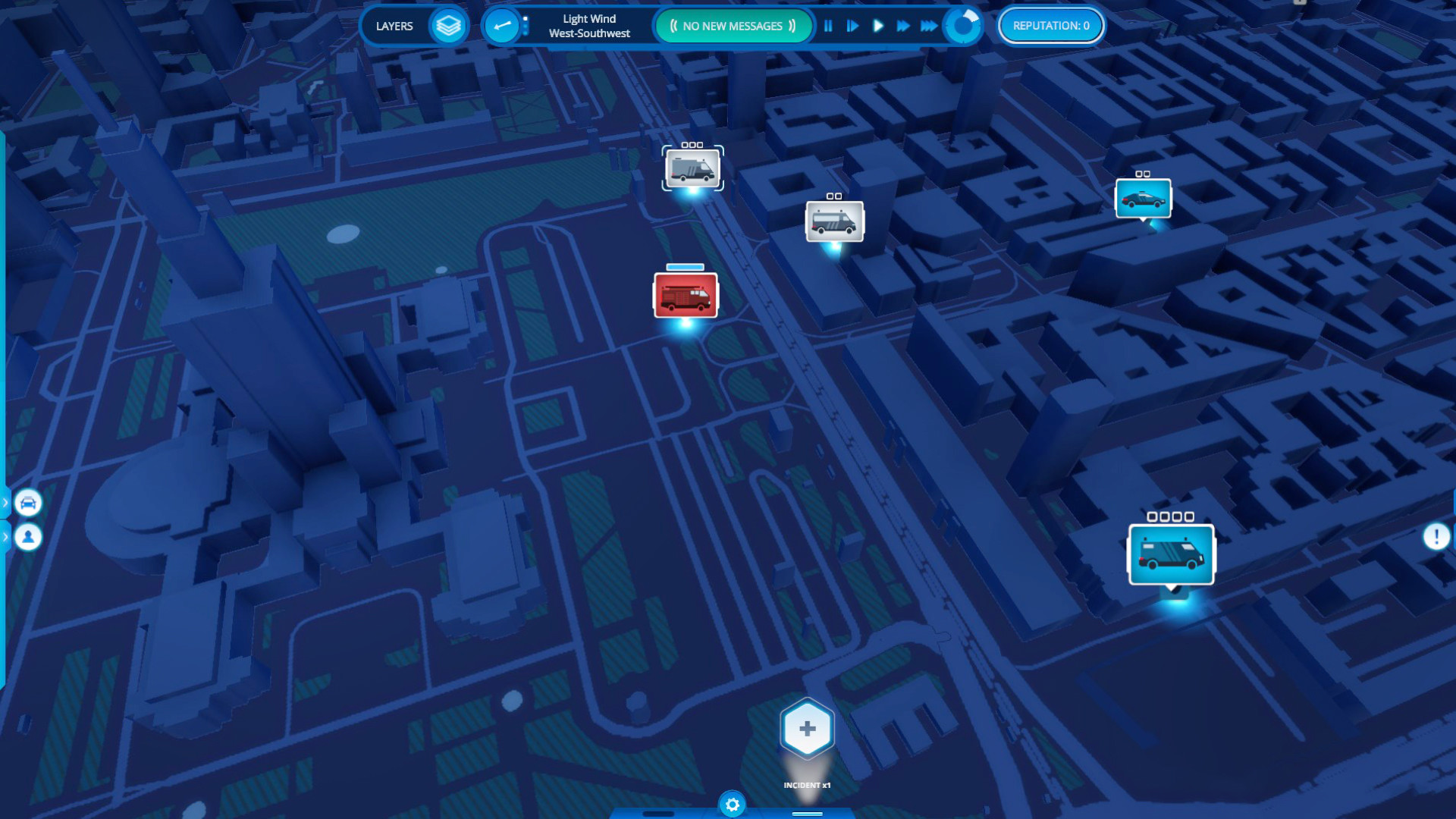
112 Operator turns real geographic information into an emergency-management problem.
You receive calls, dispatch police, firefighters and medical units, and react to incidents affected by traffic, terrain, weather, and changing conditions. Because the maps use real geographic data, familiar roads stop being scenery and become part of the strategy.
Suddenly that horrible intersection near your house matters because an ambulance has to cross it. The distant fire station becomes a resource-placement problem. Your knowledge of how the city fits together can actually help.
The original 911 Operator uses a similar concept and is also worth checking out, but 112 Operator expands the scale and simulation systems considerably.
3. NIMBY Rails – finally fix your hometown’s railway network
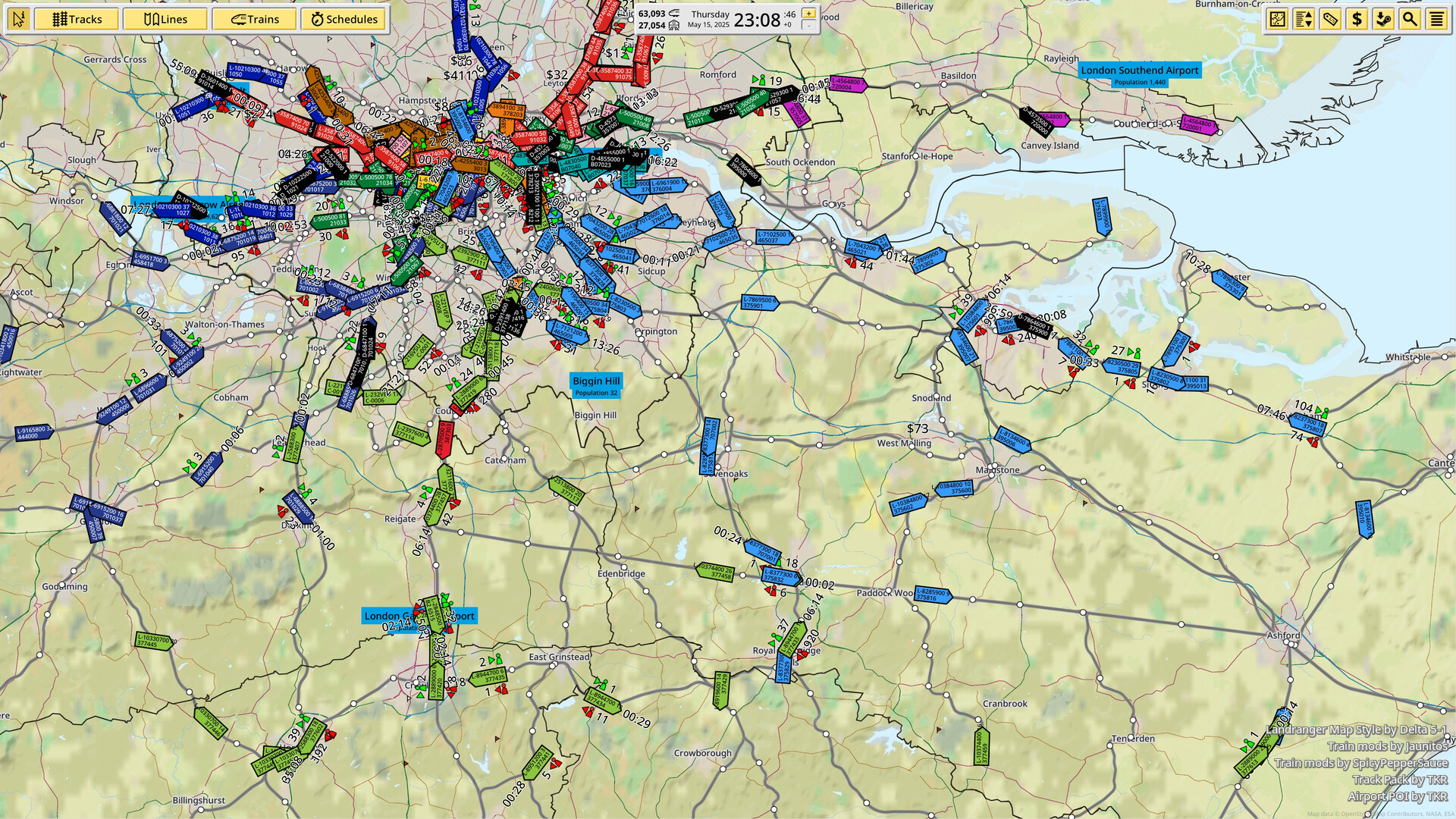
If you have ever looked at a transit map and muttered, “I could do better,” NIMBY Rails is prepared to call your bluff.
Its world map covers the entire Earth using processed OpenStreetMap data. You draw tracks over real geography, place stations, create lines, buy trains, build timetables, and try to serve simulated passengers.
You can recreate a real railway network or ignore reality entirely. Connect your suburb directly to the airport. Give a tiny village high-speed rail. Build the metro extension local politicians have been discussing since you were twelve.
Because actual roads and geography provide the background, it is especially fun when played somewhere you know well. Infrastructure arguments become a sandbox.
4. Hop.Earth – what if the whole road network were a driving game?
Hop.Earth takes the idea in a much more experimental direction.
It is a browser-based driving project that turns real road layouts and elevation information into a generated 3D world. Pick a location and you can start driving along roads based on the real network rather than a handcrafted racing map.
That means the obvious first experiment is finding your hometown, locating a road you recognize, and seeing what happens when geographic data gets translated into a game world.
It is still an evolving project rather than a giant polished driving simulator, but that is also what makes it interesting. There is something slightly magical about opening a browser, choosing almost anywhere on Earth, and treating the road network like an enormous improvised driving map.
5. Ingress – your neighborhood is part of a global territory war
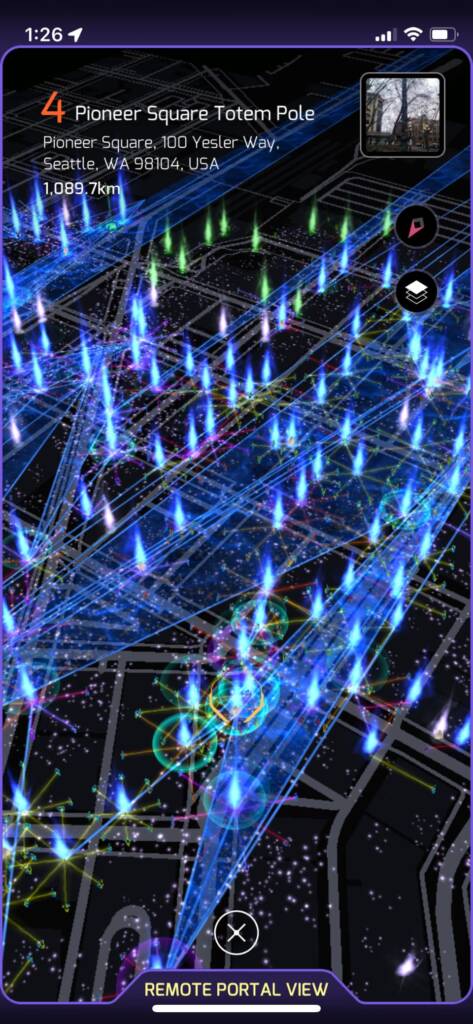
Ingress does not recreate your hometown on a screen. It makes you go outside and fight over it.
Players join the Enlightened or Resistance and compete for control of Portals located at real-world points of interest. Controlled Portals can be connected using Links, and groups of Links create Control Fields covering real territory.
That scale is what makes Ingress different from most location-based games. A statue down the street might be one objective in an operation spanning an entire city. Coordinated players can create networks covering huge areas.
Modern Ingress also has Machina, an autonomous red network capable of occupying Portals. Both player factions can fight it, which makes the game feel remarkably close to a worldwide location-based PvPvE strategy game.
Your hometown is not merely where you find content. The geography itself determines what can be linked, captured, defended, and surrounded.
6. Orna: The GPS RPG – put a fantasy RPG on top of your neighborhood
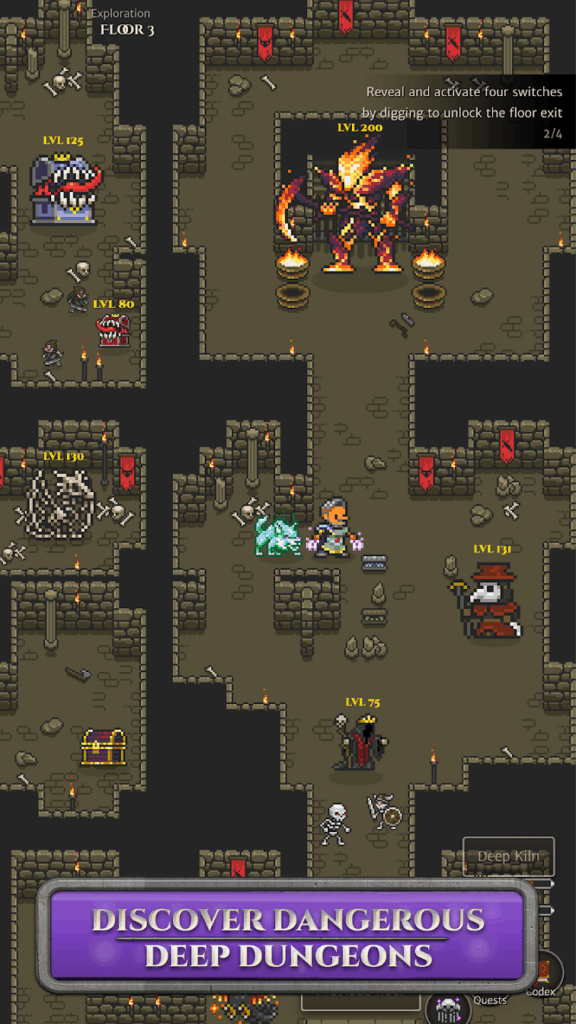
Orna asks a different question: what if your walk to the store also involved dragons, dungeons, equipment upgrades, and territorial disputes?
This mobile GPS RPG uses real-world geography while keeping the presentation deliberately old-school. You move through the real world to encounter monsters and dungeons, collect equipment, fight turn-based battles, compete in PvP, and claim landmarks.
It is less about faithfully simulating your street and more about putting an RPG layer over it. Your physical movement determines where the adventure goes next.
That makes Orna a nice middle ground between the map simulations on PC and something like Ingress. Geography matters, but instead of managing infrastructure or global factions, you are effectively walking around inside a giant location-aware fantasy RPG.
7. Microsoft Flight Simulator 2024 – because apparently the map can just be Earth

Then there is Microsoft Flight Simulator 2024, which takes this entire concept to an almost unreasonable scale.
Instead of converting one selected town into a map, Flight Simulator builds a digital Earth and lets you create a flight plan to virtually anywhere on the planet.
So yes, one of the first things many players will naturally want to do is find their house.
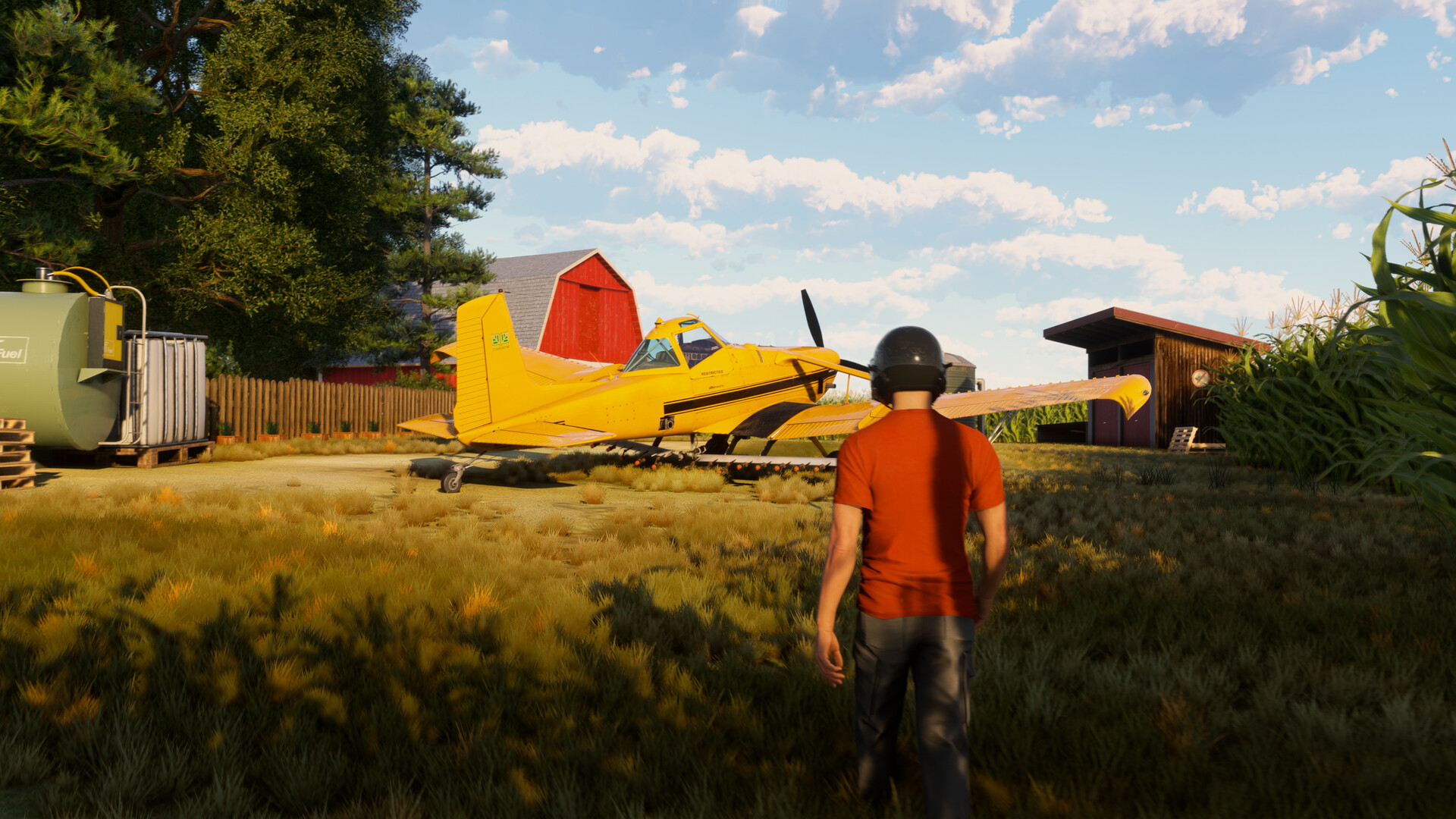
Your local airport, coastline, mountains, roads, towns, and surrounding terrain all become part of the flight. Depending on the quality and type of geographic data available for a region, individual buildings can range from highly detailed photogrammetry to more generalized representations, so do not expect every garden shed to be immortalized perfectly.
Still, few games can match the feeling of taking off, navigating by landmarks you recognize from real life, and flying over the place where you are physically sitting.
Microsoft Flight Simulator 2024 also supports Xbox Play Anywhere. A compatible digital Xbox purchase can be used across Xbox and Windows PC, with your Xbox ecosystem following you between them.
And yes, Pokémon GO counts

We can already hear the question: where is Pokémon GO?
It absolutely belongs in the conversation. Pokémon GO helped turn location-based gaming into a mainstream idea, using real-world exploration, PokéStops, Gyms, routes, and other points of interest. We are keeping it as an honorable mention because the actual shape and infrastructure of your hometown matter less to its underlying systems than they do in something like Infection Free Zone, NIMBY Rails, or Ingress.
A park in Pokémon GO might contain a Gym or PokéStop. In Ingress, the same park could become one corner of a Control Field stretching across half the city.
Both use the real world. They simply use it for very different kinds of game.
How do games turn the real world into a playable map?
These games broadly fall into three categories.
- Map-generated worlds: Infection Free Zone, 112 Operator, and NIMBY Rails translate geographic databases into strategy or simulation maps.
- GPS games: Ingress and Orna use your real physical position and nearby landmarks as part of the rules.
- Digital Earth simulations: Hop.Earth and Microsoft Flight Simulator combine multiple kinds of geographic information to create enormous explorable worlds.
OpenStreetMap quietly plays a major role in this. It provides open geographic information covering roads, buildings, railways, landmarks, and much more. Infection Free Zone directly uses its real-world data, while the NIMBY Rails world map is built from a processed OpenStreetMap dataset.
That is what makes this type of game possible without a development studio manually drawing every road in every town on the planet.
Play the world yourself – related games on G2A.COM
Several of the paid games in this list have Global key offers on G2A.COM. For Microsoft Flight Simulator 2024, there is also an Xbox Live offer covering both Xbox Series X|S and PC.
See if G2A Plus makes the trip cheaper
G2A Plus gives you bonus discounts on top of existing ones, Plus Points, monthly bonuses, and other benefits across eligible simulation, strategy, PC, and Xbox offers.
Games that use your hometown FAQ
What game lets you play a zombie apocalypse in your hometown?
Infection Free Zone lets you search for a real city or town and generate a survival map using OpenStreetMap data. Existing roads and buildings become part of your settlement.
What game lets you build railways anywhere in the world?
NIMBY Rails provides a map covering the entire Earth, allowing you to build railway lines and stations over real-world geography.
Can you drive around your hometown in a game?
Hop.Earth generates drivable roads from real geographic data directly in a browser. It is more experimental than a traditional driving simulator, but you can select real locations and explore their road layouts.
Is Ingress still based on real-world locations?
Yes. Ingress continues to revolve around real-world Portals, Links, Control Fields, the Enlightened and Resistance factions, and the autonomous Machina network.
Can you find your house in Microsoft Flight Simulator 2024?
You can fly to the real geographic location of your home. How closely the building itself resembles reality depends on the mapping, imagery, photogrammetry, and generated scenery available for that area.
Why is Pokémon GO not one of the main seven?
It still uses real-world exploration extensively. We separated it because this list focuses especially on games where the geography, road network, territory, or structure of a real location directly shapes the game systems.
Your hometown was the open world all along
There is something uniquely entertaining about recognizing a place you know inside a game. Suddenly, the boring road to work is a zombie escape route. Your local train station is part of a transport empire. A monument you have ignored for ten years becomes strategically important because somebody from the opposing Ingress faction owns it.
And when you run out of things to do locally, Microsoft Flight Simulator’s solution is fairly simple.
There is always the rest of Earth.