

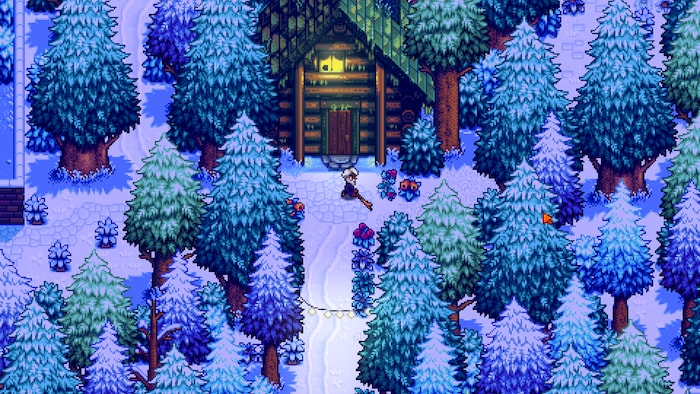
Haunted Chocolatier is not Stardew Valley 2, and Eric Barone does not seem interested in making it like a conventional sequel. He is building a more combat-focused RPG around chocolate making, exploration, relationships, and a haunted castle, while sticking surprisingly close to the slow, largely solo development process that produced Stardew Valley.
When Eric Barone released Stardew Valley in 2016, he was a lone developer with a farming game he’d spent years building himself. Ten years later, more than 50 million copies have been sold, and the game has become a reference point for almost every cozy farming sim that followed. That’s quite a reputation to live up to, especially when you’re trying to make something new.
Barone, better known as ConcernedApe, is now working on Haunted Chocolatier, and fans have been watching its development closely for years. Yet he seems in no hurry to change the way he works. Despite everything Stardew Valley achieved, he still prefers to build his games largely on his own, taking as much time as he needs to get them right.
- The second-game problem: Designing something new after genre-defining success
- From farming to fighting: Why an action RPG?
- Chocolate making as a design philosophy
- Coding from scratch: MonoGame and combat fundamentals
- The obsession with small details
- Still a one-man project: Why he chooses solitude
- What makes it a ConcernedApe game?
- Where Haunted Chocolatier stands now
The second-game problem: Designing something new after genre-defining success
Barone has compared making Haunted Chocolatier to facing a difficult second album, something that connects with his memories of playing in indie bands as a teenager. When he was working on Stardew Valley, hardly anyone knew who he was. He could spend months experimenting with an idea, throw it away, and start again without having to explain himself.
These days, even a small update about his new game gets picked apart by fans eager to know when they’ll finally get to play it. Barone has acknowledged that this attention makes the process harder. Stardew Valley was made without an established audience waiting for it. Haunted Chocolatier arrives with millions of people already wondering what his next game is supposed to be.
He could have made Stardew Valley 2, or built a large studio around the success of the first game. Instead, he wants to keep working much as he did when Stardew Valley began in a small Seattle apartment. He still enjoys figuring things out himself, whether he’s writing code, making art, composing music, or deciding what belongs in the game.
The difference is that millions of people are now paying attention.
From farming to fighting: Why an action RPG?
Haunted Chocolatier still has a town to explore and people to get to know, but Barone describes it as more of an action RPG than Stardew Valley. Adventuring, finding equipment, becoming stronger, fighting monsters, and taking on bosses are much closer to the center of the experience.
Anyone who spent more time swinging a sword in Stardew Valley’s mines than watering crops can probably see where the idea comes from. Barone has said the game is aimed partly at exactly those players.
He has loved 2D action RPGs since childhood and has wanted to make one himself for years. Haunted Chocolatier gives him much more room to focus on combat, equipment, exploration, and progression than Stardew Valley did.
That doesn’t mean the social side is disappearing. Barone still describes Haunted Chocolatier as a “town game.” Players will live somewhere new, meet people, pursue goals, and gradually build a life around them. The balance is simply shifting toward adventure.
Chocolate making as a design philosophy
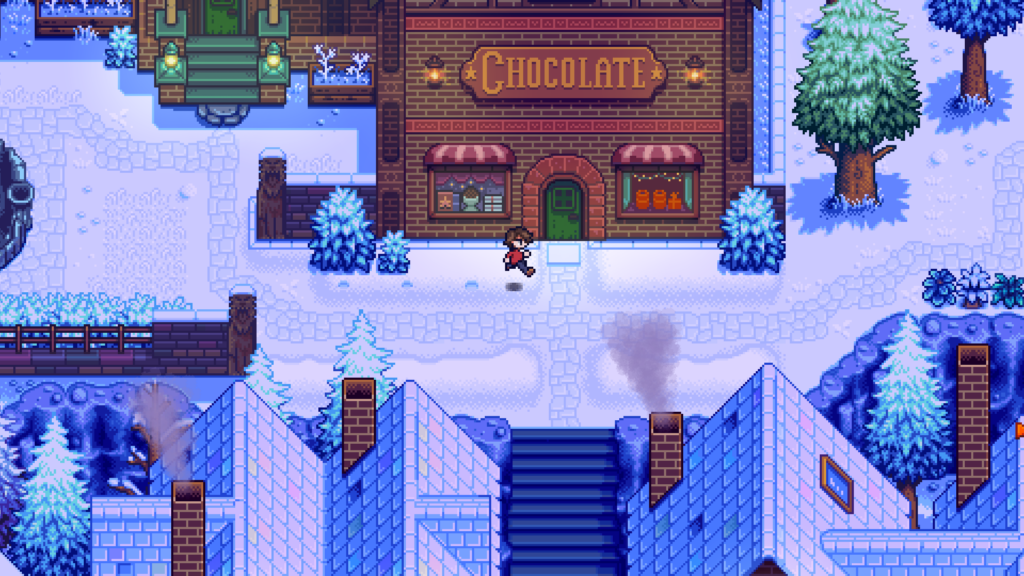
Much of Haunted Chocolatier revolves around gathering ingredients, making chocolate, and selling it from a shop inside a haunted castle. But Barone has spent a lot of time thinking about how that process should feel rather than simply building another crafting menu.
He taught himself programming, art, music, and game design while making Stardew Valley, and he still tends to trust intuition when creating something new. In 2025, he explained that he was interested in making chocolate production feel less like solving an engineering problem and more like experimenting, following curiosity, and accepting a little mystery.
That idea has limits, which Barone himself has acknowledged. A video game still runs on rules and numbers, so chocolate making cannot literally be intuitive in the way painting or composing music can be. The challenge is building a system that allows room for discovery without becoming vague or arbitrary.
Players will inevitably approach that system differently. Some will experiment until they discover combinations they like. Others will work out the underlying mechanics and chase whatever produces the most efficient result. Barone appears interested in leaving space for both without making one approach feel obviously wrong.
Coding from scratch: MonoGame and combat fundamentals
Barone is building Haunted Chocolatier in C# with MonoGame rather than simply carrying the Stardew Valley codebase forward. He has been explicit that the two games are technically separate projects, even if there are places where some code can be reused.
That distinction became important in 2026 when he pushed back against speculation that Haunted Chocolatier could somehow be folded into a future Stardew Valley update. His answer was straightforward: they are separate games built on different technical foundations.
Haunted Chocolatier also began much more simply than the finished concept suggests. Early development concentrated heavily on basic movement and combat, giving Barone room to experiment with how attacking, blocking, equipment, and encounters should feel before the rest of the world was built around them.
That is consistent with the way he tends to work. Instead of designing every system on paper and then implementing the plan, he experiments until individual pieces begin to feel right, then works out how they fit together.
The obsession with small details
Barone can spend a surprising amount of time working on something most players may barely think about. The chocolate recipe book is a good example.
In June 2026, he explained that he had returned to the interface repeatedly, changing how information is grouped and trying to reduce the number of clicks required to find what the player needs. Because the recipe book will be opened constantly, he wants it to feel effortless rather than merely functional.
That means balancing how much information appears at once, where it sits on the screen, and how easily players can understand it. Too much data becomes overwhelming. Too little makes the interface feel empty or trivial.
It might sound excessive for a single menu, but this is the sort of detail Barone tends to obsess over. If players are going to interact with something repeatedly for dozens of hours, he wants it to feel right every time.
That attention comes at a cost, of course. Every time he goes back to improve a menu, animation, or small interaction, it’s more time added to development. But it’s also how he worked on Stardew Valley, and he seems reluctant to rush through those details simply to get Haunted Chocolatier released sooner.
Still a one-man project: Why he chooses solitude
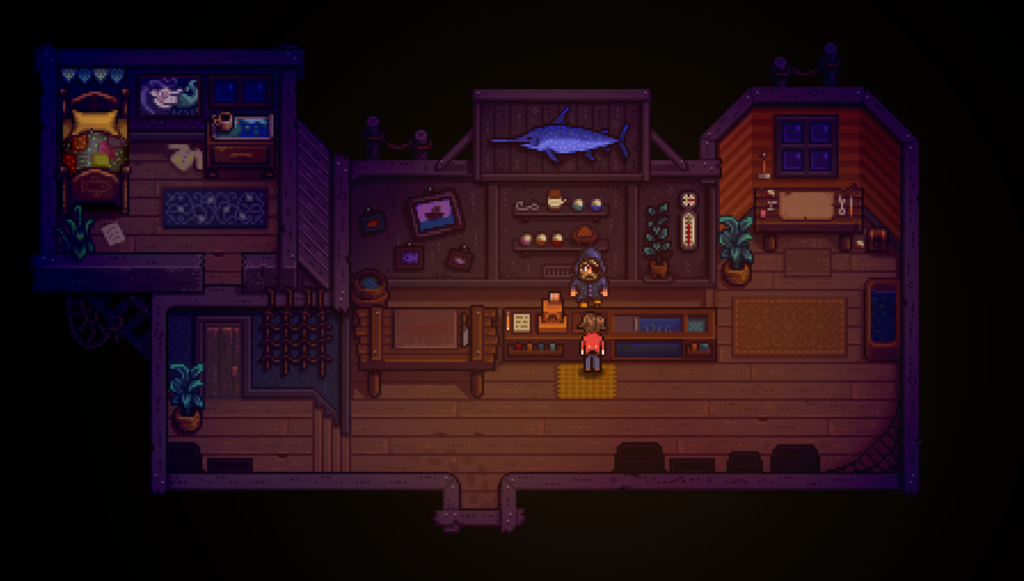
With the success of Stardew Valley behind him, Barone could easily build a much larger development team for Haunted Chocolatier. He has little interest in doing that.
He remains the game’s sole developer for now and has said he does not currently plan to bring anyone else into development. He expects he may eventually need help with areas such as console ports and localization, much as Stardew Valley relied on outside assistance for some non-creative work.
Barone has mentioned filmmaker David Lynch as one of his influences, and there is a similar attraction to keeping creative control concentrated in one person’s hands. He can change his mind about a character, rebuild a mechanic, rewrite music, or throw away months of work without having to convince an entire studio that the detour is worth it.
Of course, that also means every little problem eventually lands back on his desk.
He’s just as protective of unfinished versions of the game. Barone has said that nobody else is playing Haunted Chocolatier yet, including people close to him. He has compared showing an unfinished game to serving food before it has finished cooking. He would rather wait until the experience is ready than ask people to judge something he already expects to change.
What makes it a ConcernedApe game?
Haunted Chocolatier has more fighting and a different atmosphere, but there’s plenty that Stardew Valley players will recognize. You’ll still get to know the people living around you, work toward new goals, and explore a world full of things that are not necessarily tied to the main objective.
That broader structure is important to the way Barone builds games. Individual features do not always explain why the finished experience works. A conversation with a villager, a crafting screen, a shop, or a combat encounter might feel fairly ordinary in isolation. The character of the game appears when those pieces begin interacting.
That also helps explain why Haunted Chocolatier is taking so long. Barone can spend months building individual systems before knowing exactly how they will feel alongside everything else. He is willing to keep adjusting them until playing the game as a whole feels right to him.
Where Haunted Chocolatier stands now
Haunted Chocolatier remains in active development and still does not have a release date. Barone has repeatedly said that he does not want to commit to a window simply to satisfy expectations around the project.
His most recent major development check-in, published in August 2026, said that work had been particularly productive in recent months. He also made his priority clear: he would rather let development take longer than release something before he is satisfied with it.
That means the long wait is not necessarily evidence that the project is stalled. It reflects the same unusual development model that produced Stardew Valley, only this time the person working alone already has one of the biggest indie games ever made sitting behind him.
For players, that leaves only one difficult part: waiting until Barone decides the chocolate is finally ready to serve.
Waiting for Haunted Chocolatier?
Barone’s next game is not available yet, but Stardew Valley remains the obvious place to see how his approach to exploration, characters, progression, and carefully layered systems began.
Pay less, gain more with G2A Plus
G2A Plus Free lets you earn Plus Points on eligible purchases and use them toward future orders, while Plus Premium adds member discounts on eligible items, a monthly digital reward, and priority post-purchase support.