




One perfectly timed trailer can turn a game from something you barely knew existed into something you are suddenly thinking about every day. That is not an accident. The best game trailers are carefully constructed around a simple goal: show enough to create desire, but leave enough unanswered to keep that desire alive.
They do it through recognition, music, editing, selective gameplay, mystery, escalating reveals, and carefully chosen final moments. A reveal trailer may sell you an idea. A gameplay trailer has to prove that idea can actually become a game. A launch trailer has an entirely different job: converting years of anticipation into a reason to play now.
How game trailers grab our attention
The first job of a game trailer is not to explain the game. It is to stop you from looking away.
That usually means giving viewers something immediately recognisable, surprising, visually striking, or mysterious. Established franchises have an enormous advantage here because a location, character silhouette, voice, sound effect, or musical cue can communicate the identity of a game before its title appears.
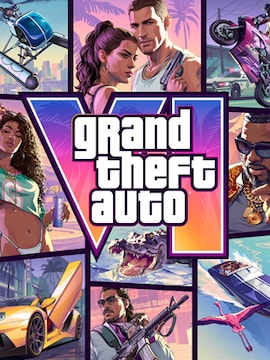
Rockstar’s first Grand Theft Auto VI trailer is a textbook example. It did not begin with an explanation of systems, mission design, or open-world mechanics. Instead, it established a place and a mood.
- Recognition: Vice City immediately connected the new game with one of the series’ most famous settings.
- Visual identity: Beaches, neon streets, wildlife, nightlife, crowds, cars, and social-media-style clips rapidly established Rockstar’s version of modern Florida.
- Character: Lucia gave the trailer a human centre without explaining her entire story.
- Questions: The trailer gave viewers enough information to speculate about the world and characters without explaining how everything fitted together.
That last point matters. A reveal works best when viewers leave knowing what they just saw while still having something they want answered.
The hook: Recognition gets attention. Mystery gives that attention somewhere to go next.
The GTA VI campaign also shows how trailer marketing evolves. Once viewers already knew Vice City and Lucia, Rockstar could use later videos to reveal substantially more about Jason, the pair’s relationship, Leonida, and the wider criminal story without simply repeating the first trailer’s job.
Trailer 2 moves closer to evidence than pure suggestion. Rockstar says the footage was captured entirely in-game from PlayStation 5, combining gameplay and cutscenes while giving viewers much more information about Jason, Lucia, and the world around them.
GTA VI shows what a launch trailer is supposed to do
Rockstar released the official Grand Theft Auto VI Launch Trailer on October 15, 2026, just over a month before the game’s November 19 release. By this stage, the campaign no longer needs to introduce Vice City from scratch. The trailer compresses years of anticipation into roughly 90 seconds of Jason and Lucia, robberies, cars, helicopters, escalating chaos, and a new track from GTA VI score composers Justice.
That makes it a useful counterpoint to Trailer 1. The reveal trailer sells possibility. The launch trailer assumes you already want the game and concentrates on making the release feel immediate.
We break down the new footage, Jason and Lucia’s role, the Vice City action, and the trailer’s new Justice track in our dedicated G2A News report.
How music and editing build excitement
A game trailer can make an ordinary gameplay action feel enormous simply by controlling when you see it and what you hear around it.
Most trailers do not maintain the same intensity from beginning to end. They build a rhythm. A quiet opening creates room for anticipation. Music begins to establish tone. Cuts accelerate. Action gets bigger. Then a sudden silence, beat drop, title card, or visual reveal creates contrast.
That contrast is important. If every second is loud, nothing feels particularly loud.
DOOM turns editing into part of the pitch
DOOM provides an unusually clear example. Bethesda’s 2015 E3 gameplay trailer cuts between weapons, demons, executions, movement, multiplayer, and environmental carnage at a pace that mirrors the game being advertised.
That editing does more than make the footage exciting. It communicates the intended fantasy. DOOM is fast, aggressive, violent, and constantly pushing the player forwards, so a slow, restrained marketing video would have sold the wrong experience.
Slow cuts: Give the viewer time to absorb atmosphere, characters, or scale.
Fast cuts: Create urgency and make action feel denser.
Music drops: Give important shots more impact.
Silence: Can make the moment immediately after it feel much bigger.
How trailers reveal gameplay without showing everything
Once a game has our attention, the next question is usually much less romantic: what do I actually do in it?
This is where gameplay trailers have a harder job than cinematic reveals. They need to demonstrate systems without becoming tutorials. Show too little and viewers may suspect there is not much game underneath the presentation. Show too much and the trailer can flatten discovery before players ever touch the controller.
The Legend of Zelda: Tears of the Kingdom handled that balance particularly well. Nintendo showed Link travelling through the sky, exploring new environments, building strange contraptions, and using new abilities, while leaving players to imagine how far those systems could actually go.
The trailers communicated possibility rather than providing an exhaustive mechanical explanation. That is often more powerful. Showing one improvised vehicle can encourage viewers to start imagining ten others.
A good gameplay trailer usually proves three things
- What the player does: Combat, exploration, building, driving, dialogue, stealth, or another core activity.
- What makes this game different: The mechanic or combination of mechanics that gives it an identity.
- What remains unexplored: Enough systems, locations, enemies, and story remain unseen that playing still promises discovery.
Why trailers save something for the end
Many game trailers are structured around escalation. The footage keeps giving you slightly more until it reaches the shot, character, logo, release date, or reveal the editor wants you to remember after the video ends.
You can think of this as the trailer’s stinger. Sometimes it comes after the title card. Sometimes it is the final shot before it. Either way, its position matters because it is one of the last things the viewer sees before deciding whether to rewatch the trailer, search for the game, or send the video to someone else.
Marvel’s Spider-Man 2 used reveals in stages
Marvel’s Spider-Man 2 is a better example of staged marketing than of one single surprise ending.
Its May 2023 gameplay reveal immediately showed Peter Parker wearing the Black Suit and demonstrated new symbiote abilities, while also showing Kraven’s Hunters, the Lizard, Miles Morales, Web Wings, and character switching. A later story trailer then pushed Venom and the symbiote threat much more directly into the marketing.
The story trailer brings the symbiote threat much closer to the centre of the campaign. That is how long marketing cycles maintain momentum: instead of revealing every selling point in the first video, publishers divide information across several beats so each new trailer still has something meaningful to contribute.
Different types of game trailers make different promises
Not every game trailer is supposed to answer the same questions. Understanding the format helps explain why comparing a cinematic reveal directly with raw gameplay can be misleading.
| Trailer type | Main job | What viewers should expect |
|---|---|---|
| Reveal trailer | Create awareness and curiosity | Concept, setting, characters, tone, limited detail |
| Gameplay trailer | Prove how the game plays | Mechanics, combat, traversal, exploration, systems |
| Story trailer | Build emotional investment | Characters, conflict, stakes, villains |
| Cinematic trailer | Sell the fantasy and tone | High-production imagery that may not represent direct gameplay |
| Launch trailer | Turn anticipation into action | Condensed highlights, reviews or accolades where applicable, release information |
Cyberpunk 2077 shows why the distinction matters
Cyberpunk 2077 used several different forms of marketing during its long pre-release campaign. Cinematic trailers sold Night City, characters, danger, and style. Its famous 48-minute 2018 gameplay walkthrough had a different job: showing quests, combat, dialogue, driving, exploration, and RPG systems in much greater detail.
This is exactly why an extended gameplay presentation should not be judged by the same criteria as a cinematic reveal. The Cyberpunk 2077 walkthrough used nearly 48 minutes to demonstrate the game rather than merely tease it, and the footage was presented as a work-in-progress look at the project.
That distinction matters whenever we judge promotional material years later. A polished cinematic can establish tone without promising that every frame represents player-controlled gameplay. An extended walkthrough makes much more concrete claims about what interacting with the game may actually feel like.
Check out Cyberpunk 2077 on G2A.COM
When game trailers create unrealistic expectations
The same techniques that make a game trailer exciting can also become dangerous when the presentation creates expectations the final product cannot match.
- Cinematic footage can be mistaken for gameplay.
- Highly controlled demonstrations can present ideal conditions rather than normal play.
- Visual targets can change during production.
- Mechanics can be redesigned or removed before launch.
- Editing can make a game appear faster, denser, or more varied than a typical session.
Watch Dogs became the cautionary example
Watch Dogs became one of the most famous examples after its visually spectacular E3 2012 demonstration was compared with the finished 2014 release.
The original demonstration created much of the early excitement around Ubisoft Montreal’s new IP by showcasing hacking, traffic manipulation, surveillance, gunplay, and an unusually atmospheric version of Chicago.
Later technical comparisons identified differences in lighting, atmospheric effects, depth of field, shadows, fog, and other visual features. The final game was still technically ambitious, but the comparison helped turn “downgrade” into one of the most persistent words attached to pre-release game marketing.
That does not mean every difference between a trailer and a finished game is deceptive. Games change during development, target hardware changes, performance constraints emerge, and features get redesigned. The useful question is whether promotional footage clearly communicates what viewers are looking at and whether later marketing corrects expectations as the project evolves.
Check out Watch Dogs on G2A.COM
Why great game trailers stay in our heads
The best game trailers do not simply contain impressive footage. They control information.
They know when recognition is more useful than explanation, when music should carry a sequence, when gameplay needs room to speak for itself, and when one unanswered question is more powerful than another minute of footage.
Reveal trailers sell possibility. Gameplay trailers turn possibility into evidence. Story trailers give us something to care about. Launch trailers compress the whole campaign into one final argument for why we should play.
That is why a great trailer can survive long after the game itself launches. You might already know every mechanic, character, and plot twist, but the right song hitting at exactly the right frame can still take you back to the moment when all you knew was that you desperately wanted to see more.
G2A Plus: Free members can earn Plus Points on eligible purchases, while Premium adds member pricing and additional benefits.