





The Guild 1 Remake: Europa 1410 entering Early Access in September 2026 gives newcomers an unusual choice. Do you start with the newest game, go back to the fan-favorite The Guild II: Renaissance, or choose the more modern presentation of The Guild 3?
All three revolve around the same basic fantasy: start with a profession, build wealth, raise a family, gain social influence, and turn one medieval citizen into a dynasty. The difference is how directly each game lets you live that life.
For most newcomers, The Guild II: Renaissance is still the best place to start. It is old and sometimes awkward, but it combines business management, direct character control, family life, crime, politics, and social climbing more completely than the other two. Europa 1410 is a better fit if you want a business-first strategy game, while The Guild 3 is easier to manage if older mechanics are a deal-breaker.
Quick answer: start with The Guild II: Renaissance if you want to understand why people still love this strange series. Pick Europa 1410 for economic strategy and politics from above, or The Guild 3 if you value newer graphics and easier large-scale management.
Comparison basis: current features, Early Access status, player reception, management style, direct character control, and the current 2026 state of each game.
Checked: October 14, 2026
The three Guild games compared
| Game | Best for | Biggest strength | Main drawback | Current status |
|---|---|---|---|---|
| The Guild II: Renaissance | Most newcomers | Business, family, crime, and politics all feel personal | Old interface, bugs, and micromanagement | Finished, with new beta development in 2026 |
| The Guild 1 Remake: Europa 1410 | Business-first strategy fans | Economic and political dynasty management | Still early in development | Early Access |
| The Guild 3 | Players who want a newer presentation | Easier automation and large-dynasty management | Less of the hands-on chaos of The Guild 2 | Fully released |
Is The Guild 1 Remake: Europa 1410 worth starting with?
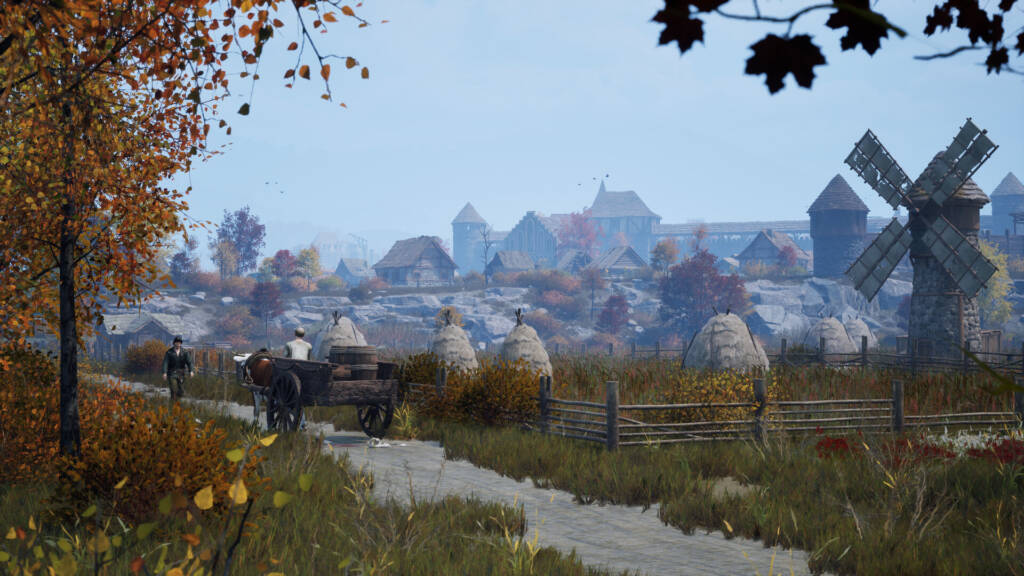
The Guild 1 Remake: Europa 1410 entered Early Access on September 17, 2026. Ashborne Games is aiming for version 1.0 in summer 2027, although the studio says the schedule ultimately depends on feedback during development.
The important thing to understand is that Europa 1410 is not trying to modernize The Guild 2. It deliberately returns to the structure of the 2002 original, Europa 1400: The Guild.
Business comes before direct character control
At the start of Early Access, Europa 1410 includes six cities and eight professions: Smith, Tailor, Joiner, Stonemason, Priest, Innkeeper, Alchemist, and Perfumer.
You build workshops, hire workers, manage production, trade goods, court a partner, produce heirs, climb the social hierarchy, and use friendship, bribery, or blackmail to gain political influence.
What you do not get is the same level of direct avatar control that defines The Guild 2. Europa 1410 uses a bird’s-eye management perspective, making it feel more like a medieval tycoon game about a dynasty than a life sim where you personally walk a character through town.
Early Access is the biggest reason to wait
The current game already contains the main economic, family, and political loop, but Ashborne Games plans to add more professions, maps, visual character interactions, deeper systems, and multiplayer for up to 12 players during Early Access.
Steam currently rates the game Mostly Positive, but many systems are explicitly still in development. That makes Europa 1410 interesting for players who want to follow the remake as it grows, rather than the safest introduction to the series today.
Best reason to start here: you prefer economic management, production, and political strategy to directly controlling individual family members.
There is also a free Steam demo, which makes this the easiest entry to test before deciding whether its menu-driven structure works for you.
Try the Europa 1410 demo on Steam
Is The Guild II: Renaissance still worth playing?
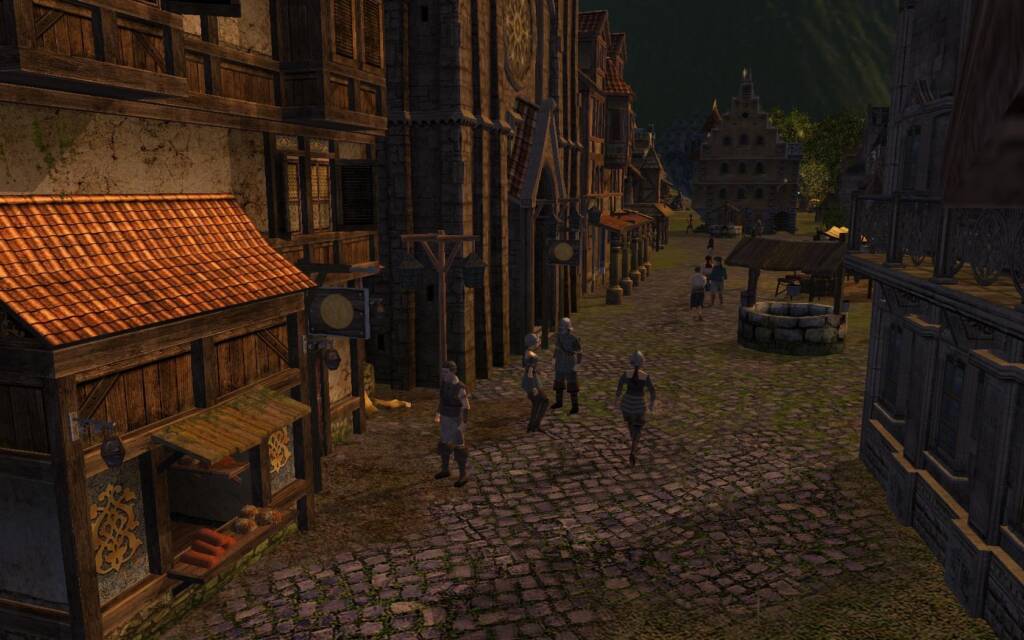
The Guild II: Renaissance released in 2010 as a standalone expansion and remains the easiest recommendation for players who want to experience the series at its most chaotic and personal.
Renaissance added eight professions of its own, including Mercenary, Grave Digger, Stonemason, Juggler, Innkeeper, Banker, Miller, and Fruit Grower, alongside new scenarios and expanded systems.
It gives you more control over your medieval life
The big advantage over Europa 1410 is direct character control. Your dynasty members physically move around the world, and business, romance, politics, crime, and family management happen through people who occupy the same towns as their rivals.
That creates stories other Guild games struggle to reproduce. A commercial rivalry can turn political. Political trouble can end up in court. A family problem can derail a business plan. An apparently sensible decision can create a completely different problem a few minutes later.
Its age is still the price of admission
The interface is old, managing multiple businesses can become tedious, and the game has never been famous for flawless pathfinding or technical polish.
The unexpected good news is that development has resumed. The 2026 Patch 4.6 beta added Steam Workshop support, Steam multiplayer, a large achievement system, new modding tools, and further technical improvements, with additional fixes continuing afterward.
Those updates do not make Renaissance feel new, but they do make starting it in 2026 less strange than its age suggests.
Best reason to start here: this is still the strongest entry if you want business ownership, family life, politics, crime, and direct character control to overlap in one unpredictable medieval sandbox.
Grab The Guild II: Renaissance on G2A.COM
Should you start with The Guild 3?
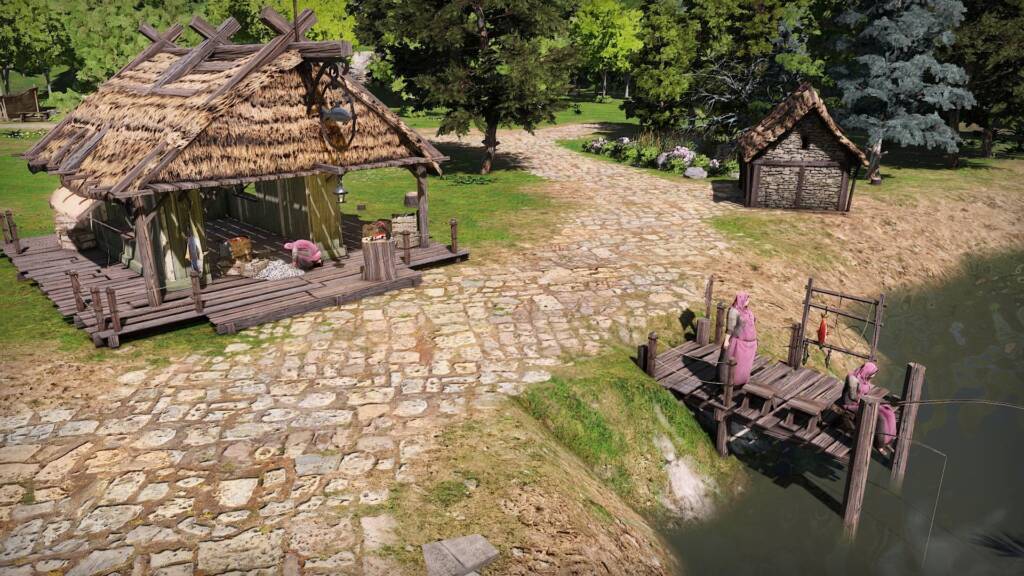
The Guild 3 left Early Access in June 2022 and offers the most immediately modern presentation of the finished games. It includes 13 scenario maps based on historical locations in Central and Northern Europe, changing seasons, day-and-night cycles, multiplayer, businesses, politics, romance, guild membership, and family dynasties.
Automation makes larger dynasties easier to manage
The biggest practical advantage is convenience. As your commercial empire expands, workers can handle more production and transport without requiring the same level of constant intervention that The Guild 2 demands.
That makes The Guild 3 easier to manage over long campaigns, particularly once your family controls multiple businesses.
The trade-off is personality. Some of the annoying micromanagement in The Guild 2 is also responsible for its unpredictable stories. Remove enough friction and the dynasty becomes easier to operate, but individual workshops and family members can start feeling less important.
Its reception remains divided
The Guild 3 currently has Mixed English-language Steam reviews, considerably weaker than The Guild II: Renaissance. That does not make it a bad entry point, especially for somebody who cannot tolerate a 2010 interface, but it makes it harder to recommend as the default starting point.
Best reason to start here: you want the Guild formula in a newer-looking package and would rather automate routine management than personally supervise every workshop.
Check out The Guild 3 on G2A.COM
Which The Guild game should you play?
| If you want… | Start with | Why |
|---|---|---|
| The best introduction to what makes the series unusual | The Guild II: Renaissance | It combines direct control, business, family, politics, crime, and rivalry |
| A medieval economic and political tycoon game | Europa 1410 | It deliberately follows the business-first design of the original game |
| Newer graphics and less micromanagement | The Guild 3 | Automation makes a large dynasty easier to manage |
| To try the series without buying anything first | Europa 1410 demo | The current Steam demo lets you test its management style first |
For most newcomers, The Guild II: Renaissance remains the strongest first step. Its awkwardness is part of the deal, but it also explains why the game continues to have such a loyal following. It gives you the clearest sense of what separates The Guild from a conventional economy or city-building game.
Europa 1410 is more specialized. If workshops, production, social classes, and political maneuvering matter more to you than directly controlling individual characters, it may eventually become your preferred entry. For now, the Early Access label makes the free demo the sensible first stop.
The Guild 3 sits between them. It is easier to approach visually and easier to manage at scale, but players specifically looking for the messy personal stories associated with the series may still find themselves preferring Renaissance.
The Guild games on G2A.COM
| Game | Best for | G2A.COM |
|---|---|---|
| The Guild II: Renaissance | Best starting point overall | Check offer |
| The Guild 3 | More streamlined modern option | Check offer |
G2A Plus: earn Plus Points when shopping. Premium members can also get up to 10% off eligible items, exclusive discount codes, a monthly digital reward, and priority support.
Related G2A News reading
For a deeper look at the newest game, read our The Guild 1 Remake: Europa 1410 spotlight.
For more games built around ordinary life rather than heroic fantasy, see Games Where You Can Be a Medieval Peasant (and Survive).
You can also explore the wider genre in our best medieval simulation games roundup.