


5 Visual Novels That Became Great Anime
Visual novels and anime have always been unusually close neighbors. Both rely heavily on character-driven storytelling, long-form plotting, dramatic reveals, and the willingness to spend a suspicious amount of time talking before everything suddenly goes horribly wrong.
Some adaptations simply compress their source material. Others become major anime in their own right. These five are among the best-known examples, covering time travel, Holy Grail Wars, murder games, rural horror, and enough emotional damage to make Clannad feel right at home.
Streaming availability below reflects current listings and can vary by region.
Table of Contents
Steins;Gate
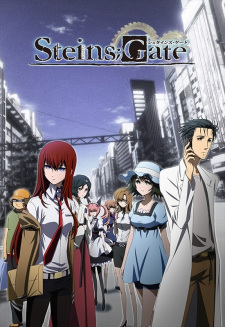
The Steins;Gate anime takes one of gaming’s most celebrated time-travel stories and turns it into a 24-episode descent from eccentric Akihabara comedy into increasingly painful science-fiction drama. Rintaro Okabe and the Future Gadget Lab accidentally discover a way to send messages into the past, only to learn that even tiny changes can push reality onto very different worldlines.
What makes the adaptation work is the shift in tone. Okabe’s theatrical mad-scientist routine initially makes the cast feel like a group of lovable weirdos messing around with technology they barely understand. Once the consequences begin arriving, those same relationships give the thriller its weight. It is also one of the easiest examples to recommend to someone who has never touched the original visual novel.
There is another reason to revisit it now. STEINS;GATE RE:BOOT is rebuilding the original visual novel with redrawn characters and backgrounds, newly recorded Japanese voices, additional dialogue, a new Gamma Worldline route, and an extra ending.It’s launching October 29, 2026 on consoles and August 19 on PC.
Fate/stay night
Fate/stay night has been adapted more than once, because the original visual novel itself is divided into major story routes. For a modern TV adaptation, Fate/stay night [Unlimited Blade Works] is an easy point of reference. It follows Shirou Emiya and Rin Tohsaka through the Fifth Holy Grail War, where seven Masters summon legendary Servants and fight for a wish-granting prize.
The anime has everything that helped turn Fate into a much larger franchise: elaborate magical rules, heroic spirits drawn from mythology and history, ideological arguments delivered between sword fights, and enough branching source material to keep watch-order discussions alive indefinitely. Unlimited Blade Works focuses especially strongly on Shirou’s ideals and the uncomfortable question of what becoming a “hero of justice” actually costs.
Danganronpa

Danganronpa: The Animation adapts the first game, Danganronpa: Trigger Happy Havoc, and wastes very little time explaining what kind of school Hope’s Peak Academy has become. Makoto Naegi and fourteen other students are trapped inside by Monokuma, who offers them one route to graduation: murder another student and survive the class trial that follows.
The television version necessarily moves faster than the visual novel, particularly when condensing investigations and trials, but the core structure remains intact. Every case begins with increasingly bizarre school life, turns into murder, and ends in a courtroom battle where accusations, evidence, lies, and Monokuma’s enthusiasm for elaborate executions all collide.
Higurashi no Naku Koro ni
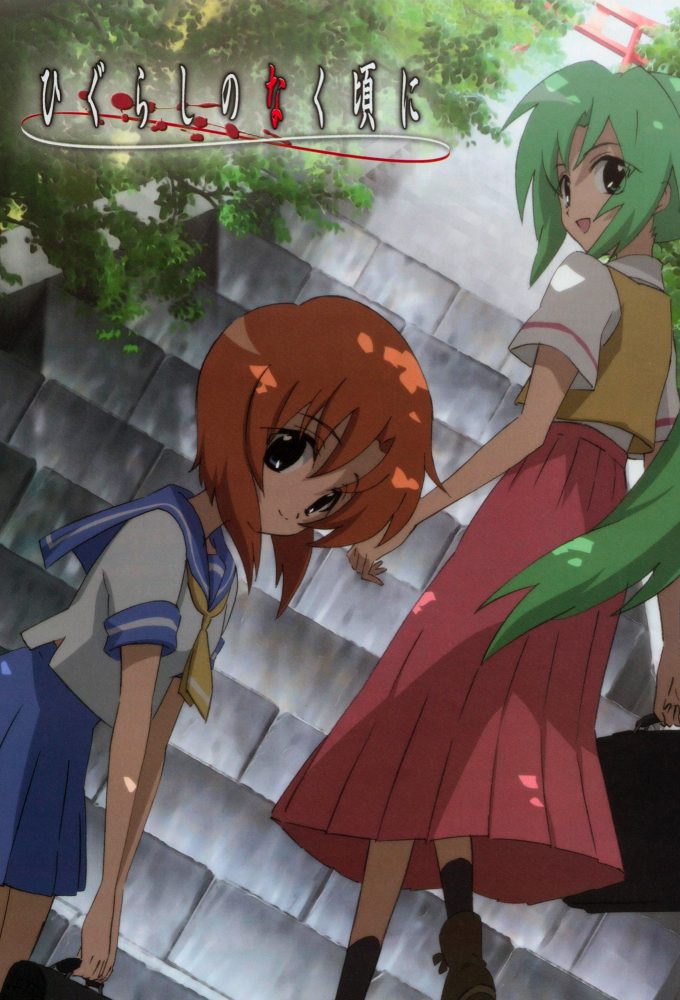
At first glance, Higurashi no Naku Koro ni, also known as Higurashi: When They Cry, looks like a story about Keiichi Maebara enjoying country life with his new friends in Hinamizawa. Then the village festival approaches, somebody mentions an uncomfortable pattern of murders and disappearances, and everything starts coming apart. The 2006 Studio Deen series adapts Ryukishi07’s visual novel through repeating story arcs that initially seem to contradict one another.
That structure is the entire appeal. Higurashi gives you pieces of the mystery rather than a straightforward timeline, making each new arc a chance to reconsider what you thought you understood about the characters and Hinamizawa itself. Violence gets much of the attention, but paranoia, unreliable assumptions, friendship, and the slow accumulation of clues are what make the story stick.
Clannad

Clannad begins on a much smaller scale than the other games on this list. Tomoya Okazaki is a disillusioned high school student drifting through his days until he meets Nagisa Furukawa and gradually becomes involved with her attempt to revive the school’s drama club. From there, the adaptation moves through relationships and character stories originally presented as separate routes in Key’s visual novel.
The first season can be funny, sentimental, and occasionally supernatural, but its reputation is inseparable from the way those relationships develop over time. Together with Clannad: After Story, the anime expands beyond the usual high-school-romance finish line and follows its characters into adulthood, family life, responsibility, grief, and some absolutely brutal emotional turns.
From visual novel to television screen
These adaptations show why visual novels translate so naturally into anime even when compromises are unavoidable. Steins;Gate turns branching timelines into a focused science-fiction thriller. Fate/stay night uses individual routes as the foundation for entirely different adaptations. Danganronpa condenses investigation and courtroom gameplay into a murder mystery. Higurashi preserves the looping structure of its horror story, while Clannad brings multiple character routes together into a much longer emotional journey.
And the relationship between visual novels and anime is still very much alive. With STEINS;GATE RE:BOOT returning to Akihabara with completely renewed presentation and new story content, this is a particularly good time to revisit where the anime phenomenon started. You can read our full STEINS;GATE RE:BOOT release date, editions & gameplay guide for more on the new version.

Crunchyroll Premium | Mega Fan 12 Months - Crunchyroll Account - GLOBAL
Release Date: January 1, 1970
Genres: