


Big-budget gaming is starting to resemble Hollywood for a simple reason: when individual projects become enormously expensive, familiar intellectual property becomes easier to defend than an unproven idea. Sequels, reboots, licensed worlds, and long-running franchises begin with something a new IP does not have: an audience that already recognizes the name.
That does not make licensed games safe bets. A famous franchise can reduce the challenge of getting noticed, but it can also encourage bigger budgets, higher expectations, licensing costs, and assumptions that brand recognition will compensate for weaknesses in the game itself. Hogwarts Legacy and Suicide Squad: Kill the Justice League show both sides of that equation remarkably well.
The big takeaway: A familiar license can make a game easier to pitch, market, and notice. It cannot make players like the game, and the confidence created by a famous brand can become dangerous when it helps justify an enormous budget.
- The Hollywood model has reached gaming
- Why familiar IP is easier to sell
- Hogwarts Legacy shows the upside
- Licensed games do not need to come from movies
- Suicide Squad shows where the shield stops working
- The budget can turn the shield into a trap
- Games and television now feed each other
- Licensed games to check on G2A.COM
- A license reduces uncertainty, not risk itself
The Hollywood model has reached gaming







AAA games can spend years in production while tying hundreds of developers, large marketing campaigns, and substantial capital to a single launch. That changes what looks attractive when a publisher decides what to fund.
A sequel already has players who know the previous game. A remake brings back a recognizable title. A licensed game can arrive with characters, rules, imagery, and a fictional universe that millions of people understand before its first gameplay trailer appears.
That logic is familiar from Hollywood, where studios repeatedly return to franchises, recognizable characters, adaptations, and sequels while trying to spread enormous production and marketing costs across brands with existing demand.
The crossover now moves in both directions. Film and television studios are increasingly looking toward games for adaptable IP, while game publishers continue building around licenses originating in books, comics, tabletop games, anime, sports, film, television, and other entertainment. Luminate’s Playing to Win research examines exactly this increasingly interconnected franchise strategy.
Why familiar IP is easier to sell
Attention is one of the first problems every new game has to solve. A completely original release has to introduce its name, world, characters, and basic appeal at once. An established license can skip part of that process.
Put Star Wars, Harry Potter, Marvel, Dragon Ball, or another major property into a reveal and a portion of the audience immediately understands the context. Players may already care about the setting or characters before they know what genre the game belongs to.
Modern licensed games also have far more room than the old movie tie-in model. They do not necessarily need to retell a film’s plot or arrive beside a theatrical release. Developers can use an existing universe as the foundation for a large RPG, fighting game, strategy game, or original story that stands on its own.
Hogwarts Legacy shows the upside
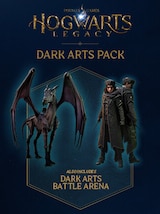
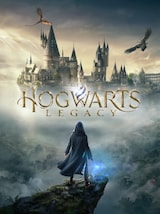
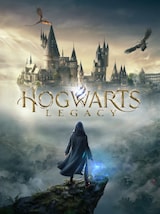
Hogwarts Legacy is one of the clearest examples of what a huge fictional world can offer a game.
It became the best-selling game of 2023 in the United States by dollar sales, breaking a run in which Call of Duty titles or Rockstar releases had taken the annual top spot in almost every year since 2009. The important part was not simply that Harry Potter was famous. The game offered players something the films could not: the ability to attend Hogwarts, explore it, build a character, learn spells, and inhabit the Wizarding World directly.
Its release was especially interesting because the wider Wizarding World was not experiencing uniform success across every medium. The Fantastic Beasts film series had lost momentum, yet Hogwarts Legacy showed that demand for the setting itself was still enormous when audiences were offered a different way to engage with it.
For Warner Bros., that distinction matters. A franchise is not one indivisible commercial object. The same fictional universe can struggle in one format while finding a much stronger expression in another.
Licensed games do not need to come from movies
The strongest gaming licenses also come from far beyond Hollywood.
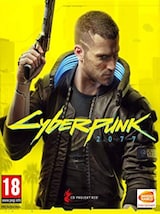
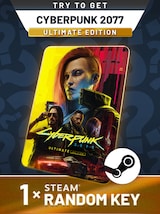
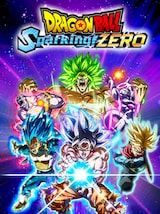
mindGAME Data’s MindSHARE measure, which combines demand and interest signals including search, Steam, social, and viewing activity, ranked Cyberpunk 2077 as the biggest licensed-IP game launch between January 2019 and March 2025 at 2.1%. Hogwarts Legacy followed at 1.9%. FIFA titles, Baldur’s Gate 3, Dragon Ball: Sparking! ZERO, Kingdom Hearts III, and S.T.A.L.K.E.R. 2 also appeared among the leading releases.
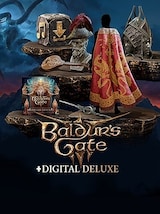
Those licenses represent completely different ecosystems. Cyberpunk began as a tabletop RPG. Baldur’s Gate uses Dungeons & Dragons. Dragon Ball comes from manga and anime. EA’s long-running football games have depended on clubs, competitions, players, and sports licensing.
The commercial principle is the same: a publisher is not beginning the conversation at zero. Some part of the audience already understands why that world matters.
Suicide Squad shows where the shield stops working
Brand awareness only solves the awareness problem. Suicide Squad: Kill the Justice League is the obvious counterexample.
Rocksteady had DC characters, the Batman: Arkham connection, cooperative play, recognizable heroes and villains, and Warner Bros. marketing behind it. Those ingredients generated attention. They did not produce the commercial result Warner Bros. wanted.
The comparison with Hogwarts Legacy is useful precisely because both sat inside Warner Bros. Games. One showed how effectively a familiar universe can combine with the right player fantasy. The other showed that recognition does not automatically create demand for a particular design, structure, or business model.
Warner Bros. later went through a much broader gaming restructuring, including the cancellation of Wonder Woman and the closure of Monolith Productions, Player First Games, and WB Games San Diego. Those decisions should not be reduced to a single failed game, but the company’s response is revealing: it said it wanted to concentrate more heavily on major properties including Harry Potter, Mortal Kombat, DC, and Game of Thrones.
The budget can turn the shield into a trap
This is where the apparent safety of a famous license becomes complicated.
A known franchise can make an ambitious project easier to justify because the potential audience looks larger. But that confidence can support a larger production, a larger marketing campaign, and higher commercial expectations. The project then needs a correspondingly bigger result.
Licensing itself can also come with obligations and costs. A publisher using somebody else’s property is not simply receiving free awareness. It is operating inside somebody else’s brand, often with approvals, restrictions, royalties, or other contractual commitments.
That creates the same paradox visible in blockbuster film production. The recognizable property is selected partly because it appears less uncertain, but its perceived safety can encourage the project to become so expensive that anything short of an enormous hit looks disappointing.
Games and television now feed each other
The Hollywood comparison becomes even more literal when a successful screen adaptation sends attention back toward the games.
Fallout is one of the strongest examples. Amazon’s series did not simply reconstruct the story of Fallout 3, Fallout 4, or New Vegas. It introduced its own characters and plot inside the existing universe, making the show approachable for viewers while preserving a connection to decades of game lore.
Luminate measured 6.6 billion U.S. viewing minutes for Fallout during the first half of 2024, placing it among Prime Video’s largest original series of that period. The franchise has continued to move between television and games since then rather than treating adaptation as a one-way trip.
That model is increasingly attractive because a successful franchise no longer needs to live inside one medium. Games can support television. Television can reactivate interest in games. A tabletop property can become an RPG, which creates another audience for the original game. Anime can feed a fighting game, and a major game can later become film or television IP itself.
Licensed games to check on G2A.COM
The games discussed here also show just how broad modern licensed gaming has become, from novels and tabletop RPGs to comics, anime, and global sports brands.
| Game | Where the IP comes from | G2A.COM |
|---|---|---|
| Hogwarts Legacy | Harry Potter / Wizarding World | Check out Hogwarts Legacy on G2A.COM |
| Cyberpunk 2077 | Cyberpunk tabletop RPG | Check out Cyberpunk 2077 on G2A.COM |
| Baldur’s Gate 3 | Dungeons & Dragons | Check out Baldur’s Gate 3 on G2A.COM |
| Dragon Ball: Sparking! ZERO | Dragon Ball manga and anime | Check out Dragon Ball: Sparking! ZERO on G2A.COM |
| Suicide Squad: Kill the Justice League | DC Comics | Check out Suicide Squad on G2A.COM |
Want more from your G2A.COM purchases? G2A Plus lets members earn Plus Points, while Premium includes better member prices, regular bonuses and rewards, and premium post-purchase assistance.
A license reduces uncertainty, not risk itself
The attraction of licensed IP is easy to understand. An established franchise gives publishers recognition, an existing audience, a clearer marketing story, and a fictional world that does not need to be introduced from scratch.
But those advantages are front-loaded. They help get a project funded, noticed, discussed, and understood. They do not decide what happens when somebody actually starts playing.
Hogwarts Legacy showed how powerful a familiar universe can become when the game offers a fantasy its audience genuinely wants to inhabit. Suicide Squad: Kill the Justice League showed the opposite side: even globally recognizable characters cannot guarantee that players will want the particular game built around them.
That is why gaming increasingly looks like Hollywood. The biggest companies are not necessarily betting on franchises because franchises cannot fail. They are betting on them because, when every bet gets bigger, familiarity can make uncertainty easier to justify.