






Gears of War: E-Day is taking the series back to where its most important war began. That also makes it a surprisingly convenient entry point for anyone who has looked at the franchise’s twenty-year history and wondered where on Sera they are supposed to start.
The good news is that you do not have to play seven games before touching E-Day.
Quite the opposite.
E-Day is an origin story set fourteen years before the original Gears of War, with a younger Marcus Fenix and Dominic Santiago experiencing the first Locust invasion. Chronologically, it sits at the beginning of the playable saga.
But the Gears timeline gets slightly more complicated once Judgment, Gears Tactics, remasters, DLC campaigns and the later JD Fenix/Kait Diaz era enter the picture.
So let’s put everything in order.
CHRONOLOGICAL ORDER
E-DAY STARTING POINT
OPTIONAL DLC EXPLAINED
TL;DR – Gears of War Chronological Order
- Gears of War: E-Day
- Gears of War: Judgment – main campaign only
- Gears Tactics
- RAAM’s Shadow – optional Gears of War 3 DLC
- Gears of War / Ultimate Edition / Reloaded – three versions of the same story
- Gears of War 2
- Gears of War 3
- Judgment: Aftermath – optional campaign taking place during the Gears 3 era
- Gears of War 4
- Gears 5
- Hivebusters – optional Gears 5 campaign expansion
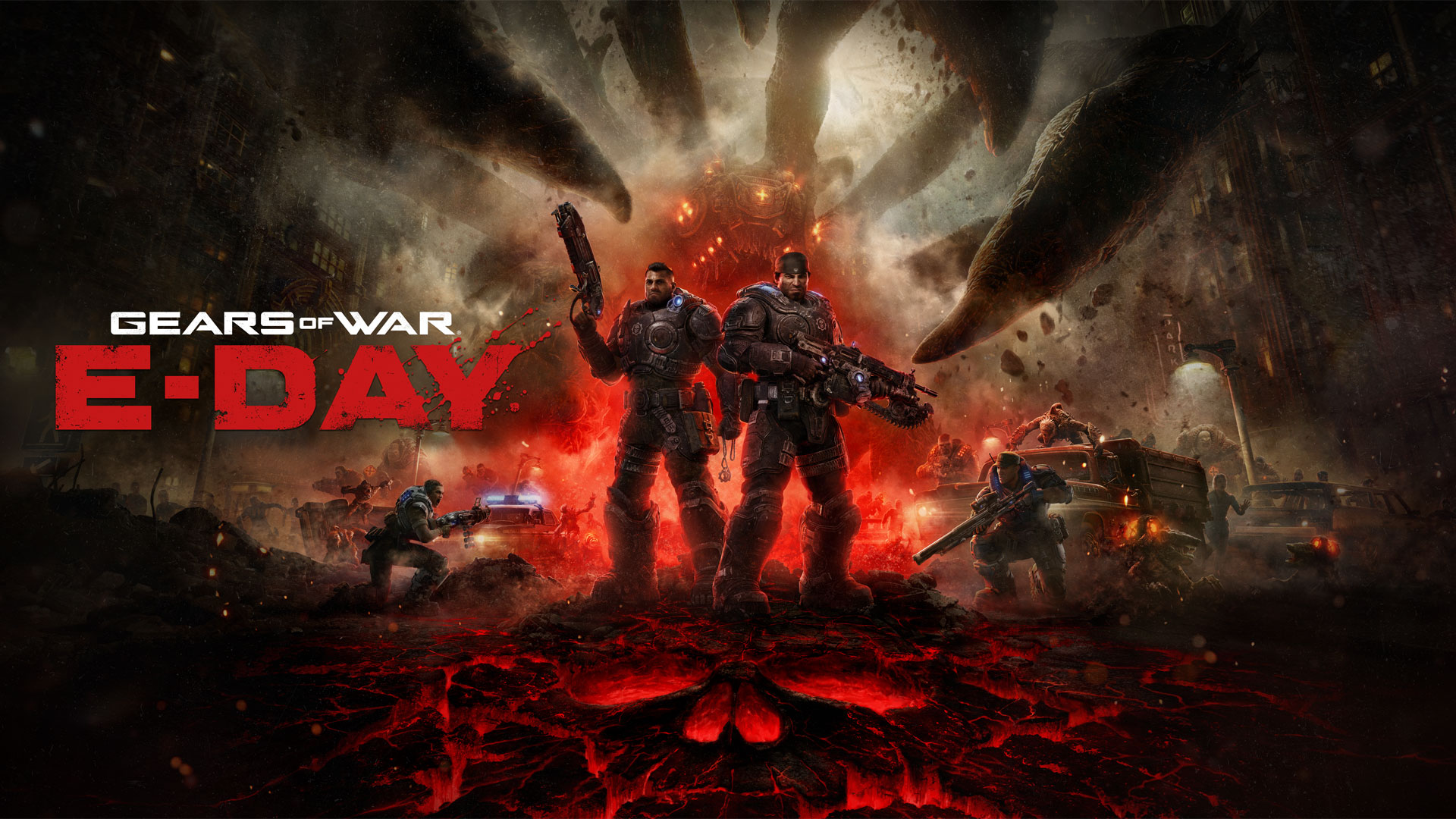
How Many Gears of War Games Are There?
If we count unique, story-driven standalone games, there will be eight once E-Day launches:
- Gears of War: E-Day
- Gears of War: Judgment
- Gears Tactics
- Gears of War
- Gears of War 2
- Gears of War 3
- Gears of War 4
- Gears 5
That count deliberately does not treat Gears of War: Ultimate Edition or Gears of War: Reloaded as separate stories.
Both are updated versions of the original 2006 Gears of War campaign.
You only need to play one of them.
There are also campaign expansions including RAAM’s Shadow and Hivebusters, plus Judgment’s bonus Aftermath campaign.
We’ll place those correctly in the timeline below.
The discontinued mobile spin-off Gears Pop! is not necessary for following the main story.
Gears of War Timeline at a Glance
| Game | Place in Timeline | Main Character(s) |
|---|---|---|
| Gears of War: E-Day | Emergence Day | Marcus Fenix, Dom Santiago |
| Gears of War: Judgment | Immediate aftermath of E-Day | Damon Baird, Kilo Squad |
| Gears Tactics | 12 years before Gears 1 | Gabe Diaz |
| Gears of War / Reloaded | 14 years after E-Day | Marcus Fenix |
| Gears of War 2 | After Gears 1 | Marcus Fenix |
| Gears of War 3 | Conclusion of the original trilogy | Marcus Fenix |
| Gears of War 4 | 25 years after Gears 3 | JD Fenix |
| Gears 5 | Direct continuation of Gears 4 | Kait Diaz |
1. Gears of War: E-Day
Release date: October 6, 2026
Timeline: Emergence Day – 14 years before Gears of War
If you want to experience the Gears story chronologically, E-Day is now the starting point.
The Coalition takes the story back to the day the Locust Horde first erupts from beneath Sera and launches a devastating attack on humanity.
Marcus Fenix and Dominic Santiago are much younger here.
They have only recently returned from the Pendulum Wars, Sera has finally experienced a brief period of peace, and neither soldier has any idea what a Locust is when the ground begins opening beneath Kalona.
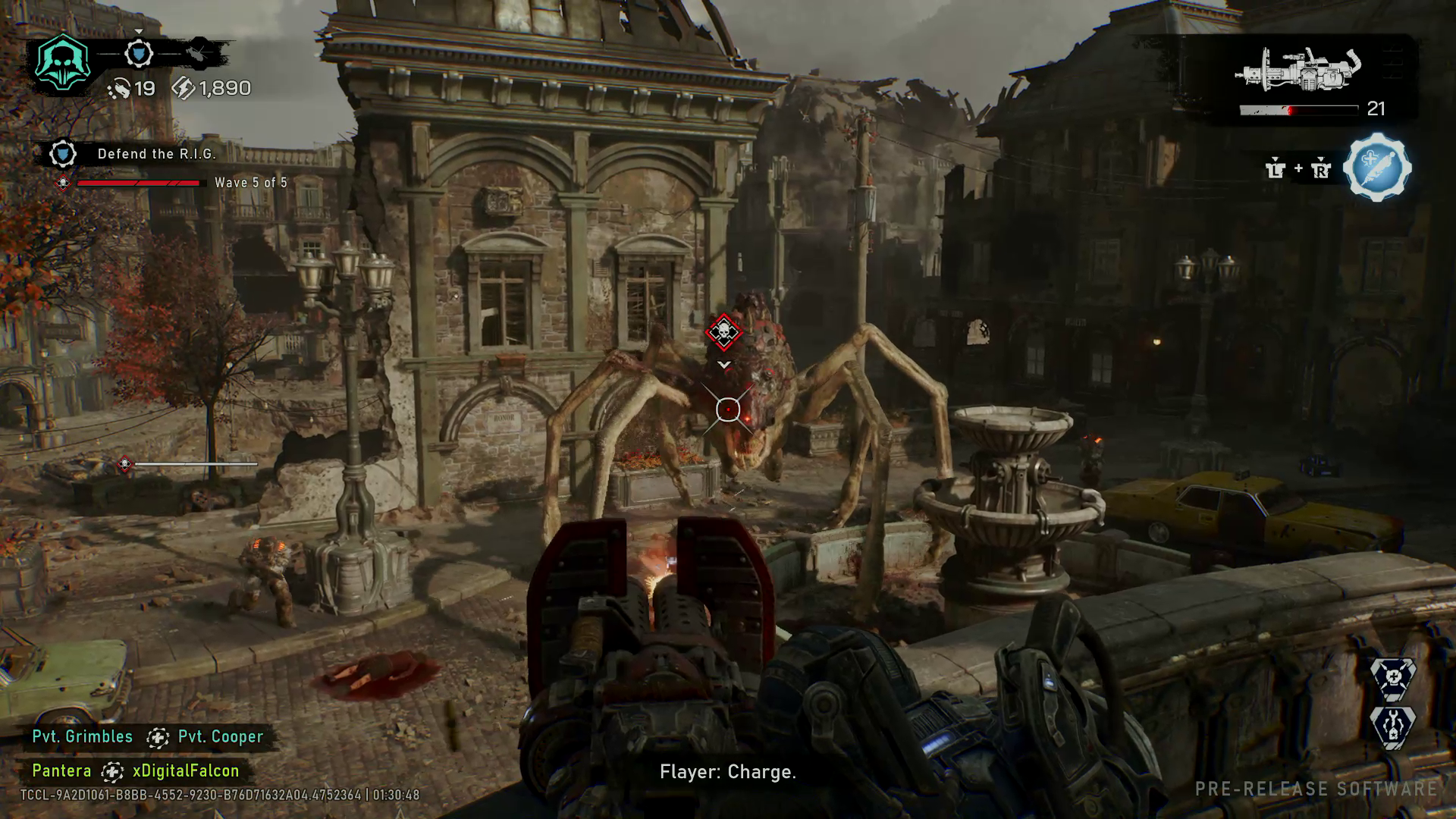
That is a major difference from the original trilogy.
In Gears 1, humanity has already spent fourteen years fighting the Locust.
E-Day shows what happens before anyone understands the enemy.
The campaign follows Marcus, Dom, Mags Carter and Lucas Reyes as Bravo Squad over the first days of the catastrophe.
Can you start the series with E-Day?
Yes.
This is probably the most straightforward chronological starting point the franchise has ever offered.
Returning fans will obviously recognize characters, weapons and events that carry additional significance, but the central conflict itself begins here.
You are not entering halfway through Marcus’ story.
You are watching the Locust War begin.
2. Gears of War: Judgment
Released: 2013
Timeline: Immediate aftermath of Emergence Day
Judgment is the next standalone game chronologically.
Instead of Marcus and Dom, the campaign follows a younger Damon Baird and Kilo Squad, which also includes Augustus Cole, Sofia Hendrik and Garron Paduk.

The group is put before a military tribunal after disobeying orders during the early stages of the Locust invasion.
The campaign unfolds through their testimony, showing just how quickly Sera’s military structures begin collapsing under the pressure of the new war.
That makes Judgment particularly interesting after E-Day.
E-Day shows the shock of first contact.
Judgment shows soldiers trying to fight an organized war almost immediately afterwards.
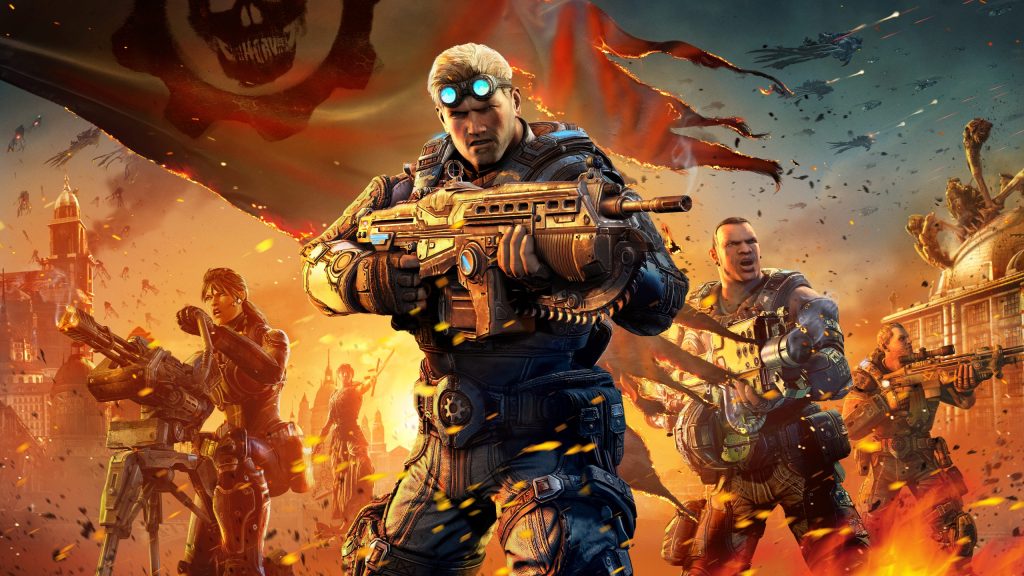
Important: save Aftermath for later.
Judgment also contains a bonus campaign called Aftermath. Despite being included in a prequel, Aftermath takes place around the Gears of War 3 period and contains major spoilers. If you are playing chronologically for the first time, finish the main Judgment campaign and leave Aftermath until you reach Gears 3.
You can view the Gears of War: Judgment page on G2A.COM, although marketplace availability can vary.
3. Gears Tactics
Released: 2020
Timeline: 12 years before the original Gears of War
This is where the genre suddenly changes.
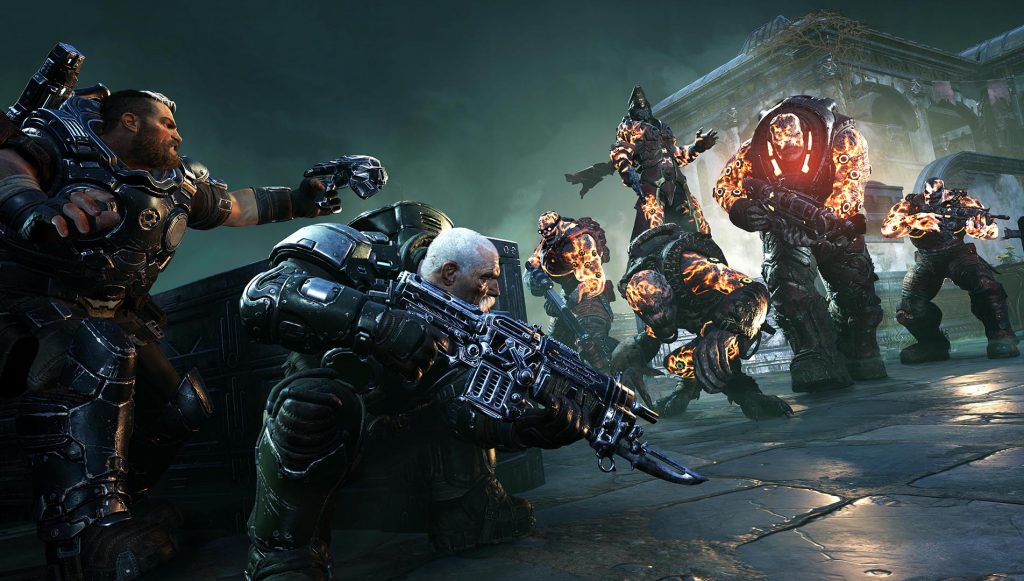
Gears Tactics is not another cover-based third-person shooter.
It is a turn-based tactical game developed by Splash Damage and The Coalition.
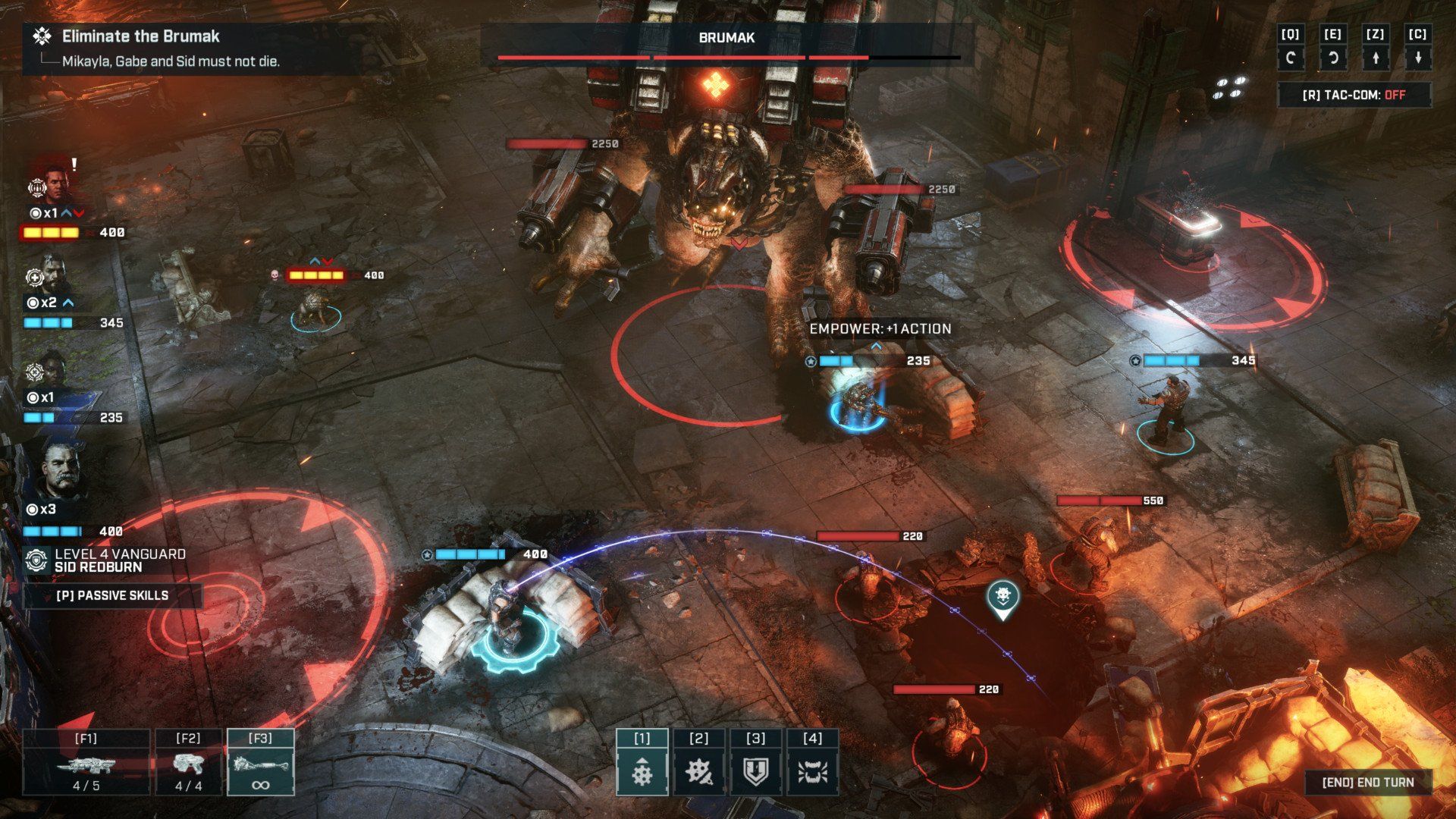
The story is completely canon, however.
Tactics takes place twelve years before Gears 1, placing it around two years into the Locust War and therefore after both E-Day and Judgment.
The protagonist is Gabe Diaz, a COG soldier tasked with hunting Ukkon, a Locust scientist responsible for creating some of the Horde’s most dangerous creatures.
The Diaz surname becomes much more important later.
If you have already played Gears 4 or Gears 5, you probably know why.
If you haven’t, leave it at that.
Do you have to play Gears Tactics?
No.
It expands the universe and provides useful background for later characters, but the Marcus Fenix trilogy still makes sense without it.
Players who dislike turn-based strategy can safely treat Tactics as an optional but canon side story.
Check Gears Tactics offers on G2A.COM
Optional: Gears of War 3 – RAAM’s Shadow
Yes, this is DLC for Gears of War 3.
No, it does not actually take place during Gears of War 3.
RAAM’s Shadow is a prequel campaign set before the original Gears of War.
It follows Zeta Squad during an earlier stage of the Locust War and also gives players an unusual opportunity to experience events from General RAAM’s side.

In strict chronology, it belongs somewhere after the earliest Locust War stories and before Gears 1.
However, for a first playthrough we would not insist on inserting it here.
RAAM means considerably more once you already know the original game.
4. Gears of War
Originally released: 2006
Modern versions: Ultimate Edition / Gears of War: Reloaded
Timeline: 14 years after Emergence Day
This is the game that started the franchise – but not the earliest story anymore.

Fourteen years have passed since E-Day.
Sera is devastated.
The COG and Locust have been fighting for over a decade, entire cities are gone and Marcus Fenix begins the campaign inside a prison rather than on a battlefield.
Dom breaks him out and brings him back into the war.
From there, Delta Squad becomes the center of the original trilogy.
Which version of Gears of War 1 should you play?
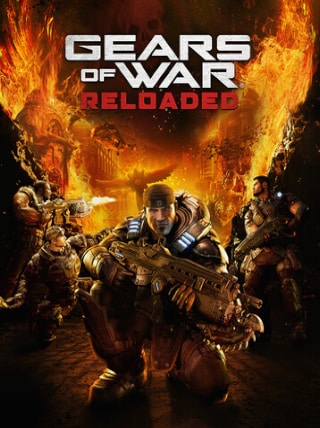
For most newcomers in 2026, the easiest answer is Gears of War: Reloaded.
There are essentially three major versions:
- Gears of War – the 2006 original.
- Gears of War: Ultimate Edition – the 2015 remaster.
- Gears of War: Reloaded – the newer modernized release based on Ultimate Edition.
These are not three different entries in the storyline.
If you play Reloaded, you can move directly to Gears of War 2 afterwards.
Do not triple your backlog by accident.
Original Gears 1, Ultimate Edition and Reloaded are different releases of the same first campaign. Pick one.
5. Gears of War 2
Released: 2008
Timeline: After Gears of War
Gears 2 continues Marcus and Delta Squad’s war against the Locust.
This time, humanity stops simply trying to survive attacks and launches a massive offensive into the enemy’s underground territory.
The scale is considerably larger than Gears 1.
You get bigger battles, more Locust lore and some of the franchise’s most important developments involving Dom.
It is also where Horde was introduced, the co-operative survival mode that eventually evolves into E-Day’s twelve-player Horde Siege.
Can you skip Gears 2?
Not if you want to follow the Marcus and Dom storyline.
The original trilogy is heavily serialized.
Going directly from Gears 1 to Gears 3 means missing several of the series’ biggest story developments.
You can view the Gears of War 2 page on G2A.COM; offer availability can vary because the game remains tied to the older Xbox ecosystem.
6. Gears of War 3
Released: 2011
Timeline: Conclusion of the original trilogy
Gears of War 3 closes the original Marcus Fenix trilogy.
The survivors are scattered, established civilization has largely collapsed and the Locust are no longer humanity’s only major problem.

The Lambent threat becomes central to the conflict.
If your main interest in Gears is Marcus and Dom, this is effectively the destination toward which E-Day, Gears 1 and Gears 2 are all building.
That makes E-Day especially interesting in hindsight.
Players who already know Gears 3 know exactly where Marcus and Dom’s friendship eventually leads.
New players starting with E-Day will instead experience that relationship in chronological order from its earliest days.
When should you play Judgment: Aftermath?
Now.
Judgment’s bonus Aftermath campaign is connected to events from the Gears 3 period and should not be played immediately after Judgment if you are new to the franchise.
Finish most – or all – of Gears 3 first.
Then return to Aftermath if you want more context for Baird and Cole’s activities during this part of the war.
7. Gears of War 4
Released: 2016
Timeline: 25 years after Gears of War 3
Then the timeline jumps forward.
Twenty-five years pass after the ending of Gears 3.
Humanity has rebuilt part of Sera, and the Locust War has become history for a new generation.

Marcus is still around, but he is no longer the primary playable protagonist.
Instead, the game follows his son JD Fenix, alongside Kait Diaz and Del Walker.
What initially looks like a new threat gradually reveals connections to the old war.
This starts the second major storyline of the franchise.
Do you need Gears 4 before E-Day?
No.
Gears 4 takes place decades later and has virtually the opposite purpose.
E-Day explains where everything began.
Gears 4 asks what happens to Sera long after the original war appears to have ended.
Check Gears of War 4 offers on G2A.COM
8. Gears 5
Released: 2019
Timeline: Direct continuation of Gears of War 4
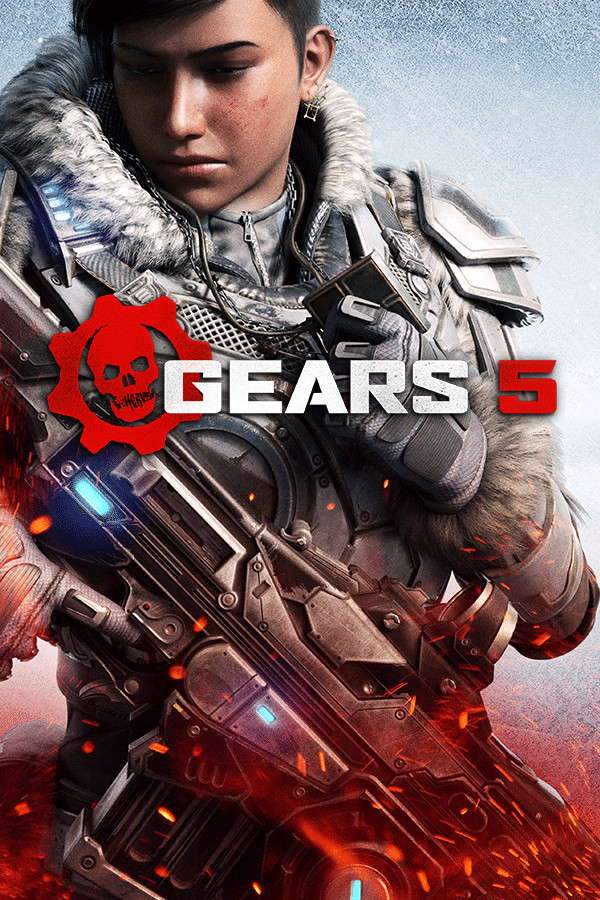
The latest mainline story chronologically is still Gears 5.
Kait Diaz takes center stage as the new conflict becomes increasingly connected to her family history and the origins of the enemy.
Marcus, JD, Del and Baird remain important, but the focus moves decisively toward Kait.
This is also where knowledge from Gears Tactics can become particularly interesting.
The two games were released close together and share important Diaz family connections, despite taking place decades apart.
Optional: Gears 5 – Hivebusters
If you want one more campaign after Gears 5, play Hivebusters.
The expansion follows Scorpio Squad – Lahni, Keegan and Mac – characters associated with Gears 5’s Escape mode.
It is a much smaller story than the main campaign but is substantial enough to function almost like a compact standalone adventure.
For a first-time marathon, the simplest placement is:
Gears 5 → Hivebusters.
That avoids interrupting the central Marcus/JD/Kait progression and gives you an additional side story once the main campaign is complete.
So What Is the Best Order to Play Gears Before E-Day?
There are actually three good answers depending on what you want.
Option 1 – Start With E-Day
Best for complete newcomers interested mainly in the new game.
E-Day → Judgment → Tactics → Reloaded → Gears 2 → Gears 3 → Gears 4 → Gears 5
This is the cleanest chronological route.
You experience the Locust War from the day it begins, see its early years, move into the original Marcus trilogy and eventually jump forward to the next generation.
The only caveat is that some prequel references were naturally written for people already familiar with later games.
Option 2 – Play Release Order
Best if you want reveals and character introductions roughly as longtime fans experienced them.
Gears of War / Reloaded → Gears 2 → Gears 3 → Judgment → Gears 4 → Gears 5 → Gears Tactics → E-Day
This route preserves the original trilogy’s mystery before filling in more of the past.
It also means E-Day becomes a return to Marcus and Dom after you already understand their complete relationship.
Option 3 – The Fastest E-Day Preparation
Best if October 6 is almost here and you do not have 70 hours.
Play:
Gears of War: Reloaded → optionally Gears 2 and Gears 3 → E-Day
Reloaded introduces:
- Marcus Fenix,
- Dom Santiago,
- Delta Squad,
- the Locust,
- COG military culture,
- the Lancer,
- and the basic combat language E-Day is modernizing.
It is therefore the single most useful older game to play if you want context before E-Day but do not have time for a complete franchise marathon.
But even that is optional.
Do You Need to Play Gears 1–5 Before E-Day?
No.
E-Day is set fourteen years before the first Gears of War and depicts the first Locust invasion.
Its Marcus and Dom are younger versions of characters longtime fans already know, but the basic story does not require knowledge of Kait, JD or events that happen decades later.
In fact, someone who starts with E-Day will have an unusual opportunity:
they can experience Marcus and Dom’s relationship almost entirely in chronological order.
Longtime players know where that relationship goes.
New players do not.
Both perspectives work.
Do You Need to Play Judgment Before E-Day?
No.
It is actually the other way around chronologically.
Judgment takes place in the immediate aftermath of Emergence Day.
If you start with E-Day and then play Judgment, you effectively move from humanity discovering the Locust to the COG attempting to organize its first desperate military responses.
Do You Need to Play Gears Tactics?
No, but it is canon.
Tactics is the easiest game to skip if you only want the central third-person shooter saga because it uses completely different turn-based gameplay and focuses on another squad.
Its story becomes more relevant when you reach the Diaz family material in the later games.
If you enjoy XCOM-style tactical combat, however, there is no reason to leave it out.
What About Gears of War: Ultimate Edition and Reloaded?
This is where newcomers can accidentally make the series look much bigger than it actually is.
You do not need to play:
- Gears of War,
- Gears of War: Ultimate Edition,
- and Gears of War: Reloaded.
They are different versions of the same original story.
Reloaded is the easiest current recommendation for modern hardware and also brought the original campaign to PlayStation 5.
Finish Reloaded and move directly to Gears 2.
Gears of War Release Order
If you would rather experience the franchise in publishing order rather than story chronology, the major games were released like this:
| Year | Game |
|---|---|
| 2006 | Gears of War |
| 2008 | Gears of War 2 |
| 2011 | Gears of War 3 |
| 2013 | Gears of War: Judgment |
| 2015 | Gears of War: Ultimate Edition |
| 2016 | Gears of War 4 |
| 2019 | Gears 5 |
| 2020 | Gears Tactics |
| 2025 | Gears of War: Reloaded |
| 2026 | Gears of War: E-Day |
Which Gears Games Should You Actually Play?
If you want the complete story:
E-Day → Judgment → Tactics → Reloaded → Gears 2 → Gears 3 → Gears 4 → Gears 5
If you want the essential shooter storyline:
E-Day → Reloaded → Gears 2 → Gears 3 → Gears 4 → Gears 5
If you are only interested in E-Day:
Start with E-Day. You are fine.
That is ultimately what makes The Coalition’s choice of setting so useful.
E-Day is simultaneously a prequel for longtime fans and an origin story for people who have never revved a Lancer before.
If it hooks you, there is then an entire war waiting on the other side.
Gears of War Games in Order – FAQ
What is the first Gears of War game chronologically?
Gears of War: E-Day. It takes place during Emergence Day, fourteen years before the original Gears of War.
Can I play E-Day without playing other Gears games?
Yes. E-Day is an origin story and is designed around the beginning of the Locust War.
What game comes after E-Day?
Gears of War: Judgment is the next standalone campaign chronologically because it takes place in the immediate aftermath of Emergence Day.
Does Gears Tactics take place before Gears of War?
Yes. Gears Tactics is set twelve years before the original game, placing it after the earliest E-Day-era events but before Gears 1.
Is Gears of War: Reloaded a new game?
No. It is a modernized version of the original Gears of War campaign, based on the content and improvements of Ultimate Edition.
Should I play Ultimate Edition and Reloaded?
No. They cover the same Gears 1 storyline. Pick one version; Reloaded is the simplest modern option.
Is Judgment required?
No, but its main campaign is canon and provides one of the earliest looks at the Locust War after E-Day.
Is Gears Tactics required?
No. It is a canon side story and becomes particularly interesting because of its connection to the Diaz family, but players who only want the shooter campaigns can skip it.
When should I play Judgment: Aftermath?
After reaching Gears of War 3. Although bundled with Judgment, Aftermath takes place much later than Judgment’s main prequel campaign.
When should I play Hivebusters?
The simplest order is after finishing the main Gears 5 campaign.
Is E-Day Gears 6?
No. E-Day goes backward to the beginning of the Locust War instead of continuing directly from the ending of Gears 5.
More Gears of War on G2A News
Explore Gears of War on G2A.COM
Compare offers for E-Day, Gears of War: Reloaded, Gears 5, Gears Tactics and other entries in the franchise from marketplace sellers.
Get more from G2A.COM with G2A Plus
G2A Plus Free lets members earn Plus Points on purchases. Premium also offers member discounts on eligible items, regular bonuses and rewards, and priority post-purchase assistance.