





Dragon’s Dogma 2 is deliberately happy to let you make mistakes. Quests can move on without you, NPCs follow their own schedules, Pawns know things you do not, camping works differently from sleeping at an inn, and your starting Vocation is definitely not a permanent class choice. Understanding a handful of these hidden rules makes the first 10 hours much easier without taking away the game’s sense of discovery.
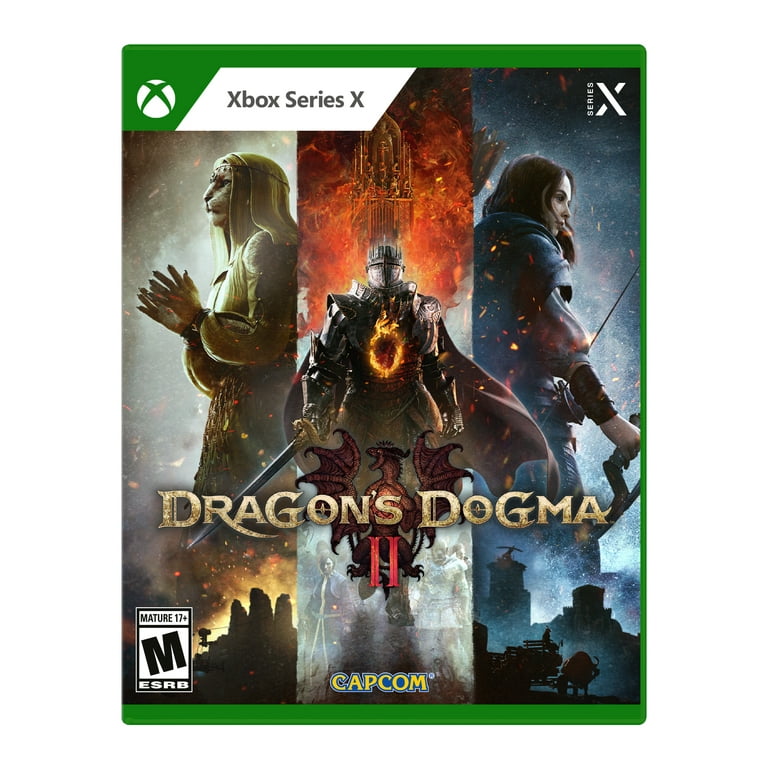
This guide focuses on the base Dragon’s Dogma 2 experience and stays light on story spoilers. Think of it as the manual the game intentionally refuses to hand you.
Five rules worth knowing immediately: make regular inn saves, pay attention to hourglass quest icons, change Vocations freely, replace underleveled support Pawns, and never assume an NPC or quest will patiently wait forever.
Table of Contents
- The save system is more dangerous than it looks
- Some quests really are timed
- Your starting Vocation is not your permanent build
- Your Pawns are more than combat companions
- Pawn Inclinations actually matter
- Why healing sometimes stops working
- Camping and inn resting are not the same thing
- Fast travel is supposed to be inconvenient
- Use Pawns as part of your inventory system
- Large monsters are physics problems
- NPCs have schedules and can die
- Do not completely ignore strange Pawn behavior
- Do not spend all your gold on equipment
- Beginner checklist
The save system is more dangerous than it looks
Dragon’s Dogma 2 is not built around repeatedly reloading convenient manual save slots until every decision goes your way.
Capcom’s current support documentation describes one save data, with manual saving and autosaving sharing that progress. You can save manually through the System menu when you are not in combat, while the game also autosaves as you explore.
The important backup is Load from Last Inn Rest. Despite the name being easy to overlook, it means exactly that: the last time you slept at an inn or one of your dwellings.
Camping does not create a Last Inn Rest save. If you have been adventuring for hours without sleeping at an inn or your house, loading that option can send you much farther back than expected.
A good habit is to sleep at an inn before a major quest, long expedition or decision you suspect could have consequences. Think of it as your more stable checkpoint.
Some quests really are timed
Dragon’s Dogma 2 does something many modern RPGs train you not to expect: the world can continue without you.

Capcom explicitly warns that some quests progress as time passes and may reach unintended outcomes if you ignore them for too long.
Fortunately, the Quest menu gives you a clue. An hourglass icon identifies a limited-time quest. When you see one, treat it differently from the pile of ordinary side quests you plan to finish eventually.
The hand icons are useful too
Blue and orange hand icons beside a quest mean one of your Pawns has relevant knowledge. Set that quest as your priority and use the Go! command. A knowledgeable Pawn may start leading you toward the objective instead of making you search blindly.
Your starting Vocation is not your permanent build
Choosing Fighter, Mage, Archer or Thief at the beginning can feel like selecting a traditional RPG class. It is much less restrictive than that.
Change Vocations. Dragon’s Dogma 2 expects you to experiment.
Once a Vocation is unlocked, you can switch to it through a Vocation Guild. Fighting enemies and completing quests earns Discipline Points, which are then spent on unlocking Vocations and learning their abilities.
The less obvious benefit is Augments. These passive abilities can be learned by ranking up different Vocations, but once unlocked they can be equipped independently of your current Vocation. You can equip up to six.
Why this matters: playing another Vocation for a while is not wasted progression. You may unlock an Augment that makes your favorite Vocation better when you switch back.
Do the same with your Main Pawn. Trying different roles also teaches you what you actually want from the rest of your party.
Your Pawns are more than combat companions
A full party consists of your Arisen, your Main Pawn and up to two support Pawns. Treating them as three AI-controlled damage dealers misses most of what makes the Pawn system useful.

Pawns can bring knowledge acquired in other worlds. A Pawn may know:
- where a quest objective is located,
- how to reach a dungeon,
- where treasure can be found,
- or which weakness works against an enemy.
Support Pawns need replacing
Your Main Pawn grows alongside you. Hired support Pawns do not dynamically level up in your party, so companions who were excellent several levels ago can gradually become the weak link.
Visit Riftstones regularly and refresh your lineup. Do not keep a level 12 support Pawn at level 25 simply because you have become emotionally attached to their terrible jokes.
Party composition matters more than raw level
Look at the entire group. A melee Arisen benefits enormously from ranged damage or magick. A Sorcerer appreciates somebody capable of keeping enemies occupied. Healing, elemental support and the ability to hit flying enemies can be more valuable than recruiting another Pawn with a slightly higher level.
Pawn Inclinations actually change how they behave
Vocation tells you what a Pawn can do. Inclination influences what it is naturally inclined to do with those abilities.
This is why two Pawns with the same Vocation can feel surprisingly different. When hiring one, check the Vocation, equipped skills, Inclination and any useful Specialization instead of looking only at level.
Why healing sometimes stops working
Eventually you will notice that part of your health bar can no longer be restored with ordinary healing. That is the Loss Gauge.
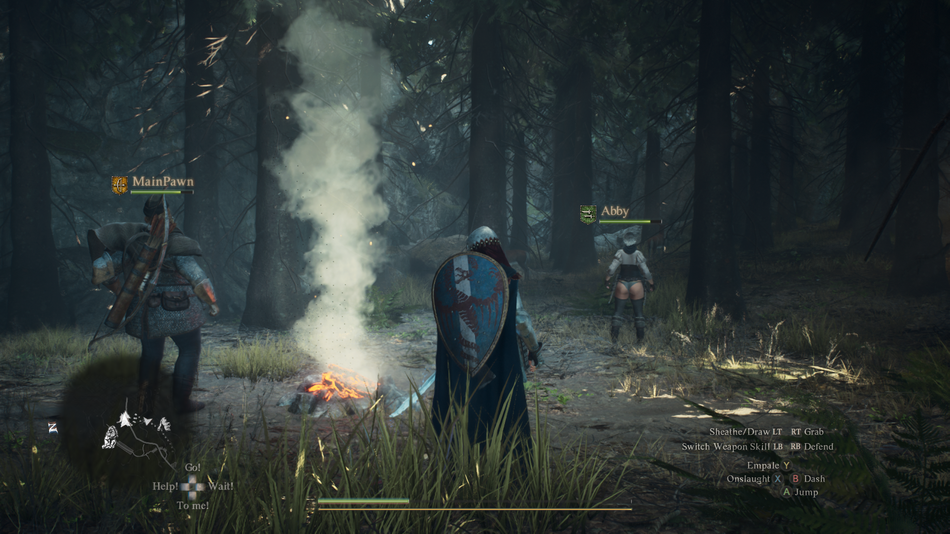
Taking damage and suffering through a long expedition gradually reduces the maximum health you can recover normally. Curatives can heal the recoverable part of the bar, but they do not simply erase the entire accumulated Loss Gauge.
The real solution is proper rest: use a campsite, inn or your own dwelling.
This changes how you should think about expeditions. A backpack full of healing items does not make you infinitely sustainable. Eventually, you need somewhere safe to stop.
Camping and inn resting are not the same thing
Camping looks like Dragon’s Dogma 2’s version of an inn in the wilderness, but the two systems are not interchangeable.
A campsite lets your exhausted party recover during a journey, making Camping Kits genuinely useful expedition equipment. It can turn a dangerous trip home with a badly depleted party into a fresh start.
But remember the save rule from earlier: camping does not update your Last Inn Rest.
Simple habit: camp to survive the road. Sleep at an inn or house when you want a dependable recovery point for your save.
Fast travel is supposed to be inconvenient
Dragon’s Dogma 2 is designed around journeys rather than treating everything between quest objectives as empty space.
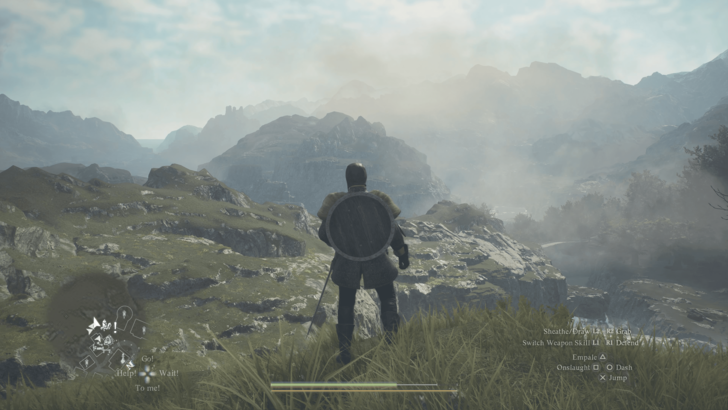
You therefore do not get unlimited map teleportation. The two main shortcuts are:
- Oxcarts, which follow specific routes between settlements and can still be attacked along the way.
- Ferrystones and Portcrystals, which provide much faster travel but are deliberately limited resources.
Do not waste Ferrystones simply because walking feels slow. They become much more valuable when you have urgent timed quests, need to return from a remote location or want to avoid repeating a dangerous journey.
Also, if a Ferrystone appears not to work, move into the open. Capcom notes that it cannot be used in some locations, including beneath a roof. In that situation, the failed attempt does not consume it.
Use oxcarts intelligently
You can doze off during an oxcart journey to skip most of the travel time. Current versions also allow you to ask about stopovers along the route, which can make a partial ride cheaper and still save a considerable amount of walking.
Use Pawns as part of your inventory system
One character does not need to carry the entire expedition.
Distribute Camping Kits, monster materials and other heavy items across the party. Pawns are walking inventory space as well as fighters.
There is also a reassuring hidden rule: if a support Pawn becomes forfeit while holding your items, Capcom says those items are automatically sent to storage. You do not need to panic because the Pawn disappeared while carrying half a griffin.
Check Pawn Specializations before handing things over
Certain Pawn Specializations can actively manage inventory. Capcom specifically warns that Hawker and Logistician behaviors can redistribute items or sell low-rarity items under the appropriate circumstances.
In other words: know who you are handing your stuff to.
Large monsters are physics problems, not just giant health bars
If you approach every Cyclops, Ogre or Griffin by repeatedly hitting its ankles, you are ignoring one of Dragon’s Dogma 2’s best systems.
You can climb large enemies, target weak points, stagger them and use the terrain against them. The current official manual even notes that dashing before jumping and clinging to a large enemy can help knock it off balance.
Look at what the monster is doing and where it is standing:
- Can you attack a vulnerable eye or head?
- Can you make it lose balance near a ledge?
- Can a Fighter hold its attention while ranged Pawns attack safely?
- Does a knowledgeable Pawn call out an elemental weakness?
- Is there something in the environment you can throw, destroy or use against it?
Capcom describes the environment itself as a potential weapon. Believe it.
NPCs have schedules, and important people can die
Dragon’s Dogma 2 NPCs do not necessarily stand beside their quest marker forever.

According to Capcom, NPCs live their own lives and can move between locations or appear only at particular times of day. If the person you need is missing, try returning later rather than immediately assuming the quest has bugged.
There is a darker possibility too: NPCs can die. Dead characters are sent to the Vermund Charnel House or Battahl Morgue. If somebody crucial has vanished entirely, that is another place worth checking.
This is one reason Wakestones are more strategically valuable than they initially appear.
Do not completely ignore strange Pawn behavior
Dragon’s Dogma 2 has one particularly unusual Pawn mechanic that is intentionally presented like an in-world mystery: Dragonsplague.
Capcom describes it as a contagious condition that Pawns can acquire while traveling between worlds. An affected Pawn can initially seem unusually powerful or confident, while more advanced symptoms can lead toward much more serious consequences.
You do not need to spend the entire game obsessively inspecting every Pawn. Just pay attention when a companion’s behavior becomes noticeably strange or unusually defiant, particularly after hiring new Pawns.
Spoiler-light advice: if the game starts very obviously drawing your attention to abnormal Pawn behavior, take the warning seriously.
Do not spend all your gold on equipment
A shiny weapon upgrade is tempting, but gold pays for much more than combat power.
You also need money for inns, oxcarts, consumables and other services. Spending every coin whenever you reach a new weapon shop can leave you powerful but strangely unable to travel or recover efficiently.
You also do not need to buy a complete premium equipment set every time you experiment with another Vocation. Test the playstyle first, then decide whether you want to invest heavily in it.
If your finances are already falling apart, our Dragon’s Dogma 2 gold-making guide covers quest rewards, exploration, Pawn Quests and other ways to refill your wallet.
Still need Dragon’s Dogma 2?
You can compare current Dragon’s Dogma 2 offers on G2A.COM. G2A Plus Free also lets you earn Plus Points on purchases, with 100 Plus Points worth €1 toward future orders. Plus Premium can provide automatic discounts of up to 10% on 10 eligible items each month.
Dragon’s Dogma 2 beginner checklist
Before heading off on another long trip, run through this quick checklist:
- Check for hourglass quests. Do those before leisurely exploration.
- Refresh your support Pawns. Make sure they are still appropriate for your level and party.
- Carry a Camping Kit. Long journeys can grind down your maximum health.
- Spread the weight. Pawns can carry supplies and loot.
- Bring a lantern. Night exploration becomes dramatically more dangerous without one.
- Keep some gold. Do not spend your last coin at the armorer.
- Think before spending Ferrystones. Walking and oxcarts are often good enough.
- Experiment with Vocations. Augments make cross-Vocation progression valuable.
- Listen to your Pawns. Their repeated chatter sometimes contains genuinely useful information.
- Rest at an inn periodically. Camping is not a substitute for your Last Inn Rest checkpoint.
Dragon’s Dogma 2 becomes easier once you stop expecting normal RPG rules
Most early frustration in Dragon’s Dogma 2 comes from assuming it works like every other open-world RPG.
It does not want you teleporting to every objective, hoarding twenty quests indefinitely, saving before every conversation or building one perfect class at character creation. The game wants journeys to matter, mistakes to survive the reload button and your party to feel like a group of adventurers working with incomplete information.
Once those rules click, many of the game’s apparent inconveniences start working together. Limited fast travel makes camps important. Camps make preparation important. Dangerous journeys make Pawns important. Timed quests make your decisions about where to go next matter.
That interconnected friction is a large part of why Dragon’s Dogma 2 feels so different. If that style of fantasy adventure is exactly what you enjoy, our updated list of games like Dragon’s Dogma 2 has more RPGs built around dangerous exploration, large monsters and meaningful preparation.