





Pawns are the system that makes Dragon’s Dogma 2 feel almost like a party-based multiplayer RPG even though the game is single-player. You create one permanent Main Pawn, then hire up to two additional support Pawns created by other players or Capcom. Their Vocation, Inclination, Specialization, skills, quest knowledge and level all affect how useful your party becomes.
The system becomes much easier once you separate your companions into two groups. Your Main Pawn is effectively your permanent second character and develops alongside you. Your two support Pawns are temporary hires, so they should be replaced regularly as your level and party needs change.
Quick rule: build your Main Pawn for long-term synergy with your Arisen. Hire support Pawns to fill whatever your current party is missing, then replace them when their level, skills or role fall behind.
Table of Contents
How Pawns work in Dragon’s Dogma 2
Your full party can contain four characters:
- The Arisen – your player character.
- Main Pawn – the Pawn you create and develop yourself.
- Support Pawn #1 – hired through the Rift or found in the world.
- Support Pawn #2 – another hired companion.
The Main Pawn earns experience and levels alongside your Arisen. You control its Vocation, equipment, skills, Inclination and Specialization, making it a permanent part of your character build.
Support Pawns work differently. They do not gain levels while traveling with you. If you recruit a level 20 Mage and eventually reach level 30 yourself, that Mage remains level 20 until you dismiss it and hire an updated version or another Pawn.
That revolving-party structure is intentional. Dragon’s Dogma 2 constantly encourages you to browse the Rift for companions that better suit your current journey.
How to hire Pawns
The main way to recruit support Pawns is through Riftstones. Major settlements such as Vernworth contain large Riftstones with extensive search options, while smaller and Forgotten Riftstones can summon more specific groups of Pawns.
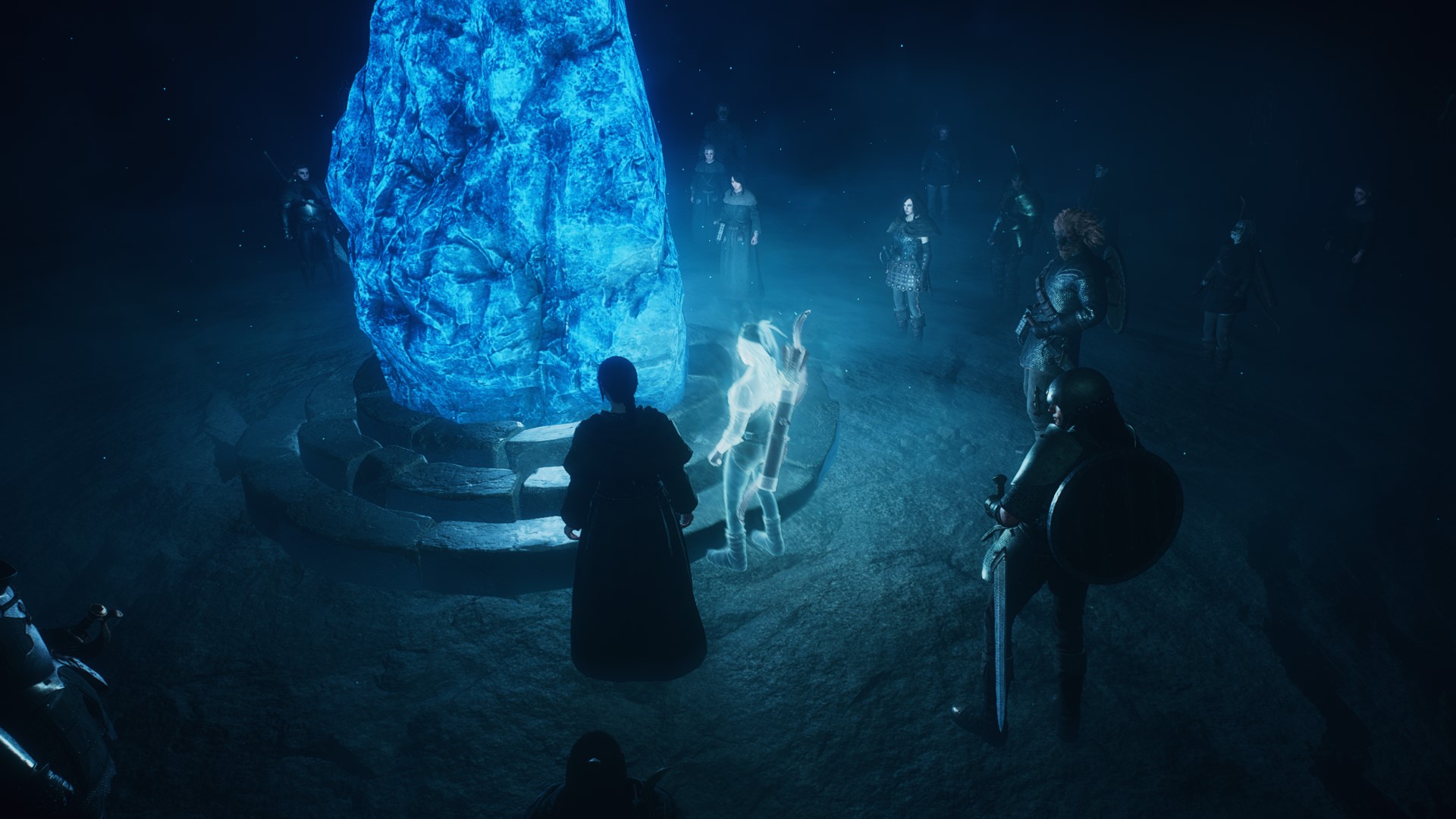
You can also meet wandering Pawns while exploring. Talk to one and you can inspect their profile before deciding whether they fit your party.
Use the Riftstone search instead of hiring blindly
A proper Riftstone lets you narrow candidates by characteristics such as level, Vocation, Inclination and Specialization. You can also search for previously hired Pawns, favorites and specific Pawn IDs.
This is particularly useful when you know exactly what your party needs. If your Arisen is a Fighter and your Main Pawn is an Archer, for example, searching directly for a Mage and Sorcerer is much quicker than inspecting every Pawn standing around the Rift.
How Rift Crystals work
Rift Crystals, usually shortened to RC, are the main currency associated with Pawn hiring.

Pawns at or below your level can normally be hired without spending RC. Hiring a Pawn above your level costs Rift Crystals, with the price increasing as the level difference grows.
That means spending a huge pile of RC on an overleveled companion early in the game is usually unnecessary. A well-built Pawn close to your own level is normally more than enough.
Your Main Pawn can earn RC for you
When another player hires your Main Pawn, it can return with Rift Crystals, knowledge and potentially a gift after its journey through that player’s world.
Making your Pawn useful therefore benefits you twice: you have a stronger companion in your own world, and other Arisen are more likely to hire it.
What should you check before hiring a Pawn?
Level matters, but it should not be the only thing you check.
The Pawn system is one of the main reasons Dragon’s Dogma 2 feels different from most open-world fantasy RPGs. You are not simply selecting three fixed companions. You are constantly rebuilding the party around the road ahead.
Pawn Inclinations explained
Inclination determines your Pawn’s general personality and AI tendencies. Dragon’s Dogma 2 has four main Inclinations.
Which Inclination is best?
There is no universal best choice because Inclination should support the Pawn’s Vocation.
- Mage: Kindhearted is an excellent fit for a support-focused healer.
- Fighter: Kindhearted or Straightforward can both work depending on whether you want a protective tank or aggressive frontline fighter.
- Warrior: Straightforward naturally complements heavy melee aggression.
- Thief: Straightforward works well for aggressive damage, while Simple can be useful during exploration.
- Archer or Sorcerer: Calm can help ranged Pawns avoid unnecessary danger.
Inclination also affects the Pawn’s manner of speech, so changing it can noticeably alter the personality of a companion you spend dozens of hours traveling with.
Pawn Specializations explained
Specializations are utility abilities separate from combat Vocations and Inclinations. A Pawn can have one Specialization at a time, and your party can benefit from different Specializations across several companions.
Your Main Pawn learns them by using Specialization Tomes earned from quests or NPC relationships. Using another Tome replaces the current Specialization.
Which Specializations are most useful?
Forager is one of the safest general-purpose choices because it helps with weapon and armor upgrades without consuming resources automatically.
Woodland Wordsmith becomes extremely useful whenever you spend time around the Sacred Arbor. You do not necessarily need it permanently, though. Hiring a support Pawn with the Specialization is enough when you need translation.
Chirurgeon is useful if your party needs more healing, but remember that the Pawn is spending items from the party’s inventory. Logistician is convenient for players who dislike inventory management, although it can automatically combine materials you might have preferred to keep separate.
Aphonite is the unusual one. It provides almost no mechanical advantage, but if repeated Pawn chatter bothers you, it might become your favorite Specialization in the entire game.
How Pawn Quests work
Pawn Quests give other players a reason to hire your Main Pawn beyond its combat usefulness.
At a Riftstone, you can assign your Main Pawn an objective to complete while traveling beyond the Rift and attach a reward for the Arisen who completes it.
Objectives can involve things such as defeating particular monsters, acquiring items or completing other Pawn-related goals. You then offer gold or an item as the reward.
Make your Pawn Quest worth doing: other players are much more likely to hire a Pawn when the objective is realistic and the reward is useful. An easy monster target with a strong gold reward can make your Main Pawn much more attractive in the Rift.
Pawn Quests can also help you acquire items
The system effectively allows limited trading between players. You can create a quest asking another Arisen to provide a particular item and offer something in return.
Pawn Quests also contribute toward Pawn Badges, which are associated with repeated experience against particular creatures and activities.
Pawns can know quests your Arisen has never completed
One of the most useful parts of the entire system is that support Pawns can bring knowledge from other players’ worlds.
If a hired Pawn has already experienced your currently prioritized quest elsewhere, it may offer guidance and sometimes physically lead the party toward the relevant location.
That makes the Quest Guide indicator worth checking while hiring. Dragon’s Dogma 2 intentionally gives players less direct navigation than many modern RPGs, so a knowledgeable Pawn can function as an in-world guide rather than another glowing objective marker.
It fits the game’s wider philosophy particularly well. As our Dragon’s Dogma 2 review noted, the journey itself is often more important than simply moving directly from objective to objective.
Good Pawn party compositions
There is no single best party because your Arisen’s Vocation changes what the group needs. A good rule is to cover four functions: frontline pressure, ranged damage, magic damage and support.
The most important thing is avoiding obvious gaps. Running four physical melee characters may feel great until you meet enemies that are much easier to handle with ranged or elemental attacks.
When should you replace support Pawns?
Because hired Pawns do not level alongside you, you should periodically return to a Riftstone and refresh the party.
You do not need to do this every time your Arisen gains a level. Instead, watch for clear signs that a companion is falling behind:
- The Pawn is several levels below the rest of your party.
- Its equipment has become noticeably weak.
- You need a different Vocation for an upcoming area or quest.
- Its Weapon Skills no longer complement your current strategy.
- You need a particular Specialization such as Woodland Wordsmith.
- You find another Pawn offering a particularly valuable Pawn Quest.
Favorite good Pawns
If you find a companion you really like, add it to your favorites. The Pawn’s owner may continue leveling and improving it, allowing you to summon a newer version later.
Important Pawn tips the game does not emphasize enough
Your Main Pawn should complement your Arisen
Because you control both characters permanently, avoid building them for exactly the same job unless you have a deliberate strategy. A melee Arisen benefits enormously from a Mage Main Pawn, while a ranged or magical Arisen may prefer a Fighter or Warrior that keeps monsters occupied.
Check skills, not just Vocation
Two Mage Pawns may have completely different loadouts. One can focus heavily on healing and buffs while another carries several offensive spells. Open the Pawn’s details before hiring.
Specializations can have downsides
Automation is convenient until the Pawn automates something you did not want. Chirurgeon can consume curatives, and Logistician can combine materials automatically. If you care about exact inventory control, Forager or Woodland Wordsmith may be safer choices.
Simple Pawns are excellent pack mules for exploration
They actively gather items and investigate their surroundings, which makes them useful when you are exploring rather than rushing between quests. Just remember to check their inventory because they may have picked up something valuable without you noticing.
A Mage is not mandatory, but healing is
The easiest party for most of the game includes a Mage because healing, buffs and elemental support solve many problems at once. If you skip one, compensate with curatives, Chirurgeon or another reliable source of recovery.
Building your next Dragon’s Dogma 2 party?
G2A Plus Free lets you earn Plus Points when shopping, with 100 Plus Points worth €1 toward future orders. Plus Premium can also provide up to 10% off 10 eligible items each month, higher discount codes, gaming rewards and priority post-purchase help.
Dragon’s Dogma 2 Pawn FAQ
How many Pawns can you have in Dragon’s Dogma 2?
You can travel with three Pawns: your permanent Main Pawn and up to two hired support Pawns. Together with the Arisen, that creates a four-character party.
Do hired Pawns level up?
No. Your Arisen and Main Pawn gain levels in your world, but support Pawns keep the level at which you hired them. Replace or rehire them periodically as your party progresses.
What is the best Pawn Inclination?
It depends on the role. Kindhearted works especially well for support Pawns, Straightforward suits aggressive melee fighters, Calm can benefit ranged or defensive characters and Simple is particularly useful during exploration.
Can a Pawn have more than one Specialization?
No. A Pawn can have one active Specialization. Using a new Specialization Tome on your Main Pawn replaces the existing one.
Your Pawns are part of your build
The easiest mistake to make in Dragon’s Dogma 2 is thinking of Pawns as generic AI followers. They are much closer to interchangeable pieces of your character build.
Your Arisen determines how you personally fight. Your Main Pawn covers the weaknesses you want permanently covered. Your two support slots then let you adapt that core duo to whatever monster, region or quest is coming next.
Check their skills. Look at their Inclination. Use Specializations deliberately. Take good Pawn Quests when you see them. And do not get too attached to a support Pawn that stopped leveling twenty hours ago.
If you want a broader overview of the RPG’s systems, our Dragon’s Dogma 2 gameplay, story and systems guide covers the wider world, Vocations, exploration and combat.