





KINGDOM HEARTS III is much easier to control than the older games, but it quietly introduces a huge number of systems without fully explaining how they fit together. Your opening choices alter Sora’s starting HP and MP and the order in which he learns abilities, Cure consumes the entire MP bar, every Keyblade can be upgraded, Formchanges can be stored by switching weapons, Airstep is more useful than the tutorial makes it look, and even Donald’s behavior can be customized.
If you are reaching KINGDOM HEARTS III through the new KINGDOM HEARTS Collection [I–III], this is where several systems from earlier games finally collide: Keyblade transformations, Shotlocks, Flowmotion, party abilities, synthesis, magic and a much faster style of combat.
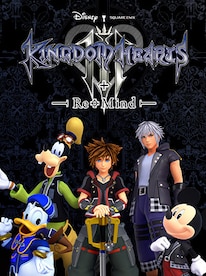
Easy first-playthrough setup: Standard difficulty, Balance for Sora’s starting stats and Guardian for a defense-oriented ability progression. Upgrade the Keyblades you actually enjoy using, put Cure on a shortcut, photograph Lucky Emblems as you find them and do not save Re Mind for the middle of the story. It is post-game content.
Table of Contents
- Do you need to play the earlier games?
- Which difficulty should you choose?
- Wisdom, Vitality, Balance, Guardian, Warrior or Mystic?
- Abilities still need AP
- Do not replace old Keyblades automatically
- How Formchanges really work
- Shotlocks and Airstep explained
- Why Cure empties your MP
- Links are also emergency healing
- Cuisine is worth using
- Do not ignore Lucky Emblems
- Customize Donald and Goofy
- When should you play Re Mind?
- Best beginner habits
Do you need to play the earlier Kingdom Hearts games first?
Yes, if you care about the story. KINGDOM HEARTS III is numbered like a direct sequel to KINGDOM HEARTS II, but it assumes you already know major events from Birth by Sleep, Dream Drop Distance and 0.2 Birth by Sleep as well.
If you are working through Collection [I–III], our KINGDOM HEARTS games in order guide gives you the recommended sequence. Do not simply jump from KINGDOM HEARTS II into III because both games happen to have Roman numerals in their titles.
If you mainly need a refresher rather than another marathon, our complete Kingdom Hearts story overview covers Xehanort, Organization XIII, the Guardians of Light and everything else leading into the final conflict.
Which KINGDOM HEARTS III difficulty should you choose?
Current versions of KINGDOM HEARTS III offer four main difficulty settings: Beginner, Standard, Proud and Critical.
Standard is the easiest recommendation for a first run. KINGDOM HEARTS III gives Sora an enormous toolkit, and learning how Keyblade transformations, magic, Links, Shotlocks and movement interact is more useful than turning the opening hours into a survival exercise.
Wisdom, Vitality, Balance, Guardian, Warrior or Mystic?
KINGDOM HEARTS III opens with two sets of choices that look philosophical but have mechanical consequences.
First choice: Wisdom, Vitality or Balance
This determines Sora’s starting HP and MP.
Balance is the safest general-purpose pick. Wisdom becomes more attractive if you already know you want to lean heavily on spells and Links, while Vitality gives new players a little more room for mistakes.
Second choice: Guardian, Warrior or Mystic
This affects the order in which Sora learns abilities while leveling. Guardian prioritizes defensive abilities, Warrior leans toward physical combat and Mystic favors magic-related abilities.
You are not locking Sora into a class. The choice mainly changes when abilities appear, rather than permanently preventing you from learning the other paths.
Beginner recommendation: Balance + Guardian gives you a comfortable all-round starting setup without heavily committing Sora to either HP or MP.
Learning an ability does not mean Sora is using it
Like the earlier games, KINGDOM HEARTS III uses AP to equip abilities. Leveling up may unlock something useful, but that ability does nothing until you have enough AP and activate it in the Abilities menu.
Check the menu after several levels, after equipping new accessories and whenever combat starts feeling strangely limited. You may have defensive, movement or combo abilities sitting unused.
Do not equip everything automatically either. Some combo modifiers change how Sora behaves in ways you may not always want. AP is a build resource, not merely a checkbox requirement.
Newer Keyblades do not automatically replace older ones
KINGDOM HEARTS III changes one of the most important assumptions carried over from the older games: Keyblades can now be upgraded.
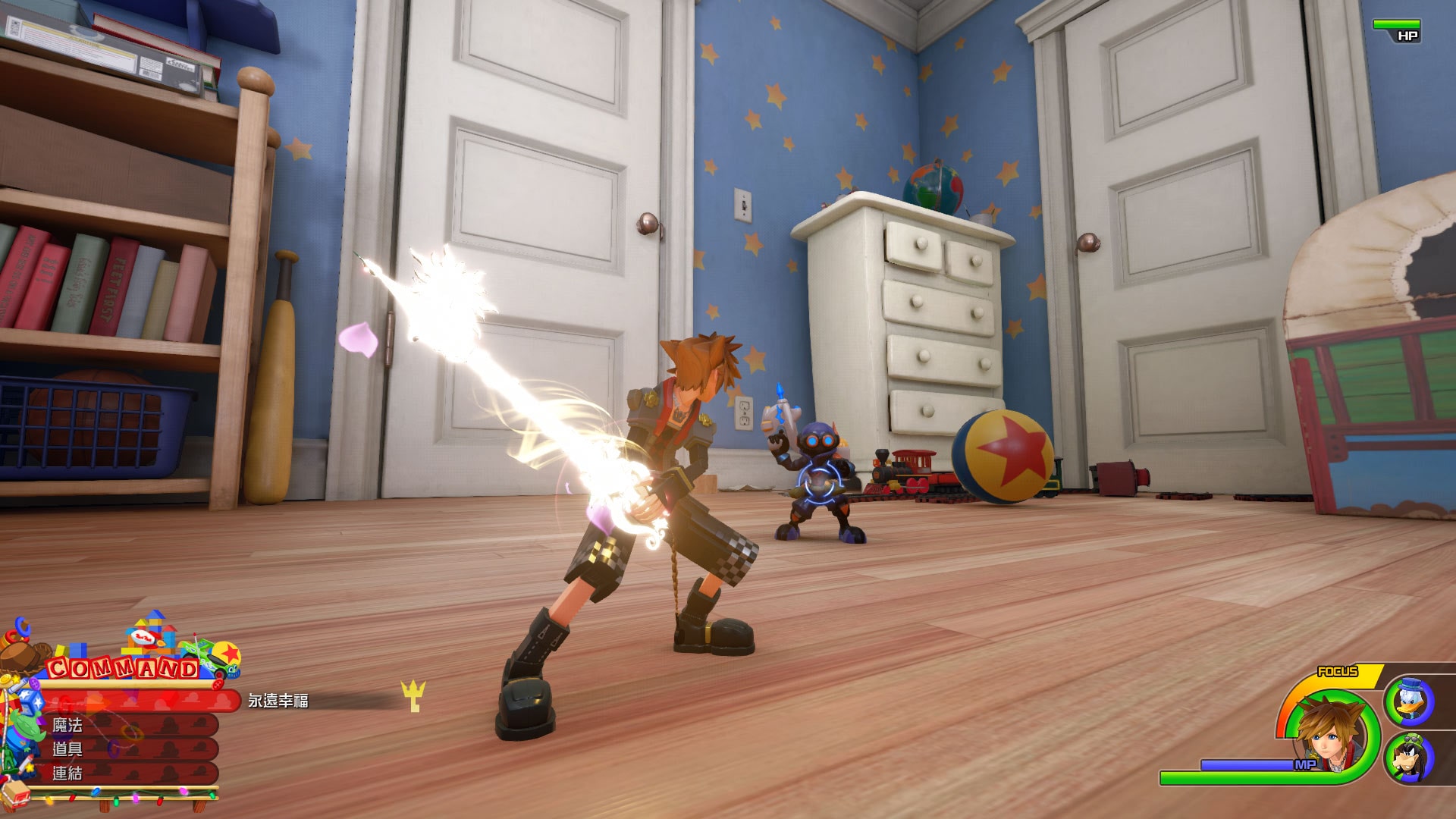
The Keyblade Forge at Moogle Shops lets you spend synthesis materials to improve Strength, Magic and eventually unlock additional abilities. Each Keyblade can reach level 10.
That means obtaining a weapon later in the story does not automatically make everything before it obsolete. The Kingdom Key, Ever After, Favorite Deputy and other weapons all have different abilities, transformations and Shotlocks that can make them useful for different builds.
You can equip three Keyblades at once
Sora can carry three equipped Keyblades and switch between them during combat. Think of the three slots as a loadout rather than choosing one permanent weapon.
A useful setup can mix a physical weapon, a magic-focused weapon and a third Keyblade whose transformation or Shotlock fills a specific tactical role.
Formchanges have more depth than the game initially shows
Attacking enemies builds Situation Commands. When the relevant Keyblade command appears, activating it transforms the weapon and changes Sora’s moveset.
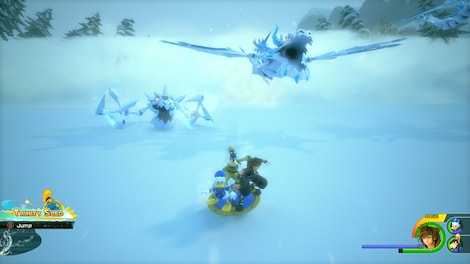
Some Keyblades have more than one transformation stage. Keep attacking while the first Formchange is active and another Situation Command may appear, allowing the weapon to transform again.
You can bank active Formchanges by switching Keyblades
This is one of the most useful combat rules the game barely highlights. When multiple Keyblades have active Formchanges, only the transformation attached to the Keyblade you are currently using has its timer continue to drain.
Switch away and its timer freezes. You can therefore prepare a transformation, swap weapons, build another one and switch back when you want the first form again.
You do not need this trick to finish Standard difficulty, but it becomes increasingly useful once you start learning the combat system properly.
Shotlocks and Airstep use the same targeting mode, but not the same resource
Holding the Shotlock button enters a targeting mode associated with Sora’s Focus gauge. Locking onto enemies and releasing the command triggers the Shotlock attached to your current Keyblade.
Different Keyblades have different Shotlocks, giving you another reason to think about your three-weapon loadout beyond raw Strength and Magic values.
Airstep is not just an Olympus tutorial gimmick
While using the same targeting view, you can Airstep directly toward valid environmental points or enemies. In combat, this effectively gives Sora a rapid gap closer that lets him reach distant targets without slowly running or jumping toward them.
Airstep does not consume the Focus gauge the way a Shotlock does. Use it aggressively when enemies separate from Sora or when the environment gives you vertical targets.
Cure intentionally empties the entire MP gauge
One of the easiest systems for newcomers to misread is Cure.
Cure, Cura and Curaga consume all of Sora’s remaining MP. It does not matter whether the gauge is full or nearly empty. Casting the spell sends Sora into MP Charge until his magic recovers.
That means you generally want to spend offensive magic before healing rather than casting Cure while sitting on a completely full MP bar.
Simple combat habit: if you know you are probably going to heal soon, spend some MP on Fire, Blizzard, Thunder or Aero first. Cure will empty whatever remains anyway.
Set up your shortcuts immediately
KINGDOM HEARTS III gives you three shortcut sets. Use them. At minimum, keep your preferred Cure spell and your most-used offensive magic available without navigating the Command Menu during a boss fight.
Links are also one of Sora’s emergency recovery tools
Links replace the traditional Summons of the older Kingdom Hearts games. They require a full MP gauge and consume all of it when activated.
The part beginners often miss is that activating a Link also restores Sora’s HP. On most difficulties it restores him completely; Critical Mode reduces that recovery to half of his maximum HP.
So a Link is not simply another flashy offensive ability. If your MP is full and a dangerous fight suddenly goes wrong, activating one can simultaneously save Sora and put you into a powerful temporary moveset.
Little Chef’s food is a real combat system, not a side activity
Once cooking becomes available in Twilight Town, meals provide temporary stat bonuses to Sora and the party.
The individual bonuses are useful, but combining dishes into a complete meal can also activate a Full Course Bonus. These additional effects can make difficult bosses significantly more manageable.
Ingredients are found throughout the worlds, and Donald and Goofy will regularly point them out. Picking them up may feel like busywork during exploration, but having a stocked kitchen later saves you from deliberately farming basic ingredients before tougher fights.
Save useful meals as favorites
If you find a combination whose stat increases and Full Course Bonus work well for your build, save it. You do not need to reconstruct the meal from memory every time.
Photograph Lucky Emblems whenever the party points one out
Lucky Emblems are Mickey-shaped symbols hidden around most worlds. Once the Gummiphone camera becomes available, photographing them earns rewards at specific milestones.
These are much more important than ordinary collectibles. Rewards include AP and stat boosts, strong accessories and armor, and an Orichalcum+ needed for Ultima Weapon synthesis.
They are also connected to the secret ending.
None of them are missable, so there is no need to turn the first playthrough into a collectible checklist. But if Donald, Goofy or another party member says they see a Lucky Emblem nearby, taking thirty seconds to look around can save a lot of backtracking later.
Donald is not useless: customize your party AI
The long-running joke about Donald refusing to heal Sora hides an actual game system. Open the Customize menu and you can change how frequently party members use abilities, recovery actions and other resources.
If you want Donald to conserve MP for healing, configure him accordingly. If you prefer him to cast offensive magic constantly, you can lean the other way.
Party members can also use the items you give them
Anything placed in a companion’s item slots is a resource that their AI can potentially spend. Do not casually fill Donald and Goofy’s inventories with valuable Elixirs and then act surprised when they disappear during an ordinary battle.
For important fights, though, deliberately giving the party Potions, Ethers or other recovery items can provide another layer of automated support.
Do not start Re Mind until you finish KINGDOM HEARTS III
Current PC releases and the new Collection [I–III] package KINGDOM HEARTS III together with its Re Mind expansion, which can make it look like ordinary DLC you should weave into the campaign.
Do not do that.
Re Mind takes place around and after the climax of KINGDOM HEARTS III and directly assumes you have seen the main ending. Finish the base game first, then begin Re Mind from a cleared save.
It also leads into much harder post-game material than the regular campaign. If the main story felt comfortable, do not assume the later optional encounters will be equally forgiving.
Playing through the complete Kingdom Hearts collection?
G2A Plus Free lets you earn Plus Points when shopping, with 100 Plus Points worth €1 toward future orders. Plus Premium can also provide automatic discounts of up to 10% on 10 eligible items each month, higher discount codes, gaming rewards and priority post-purchase help.
The best habits to learn early
Do not try to use every combat system at once
KINGDOM HEARTS III throws far more options at Sora than KINGDOM HEARTS FINAL MIX or even KINGDOM HEARTS II. That can make the early combat look more complicated than it really is.
Start with the fundamentals: attack, block, dodge, magic and Cure. Then add Keyblade switching. Then learn Formchanges and Shotlocks. Use Airstep when distance becomes a problem. Treat Links as both powerful attacks and emergency recovery. Once those systems become instinctive, the spectacle stops feeling random and starts becoming something you actively control.
And if this is your first trip through the entire saga, do not rush it just because KINGDOM HEARTS IV is waiting further down the road. The new Collection [I–III] finally makes most of Sora’s journey easy to access in one place, so take the time to understand the systems rather than simply racing toward the credits.
More KINGDOM HEARTS guides
- KINGDOM HEARTS II Final Mix guide hub: Beginner tips, Drive Forms, Keyblades, synthesis and more
- KINGDOM HEARTS FINAL MIX guide hub: Beginner tips, builds, magic, Trinity Marks, Ultima Weapon and secret bosses
- KINGDOM HEARTS games in order: The best story order to understand everything
- KINGDOM HEARTS story: Everything you need to know
- KINGDOM HEARTS Collection [I–III] vs. INTEGRUM MASTERPIECE: What’s the difference?