

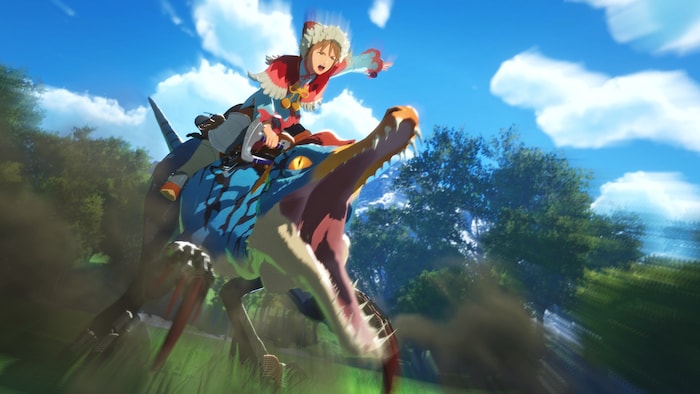
Combat is Monster Hunter Stories 3’s core system, the final test of your gear upgrades, the ecosystem revitalization, and the monstie training.
As such, it’s probably a good idea to understand how MHS3 combat system works at its core. Thankfully, despite many moving parts, it’s quite easy to figure out.
Let’s get into it, here are all the core concepts of Monster Hunter Stories 3 combat system gathered in one place, rather than a dozen entries of in-game codex.
Combat guide summary
- Internalise the Power-Technique-Speed triangle
- Keep an eye out for a chance to have a Head-to-Head and Double Attacks (blue and gold targeting lines)
- Learn monsters’ attack patterns through observation and Monsterpedia
- Save your Stamina until you have a good setup for your Skills
- Breaking Wyvernsoul can save your skin and open the monster up for extra damage
- Break monster parts for extra tactical advantage
- Try to exploit monsters’ damage weaknesses and prepare your defenses for their attack element
Table of Contents
Combat foundations
The fundamentals are formed around a simple Rock-Paper-Scissors system. Everybody’s basic attacks come in three types: Power (red), Speed (blue), or Technique (green).
There are no mechanical difference between them, Fast attacks won’t hit sooner, Powerful won’t deal more damage, but the distinction is important, as one type beats another:
- Power defeats Technique
- Technique defeats Speed
- Speed defeats Power
On each turn, you have two options:
- Basic attacks – they cost no Stamina, follow the Power-Technique-Speed typing, and just deal weapon damage with no extra effects.
- Skills – they cost Stamina, have additional effects, and some of them can be untyped (yellow), outside of the Power-Tech-Speed triangle.
Head-to-Head
When two creatures are attacking one another with single-target typed attacks, they will enter the so-called Head-to-Head, with three results: you win, you lose, or you have a draw.
When you win the HtH, you will receive reduced damage (at worst you’ll be reduced to 1 HP), and deal more of your own.
Important: if you use a “yellow” skill, you won’t enter a Head-to-Head. Only the Red-Green-Blue basic attacks and abilities count.
Reading the target lines
To spot potential HtH, pay attention to the shiny lines between your party and the enemies. There four options:
- No line – the monster will use a self-buff or an Area-of-Attack ability: doesn’t trigger a HtH
- Red cone – the monster will use an untyped skill: doesn’t trigger a HtH
- Blue line – the monster targets one of your allies: can trigger a Head-to-Head
- Yellow line – the monster targets you: can trigger a Head-to-Head
When in doubt, you can check the targeting lines by tapping right trigger on a gamepad/Shift on a keyboard to pull up a battle status screen.
Double Attacks
When a Rider and a Monstie have the same target and use the same attack type, if one of the would win a Head-to-Head they instead use a Double Attack.
E.g. a Rathalos uses a Powerful skill in a HtH against a Technical Nerscylla and a Rider uses a Powerful attack against her.
Double Attacks deal increased damage and negate the oncoming blow altogether. Importantly, you don’t need to Double Attack with your own Monstie, if it is advantageous, you can DA with your partner’s companion, and they can DA with yours.
WARNING: the Rider must use a Basic Attack for a Double Attack to happen. It doesn’t work with Skills.
Changing attack types
The availability of attack types depends on the user.
- You can change attack types at will by flicking the left analog stick on a gamepad or pressing A/D on a keyboard. You can do it for both Basic Attacks and Skills.
- Your monsties default to one attack type, but they might unlock or receive additional options.
- Enemy monsters switch attack types based on their state (=Transformation), such as becoming Enraged.
E.g. Nerscylla uses Technique by default, but switches to Speed when Enraged.
Certain monsters can have more than one transformation. Observe them carefully, as every state is visually represented by extra visual effects, or even entirely new animation sets.
Tip: Your Monsterpedia has information about the attack patterns of the monsters you’ve encountered.
Stamina management
Your Stamina reserves, represented by the yellow bar under the health bar, are quite limited and regenerate slowly, so you can’t rely on skills each turn.
Keep an eye on your Stamina and plan ahead. It doesn’t matter what skills your weapon has if you can’t use them because you ran out of steam. It also applies to your monsties: when they run out of Stamina, your options become quite limited until it regenerates.
If you have skills exploiting or reacting to a certain condition, try to keep enough stamina to use them when it occurs.
You can quickly boost stamina with items, but it usually means your Rider can’t do anything else on that turn.
Wyvernsoul
Monsters have their own sort-of Stamina: the Wyvernsoul gauge. It essentially reflects the monster’s posture.
When depleted, it will turn blue and cause most monsters to Stagger, making their attacks more likely to miss. When it’s broken fully, the monster will be toppled for a turn, which opens two options for you:
- The first is the Synchro Rush a time-limited (not really a QTE) prompt letting your team unleash automated, guaranteed-hit attacks for massive damage.
- If you ignore the Synchro Rush prompt, the monster will stay toppled for one turn all of your attacks and skills will be guaranteed crits. It’s a perfect opening to unleash your most powerful skills and use accumulated meters.
Most monsters will have just one Wyvernsoul meter, so them getting Staggered immediately Topples them. However, certain hardy beasts will be able to take more hits. It will be reflected by red orbs near their Wyvernsoul meter: their Wyvernsoul Stock.
Tip: if you want to focus on Toppling, pick weapons with high WS and skills dealing extra WS damage.
Breaking monster parts
Monsters usually have at least two targetable parts, such as Head, Torso, Wings, etc.
Breaking a part provides valuable tactical advantages, such as causing a stun or making it fall to the ground. The effects are usually strong and valuable enough to be worth a shot. In some battles it’s even the key to success.
Pay attention to the monster appearance and behavior to identify weak spots. In some cases, your companions might also offer additional advice.
The target selection wheel tells you what will happen when you break the selected part, and what kind of damage will be the most effective.
Damage types
While dealing with monsters, you need to pay attention to damage types. There are two categories you generally need to account for:
Physical damage type – Slashing, Piercing or Blunt
Each weapon has one of three damage types, e.g. Bow is Piercing, while Hunting Horn is Blunt. You will usually need all three, because different monster parts are vulnerable to different types. Luckily, you can have three weapons with you.
Elemental damage type – Non-Elemental, Thunder, Fire, Ice, Water, Dragon
Monsters you fight will have different combinations of resistances and weaknesses to each of those, e.g. Nerscylla is weak to Fire and Thunder, but resistant against Dragon and Water.
Outside of combat, you can check the monsters’ resistances in the Monsterpedia, while in battle you can press right trigger on gamepad/Shift on keyboard to pull up the battle status screen.
WARNING: monsters can deal elemental damage as well. If you’re getting pummeled, consider choosing an armor resistant against that element.
Kinship
Your final tool is your Rider’s kinship with their monstie.
As you make successful attacks, win Head-to-Heads, use Synchro Rush, etc. you will gradually fill the Kinship Gem. When full, it will display a prompt allowing you to hop on your monstie and start acting together, as one unit. It has several benefits:
- It heals you both and clears statuses
- You can choose basic attack type like you would with a weapon – easier to win Head-to-Heads
- You can keep building the meter up easier
The most powerful effect, however, is a Kinship Skill: a special move guaranteed to deal massive damage to the target and, possibly, bring in some additional effects. It gets stronger with extra Kinship charges, so if you’re not in a rush, consider filling the gem as much as you can. Kinship Skills also act first in the initiative order, an advantage worth exploiting.
Occasionally, your partner will join your Kinship skill with their own, if their Gem is filled. These team-ups are devastating when they happen.
Go forth and ride
This is all you need to start bashing monsters around like crazy. There are many more advanced tools, such as traps, bombs, or skill affinities, but knowing the fundamentals will carry you very far even without deeper optimization.