




The Legend of Zelda: Ocarina of Time may be 28 years old at its core, but the Switch 2 remake is clearly designed for people who never had to learn Zelda on a Nintendo 64 controller.
Nintendo has added manual jumping, a dash, modern camera control, faster item handling, expanded hints and the new Threads of Time system while keeping the original adventure’s more deliberate structure. That makes the remake much easier to approach, but it can still feel very different if your idea of Zelda comes mainly from Breath of the Wild.
This guide is deliberately spoiler-light. It explains how to think about Ocarina of Time, which systems matter from the opening hours and which habits will save you frustration later without telling you the solution to every dungeon.
If this is your first Zelda entirely, our Ocarina of Time newcomer guide explains why you do not need to play any earlier game first. For the remake’s release details and full feature set, see our Ocarina of Time Switch 2 overview.
Ocarina of Time beginner checklist
| Do this early | Why it matters |
|---|---|
| Learn targeting | Combat is designed around facing and circling enemies, not free-form button mashing. |
| Talk to Navi and NPCs | Hints often explain enemy weaknesses, objectives or nearby mechanics. |
| Practice jump and dash | These are new remake mechanics and affect exploration throughout Hyrule. |
| Inspect suspicious scenery | Cracks, targets, unusual walls and unreachable ledges often signal a future solution. |
| Remember places you cannot reach yet | Ocarina constantly rewards returning with new items. |
| Use Threads of Time when stuck on the story | It shows your progress and next objective without replacing dungeon puzzle-solving. |
Table of Contents
- Learn targeting first
- Listen to Navi
- Do not play it exactly like Breath of the Wild
- Talk to people
- Use jump and dash properly
- Use the free camera as a puzzle tool
- Spend Rupees instead of hoarding them
- Understand Heart Pieces
- Never underestimate bottles
- Songs are abilities, not collectibles
- Pay attention to day and night
- Return to old areas
- Let each dungeon item teach you something
- Read environmental clues
- Young and Adult Link do not use everything the same way
- Use Threads of Time selectively
- Do side content when something looks interesting
- Use items in combat
- Veterans should not trust muscle memory completely
- Do not rush Hyrule
1. Learn targeting before you learn fancy combat
Ocarina of Time’s targeting system is one of the most important things the original game contributed to 3D action games, and Nintendo has deliberately kept its basic philosophy intact.
Lock onto an enemy and Link keeps facing it as you move. That lets you circle an opponent, block attacks, move backward without turning around and respond more deliberately instead of swinging at whatever happens to be in front of the camera.

Do not treat every fight as a race to land more sword hits than the enemy. Many opponents have defensive states, openings or attacks you are supposed to respond to. Target first, watch what the creature does and attack when the game gives you an opening.
Beginner rule: if sword combat feels chaotic, you probably need to target more, not attack faster.
2. Navi is an actual gameplay tool
Navi has spent decades being reduced to jokes about shouting for Link’s attention, but beginners should actually listen to her.

When you focus on a new enemy, Navi can explain what it is and often gives a clue about how to fight it. That is particularly useful in a game where some creatures are less about raw damage and more about recognizing a behavior.
Nintendo has said that the remake introduces mechanics gradually and gives clear feedback as players learn them. Navi is part of that teaching process rather than background chatter.
3. Do not play Ocarina exactly like Breath of the Wild
You can explore Hyrule, ignore the main path for a while and discover optional things, but Ocarina is fundamentally a structured adventure.
You are not expected to climb every wall or solve every obstacle with physics. Progress often depends on a particular item, song or story event.

If you can clearly see a Heart Piece or suspicious ledge but cannot find a way to reach it, that does not necessarily mean you missed a physics trick. The game may simply be showing you something that will make sense after you obtain another tool.
Nintendo itself sees this as one of the remake’s strengths for modern players. Producer Eiji Aonuma specifically wants people raised on the freedom of newer Zelda games to experience Ocarina’s carefully paced structure. Our feature on why Nintendo remade Ocarina of Time goes deeper into that design philosophy.
4. Talk to people, especially early
Ocarina is not a game where NPC dialogue is merely flavor text sitting underneath an exclamation mark.
People tell you about places, nearby problems, rumors, items and characters. Sometimes they simply make Hyrule feel alive, but sometimes a throwaway-sounding comment is the clue that pushes you toward the next useful discovery.
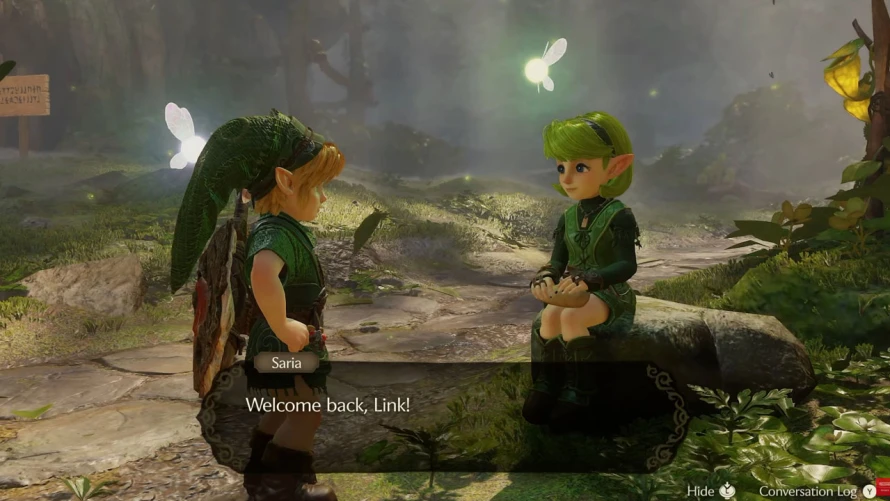
The remake significantly expands dialogue and voices major scenes, so even veterans should not automatically skip conversations they remember from 1998.
5. Learn what the new jump and dash can actually do
The original Ocarina of Time had no conventional jump command. Link automatically jumped from appropriate ledges.
The remake changes that. You can jump manually and run freely, and rolling can transition into faster movement.
Practice these controls in Kokiri Forest. They help with general traversal, make Hyrule Field less tedious and play a role in redesigned puzzles.
But do not assume manual jumping turns Ocarina into a platformer where you can bypass every locked route. Nintendo has rebuilt terrain and puzzles specifically around Link’s increased mobility.
6. Treat the free camera as another puzzle tool
Right Stick camera control is one of those improvements that sounds boring until you remember the original game was designed around heavily controlled viewpoints.
Use it constantly.
Look above doors. Inspect ceilings. Check what is behind pillars. Pan around a room before touching the obvious switch. Zelda puzzles frequently communicate through architecture, and being able to inspect that architecture freely is one of the remake’s biggest beginner advantages.
7. Spend Rupees instead of treating them like a retirement fund
Rupees are Zelda’s currency, and you will find them in grass, pots, treasure chests, minigames and plenty of other places.
The important beginner habit is not to become obsessed with hoarding every one of them. Your wallet has a maximum capacity, and additional money stops being useful once you hit that limit.
If your wallet is regularly full, buy the useful supplies you actually consume or investigate how to improve your carrying capacity rather than leaving money everywhere because you are afraid to spend it.
8. Heart Containers and Pieces of Heart are not the same thing
Major bosses traditionally award full Heart Containers, increasing Link’s maximum health immediately.
Pieces of Heart are smaller optional rewards hidden around Hyrule. Collect enough pieces and they combine into another permanent heart.
This is why suspicious side paths and minigames matter. Optional exploration can translate directly into more survivability before a difficult dungeon or boss.
9. Bottles are some of the most useful inventory slots in the game
A bottle sounds considerably less exciting than a sword, bow or magical artifact. That is exactly why beginners often underestimate them.
Bottles can carry useful substances, creatures and recovery items. They also appear in puzzle and quest contexts. A spare bottle can make exploration more flexible and sometimes turns an annoying trip back to town into something you can solve immediately.
Beginner rule: when the game offers an opportunity to obtain another bottle, that reward is probably more valuable than it first looks.
10. Ocarina songs are abilities, not optional music collectibles
The title is called Ocarina of Time for a reason.
Songs can open paths, interact with the world, change environmental conditions and eventually affect travel. Learning a new melody is closer to gaining a new ability than collecting a soundtrack entry.
You do not need to memorize every input perfectly. The remake makes songs easier to reference, and Nintendo has added microphone recognition that can respond when you hum a learned melody or play it on a real instrument.
The Nintendo Switch App’s ZELDA NOTES feature can also turn your phone into a virtual ocarina and provides additional music-related tools.
11. Day and night can change what is available
Hyrule does not behave exactly the same at every hour.
NPCs may be in different places, certain routes or activities can depend on the time of day and Hyrule Field becomes considerably less friendly after dark.

The remake makes this more consistent because Nintendo now allows the day-and-night cycle to continue even in towns where time previously behaved differently.
12. Return to old areas whenever you get an important new item
This is one of the most important habits in classic Zelda.
A bomb, projectile weapon, Hookshot-like tool or other dungeon item may solve the room directly in front of you, but it can also explain something you saw hours earlier somewhere else.
Remember suspicious obstacles. You do not need to write down coordinates, but mentally flag obvious cracks, unreachable platforms, strange targets and objects that seem designed for an interaction you cannot perform yet.
Ocarina rewards curiosity much more than attempting to clear every region completely the first time you enter it.
13. A new dungeon item usually teaches the dungeon’s language
When a dungeon gives you a major new item, stop treating it as loot and start treating it as a lesson.
Ask three questions:
- What can this interact with?
- Which obstacles in this dungeon suddenly make sense?
- Where outside this dungeon have I already seen something similar?
The game often introduces an item in a relatively safe situation, lets you practice it and then expects you to apply the same concept in more complicated rooms or during the boss encounter.
14. Cracks, targets and unusual scenery are rarely accidental
The remake has made some environmental clues easier to read than they were on Nintendo 64.
October hands-on reports found clearer targets for projectile and Hookshot interactions as well as more visible clues around certain hidden entrances.
That does not mean every secret glows bright orange. It means you should get into the habit of asking why a wall looks different, why one patch of ground is cracked or why a suspicious object sits in exactly the right place to be hit.
15. Young Link and Adult Link do not have identical toolkits
Nintendo openly markets Ocarina as an adventure across time, so this is not a spoiler worth hiding: part of the game is played as young Link and part as his older self.

The two ages do not simply change Link’s character model. Equipment availability changes, his physical capabilities differ and some problems are deliberately designed around what one age can do that the other cannot.
If an object or route stops making sense after the time transition, consider whether the answer involves approaching it as the other version of Link rather than searching for another hidden button.
16. Use Threads of Time when you lose the story, not every five minutes
Threads of Time is one of the remake’s most useful additions for newcomers.
It lets you review your story progress and check your next objective. An illustrated tapestry gradually develops as Link’s adventure continues, effectively creating a visual record of the journey.
Use it when you return after a break or genuinely forget where the main story was pointing.
Do not mistake it for a room-by-room puzzle solver. A dungeon can still expect you to examine the environment, understand its central mechanism and work out the route yourself.
17. Optional activities are often worth more than a throwaway reward
Fishing, shooting challenges, NPC errands, hidden areas and other side activities can reward you with permanent upgrades, useful items or Pieces of Heart.
You do not need to complete every distraction the moment it appears. But if an NPC gives you an unusual task or an activity feels more elaborate than simple scenery, there is usually a reason.
This is especially important for players used to modern open-world games where optional activities can become repetitive map markers. Ocarina has fewer systems, but individual side activities are often more bespoke.
18. Your sword is not the answer to every enemy
Bombs, projectiles and dungeon tools are not reserved for puzzles.
Try your equipment in combat. Some enemies react badly to specific items. Others can be stunned, exposed or attacked safely from a distance.
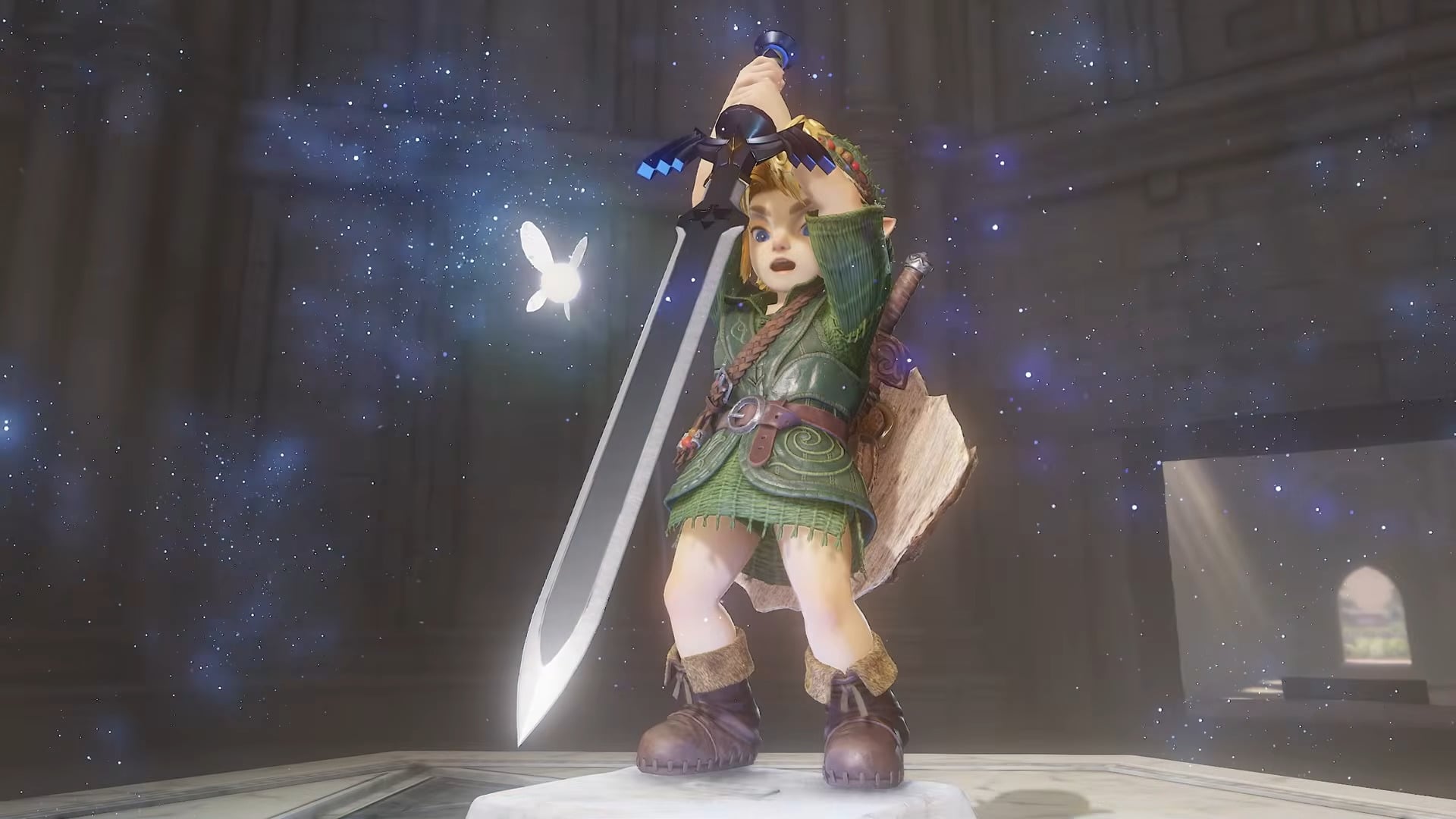
The remake’s quicker item handling makes this much easier than it was in 1998, so take advantage of it instead of falling back on sword-and-shield combat for every encounter.
19. Returning players should not trust 1998 muscle memory completely
Nintendo has kept the identity of Ocarina of Time, but the Switch 2 version is not a room-for-room recreation.
Hands-on previews have already identified redesigned dungeon puzzles, changed enemy behaviors, altered miniboss encounters, new environmental clues, expanded NPC dialogue and shortcuts that did not exist in the Nintendo 64 release.

If you played Ocarina dozens of times before, look at the room in front of you instead of assuming the same solution will always work.
Our Ocarina of Time remake changes breakdown catalogs the differences already identified before release.
20. Do not rush Hyrule just because you know where the next dungeon is
Nintendo actually experimented with making Ocarina considerably faster to move through.
The remake team tested additional warp points because crossing Hyrule can take time. Then it removed them after realizing that skipping the journeys also removed the discoveries players made on the way.
That is a useful mindset for your entire first playthrough.
You do not need to inspect every blade of grass, but let yourself notice a strange cave, a character standing somewhere unexpected, a song you have not used recently or a route that suddenly looks different at night.
Ocarina of Time is structured, but it is not a corridor.
What should you do in the first hour?
- Explore Kokiri Forest instead of immediately hunting the exit.
- Learn targeting and defensive movement on early enemies or training opportunities.
- Talk to the Kokiri and pay attention to Navi’s hints.
- Practice manual jumping, dashing and the free camera.
- Obtain the equipment needed for the first major objective.
- When you enter your first dungeon, inspect rooms before rushing toward the nearest door.
- Once Hyrule opens up, remember that night can change what happens on the road.
Beginner mistakes to avoid
| Mistake | Better approach |
|---|---|
| Swinging constantly at blocked enemies | Target, defend and wait for the opening. |
| Trying to complete every area immediately | Return after acquiring new items. |
| Ignoring NPC dialogue | Talk to people when entering a new settlement. |
| Using only the sword | Experiment with tools in combat. |
| Assuming manual jump breaks every puzzle | Remember that Nintendo redesigned rooms around it. |
| Immediately searching the web when lost | Try Navi, NPC clues and Threads of Time first. |
G2A Plus: members can collect Plus Points on eligible purchases, with 100 Plus Points equal to €1 toward future orders. Plus Premium also includes automatic member prices of up to 10% off on as many as 10 eligible items each month, higher discount codes, monthly gaming rewards and priority assistance after purchase.
Ocarina of Time beginner FAQ
Is Ocarina of Time difficult for beginners?
The remake is designed to be more approachable than the Nintendo 64 original. Nintendo has modernized movement and camera control, introduced mechanics gradually and added optional guidance such as Threads of Time. Dungeon puzzles still expect you to observe and think rather than follow a waypoint through every room.
Is Ocarina of Time a good first Zelda game?
Yes. It introduces the Link, Zelda, Ganondorf and Hyrule relevant to its own story, and Nintendo is explicitly treating the remake as an entry point for newcomers.
Should I play Breath of the Wild first?
No. The two games use very different structures, and neither is required to understand the other. If anything, Ocarina is useful for seeing the more structured dungeon-and-item design that defined 3D Zelda before the open-air era.
Can I get permanently stuck by missing an important item?
Core progression is designed around acquiring the items and songs required for the main adventure. Optional secrets and upgrades can be missed temporarily, but Ocarina frequently allows you to revisit earlier areas later with new equipment.
Should I use Threads of Time?
Yes when you forget the main objective or return after a break. It is especially useful for newcomers, but you do not need to consult it constantly. Exploring, talking to NPCs and solving dungeon puzzles remain important parts of the game.
Should I use motion aiming?
Use whichever aiming method feels more comfortable. Motion-assisted aiming can make small corrections easier for ranged weapons, but the remake does not require you to rely on motion controls.
Do I need to memorize all the ocarina songs?
No. The remake makes song information easier to check, and Switch 2 can even recognize learned melodies that you hum or play on an instrument.
Learn how Ocarina thinks and the rest becomes much easier
The most useful thing a beginner can learn is not one secret location or boss trick. It is the logic Ocarina of Time uses.
An enemy probably has a behavior worth observing. A strange wall probably means something. A dungeon item probably solves more than one room. A melody is probably useful outside the scene where you learned it. A place you cannot reach may simply be waiting for a future version of your inventory.
Once that clicks, Ocarina becomes far less intimidating. You stop asking “Where is the waypoint?” and start asking “What has the game taught me that could work here?”
If you want more context before launch, read our remake changes breakdown, Nintendo development feature, Zelda games in order guide and our complete Zelda timeline.