




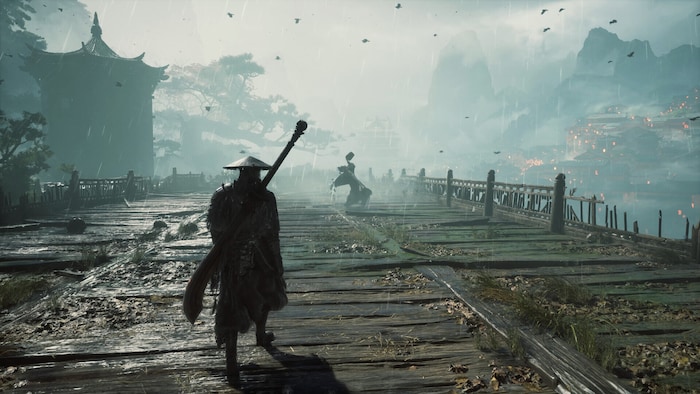
Phantom Blade Zero has four difficulty modes: Wayfarer, Pathbreaker, Hellwalker, and 66 Days. The first three cover the normal campaign from story-focused to highly demanding, while 66 Days is a post-completion challenge that combines Hellwalker-level combat with a limited number of deaths.
The important part is that higher difficulty is not just a matter of giving bosses bigger health bars. Enemy aggression, defensive pressure, and, at the top end, AI behavior change enough to make the same fight feel different. Pathbreaker is the best starting point for most action-game players, Wayfarer is ideal if you want the wuxia power fantasy without repeated boss walls, and Hellwalker is for players who specifically want Phantom Blade Zero’s parry and Sha-Chi systems to push back hard.
Quick recommendation: Start on Pathbreaker if you regularly play action games. Choose Wayfarer if you value exploration, story, and spectacular fights more than repeated mastery attempts. Pick Hellwalker if accurately parrying long attack strings sounds like the fun part. Save 66 Days for a later run.
Phantom Blade Zero difficulty modes compared
| Mode | Experience | What changes | Best for |
|---|---|---|---|
| Wayfarer | Forgiving / cinematic | Less aggressive enemies, lower incoming damage, easier guard breaks | Story, exploration, first-time action players, power fantasy |
| Pathbreaker | Standard | Baseline enemy aggression, damage, guard pressure, and combat tuning | Most players with action-game experience |
| Hellwalker | Hard | Much more aggressive enemies, heavier punishment, advanced and adaptive AI | Parry-focused players and action-game veterans |
| 66 Days | Hardcore challenge | Hellwalker combat plus a total limit of 66 deaths | Second playthroughs, challenge runs, mastery |
Wayfarer, Pathbreaker, and Hellwalker are available for a normal first playthrough. 66 Days is unlocked after completing the game and is designed as a separate challenge rather than the setting you should use to learn Soul’s combat system.
If you are still learning what Sha-Chi, blue attacks, red attacks, Ghoststeps, and weapon switching actually do, start with our Phantom Blade Zero beginner guide. Difficulty makes much more sense once the defensive loop clicks.
Wayfarer: for the wuxia action fantasy without the grind
Wayfarer is Phantom Blade Zero’s easiest setting. S-GAME describes it as the option for players who mainly want to experience the story, world, and cinematic combat at their own pace.
Enemies are less aggressive than on the higher settings, their attacks are less punishing, and their defenses are easier to break. That creates more opportunities for executions and lets Soul spend more time doing the spectacular part of the combat system rather than repeatedly getting interrupted while learning it.
Wayfarer is not a mode where combat stops mattering. You still need to understand blocking, dodging, parrying, Sha-Chi, healing, and unblockable attacks. The difference is that you get substantially more room to make mistakes while learning them.
Choose Wayfarer if…
- you mainly want the story, world, side quests, and exploration;
- you enjoy stylish action but dislike repeating bosses for long periods;
- precise parry timing is not normally your favorite mechanic;
- this is one of your first games built around active defense;
- you want Soul to feel more like the near-superhuman protagonist of a wuxia movie.
It is also a completely reasonable option for completion runs. Current trophy documentation indicates that difficulty does not gate the normal trophy list, so there is little reason to play above your preferred level purely for an achievement.

Pathbreaker: the default first-playthrough choice
Pathbreaker is the standard difficulty and the setting we would recommend to most players who already enjoy action games. It is also the default highlighted choice when starting a new game.
Enemies are aggressive enough that ignoring defense will get you punished, but the mode gives you enough latitude to learn an unfamiliar boss without requiring near-perfect execution immediately. Guards also take more deliberate pressure to break than on Wayfarer, making Sha-Chi management more central to fights.
That is important because Phantom Blade Zero is not built around waiting patiently for one safe opening every 20 seconds. You are expected to attack, block, parry, dodge, switch weapons to recover Sha-Chi, spend Phantom Edge charges, and keep the opponent defending as well.
Choose Pathbreaker if…
- you regularly play action RPGs or character-action games;
- you want bosses to demand learning without turning every encounter into a mastery test;
- you want blocking to remain useful while you learn parry timing;
- you want the game’s standard combat balance;
- you are unsure which difficulty to pick.
Best first-run choice: Pathbreaker is hard enough to make you learn Phantom Blade Zero’s systems, but forgiving enough that you can experiment with new weapons instead of feeling pressured to use only the safest build.
That experimentation is worth doing. Our best Phantom Blade Zero weapons guide covers strong options for survivability, guard breaking, Bleed, ranged pressure, and more technical playstyles.
Hellwalker: when you want enemies to fight back properly
Hellwalker is the hardest standard difficulty. This is also where Phantom Blade Zero’s approach to difficulty becomes more interesting than simply increasing damage.
S-GAME specifically describes Hellwalker as using more advanced and adaptive enemy intelligence. Enemies become much more aggressive, and the hardest opponents can react to spacing, punish failed attacks, and vary their offense instead of behaving like the same Pathbreaker encounter with a larger health pool.
In practical terms, parrying becomes more important. Holding block is still part of Phantom Blade Zero, but stronger guard pressure means you cannot rely on absorbing long strings forever. A missed attack is also more likely to become an opening for the enemy rather than simply a brief pause in your own combo.
Choose Hellwalker if…
- learning a boss’s complete moveset is part of the appeal;
- you enjoy games built around deflection, parrying, and active defense;
- you want enemy AI changes rather than only bigger numerical penalties;
- you are already comfortable recognizing Phantom Blade Zero’s blue and red attack cues;
- you want victories to come from execution and matchup knowledge.
Hellwalker is a particularly good fit for players whose favorite part of games such as Sekiro or Wo Long is eventually reaching the point where a difficult duel stops feeling chaotic and starts feeling rhythmic. Phantom Blade Zero is mechanically different from both, but the satisfaction of reading increasingly dangerous attack strings is similar.
If you are more interested in why its combat moves so differently from a conventional Soulslike, our Phantom Blade Zero Spotlight looks at how S-GAME translates wuxia choreography into its combat system.

66 Days: Hellwalker with an actual failure condition
66 Days is unlocked after completing the game and is intended as the ultimate challenge run. Its combat difficulty is based on Hellwalker, but every death also reduces a counter that starts at 66.
Reach zero and the run ends permanently. On the other three modes, the game’s “66 days” concept is part of the narrative rather than a real-world countdown. You can explore, complete side content, and spend as long as you need without the game deducting days because you rested or wandered off the main route.
That makes 66 Days fundamentally different from simply selecting Very Hard in another action game. Death itself becomes a finite resource. A boss you could brute-force through 30 attempts on Hellwalker becomes a strategic question: how many of those attempts are you willing to spend before changing weapon, leaving to strengthen Soul, or reconsidering the matchup?
Choose 66 Days if…
- you have already finished the game;
- Hellwalker no longer feels intimidating;
- you know which weapons and Phantom Edges solve difficult matchups;
- limited-life or permadeath-style runs sound exciting rather than stressful;
- you want a playthrough where every failed attempt has a measurable cost.
We do not recommend 66 Days as the way to discover optional bosses or experiment blindly. The standard modes are much better laboratories. Learn the Wulin first, then come back when you know which fights deserve caution.
Can you change difficulty in Phantom Blade Zero?
The launch build includes a Select Difficulty option under the in-game Settings menu for the normal campaign modes. That means choosing Pathbreaker at the beginning does not necessarily require restarting the entire game if a later encounter becomes much more frustrating than you expected.
66 Days is different. It is an unlocked challenge mode that must be selected for its own run and cannot simply be toggled on halfway through an existing campaign.
PlayStation also officially lists Phantom Blade Zero as supporting adjustable difficulty alongside control and tutorial reminders, pausing, and manual saving.
Which Phantom Blade Zero difficulty should you choose?
| You want… | Pick | Why |
|---|---|---|
| The easiest route through the story | Wayfarer | More room for mistakes and easier defensive breaks. |
| A cinematic kung fu power fantasy | Wayfarer | More fights end with Soul doing the spectacular stuff rather than restarting them. |
| The standard first experience | Pathbreaker | Best balance between learning, experimentation, and challenge. |
| Soulslike-level tension without fixed difficulty | Pathbreaker or Hellwalker | Pathbreaker is more forgiving; Hellwalker makes precise defense far more important. |
| The most demanding boss AI | Hellwalker | Advanced and adaptive behavior is the defining difference. |
| A high-stakes mastery run | 66 Days | Hellwalker combat plus a limited death budget. |
For most people, the decision is really between Wayfarer and Pathbreaker. Hellwalker is intentionally asking for something more specific: not simply competence, but enjoyment of repeated technical mastery.
If you are aiming for extensive exploration, optional bosses, weapons, and the different story routes on your first run, Pathbreaker is a good compromise. If you mainly care about seeing all of that content without combat becoming the reason you stop playing, Wayfarer is the better choice.
For the broader completion picture, including weapons, endings, optional content, and exploration, see our complete Phantom Blade Zero guide hub.
Phantom Blade Zero difficulty FAQ
What is the best difficulty for a first playthrough?
Pathbreaker is the best starting point for most players with action-game experience. Wayfarer is better if your priority is story, exploration, or learning the combat without repeated failure.
Is Wayfarer still challenging?
Yes. It makes enemies more forgiving, but Phantom Blade Zero still expects you to block, dodge, parry, manage Sha-Chi, heal, and recognize dangerous attacks. It is an easier action game, not an automatic story mode.
Does Hellwalker only increase enemy health?
No. S-GAME specifically highlights more advanced and adaptive enemy intelligence on Hellwalker. Current launch testing also reports much greater aggression and stronger punishment for mistakes.
Do I need Hellwalker or 66 Days for the Platinum trophy?
No. Current trophy documentation lists no difficulty requirement, so the normal trophy set can be completed on Wayfarer.
Is the 66-day limit active on normal difficulties?
No. On Wayfarer, Pathbreaker, and Hellwalker, the 66 days are part of the story rather than an actual gameplay timer. Only 66 Days mode converts them into a finite death counter.
Save more with G2A Plus
G2A Plus Free members earn Plus Points on eligible purchases, with 100 Plus Points worth €1 toward future orders. Plus Premium also includes member pricing with up to 10% off on up to 10 eligible items per month, higher discount codes, a monthly digital reward, and priority post-purchase assistance.
Pick the difficulty that makes the fights enjoyable
Phantom Blade Zero is built to make sword fights look like elaborate kung fu choreography, but there is no reason every player needs the same amount of resistance behind that spectacle.
Wayfarer lets you inhabit the fantasy. Pathbreaker asks you to understand it. Hellwalker wants you to master it. And 66 Days assumes you already have.
For a first run, start where that sounds fun rather than where it sounds impressive.