






If you keep losing early Gwent matches in The Witcher 3 Remastered, the problem is usually not that your cards are terrible. It is that you are spending too many of them in the wrong round.
Gwent is a best-of-three game built around resource management. You normally draw your hand at the start and do not refill it between rounds, which means every unit you play now is one fewer option later. Learning when to stop fighting for a round is therefore more important than simply placing your strongest card whenever you can.
For a new player, the easiest starting point is the Northern Realms deck. You begin with it, it has straightforward unit combinations, and it becomes much stronger quickly once you start buying cards from innkeepers and winning cards from other players.

The three rules that matter most: keep the deck small, do not waste cards winning a round you have already secured, and value cards that generate extra cards, especially Spies and Decoys.
Research basis: Current Remastered notes plus verified Witcher 3 Gwent card and rules documentation.
Remastered note: CD PROJEKT RED’s published Remastered changes do not list a redesign of Gwent’s core rules, so this guide uses the established in-game Gwent system.
Table of Contents
- How Gwent works
- Learn when to pass
- Keep your deck as small as possible
- Buy the White Orchard cards
- Why Spy cards are so strong
- Why Decoy is one of your best early cards
- Do not overload your deck with weather
- Use Northern Realms synergies
- Play every merchant and innkeeper you can
- Common beginner mistakes
- A simple early-game plan
1. How Gwent works in The Witcher 3
A Gwent match is won by taking two out of three rounds. Each player places units into melee, ranged, or siege rows, and the total strength of those cards determines the score for that round.
The important catch is that your hand is a shared resource across the entire match. You do not simply refill to a full hand after every round. If you burn six cards to win round one while the opponent only spends four, you may technically be ahead in rounds but behind where it really matters: available cards.
That is why Gwent often rewards the player who is willing to lose a round cheaply. A controlled loss that leaves you with two extra cards can be far more valuable than an expensive victory.
2. Learn when to pass
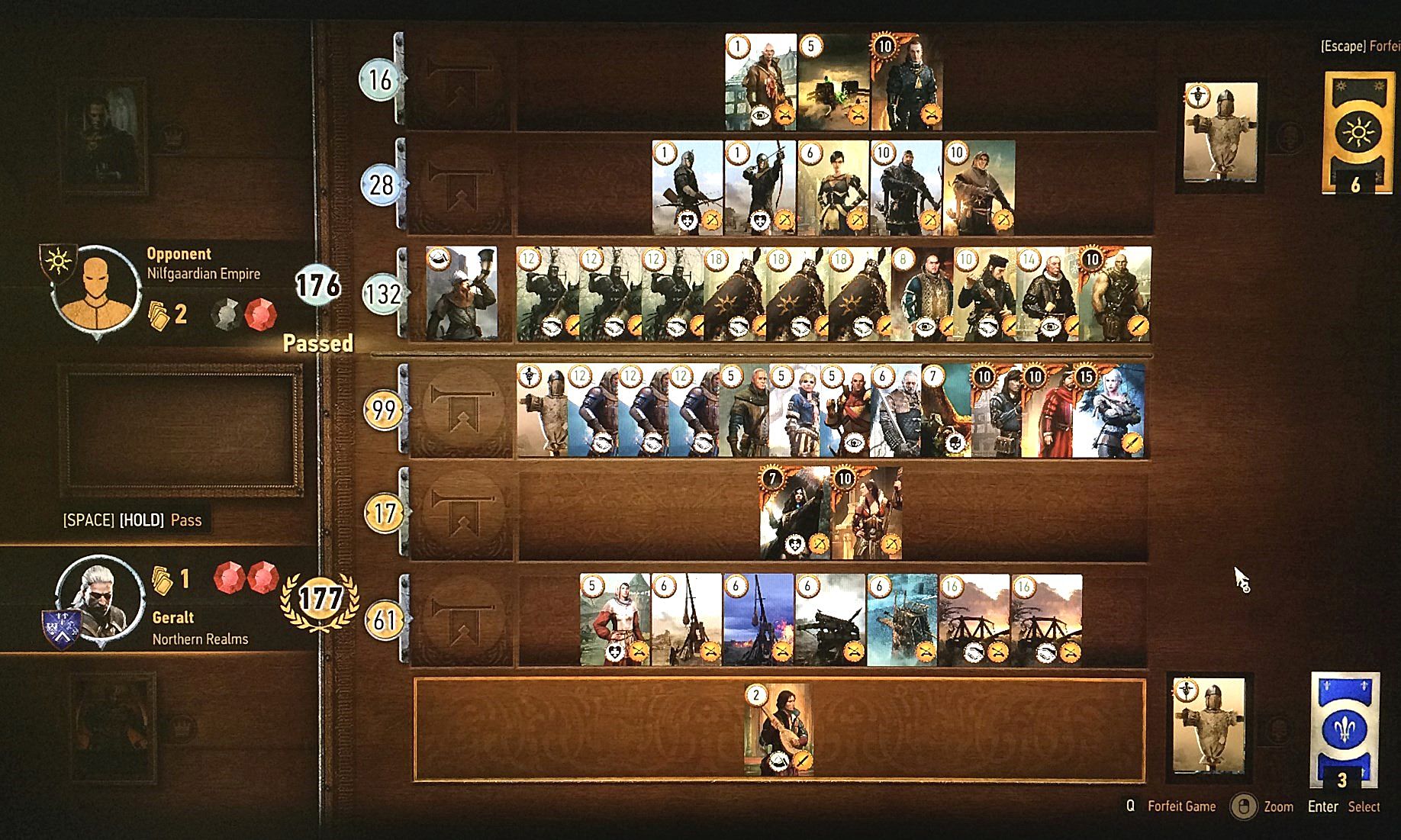
Passing is the first habit every new Gwent player should learn. Once you pass, you cannot play more cards in that round, so the opponent can decide whether to spend enough resources to beat your score or give up the round themselves.
Suppose you are ahead 24 to 10 and your opponent has already spent several cards. Playing another 8-strength unit because you want an even bigger lead usually accomplishes nothing. If your opponent was already going to pass, you have simply thrown away a card you could have used in the deciding round.
The opposite situation matters too. If your opponent commits multiple strong cards early and you would need half your hand to catch up, let them have the round. Make them pay for it, keep your cards, and attack the next two rounds with better resources.
Beginner rule: do not ask “Can I win this round?” Ask “How many cards will winning this round cost me?”
3. Keep your deck as small as possible
One of the easiest mistakes is adding every new card to your active deck. More cards do not automatically make a deck stronger. They make it less consistent.
Your goal is to draw your strongest and most useful cards as often as possible. If the deck is packed with low-strength units you no longer need, those weak cards compete with Catapults, Spies, Medics, Tight Bond units, and other cards you actually want to see.
Whenever you buy or win a clear upgrade, open the Gwent deck menu and remove a weaker unit. Treat the minimum deck requirement as a target rather than something you should exceed by ten or fifteen cards for no reason.
4. Buy the useful Gwent cards in White Orchard
Do not treat the White Orchard Gwent tutorial as something to finish and forget. The opening region gives you several ways to improve the Northern Realms starter deck before you ever reach Velen.
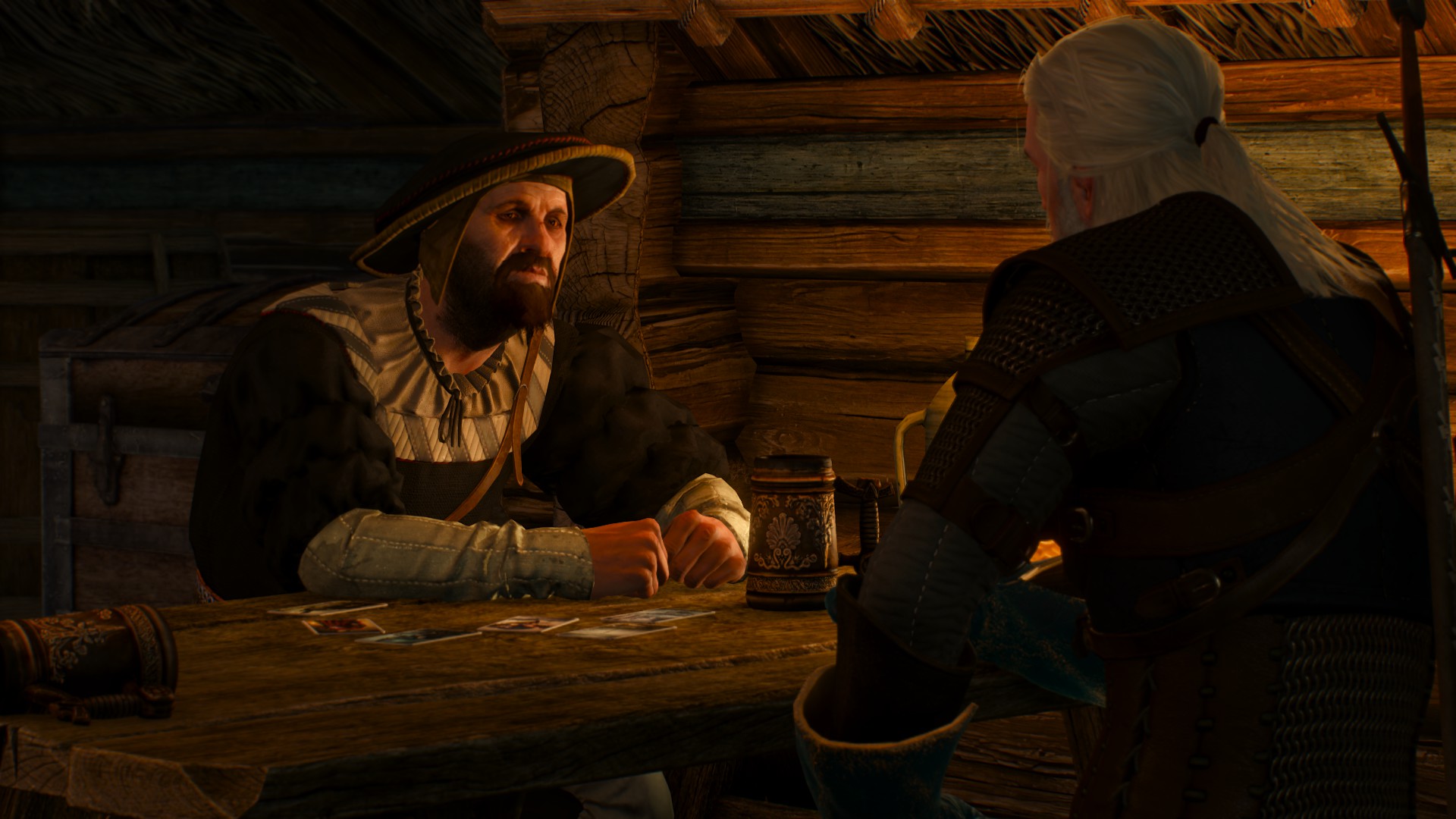
Beating the scholar Aldert Geert in the White Orchard tavern rewards the Zoltan Chivay card. If you miss the match there, current versions also provide another way to recover the card later, but winning it immediately is the simplest route.
More importantly, check the local merchant stock. A Decoy can be purchased in White Orchard, and useful Northern Realms cards such as Catapult and an alternative Foltest leader card are also obtainable early. These purchases improve the starter deck much more than hoarding a few extra Crowns.
5. Spy cards are powerful because they give you more cards
Spies initially look terrible. You play the unit on your opponent’s side of the board, which increases their score. In exchange, however, you draw additional cards.
That trade is often excellent because Gwent is fundamentally about card advantage. Giving the opponent a few points in a round you may not even intend to win is a small price for entering the next round with more options than they have.
Later Northern Realms decks become particularly strong once they gain access to better Spies. A Spy can also become even more valuable when Decoys and Medics start letting you reuse card-generation effects.
6. Decoy is one of the best early utility cards
Decoy swaps with one of your units already on the board and returns that unit to your hand. That sounds simple, but it creates several of Gwent’s strongest tactical plays.
The most obvious use is stealing an enemy Spy. If your opponent plays a Spy on your side of the board, use Decoy to pick that Spy up, then play it back onto their side and gain the card-draw benefit yourself.
Decoy can also rescue a strong unit from a round you are about to abandon, or let you replay units with useful abilities later. That flexibility is why buying one in White Orchard is such a strong early investment.
7. Do not fill your deck with weather cards
Weather cards reduce the effective strength of units in a particular row, which makes them look universally useful. They are not.
Every weather card in your hand is also a card that is not a unit. If you draw several weather effects that do not match the opponent’s strategy, you can end up with a hand full of answers to problems that never appear.
Use weather deliberately. Biting Frost is useful against decks that heavily stack melee rows, while Torrential Rain can punish siege-heavy Northern Realms setups. But carrying every weather type simply because you own it makes the deck less reliable.
Clear Weather is also worth understanding because it removes active weather effects from the board. One early Foltest leader option can perform the same general job, giving Northern Realms another way to protect its rows from weather disruption.
8. Build around Northern Realms synergies
The Northern Realms starter deck becomes much better when you stop evaluating cards only by the number printed in the corner. Some units become considerably stronger when paired with matching cards or supported by row bonuses.
The Tight Bond ability rewards playing matching units together. A single low-strength unit may look mediocre, but two or more copies can multiply each other’s strength and produce a much stronger row.
Siege is another Northern Realms strength. Cards such as Catapult become valuable building blocks, especially once you acquire more siege units and effects that amplify the row. The faction therefore rewards a focused deck more than a random collection of individually decent cards.
9. Play Gwent against merchants, smiths, and innkeepers
If an NPC has the option to play Gwent, challenge them. Winning matches is one of the main ways to build the collection, and early merchants are generally much more manageable than the named high-level Gwent opponents you will meet later.
Innkeepers are especially important because they frequently sell cards in addition to playing matches. Make a habit of checking their shop inventories before leaving a settlement.
This matters for Collect ‘Em All as well. If you care about completing the Gwent collection, start buying and winning cards early rather than trying to reconstruct your entire route across the Continent dozens of hours later.
10. Common Gwent mistakes new players make
| Mistake | Why it hurts | Better habit |
|---|---|---|
| Playing your strongest card first | Reveals your power too early and can waste resources | Open with cheaper or utility cards |
| Trying to win every round | Leaves you with too few cards for the final round | Sacrifice a round when the cost gets too high |
| Keeping every weak unit in the deck | Reduces the chance of drawing your best cards | Remove obsolete cards as you upgrade |
| Using too many weather cards | Creates dead draws against the wrong opponent | Only carry weather that supports a plan |
| Ignoring Decoy and Spies | Gives up one of the strongest forms of card advantage | Prioritize card-generation tools |
| Forgetting to shop for cards | Your deck stays weak even after dozens of hours | Check every innkeeper and relevant merchant |
A simple early-game Gwent plan
You do not need a tournament-level deck to start winning. A simple progression path is enough.
Early Gwent checklist:
1. Beat Aldert Geert in White Orchard.
2. Buy the White Orchard Gwent cards, especially Decoy.
3. Keep the Northern Realms deck close to the minimum size.
4. Remove weak units whenever you gain a clear upgrade.
5. Challenge merchants, smiths, and innkeepers as you travel.
6. Prioritize Spies, Decoys, useful leader effects, and cards with strong synergies.
During matches, spend the first round learning what the opponent wants to do. If they dump half their hand onto the board, consider letting them have it. If they pass early, win by the smallest margin possible and preserve the rest of your cards.
Once Spies and Decoys start entering the deck, the game becomes much easier to control because you can create a card advantage instead of relying purely on raw strength.
G2A Plus: Plus Free members earn Plus Points on purchases. Plus Premium also includes better member prices, a monthly free digital item or DLC, exclusive discount codes, and priority support.
Gwent gets easier when you stop trying to win every turn
The biggest shift for a new Gwent player is realizing that the score in front of you is only part of the match. Having 40 points on the board means very little if you needed eight cards to get there and your opponent only spent five.
Keep the deck lean, buy useful early cards, learn to pass, and pay attention to card advantage. Northern Realms becomes much stronger surprisingly quickly once weak starter units are replaced by better siege cards, Spies, Decoys, and synergistic units.
Before long, the question stops being whether you understand Gwent and becomes something far more dangerous: whether you are willing to interrupt Geralt’s search for Ciri because a random blacksmith has a card you have not won yet.
More Witcher guides on G2A News
If this is your first trip across the Continent, our Witcher 3 beginner’s guide covers combat, exploration, crafting, progression, and other fundamentals.
It is also worth clearing White Orchard thoroughly before heading into Velen, since the opening region contains your first Gwent opponent, purchasable cards, and several other early-game upgrades.