


Hell Let Loose: Vietnam is not just Hell Let Loose with a new coat of jungle paint.
Yes, both games share the same core idea: 50v50 tactical warfare, squads, commanders, battlefield roles, brutal firefights, and the kind of teamwork that makes a working microphone feel like military equipment.
But the move from World War II to the Vietnam War changes a lot. The original Hell Let Loose is built around tanks, artillery, towns, fields, supply lines, and clearer frontlines. Hell Let Loose: Vietnam brings in jungles, helicopters, patrol boats, tunnels, rivers, mortars, and more flexible movement.
In other words: the foundation is familiar, but the battlefield should feel very different.
TL;DR – Hell Let Loose: Vietnam vs. Hell Let Loose
Table of Contents
- Basic comparison
- What both games have in common
- Setting: World War II vs. Vietnam War
- Maps and battlefield flow
- Roles and squad structure
- Vehicles: tanks vs. helicopters and patrol boats
- Movement and interaction changes
- Teamwork, command, and communication
- Which one is better for new players?
- Can you grab both on G2A.COM?
- FAQ – Hell Let Loose: Vietnam vs. Hell Let Loose
- Same war machine, different nightmare
Basic comparison
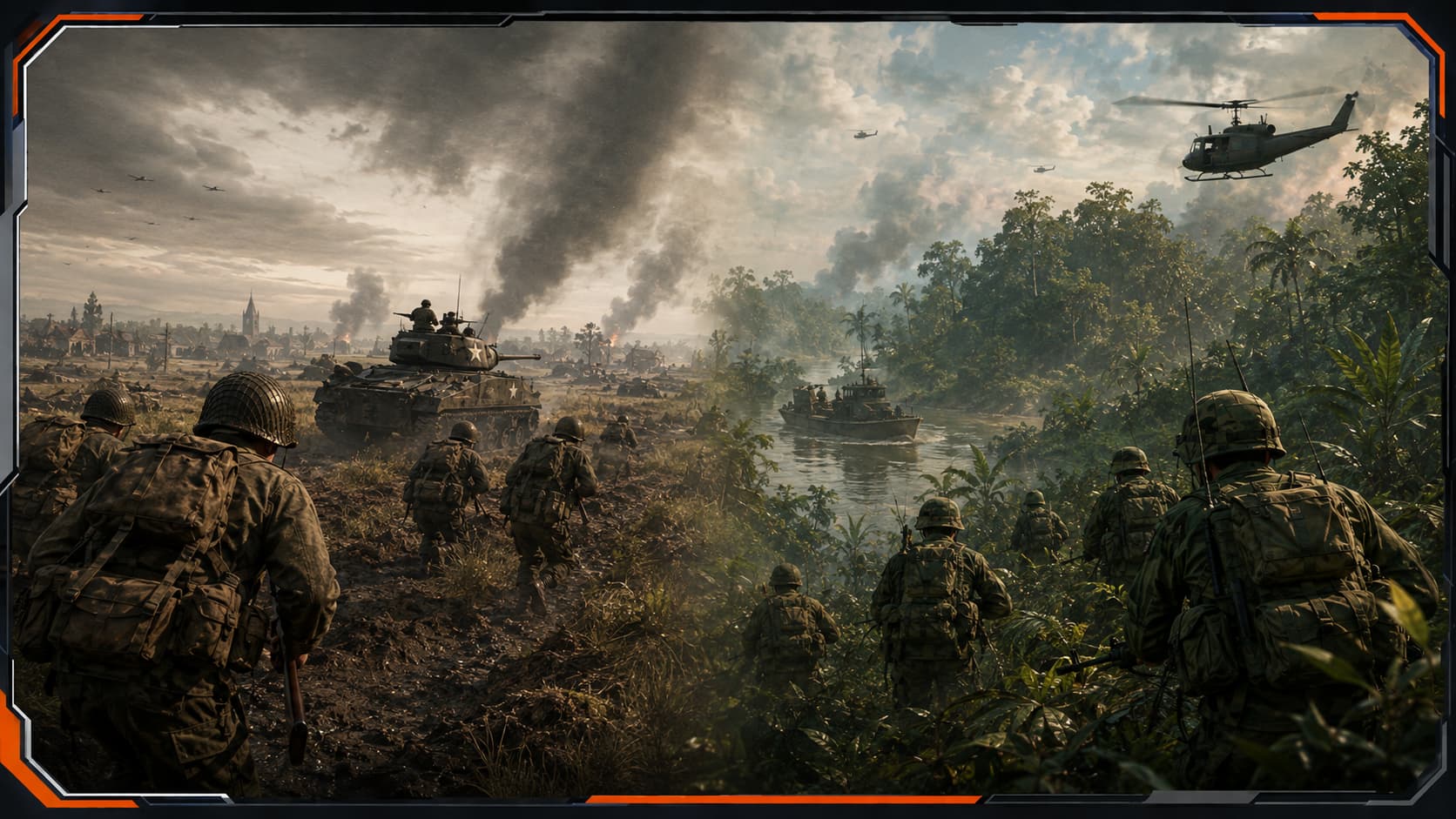
On paper, Hell Let Loose and Hell Let Loose: Vietnam are close relatives. Both are large-scale tactical FPS games built around 50v50 multiplayer battles, squads, chain of command, battlefield roles, and the idea that one well-coordinated team can absolutely roll over a group of lone wolves, however skilled they might be.
Hell Let Loose: Vietnam
Release Date: August 13, 2026
Genres: Tactical Shooter, FPS
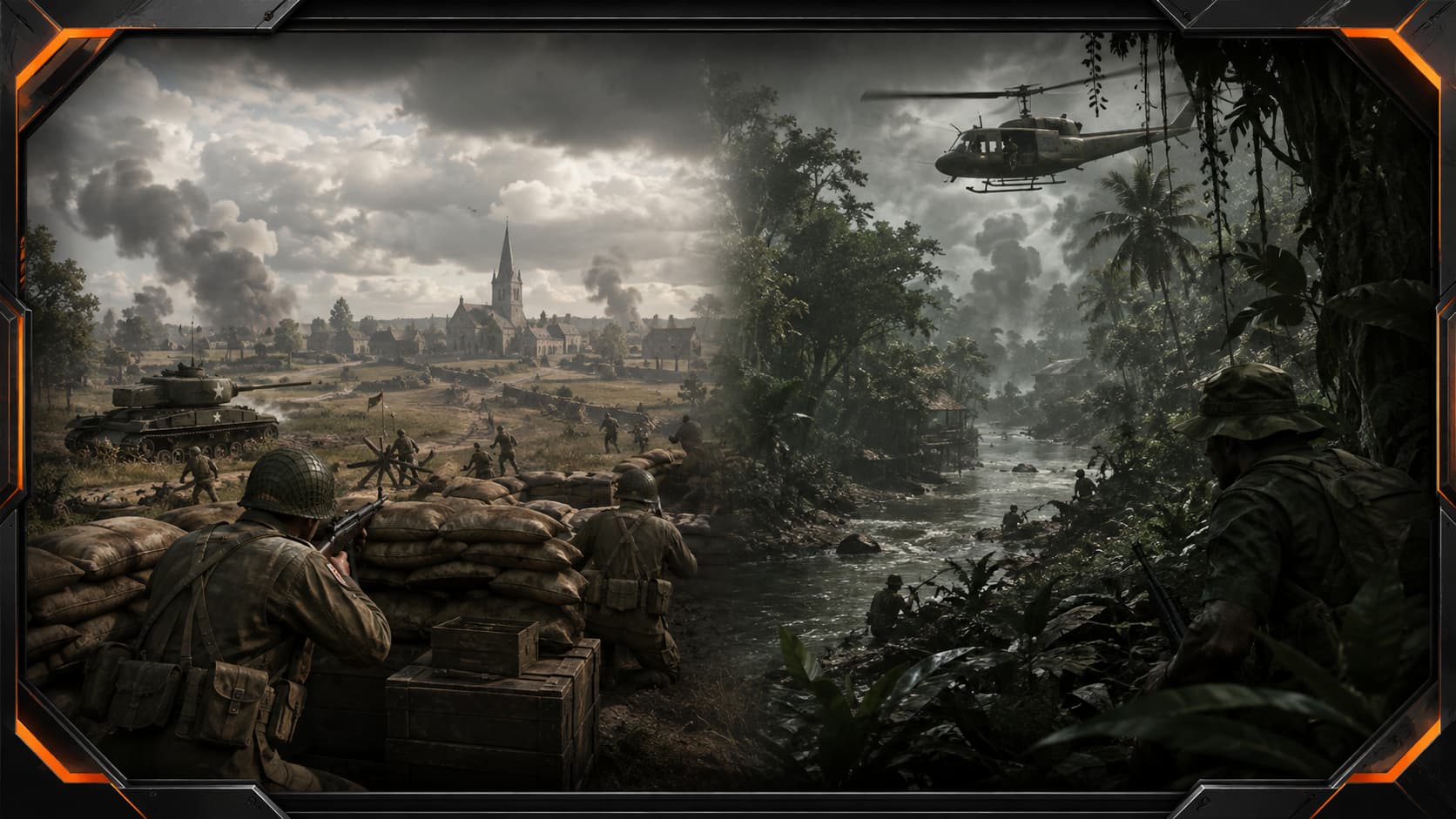
The big difference is the war itself. Hell Let Loose is a World War II shooter. Its identity is built around places like Omaha Beach, Carentan, Stalingrad, Kursk, Foy, and other European and North African battlefields. Hell Let Loose: Vietnam moves the formula into Vietnam, with US forces, the North Vietnamese Army, jungles, rivers, helicopters, patrol boats, tunnels, mortar squads, and more movement options.
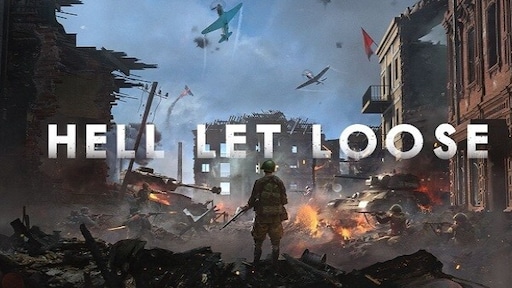
Hell Let Loose
Release Date: July 27, 2021
Genres: Tactical Shooter, FPS
What both games have in common
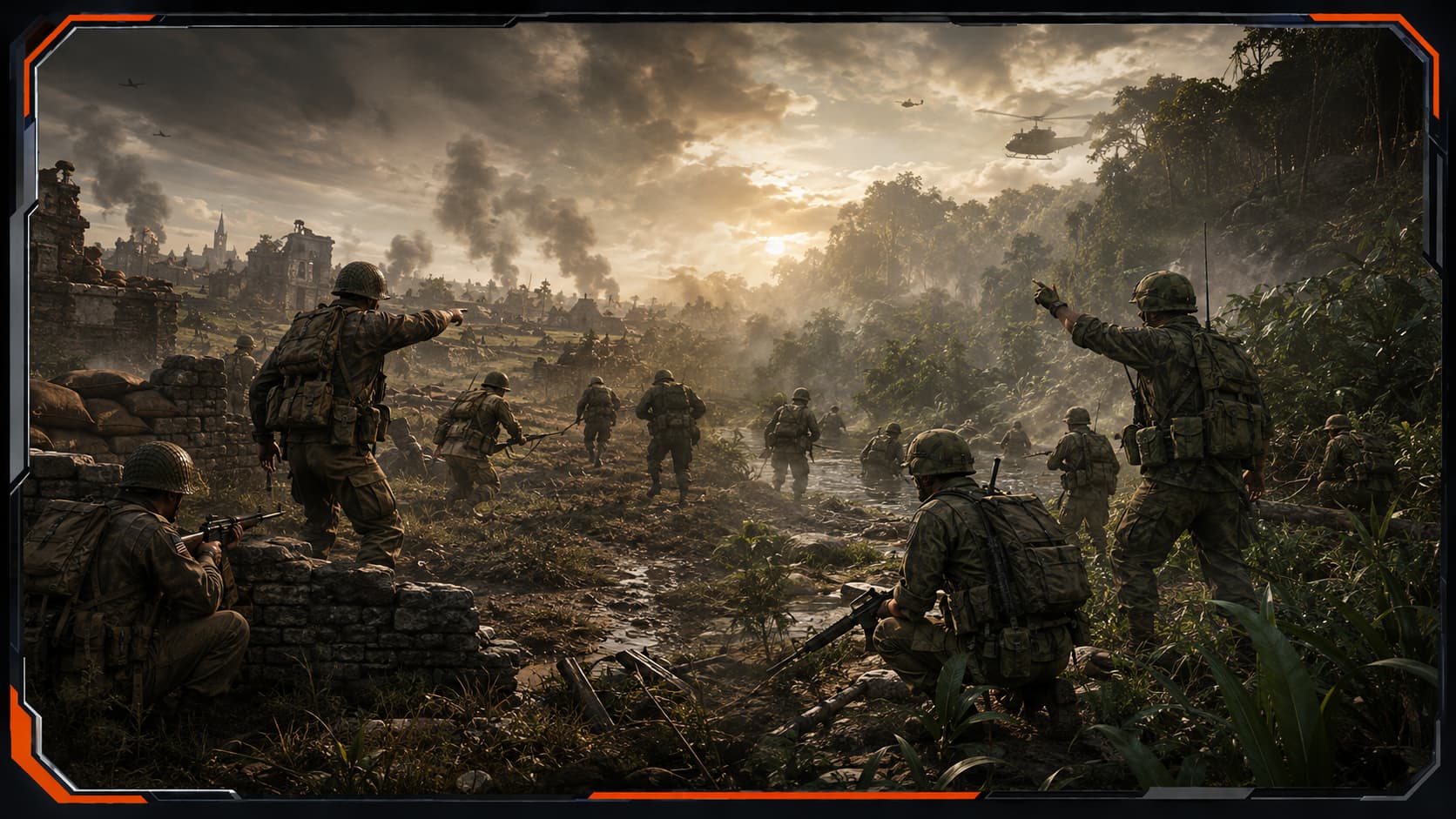
The most important similarity is simple: both games are built around teamwork first, shooting second.
Yes, you still need to aim. Yes, you still need to survive contact. But Hell Let Loose has never been about chasing kill-death ratio glory while ignoring the map. It is about building spawn points, defending sectors, moving supplies, listening to officers, following the commander’s plan, and making boring tactical choices that eventually become exciting because they win the match.
Hell Let Loose: Vietnam keeps that philosophy. It still uses 50v50 battles. It still asks players to join squads. It still rewards communication and chain-of-command play. It still looks like a game where one good squad can turn a match by doing something that looks completely unglamorous for five minutes before suddenly becoming the reason the whole team advances.
So, if you like Hell Let Loose because it makes war feel like a giant machine where every player is a gear, Vietnam should feel familiar. If you only like shooters where one player can sprint through a flank and delete half the lobby alone, both games will probably punish your optimism.
Setting: World War II vs. Vietnam War
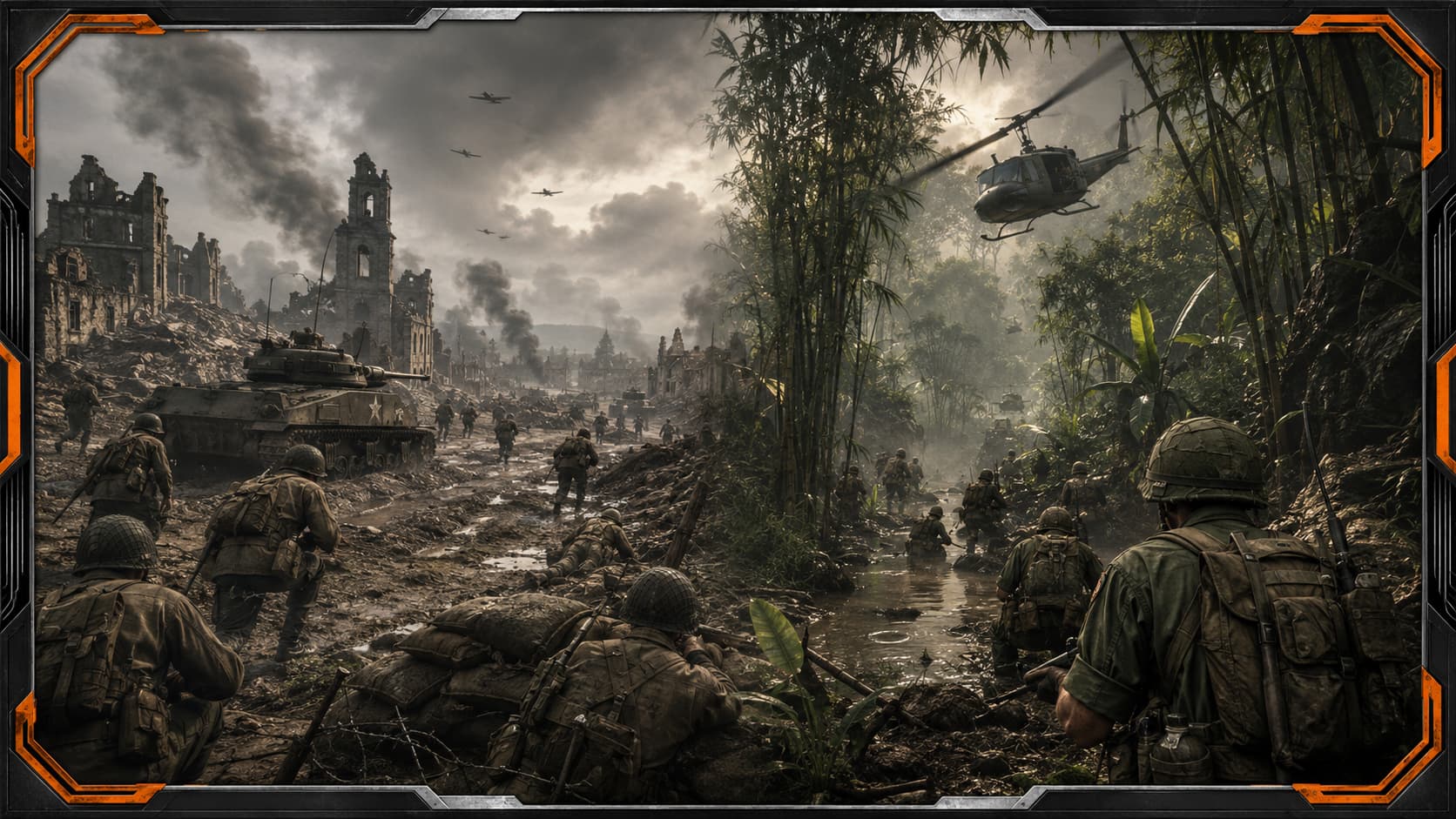
The biggest change is also the most obvious one: Hell Let Loose is World War II, while Hell Let Loose: Vietnam is the Vietnam War.
That is not just cosmetic. World War II gives Hell Let Loose a battlefield language most shooter players already understand: tanks rolling through towns, infantry crossing fields, artillery smashing strongpoints, machine guns locking down roads, engineers building defenses, and commanders using resources to shape the front.
Vietnam changes the rhythm. Thick jungle, rivers, tunnels, helicopters, patrol boats, and asymmetric faction tools should make the battlefield feel less readable. You are not always looking across a hedgerow or down a street. You might be moving through cover that hides everything, crossing water, listening for helicopters, or trying to understand where the NVA tunnel network is letting enemies appear from.
In short: Hell Let Loose is about surviving a huge WWII war machine. Hell Let Loose: Vietnam looks like it is about surviving a battlefield that refuses to stay obvious.
Maps and battlefield flow
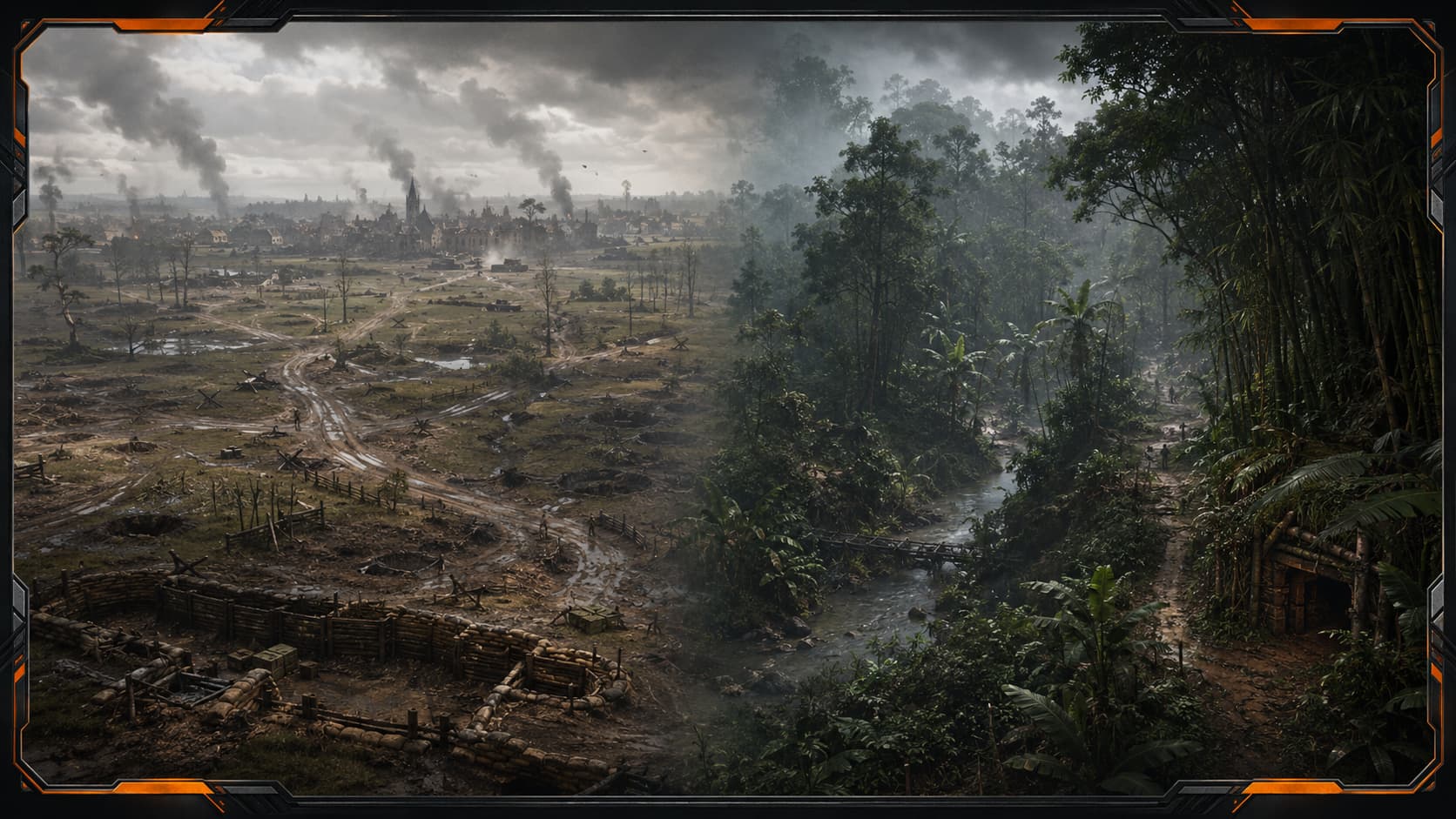
Hell Let Loose maps are big, brutal, and often very readable once you learn their shape. You fight across capture sectors, build spawn networks, move armor, defend strongpoints, and slowly turn a messy battlefield into something your team can control.
The original game’s maps are also tied heavily to famous WWII locations. That gives them an almost documentary flavor: beaches, fields, towns, forests, bridges, ruins, and wide approaches where a bad crossing can become a meat grinder.
Hell Let Loose: Vietnam launches with a different map language. The Steam page describes 6 large-scale maps inspired by real-world locations, with mountain gorges, thick jungle, rivers, tunnels, and dynamic terrain problems. That suggests less “hold this town block” and more “the jungle is doing half the defending already.”
This could be one of the most important differences. In Hell Let Loose, the map often feels like a tactical chessboard covered in mud, smoke, and tank shells. In Vietnam, the map may feel more like an active enemy: hiding movement, breaking sightlines, forcing river approaches, and making every clearing feel suspicious.
Roles and squad structure
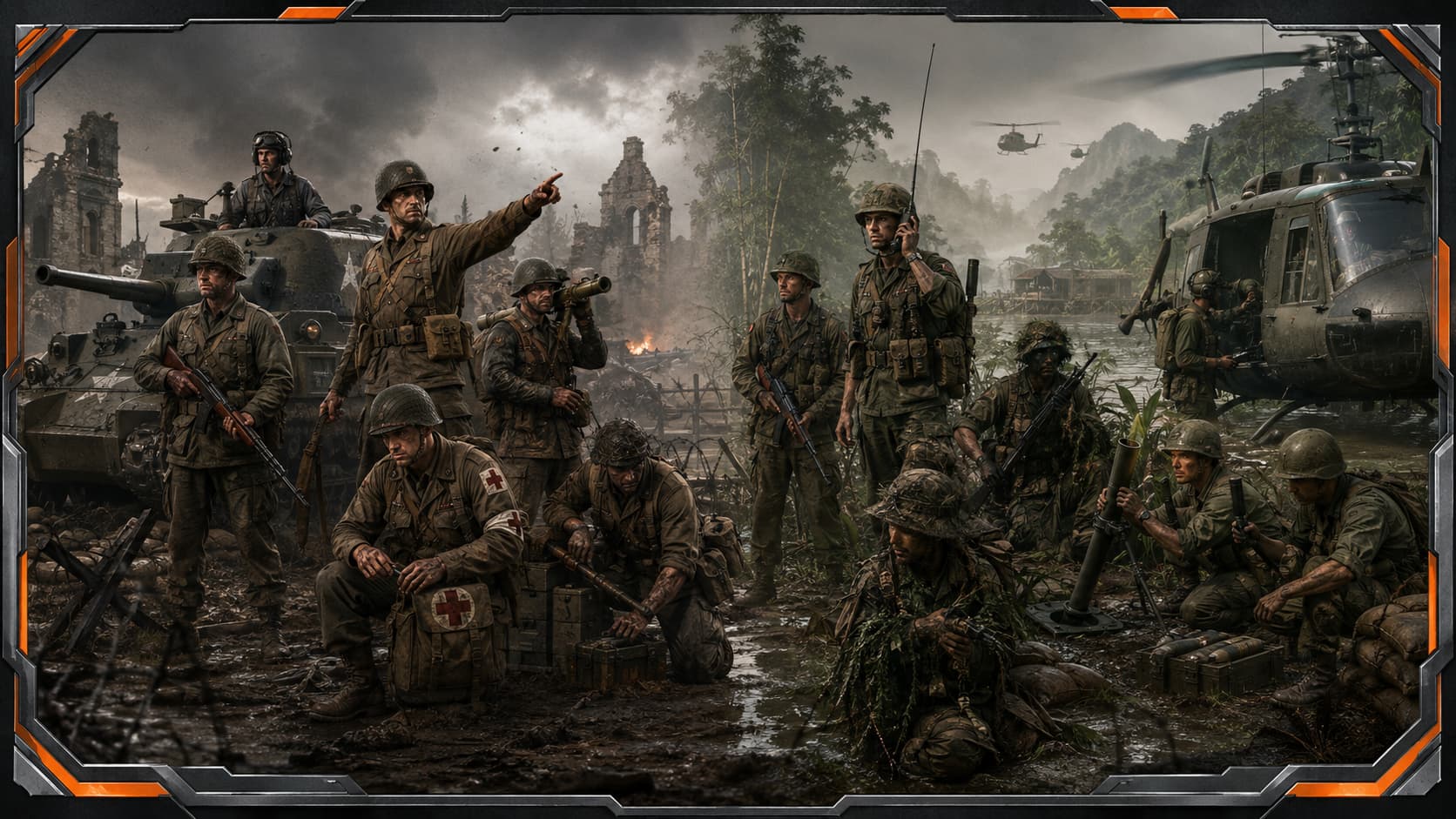
Both games use roles to stop everyone from becoming the same rifleman with different vibes.
Hell Let Loose has 14 roles across command, infantry, recon, and armor. It is the established version of the system: commanders guide the battle, officers lead squads, support roles help logistics, engineers build, armor crews operate tanks, and infantry roles fill the gaps between defense, assault, suppression, and anti-tank work.
Hell Let Loose: Vietnam expands the role count to 17 roles across 6 battlefield units. The big change is not just the number. It is the kind of roles that Vietnam needs. The Steam page lists command, infantry, recon, armor, helicopter, and mortar squads. That immediately tells you the battlefield is being reorganized around new tools.
That means Vietnam should feel more specialized. If the original Hell Let Loose is about infantry, armor, recon, and command holding a front together, Vietnam looks more like a layered network of air mobility, water routes, tunnel pressure, mortar support, and jungle infantry work.
Vehicles: tanks vs. helicopters and patrol boats
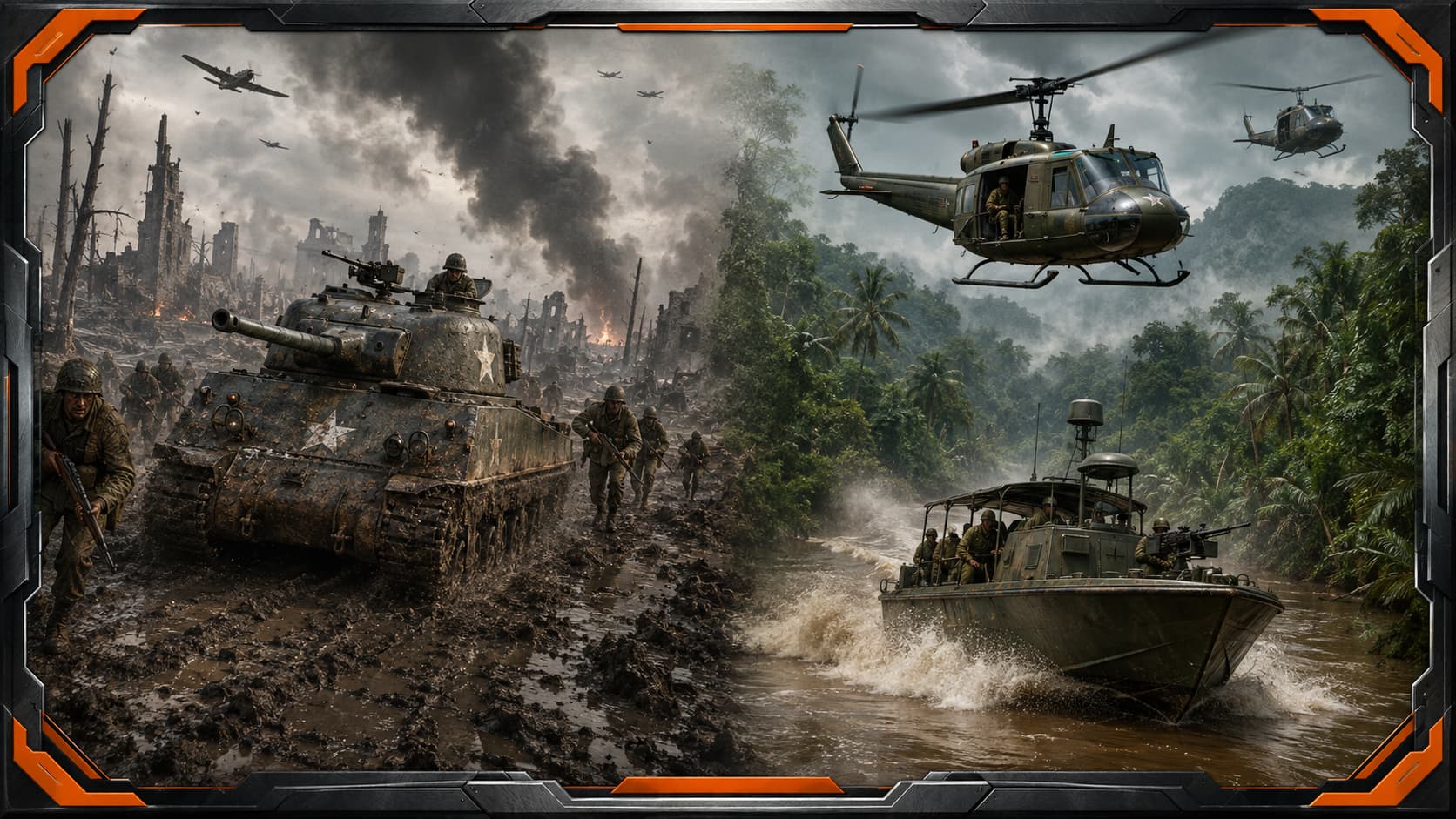
Vehicles are where the comparison gets spicy.
Hell Let Loose is very much a WWII combined-arms shooter. Tanks matter. Trucks matter. Artillery matters. Anti-tank guns matter. Armor crews can dominate a push if infantry supports them properly, but they can also get turned into scrap if they wander into bad terrain without coordination.
Hell Let Loose: Vietnam still has vehicles, but the headline additions are different. The Steam page highlights fully operational helicopters for US fire support and supply drops, patrol boats for river combat, and NVA tunnel networks for stealth movement and ambushes.
That changes the whole feel of battlefield movement. A tank in Hell Let Loose is a moving bunker with a big gun. A helicopter in Hell Let Loose: Vietnam is speed, noise, danger, supply potential, and an extremely obvious target all at once. Patrol boats also make rivers matter in a way they simply do not in the original game.
Big difference: Hell Let Loose is about grinding across the front with infantry, armor, artillery, supplies, and spawn placement. Hell Let Loose: Vietnam adds more vertical and lateral pressure through helicopters, rivers, patrol boats, tunnels, and ambush routes.
Movement and interaction changes
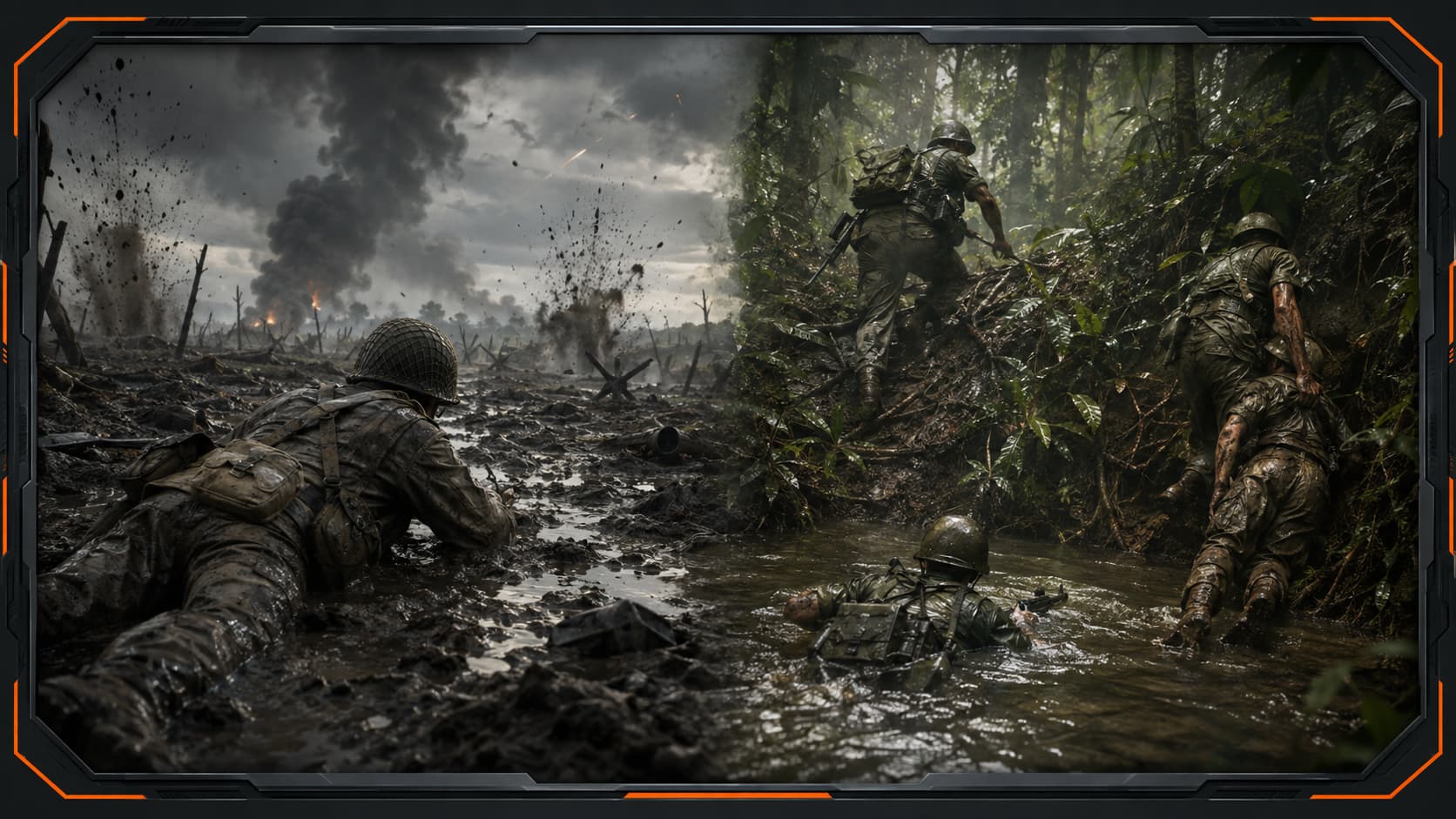
This is one of the clearest signs that Hell Let Loose: Vietnam is not simply reskinning the original game.
The Vietnam Steam page lists enhanced movement and interactions, including swimming, climbing, fast crawling, and dragging wounded teammates away from active fire. Those changes make sense for the setting. Jungle and river warfare need more body language than the original WWII battlefield.
In Hell Let Loose, movement is deliberate and heavy. That is part of the appeal. You are a soldier in a war machine, not an action hero sliding around like the floor is waxed.
Vietnam seems to keep that serious tone but add more situational tools. Swimming matters because rivers matter. Climbing matters because terrain is denser and more vertical. Fast crawling matters because concealment and low movement are more important in vegetation. Dragging wounded teammates matters because saving someone under fire can now become a small tactical drama instead of just a revive timer moment.
That could make Vietnam feel more physically expressive without turning it into an arcade shooter. At least, that is the sweet spot it seems to be aiming for.
Teamwork, command, and communication
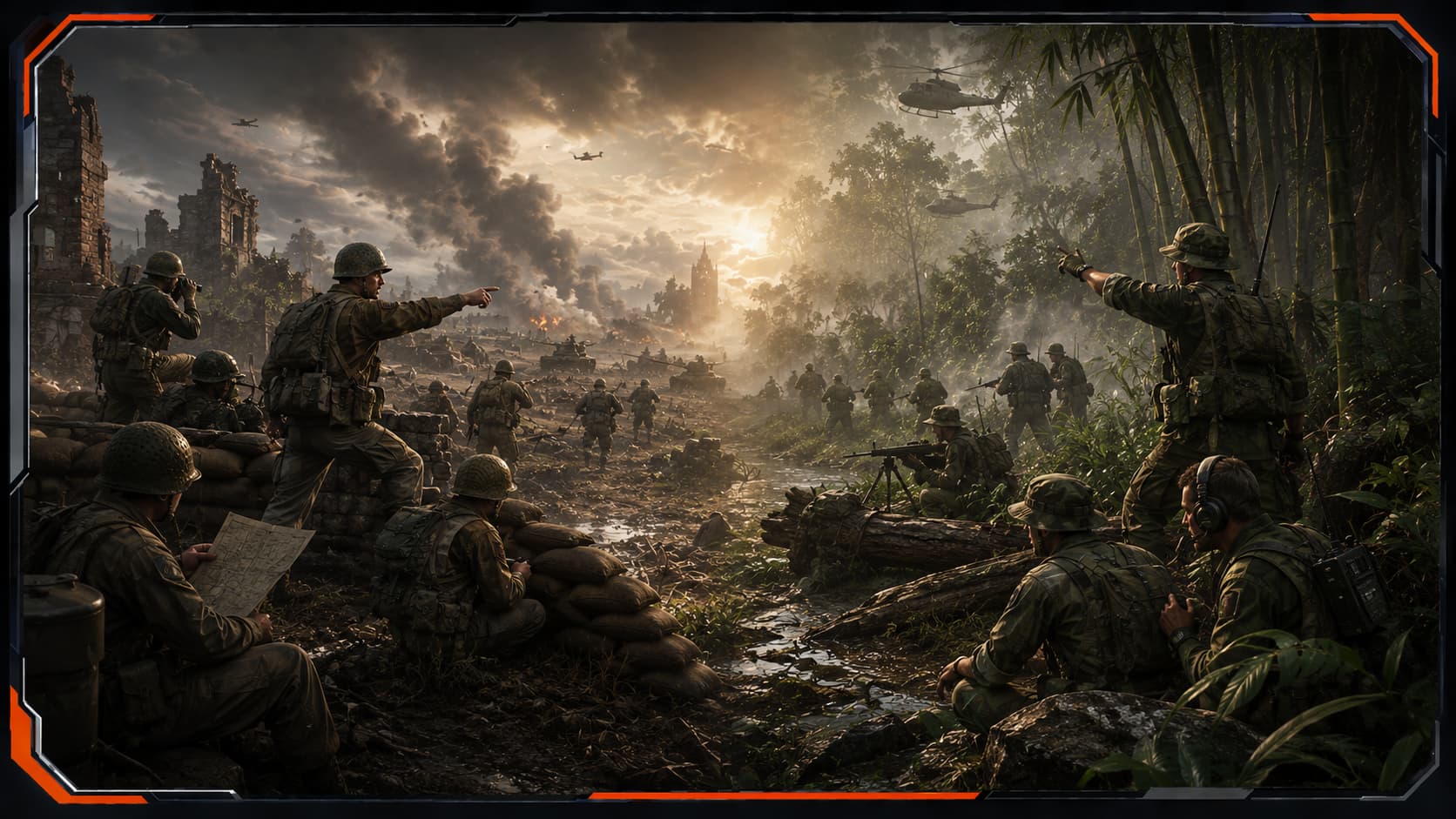
This is where the two games are most similar.
Hell Let Loose already demands communication. Officers, commanders, armor crews, recon players, support roles, and infantry squads all work better when players actually talk. The original game is famously not about personal stats. It is about sector control, spawn pressure, supplies, timing, and coordinated pushes.
Hell Let Loose: Vietnam keeps that same philosophy and seems to make it even more important. Helicopters need coordination. Mortar squads need information. Patrol boats need purpose. NVA tunnel networks need planning. Infantry moving through dense jungle needs callouts. A silent team in Vietnam sounds like an even faster way to turn into confused jungle fertilizer.
The original game asks: can your team build and hold a frontline?
Vietnam asks: can your team survive a battlefield where the frontline is harder to read?
Which one is better for new players?
Right now, Hell Let Loose is the safer recommendation for new players because it is already out, already populated, already expanded, and already understood by the community. You can watch tutorials, read guides, learn maps, understand roles, and get a clear sense of what the game expects from you.
Hell Let Loose: Vietnam is more exciting if you want to start fresh with everyone else when it launches. A new game means a new meta, new maps, new systems, and a lot of players learning together. That can be messy, but it can also be brilliant.
If you are completely new to the series, the smartest route is probably this: play Hell Let Loose now, learn how squads, officers, garrisons, supplies, sectors, and communication work, then move into Vietnam with the fundamentals already in your pocket.
Can you grab both on G2A.COM?
Yes, you can check out both games on G2A.COM.
FAQ – Hell Let Loose: Vietnam vs. Hell Let Loose
Is Hell Let Loose: Vietnam a sequel to Hell Let Loose?
It is a standalone follow-up in the Hell Let Loose franchise. It keeps the large-scale tactical FPS structure but moves the setting from World War II to the Vietnam War.
Do both games have 50v50 battles?
Yes. Both games are built around 50v50 multiplayer battles where squads, command structure, and teamwork matter more than lone-wolf play.
What is the biggest gameplay difference?
The biggest difference is battlefield mobility and asymmetry. Hell Let Loose is built around WWII combined arms, while Hell Let Loose: Vietnam adds helicopters, tunnels, patrol boats, rivers, enhanced movement, and Vietnam-specific roles.
Which game has more roles?
Hell Let Loose has 14 roles. Hell Let Loose: Vietnam lists 17 roles across command, infantry, recon, armor, helicopter, and mortar units.
Which one should new players start with?
Hell Let Loose is the safer starting point because it is already established and easier to learn through existing guides and community knowledge. Hell Let Loose: Vietnam is the exciting choice if you want to join the new game from day one.
Is Hell Let Loose: Vietnam easier than Hell Let Loose?
Not necessarily. It adds revamped onboarding, but the battlefield may be more complex because of tunnels, helicopters, rivers, dense jungle, and new role types.
Do I need to play Hell Let Loose before Hell Let Loose: Vietnam?
No, but it will help. The original game teaches the core logic of squads, officers, commanders, sectors, supplies, spawn networks, and communication.
Same war machine, different nightmare
Hell Let Loose is the known quantity: a big, harsh, teamwork-heavy WWII shooter where the front line moves because squads communicate, supplies arrive, armor supports infantry, and commanders make the right calls at the right time.
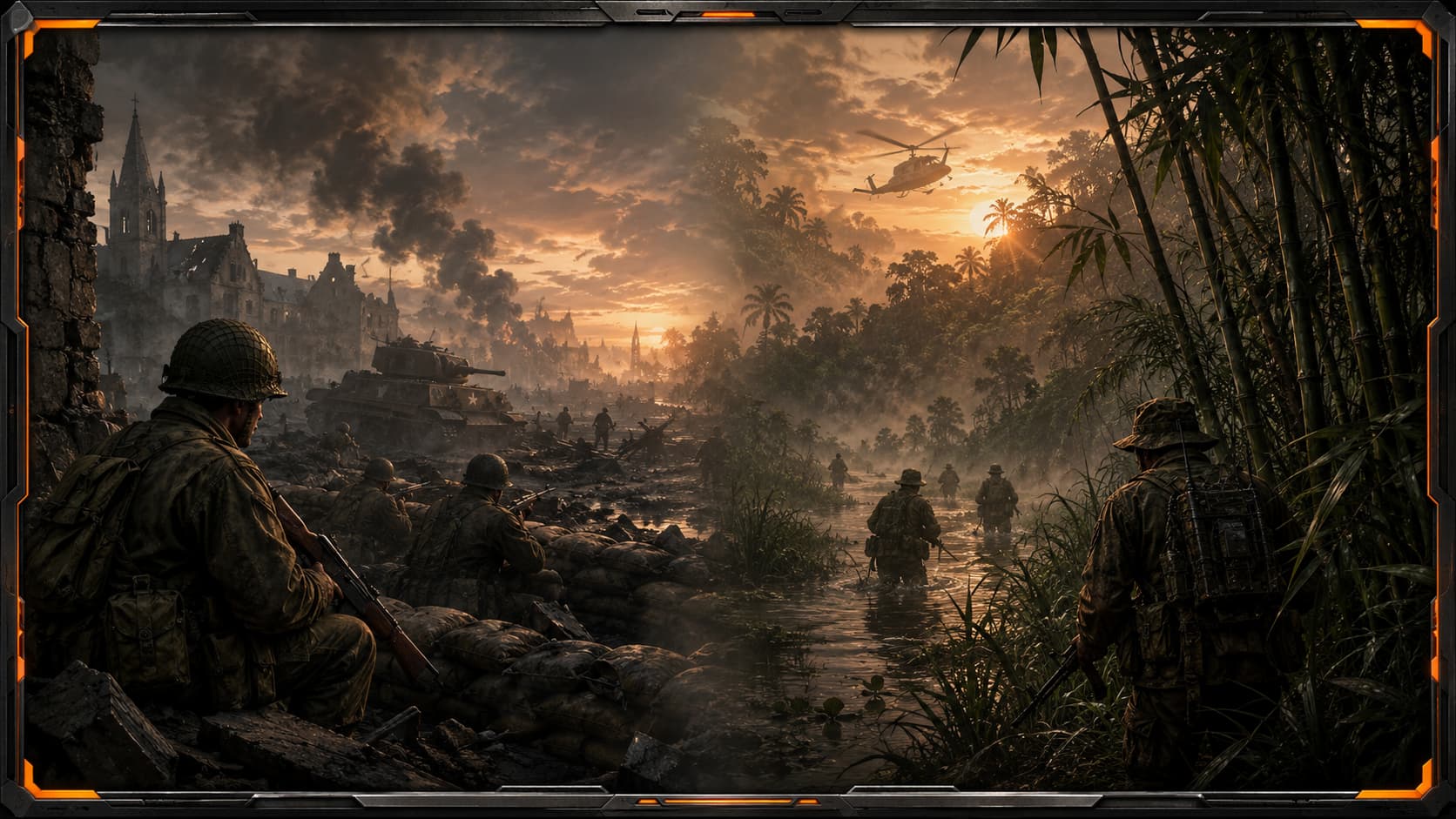
Hell Let Loose: Vietnam looks like the formula pushed into a more unpredictable battlefield. Jungles hide movement. Rivers create new routes. Helicopters change logistics and fire support. Tunnels give the NVA a very different kind of pressure. Patrol boats make water matter. Enhanced movement makes the soldier feel more adapted to the terrain.
So the difference is not simply old war vs. newer war. It is structured WWII frontline warfare vs. denser, more asymmetric jungle warfare. If you already love Hell Let Loose, Vietnam should feel familiar enough to understand, but different enough to make you nervous again.