



Video games can improve certain types of focus, especially these ones:
- visual attention
- task switching
- reaction time
- learning under pressure
However, they can also hurt concentration when playtime becomes excessive, sleep is disrupted, or games start replacing school, work, exercise, and social routines.
That’s why the real community discussion isn’t “games good or bad”, but how balance, genre, gaming habits, and individual needs shape the outcome.
In this article, I want to show how different players experience games in different ways, and why the same hobby can sharpen your focus in one context, and completely distract you in another.
Table of Contents
Different Video Games and Focus
Many games can genuinely strengthen specific types of focus, but each genre does it in a different way. Let’s find out more details:
- Fast-paced action games and competitive shooters train you to track multiple moving objects, react quickly, and filter out visual noise while staying calm under pressure.
- MOBAs and RTS titles push you to switch tasks, manage resources, and make fast strategic decisions as the situation changes every second.
- Rhythm games sharpen timing, pattern recognition, and sustained attention.
- Puzzle games help with problem-solving focus and the ability to hold information in mind.
- Even brain training apps can support short bursts of cognitive practice, especially for memory and attention control.
None of these genres magically “fix” concentration, but they can build small, useful skills that transfer into everyday tasks when playtime is balanced and intentional.
What Research Really Says About Video Games and Attention
Research on video games and attention is mixed but easier to understand when you break it into clear points. Some studies (including big reviews and meta-analysis) show that action video games can help players improve:
- attentional control (staying focused on what matters)
- visual attention (noticing important details and ignoring distractions)
- task switching (moving quickly between different tasks)
- fast decision-making (choosing the right action under pressure)
These improvements usually appear when players practice regularly and the game has fast pacing, clear feedback, and lots of information on screen. However, the effects aren’t the same for everyone. They depend on:
- game design
- how often someone plays
- player age
- how the study was done
There’s also research showing the other side. Long-term studies have found that:
- Heavy gaming time can be linked with later attention problems in children and teenagers.
- The WHO (World Health Organization) recognizes gaming disorder when gaming seriously harms daily life.
And one more important point is that correlation does not equal causation. Just because two things happen together doesn’t mean one directly causes the other. Attention can improve or worsen for many reasons, and gaming is only one part of the picture.
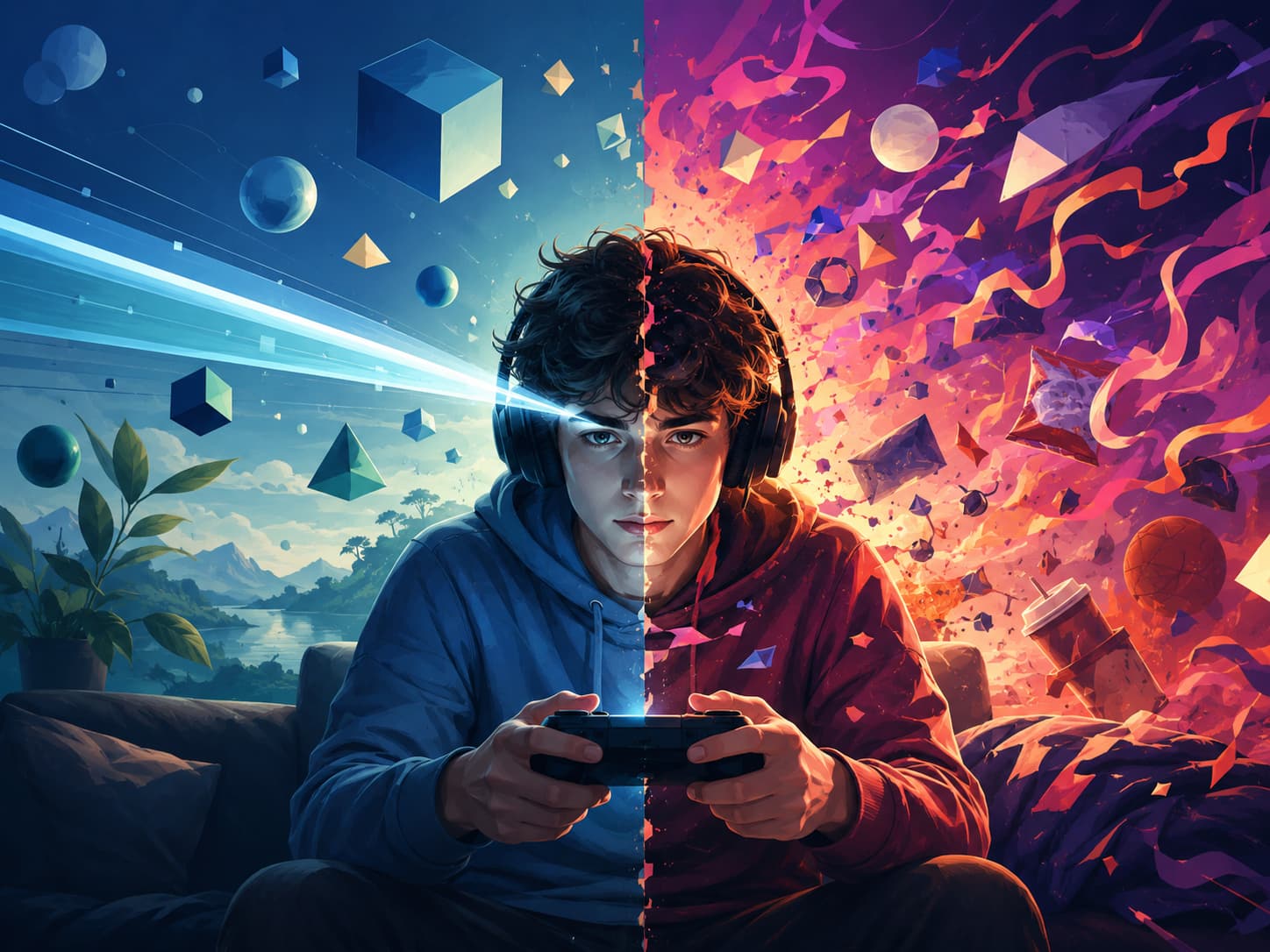
When Gaming Can Help Focus
Gaming can support better focus when it’s simple, structured, and fits into your day instead of interrupting it. Let’s take a closer look at the situations where gaming can help:
- Short, goal-based sessions that give your brain a clear target.
- Games that require planning like strategy games or puzzle titles.
- Playing after responsibilities so gaming becomes a reward, not a distraction.
- Using games as structured breaks to reset your mind between tasks.
- Choosing games that challenge memory and precision such as rhythm, puzzle, or tactical games.
These habits make gaming feel like a focused mental exercise, helping you stay alert, think clearly, and practice staying on task.
When Gaming Can Hurt Focus
Gaming starts to hurt focus when it takes over your routine or pushes your brain into constant overstimulation. Lack of sleep, nonstop rewards, and multitasking can make everyday tasks feel slow or boring.
There are common signs that gaming is working against your attention:
- Late-night sessions that cause sleep disruption.
- Constant reward loops that overstimulate your attention.
- Multitasking (with streams or social media) while playing.
- Skipping sleep or binge-playing for many hours.
- Irritability when not gaming or feeling restless without it.
- Difficulty focusing on slower tasks like reading, homework or chores.
Remember that in these situations, the issue isn’t gaming itself – it’s the timing, intensity, and habits around it.
Game Mechanics That Affect Focus
Some game mechanics naturally support steady, sustained attention, while others push players into rapid task switching or compulsive checking. Let’s find out more about them:
- Timers create urgency and sharpen short-term attention.
- Ranked modes encourage sustained focus through pressure and clear goals.
- Loot systems can lead to compulsive checking and rapid attention shifts.
- Notifications interrupt concentration and pull your focus away from long tasks.
- Daily quests promote routine engagement but can also create FOMO-driven checking.
- Team voice chat adds multitasking by mixing gameplay, communication, and strategy.
- High-speed combat trains quick reactions but encourages constant task switching.
- Open-world distractions scatter attention with side quests, markers, and pop-ups.
- Skill trees support planning and long-term decision-making.
- Puzzles build sustained attention and problem-solving focus.
- Resource management strengthens planning, prioritizing, and steady concentration.
Conclusion
Games aren’t automatically good or bad for focus. It all depends on:
- what you play
- how long you play
- why you play
- whether gaming supports the rest of your routine
Some games sharpen attention and decision-making, while others can overwhelm your focus if they’re played without balance.
The most important rule to remember is simple: choose a gaming habit that leaves you sharper after the session, not drained, distracted, or unable to stop.