
I bet you’ve recently had the same thing happen… hearing that song on the radio:
“We’re going up, up, up, it’s our moment
You know together we’re glowing
Gonna be, gonna be golden…”,
And then it just keeps playing in your head for the rest of the day. You hum it while making coffee, while you’re driving, and by evening you’re still catching yourself singing the chorus. Ugh! It’s unstoppable!
But do you know who owns this hit? It’s not some long‑established girl group that’s been dropping hits for years. Nope. It’s actually from the movie KPop Demon Hunters. I know, I know, you’re probably thinking, what even is that? And yet, but my kids could tell you everything about it, even without having seen the film yet. Surprised? I was too, believe me…
What Is KPop Demon Hunters?
So, KPop Demon Hunters is this new animated movie that dropped on Netflix in June 2025. And it’s already massive! Like, everyone’s talking about it! Why?
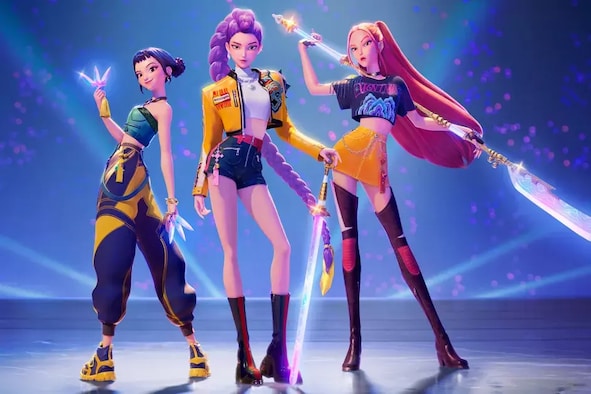
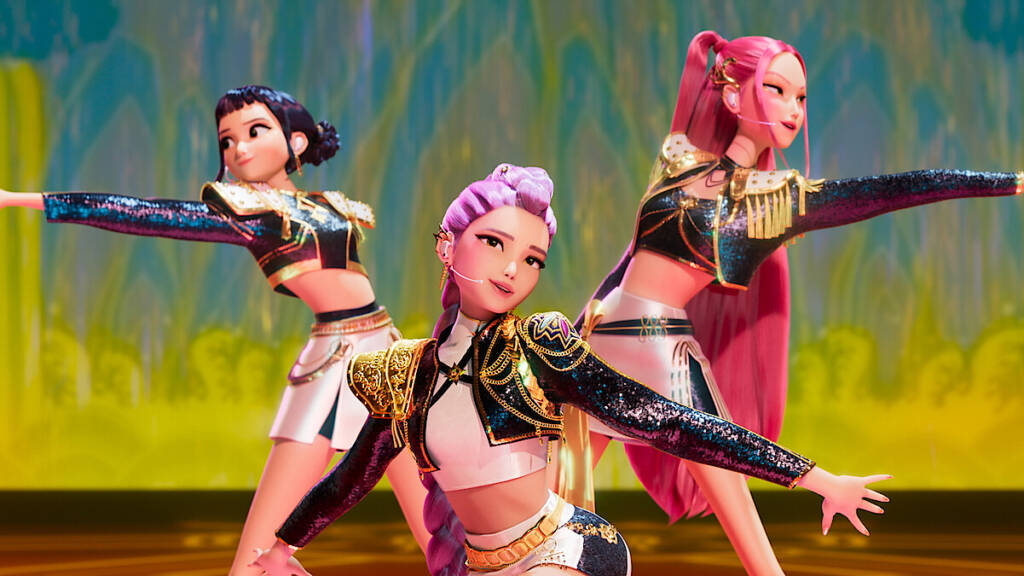
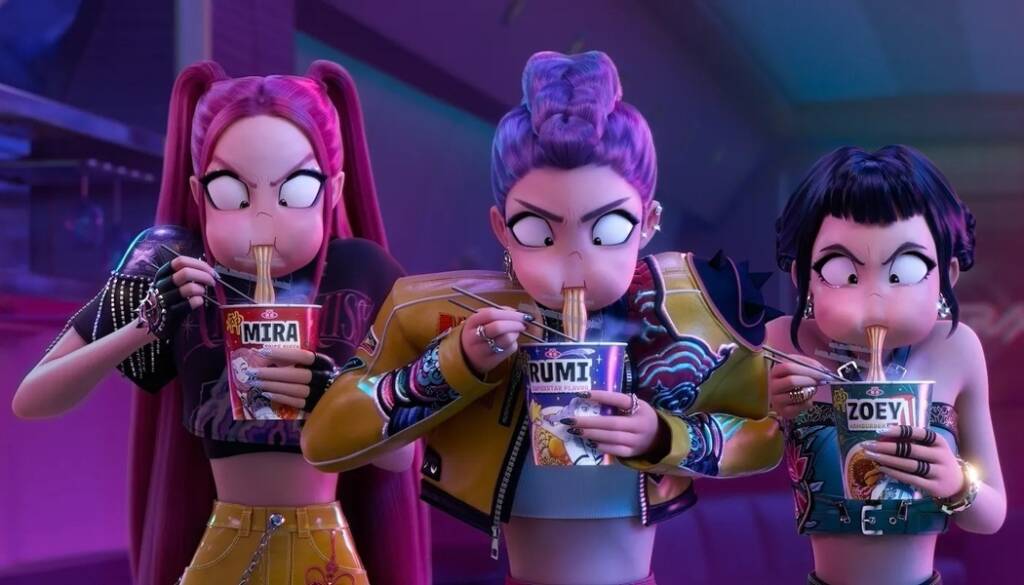
The plot follows Huntrix, a super popular K‑pop girl group. Sounds ordinary? But when they’re not performing on stage, they’re actually demon hunters, using their music powers to fight off evil and protect the world. Superheroes!
For me, it’s kind of wild, because it mixes the flashy, colourful energy of K‑pop with action scenes you’d expect from a fantasy adventure.
The movie was made by Sony Pictures Animation and directed by Maggie Kang and Chris Appelhans, so it’s got some serious creative talent behind it. Plus, the voice cast is stacked: Arden Cho, Daniel Dae Kim, Ken Jeong, even Lee Byung‑hun. So, it feels like a big crossover of cultures.
And honestly, I guess that’s why all kids are hyped about it even before watching. They see the posters, hear the buzz, catch clips online, and suddenly they’re acting like they already know the whole story. It’s one of those films where the vibe alone is enough to pull them in.
Marketing That Feels Like Fandom
The crazy thing about KPop Demon Hunters is that the marketing almost feels like a fandom on its own. Even before the movie came out, kids were already sharing teasers, posters, and clips all over social media, like they were part of some secret club. The posters look like real K‑pop promotions, so fans treat them as if they’re following an actual idol group.
And once those short teaser videos started trending, the hype spread faster than the film itself. Suddenly it wasn’t just about the clips anymore. A mass of memes, reaction posts, and fan edits popped up everywhere. The buzz took on a life of its own.
In my house, it went even further… my kids were asking me to print colouring pages with Huntrix all the time, singing the songs nonstop, secretly learning choreographies in their rooms, and then putting on little performances for us in the living room. They even taped their finished colouring pages on the walls and doors, turning our home into a mini fan zone. What a hype!
Honestly, it felt like the movie had already arrived, even though we all hadn’t seen a single scene yet.
Why It Works Without a Screening
I’ve recently thought about KPop Demon Hunters a lot. Why my kids are hooked before they even watch a single episode. I’ve found some specialistic explanation.
Psychologists say it’s because of something called Social Learning Theory (from Albert Bandura). Basically, kids pick up behaviours by copying what they see. So even a flashy teaser or a poster can get them singing, dancing, or pretending to be the characters, just because it looks fun and cool. And that’s all!
Sociologists add another layer, explaining that it’s about fitting in. Cristina Bicchieri’s research on social norms shows that when kids see their friends online sharing clips, memes, or edits, they feel the pull to join in too. It’s less about knowing the whole storyline and more about being part of the group, sharing in the collective excitement, and not wanting to be left out of the conversation. Participation itself becomes the ticket to belonging.
And developmental psychologists like Yalda T. Uhls point out that media plays a crucial role in helping kids figure out who they are. Bright visuals and catchy music don’t just entertain them — they provide symbols, references, and building blocks for identity. Kids remix these elements, turning them into dance routines, drawings, or performances, experimenting with different versions of themselves. In this way, media becomes both a mirror and a playground, giving them countless ways to express, test, and refine their sense of self.
That’s why my daughters cover the walls and doors with colouring pages, learn dance routines, and put on little performances at home. They’re not waiting to understand the plot, but they’re already shaping their own identity by joining in.
In other words, kids don’t need the full story to dive in. The excitement, the group vibe, and the chance to express themselves are enough to pull them in right away. And now, it all makes sense to me!
Final Thoughts
You know what strikes me most? It’s the way kids build community and identity around these films even before they’ve seen them. They learn dances, and cover the house with colouring pages because it makes them feel part of something bigger. Honestly, it’s not about the plot at all, but it’s about belonging.
As a parent, I see it up close. My daughters don’t need the full story to dive in; they’re already creating their own little world around it.
And when the big day finally came… yes, we all sat down together and watched the whole film. Just us, popcorn, and the Netflix screen. That moment tied everything together: the dances, the drawings, the sense of community. It wasn’t just about the movie anymore, but it was about the journey we’d shared leading up to it.
Looking back, I realize the story wasn’t only on the screen. It was in our home, in the way my kids expressed themselves, and in the joy of experiencing it all as a family.