





Voice AI is turning an actor’s performance into something that can potentially generate new dialogue long after the original recording session ends. The biggest industry fight is therefore not simply about whether synthetic speech should exist. It is about consent, control, compensation, disclosure, and exactly what a studio or technology company is allowed to do with a performer’s voice.
That distinction matters because not every use of voice AI is the same. Using temporary synthetic dialogue to test a quest is very different from creating a permanent digital replica of an actor, licensing it to third parties, or generating lines the actor never agreed to perform.
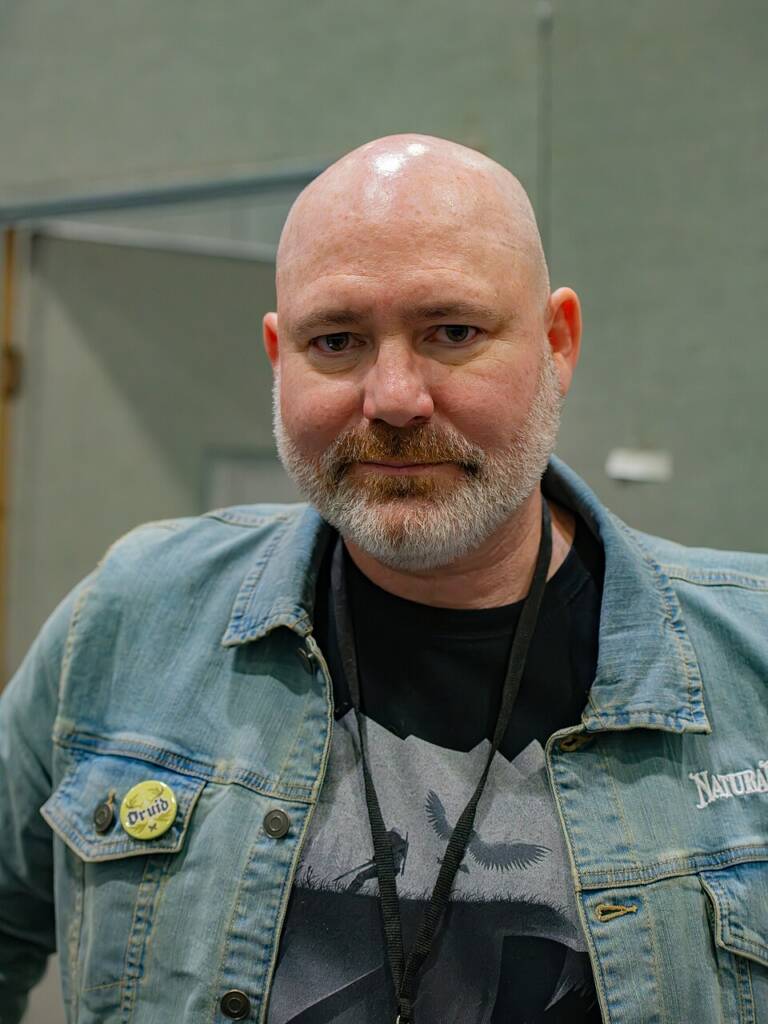
Doug Cockle, best known as the English-language voice of Geralt of Rivia in The Witcher games, has become one of the most recognizable voices in that debate. His criticism of unauthorized AI replicas drew attention to a problem that extends far beyond one character: once a recognizable voice can be reproduced convincingly, an actor can potentially lose control not just over future work, but over what that voice appears to say.
A Polygon post highlighting Cockle’s comments became a particularly visible example of that backlash.
How we checked this: This article is research-based and uses current SAG-AFTRA contract material, Steamworks policy, Nexon financial reporting, public comments from Embark Studios, current Unity documentation, and the 2025 PRAC³ voice-actor study.
Table of Contents
- Why Doug Cockle’s criticism matters
- Rising AAA costs make automation attractive
- What ARC Raiders actually uses AI voices for
- Voice AI is getting easier to integrate
- Contract risks and the PRAC³ framework
- What SAG-AFTRA’s digital-replica rules actually do
- Steam disclosure and the Tim Sweeney disagreement
- Where voice AI fits without replacing actors
Why Doug Cockle’s criticism matters
For an actor, a convincing voice clone creates a problem that an ordinary reused audio file does not. A recording is finite. A sufficiently capable synthetic model can potentially generate completely new sentences in a recognizable version of someone’s voice.
That introduces several different risks at once.
There is the obvious employment question: if a company can generate another 50 lines without bringing the actor back, does that reduce paid recording work?
There is also a reputational problem. A recognizable synthetic voice could be made to deliver political statements, offensive material, sexual content, advertising, or dialogue the actor would never have agreed to perform.
Cockle’s concern about Geralt-style AI replicas is important for precisely that reason. The issue is not simply whether a machine can sound convincing. It is whether listeners can tell the difference between a genuine performance and generated speech, and whether the person whose identity gives that voice value has any control over the result.
For a well-known actor attached to an iconic character, that problem is highly visible. For lesser-known performers without the same audience, representation, or legal resources, enforcing those boundaries may be even more difficult.
Rising AAA costs make automation attractive
The economic pressure behind the debate is easy to understand. Modern AAA development can involve multiple studios, hundreds of developers, long production schedules, expensive technology, and enormous marketing campaigns.
Battlefield 6 offers a useful example of how commercial success and employment stability are no longer the same thing. DICE, Criterion, Motive, and Ripple Effect were among the teams involved in the wider Battlefield development organization. The game sold more than 7 million copies in its first three days, yet EA later confirmed layoffs affecting Battlefield Studios.
That does not mean AI caused those layoffs. There is no public evidence establishing that link. What it does show is how intensely even successful AAA operations are being pushed to control staffing and production costs.
ARC Raiders is often brought into the same discussion because Embark Studios achieved major commercial results with a comparatively lean production model. An external estimate placed its total development and marketing cost at roughly $75 million, and Embark boss Patrick Söderlund later indicated that the estimate was reasonably close rather than publishing an official budget himself.
Nexon subsequently reported ¥18.3 billion in ARC Raiders revenue for Q2 2026 alone, roughly $115 million using the conversion cited in contemporary reporting.
That makes the game attractive as a case study for publishers looking for more efficient ways to make technically ambitious games.
Important distinction: ARC Raiders is not evidence that generative AI alone dramatically reduced a AAA budget. Embark itself has said that very little of its production efficiency came directly from AI. The studio has pointed instead to broader changes in tools, workflows, procedural systems, photogrammetry, and how the team was organized.
Voice synthesis is therefore better understood as one part of a much larger automation push, rather than the secret behind ARC Raiders’ production model.
What ARC Raiders actually uses AI voices for
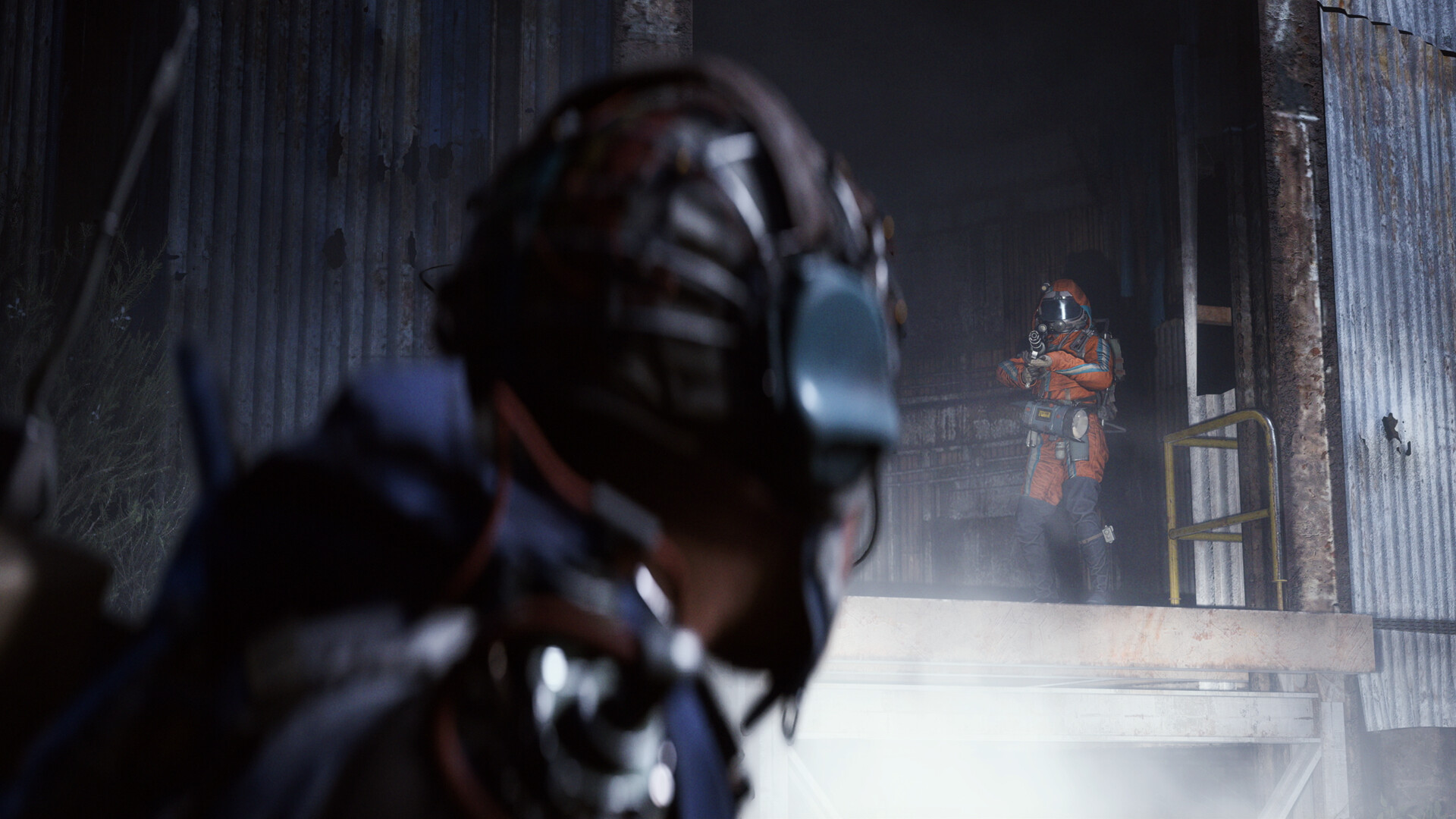
Embark Studios has already experimented with synthetic speech in both The Finals and ARC Raiders, which makes the developer an important test case for what licensed voice AI can look like in practice.
The studio’s position is more nuanced than simply replacing actors with a text box.
Embark has said that performers are paid for recording work and for approved use of their voices with text-to-speech systems. In ARC Raiders, synthetic speech has been used particularly for limited system dialogue such as ping callouts. The studio has also re-recorded some material with human performers.
Söderlund has described another practical use: rapid iteration. A designer can test many versions of a line in context before deciding which one is worth taking into a proper recording session.
That can be genuinely useful. Booking a performer and studio every time a quest designer wants to hear whether “get to the extraction point” works better than “move to extraction” is slow and expensive.
But there is an enormous difference between using AI as temporary scratch audio and permanently substituting a performer’s licensed identity.
| Use | What it does | Main concern |
|---|---|---|
| Prototype / scratch TTS | Lets developers hear temporary dialogue while a scene is still changing. | Whether temporary AI gradually replaces work that would previously have gone to actors. |
| Licensed digital replica | Generates new speech based on a performer who has agreed to defined uses. | Scope, duration, payment, future reuse, and whether consent is genuinely informed. |
| Unauthorized voice clone | Imitates a recognizable performer without permission. | Loss of income and control, impersonation, privacy issues, and reputational harm. |
Treating all three as simply “AI voices” hides the most important part of the debate.
Voice AI is getting easier to integrate
One claim that needs updating is that Unity Muse has become a built-in speech generator for Unity 6. Muse is now a deprecated Unity offering, so it is no longer a good current example of a native voice-cloning system.
The broader point, however, remains valid.
Unity 6 now has integrated AI development tools, while Unity’s runtime inference technology can execute compatible neural-network models locally. Developers can also connect third-party speech-generation services, packages, and models to their pipelines.
In other words, studios no longer need to build an entire speech-synthesis stack from scratch. The technical barrier to experimenting with generated dialogue is getting lower.
That matters particularly at the bottom of the voice-acting market.
A 2025 study of professional voice actors documented concerns about AI taking over demo work, minor roles, background dialogue, and other smaller jobs. Those are not glamorous starring performances, but they can be important entry points for actors building experience, credits, contacts, and income.
The study does not prove that entry-level acting has already been broadly eliminated by AI. It does show that professional performers are reporting displacement in exactly the categories of work most exposed to cheap synthetic speech.
Contract risks and the PRAC³ framework
Voice also has a second life outside entertainment. A person’s speech patterns can function as biometric data, often discussed in terms of a voiceprint. That makes a high-quality recording valuable for reasons that go beyond one character or one game.
The researchers behind the voice-actor study organize those long-tail risks through the PRAC³ framework: Privacy, Reputation, Accountability, Consent, Credit, and Compensation.
Their interviews with 20 professional voice actors documented a range of reported experiences involving synthetic voices and contractual control.
| Actor code | Reported incident | Why it matters |
|---|---|---|
| P1 | A performance recorded for a video-game client was later synthesized despite a contractual “No-AI” provision that the developers reportedly had not seen. | Shows how consent can break down across a production chain even when restrictions exist on paper. |
| P4 | A voice-replication provision appeared in an attached contract exhibit without being made sufficiently clear to the performer. | Illustrates the risk of broad AI rights being buried in lengthy contract documentation. |
| P7 | Game modders reportedly used AI to imitate the actor’s recognizable character voice in explicit content without consent. | Shows that voice-cloning risk extends beyond employers into mods and other third-party content. |
| P12 | A large technology company reportedly licensed the performer’s voice onward to third-party platforms. | Raises questions about downstream reuse, continuing compensation, and where the actor’s control ends. |
| P14 | The performer reported losing some minor roles and demo work to AI-generated voices. | Points to possible displacement in smaller jobs that traditionally help actors enter and remain in the industry. |
Note: These are participant accounts documented by the researchers, not judicial findings about the companies or clients involved.
The same study also records concern about pick-ups, the short follow-up sessions used when a developer needs a corrected or additional line after the main recording. A digital replica can theoretically make those revisions without booking the actor again.
That may look like a tiny production saving. From an actor’s perspective, however, it raises a much bigger question: if the original performance allows unlimited future corrections, variations, and additions, what exactly was the original session fee paying for?
What SAG-AFTRA’s digital-replica rules actually do
The current SAG-AFTRA Interactive Media Agreement, which runs through October 31, 2028, attempts to answer that question directly.
The agreement distinguishes between forms of digital replicas, including independently created digital replicas, and establishes rules around consent and payment.
For covered work, authorization cannot simply disappear into a vague blanket clause. Digital-replica consent must be documented in writing, with the intended use described with reasonable specificity and the relevant authorization separately acknowledged as required by the agreement.
The compensation rules are equally important.
| Digital-replica use | Contract protection |
|---|---|
| Generated vocal dialogue | Compensation is tied to the agreement’s Limited Integration payment, effectively establishing a session-fee floor for each 300 lines generated. |
| Real-time generation during gameplay | Compensation must be negotiated in good faith and cannot be lower than 750% of the applicable minimum scale, together with the agreement’s applicable additional-compensation provisions. |
That changes the economics. On a SAG-AFTRA-covered production, a digital replica is not supposed to function as unlimited free dialogue simply because an actor recorded source material once.
There is an important limitation, though: union contracts govern covered productions and signatory employers. They cannot by themselves stop an anonymous modder, an overseas platform, or another unauthorized third party from cloning someone’s voice.
Contract protection is therefore one layer of the solution, not a universal technical barrier.
Steam disclosure and the Tim Sweeney disagreement
Valve has added another layer through Steam’s content disclosure system, but the rule is sometimes described too broadly.
Developers do not have to declare every AI-assisted productivity tool used somewhere in development. Steam’s current Content Survey focuses on generative-AI material that becomes part of the content players consume.
Valve distinguishes between pre-generated AI content and live-generated material created while the game is running. Live generation also requires developers to describe the guardrails used to prevent illegal content.
That transparency requirement has become controversial in its own right.
Epic Games CEO Tim Sweeney has criticized Steam’s AI disclosure approach, arguing that special AI labels unfairly stigmatize developers as generative technology becomes more deeply integrated into ordinary production workflows.
That disagreement exposes another fault line in the debate. One side sees disclosure as useful information for consumers. The other sees a dedicated AI label as increasingly arbitrary once machine-assisted tools become commonplace.
There is also a limit to what platform disclosure can solve. A Steam notice can tell a player that generative AI was used. It does not establish whether a voice performer gave meaningful consent, whether the replica stayed within the agreed scope, or whether the actor was properly compensated.
Those are labor and contract questions.
The line is consent, control, and compensation
Voice AI does have legitimate uses in game development.
It can let a narrative team test dialogue before an expensive recording session. It can provide temporary scratch audio while scenes are being rewritten. With a properly negotiated digital replica, it could also support highly dynamic systems that would be impractical to record line by line.
None of those uses require treating an actor’s identity as free raw material.
The most defensible model is one where the performer knows what is being created, what the replica can be used for, how long that permission lasts, who can access it, and how additional generated work will be paid.
The least defensible model is the opposite: obtain a recording once, turn it into a reusable voice, and assume the performer no longer needs to be involved.
That is why the backlash from actors such as Doug Cockle matters. The technology itself is moving quickly, but the central question is surprisingly old-fashioned: who owns the value created by someone’s performance?
AI can make game production faster. It should not make consent optional.