


TL;DR — Genes system explained
- Genes define your monstie’s abilities (active + passive)
- You can rearrange and transfer genes via Rite of Channeling
- Bingo system boosts damage when genes align
- Stronger genes come from higher ecosystem ranks
- Egg Skills and Environmental Skills add extra power layers
Table of Contents
Genes – what are they good for?
Genes correspond to your monstie’s active and passive abilities.
Each monstie’s core genes are determined by the species, but they will also have a few randomized extras. One of your Tobi-Kadachis might, for example, come with a gene that lets it deal extra damage when it exploits the enemy’s elemental weakness.
You can see all of your monstie’s genes on the Skills tab of its profile, and if you press Shift on the keyboard/[top face button] on the gamepad you’ll pull up the detailed descriptions.
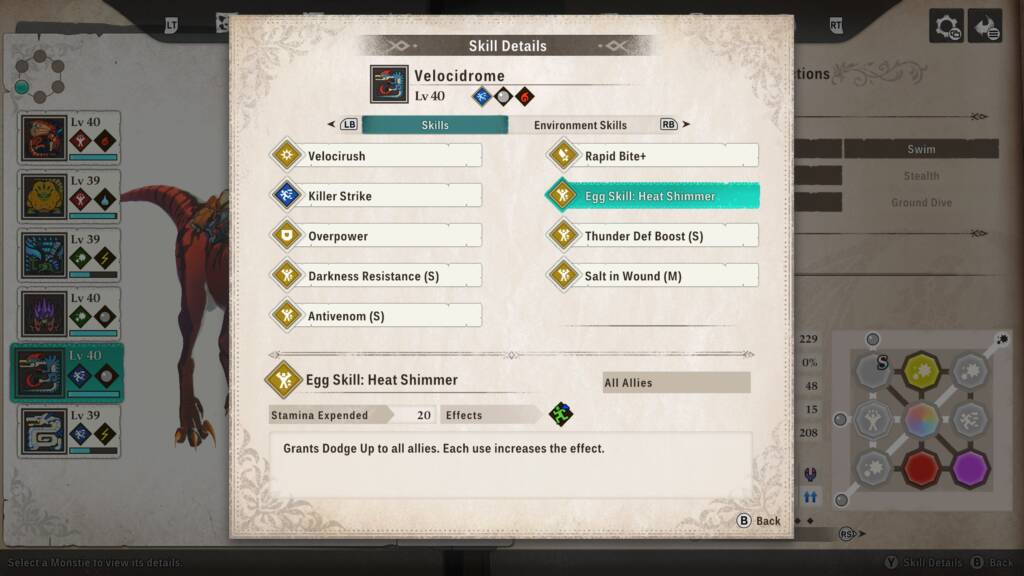
Tip: You can also check what each Monstie’s Kinship skill does in addition to damage. They are the skills marked with a star-like icon.
Most monsties hatch with genes focused on one element and attack type, but there are plenty of exceptions, and the Rite of Channeling lets you reconfigure everything anyway.
While the genes by themselves only do what their descriptions set they do, their element and type come into play in a major way in the gene bingo system.
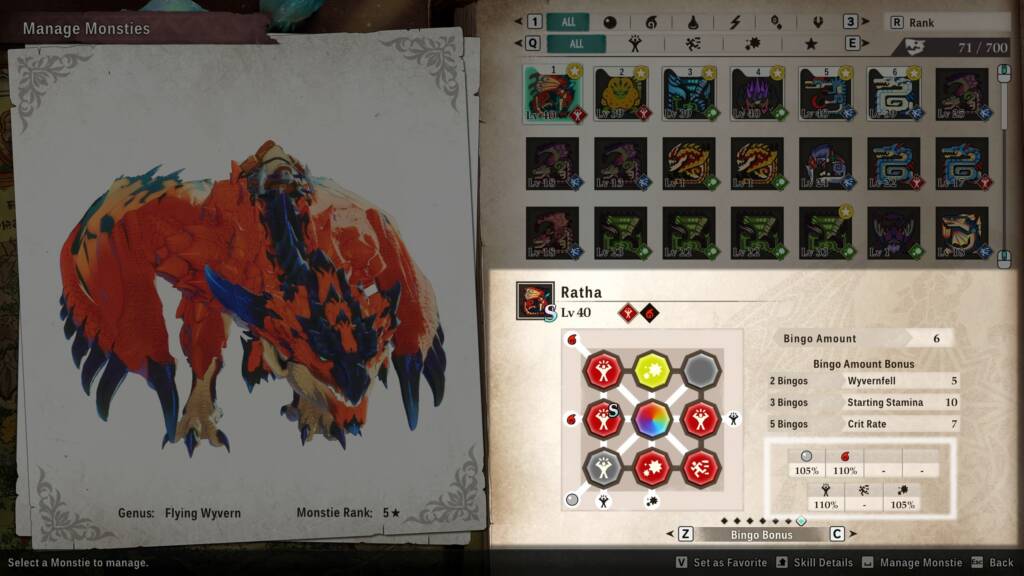
Bingo bonus
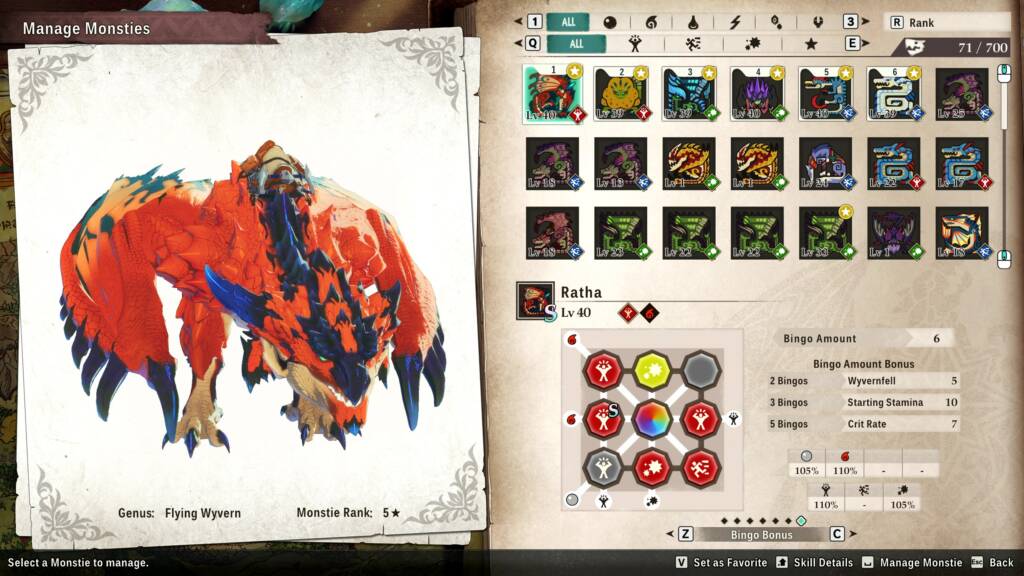
Each monstie’s profile features a 3-by-3 grid with a few genes already slotted in. It’s on the profile’s very first page, but its function only becomes apparent when you flip over to the last page, called Bingo Bonus (which could also be a name for a hazard-obsessed hobbit).
Reading the genes
These genes have two aspects:
- Element
- Non-elemental (grey)
- Thunder (yellow)
- Fire (red)
- Water (deep blue)
- Ice (light blue)
- Dragon (light purple)
- Attack type
- Neutral (no icon)
- Power (icon of a person flexing their muscles)
- Speed (icon of a person running)
- Technique (Icon of three star-like cogs)
There is also a third type: a Free Bingo gene. It’s basically a wild card which will complete the bingo with any two aligned genes. It is invaluable when your monstie’s genes don’t have enough overlap. You can recognize it by its swirl of colours.
Gene bingos
When three genes of the same kind are on the same vertical, horizontal, or diagonal line, the similarly aspected skills deal 5%pt more damage per relevant bingo.
- Three Fire genes in a line increase Fire skills’ damage by 5%
- Three Power genes in a line increase Power skills’ damage by 5%
If the genes have both Fire and Power aspects, you get both bonuses with just three genes.
These bonuses stack. Two Fire-Power lines will net you +10% Fire damage and +10% Power damage, which is a hefty boost to your monstie’s Fire-Power attacks.
Bingo Amount Bonus
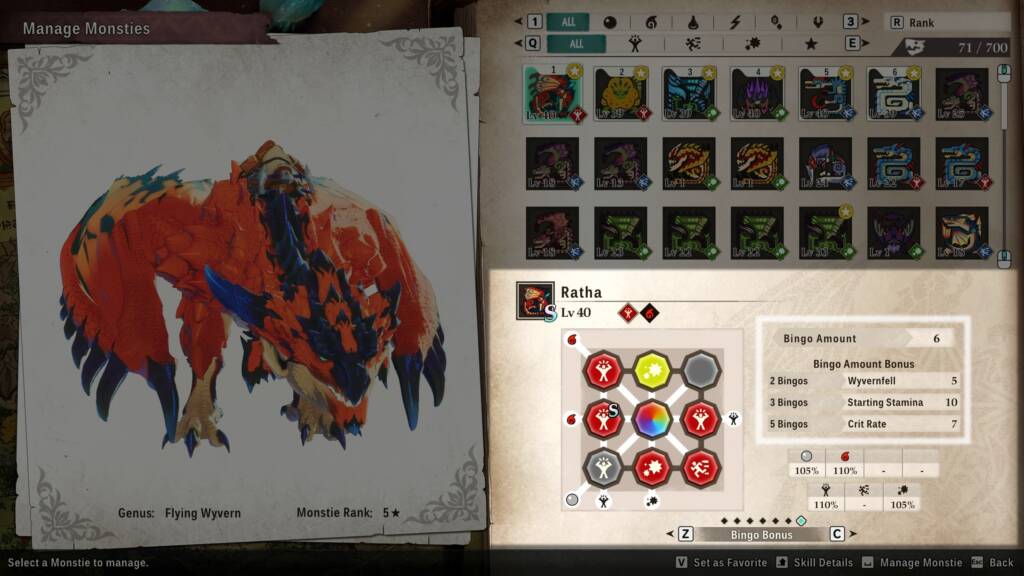
In addition to damage bonuses from aligning similar genes, each monstie species has a different array of Bingo Bonuses, unlocked after achieving a certain number of bingos.
Bingo Amount bonuses are numerical bonuses to certain stats.
Example: a Rathalos gets +5 Wyvernfell damage for 2 Bingos; +10 Starting Stamina for 3 Bingos; and +7 Crit Rate for 5 Bingos.
Rite of Channeling
The arrangement of genes in a Monstie’s grid is always random, certain genes or even empty slots might be level-locked, and monsties usually do not hatch with even one bingo online (though it does happen, it’s all random chance).
The solution to all this is the Rite of Channeling
Unlocking the Rite of Channeling
The Rite of Channeling unlocks automatically when you progress the plot of Chapter 1. If you just focus on completing the main story missions, you will get it in no time.
Tip: Don’t worry about the plot speeding up, you’ll get the Rite well before any major developments. Just keep doing main story quests (doing the side quests is also VERY worthwhile, they are a great source of EXP, items, and recipes) and you’ll get there.
Channeling the genes
The Rite of Channeling has two functions.
- It lets you rearrange your monstie’s genes.
- It lets you transfer genes between monsties.
Monsties hatch with a fixed number of genes, and much of their grid is empty. To fill it out, to get more bingos, and give your monsties more passive and active abilities you have to take genes from other monsties.
- After unlocking the Rite, go to the Stables.
- Select “Rite of Channeling.”
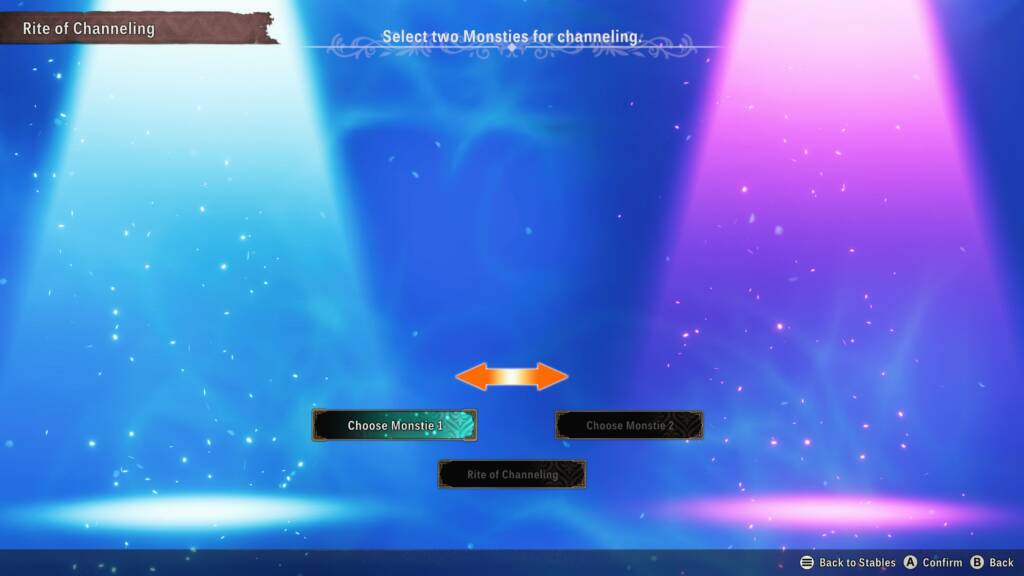
- Select Monsties and genes.
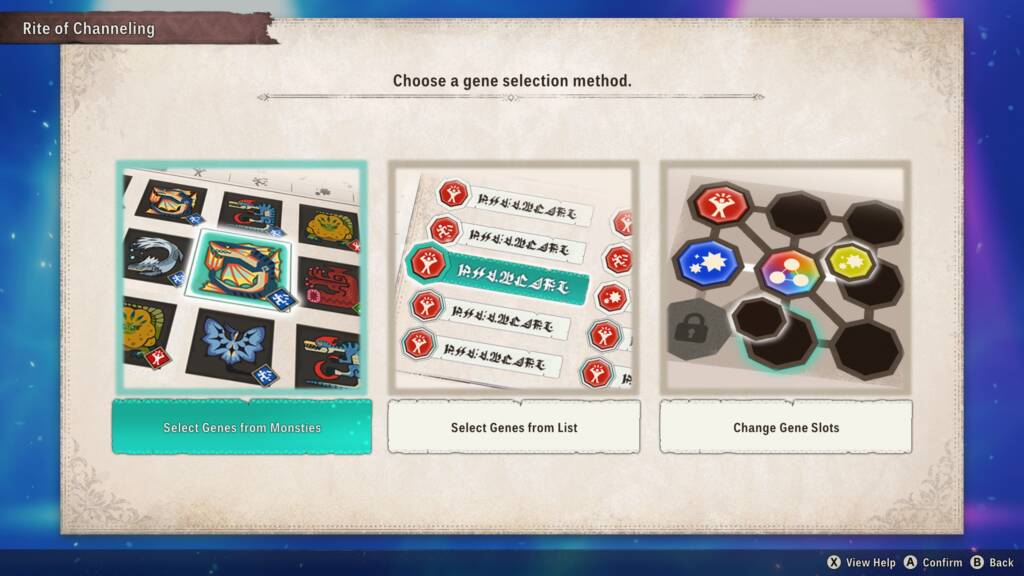
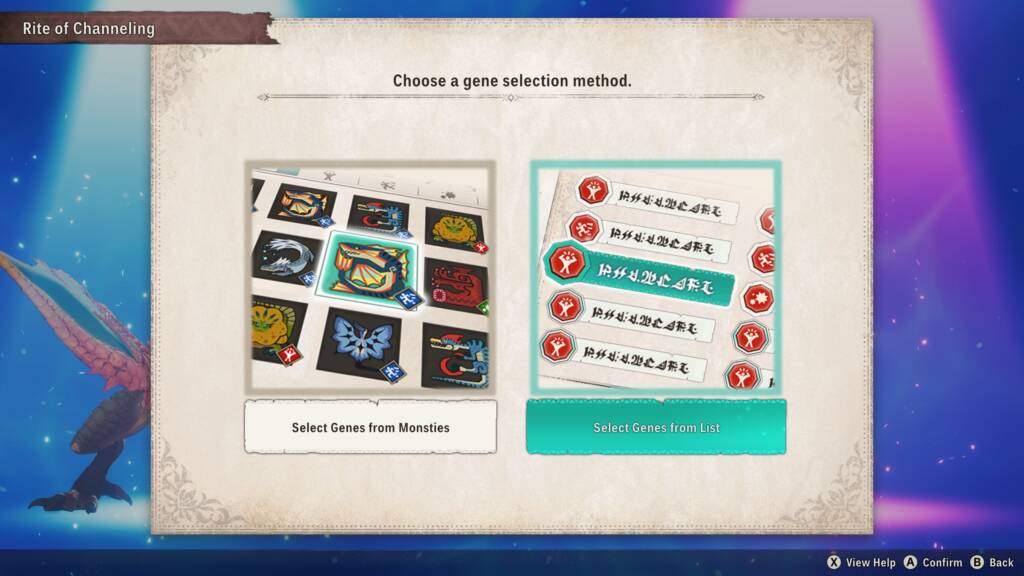
- Confirm and finalize transfer.
A donor-monstie doesn’t disappear after the rite, and if you so choose you can even give them the gene back or take even more genes from it, if they hatched with very strong ones.
Getting better genes
Genes you get early on in the game are not going to be super strong, many passives will be marked with “(S)”, for example.
To increase the gene quality of your monsties, you need to engage with an entirely different subsystem of the game: the Habitat Restoration.
The higher a species’ Ecosystem rank in the given zone, the more likely the monsties from there are to hatch with stronger genes.
Egg skills
Monsties might also hatch with a powerful Egg Skill gene, depending on the element of the zone they hatched in and the Monster Rank.
Egg Skills can be transferred as well.
Environmental Skills
Each region has three Environmental Skills your monsties might acquire if they hatch from an egg of a high enough rank.
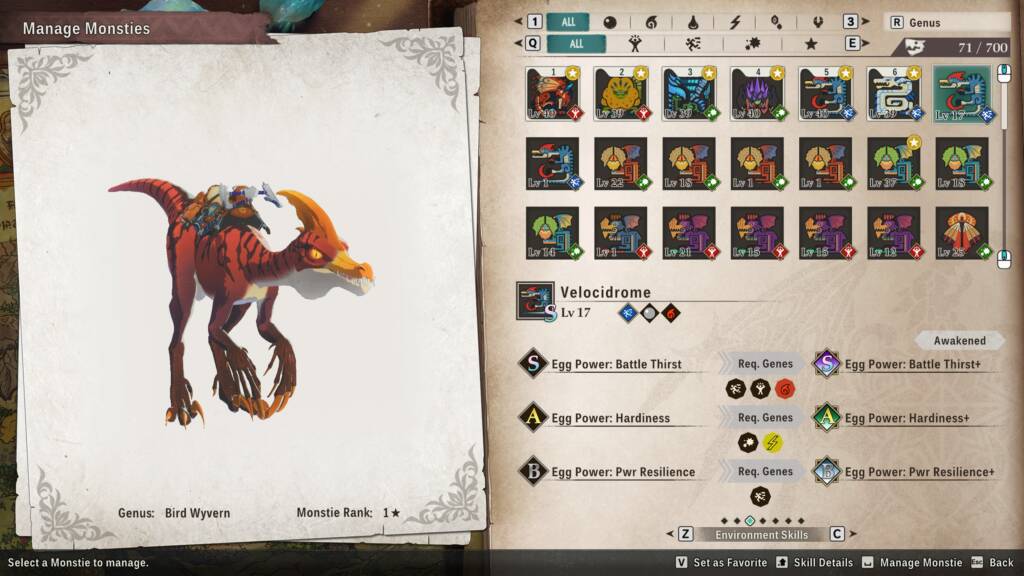
To activate their stronger version, the monstie needs a specific combination of genes in its grid.
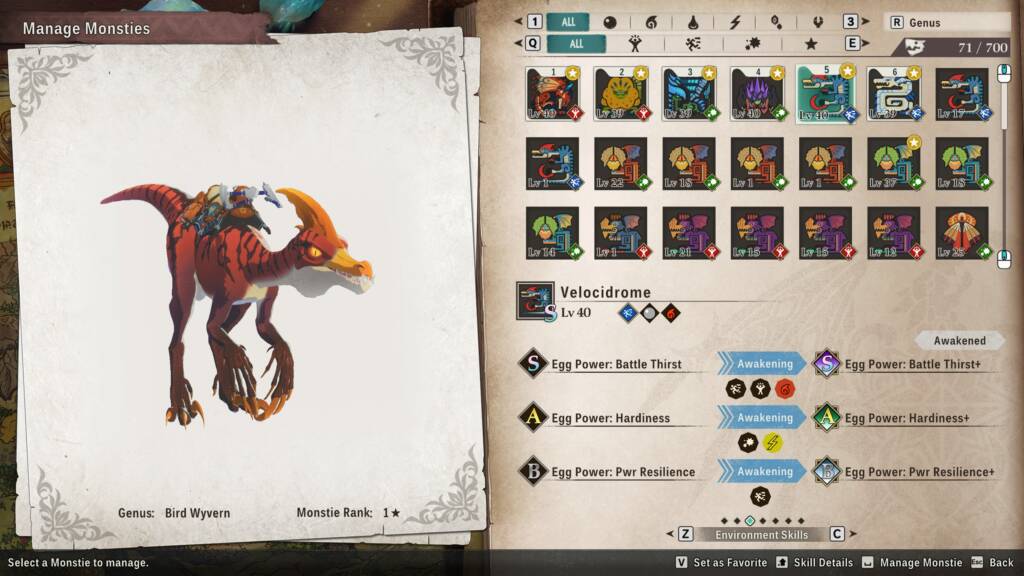
You can’t transplant Environmental Skills with the Rite of Channeling, but later on you’ll get the ability to teach them.
Become a true Gene-stealer
So there, all you must know about giving your monsties the best chance at staying in your roster by gene-splicing extra power and function into them.
Gene-editing can carry you far, but do not overestimate it too much, no matter how much you love your Velocidrome (I sure love mine, it’s a great mount), you will probably want to switch to high-rank monsties and tamper with their genes to tackle the game’s grandest challenges.