
When I first launched Our Life: Beginnings & Always, I expected a wholesome, feel-good indie experience.
That part delivered.
But even though I’m big on RPGs and love story-driven games with deep character attachment, this one didn’t click for me, even though I came into it with a really open mindset.
Visual novels: what to expect
Visual novels are often misunderstood if you’re coming from other genres. They’re mostly about reading, making occasional choices, and watching a story unfold. There’s usually minimal interaction in terms of gameplay mechanics, and progression is driven more by emotion and narrative than challenge or strategy.
We can compare it to a digital book with branching paths and some interactivity layered on top.
Some players like that these games slow everything down and put the focus on people and their stories. Others can find the format too hands-off, especially if you are used to games where you drive the action or change the world in clear ways. That is not a problem with the genre, it just works better in certain moods.
When it clicks, a visual novel can pull you in through writing, characters, and tone, even without much direct interaction.
But if you’re used to being more active in your games, they can also feel a bit… dry.
What the game does well
There’s no question Our Life is polished and thoughtfully made.
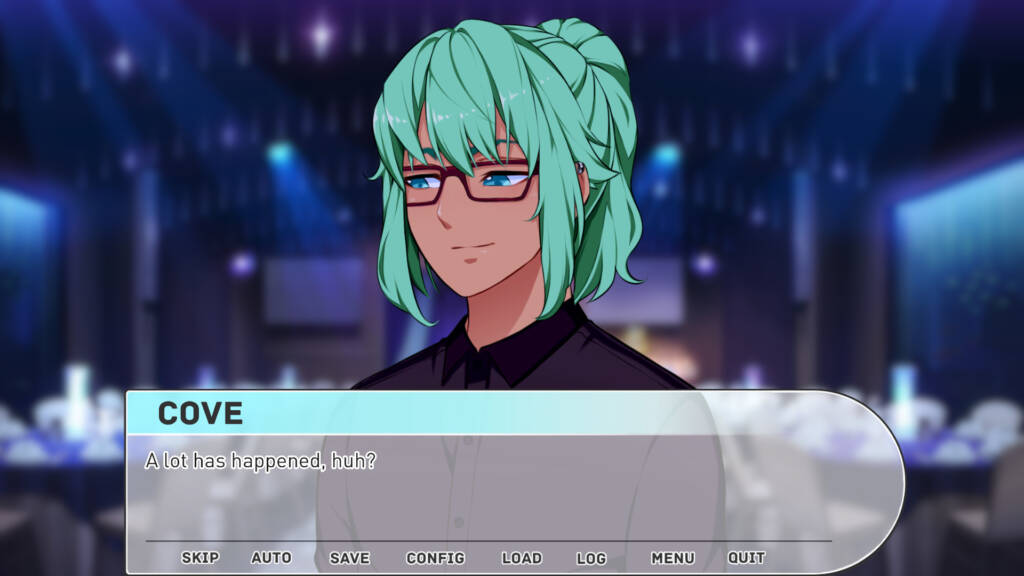
Developed by GB Patch Games, it follows your character across childhood, adolescence, and early adulthood alongside your neighbor Cove Holden. You choose your name, appearance, pronouns, personality traits, and how your relationship with Cove evolves over time.
Each chapter is set during a summer vacation, and before each time skip, you decide how your character currently feels about Cove. You’re never locked into a romantic path. You can stay close friends, fall slowly into a relationship, or keep him at arm’s length. There’s a surprising amount of flexibility, and the game adjusts to your choices without judging them.
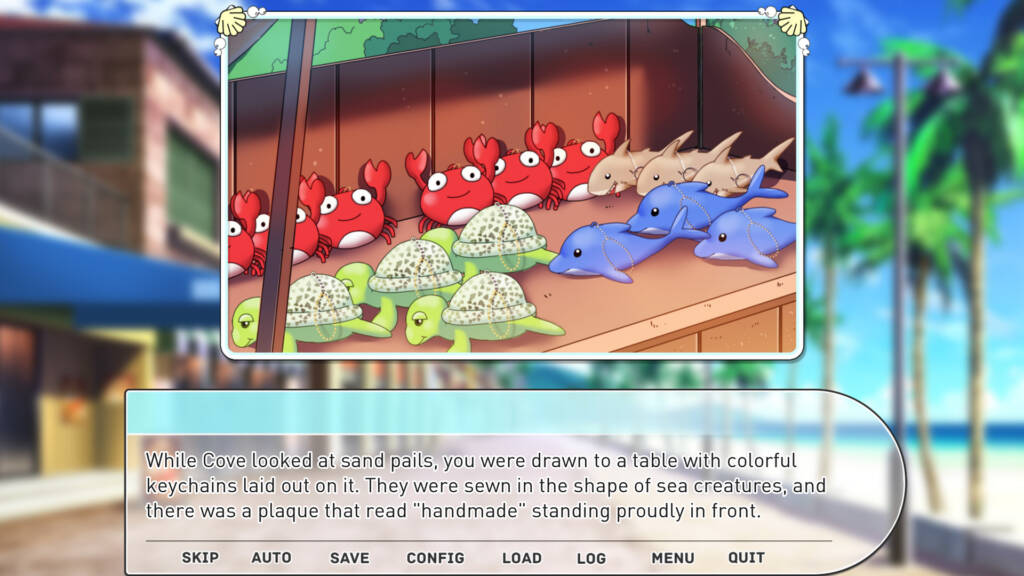
One of the game’s strengths is how much it respects your pace. There are no fail states or bad endings. Even small decisions, like whether you hug someone or what kind of food you like, are remembered. It’s the kind of writing that builds a slow, believable sense of continuity.
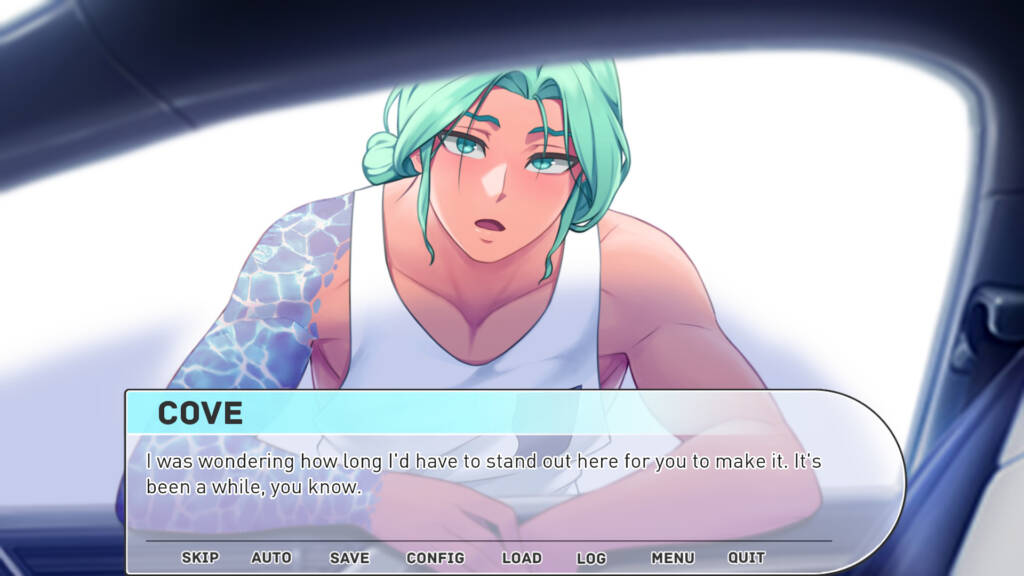
Cove grows with you, and how he responds changes depending on how you treat him.
The tone is gentle, inclusive, and emotionally grounded. You’re not punished for being unsure or changing your mind. It’s rare to find a game this non-judgmental.
So, why didn’t it work for me?
Honestly, I’m still trying to figure that out.
I went in ready to enjoy it. The premise sounded solid, and I liked the idea of a character-driven story that let me shape the emotional direction. And again, I love RPGs with strong writing and complex characters. I’m the type of player who reads every lore entry, who always maxes out the companion quests, who gets attached, and feels empty after the credits roll. Sometimes I put off finishing a game because I am not ready to let go of the characters or the world.
But that didn’t happen here.
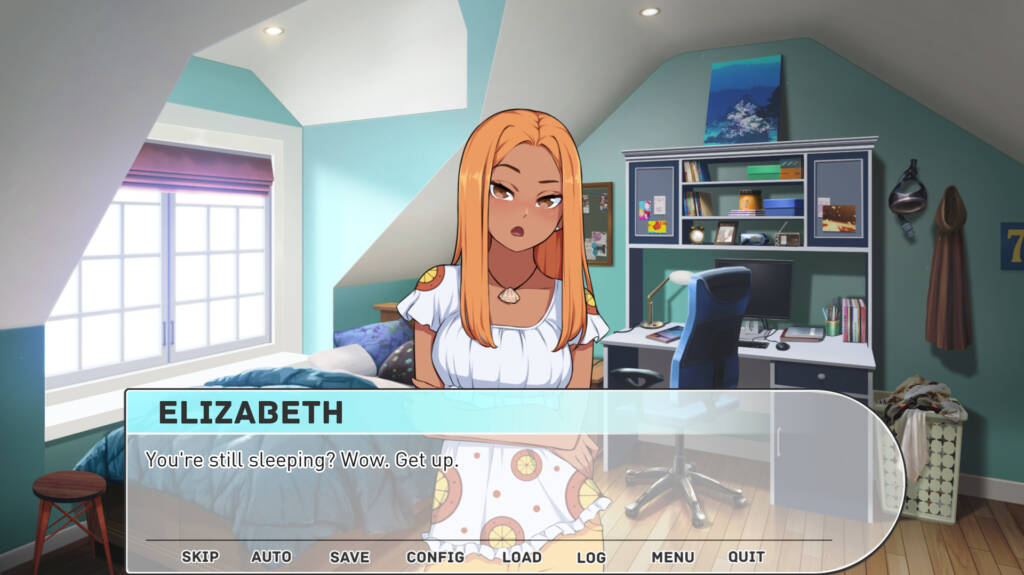
Our Life didn’t pull me in. After a couple of hours, I felt… detached. Not bored, just not engaged. Part of it might be the visual style. It’s soft, pastel, and very cheerful. Which fits the mood, sure, but it made it hard for me to feel grounded in the story. Everything looked so smooth and sweet that it lacked the edge or complexity I usually want in emotional arcs.
Another factor might be the lack of structure. Without traditional gameplay loops or goals, the story depends entirely on emotional buy-in. If you’re not connecting to Cove or your character’s journey, it can start to feel repetitive.
I didn’t feel much urgency to continue. Even though I appreciated the freedom the game gave me, I wasn’t sure what I was working toward.
Still a smart, kind game
What I think happened with Our Life is that it offered warmth and flexibility, but I wanted more challenge, or at least more contrast.
Something to push back a little.
The game is extremely well received, “Overwhelmingly Positive”, on Steam, loved by fans who replay it multiple times, but I just couldn’t connect with it the way others clearly did.
If you want a calm story about growing up and handling relationships, this game fits that mood. The game cares about quiet decisions and ordinary moments.
You spend time choosing how to respond, who to trust, and when to speak up or stay silent. Nothing is trying to shock you or rush you forward.
If you are comfortable with the slower rhythm of Stardew Valley or Spiritfarer, the pacing will make sense, just with less routine and more attention on dialogue and consequences.
If you usually play for clear win conditions, rising tension, or systems that reward optimization, this can feel underwhelming.
The game rarely challenges you mechanically, and it does not push you toward big turning points. It asks for patience and interest in people, not problem-solving.
Sometimes, even when a game does everything right, it might still not be for you. That’s how I felt here. I gave it a chance, and I don’t regret it. But I won’t be coming back to Cove’s world.
And that’s okay.
Not every good game has to become your favorite.