


Roguelike and roguelite are often used interchangeably, but they are not exactly the same thing.
Both belong to the enormous family tree started by 1980’s Rogue, yet a traditional roguelike such as NetHack has surprisingly little in common with Hades, Balatro, Vampire Survivors, or Returnal when you actually sit down and play.
The confusion gets even better once terms such as roguevania, deckbuilding roguelike, survivors-like, bullet heaven, and strategy roguelite enter the conversation. So, let us sort out the family tree and explain what all of these names actually mean.
TL;DR – Roguelike vs roguelite
- What is a roguelike?
- What is the Berlin Interpretation?
- What is a roguelite?
- Roguelike vs roguelite: the differences
- The roguelike family tree
- Action roguelites
- Roguevanias
- Roguelike deckbuilders
- Survivors-likes and bullet heavens
- Strategy and tactical roguelites
- Management and city-building roguelites
- Shooter and first-person roguelites
- What does run-based mean?
- Is Diablo a roguelike?
- Roguelikes and roguelites on G2A.COM
- More guides on G2A News
- FAQ
What is a roguelike?
The term comes from Rogue, the influential dungeon crawler first released in 1980. You explore a procedurally generated dungeon, manage limited resources, fight monsters, collect equipment and search for the Amulet of Yendor.
The important part is what happens when you die: your run is over. There is no traditional reload that lets you undo a terrible decision. The next character begins again in a newly generated dungeon.
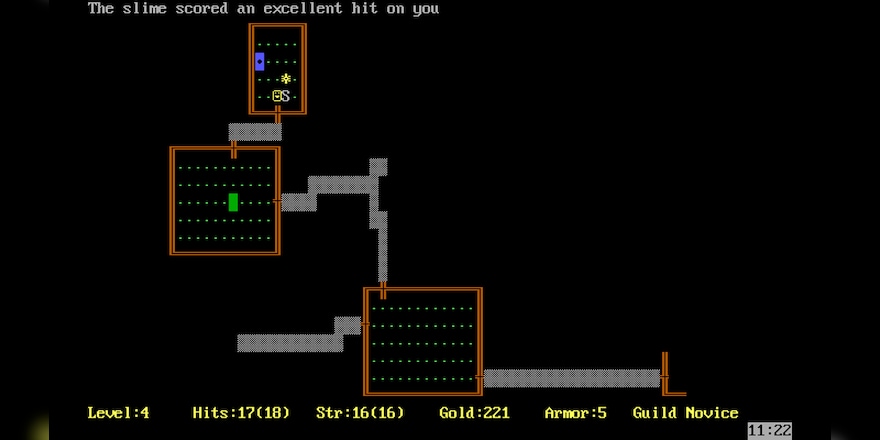
Traditional roguelikes generally combine permadeath, procedural generation, turn-based actions, grid movement, resource management, exploration and complex interactions. The player is expected to learn the game’s rules across many failed characters.
Classic examples include Hack, NetHack, Moria, Angband, ADOM, Dungeon Crawl Stone Soup and Brogue. More modern games that still lean strongly toward traditional roguelike design include Caves of Qud, Tales of Maj’Eyal, Cogmind, Jupiter Hell and Shiren the Wanderer.
Feature spotlight: Permadeath Permadeath means death has consequences you cannot simply erase by loading a previous checkpoint. In traditional roguelikes, losing the character normally ends that entire attempt.
What is the Berlin Interpretation?
If you have ever seen somebody claim that a game is “not a real roguelike,” there is a decent chance the Berlin Interpretation is lurking somewhere in the background.
Created during the 2008 International Roguelike Development Conference, it attempted to describe the characteristics shared by traditional roguelikes.
It identifies nine high-value factors: random environment generation, permadeath, turn-based gameplay, grid-based movement, non-modal actions, systemic complexity, resource management, hack-and-slash combat, and exploration and discovery. It also lists lower-value factors such as controlling one character, tactical challenge, visible numerical statistics, dungeons and traditional ASCII presentation.
There is one very important detail that often disappears from online arguments: the interpretation itself says that missing some factors does not automatically mean a game is not a roguelike. It was designed as a descriptive tool, not a court handing out roguelike licenses.
That distinction matters even more today because the genre has expanded far beyond ASCII dungeon crawlers.
What is a roguelite?
A roguelite takes some of the structural ideas popularized by roguelikes and combines them with other genres.
You still commonly get repeated runs, randomized levels or encounters, randomized builds and a major reset after death. The difference is that a roguelite does not need to be turn-based, grid-based or even an RPG.
It might be an action game, platformer, shooter, card game, survival game or city builder.
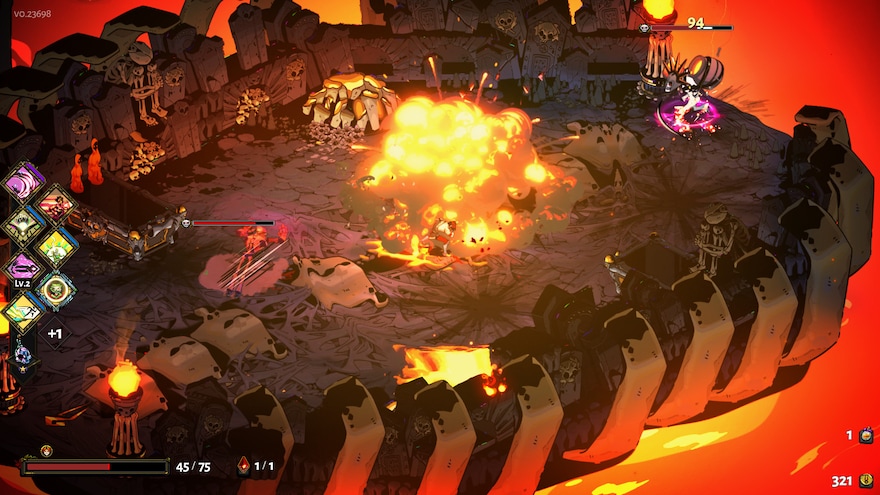
Roguelites also commonly use meta-progression. You may lose the current build when you die but keep currencies, weapons, characters, upgrades, story progress, unlocks or additions to the pool of items that can appear in later runs.
That does not mean every roguelite constantly makes your character statistically stronger. Spelunky, for example, puts much more emphasis on player knowledge and mastery than permanent stat upgrades. The category is broad by design.
Some of the biggest examples are Hades, Hades II, Dead Cells, The Binding of Isaac: Rebirth, Enter the Gungeon, Risk of Rain 2, Returnal, Rogue Legacy 2, Spelunky 2, Noita, Curse of the Dead Gods, Ravenswatch, Nuclear Throne and Wizard of Legend.
Roguelike vs roguelite: what is the actual difference?
The cleanest rule is this: a traditional roguelike tries to resemble the design philosophy of Rogue and its direct descendants. A roguelite borrows the run-based structure and uses it as an ingredient in something else.
The roguelike family tree has become enormous
The easiest way to understand modern terminology is to stop imagining roguelike and roguelite as two sealed boxes.
Rogue ↓ Traditional roguelikes ↓ Modern roguelites ↓ Action roguelites • Roguevanias • Deckbuilders • Survivors-likes • Strategy roguelites • Management hybrids • Shooters
These branches can overlap. Dead Cells can be described as an action roguelite and a roguevania. Slay the Spire is a deckbuilder and a roguelite. Against the Storm is both a city builder and a roguelite.
The label tells you which part of the roguelike formula has been grafted onto another genre.
Action roguelites
This is probably what many players imagine today when they hear “roguelike.”
Action roguelites replace traditional turn-based movement with real-time combat. Runs give you randomized weapons, abilities and upgrades, while dying sends you back to a hub or fresh attempt.
Examples:Hades, Hades II, Enter the Gungeon, Nuclear Throne, Curse of the Dead Gods, Ravenswatch, Wizard of Legend, Dreamscaper, Warm Snow, Have a Nice Death and Skul: The Hero Slayer.
These games usually rely more heavily on reflexes and mechanical execution than traditional roguelikes, but the obsession with adapting to whatever a run gives you remains very familiar.
Roguevania: when roguelite meets Metroidvania
Roguevania is a useful label for games that combine repeated roguelite runs with platforming, interconnected environments, movement abilities and exploration inspired by Metroidvania design.
Dead Cells helped popularize the name itself. Every attempt gives you different weapons and routes, while permanent unlocks gradually expand what can appear and where you can travel.
Rogue Legacy 2 makes inheritance literal: every failed hero is followed by a descendant with a different class and traits. The Rogue Prince of Persia combines the structure with acrobatic movement, wall-running and fast combat.
Other examples: Blade Chimera-like hybrids are sometimes placed nearby, while games such as A Robot Named Fight! push even closer toward the Metroidvania end of the spectrum.
Roguelike deckbuilders and deckbuilding roguelites
Then somebody realized that a “build” does not need to consist of swords, spells and armor. It can be a deck of cards.
Slay the Spire is the landmark example. Every run starts relatively simple, then forces you to construct a deck from random rewards, relics and encounters. The entire challenge is creating synergy before the enemies scale beyond what your deck can handle.
Balatro pushes the same run-building philosophy into poker. Monster Train adds layered tactical battles. Wildfrost mixes card synergies with positioning, while Cobalt Core combines deckbuilding with spaceship combat.
Other strong examples include Inscryption, Griftlands, Vault of the Void, Across the Obelisk, Tainted Grail: Conquest and Dicey Dungeons.
The important part is not whether every game uses literal permadeath. It is that a failed attempt destroys the current deck and makes you construct a new strategy from uncertain ingredients next time.
Survivors-likes, bullet heavens and reverse bullet hells
Vampire Survivors created such a recognizable formula that it effectively spawned another branch of the family.
The genre goes by several names, including survivors-like, bullet heaven, horde survival and occasionally reverse bullet hell.
You normally survive a timed run against enormous enemy hordes while collecting experience and repeatedly selecting randomized upgrades. Individual attacks are often automatic, so positioning and build construction become more important than manually aiming every weapon.
Examples: Vampire Survivors, Brotato, Halls of Torment, 20 Minutes Till Dawn, Soulstone Survivors, Death Must Die, Deep Rock Galactic: Survivor, Nordic Ashes, Boneraiser Minions and Yet Another Zombie Survivors.
This branch is far removed from Rogue mechanically, but the DNA is easy to see: short attempts, randomized builds, repeated failure, discovery and another run waiting immediately afterward.
Strategy and tactical roguelites
The run structure also works surprisingly well when reflexes are removed completely.
FTL: Faster Than Light generates a dangerous journey across the galaxy in which losing your ship ends the attempt. New ships and layouts create future possibilities, but your current crew is gone.
Into the Breach turns the concept into compact turn-based tactical battles. The Last Spell combines tactical defense with persistent progression, while Darkest Dungeon II structures its campaign around dangerous expeditions and repeated failure.
Other examples include Invisible, Inc., Curious Expedition 2, For the King, Inkbound, Crown Trick and Star Renegades.
Management and city-building roguelites
Yes, even city builders caught the roguelite bug.
Against the Storm is the clearest example. Instead of building one city forever, you establish multiple settlements under changing conditions, finish an expedition, carry broader progression forward, and eventually begin another cycle.
Cult of the Lamb combines action runs with cult and settlement management, while games such as DotAGE and As Far As The Eye experiment with repeated survival-focused settlement runs.
The result is a very different kind of roguelite. Instead of asking whether your hero survives the dungeon, the question becomes whether your whole settlement survives your decisions.
Shooter and first-person roguelites
Roguelite structure also fits shooters extremely well because randomized weapons make every run feel immediately different.
Risk of Rain 2 turns the formula into a third-person shooter where item stacks can escalate into hilariously broken builds. Returnal combines fast third-person shooting with bullet-hell patterns and AAA production values.
For first-person options, look at Gunfire Reborn, Roboquest, Ziggurat 2, Immortal Redneck and Void Bastards. Cooperative roguelites such as Deep Rock Galactic: Rogue Core push the formula further by making team composition part of the run.
What does “run-based” actually mean?
“Run-based” has become one of the most useful neutral terms in this conversation.
A run is one attempt that begins from a defined starting point, develops through temporary upgrades or discoveries, then eventually ends in victory or failure. A new attempt resets a significant portion of what you acquired.
This lets us describe games without spending half an hour arguing about whether they are roguelike enough.
Hades is run-based. Balatro is run-based. Vampire Survivors is run-based. Against the Storm contains run-based campaign structure. Their moment-to-moment gameplay could hardly be more different, but the repeated cycle of start, adapt, build, fail or win, repeat connects them.
Is Diablo a roguelike?
No, Diablo is not generally classified as a roguelike. Its normal campaign progression, real-time combat and persistent characters put it firmly in the action RPG family.
But the roguelike influence is absolutely worth mentioning.
Diablo’s early development was heavily inspired by games such as NetHack and Moria, and the project was originally conceived as turn-based before switching to real-time combat. Procedural dungeon layouts and randomized loot also show how ideas associated with roguelikes migrated into action RPGs.
This is another good reminder that influence does not automatically equal genre.
Roguelikes and roguelites to check out on G2A.COM
If all these definitions have made you want to immediately ruin a promising run with one terrible decision, here are several different branches of the genre available on G2A Marketplace.
One more run, one more deal
G2A Plus members can collect Plus Points and access additional marketplace benefits. G2A Plus Premium can also provide lower member prices on eligible items, along with additional rewards and benefits.
More roguelike and permadeath guides on G2A News
- 20 Best Games With Permadeath Mechanics – more ways for a single bad decision to become permanent.
- Games Like Dead Cells – action-heavy alternatives for roguevania fans.
- Games Like Hades – more action roguelites built around repeated escapes, builds and bosses.
- Games Like Noita – procedural chaos, permadeath and systems waiting to ruin your plans.
Roguelike vs roguelite FAQ
Are roguelike and roguelite the same thing?
No. Traditional roguelikes follow much more closely in Rogue’s footsteps, usually with turn-based gameplay, procedural levels and permadeath. Roguelites borrow parts of that structure and combine them with other genres.
Does a roguelite need permanent upgrades?
No. Permanent or meta-progression is common, but it is not mandatory. Some games mainly reward the player with knowledge, additional options or unlocks rather than raw stat increases.
Is Hades a roguelike or roguelite?
Roguelite is the more precise label. Hades uses repeated runs, randomized boons and death as part of progression, but its real-time action combat is far removed from the traditional roguelike structure.
Is Dead Cells a roguelike?
It is more accurately described as an action roguelite or roguevania. Motion Twin itself has used the RogueVania label to describe its mix of repeated runs, progression, action platforming and Metroidvania-style exploration.
Is Vampire Survivors a roguelike?
It shares roguelite DNA, but survivors-like or bullet heaven is a more useful description of its actual gameplay. Runs are short, upgrades are randomized and permanent unlocks influence future attempts.
Is Balatro a roguelike?
Balatro is usually described as a roguelike deckbuilder or deckbuilding roguelite. Its individual runs revolve around building temporary poker hands and Joker combinations from randomized options.
Does permadeath automatically make a game a roguelike?
No. XCOM, survival games and many tactical RPGs can feature permanent death without becoming roguelikes. Permadeath is only one piece of the formula.
Does procedural generation make a game a roguelike?
No. Diablo, Minecraft and countless survival games use procedural generation without belonging to the genre. Context and the overall gameplay structure matter.
Death created an entire family tree
The funniest thing about the roguelike debate is that both sides are describing something real.
Traditional roguelikes are a distinct genre with decades of history, from Rogue and NetHack to Dungeon Crawl Stone Soup and Caves of Qud. Calling Hades exactly the same type of game obviously ignores enormous differences in how they play.
At the same time, modern roguelites clearly inherit ideas from that tradition. Permadeath became repeated runs. Random dungeons became randomized encounters, cards, weapons and upgrades. Learning through failure became meta-progression, new unlocks and increasingly ridiculous builds.
That is how one ASCII dungeon eventually helped give us Hades, Dead Cells, Balatro, Vampire Survivors, FTL and a city builder where losing an entire settlement is part of the plan.
Not bad for a game from 1980.