


Skull Horde has one of those setups that instantly sells the whole game.
A necromancer’s body cuts off its own skull, buries it, and stomps off in pursuit of immortality. Later, that floating skull rises from the dirt, summons an army of skeletons, and sets out to fight its own headless corpse. It’s weird, grim, and immediately memorable.
TL;DR – Skull Horde
| Topic | What to know |
|---|---|
| Core idea | Roguelike mix of survivor-style combat and auto-battler army building |
| Gameplay loop | Recruit units, build synergies, survive escalating enemy waves |
| Unique twist | Your skull takes shared damage – positioning matters |
| Main concern | Early progression may limit build experimentation |
Table of Contents
That tone carries straight into the game itself. At a glance, Skull Horde looks like a roguelike mashup of Vampire Survivors-style survival combat and Teamfight Tactics-inspired unit management.
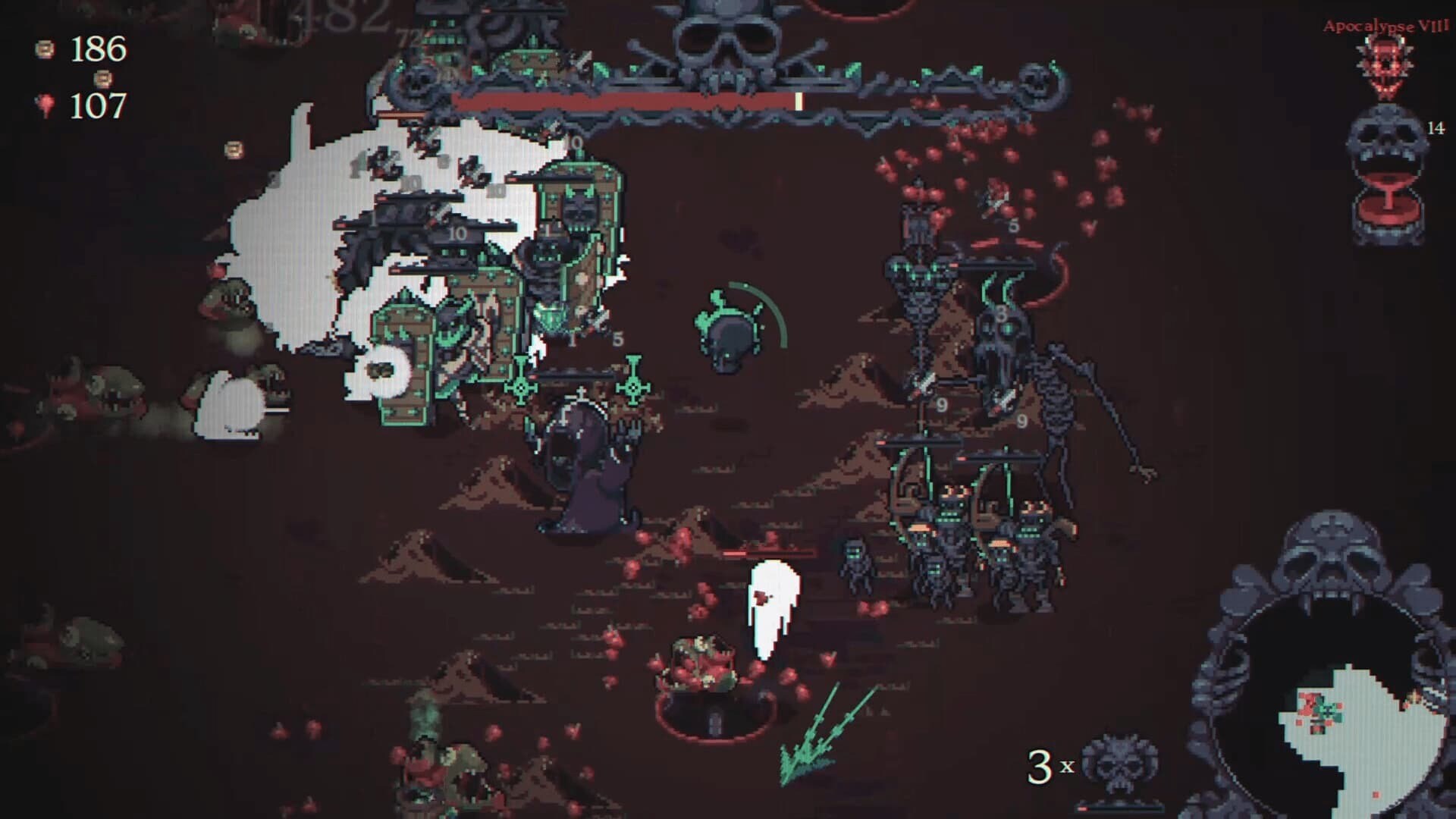
You drift through bleak dungeon floors as a vulnerable floating skull while your undead minions automatically attack anything nearby. Between battles, you recruit new skeletons, upgrade your army, and try to build synergies strong enough to survive the escalating flood of enemies.
Where Skull Horde gets clever
The army-building is the real hook. You can recruit a variety of unit types, from heavily armored frontliners to ice mages and even skeletal rat swarms. Each run forces you into tough decisions, because your army can only support six different unit types at a time.
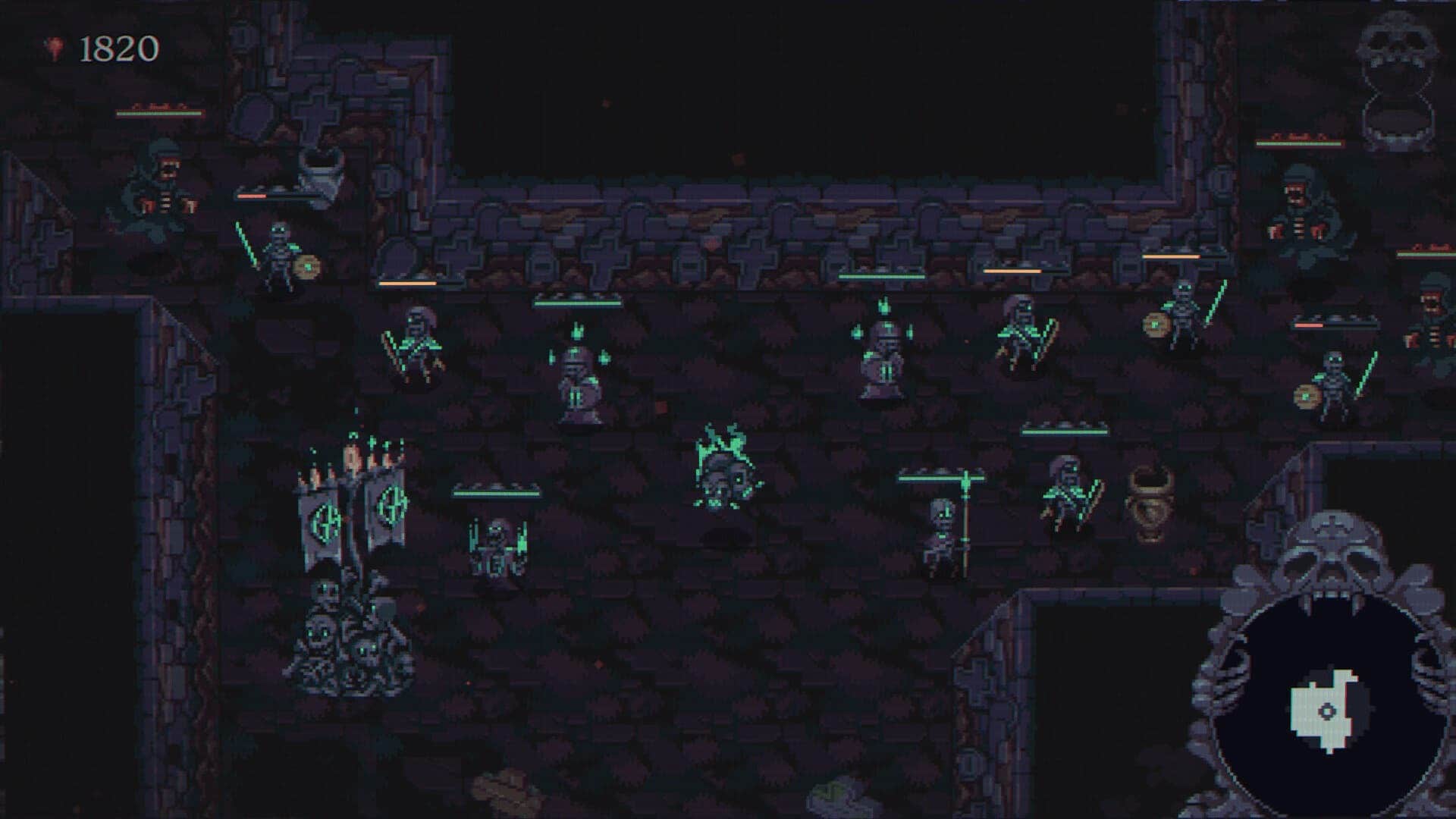
The layering goes deeper than just picking favorites. Three copies of the same minion combine into a Veteran, and three Veterans merge into a Champion.
Once you start fielding Champions with matching traits like Vanguard, Siege, or Horde, you unlock set bonuses that can reshape your whole build. It is a smart system that makes every shop phase feel important, even when the game refuses to offer exactly what you want.
Survival speed matters as much as strategy
The other big twist is pacing. Skull Horde is not a game where you can carefully clear every corner of the map.
The longer you stay on a floor, the more enemies spawn, and eventually the whole run spirals out of control. That pushes you into a constant tug-of-war between greed and survival.
You are hunting treasure chests, elites, and other valuable objectives, but you also need to know when to stop pushing and sprint for the exit portal.
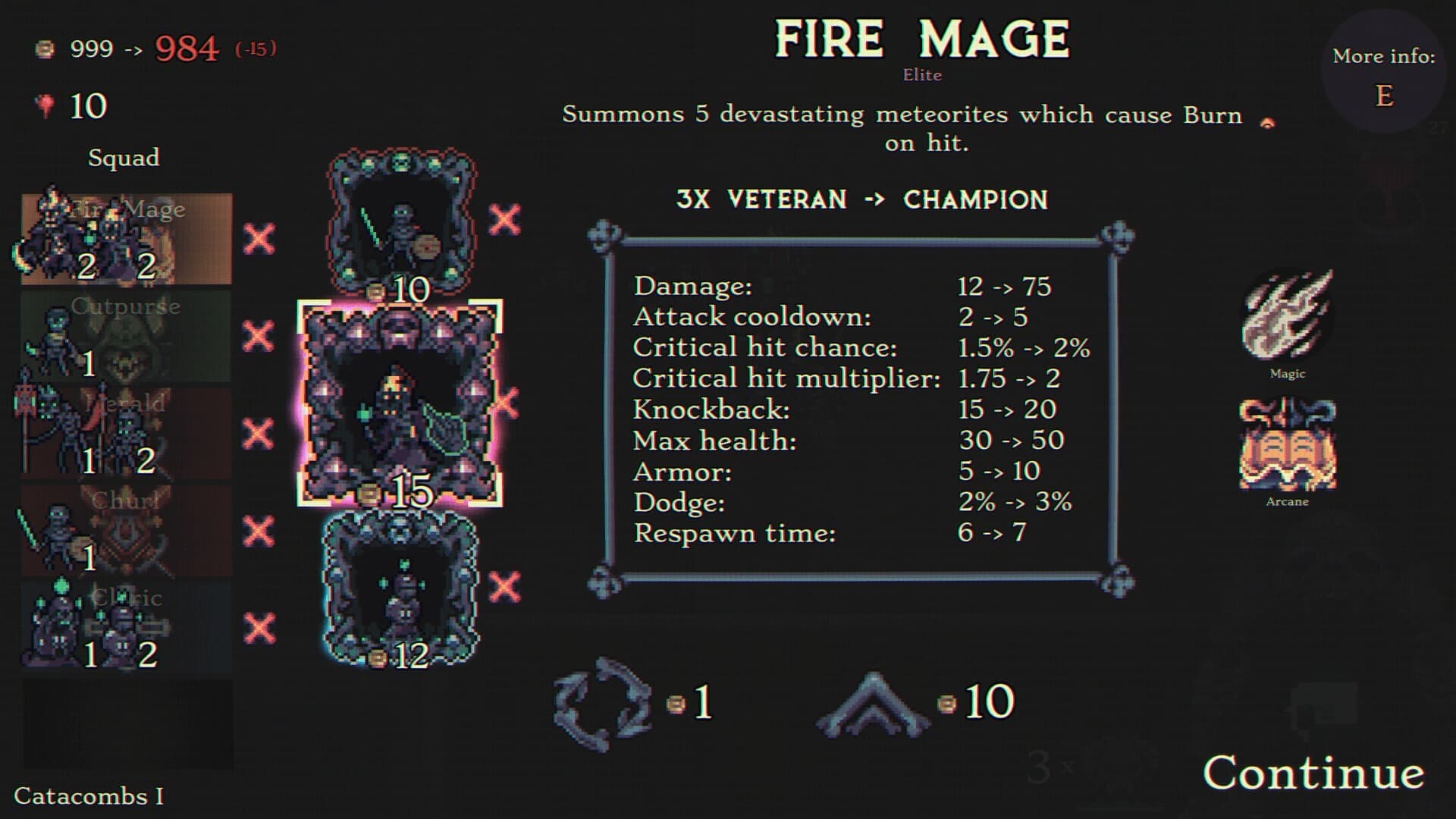
That creates a nice pressure curve, especially because your floating skull is not just a spectator. If it gets hit, the damage is shared across your whole army, ignoring their defenses. So even with a strong frontline, bad positioning can still wreck a run fast.
That risk-reward balance is where Skull Horde feels strongest. You are always deciding whether to hide safely behind your minions or push forward to save precious time.
The big weakness – early build freedom
Where the game seems less convincing, at least early on, is in how much it actually encourages experimentation. A first run built around Vanguard units, tanky warriors, clerics, and bannermen already feels effective, but after losing, the unlocks do not really push you toward trying something wildly different.
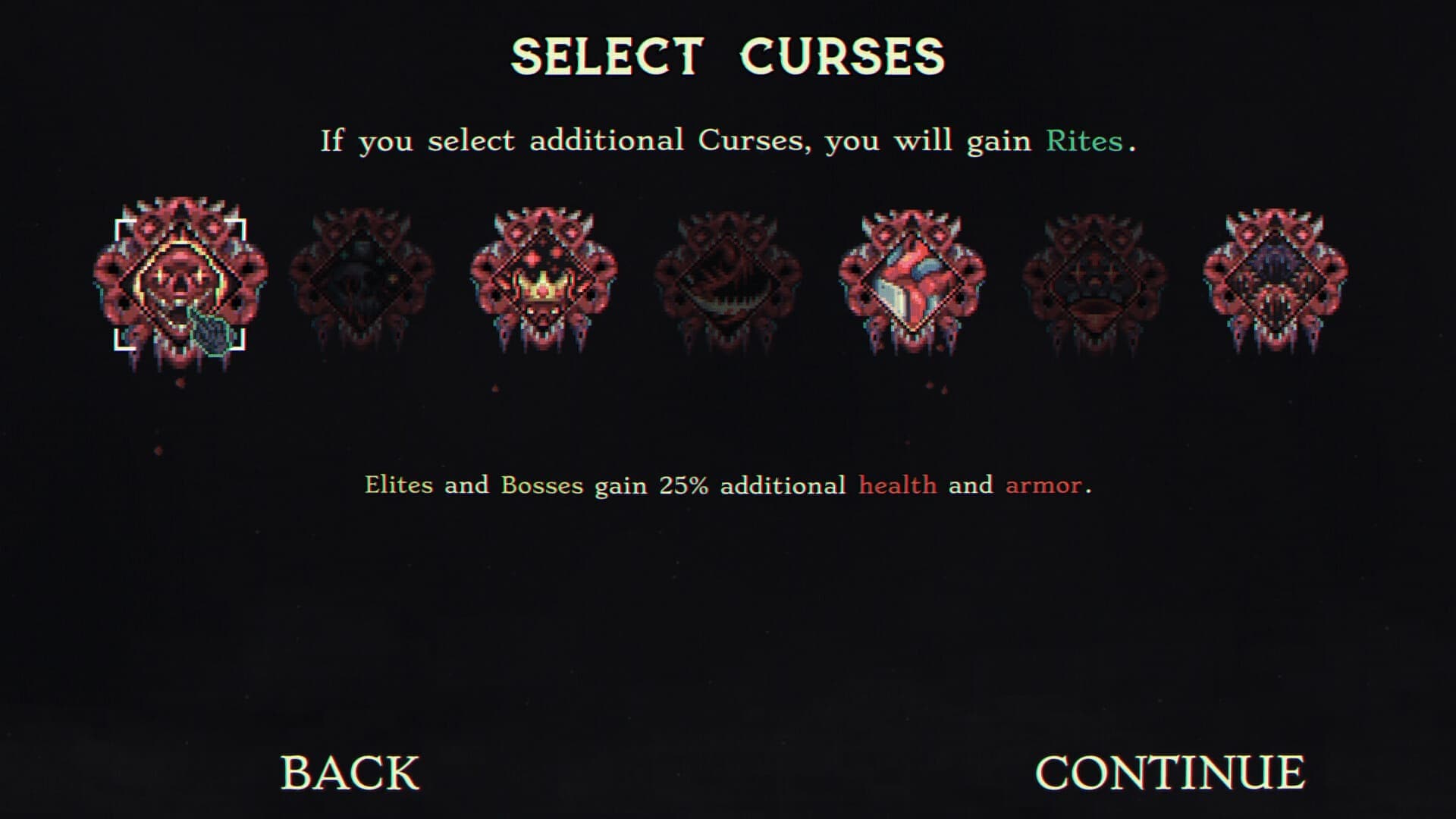
The current skill tree appears to reinforce that same defensive archetype, and even the next unlockable character is tied to achieving a high armor multiplier. That creates the sense that, while the game offers lots of unit variety on paper, it may funnel players into a narrower path than it first suggests.
That is a shame, because some of the most interesting possibilities sound like the less conventional ones: swarm-heavy Horde builds that benefit from minions dying, or magic-focused armies built around debuffs and support units. Right now, those options feel more intriguing than fully encouraged.
Final thoughts
Even with that limitation, Skull Horde still looks like a strong spin on two very crowded genres. The mix of auto-battler army planning and survivor-like battlefield pressure gives it a distinct identity, and the necromantic presentation is excellent. It is strategic, fast, and just the right kind of grimly silly.
The main question is whether future runs and unlocks open the game up enough to let its wilder build ideas really shine. If they do, Skull Horde could end up being something special. If not, it still has enough style and smart systems to make fighting your own headless body a pretty good time.