
In the world of video games, the label “walking simulator” gets thrown around too easily. That kind of shortcut can make people miss what a game is actually doing. The Alters, from Polish developer 11 bit studios, sometimes ends up in that category. But is it really just a slow stroll through space? Not even close.
Here’s why The Alters deserves a second look, and why calling it a walking sim says more about the player than the game.
It’s Not Just Walking: Complex Gameplay Mechanics
The Alters blends survival, strategy, base building, and character-driven RPG choices. You play Jan Dolski, the lone survivor of a wrecked space mission, trying to stay alive on a planet where the sun literally moves closer every day.
You do explore, but it’s never aimless. You scout for resources while planning routes, avoiding hazards, and dealing with anomalies that mess with your gear or drain your suit battery. Some you can outsmart. Some will chase you. You need the right tools, and often you have to build them first. It’s a loop of planning, upgrading, reacting, and surviving.
You’ve got to think ahead when moving between points. The planet doesn’t sit still. Wait too long, and some areas turn into real trouble. A path that felt safe before might suddenly get cut off by terrain shifts or new anomalies popping up. Every time you leave the base, there’s tension, and every mistake carries consequences.
It’s pressure-based navigation tied to real consequences. Hard to call it just “walking”. If you ignore the systems, you fail. I’ve reloaded saves after realizing I spent too long detouring and now I’m boxed in with no way back. Every step outside the base feels like a risk, especially when the sunlight creeps up and the anomalies get more aggressive.
The Heart of the Game: The Alters and Their Stories
What really stuck with me is how personal it all feels. The “Alters” are alternate versions of Jan, each from a different life path. Not just generic clones, but full characters with memories, skills, and opinions. One might be a miner, and another therapist. Their mood affects their performance, so your job is to make them happy or at least make their stay at the base bearable. Some of them don’t like each other and some don’t like you. And they all have something to say.
You have to manage these relationships and make hard calls. Do you push someone to work even if they’re breaking down? Do you let two Alters who hate each other work the same shift? Your choices shape the outcome. This is character-driven survival, not passive storytelling. It’s wild how fast I went from thinking of them as tools to worrying about how they’d react to a decision.
And the voice work deserves a mention. Alex Jordan voices every Alter, but gives each one a unique tone and delivery. It adds a layer of immersion that’s rare in games like this. It also reinforces that each Alter is a distinct person, not just a gameplay piece.
Over time, you begin to see how these relationships evolve. Some Alters will start to question your decisions. Others may form alliances or come to trust you more, depending on how you interact with them (will you let them win at beer pong?). That emotional layer adds weight to every decision, especially when you have to choose who to send into danger. And in some cases, you might even face a choice of whether to delete or keep an Alter who no longer serves a purpose but still feels human.
Fighting Time and Environment: Constant Pressure
The Alters puts you under pressure from the first minute. The sun keeps moving, radiation builds up and you keep hearing that the radiation filters are running out, and you have to survive the storm. You have to keep your base mobile and operational or die. Time matters as the sunlight acts like a real-time clock you can’t ignore. The game doesn’t let you idle or feel comfortable.
Base upgrades, resource collection, anomaly responses, Alters needs… you’re constantly juggling problems. It plays more like a survival strategy game than anything else. You’re reacting to threats, managing downtime, and trying to stay one step ahead of collapse.
As you expand your base, the pressure doesn’t ease. In fact, it scales. Larger bases require more resources and more efficient task assignments. A misstep in task delegation can leave you short on power, oxygen, or critical parts. Every expansion comes with risk.
And there is always the looming threat of running out of time. The sunlight is a ticking clock that forces you to act decisively. Wait too long, and the environment becomes hostile enough to kill you and every Alter you brought with you. Some day you’ll get caught out there, too far from home, and feel that panic set in. It’s less stressful than XCOM, but not by much. You will feel it.
Optimization and Quality of Life Features: Thinking for the Player, Not the Walker
The devs clearly respect your time. When Jan finishes a task, the game suggests what he should do next. You can assign Alters to jobs from anywhere in the base. Build queues are easy to manage, and time speeds up when you’re working inside. The point isn’t to make you walk more but to make you think smarter. There are plenty of features that streamline gameplay without removing challenge. For instance, certain modules let you automate parts of the workflow, but only if you’ve earned them through research or tech upgrades. There are limits so the game avoids turning into a spreadsheet simulator by keeping you involved in key decisions. You can also assign tasks in bulk once you unlock more advanced control terminals. This is especially useful when managing larger crews. It reduces micro-managing without making things too easy. You still need to keep track of who is doing what and how they feel about it.
What surprised me was how even the downtime feels meaningful. Watching a comedy short with your Alters, playing beer pong, just hanging out… these little moments improve morale and help you survive longer. And yeah, I spent way too much time deciding where to place a recycler, just because it felt like it mattered where people would actually walk to use the bathroom.
That’s how deep the immersion gets. I’ve caught myself roleplaying decisions I wasn’t planning to care about.
Conclusion
The Alters is a tight blend of survival mechanics, branching character arcs, and real-time pressure. Calling it a walking simulator misses everything that makes it work. Yes, once you figure out the best upgrades and layout, it can become easier, but is having a checklist a bad thing? That early stress, the scrambling to stay alive, the quiet base conversations – they all hit really hard on a first run.
This game is smart, tense, and strangely emotional. If you like sci-fi, RPG choices, and survival mechanics, it’s absolutely worth a try. Especially if you have Game Pass.
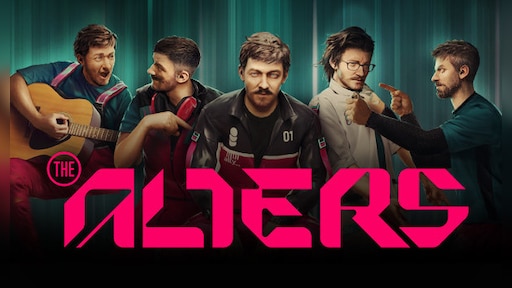
The Alters
Release Date: December 31, 2025
Genres: Survival, Adventure