



1999 wasn’t just a good year for shooters — it was a real battlefield! Two arena giants stepped in, and players had to pick a side: Unreal Tournament versus Quake III Arena.
Honestly, it wasn’t a quiet rivalry. It was fast, loud, and fueled by LAN parties, dial-up trash talk, and pure competitive pride. One game pushed speed and precision and the other pushed variety and style. Both wanted the same crown: king of multiplayer FPS.
So, how did this clash start, and why do players still argue about it today? Let’s rewind to the moment when arena shooters ruled the world and see why gamers still debate which one was better.
What Made Quake III Arena Unique Among Arena Shooters?
Quake III Arena didn’t try to entertain you with extras — it challenged you to get good. Fast. It was built as a pure skill arena where aim, timing, and movement decided everything. No long intros, no fluff, no story distractions, just you, your weapons, and whoever stood across the map. It was a raw multiplayer.
What’s interesting, Quake III Arena’s speed and skill-driven gameplay spawned early esports tournaments, including the Cyberathlete Professional League.
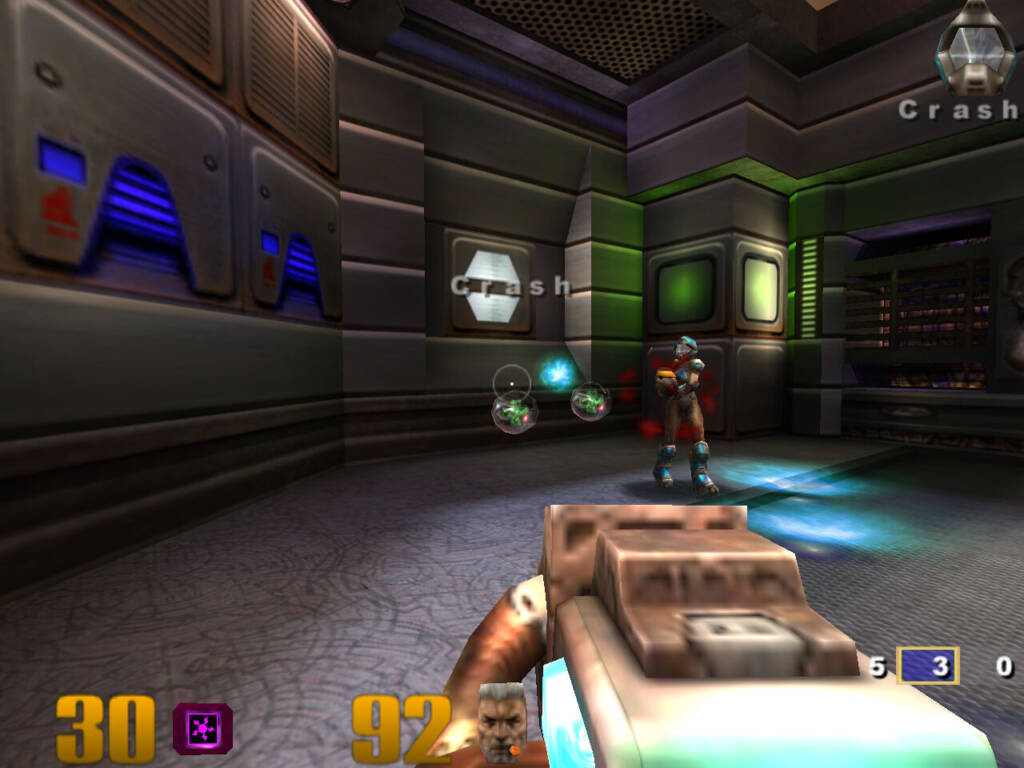
In the heat of battle, its standout features were:
- symmetrical, tournament-ready maps designed for fair, competitive play
- laser-focused weapon balance where each gun filled a clear role
- high-skill movement like strafe-jumping and rocket-jumping
- rock-solid performance that made matches feel incredibly smooth
Reviewers and competitive players loved that purity. PC Gamer famously praised its “blistering speed and unmatched multiplayer focus,” while many community veterans summed it up more simply: “No luck, just skill.” The vibe was clear — if you improved, you won.
What Made Unreal Tournament So Popular With Players?
Unreal Tournament sold over 2 million copies worldwide in its first year, quickly becoming a LAN party staple. The game arrived with a fresh, bold attitude: more modes, more chaos, more personality. It wanted you to compete, sure, but it also wanted you to have a blast doing it. From day one, it felt loud, creative, and packed with content.
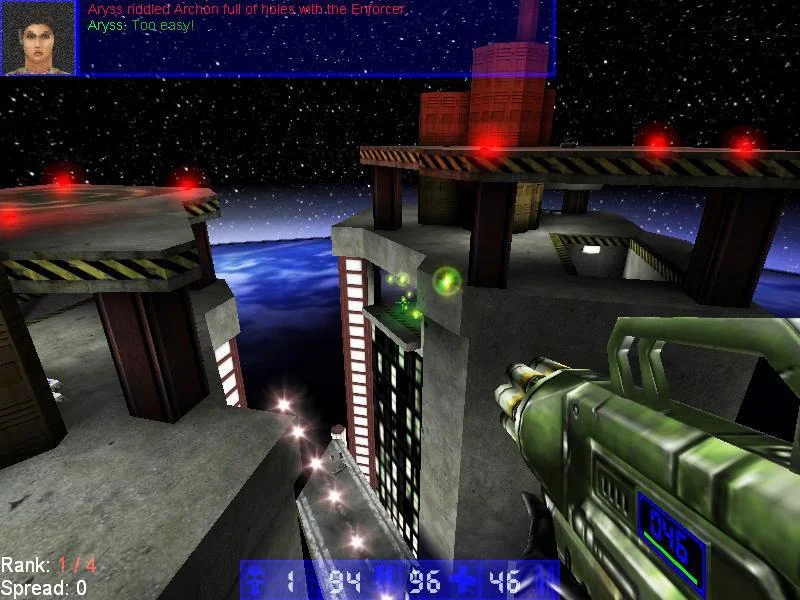
Players around the world kept talking about features like:
- a variety of modes beyond Deathmatch, like Assault and Domination, which encouraged strategy and team coordination
- wild, memorable weapons that created huge “did you see that?!” moments
- smart AI bots that made offline play genuinely fun
- a generous amount of launch content, from maps to game types, that made the purchase feel like a great value
Review outlets like GameSpot highlighted its value and variety, and many LAN players said it was “the game you installed first at a party.” Community sentiment often leaned toward how fun and flexible it felt, even for non-pros.
Summing up this part, Quake III felt like a sport. Unreal Tournament felt like a festival. One tested your limits and the other made sure you had a great time. That contrast is exactly why this 1999 rivalry still sparks passionate debates today.
How Did Quake III Arena and Unreal Tournament Shape the Gaming Industry?
Q3A and Unreal Tournament didn’t just fight for players’ attention. They changed multiplayers gaming forever! Between 1999 and 2000, they set the benchmark for arena shooters, competitive balance, and online play.
Below, there are the main ways these games shaped the industry:
- competitive focus, with Quake III’s skill-based combat inspiring early esports and tournaments, while setting the standard for competitive multiplayer games.
- variety and accessibility, as Unreal Tournament proved that multiple game modes, creative weapons, and smart AI could attract both casual and hardcore players.
- LAN and community culture, because both games encouraged LAN parties, modding, and community-driven content, helping build lasting fan communities.
- design templates, since symmetrical maps, advanced movement mechanics, and inventive weapon systems became the foundation for almost every shooter that followed.
The legacy is undeniable! Fast arena combat, iconic weapons, and replayable maps are now the backbone of modern multiplayer shooters. Without these 1999 classics, today’s competitive and casual FPS games would look completely different.
What Later Games Were Inspired by Quake III Arena and Unreal Tournament?
Quake III Arena and Unreal Tournament set the blueprint for skill-based multiplayer shooters. Map control, movement tricks, and crazy weapon variety became standard for almost every shooter that followed, shaping both casual and competitive gameplay.
Their influence can be seen across genres, from arena shooters to modern team-based and battle royale titles.
Let’s take a closer look at these clear examples:
- Halo: Combat Evolved (2001) borrowed map control, balanced weapons, and competitive multiplayer design that rewarded skill and strategy.
- Team Fortress 2 (2007) emphasized unique character abilities and class-based arena combat, showing how variety and teamwork could complement skill-based action.
- Overwatch (2016) combined fast action, distinct heroes, and strategic team play, carrying forward the arena shooter spirit with modern mechanics.
- Apex Legends (2019) introduced battle royale gameplay with movement mechanics, weapon variety, and pacing directly inspired by classic arena shooters.
You know what? If you still love fast, skill-based multiplayer today, you’re seeing the legacy of Q3A and UT99 everywhere.
Final Thoughts
Honestly, Quake III Arena will always hold a special place in my heart. It was one of the first games I truly got lost in, and I still remember sneaking in a few matches during IT lessons at school. I got completely hooked, and honestly, I was pretty good! I even managed to beat a few of the boys from my class several times. So proud!
I remember the rush of running through those chaotic maps, the thrill of nailing a perfect rocket jump, and the satisfaction of outsmarting an opponent just as the timer ran out.
The intense sounds, chaotic arenas, and crazy weapons made every match unforgettable, but my favourite was always the plasma gun. Oh, yeah!
Looking back, it wasn’t only another game, it was an experience that got me hooked on multiplayer shooters and competitive gameplay for life.
Even now, when I hear that electric hum or see fast-paced arena combat, it instantly takes me back to those school days. And I can’t help but smile at how much fun I had discovering that game for the first time.