




A new game can draw you in right from the very first minutes. Everything feels fresh: the world, the characters, the mechanics and the way the story unfolds. You feel a sense of excitement as you discover new elements and get the impression that you’re making rapid progress.
However, over time, this initial energy often wanes, and games that have been started are left unfinished. In their place, new games appear, which once again provide that same sense of novelty and engagement.
This phenomenon is very common and stems from several important psychological factors as well as the design of the games themselves.
If you’d like to find out more, read our guide.
What Makes It Easier For Us To Start New Games Than To Finish Old Ones
The fact that players are more likely to start new games than to finish those they have already begun is influenced by several key factors that operate simultaneously and reinforce one another.
Each of these factors affects a different aspect of motivation, ranging from the excitement of novelty, through the way players are rewarded, to fatigue caused by long and complex gameplay.
In practice, this means that starting a new game often seems easier and more appealing than continuing a story you’re already familiar with, even if it was previously very engaging.
The Novelty Effect
One of the key reasons is the novelty effect. The human brain reacts very strongly to new stimuli, as these are associated with curiosity and greater emotional engagement. In practice, this means that the first few hours of a new game are the most exciting.
The player explores the world, gets to know the mechanics and gradually learns the rules of the game. Every new element brings a sense of satisfaction and progress. However, once everything becomes familiar and predictable, the excitement naturally wanes and the game loses its novelty.
Reward System
Games are designed to engage the player very strongly at the outset. That is why, in the early stages of gameplay, rewards appear frequently and quickly, whilst new levels, skills or items give the impression of dynamic progression.
Later on in the game, the pace of rewards usually changes. Progress slows down, and achieving further goals requires more time and effort. For many players, this leads to a drop in motivation and a greater tendency to start a new game, which once again offers a quick sense of progress.
Game Complexity
Many modern games gradually increase in complexity. At the start, the mechanics are simple, but over time further systems are introduced: character progression, crafting, resource management and expansive maps with side quests.
Players have to manage more and more elements simultaneously, which can lead to information overload. Instead of an enjoyable gaming experience, fatigue and chaos set in, and starting a new game seems easier and more straightforward.
An Overabundance Of Games And FOMO
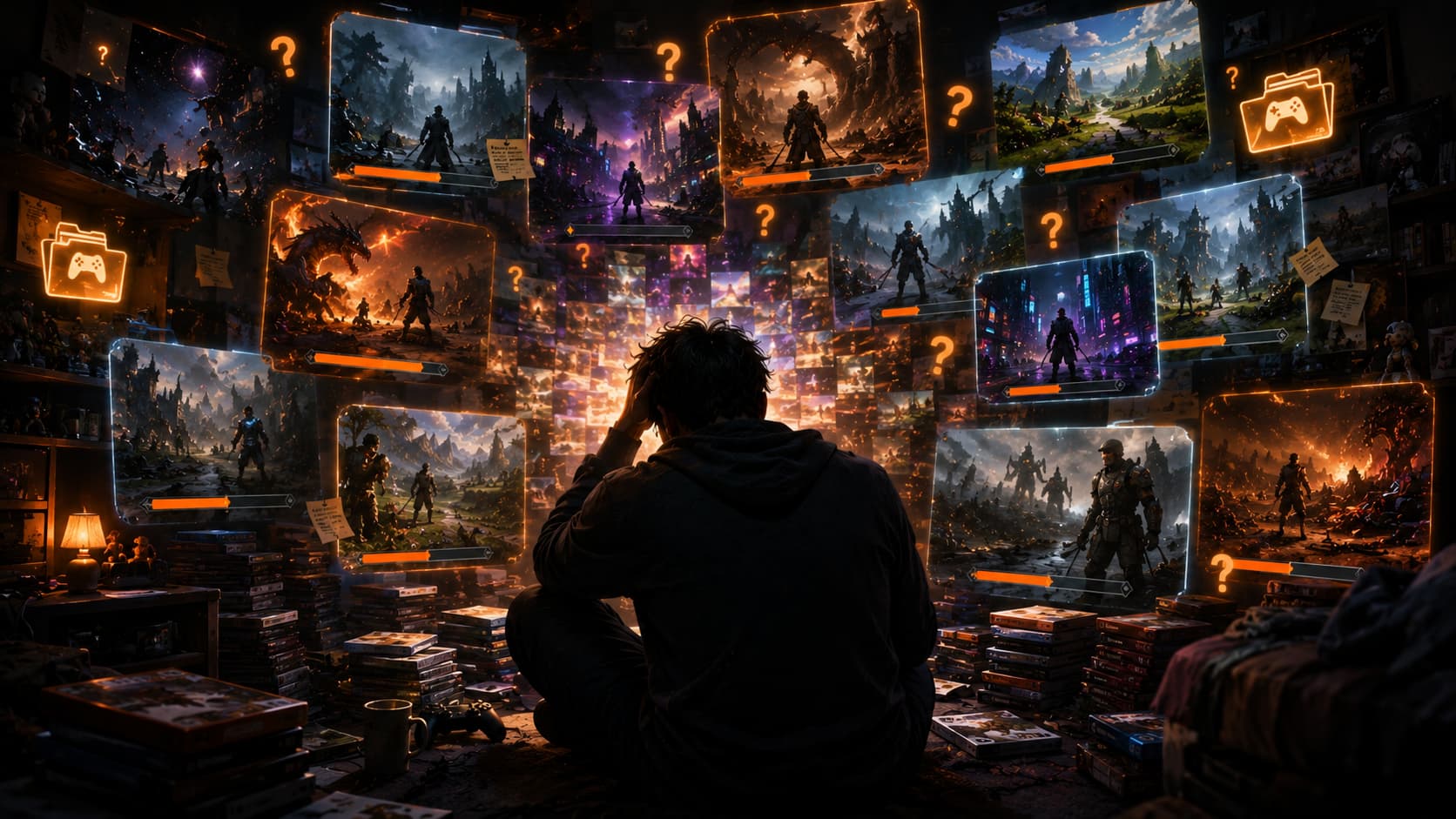
The modern gaming market offers a vast number of titles, with new releases appearing very frequently. Players therefore have constant access to new experiences, which makes it difficult to focus on just one game.
On top of that, there’s FOMO, the fear of missing out on something interesting. Even if a particular game is enjoyable, the awareness of other popular titles can lead a player to abandon it and try something new.
Gamers’ Perfectionism
Some gamers do not finish games because they are striving for a perfect run. If they make a mistake or feel they have not played optimally, they would rather start from the beginning than continue playing.
As a result, the game is restarted time and time again, but is never completed, as the player keeps returning to the start in an attempt to achieve the perfect result.
Game Fatigue
Longer games, particularly RPGs and open-world titles, require many hours of commitment. As you progress, the storyline may slow down and tasks become repetitive. The initial excitement gradually fades.
At this point, players often lose motivation and opt for a new title that offers a fresh experience and a faster pace of gameplay.
Conclusion
That’s all you need to know about why players are more likely to start new games than to finish the ones they’ve already begun.
Starting new games is associated with intense emotions, rapid progress and a sense of discovering something new. Finishing them, on the other hand, requires patience, consistency and the ability to cope with increasing complexity and a slowing pace of rewards.
The combination of player psychology, game design and the vast number of titles available means that many adventures that are started are never completed.