


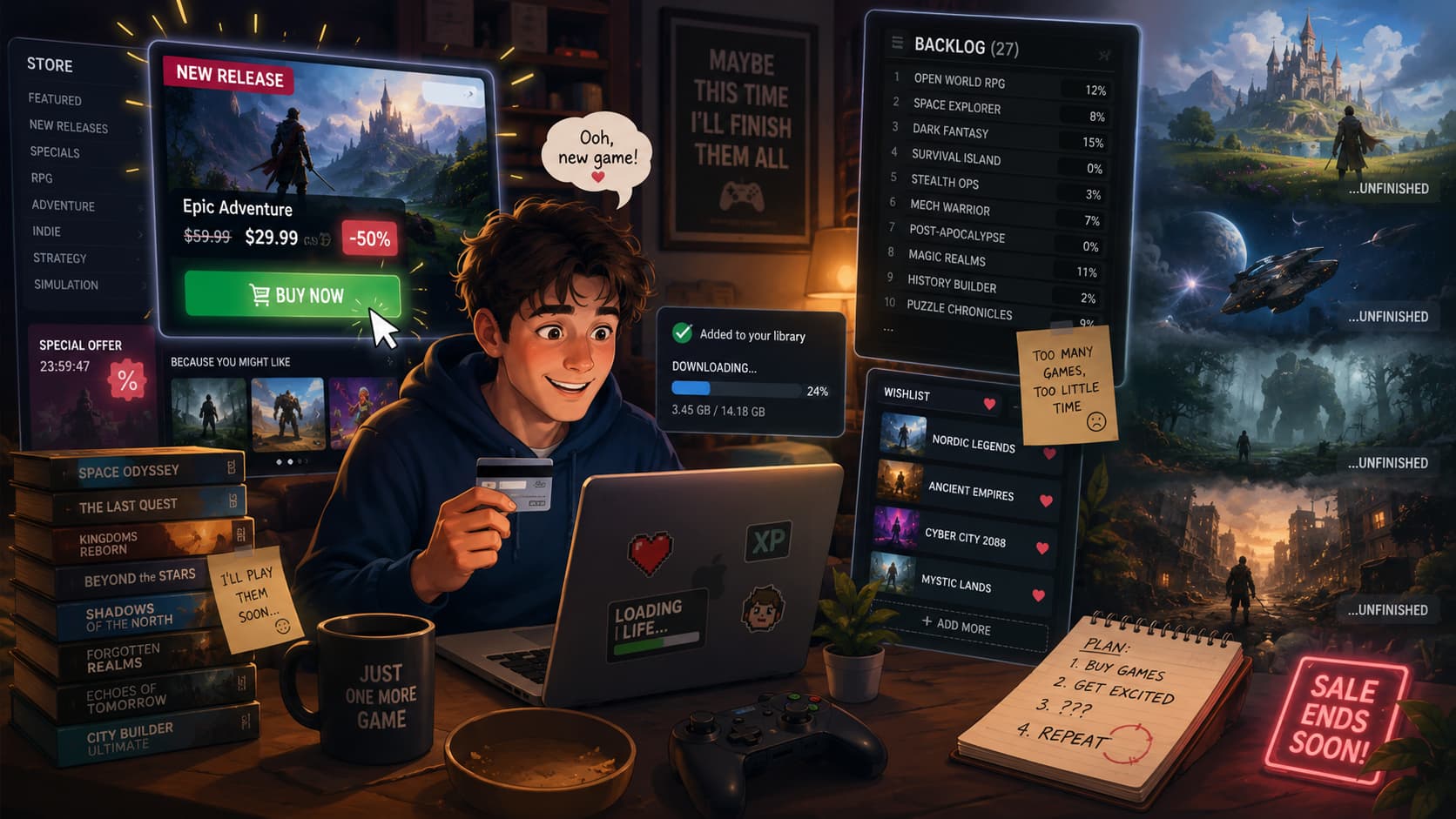
Every gamer is familiar with this pattern. You log into Steam during a sale, see the deals, add games to your basket and think: “I’ll play them later.” Before you know it, another sale or a new release comes along and your gaming backlog starts growing faster than you can keep up with it.
That is why many gamers today have dozens or even hundreds of unfinished games in their game libraries. The purchase itself provides instant gratification and a sense of belonging to gaming culture, but finishing games requires time and commitment.
In the world of digital distribution, wishlists, game bundles and subscription services, our libraries are bigger than ever, but we do not have any more time to play. This shift in player behavior has created a modern form of collecting called game ownership where we buy more than we finish.
If you want to understand why the modern Steam backlog never ends, read our guide.
Table of Contents
Why Gamers Buy Games They Never Finish?
One of the main reasons is FOMO, or the fear of missing out. Seasonal sales, limited time offers and messages such as last day of the sale are classic examples of impulse buying games where decisions are driven by emotion rather than logic.
The second important factor is dopamine. The act of purchasing provides a quick rush of pleasure, often stronger than the later gameplay. This is closely linked to game sales psychology and consumer psychology where buying itself becomes part of entertainment.
There is also future oriented thinking such as I will play it someday or I will find the time later. In reality this leads to growing backlog guilt especially when wishlists and seasonal sales constantly remind us of new deals.
The market also plays a huge role. Free games, bundles and subscription services mean access to new titles is almost unlimited. This expands our game libraries but does not increase our completion rates or available time.
Why Do These Games Remain Unfinished?
The problem does not end with the purchase, because how we play is just as important.
Players often start one game but after a few hours move on to the next one, usually something newer or more popular. This is a result of the attention economy where every new release competes for limited focus.
Modern games also contribute to this issue. Huge open worlds, hundreds of side quests and long campaigns lead to open-world fatigue. Some live-service games also encourage constant return instead of completion, which changes how players approach finishing games.
As a result many titles become unfinished not because they are bad but because there are simply too many competing for attention and player engagement.
Community And Trends Pressure
Other gamers and social media also have a huge influence on gaming habits. Streamers, YouTube, TikTok and Reddit create pressure to keep up which affects what we buy and play.
Typical effects of these include:
- buying games at the peak of hype,
- quickly abandoning older titles,
- constantly expanding the Steam backlog,
- participating in community discussion instead of finishing games.
As a result many players experience a similar pattern where their backlog grows faster than their available time.
How Do Games Influence Our Habits?
Modern games are designed with player engagement in mind. Battle passes, daily missions, seasonal updates and progression systems ensure there is always a reason to return.
At the same time competition between games increases switching behavior, so even highly rated titles struggle against new releases and trends.
The result is simple: we play more games than ever but we finish fewer of them regardless of replay value or quality.
How Can You Manage Your Games Library More Effectively?
To reduce backlog guilt and keep better control over your collection it is worth adopting a few simple rules:
- limit purchases during major seasonal sales,
- play one main game at a time,
- try games before committing especially via subscriptions,
- mix long games with shorter experiences,
- treat games as entertainment not a chore.
This helps make game ownership more mindful and reduces pressure created by endless choice in modern ecommerce platforms.
Conclusion
That is everything you need to know about why we buy games we never finish and where the modern gaming backlog comes from.
In a world shaped by digital distribution subscriptions and unlimited choice unfinished games are a normal part of modern gaming habits.
It is not a failure of the player but a result of the system the market attention economy and how games are designed today.
With a more mindful approach the backlog stops feeling like pressure and instead becomes a list of future experiences waiting to be enjoyed.