
I hate it when a game tells me no.
I try to do something fun, maybe jump on a roof, take a shortcut, or mess around a little, and suddenly I’ve “left the mission area” or hit an invisible wall.
Nothing kills the mood faster!
That’s why open worlds are so popular. They let you go your own way, get lost, and play how you want.
But does that freedom always work? And do all open worlds really feel free?
Escape into another world
Open-world games give us something hard to resist: freedom and immersion. You can explore for hours and leave real life behind.
No wonder scientific studies confirm this kind of escape can help us. A 2024 study found that open-world games can actually help people relax and feel better mentally. Researchers called it a “cognitive break”, basically, a way to unplug and reset.
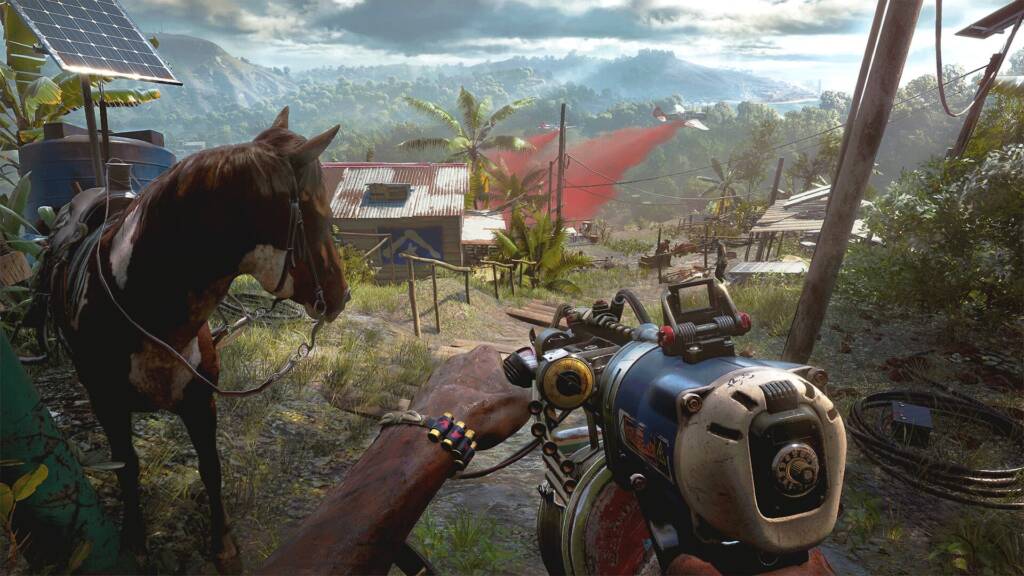
Big maps and player-driven pacing give you space to… breathe. One researcher summed it up well: these games offer “a sense of exploration, skill, positivity, and even meaning.” Sounds dramatic? Maybe. But plenty of us really do feel that.
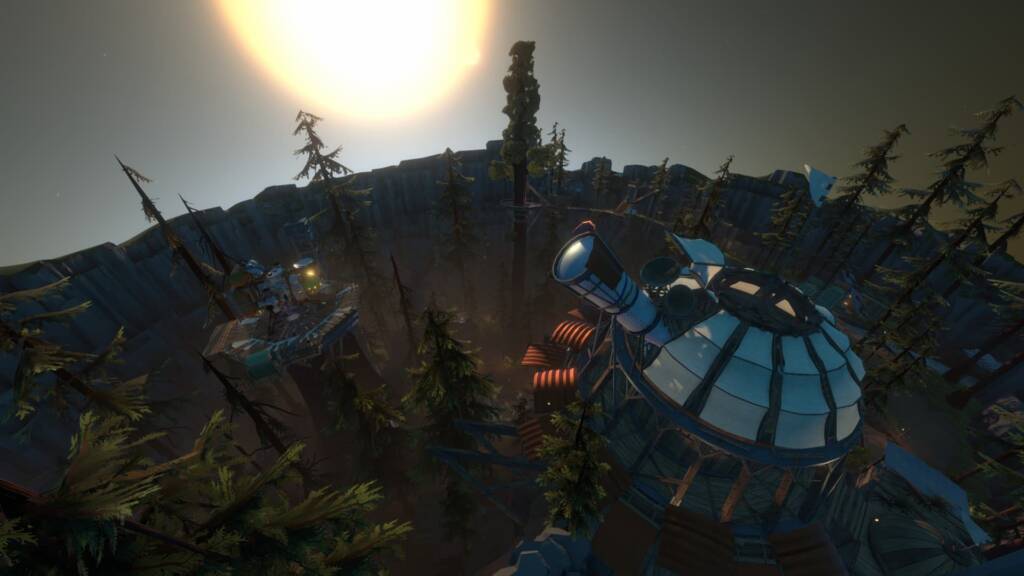
You don’t even need to look far for examples. Outer Wilds, a small gem about exploring a tiny solar system, lets you become a space explorer. You can fly between planets freely and uncover mysteries in any order, all while the game rewards your curiosity. Reviewers said it captures freedom perfectly.
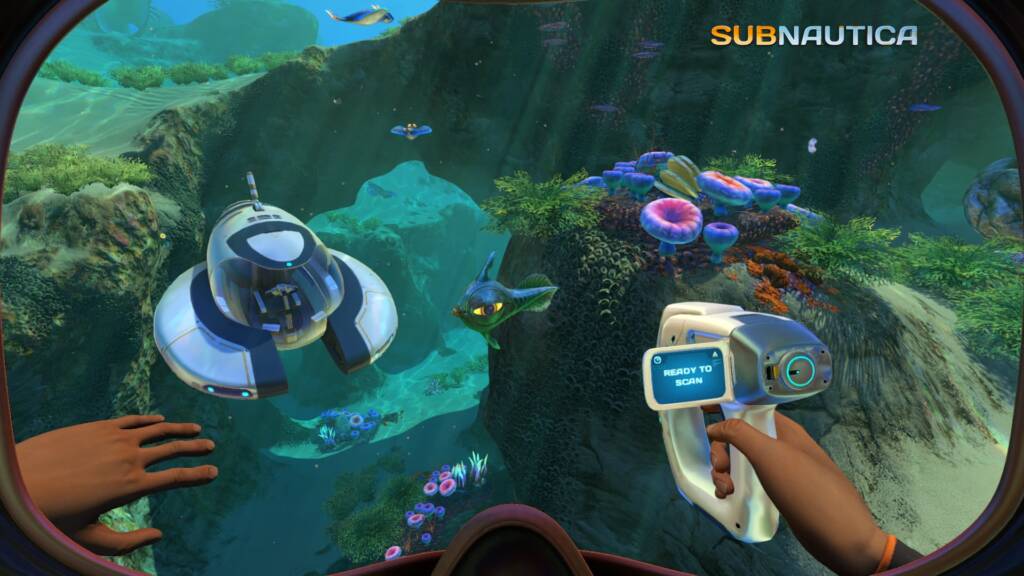
Then there’s Subnautica, which proves an open world doesn’t need to be on land. The depths of an alien ocean are stunning and terrifying at the same time.
What makes us sink into these worlds?
It’s a combination of factors.
First, the freedom of action. You can go where you want and do what you want without the game limiting you.
Second, the sense of discovery. Every part of the map might hold something interesting, like a hidden cave or a unique NPC with a quest.
Third, the details that build the world. Changing weather, wild animals crossing the road, books full of lore on shelves.
All this makes the world feel alive. For many of us, these virtual lands have become a way to relax and satisfy the need for adventure. Some players even say they feel more at home in open worlds than in linear games.
When a game becomes your second life
But an open world is not just scenery to admire. It is also a set of mechanics that make the player feel part of that world.
Developers are constantly trying new ways to make it feel like real life, where our decisions matter and the world reacts to what we do.
Ten years ago, interactive storytelling was mostly associated with RPGs like Mass Effect, where we decided who would live and who would die.
Today, player influence is far more direct. Dying Light 2 is a good example, since your choices can reshape the city.
Taking over a water tower can lead to very different outcomes. Give it to the Peacekeepers and the district becomes safer, water flows freely, and you get new traversal tools, though the faction might turn on you later. Support Jack and Joe instead and the area stays rough, but you earn cash, gain black market access, and pick up some shady perks.
These choices change the map and the missions you can access. No single playthrough shows everything, and Techland even built a new engine to handle so many branching states.
And while we can debate how fully those promises were kept in the final game, the point is this: it feels like your choices matter. It is your city, shaped by your actions.
Worlds that react and respond
Another way to make the world feel alive is through simulation and interaction, inspired by immersive sims. NPCs with their own routines who react to you, dynamic ecosystems where creatures hunt each other, physics that let you experiment and mess around. All of this makes the game feel less scripted and more spontaneous.
Building your own world
We also see more and more mechanics that let you build your own piece of the world.
Survival sandboxes got us used to crafting and base building, but open-world RPGs have picked that up, too. In Fallout 4 or Skyrim, you could furnish homes. In Assassin’s Creed Valhalla, you expanded a Viking settlement.
Indie games push it even further.
Bellwright, a medieval indie project, blends an open world with strategy and base building. You start as a fugitive soldier who founds a village in the forest. You can build structures, recruit villagers, and conquer nearby lands and castles. The game world literally changes, as your settlement grows from a forest outpost to a walled stone town.
When the open world fails
Of course, that’s the ideal. In reality, not every open world feels alive. Sometimes things fall flat. Instead of awe, we feel boredom or frustration.
When does that happen?
The first problem is emptiness. It does not matter if you have 50 square kilometers or half a continent. If there is little to do beyond the view, you get bored fast.
A classic example is The Elder Scrolls II: Daggerfall from the 1990s. Still one of the biggest maps in gaming history, but largely procedural and… empty.
Modern games can run into similar problems. Halo Infinite got some criticism for lacking things to do in its open terrain outside the campaign.
Mafia II gave us a lovely Empire Bay, but once the main story was done, it had almost nothing else to offer .
Repetition and fake choices
The second issue is repetition and filler.
A giant map dotted with icons might look promising at first (so much to do!), but if 80% of those activities are weak, like collecting 100 feathers or clearing 40 identical bandit camps, enthusiasm drops.
The next trap is artificiality and lack of interaction.
Sometimes a game has an open world on paper, but it feels like an empty set. NPCs wander in circles, repeating the same lines. Half the buildings are just textures with no interiors. Your actions do not leave any lasting mark, because the story is stuck on rails. It becomes a fake open world.
For example, Cyberpunk 2077 built up Night City as a living organism full of unique characters and opportunities. But right after the game’s release, players quickly noticed many features were just decoration. NPCs lacked depth or daily routines, and the police appeared from nowhere. You couldn’t do much outside the story.
Is bigger always better?
And there is one more thing, which is genre fit. Not every game needs an open world. Sometimes it feels forced. Developers add it because it is trendy. The result? Diluted gameplay. Many players prefer tight, focused adventures over sprawling sandboxes. A smaller, content-rich world beats a huge, empty one.
Intentional emptiness?
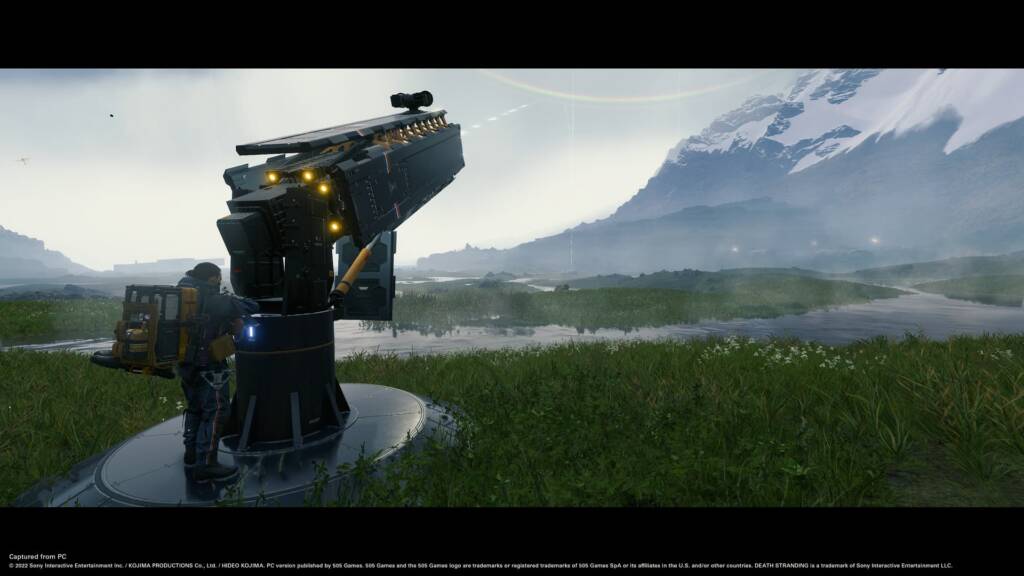
Interestingly, emptiness can be intentional. Then it depends on player preference. Death Stranding by Hideo Kojima is a great example. Its vast, barren landscapes force you to deliver packages while avoiding ghosts and fighting sleep. Some players loved the meditative solitude and post-apocalyptic journey. Others were bored out of their minds.
Even football is getting a sandbox
Despite these challenges, the open world formula dominates gaming. Even series that had nothing to do with it before are trying to add sandbox features.
A recent example? A football game. EA Sports FC, formerly FIFA, already has the Pro Clubs mode, where you play matches with friends. But that is still classic football.
Now EA says it is working on a new open-world mode for future FC games. It would be like The City in NBA 2K, a big hub city where players walk around as avatars, meet online, and take part in street sports events.
Instead of selecting a match from the menu, you could go to a virtual court and challenge a friend in person. It works well in NBA 2K, where The City has mini-games and spontaneous pickup games.
Will it work in football? Too soon to tell.
But it also raises the question: does every game really need open world features? Or have we gone too far?
Freedom that keeps you hooked
Despite the flaws and occasional missteps, we still love open worlds. When everything works, they give us experiences that linear games cannot match. That feeling of living in another universe, shaping the outcome with your choices, and going wherever you want that is the kind of magic worth forgiving a few filler quests or slow parts.
I’m excited for the next wave of open-world games, especially those trying something new.
After all, nothing beats that moment when you take your first step on a new path and think, “What’s over that next hill?” and knowing you get to find out your own way.