




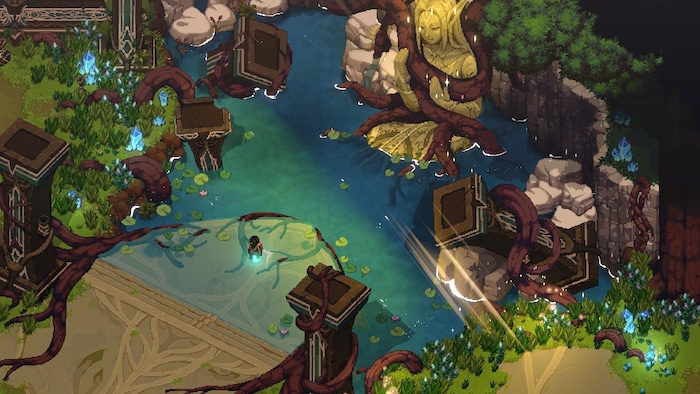
Dimraeth launches into Steam Early Access on September 15, 2026, and it looks like someone squeezed a co-op fantasy RPG, Souls-lite combat system, character builder, crafting game, and settlement loop into one very pretty isometric pixel world.
You can play alone or bring up to seven friends, build a hero around race, class, attributes, equipment, and magic, then head into Mirkea to fight bosses, complete quests, recruit allies, gather resources, and come home to a stronghold that becomes more useful as you invest in it.
That last part is what makes Dimraeth more interesting than simply calling it a pixel-art action RPG.
The home base is not supposed to be a decorative pile of walls you visit between adventures.
You build farms and quarries. You add crafting stations. Recruited allies expand shops and services. Food and potions support harder expeditions. Relationships open conversations, personal quests, and potential romances. Then you leave home, fight something unpleasant, return with more loot and materials, and improve the machine again.
It is a very familiar “prepare, explore, come home stronger” loop, but wrapped around a much more traditional character-building RPG than most survival-crafting games.
How we assessed this: This Spotlight is based on Dimraeth’s current Steam page, Mudtek’s official website and Steam development updates, including the September Early Access content announcement. It is research-based rather than a hands-on review.
Table of Contents
- What is Dimraeth?
- The Souls-lite part actually matters
- Races, classes, Archetypes, and 300+ spells
- Adventure, come home, build something useful
- How 8-player co-op progression works
- What is actually in Early Access?
- Who should play Dimraeth?
- More games if Dimraeth looks like your thing
- Playing Dimraeth through Steam
- More co-op RPGs on G2A News
- The adventure matters because you have somewhere to come back to
What is Dimraeth?
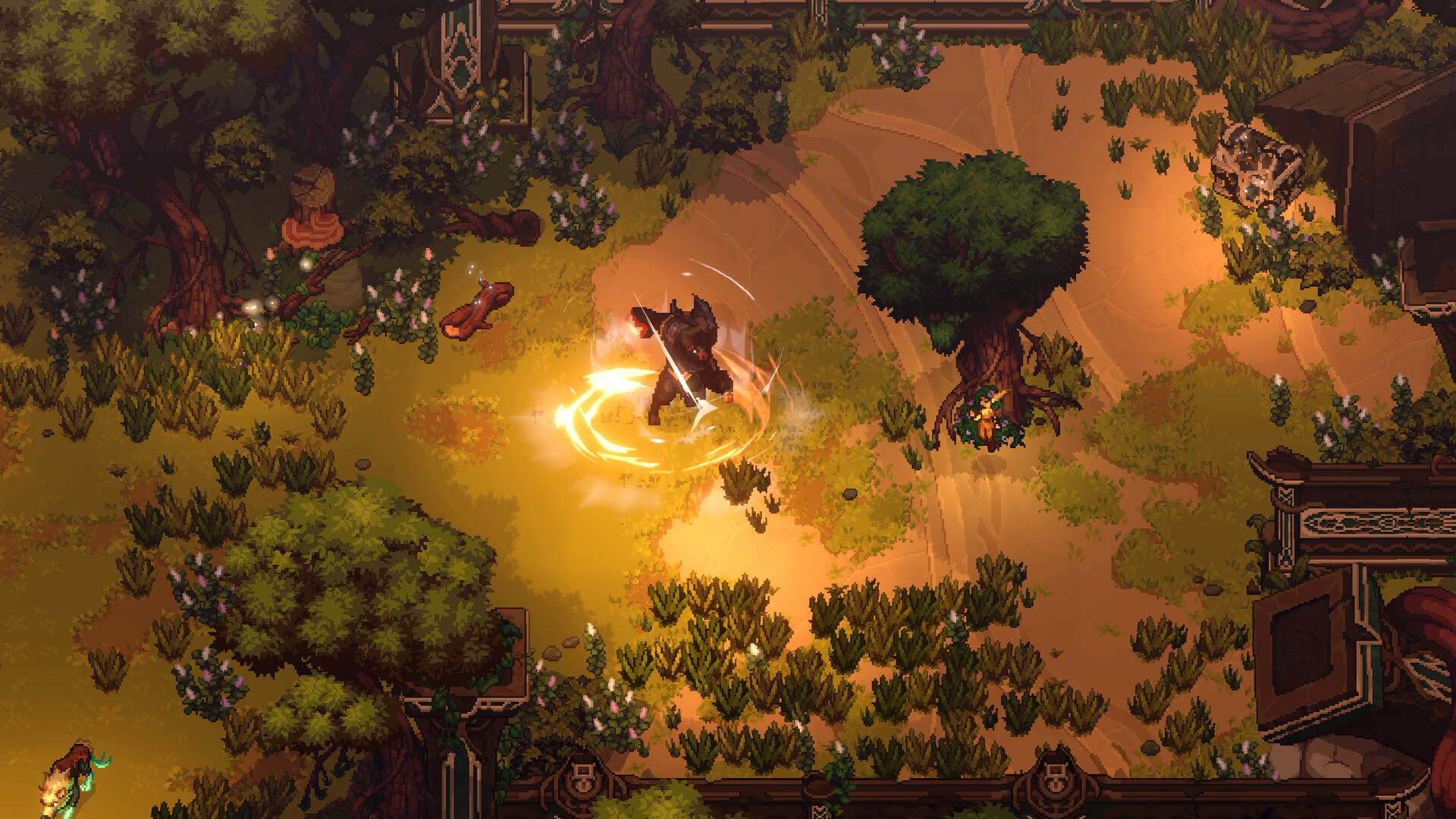
Dimraeth is an isometric fantasy action RPG set in the world of Mirkea.
A broken ritual leaves your character carrying an ancient power they do not fully understand. The wizard Faustas recruits you as corruption spreads across the land and Sylbos, Last of the Ogre Magi, attempts to claim Dimraeth and the power surrounding it.
That’s the story excuse for going out and becoming increasingly dangerous.
The actual loop is broader.
You explore handcrafted environments, complete quests, fight enemies and bosses, gather equipment and resources, develop your build, recruit characters, strengthen relationships, then return home and improve the infrastructure supporting the next journey.
Steam describes the core loop quite neatly: explore, fight, gather, build, level up, group up.
That sounds dangerously close to half the games on Steam until you look at how much traditional RPG structure Mudtek is putting on top.
Dimraeth has character races, classes, individual skill trees, attributes, rarity-based gear, spell requirements, elemental combat, NPC relationships, quests, romances, bosses, equipment upgrades, and hundreds of spells.
Then it lets eight people bring their own characters into the same world.
The Souls-lite part actually matters
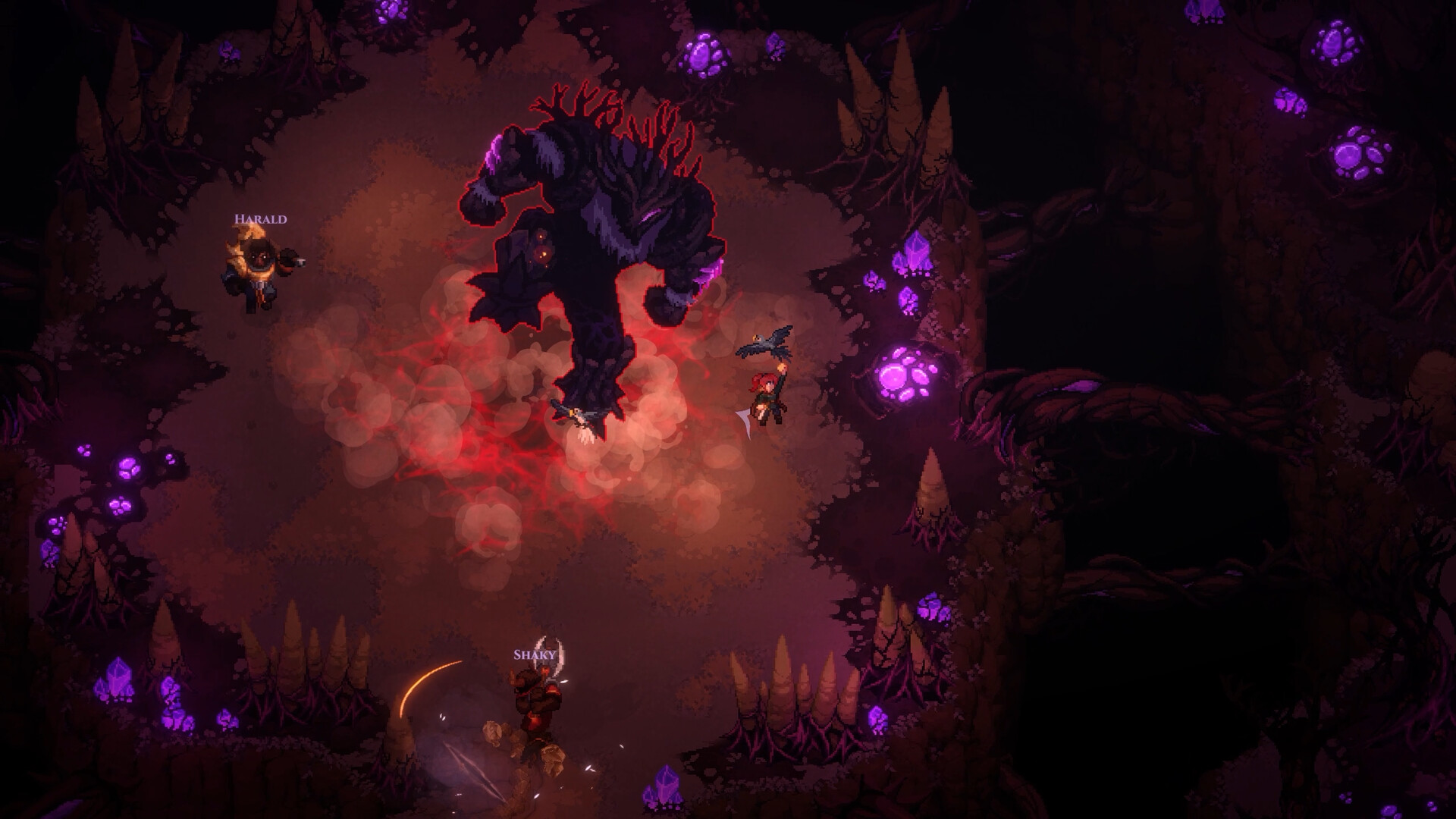
The Souls-lite label is not there just because Dimraeth has dodge buttons and bosses.
Combat is built around commitment and resource management.
You manage stamina, watch enemy telegraphs, position before attacking, and decide whether to strike, dodge, block, or parry.
That immediately separates it from a pure Diablo-style click-through-a-crowd action RPG.
Dimraeth still has loot and buildcraft, but good equipment is not supposed to eliminate the need to read a fight.
Spells add another layer. You can equip five at a time and create combinations around your chosen loadout. Magic can come from your race, your class, or crafted spellbooks, with universal spells requiring the appropriate attributes before you can use them.
The current Steam page says there are more than 300 spells in total.
That is an absurdly large toolbox if Mudtek can make enough of those abilities meaningfully distinct.
| Dimraeth system | What it adds |
|---|---|
| Stamina | Stops combat from being pure attack spam and makes timing matter. |
| Dodge, block, parry | Gives the player several defensive answers instead of relying entirely on gear score. |
| Enemy telegraphs | Rewards learning what enemies and bosses are actually doing. |
| Five-spell loadout | Forces choices inside a very large spell pool rather than letting one character carry everything at once. |
| Co-op | Lets builds interact across a party instead of every hero needing to solve every problem alone. |
Races, classes, Archetypes, and 300+ spells
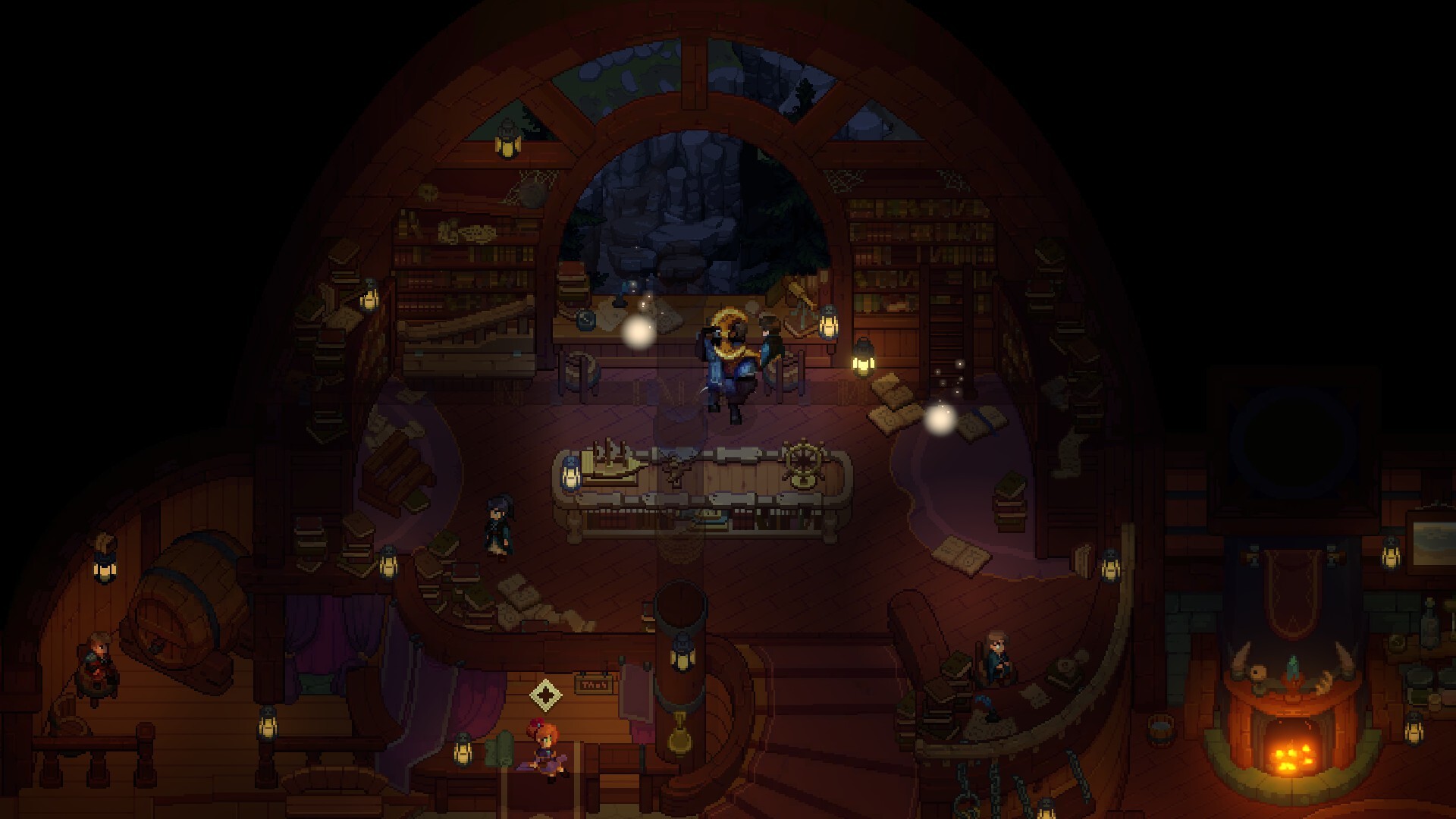
Dimraeth’s long-term character system is based on combining eight races with six classes, producing 48 distinct Archetypes, each intended to have its own skill tree and playstyle.
The important Early Access caveat is that Mudtek is still rolling that larger roster out.
Steam describes the launch build as containing multiple playable races and classes, not the completed 48-Archetype grid. The September 2 Early Access update specifically added the Elf as another race and Shadow as another class, while the wider roster is part of continued development.
So don’t read “eight races and six classes” as “all 48 combinations are finished on day one.”
The underlying idea is still excellent.
Race and class are meant to interact rather than sit beside each other as two separate menus. The combination creates an Archetype with its own skill tree and playstyle.
That means a particular class on a Minotaur is not necessarily supposed to feel identical to that class on another race.
Then attributes, equipment, spellbooks, and the five-spell loadout let you push the character further.
If Dimraeth eventually delivers enough meaningful Archetype differences, the replay potential becomes obvious even before co-op enters the picture.
Adventure, come home, build something useful
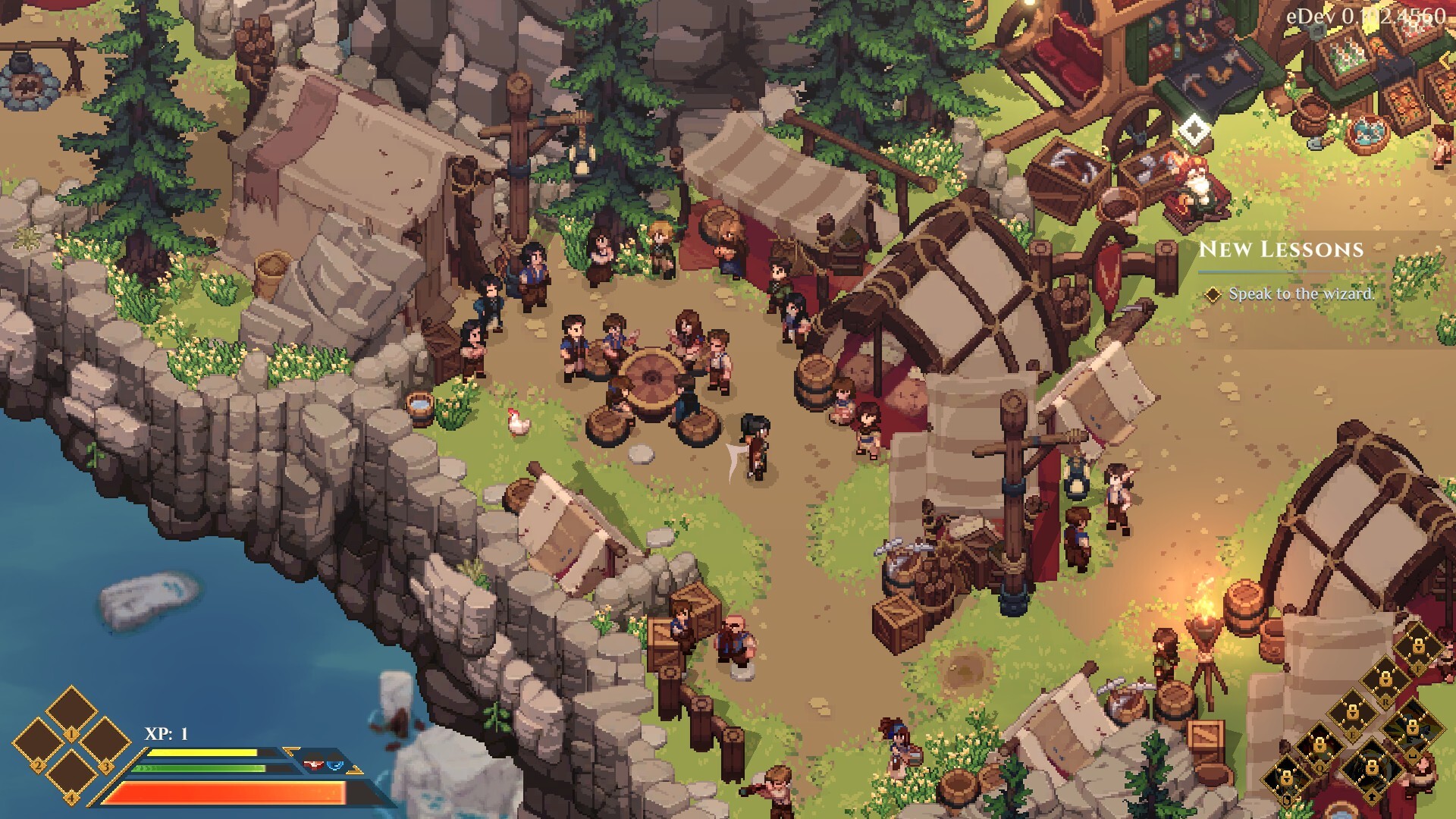
The stronghold is where Dimraeth starts crossing into Valheim and Enshrouded territory.
You gather resources while exploring Mirkea, then return home to turn them into infrastructure.
That can mean crafting equipment, brewing potions, cooking food, establishing farms and quarries, creating storage, or building additional stations.
Food is not just decorative survival clutter. Mudtek says meals can increase vitality and support future exploration.
Relationships feed into the same home loop.
Characters you recruit can develop deeper relationships with your hero, opening additional conversations, personal quests, and potential romances. Investing materials into their facilities can improve shop inventories, unlock crafting services, and expand useful production around the stronghold.
So the base is doing three jobs at once:
- it stores the results of your adventures,
- it produces resources for future adventures,
- and it gives the NPC side of the RPG somewhere to live and grow.
That is a much more appealing structure than collecting a dozen NPCs who mysteriously stand in the same tavern forever.
How 8-player co-op progression works
Dimraeth supports seamless drop-in/drop-out online co-op for up to eight players.
The clever part is how progression is divided.
Your hero travels with you.
Your level, equipment, inventory, spells, and personal progression can move between worlds.
The world does not.
Story progress, recruited allies, and buildings remain attached to the world in which they were created.
That’s a useful compromise for friend groups.
If your friends have spent three evenings constructing an enormous stronghold while you were away, you do not magically import those buildings into your personal save when you come home.
But the character progression you earned playing with them remains yours.
It is much closer to the social rhythm of Valheim than an MMO.
You can have your own world, your own version of the story and stronghold, then take your developed hero into somebody else’s Mirkea and help ruin a world boss’s afternoon.
Worth knowing: Dimraeth is online co-op, not an MMO. Steam lists solo play and online co-op, and your character progression can travel between worlds while world-specific story and building progress stays with the host world.
What is actually in Dimraeth Early Access?
This matters because the final ambition is significantly larger than the September build.
According to Mudtek’s current Steam Early Access description, the launch version includes:
- multiple playable races and classes,
- a complete starter progression from The Lost Caverns through Earlwood Village and into the Wildwood Forest,
- the core crafting and base-building loop,
- a functioning skill-tree and attribute system,
- equipment rarity tiers and upgrades,
- online co-op for friend groups,
- and multiple boss encounters.
The September Early Access update expands that further with the Elf race, Shadow class, an expanded Wildwood, the Goblin Caves, new world bosses, nine pets with different abilities, more equipment, crafting stations, furniture, base-building pieces, quests, NPCs, elites, dungeons, difficulty settings, and a skill-tree overhaul.
Mudtek says the Early Access level cap starts at 25 and is intended to rise as additional acts arrive.
The studio currently expects Early Access to last roughly 18 to 24 months, although it explicitly says quality and roadmap milestones matter more than hitting a predetermined date.
Future development is expected to add more zones and biomes, additional races and classes, higher late-game progression, more bosses, deeper crafting and building systems, and a longer story.
The price is also planned to rise gradually as more content is added.
There is at least some evidence of an audience waiting for it. Mudtek reported more than 60,000 players had tried the demo by the time it closed on July 15.
That’s considerably more useful than a wishlist number nobody has actually played.
Who should play Dimraeth?
| Check it out if… | Think twice if… |
|---|---|
| You like building RPG characters but also want a persistent home to develop. | You only want a finished 1.0 campaign with every planned race, class, region, and endgame system. |
| Valheim or Enshrouded worked for you, but you want heavier class and spell systems. | Crafting and settlement development feel like chores between the RPG bits. |
| You enjoy deliberate dodging, blocking, parrying, and boss fights. | You want Diablo-style combat where speed and huge enemy packs dominate everything. |
| You have a friend group large enough to make four-player co-op feel restrictive. | You need local co-op, split-screen, or a traditional MMO population. |
More games if Dimraeth looks like your thing
Dimraeth lives in the overlap between several familiar games. The right alternative depends on whether you care most about co-op exploration, action-RPG builds, base development, or difficult combat.
| Game | Play it for… | How it compares | G2A.COM |
|---|---|---|---|
| Valheim | Co-op exploration and home building | The closest comparison for the friend-group rhythm: venture into dangerous regions, defeat bosses, gather resources, then return home to craft and build. Dimraeth puts substantially more emphasis on classes, spells, NPC relationships, and traditional RPG character building. | Check it out |
| Enshrouded | Fantasy RPG + building | Probably the closest broad mechanical match. Enshrouded also combines fantasy exploration, combat, character progression, crafting, construction, NPCs, and co-op. Dimraeth distinguishes itself with isometric pixel art, race/class Archetypes, and a more explicit Souls-lite combat model. | Check it out |
| V Rising | Isometric combat and castle progression | A strong alternative if you like the idea of precise isometric action combat feeding back into a growing home base. V Rising is more focused on its vampire fantasy and boss-driven power progression, while Dimraeth leans toward party RPG structure, quests, allies, and class combinations. | Check it out |
| Core Keeper | Pixel-art co-op progression | Choose this if the handcrafted pixel presentation, multiplayer exploration, resource gathering, crafting, farming, base development, and boss progression are the parts that caught your attention. Its survival sandbox is much less class-driven than Dimraeth. | Check it out |
| Remnant II | Co-op builds and Souls-like bosses | Remnant II drops the settlement-building side almost entirely, but it is an excellent alternative if the appeal is making distinct co-op builds and taking them into dangerous worlds full of bosses that expect you to learn their attacks. | Check it out |
Quick pick: Start with Valheim for the friend-group adventure loop, Enshrouded for the closest RPG/base-building mixture, V Rising for isometric action combat, Core Keeper for pixel-art co-op crafting, or Remnant II if bosses and character builds matter more than construction.
Playing Dimraeth through Steam
Dimraeth launches into Early Access through Steam. If you want to add funds to your Steam Wallet before heading into Mirkea, you can check current Steam gift card offers on G2A.COM.
Choose a card compatible with the currency and region of your Steam account before buying.
Check Steam gift cards on G2A.COM
Check out G2A Plus
G2A Plus Free lets members collect Plus Points on purchases and use them to pay less on future orders. Premium also adds member discounts of up to 10% on eligible items, exclusive discount codes, a monthly digital reward, and priority support.
More co-op RPGs on G2A News
- Games Like Valheim – the best next click if Dimraeth’s co-op exploration, gathering, boss progression, and base-building rhythm is what caught your attention.
- Games Like Windrose – includes more co-op worlds built around exploration, survival systems, construction, and bringing resources home.
- 10 Best Action RPGs to Play – useful if Dimraeth’s character progression and combat matter more to you than its building systems.
- Best Co-op Games for Friends – more options for groups looking for a longer game to play together.
The adventure matters because you have somewhere to come back to
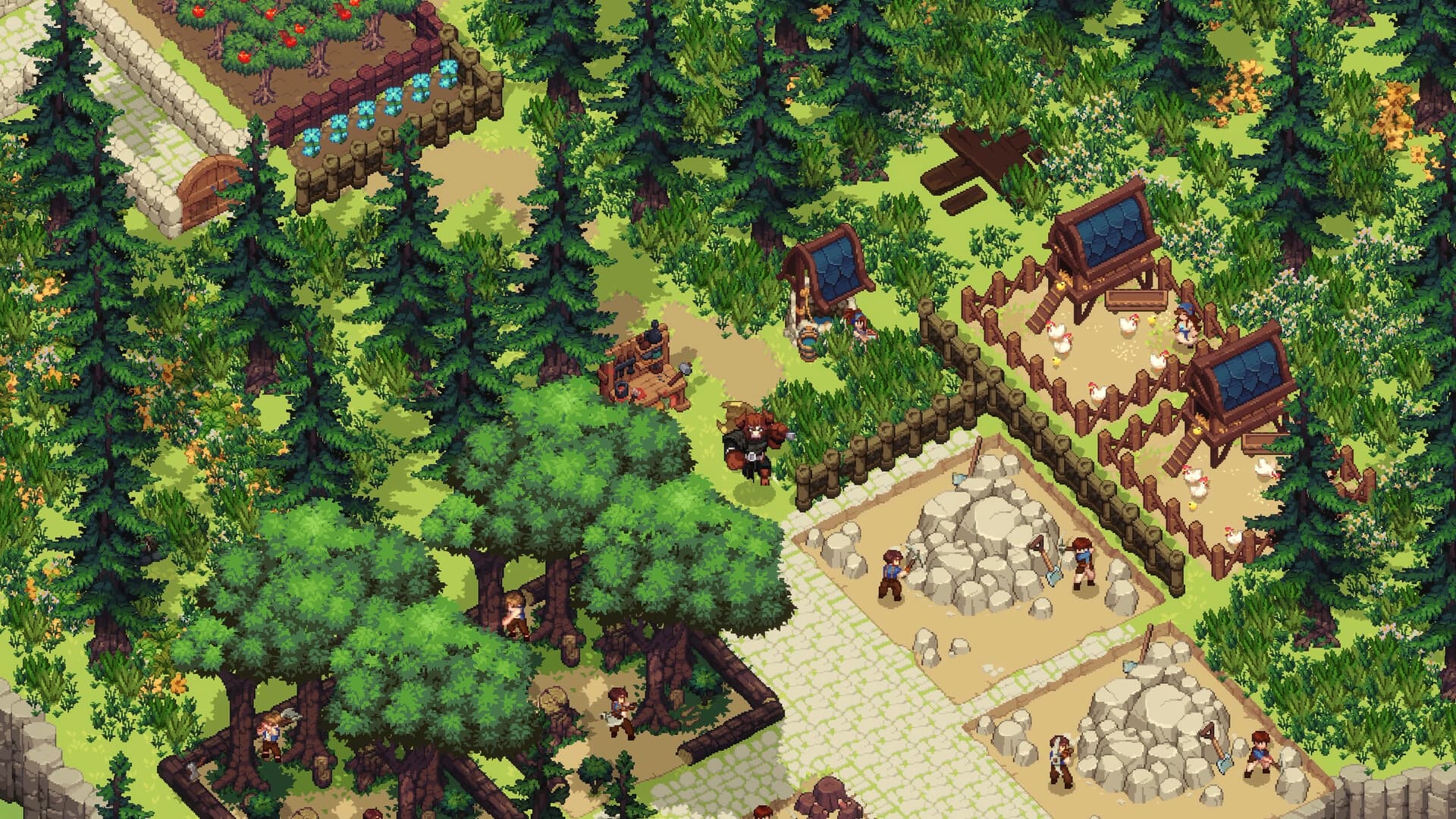
The most promising thing about Dimraeth is not any one feature on its Steam page.
It’s the way the features feed each other.
You fight because you need loot and progression.
You explore because you need resources, quests, allies, and bosses.
You bring those resources home because the stronghold can produce better food, crafting services, equipment, and materials.
You recruit people because relationships and facilities can make that home more useful.
You improve the character because stronger areas are waiting outside.
Then a friend drops into your world with their own hero and suddenly the weird Minotaur spell build you’ve been working on has somebody else’s equally weird build standing next to it.
None of these ideas is revolutionary by itself.
Valheim already proved that going home can be as satisfying as going adventuring. Enshrouded pushes RPG progression deeper into that formula. V Rising showed how well precise isometric combat can coexist with base development.
Dimraeth’s opportunity is to push even further toward the traditional fantasy RPG side: races, classes, hundreds of spells, quests, relationships, romances, and a world designed to support up to eight developed characters at once.
Early Access is the obvious caveat. Mudtek’s final 48-Archetype vision, expanded biomes, additional classes and races, later progression, and endgame systems are not all finished yet.
But there is already a substantial core to judge, and more than 60,000 demo players gave the studio feedback before launch.
Dimraeth enters Steam Early Access on September 15, 2026.
If your ideal fantasy RPG evening starts with eight friends leaving a stronghold to kill a boss and ends with everyone coming home carrying enough junk to build three more crafting stations, Mirkea may be worth a visit.