





Graveyard Keeper 2 launches on September 22, 2026, and the biggest change is wonderfully on-brand: the zombies that used to help automate your questionable medieval business can now become an actual undead army.
Lazy Bear Games is still building around graveyard management, crafting, resource chains, dark comedy, and the kind of capitalism that probably requires several exorcisms. The sequel simply gives the whole operation more room to get out of hand.
This time you are the Grand Inquisitor, the Town needs rebuilding, a zombie apocalypse is chewing through the kingdom, production can be automated more aggressively, and your undead workforce has been promoted from unpaid labor to military service.
That makes Graveyard Keeper 2 more than a bigger cemetery sim. It is still recognizably Graveyard Keeper, but its familiar systems now feed into town restoration, fortifications, combat, production chains, and a much larger crisis.
Table of Contents
- What is Graveyard Keeper 2?
- Your zombie workers got promoted
- Automation gets more important
- The Town gives the sequel a bigger canvas
- Graveyard Keeper vs. Graveyard Keeper 2
- What to play if you like Graveyard Keeper 2
- Graveyard Keeper 2 on G2A.COM
- Who should play Graveyard Keeper 2?
- Related G2A News reading
- The graveyard shift just got much bigger
What is Graveyard Keeper 2?
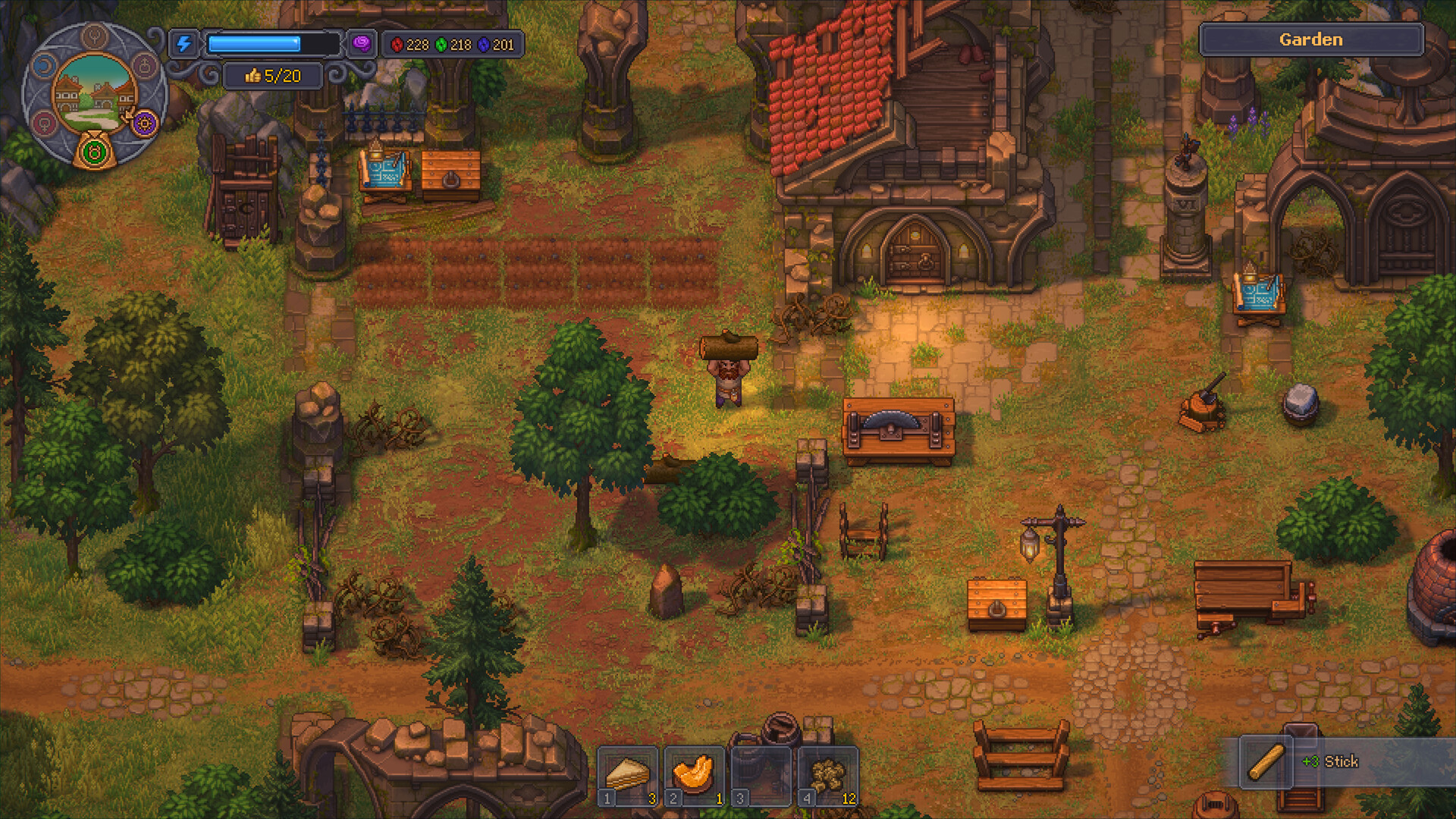
The original Graveyard Keeper took the familiar farming and life-sim rhythm of gathering, crafting, upgrading, and meeting townsfolk, then replaced the wholesome family farm with a medieval cemetery full of corpses and extremely flexible ethics.
The sequel does not abandon that joke. It expands it.
You still manage a graveyard, gather resources, craft items, build production machinery, improve skills, complete quests, and squeeze questionable value out of virtually every problem you encounter.
Now, however, the surrounding kingdom is facing a zombie apocalypse and you have become the Grand Inquisitor.
That means restoring the Town, building stronger production chains, preparing defenses, crafting equipment, and sending your own undead forces into battle.
The interesting part is how naturally those additions fit. Graveyard Keeper 2 is not throwing out its old management loop to become an action game. Instead, the management systems appear to feed the larger conflict. Resources become machinery. Machinery supports production. Production helps rebuild and defend the Town. Zombies automate the work, then some of those zombies can be sent into combat.
Your zombie workers got promoted
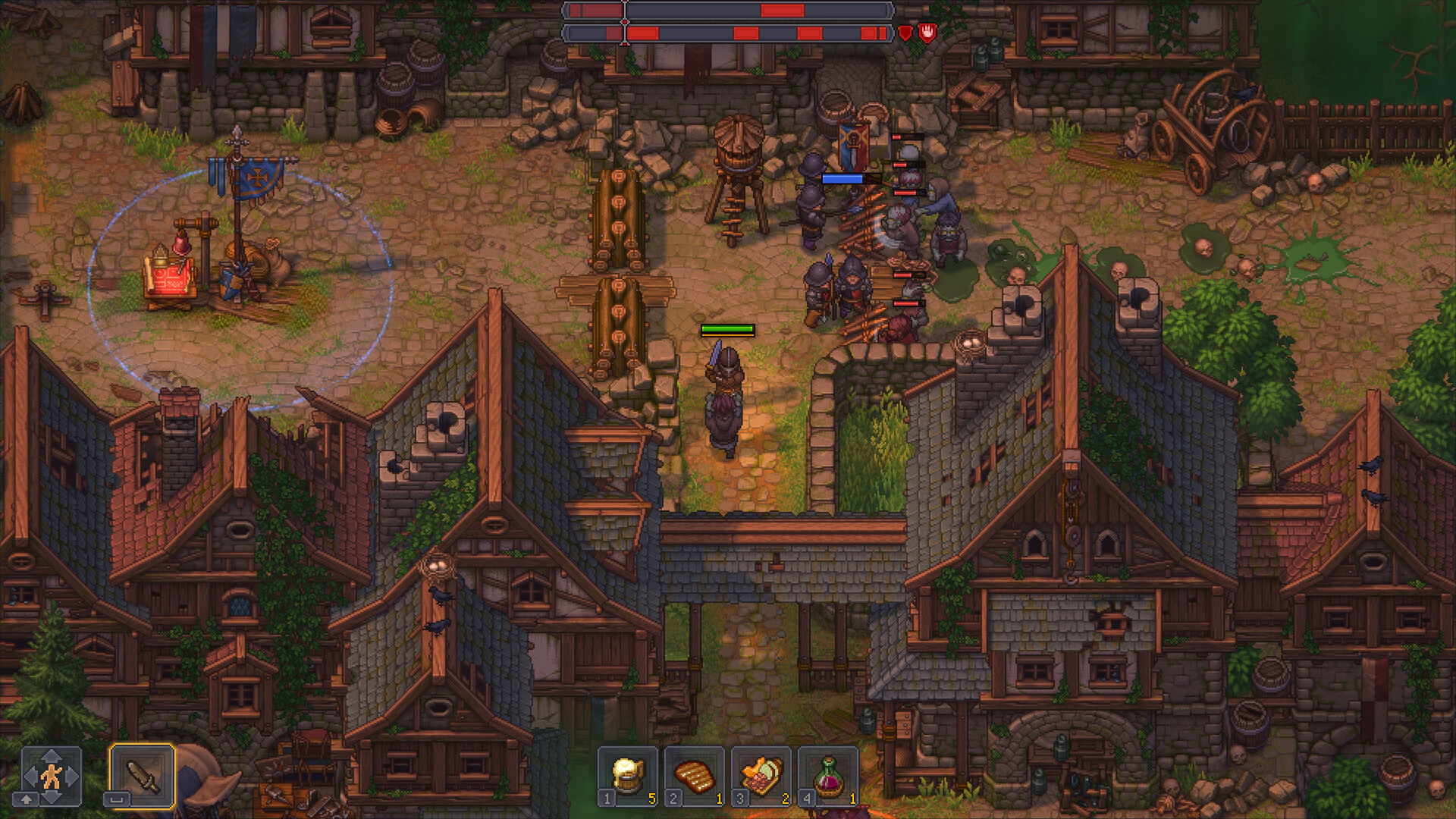
The undead workforce was already one of Graveyard Keeper’s cleverest systems because zombies could reduce repetitive labor and let the player build more efficient production.
Graveyard Keeper 2 keeps that automation fantasy but adds another job title: soldier.
Your zombie army can be sent into battle as part of the wider effort to defend the Town and push back against the apocalypse. Fortifications, towers, crafted weapons, armor, and combat preparation become part of that expansion, meaning the sequel is no longer only about building the perfect morally compromised graveyard operation.
Now that operation has a military wing.
It is an excellent sequel feature on paper because it grows directly out of something players already understand instead of bolting an unrelated mechanic onto the formula. The zombies were your workforce. The world got worse. Management responded accordingly.
Combat also provides another reason for the economy to matter. Crafting a better weapon is not just an item-progression checkbox if that weapon helps push into another part of the Town or makes the next confrontation easier.
The key question will be how well those battles interact with the slower management systems. Graveyard Keeper has traditionally been strongest when apparently simple chores spiral into interconnected production problems. If the army gives those systems another meaningful destination, it could make the sequel feel considerably broader without losing what made the original strange.
Automation gets more important
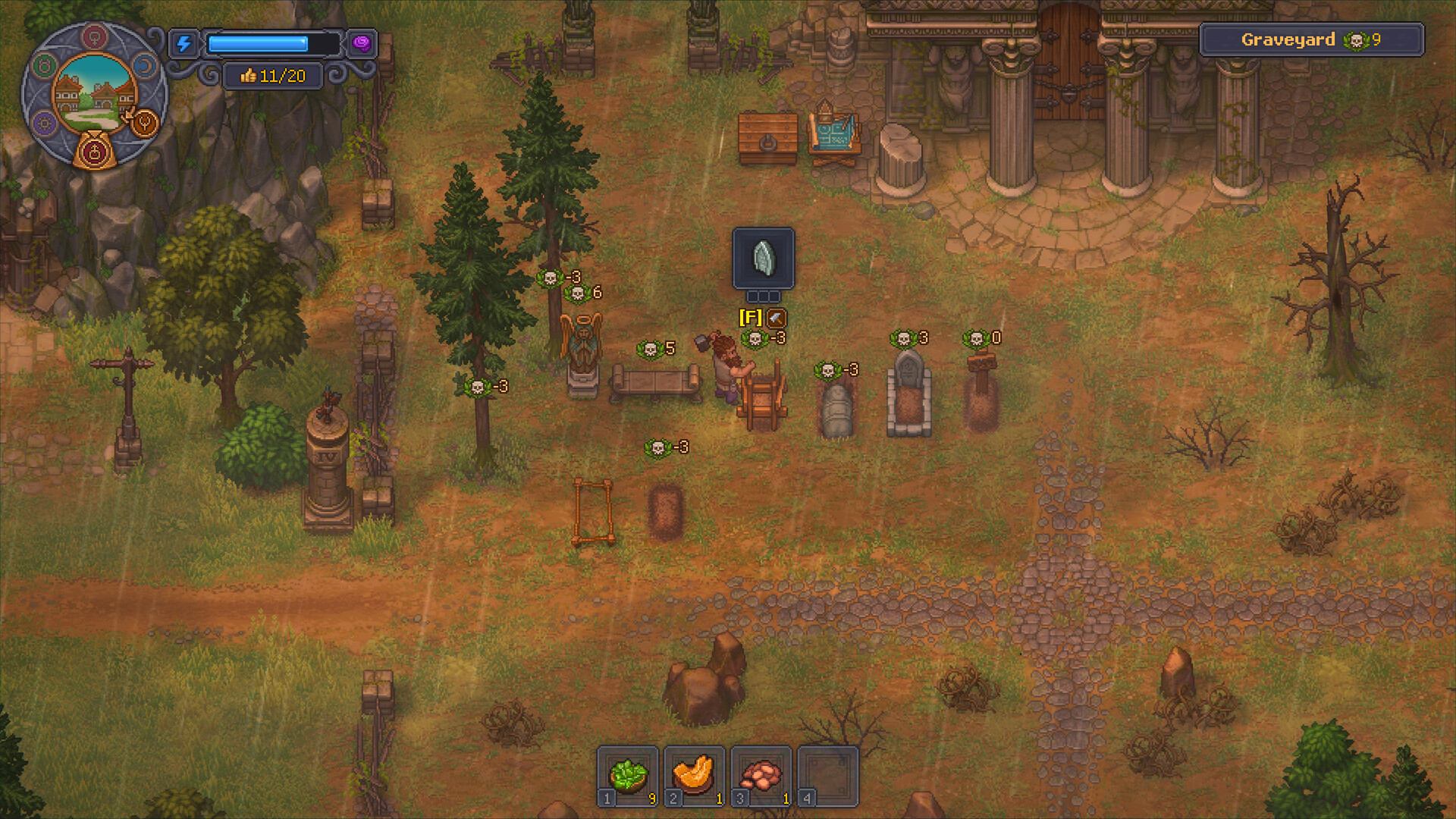
Automation is another area where the sequel looks meaningfully larger.
Production chains, resource gathering, machinery, and undead labor all feed into the broader rebuilding effort. Instead of simply crafting the next tool because you need it, the fantasy increasingly becomes about constructing a system that keeps generating what the operation needs.
That pushes Graveyard Keeper 2 slightly closer toward players who enjoy logistics and production optimization without turning it into a full factory simulator.
The important distinction is tone and structure. Graveyard Keeper 2 is not Factorio with corpses. The production chains sit inside quests, character interactions, exploration, graveyard upkeep, combat, story, and the series’ black comedy.
You may be optimizing a machine, but you are also dealing with townsfolk, bodies, bizarre problems, and a kingdom where the solution to a labor shortage is apparently necromancy.
The returning zombie automation matters because it can reduce some of the manual repetition as the operation grows. A larger Town and more ambitious production would be less appealing if every extra system simply meant another pile of chores for the player to handle personally.
The promise is not merely “more things to do.” It is a larger machine that you gradually learn how to make work for you.
The Town gives the sequel a bigger canvas
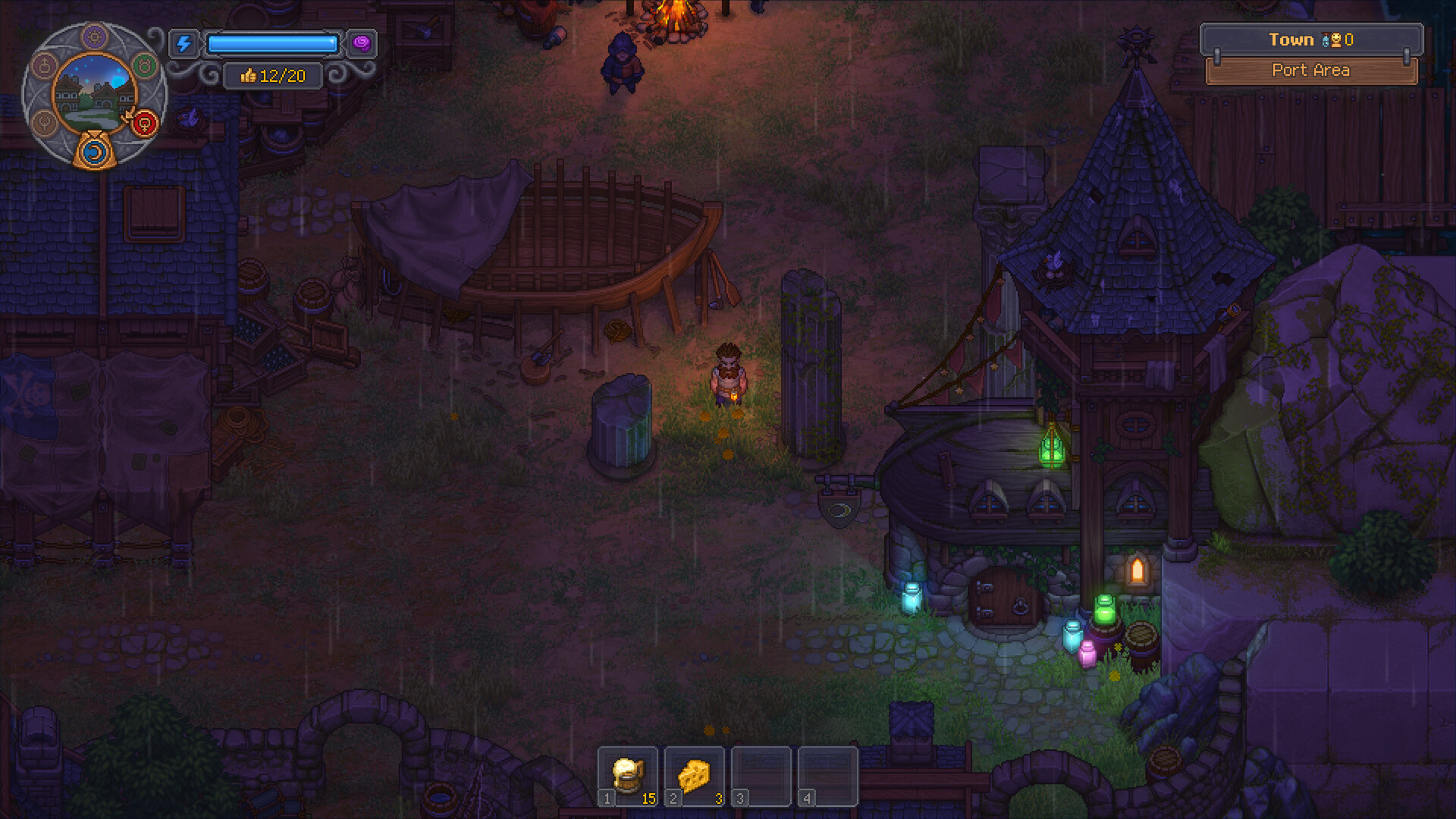
The Town is the other major structural change.
Restoring it gives the sequel a broader visible objective than improving one cemetery and the immediately surrounding facilities. Residents have problems. Buildings and defenses need attention. Quests contribute to reconstruction. New areas can be opened as progress continues.
And, because this is Graveyard Keeper, helping society recover is also an opportunity to work out how to monetize society recovering.
That darker economic joke is important to the series. Graveyard Keeper has always been funny because the player is encouraged to look at situations that should inspire dignity, grief, or concern and immediately wonder whether there is a more efficient production chain hidden inside them.
A devastated Town gives that instinct significantly more space.
The free demo also gives players a way to sample the opening before committing to the full game, with progress intended to carry over into the full release.
Graveyard Keeper vs. Graveyard Keeper 2
The sequel appears to work best when viewed as an expansion of the original game’s logic rather than a completely different direction.
| System | Graveyard Keeper | Graveyard Keeper 2 |
|---|---|---|
| Graveyard | Central management and progression loop | Still central, now connected to a larger kingdom-wide crisis |
| Zombies | Automation and labor | Automation plus an undead army |
| Production | Crafting and automated work | Larger production chains tied into rebuilding and combat |
| World goal | Run the graveyard and navigate medieval absurdity | Rebuild the Town while dealing with a zombie apocalypse |
| Combat | Present, but not the main identity | A larger system involving undead troops, equipment, towers, and fortifications |
What to play if you like Graveyard Keeper 2
Graveyard Keeper 2 sits in a funny middle ground between management game, crafting RPG, production-chain optimizer, life sim, and black comedy. That means its nearest alternatives depend heavily on which part of the job you enjoy.
The original is naturally the closest starting point, but several other games capture different parts of the same appeal. These five cover the strongest branches of that design and currently have relevant offers on G2A.COM.
| Game | Why it fits | Best for | G2A.COM |
|---|---|---|---|
| Graveyard Keeper | The direct foundation: cemetery management, crafting, dark comedy, production chains, strange quests, and zombie automation. | Anyone new to the series | Grab it on G2A.COM |
| Cult of the Lamb | Another cheerful-looking game about extremely questionable management, mixing base development and resource loops with combat. | Dark comedy plus management | Grab it on G2A.COM |
| My Time at Sandrock | A much warmer alternative built around workshops, machinery, crafting, production, quests, and rebuilding a struggling community. | Crafting and Town restoration | Grab it on G2A.COM |
| Core Keeper | Gathering resources gradually turns into increasingly elaborate crafting, farming, base-building, equipment, and automation systems. | Players who love progression systems | Grab it on G2A.COM |
| Travellers Rest | A medieval business-management alternative about gathering ingredients, crafting, improving production, and turning a small operation into something much larger. | The business and production side | Grab it on G2A.COM |
Where to start: play the original Graveyard Keeper if you want the direct foundation for the sequel. Cult of the Lamb is the strongest dark-comedy alternative, while My Time at Sandrock makes sense if production and rebuilding are the real attraction.
Graveyard Keeper 2 on G2A.COM
Graveyard Keeper 2 already has marketplace listings on G2A.COM. Availability and seller pricing can change, so the cleanest route is to check the game’s main marketplace page and compare the options available for your account and platform.
Check out Graveyard Keeper 2 on G2A.COM
Want more from G2A Plus? G2A Plus Free lets members collect Plus Points on purchases. Premium also includes better member prices on eligible items, higher discount codes, a free digital reward every month, and priority post-purchase assistance.
Who should play Graveyard Keeper 2?
The obvious audience is anyone who liked the original but wanted its systems pushed outward rather than simply receiving another cemetery map.
The Town, heavier automation, fortifications, crafting, and undead combat all take recognizable pieces of Graveyard Keeper and give them more room.
It may also appeal to farming and life-sim players who enjoy optimization more than pure coziness. Graveyard Keeper has always occupied a strange lane where routine can be relaxing, production chains are satisfying, and virtually every narrative detail is trying to make you feel slightly guilty about laughing.
If your favorite part of the original was gradually making a messy operation efficient, the expanded automation is probably the most important feature. If you wanted a larger reason for all that production to exist, Town reconstruction and combat provide one.
If you mainly want a peaceful farming simulator where the neighbors are pleasant and nobody asks what you did with yesterday’s corpse, this probably remains the wrong medieval community.
Related G2A News reading
- Graveyard Keeper 2 Revealed – The Cult Hit Finally Returns
- Love Graveyard Keeper? Here Are 8 Similar Games You’ll Enjoy
- Games Like Stardew Valley
- Best Cozy Games With Farming
The graveyard shift just got much bigger
The most promising thing about Graveyard Keeper 2 is that its headline features do not feel randomly selected.
The original game already taught you to automate work with zombies. Now those zombies can fight. It already encouraged crafting and production. Now that machinery supports a Town-scale recovery effort. It already made morally questionable business decisions funny. Now an entire apocalypse looks like another opportunity for vertical integration.
That is exactly what a sequel should ideally do: take the weird ideas people already associate with the first game and ask how much further they can be pushed.
Apparently the answer is: give the workforce armor and send it to war.