

Hytale’s world generation is procedural, but with structure. It is designed to feel deliberate rather than random.
- Why World Generation Is a Big Deal for Hytale
- Two Generators: V1 and V2
- Introducing Orbis
- Curated Procedural Design Philosophy
- Pattern Scanning and Visual Cues
- Biome and Terrain Control
- Material Logic and Terrain Composition
- Node Editor for World Building
- Modular Biomes and Zones
- Community Access and Shared Assets
- Development Roadmap
- Changing the Block-Game Genre
TL;DR
Hytale’s procedural worlds aren’t “random” — V2 (Orbis) adds designer control, modular biomes, and creator-friendly tools
Hytale uses procedural generation with built-in rules so terrain feels intentional. The big shift is from the older V1 generator to V2, which powers Orbis and enables more controlled biomes, smarter placement logic, and a node-based editor for creators.
Why world generation matters in Hytale
- The world directly shapes exploration, combat routes, building spots, and discovery.
- The system needs replay variety while still feeling designed, not chaotic.
- It must support modders and community creators long-term.
V1 vs V2: what’s changing
- V1 (2016–2020): playable prototype, more limited biome complexity; Exploration mode launches on it because it’s ready.
- V2 (from 2021): scalable, modular, built for designers; intended to replace V1 once complete (while keeping V1 worlds accessible).
Orbis: the new V2 world
- Orbis is the primary world built on V2.
- Players access parts of it through Gateways at launch while it’s tested.
- After testing, Orbis becomes the default standard world.
Curated procedural design
- Terrain is generated with rules so locations serve gameplay (paths, encounters, discovery beats).
- The world aims to feel handcrafted in intention, even when it’s procedural.
Smarter patterns and visual cues
- The generator checks for shapes before placing objects (example: a log bridge only appears when shores align).
- Environmental details can act as clues (example: certain trees appear above caves).
- Result: players can learn to read the terrain, not just wander.
Biome, terrain, and material logic
- Biomes are controlled independently: height, textures, erosion, cliffs, rivers with cleaner blending than V1.
- Material Provider nodes define surface rules (example: grass depends on depth/air exposure).
- Props (ruins, trees, set dressing) follow placement grids and condition rules to create “worth exploring” areas.
Node editor and modding impact
- A visual node editor lets artists/designers build worlds without code and see results instantly.
- V2 also exposes deeper control via modding APIs so mods can extend terrain/structures cleanly.
Modular biomes, zones, and shared assets
- Biomes are self-contained modules — easier to swap, tweak, test, and update without breaking everything.
- Orbis biomes will be open for learning: players can inspect them in the editor and build on top.
- Experimental ideas include floating islands, arches, layered terrain, and zones with different rules.
Roadmap direction
- Short-term: stable foundations and modular assets that don’t collapse under iteration.
- Long-term: terrain that feels “alive” — natural river carving, logical ruins, integrated dungeons, reactive wildlife, and evolving landscapes.
- Community support: more tools, tutorials, guidelines, plus expanding world design staff.
Important tips: Expect V1 to power the early “ready content,” but V2/Orbis is the real future — more designer control, smarter procedural rules, and creator tools built to make new worlds feel intentional instead of random.
The game is moving from its first generator, V1, to a more flexible system called V2, which powers a new world named Orbis. This change reflects a broader goal: to rebuild how block-game environments are made, explored, and modified.
Why World Generation Is a Big Deal for Hytale
In Hytale, the world affects every part of the game. Terrain shapes movement, discovery, and how players build. As the game moves toward Early Access, the system must offer variety, support repeat playthroughs, and give creators the tools to shape new environments.
Two Generators: V1 and V2
V1 was developed from 2016 to 2020 as a working prototype. It is fully playable, but limited in biome complexity. Exploration mode launches on V1 for its ready content.
On the other hand, V2, started in 2021, is scalable, modular, and built for designers. Once complete, it will replace V1 entirely, though V1 worlds will remain accessible.
Introducing Orbis
Orbis is the new primary world built on V2. At launch, players will access parts of it through Gateways. Once testing ends, Orbis becomes the standard world for all players.
Curated Procedural Design Philosophy
Hytale’s world might look like a bunch of blocks at first glance, but it’s far from random. The terrain is shaped using rules crafted by the developers to make sure it actually plays well.
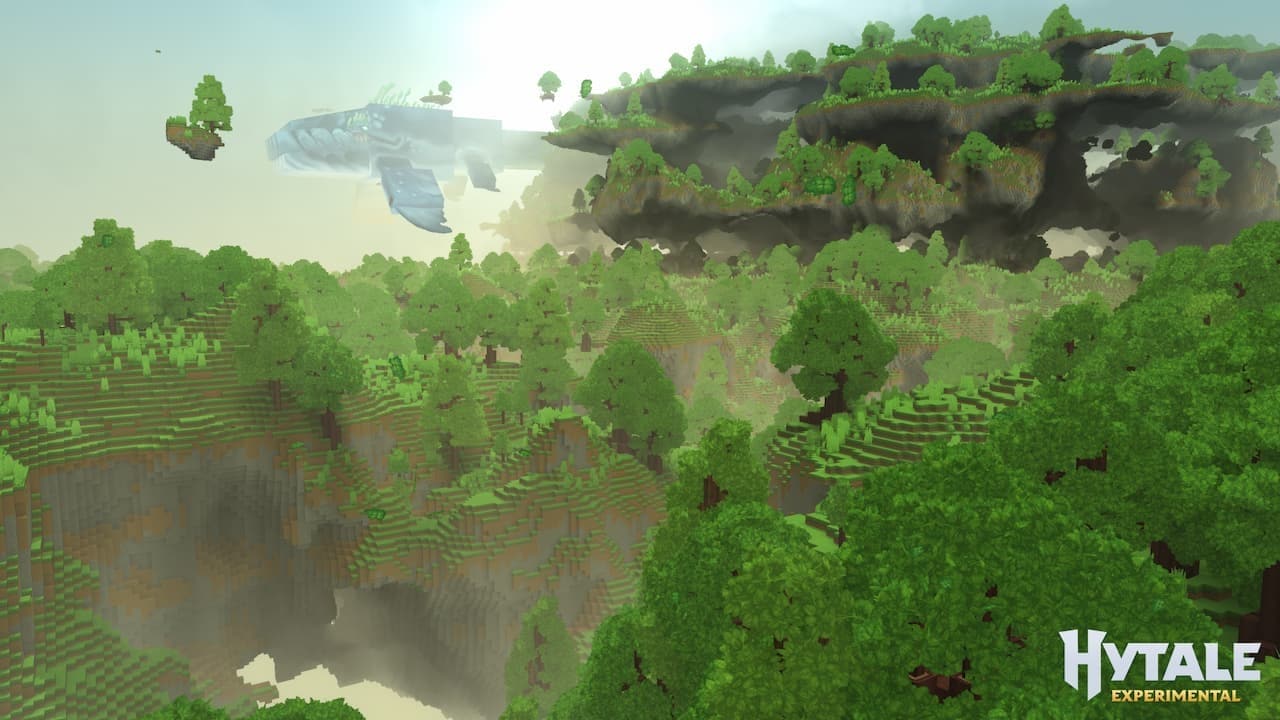
That means every mountain, forest, or cave isn’t just there to look nice, but it also serves a purpose. Maybe it creates a natural path for exploration, sets the stage for a surprise enemy encounter, or guides players toward hidden loot.
Pattern Scanning and Visual Cues
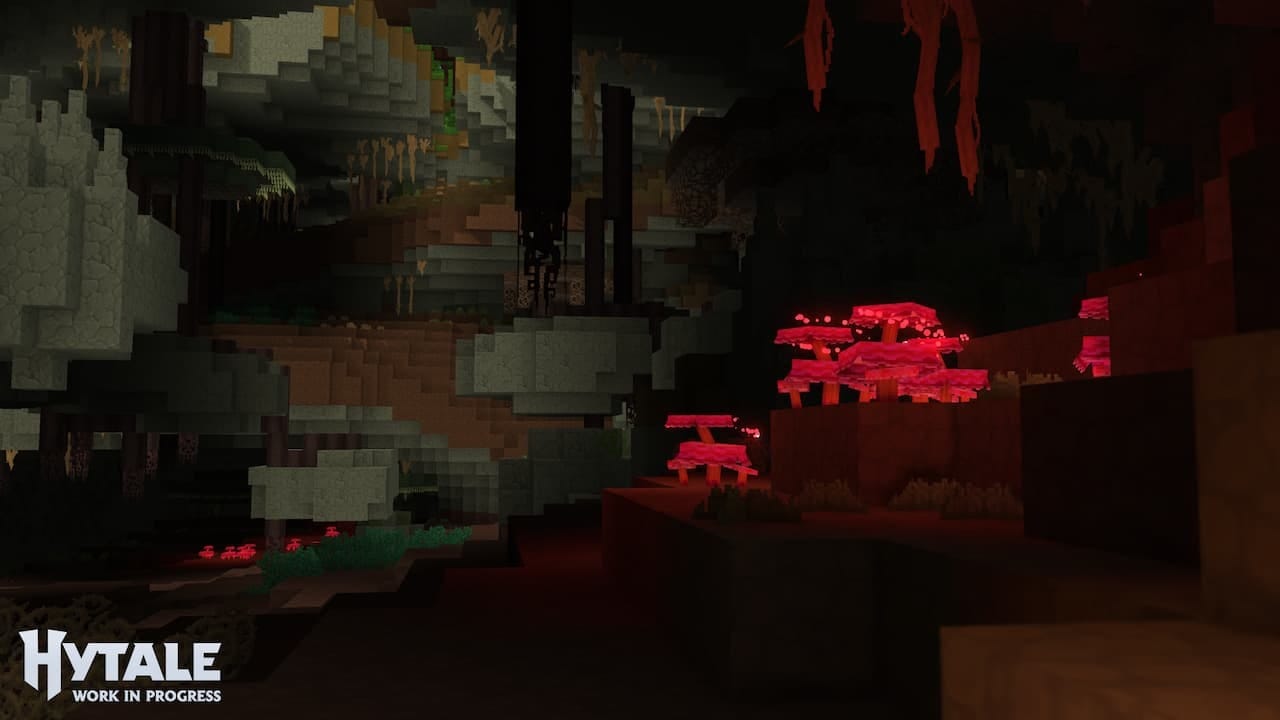
Before dropping objects into the world, the system checks for specific shapes. You’ll only see a log bridge if two shores line up. Dark ash trees? They show up above caves. These patterns act as clues, teaching you how to read the environment and react to what’s around you.
Biome and Terrain Control
Each biome is shaped independently. Designers define terrain height, texture, and detail. Transitions between biomes blend naturally. Erosion, cliffs, and rivers are all handled procedurally with more control than in V1.
Material Logic and Terrain Composition
Material Provider nodes decide surface makeup based on depth and air exposure. Grass might only grow with ten blocks of air above. This adds realism and biome consistency.
Objects such as trees, ruins, and decorations follow placement rules set by a grid system. When the right conditions are met, these rules create areas worth exploring. This makes the world feel more connected and gives players a reason to pay attention to their surroundings.
Node Editor for World Building
Hytale includes a visual editor that lets creators build and adjust worlds without using code. Changes appear instantly in-game, so it is easy to see what works and make quick fixes. This tool is made for artists and designers, not just developers.
For those who want to go deeper, V2 provides full access through modding APIs. These tools are multithreaded and give modders full control over terrain, structure, and gameplay logic. Mods built with these tools can run alongside official systems without conflicts.
Modular Biomes and Zones
Each biome in Hytale is its own self-contained piece. It means developers or modders can add new content, tweak terrain, or swap out entire biomes without breaking everything else around it.
You’re not dealing with one giant, fragile world, but you’re working with modular parts. That makes the system more stable, easier to test, and way more flexible when it comes to updates or custom creation.
Community Access and Shared Assets
All of Orbis’s biomes will be open to players. They can load them in the node editor, see how they were built, and use the same tools to make changes or create something new. It is a clear invitation to learn by example and build on top of what already exists.
The team’s also testing some interesting stuff, like floating islands, layered terrain, arches, even separate zones with their own rules. None of it’s final, but it gives a clear look at what the engine can pull off.
Development Roadmap
Right now, the focus is on getting the foundations right: stable systems and modular assets that don’t fall apart when you build on them.
But the long-term vision is much bigger. The team wants terrain that feels alive: rivers that carve through zones naturally, paths that make sense, ruins scattered where you’d actually stumble across them, and dungeons that feel like part of the world, not just dropped in. Wildlife should move and react like it belongs there. The landscape itself should evolve over time.
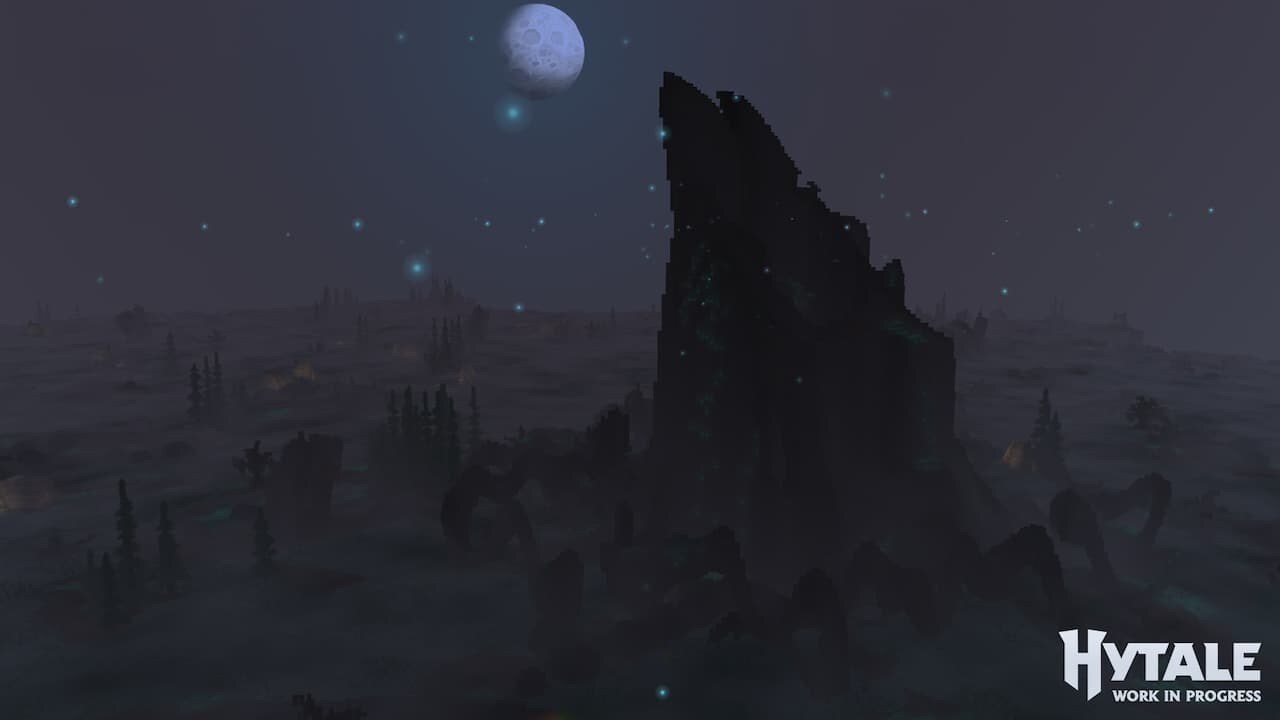
To support that, the developers are opening things up. They plan to release tools, tutorials, and guidelines so the community can help shape how this system grows. Player feedback won’t just be heard, but it’ll guide updates.
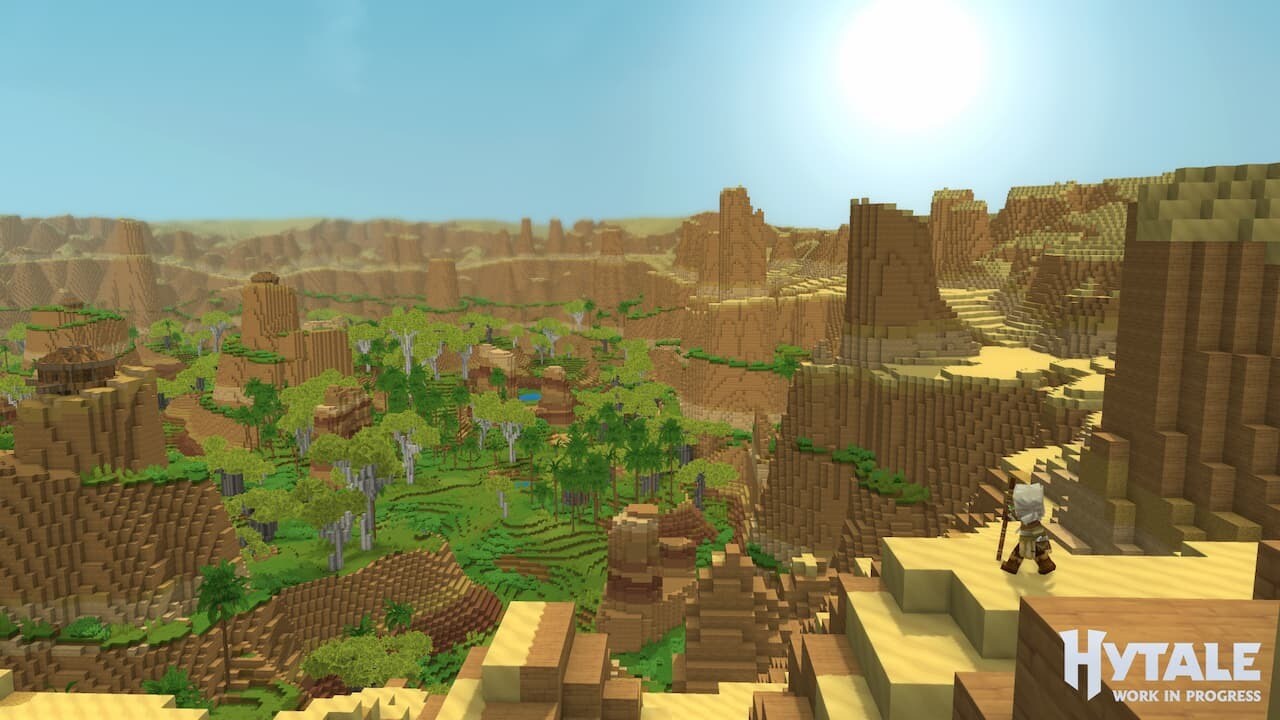
They’re also scaling up internally. Hypixel is bringing on over fifteen new World Designers, many pulled straight from the community. Their job is to use the new V2 tools to shape worlds from the ground up, with procedural generation that feels handcrafted. It’s a new role built for a new kind of game.
Changing the Block-Game Genre
Hytale shifts world generation from coders to designers. Artists, level designers, and creators now have the tools to shape entire environments without writing code.
Orbis is where things start to click. It mixes handcrafted detail with the kind of variety that keeps things fresh every time you play. More importantly, it’s the first real step toward showing what Hytale’s procedural tools can do.