





Most dinosaur parks put the dinosaurs on the wrong side of history. Jurassic Architect sends the paying customers through a portal instead. The animals already live in the valley. Your contribution to prehistory is a café, a safari route and, with any luck, enough room for the locals.

The T. rex has notes on your enclosure
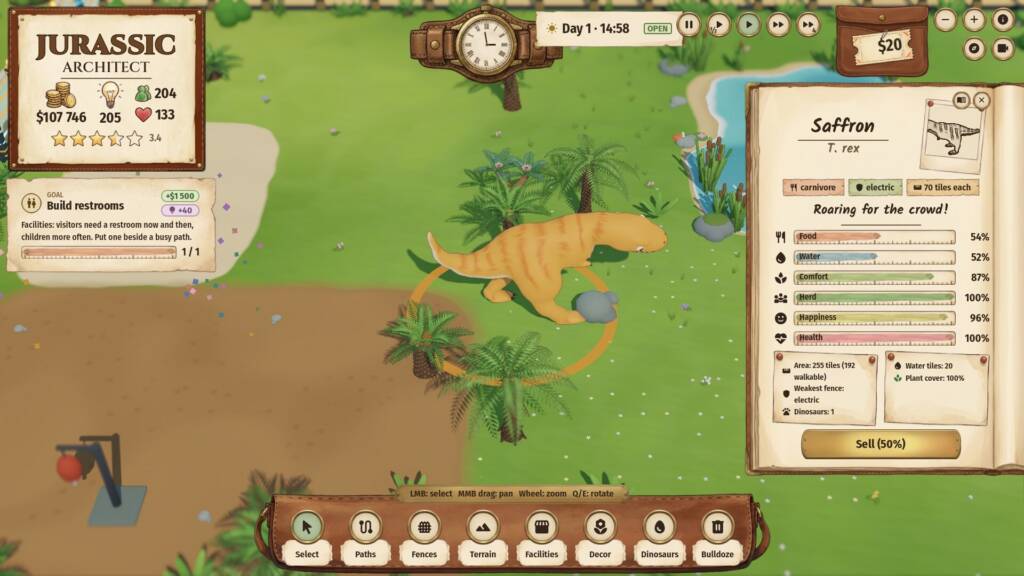
MadOctopus released Jurassic Architect for Windows PC on November 24, 2026. It’s a single-player zoo builder with a particularly good use for a bored tyrannosaur. Leave yours hungry or short of things to do and it may start working on the fence. Once it gets through, guests scatter and the rangers have a large, mobile target for a tranquilizer dart. By then, the interesting management decision is several minutes behind you.
Look at the animal’s species card while you’re drawing the enclosure. It tells you what the habitat is missing. You can bend the fence around a pond, paint in sand or give the herd another stretch of open ground. That makes for two quite different ways to spend an afternoon with a T. rex. One involves landscaping. The other involves finding out how fast the visitors can run.
Give the humans a decent view
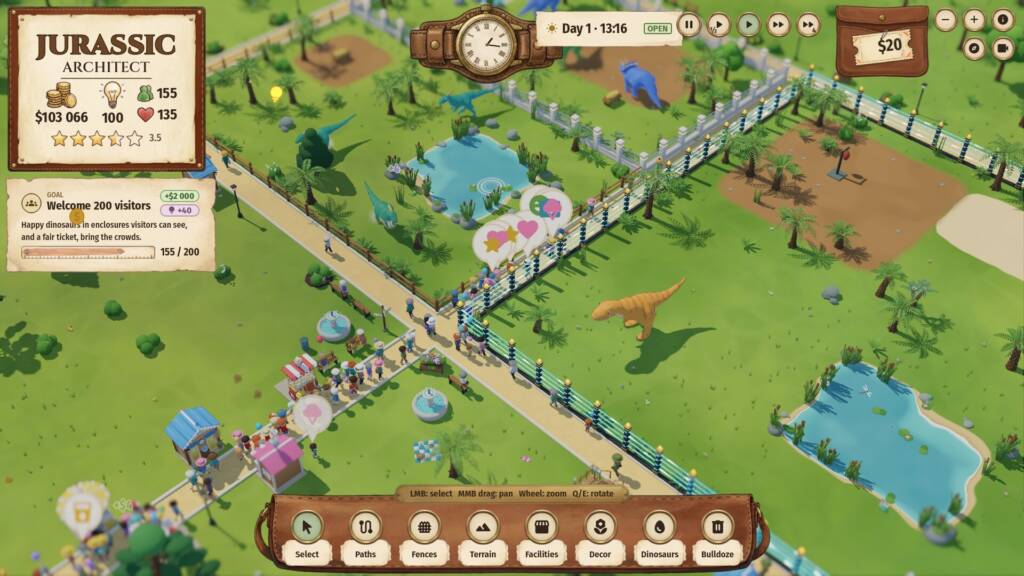
A good pen and a good exhibit are two different design problems. The animals need space. The visitors would quite like to see whatever is taking up all that space. A viewing tower lets you pick the angle from which people see a herd. A safari ride lets you plan a route through it. If a baby starts trailing its parents, that’s the bit you’ll wish you’d given everyone a better view of.
Fortunately, you can pick up and move anything you build. Put the café where it makes sense for three enclosures and move it once your park stretches across the valley. That freedom to rethink a layout is worth a look if you enjoy the habitat side of zoo management games like Planet Zoo, especially if your first attempt at a footpath usually turns out to be a rough draft.
An expedition brings home an egg. Then what?
Portal expeditions bring back eggs, with more than 50 species to discover. A new arrival gives you a building project as well as an animal. Pterosaurs need an aviary, plesiosaurs get a lagoon, and suddenly the lovely flat plot you’d earmarked for another café has a rather better use.
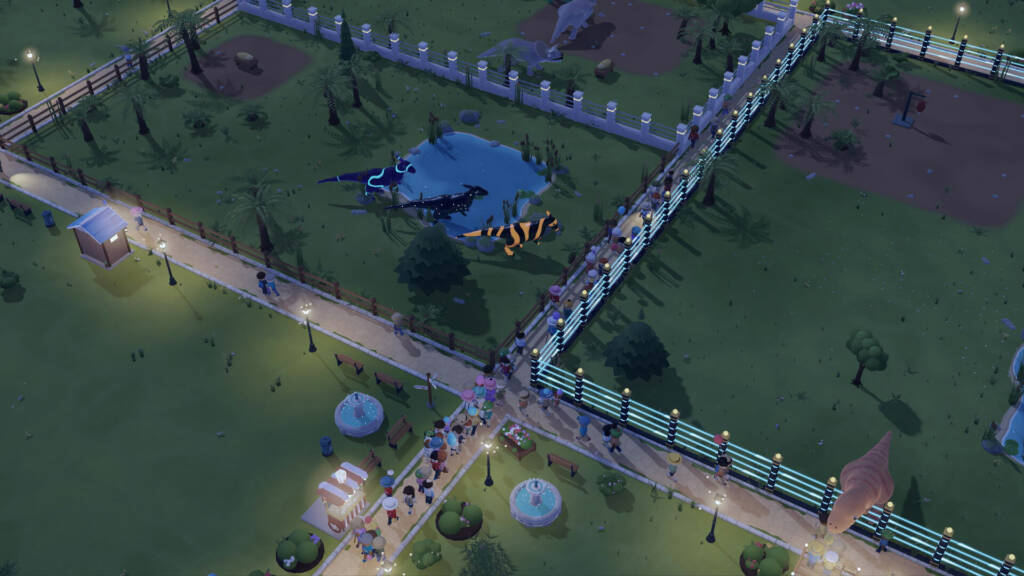
There’s also a reason to spend time with species you already have. Contented pairs can breed, and individual animals carry genes and color traits. You can work toward a rare color within a favorite herd instead of ticking off the next species. A few legendary animals even glow after dark. For once, staying until closing time sounds like a reasonable wildlife photography strategy.
How much Jurassic Park do you want in your park?
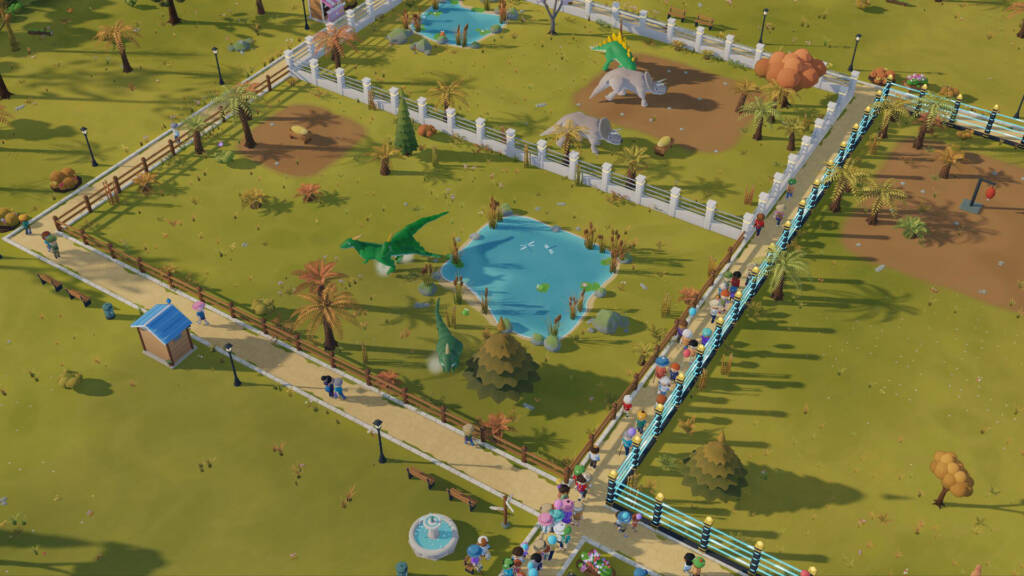
A storm can knock out the electric fences. A school trip can also be the day’s big event. Which of those sounds like the better afternoon? Jurassic Architect lets you switch escapes off. You can keep building habitats and breeding animals without every power cut threatening to turn the field trip into an incident report.
The campaign gives you stars to earn across the valley. Free play and sandbox are alternatives for anyone who came in with a park design of their own. There’s one particularly good reason to surrender a little control again: in streamer mode, viewers can name the dinosaurs and vote on tomorrow’s event. Naming a hatchling seems harmless enough. Giving chat a vote on your working conditions takes real confidence.
Three more dinosaur parks worth a ticket
If one part of Jurassic Architect sounds more tempting than the rest, start there. Our three-way park builder comparison digs into the differences between exhibit design and franchise-scale spectacle. These three PC games each pick up a different thread.
For more picks, browse our dinosaur park builders or follow the management side into games like Jurassic World Evolution 3. As for Jurassic Architect, the giveaway is what you’d do after an escape. If your first instinct is to redraw the paddock so the old boy has a better afternoon tomorrow, MadOctopus has built a park for you.