





Nomori launches on September 23, 2026, with a puzzle system built around rotating portals, changing gravity, manipulating time, and turning surfaces that definitely should not be floors into floors anyway.
The Portal comparison is obvious, but Nomori pushes the idea in another direction: portals do not merely connect two places. Rotating them changes the orientation and gravity of whatever passes through.
There is a particular kind of puzzle game that makes a perfectly ordinary wall feel deeply suspicious.
Nomori appears determined to make every surface suspicious.
Developed by Dutch indie studio Enchanted Works, this colorful adventure follows Kiko through a fractured spirit world where perspective, gravity, and time are tools rather than fixed rules.
It also arrives with the kind of mechanic that is very easy to understand and potentially very difficult to master: rotate the portal, rotate your relationship with gravity.
How we assessed this: Based on Enchanted Works’ official press materials, Steam and Xbox store information, and the current Nomori demo. This is not a hands-on review.
What is Nomori?
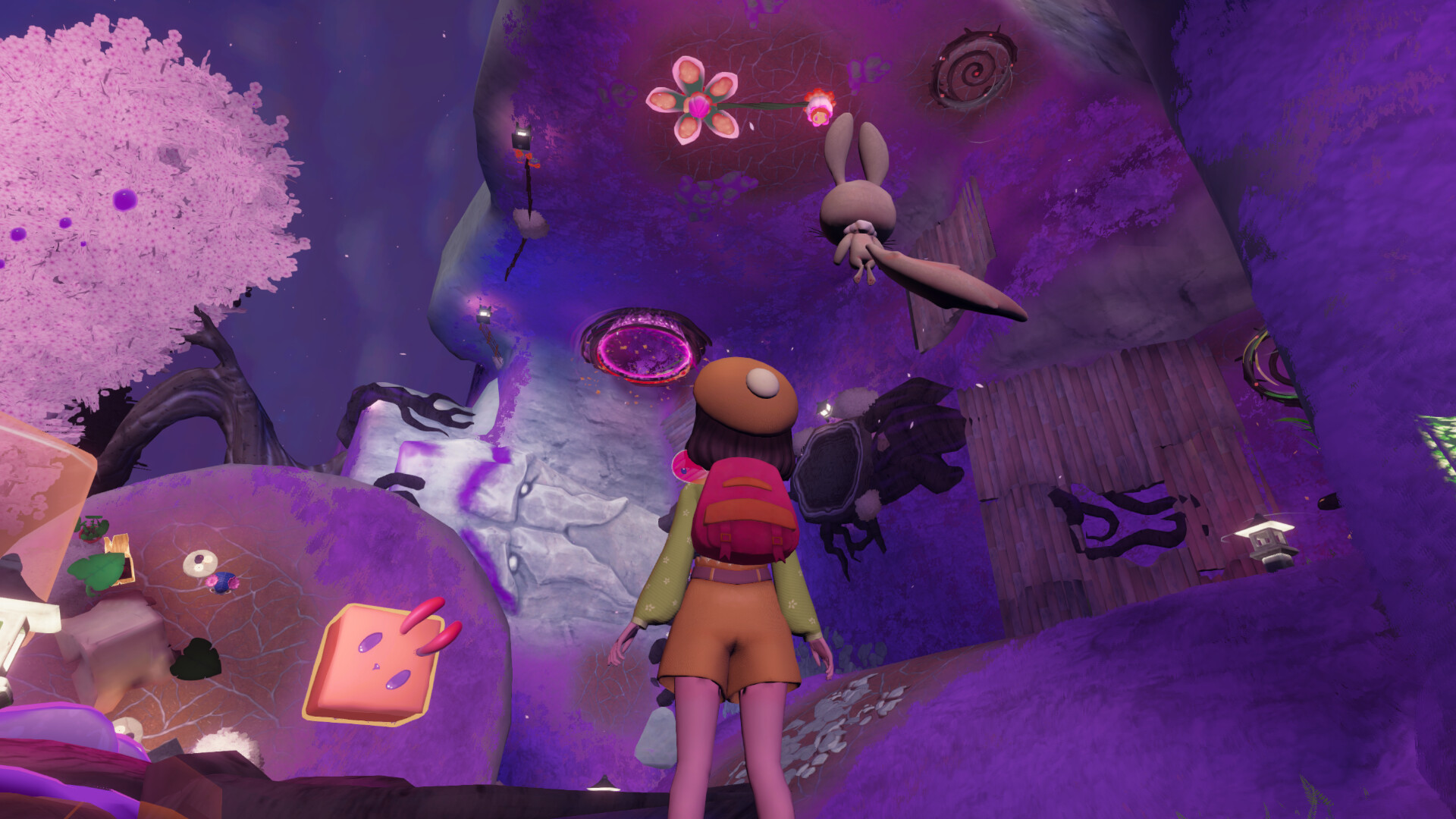
Nomori is a third-person puzzle adventure starring Kiko, a young girl trapped in a whimsical spirit world that has broken into disconnected islands.
Fixing that world means learning to treat physics more like a suggestion.
Kiko can place, move, and rotate portals. She eventually gains Spirit Powers that manipulate gravity and time, with the systems combining to produce multiple ways through environmental puzzles.
The presentation is deliberately gentle and colorful rather than cold or clinical. Nomori’s story draws inspiration from Japanese folklore, while its environments move through four seasonal domains populated by Spirits and eccentric characters.
So, despite all the talk of portals and physics, this is not simply Aperture Science with prettier trees.
Yes, the Portal comparison makes sense
Any puzzle game prominently featuring paired portals will have a giant orange-and-blue elephant standing in the room.
The comparison with Portal is fair because both games ask players to reason spatially through connected surfaces and use physical rules to reach places that initially seem impossible.
But the mechanical emphasis is different.
| Reference | Shared DNA | What Nomori changes |
|---|---|---|
| Portal | Linked portals, physics, spatial reasoning | Portals can rotate orientation and gravity |
| Superliminal / Escher-like puzzlers | Questioning how space should behave | Adds persistent abilities, exploration, and time manipulation |
The clever part is rotating gravity
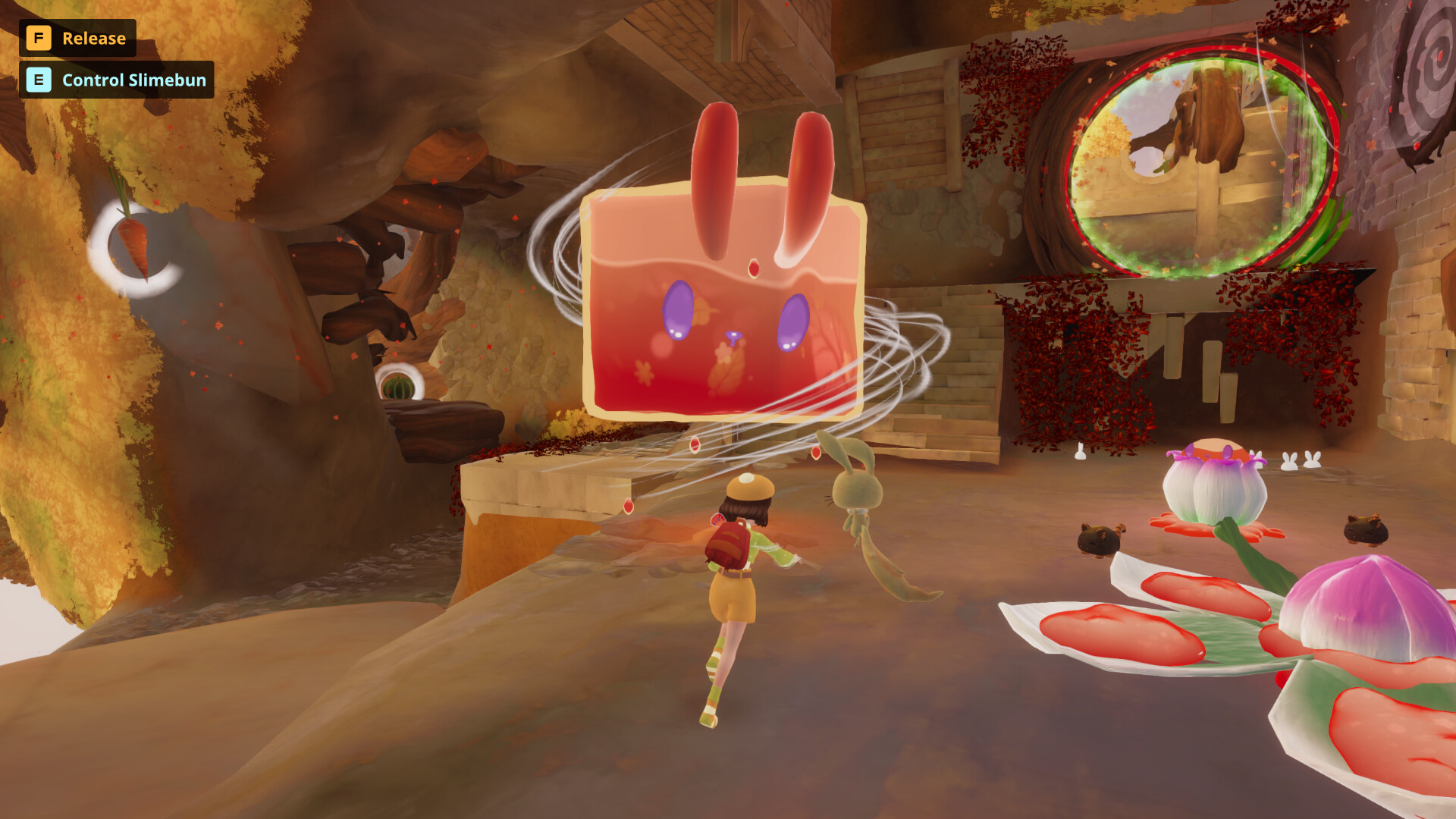
A portal in Nomori is not simply a doorway.
Rotate its destination and the object passing through can emerge under a different gravitational orientation. The same applies to Kiko herself.
Suddenly, a wall can become walkable ground. A ceiling can become the next platform. Objects that previously fell in one direction can be made useful by changing what “down” means.
That is a deceptively powerful puzzle language because it forces you to think about orientation before movement.
You are not merely asking, “Where should this portal go?”
You are asking, “Which direction should reality be facing when I come out?”
Then Nomori adds time manipulation
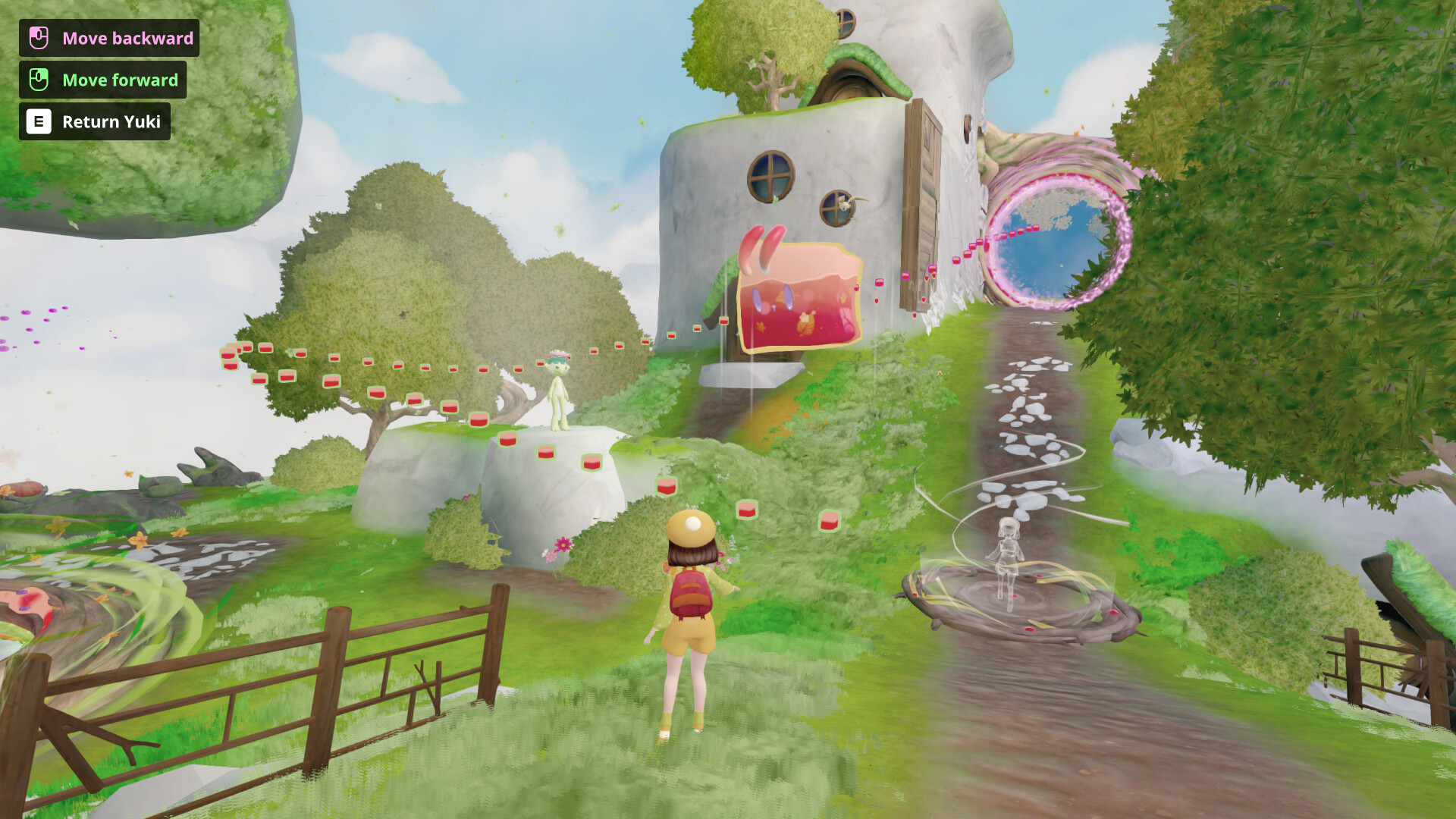
Gravity would probably have been enough.
Enchanted Works decided to add time control too.
Spirit Powers can manipulate the flow of time and interact with the broader physics systems, which means later challenges can combine position, timing, gravity, and portals rather than relying on a single trick.
Importantly, the developer describes puzzles as allowing multiple approaches. That gives the systems a more experimental character than a puzzle game where every room has one invisible answer the designer expects you to discover.
The best version of this kind of game makes players feel like they cheated even when they solved the puzzle exactly as intended.
Nomori looks built around that feeling.
Four seasons and more than 40 islands
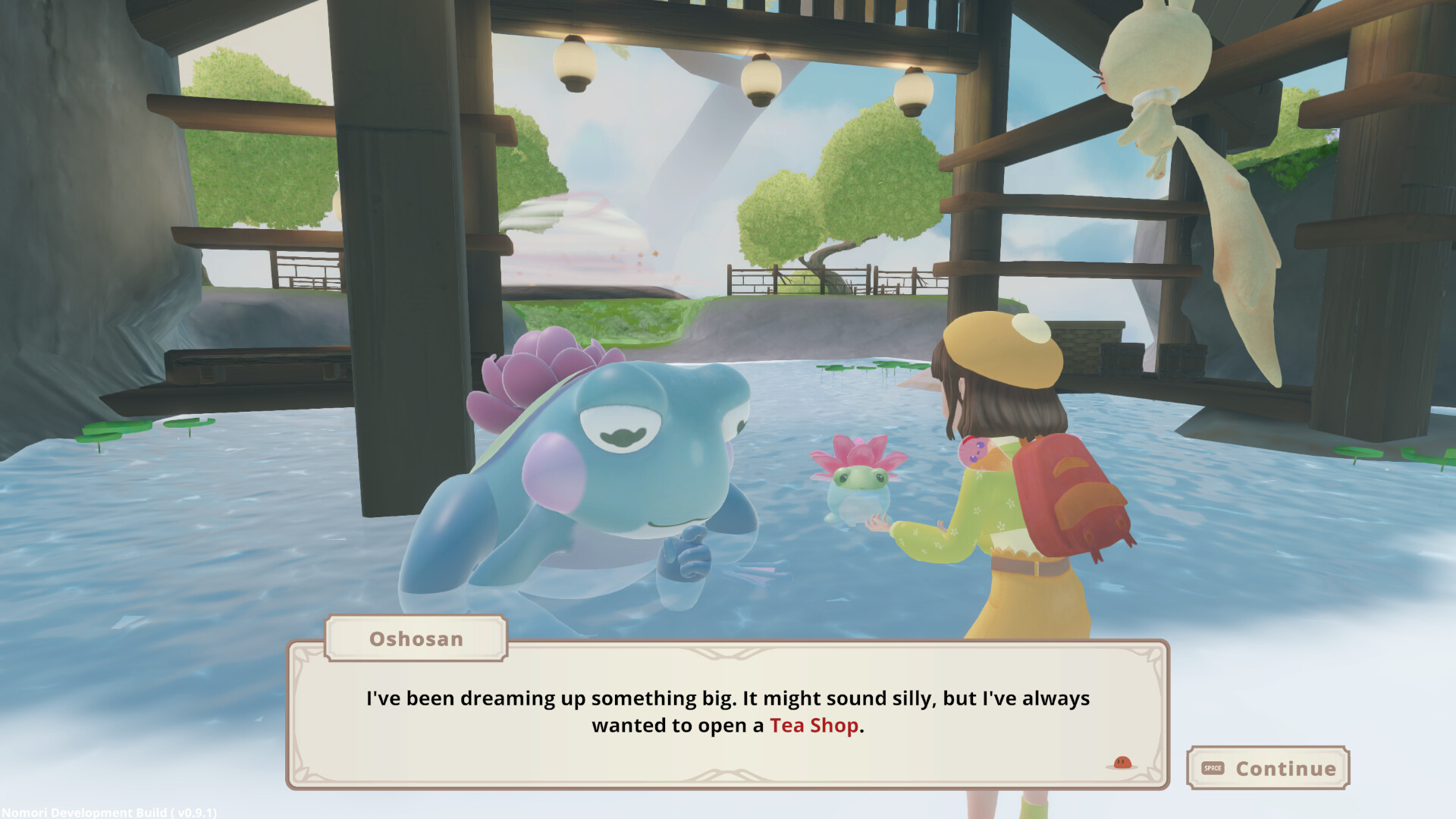
The world is divided across four seasonal domains, with each bringing its own environment, Spirits, and puzzle mechanics.
Enchanted Works says the full game includes more than 40 puzzle islands.
Progression also gives exploration a mild Metroidvania flavor. New Spirit Powers can change how earlier areas are understood, encouraging players to return to old locations and approach them with abilities they did not previously possess.
That is useful because it stops the world from becoming a straight line of disconnected puzzle chambers. The islands are spaces to revisit, not just tests to pass once and forget.
Nomori’s development itself has taken a similarly winding route. The earliest prototype began as a university project under the codename Yokai in 2020. The team later formed Enchanted Works, showed the game at Gamescom, won The Big Indie Pitch in 2022, released a Prologue tech demo, and followed it with a newer demo in February 2026.
Six years after that first university prototype, the full game finally arrives.
Planning on playing Nomori on Steam?
Steam gift card options on G2A.COM can be used to top up a compatible Steam wallet.
Related puzzle games on G2A.COM
If Nomori’s mix of portals, impossible spaces, gravity tricks, and open-ended puzzle solving sounds good, there are several games that scratch different parts of the same itch.
Portal 2 is the obvious starting point if connected spaces and physics are the main attraction. Manifold Garden comes closest to Nomori’s gravity-bending, Escher-like side, while Viewfinder and Superliminal focus more heavily on changing how you perceive and manipulate reality. The Talos Principle 2 is the pick if you want much denser puzzle spaces wrapped in a larger exploration-driven adventure.
| Game | Why it fits Nomori fans | Biggest difference | G2A.COM |
|---|---|---|---|
| Portal 2 | The clearest match for portal-based spatial reasoning, momentum puzzles, physics, and learning how two connected surfaces can completely change a room. | Much more linear and test-chamber focused, with no gravity-rotation progression system like Nomori’s. | Grab it on G2A.COM |
| Manifold Garden | Probably the closest match for Nomori’s gravity manipulation, impossible architecture, walkable walls, and M.C. Escher-style spaces. | More abstract and architectural, with less character-driven adventure and no portal-centered progression. | Grab it on G2A.COM |
| Viewfinder | Another puzzle game where the basic laws of the environment can be rewritten, this time by turning photographs, drawings, and other images into physical spaces. | It manipulates perspective and images rather than gravity, time, and portals. | Grab it on G2A.COM |
| Superliminal | A strong fit if the appeal is making your brain question whether size, perspective, and physical space are behaving the way they should. | Built around forced perspective rather than persistent movement abilities and interconnected seasonal environments. | Grab it on G2A.COM |
| The Talos Principle 2 | Large puzzle environments, layered mechanics, exploration, strange machinery, and increasingly complicated combinations of previously learned rules. | Far more philosophical and science-fiction focused, with heavier narrative themes and no gravity-shifting portal system. | Grab it on G2A.COM |
Quick pick: Start with Manifold Garden if Nomori’s gravity-changing geometry is the main draw. Pick Portal 2 for the closest portal-and-physics connection, Viewfinder or Superliminal for reality-bending puzzle tricks, and The Talos Principle 2 if you want something larger and more exploration-heavy.
G2A Plus
G2A Plus members can collect Plus Points and use them to pay less on future orders. Premium adds member prices, discounts of up to 10% on up to 10 eligible items per month, regular rewards, and priority post-purchase assistance.
Who should play Nomori?
Nomori looks particularly promising for players who enjoy learning a small number of strange rules and then discovering increasingly complicated ways to combine them.
Portal fans are the obvious audience, but the M.C. Escher-inspired geometry, nonlinear exploration, cozy presentation, and seasonal spirit world widen that considerably.
If you want combat, competitive pressure, or twitch platforming, this is clearly not built around those priorities.
If rotating a doorway until the wall becomes your floor sounds like an excellent way to spend an evening, however, Nomori has a very clean argument for your attention.
More puzzle games on G2A News
- Games Like Portal – the most natural next stop if Nomori’s spatial puzzles are the hook.
- Best Puzzle Games for PC – more games designed to rearrange your neurons.
- Why Portal Is Still Worth Playing – useful context for the most obvious mechanical comparison.
Make the wall the floor
Nomori’s biggest strength on paper is that its hook does not require much explanation.
Rotate a portal. Change gravity. Manipulate time. Find another way through.
Simple rules are often what give puzzle games the most room to become complicated.
Nomori launches with several of them pointing in entirely different directions.