





Most space simulators sell you a fantasy. Ostranauts hands you a loan agreement, a barely functional ship, and a crew member who has decided that now is the perfect time to have a personal crisis.
After six years in Early Access, Blue Bottle Games’ hardcore noir space sim reached version 1.0 on August 3, 2026. The full release completes the Ceres Affair storyline, adds endgame content, introduces bounty hunting, expands the solar system with new station maps, opens the Steam Workshop, and makes the opening hours slightly less likely to leave new captains staring at a control panel in helpless silence.
The basic pitch remains wonderfully cruel. You buy your independence with borrowed money, fly into orbital scrapyards, strip abandoned vessels for anything useful, patch those parts into your own ship, and try to earn enough money to cover food, oxygen, fuel, repairs, wages, and debt.
It is NEO Scavenger in space, mixed with the ship management of Space Haven, the blue-collar salvage of Hardspace: Shipbreaker, and the emergent disaster stories of RimWorld. The difference is that Ostranauts makes you operate the switches yourself.
TL;DR – Ostranauts 1.0
Table of Contents
- What is Ostranauts?
- What does Ostranauts 1.0 add?
- The salvage loop makes every wreck tempting
- Your spaceship is a machine, not a menu
- Your crew can solve problems or become one
- Newtonian flight, ship combat, and asteroid mining
- A better tutorial does not make space safe
- What comes after Ostranauts 1.0?
- Does Ostranauts have a Deluxe Edition?
- Space sims and survival games on G2A.COM
- How to get Ostranauts through G2A.COM
- Related G2A News reading
- Who should play Ostranauts?
- Ostranauts FAQ
- The stars are open and the loan is due
What is Ostranauts?
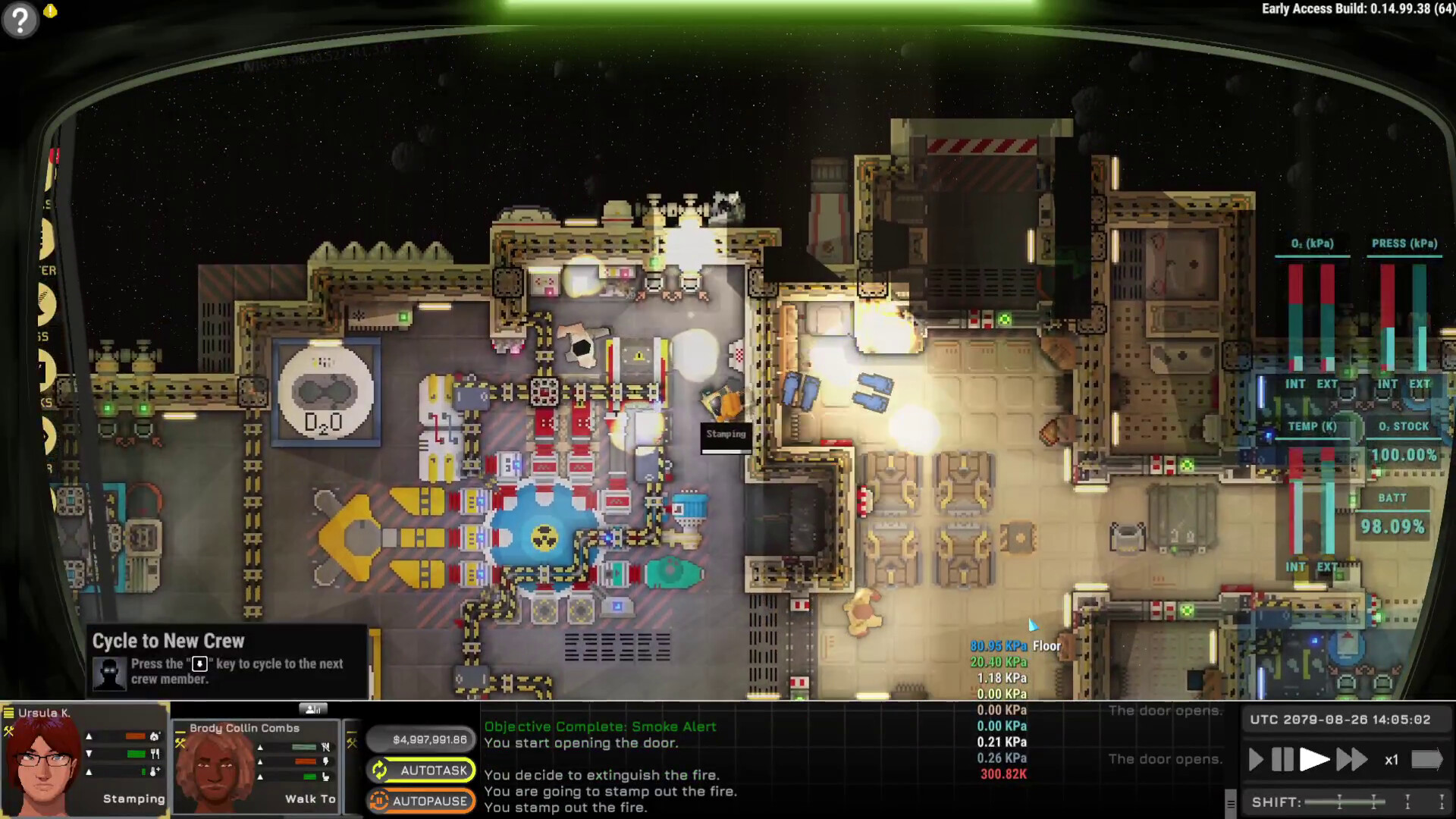
Ostranauts is a single-player space simulation, survival RPG, and life simulator set in the same universe as NEO Scavenger.
Earth has suffered a series of catastrophic collapses, and the surviving solar system has developed into a grim network of stations, corporations, scrapyards, colonies, criminal operations, and half-legal opportunities. You are not a decorated fleet commander or the chosen savior of humanity. You are a worker who has scraped together enough money, plus a substantial loan, to purchase a ship and try independent life.
That independence immediately comes with expenses.
Your ship needs fuel, power, air, replacement components, and maintenance. Your character needs food, rest, safety, and money. Crew members need wages and attention. Docking, travel, repairs, licenses, equipment, and poor decisions all create new ways for your finances to bleed.
The result is a space game where the fantasy is not simply owning a ship. It is keeping that ship functional long enough to make the next payment.
The character creation process supports that role-playing focus. A Career Kiosk lets you shape your captain’s background, qualifications, skills, income, traits, and personal history. You can begin with professional contacts, enemies, acquaintances, and ex-lovers who may appear later.
Those choices are not only flavor text. They influence conversation options, relationships, available work, and how prepared your character is when something important breaks in the least convenient part of the ship.
What does Ostranauts 1.0 add?
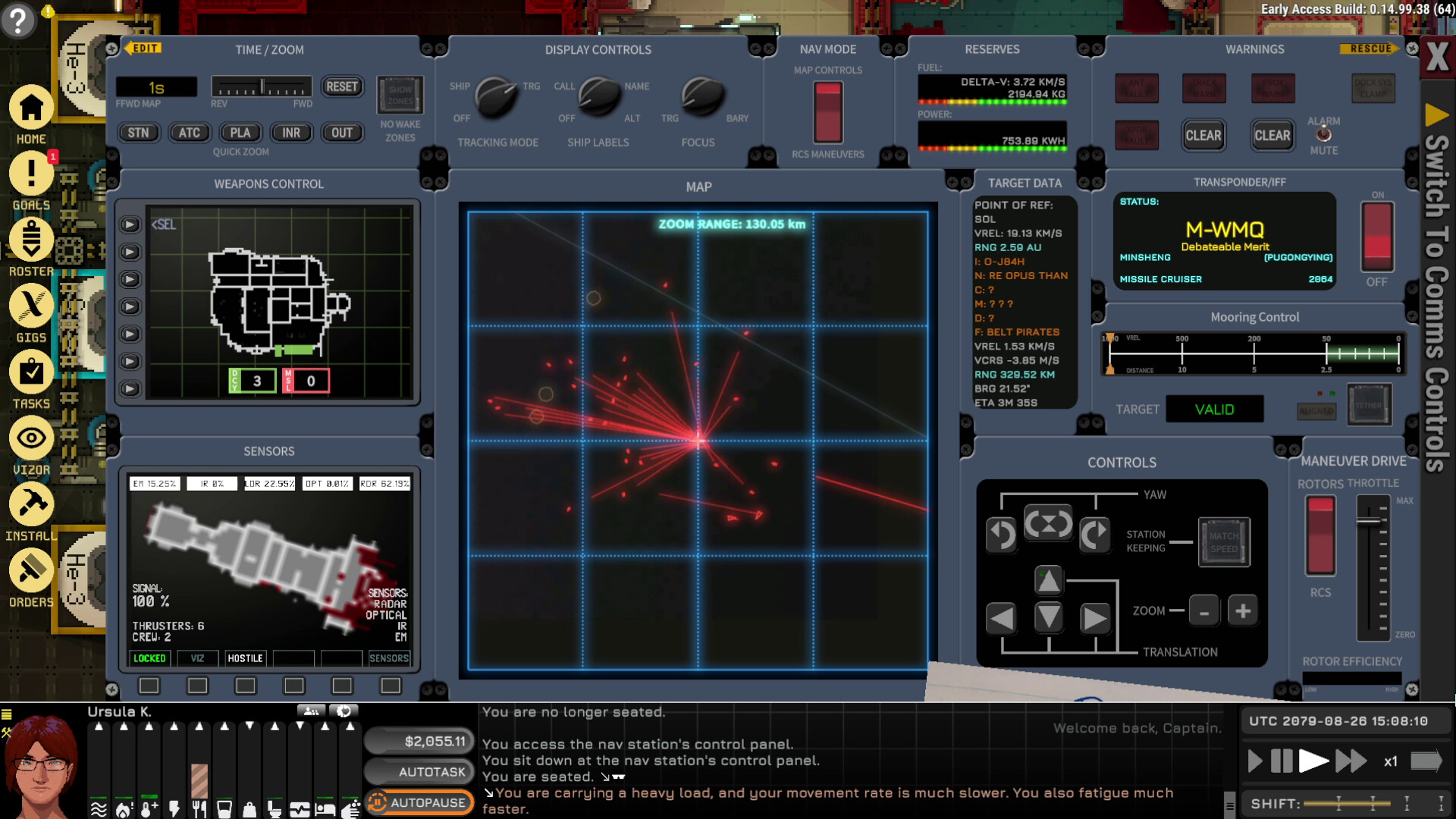
The biggest change is simple: Ostranauts now has a complete main storyline and endgame.
Version 1.0 concludes the Ceres Affair plot and continues beyond it, with alternate outcomes that can permanently change conditions across the solar system. Decisions made during the storyline can affect factions, locations, and the state of the wider world.
The update also introduces a bounty system. Captains can track wanted targets and earn money by capturing them dead or alive, providing another career route beyond salvage, transport, mining, trading, and other station work.
Major Ostranauts 1.0 additions
- The complete Ceres Affair storyline, including alternate endings and consequences that affect the wider system.
- Additional endgame content that becomes available after the Ceres Affair concludes.
- Bounty hunting with dead-or-alive targets.
- New station layouts for major locations across the solar system.
- New destinations, including Tharsis Landing and Labyrinth on Mars, the Voltaire facility on Deimos, and the struggling Jade Rabbit mining outpost on Luna.
- Steam Workshop integration for downloading and sharing community mods.
- 31 Steam achievements tied to intended accomplishments and the kinds of strange events this simulation produces naturally.
- An expanded opening tutorial based on player feedback.
- Quality-of-life improvements and fixes covering navigation, artificial intelligence, docking, trading, gamepad controls, and other systems.
The launch notes also mentioned that more than 68 community mods were already available when Workshop support arrived. Considering how many systems Ostranauts exposes to modders through editable data files, that number is unlikely to remain small.
The salvage loop makes every wreck tempting
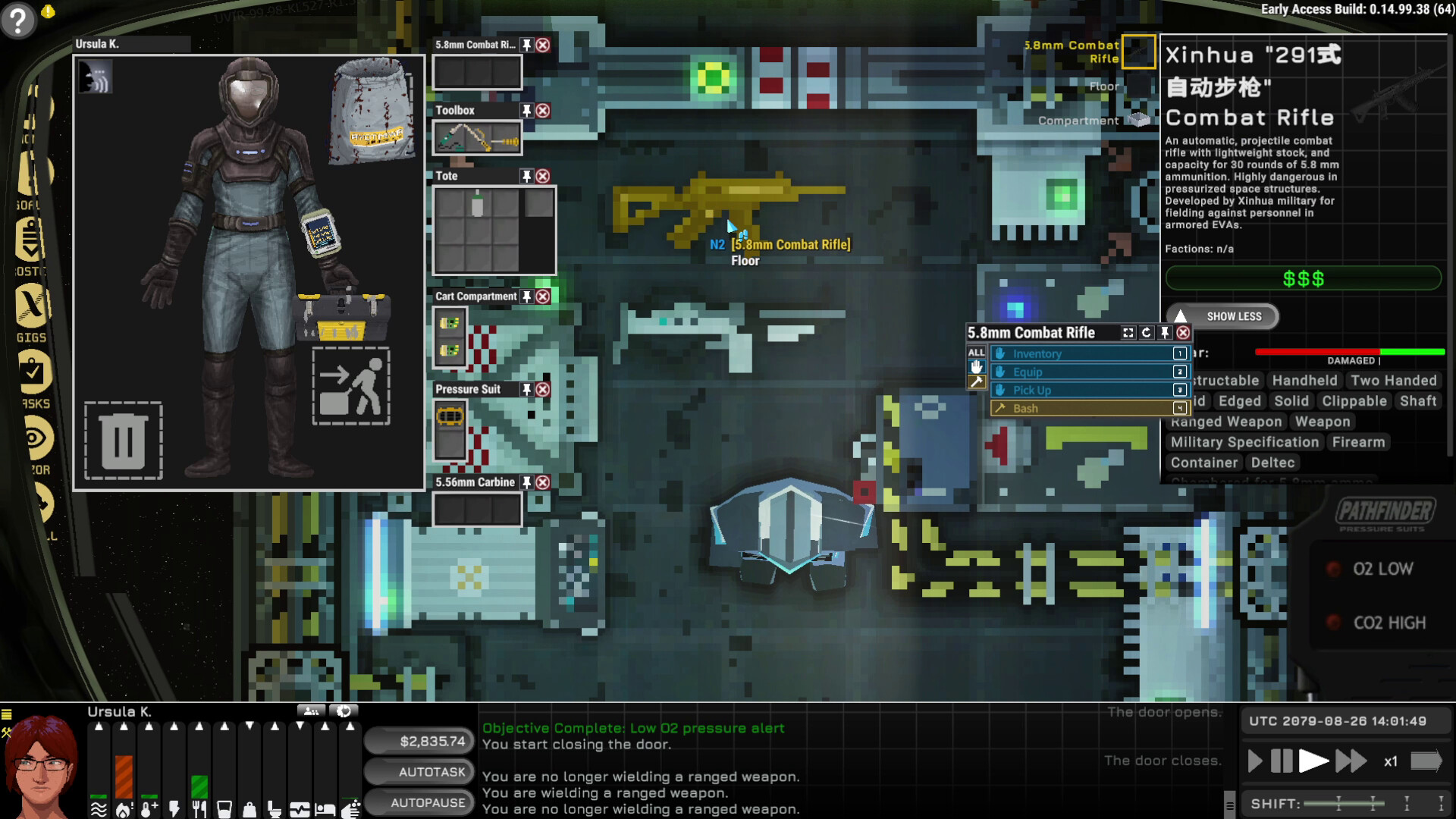
The main Ostranauts loop begins in the boneyard, a field of abandoned and damaged ships waiting to be explored.
You dock with a wreck, suit up, open the airlock, and start inspecting what remains. A derelict may contain valuable equipment, intact structural pieces, furniture, tools, power systems, thrusters, batteries, life-support components, or cargo worth selling.
The problem is deciding what to take.
A component might be valuable enough to sell, but it could also solve a weakness on your own ship. A damaged thruster might improve maneuverability after repairs. An extra battery could stabilize the power network. A working air pump might be more useful than the money it would generate at a station.
You are constantly making practical decisions:
- Which wreck is worth investigating?
- How much time, oxygen, and fuel will the trip consume?
- Can your ship carry the recovered equipment?
- Should the component be installed, stored, repaired, or sold?
- Will removing a part cut power, release pressure, or create another hazard?
- Can you afford to spend another shift salvaging instead of completing paid work?
This is where Ostranauts separates itself from games that treat scavenging as walking toward a glowing container and pressing a button.
Salvage is physical. Parts exist inside the ship. They are connected to walls, floors, power networks, atmosphere systems, and machinery. Recovering something useful often means understanding how the vessel works before you begin dismantling it.
Every wreck is both a shop and a crime scene. You are trying to work out what is valuable, what failed, and whether that failure is about to become your problem.
Your spaceship is a machine, not a menu
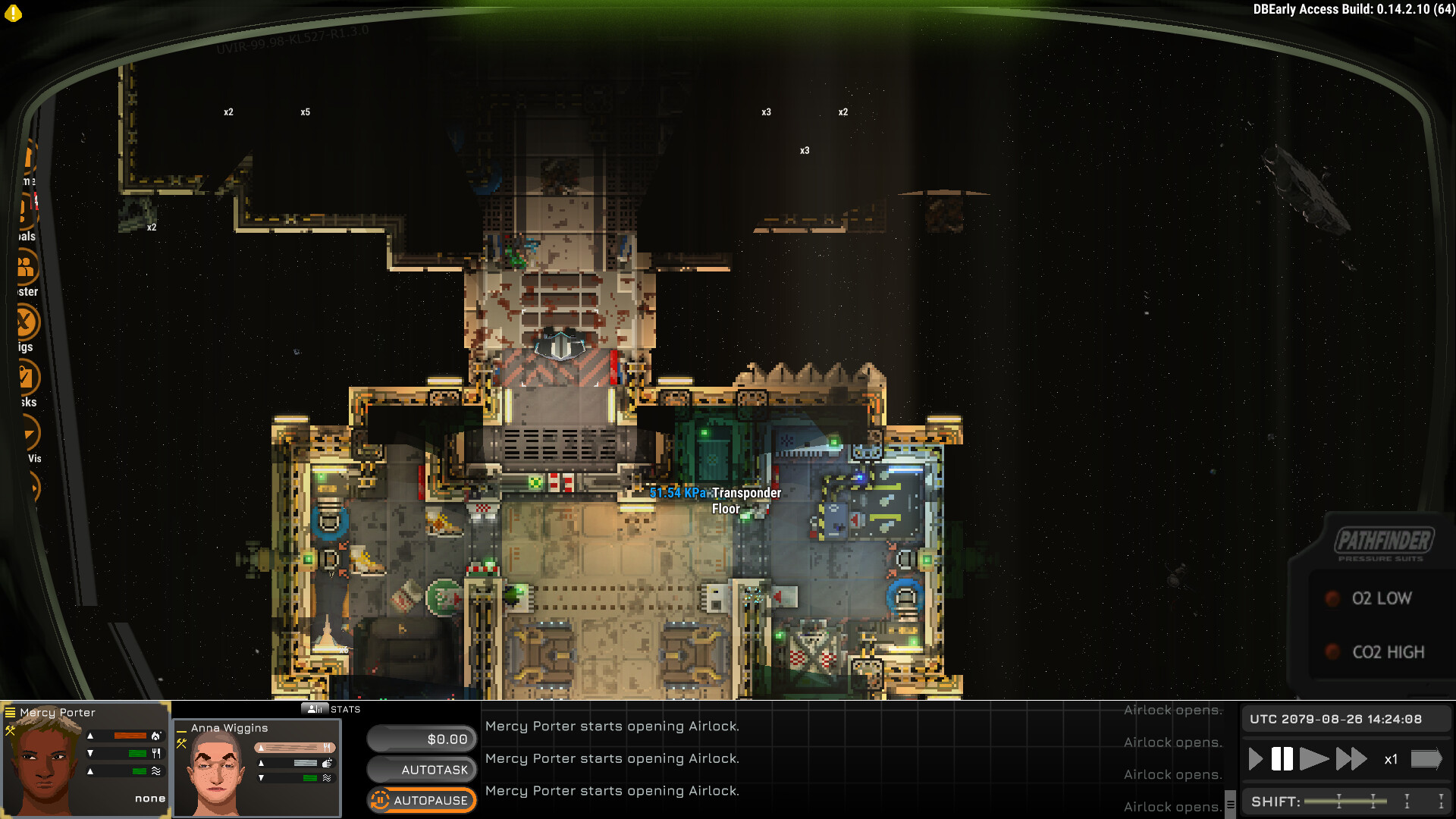
Ostranauts lets you construct and modify a ship from individual functional components.
You can change the floor plan, repair hull sections, install walls, create rooms, route power, add storage, replace worn equipment, mount thrusters, improve life support, and slowly transform a second-hand wreck into something resembling a personal vessel.
The phrase “functional components” matters here. A refrigerator is not only decoration. A battery is not a percentage increase hidden inside an upgrade screen. Thrusters have positions and affect how the ship handles. Hull mass changes flight behavior. Power networks must support connected devices. Damaged equipment becomes less reliable.
You can build something sensible, efficient, and carefully planned.
You can also bolt a suspiciously large engine onto a poorly balanced collection of rooms and discover why aerospace engineering is usually performed by people with qualifications.
The ship therefore becomes a record of your decisions. You remember where a bulkhead came from, why one corridor is an awkward shape, which thruster nearly bankrupted you, and which second-hand reactor is currently making a noise you have chosen not to investigate.
That creates a stronger bond than a conventional upgrade tree. You do not simply unlock “Ship Level 4.” You live inside the thing you built, repaired, rearranged, and almost destroyed.
Your crew can solve problems or become one
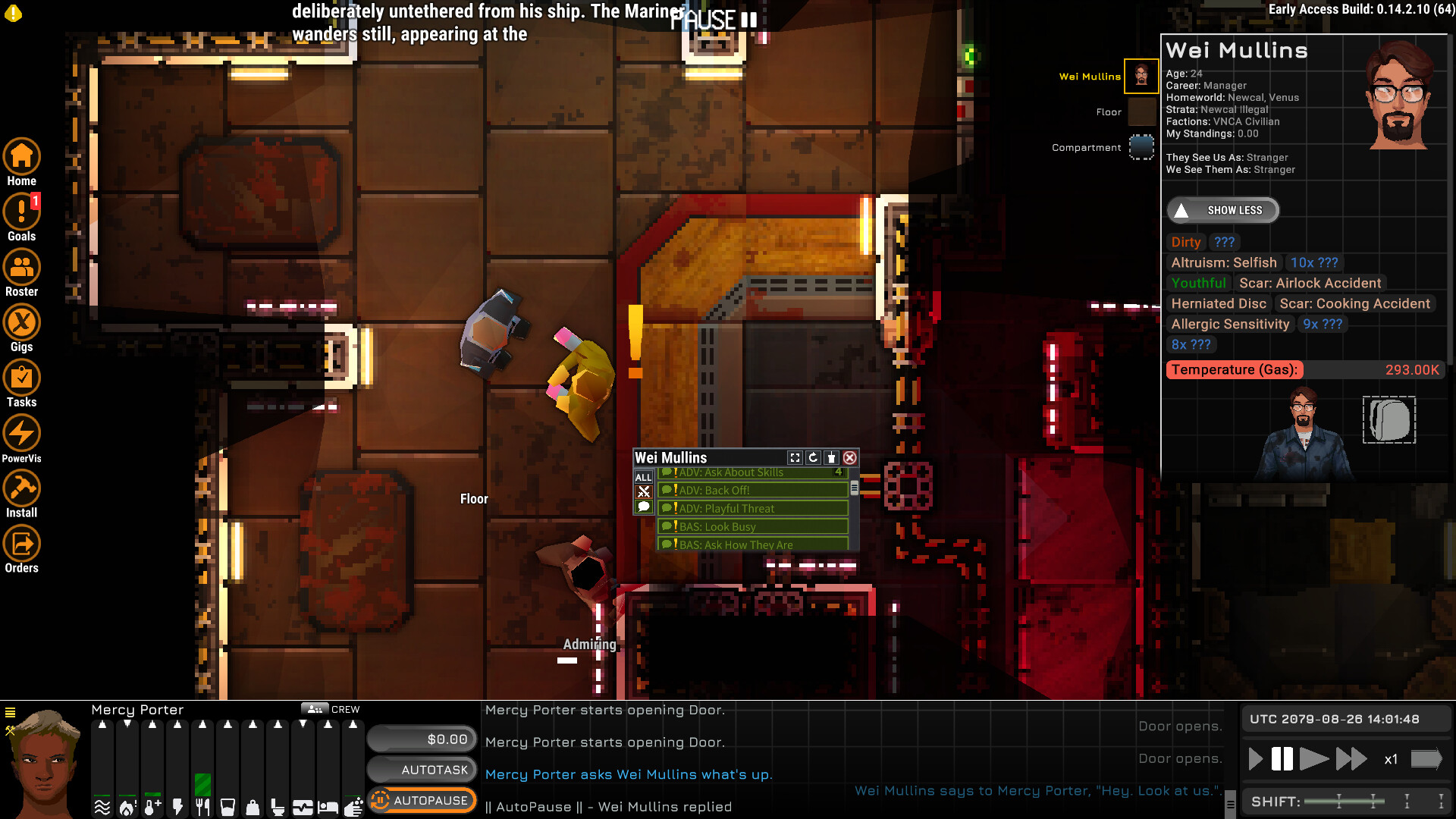
Running a ship alone is possible, but a capable crew can make larger operations more manageable.
Crew members bring their own skills, histories, relationships, and behavioral needs. They can operate equipment, perform repairs, move supplies, handle routine jobs, and respond to emergencies. Assigning the right person to the right role can keep a complex ship running while the captain focuses on navigation, trade, salvage, or damage control.
Unfortunately, people remain people even after leaving Earth.
Crew members can become tired, uncomfortable, unhappy, distracted, or involved in personal conflicts. Relationships matter. Living conditions matter. Work schedules matter. A ship that functions perfectly on paper can still become miserable to inhabit.
This makes crew management more interesting than filling job slots with anonymous workers. A good engineer is valuable, but so is an engineer who can tolerate the rest of the crew without turning the mess hall into a diplomatic incident.
The social simulation also helps Ostranauts generate stories naturally. The game does not need a scripted cutscene every time something memorable happens. Sometimes the story is that a repair job ran long, the oxygen supply became uncomfortable, two crew members began arguing, and the captain had to choose between finishing the contract and preventing the ship from becoming the solar system’s angriest sealed container.
Newtonian flight, ship combat, and asteroid mining
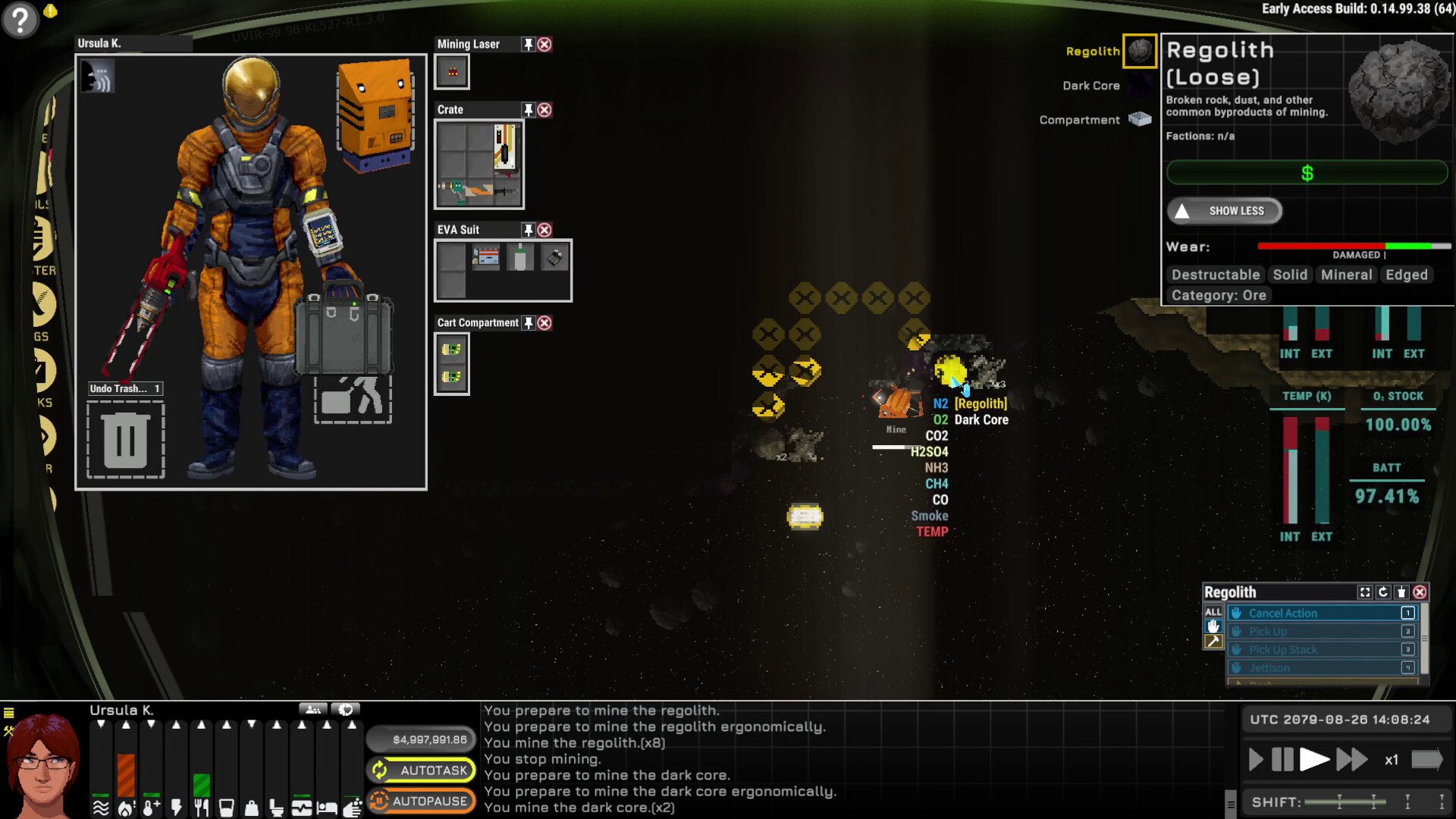
Flying in Ostranauts is deliberately more involved than pointing the ship toward a marker and holding the forward key.
The game uses Newtonian movement, meaning acceleration, mass, rotation, and momentum matter. A ship continues moving until another force changes its direction or speed. A heavier vessel responds differently from a light craft. Thruster placement and available fuel can determine whether a maneuver is elegant, inefficient, or immediately regrettable.
The control interface reinforces this physical approach. Navigation, docking, sensors, power, and other systems are operated through in-world consoles. Learning the ship means learning what its panels, switches, readouts, and warning indicators are trying to tell you.
The Fire in the Hold update expanded that foundation with ship-to-ship combat, sensors, weapons, asteroid mining, and additional hazards.
Armed conflict is concentrated around Ceres, where rival factions, naval vessels, beacons, and pirates compete for control. Weapons require targets, sensor information, firing arcs, suitable positioning, and a ship capable of surviving the answer.
This is not an arcade dogfighting game. Damage can break systems, puncture hulls, start fires, disable equipment, and turn a manageable engagement into an engineering emergency.
Asteroid mining offers a less aggressive route to profit. Captains can extract resources, sell ore, improve relationships with relevant groups, or establish claim beacons for passive income.
Of course, “less aggressive” is relative. You are still operating industrial machinery in open space aboard a ship assembled from whatever parts you could afford.
A better tutorial does not make space safe
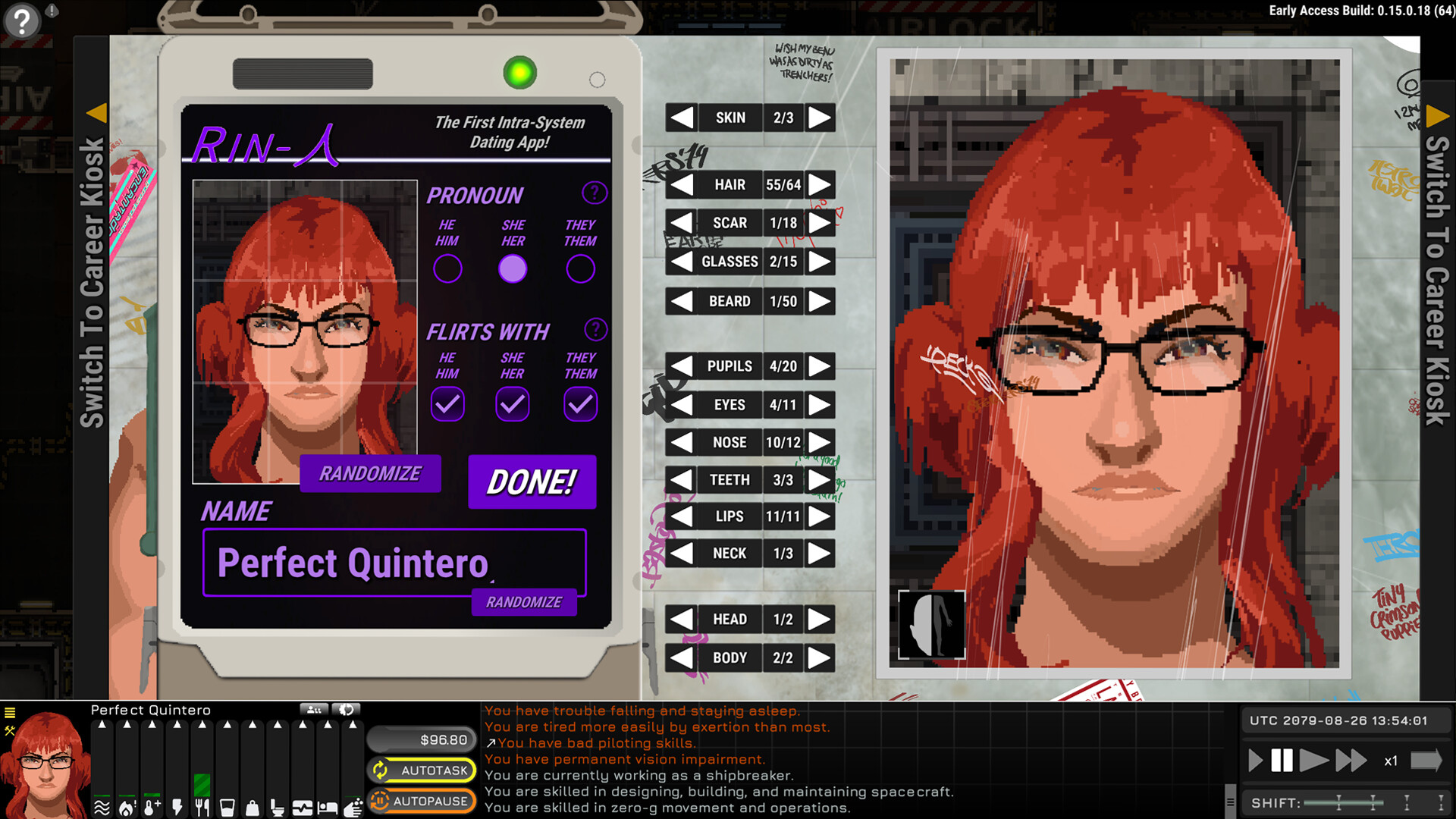
Ostranauts has a reputation for being difficult, dense, and initially confusing. Version 1.0 does not remove that complexity, but it does make the first steps easier to understand.
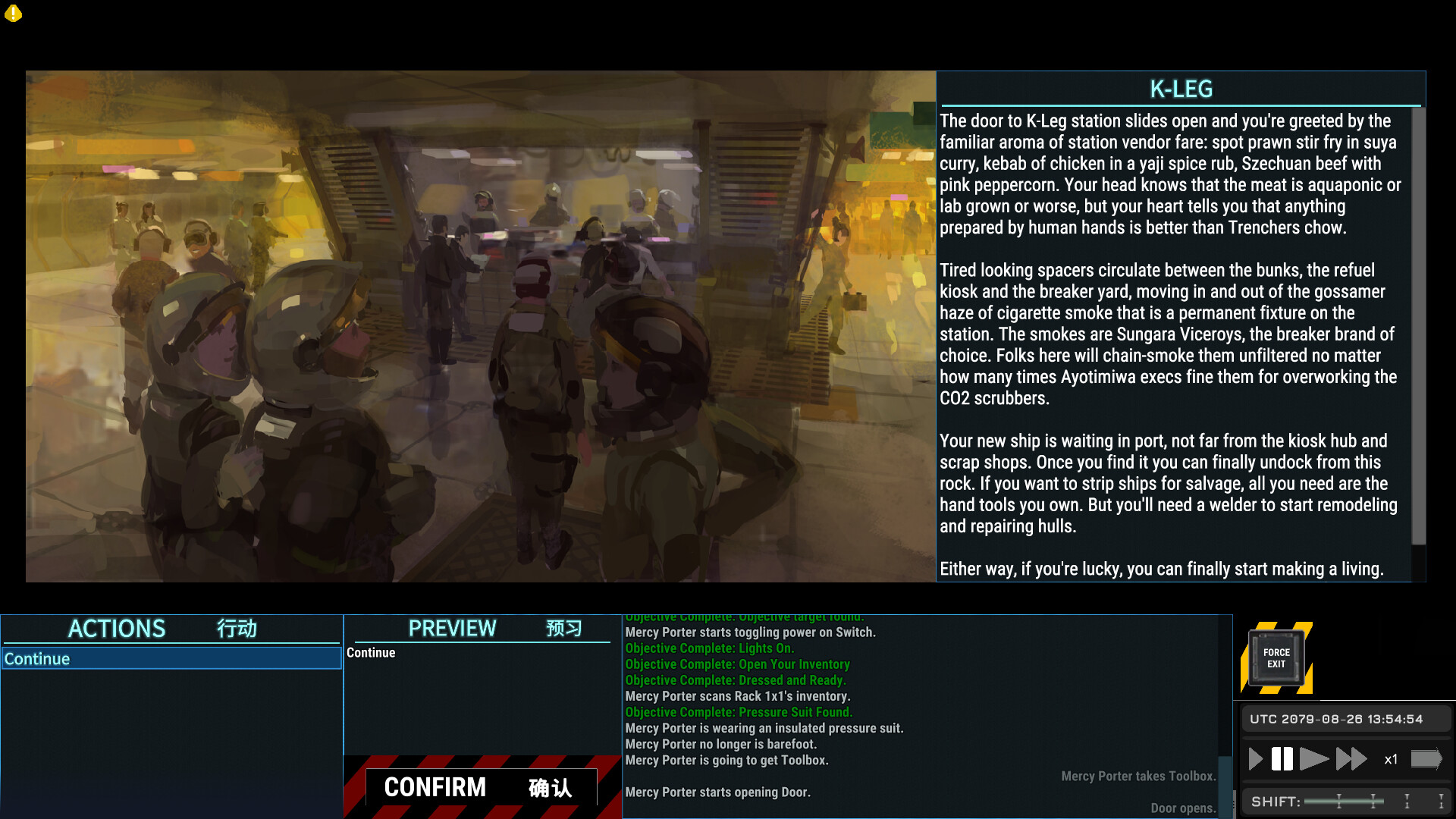
The opening tutorial was expanded using years of player feedback. It offers more guidance on operating the starting ship, handling basic controls, navigating, docking, and surviving the early game.
That improvement matters because the game’s challenge is most enjoyable when you understand why something went wrong.
Running out of fuel because you planned badly can be interesting. Running out of fuel because you never found the relevant gauge is less interesting. Losing control because you ignored momentum is a useful lesson. Losing control because the interface did not explain which panel mattered is mostly a reason to close the game.
The improved onboarding aims to move players from the second category into the first.
Ostranauts is still built for players who enjoy learning systems, reading displays, experimenting, and recovering from mistakes. It will not suddenly become a relaxed space tourism game. It is simply better at teaching you how your decisions led to the latest disaster.
Important: Ostranauts rewards patience. The first successful flight, clean docking maneuver, profitable salvage run, or repaired ship feels good precisely because the game makes you understand how it happened.
What comes after Ostranauts 1.0?
Version 1.0 is not the end of Ostranauts development.
Blue Bottle Games has committed to at least one additional year of post-launch development. The studio has mentioned fixes, interface improvements, unused assets, feature ideas, community events, and other work that did not fit into the road to 1.0.
That is a commitment to continued development rather than a detailed public roadmap with named expansions and release dates. Players should not assume that every old idea or requested feature will appear.
Still, the important point is that the developers plan to keep working on the game after launch. Considering Ostranauts’ simulation-heavy design, Workshop support, and long Early Access history, continued refinement may be as valuable as one enormous content drop.
Does Ostranauts have a Deluxe Edition?
Steam currently lists the standard Ostranauts game and a separately available soundtrack. There is no Deluxe Edition or Collector’s Edition listed on the Steam page.
The soundtrack includes music by composer Josh Culler, with the 1.0 update adding the tracks West Lake and The Mint.
Steam also offers several bundles pairing Ostranauts with other games, but those are store bundles rather than different editions of Ostranauts itself.
Space sims and survival games on G2A.COM
Ostranauts occupies a very specific corner of gaming, but several other titles explore parts of the same fantasy. Some focus on ship construction, some on salvage, some on crew survival, and others on the complex simulation that turns small mistakes into unforgettable stories.
How to get Ostranauts through G2A.COM
The current Ostranauts marketplace page lists Steam Gift options for Global and European regions. The previously indexed Global and Europe Steam Key pages are currently unavailable, so check the item type, region, activation instructions, and seller details before ordering.
Prefer buying Ostranauts directly through Steam?
A Steam gift card can provide wallet funds for Ostranauts, its soundtrack, or another PC game without relying on a specific game listing.
Get more from marketplace offers with G2A Plus
A G2A Plus membership can provide access to better member prices, Plus Points, monthly gaming rewards, and premium post-purchase assistance.
Related G2A News reading
Looking for more games built around space travel, survival, simulation, construction, and stories generated by interacting systems? These G2A News features are useful next stops:
- Best Space Games on PC
- Space Building Games Worth Playing
- Games Like RimWorld and Dwarf Fortress
- Best Survival Games to Play in 2026
- Games With the Best Steam Workshop Support
Who should play Ostranauts?
Players looking for cinematic dogfights, fast progression, constant combat, or a simple campaign may struggle with its pace. Ostranauts is often deliberate, procedural, and willing to let routine work become the main event.
That is also why its audience loves it.
Ostranauts FAQ
Is Ostranauts fully released?
Yes. Ostranauts left Early Access and reached version 1.0 on August 3, 2026.
Is Ostranauts connected to NEO Scavenger?
Yes. Both games take place in the same universe created by Blue Bottle Games. NEO Scavenger focuses on survival around a collapsed Earth, while Ostranauts moves the struggle into the wider solar system.
Does Ostranauts have multiplayer?
No. Ostranauts is a single-player game.
Does Ostranauts have ship combat?
Yes. The Fire in the Hold update added ship-to-ship combat, weapons, sensors, firing arcs, hostile vessels, asteroid mining, and new activity around Ceres.
Does Ostranauts support mods?
Yes. Version 1.0 introduced Steam Workshop support, and the game also uses editable data files that support extensive modding.
Is Ostranauts beginner-friendly?
The improved tutorial makes the opening easier to understand, but Ostranauts remains a complex and demanding simulation. It is best approached patiently.
Will Ostranauts receive more updates?
Yes. Blue Bottle Games has committed to at least one year of additional development after the 1.0 launch.
The stars are open and the loan is due
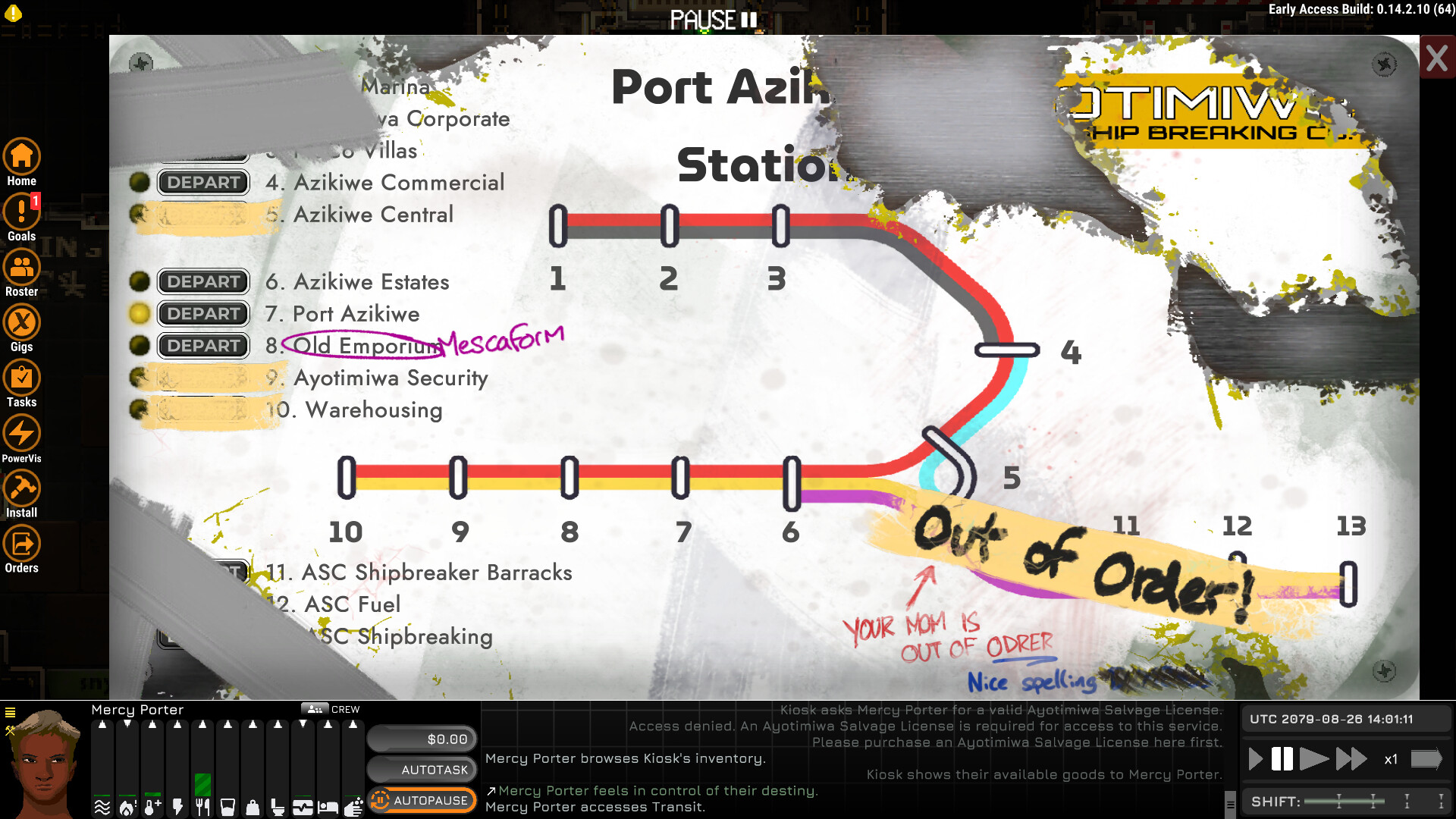
Ostranauts succeeds because it understands that owning a spaceship should create as many problems as it solves.
The ship is not simply transportation. It is your home, workplace, investment, escape plan, storage unit, social space, and largest source of anxiety. Every repair adds history. Every salvaged component creates another decision. Every crew member makes the ship more capable and more complicated.
Version 1.0 finally gives that simulation a completed storyline, endgame consequences, bounty hunting, additional stations, achievements, Workshop integration, and a more welcoming opening. It does not sand away the game’s sharp edges or turn it into a conventional space adventure.
It simply gives you more ways to build a life among the wreckage.
Just remember to check the oxygen before admiring the view.