




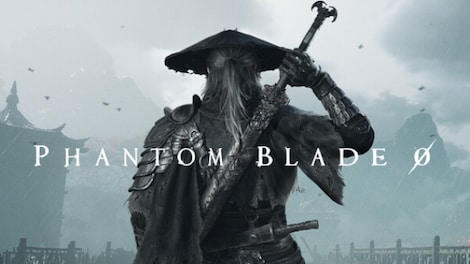
Phantom Blade Zero has opened to highly positive reviews, with critics overwhelmingly praising its combat, boss fights, weapon variety, martial-arts animation, and distinctive kungfupunk art direction.
Metacritic’s first official snapshot after 57 critic reviews put the PC version at 89 and the PS5 version at 88, with the numbers continuing to move slightly as more reviews were added.
The interesting part is how concentrated the praise is. Reviewers who disagree about the story, level design, enemy respawning, performance, and even boss health still keep coming back to the same conclusion: Phantom Blade Zero feels exceptionally good when swords are out. Its biggest weakness is much easier to identify too. Several critics describe the storytelling as confusing, uneven, overloaded with flashbacks, or simply much weaker than the action surrounding it.
Review consensus: Combat is the clear star. Bosses, weapon design, animation, build experimentation, and art direction are repeatedly praised. Storytelling is the most consistent criticism, while performance, level design, boss durability, enemy respawning, and voice acting are more divisive.
Metacritic review aggregation plus individual reviews from publications included in the launch review wave.
Combat, bosses, weapons, story, level design, exploration, performance, audiovisual presentation, pacing, and recurring technical complaints.
Metacritic scores can still change as additional reviews are indexed.
| Review snapshot | Score | What stands out |
|---|---|---|
| Metacritic PC | 89 | First official snapshot after the initial 57 critic reviews |
| Metacritic PS5 | 88 | First official snapshot after the initial 57-review wave |
| Overall consensus | Highly positive | Exceptional action game with a noticeably weaker narrative layer |
- How critics scored Phantom Blade Zero
- Everything critics praise
- Combat is the overwhelming highlight
- Boss fights are another major win
- Weapons and build experimentation
- World, exploration, and art direction
- Everything critics criticize
- Storytelling is the clearest weakness
- Performance and polish are inconsistent
- Where critics disagree
- What the review consensus really means
- More Phantom Blade Zero on G2A News
How critics scored Phantom Blade Zero
The scores make Phantom Blade Zero one of the more strongly reviewed action games of 2026. The most revealing part is not simply the high average, but how many reviewers arrive at similar conclusions despite approaching the game from different platforms and expectations.
| Publication | Score | Review emphasis |
|---|---|---|
| Wccftech | 10/10 | Combat, weapons, bosses, exploration, visuals |
| Push Square | 9/10 | Exceptional game feel and bosses, weak storytelling |
| TheSixthAxis | 9/10 | Bosses, experimentation, pacing, respect for player time |
| MMORPG.com | 8.5/10 | Fast combat, weapons, world, progression |
| VGC | 4/5 | Fast action and animation, weaker story and linear levels |
| CD-Action | 8/10 | Combat, choreography and exploration, uneven late game |
If you want the broader background before digging into the reviews, our complete Phantom Blade Zero guide covers the release date, platforms, world, combat systems, and other confirmed details.
Everything critics praise about Phantom Blade Zero
Across the reviews examined for this roundup, the positive comments cluster around a remarkably consistent group of strengths. Some are close to consensus. Others are praised strongly by several outlets but disputed elsewhere.
| Praised aspect | What critics like about it | Consensus strength |
|---|---|---|
| Combat feel | Fast, fluid, responsive, impactful, and satisfying to control | Very strong |
| Parrying and defense | Smooth transition between offense, blocking, parrying, and dodging | Very strong |
| Boss fights | Spectacular choreography, distinctive mechanics, memorable phases, and strong visual identity | Very strong |
| Weapon variety | Large arsenal where weapons meaningfully change playstyle instead of acting like simple stat upgrades | Very strong |
| Build experimentation | Refunding upgrade materials makes changing weapons and builds unusually painless | Strong |
| Animation | Martial-arts motion capture gives fights a cinematic, wire-action quality | Very strong |
| Combat choreography | Finishers, counters, movement, and boss sequences often look like choreographed wuxia cinema | Very strong |
| Art direction | The combination of wuxia, dark fantasy, machinery, horror, and punk elements gives the game a distinct identity | Very strong |
| Environment design | Detailed, atmospheric locations with strong visual variety and memorable Chinese-inspired scenery | Strong |
| Exploration rewards | Optional paths regularly lead to meaningful upgrades, weapons, lore, quests, and hidden bosses | Strong, but level structure is disputed |
| Secrets and side content | Optional bosses and hidden routes can materially affect progression and the ending | Strong |
| Enemy variety | New enemy types and combat situations continue appearing for much of the campaign | Generally positive |
| Difficulty design | Demanding fights usually feel learnable rather than deliberately punishing | Generally positive |
| Quality-of-life design | No resource loss on death, generous checkpoints, easy build changes, and boss phase checkpoints reduce repetition | Praised by several critics, divisive for challenge purists |
| Visual presentation | Strong character detail, atmospheric lighting, elaborate effects, and impressive cinematic sequences | Strong, with some technical caveats |
| Soundtrack and sound design | Music, weapon impacts, environmental audio, and the clash of steel receive positive mentions | Strong, although audio mixing caused problems for some reviewers |
Combat is the overwhelming highlight
If there is one thing that ties almost the entire review spread together, it is the combat. Push Square calls the fighting punchy, stylish, deep, fast, and fluid. GamesRadar describes it as one of the best combat systems the reviewer had encountered in a long time. VGC similarly points to some of the fastest and most engaging action in the genre.

That praise goes deeper than spectacle. Critics repeatedly mention how quickly Soul can move between offense and defense. Blocking, parrying, dodging, weapon switching, strong attacks, and counters are designed to flow into one another rather than feel like separate modes. Failed timing can still be punished hard, but several reviewers argue that the game makes understanding what went wrong relatively easy.
The animation is a huge part of that sensation. S-GAME used martial-arts motion capture extensively, with Donnie Yen serving as a creative consultant and participating in the performance process. Critics repeatedly compare the resulting encounters to choreographed kung fu or wuxia cinema rather than ordinary fantasy sword fighting.
For a much longer look at how the combat actually flows, G2A News previously covered the game’s extended gameplay showcase.
There is one combat criticism worth noting
VGC notes that Phantom Blade Zero can occasionally move so quickly that defense becomes less about carefully reading every individual hit and more about pressing parry through an incoming barrage. When several enemies or projectiles arrive simultaneously, the visual speed can also make encounters harder to parse.
That is not the dominant opinion, but it is an important qualification. Critics broadly love the speed. Not everyone believes the game communicates every attack equally well at that speed.
Boss fights are another major win
Boss design is the second major pillar of the review consensus. Push Square emphasizes that encounters rarely feel like another ordinary sword fighter with a larger health bar. Bosses introduce unusual attacks, multiple phases, visual set pieces, different ways to create openings, and distinctive weapons that often become part of Soul’s own arsenal afterward.

TheSixthAxis also highlights boss battles as some of the game’s most memorable skill checks, while GamesRadar praises the way optional exploration regularly leads to hidden bosses and powerful rewards. Several critics specifically like the fact that clearing the first phase of a multi-stage boss often creates a checkpoint. For players interested primarily in learning the second phase, that removes the need to repeatedly replay a section they have already mastered.
But some critics think bosses have too much health
This is one of the clearest points of disagreement. Creative Bloq argues that some bosses become prolonged, spongy fights where even heavy attacks after a stagger only chip away at large health bars. CD-Action raises a similar issue later in the campaign, where certain bosses combine very high durability with attacks capable of killing Soul extremely quickly.
GamesRadar also reports a dramatic difficulty increase around some secret bosses connected to the game’s true ending. In other words, the consensus says the bosses are spectacular. It does not say every boss is perfectly paced.
Weapons and build experimentation get a lot of praise
Weapon design may be Phantom Blade Zero’s most important strength after the core combat itself. Reviewers repeatedly stress that the arsenal is not filled with cosmetic variants of the same moveset. Different weapons can introduce exclusive abilities, new attack patterns, unusual status effects, different ranges, and completely different approaches to pressure and defense.
The official game information promises more than 30 main weapons alongside a large collection of Phantom Edges. What critics like most is that the game encourages players to actually use them. Upgrade materials can be refunded and reinvested if you want to rebuild around another weapon, reducing the usual RPG anxiety that comes from spending rare resources on the “wrong” choice.

Push Square specifically notes that the system persuaded a reviewer who normally sticks to one comfortable loadout to keep experimenting. TheSixthAxis and MMORPG.com reach similar conclusions about weapon variety keeping combat fresh.
Not every weapon is equally convincing
A smaller criticism is that some of the more unusual tools can feel gimmicky, while limited upgrade materials may still encourage conservative players to concentrate on a few favorites. The refund system reduces that problem considerably, but it does not make every weapon equally desirable.
The world looks distinctive, and exploration is often worth the detour
Critics are also enthusiastic about the visual identity S-GAME calls kungfupunk. Traditional wuxia imagery sits beside grim fantasy, machinery, occult horror, elaborate prosthetics, and exaggerated martial-arts choreography. Even reviewers who criticize individual graphical details tend to praise the overall art direction.
Exploration fares well in several reviews too. GamesRadar describes the world as tightly designed and full of worthwhile discoveries. CD-Action praises optional paths, hidden bosses, upgrades, side quests, and metroidvania-like barriers that reward returning with the right ability or item. Wccftech similarly highlights branching routes, secrets, side content, and meaningful reasons to leave the obvious path.
The world is not a traditional open-world sandbox. It is better understood as a series of interconnected or wide-linear spaces, something S-GAME has been describing since the game’s early reveal. You can see more of that structure in our earlier Phantom Blade Zero world deep dive.
Everything critics criticize about Phantom Blade Zero
The negative side of the reviews is more fragmented than the praise. Storytelling is the recurring complaint. Most other issues appear in only part of the review spread, sometimes directly contradicting another critic’s experience.
| Criticism | What reviewers reported | How widespread? |
|---|---|---|
| Confusing storytelling | Frequent time jumps, flashbacks, terminology, and weak contextual introductions make the timeline difficult to follow | Recurring criticism |
| Character development | Soul and parts of the supporting cast can feel underdeveloped or emotionally flat | Mentioned by multiple reviewers |
| Narrative pacing | Long flashbacks, lore notes, and forced exposition can interrupt the speed of the action | Recurring criticism |
| Too many lore collectibles | Some critics found the volume of written notes excessive for such a fast action game | Several reviews |
| Linear level design | VGC found the world too linear and uninspired despite its visual quality | Divisive |
| Restrictive traversal | Some routes use prescribed grapple, wall-run, or contextual traversal points rather than free movement | Limited number of reviews |
| Invisible barriers and route readability | Creative Bloq reported cases where nearby objectives or apparently reachable ledges could be frustrating to navigate toward | Not universal |
| Spongy bosses | Some boss health pools can make otherwise exciting encounters last too long | Divisive |
| Late-game difficulty spikes | Some later and secret bosses combine high health with extremely punishing attacks | Several reviews |
| Enemy and boss recycling late in the game | The final stretch can rely more heavily on familiar enemies and repeated encounters | Some reviewers |
| Repetitive finishers | Early encounters can repeatedly trigger the same small pool of cinematic executions | Minor criticism |
| Empty cleared areas | Because normal enemies generally do not respawn, revisiting cleared locations can feel strangely deserted | Divisive design choice |
| Camera and geometry | Aggressive encounters can push characters against scenery, with the environment occasionally obstructing the camera | Some reviews |
| Frame-rate drops | Some PS5 Pro reviewers saw drops during effect-heavy boss fights, including one much more severe report | Inconsistent between reviewers |
| Minor bugs | Getting stuck on scenery, texture problems, reflection glitches, and occasional traversal stutter were reported | Pre-launch build dependent |
| Audio mixing | Dialogue can become too quiet compared with music, while some effects sounded overly loud | Some PS5 reviews |
| Hair and visual glitches | Hair physics, reflections, and occasional textures reportedly misbehaved in some scenes | Minor / build dependent |
| English voice delivery | One review criticized stiff delivery and awkward pauses | Highly divisive |
| Non-combat animation | Movement and acting outside the elaborate battle choreography can look comparatively stiff | Some reviews |
| Uneven visual quality | Cutscenes and standout environments look stronger than some ordinary gameplay spaces and character work | Occasional criticism |
| Abrupt bad ending | GamesRadar found the standard bad ending abrupt and unsatisfying | Specific review |
| Needs more polish | Several critics found small rough edges that do not undermine the combat but stop the whole game from feeling equally refined | Recurring secondary criticism |
Storytelling is the clearest weakness
If combat is the closest thing Phantom Blade Zero has to universal praise, the narrative is the closest thing it has to a recurring weakness. Push Square is particularly harsh, criticizing the game’s constant jumps between different periods of Soul’s life, characters appearing without enough context, and flashbacks that can move between events separated by days, years, or decades.
GamesRadar is less negative but still calls the storytelling inconsistent. VGC says the story and characters come across as bland. MMORPG.com found the first half confusing before becoming more invested later. Wccftech similarly argues that the opening can overwhelm the player with terminology and that Soul himself does not always receive enough characterization.
The pacing problem follows from that structure. An action game this fast regularly stops to deliver flashbacks, written lore, exposition, or collectible-related dialogue. Push Square specifically criticizes health-upgrading flowers that trigger a short monologue while the player is unable to move.
That does not mean nobody likes the narrative. Some critics found the worldbuilding, quests, and later story beats genuinely affecting. The important distinction is that worldbuilding receives more consistent praise than the way the main story communicates itself.
Performance and polish are inconsistent across reviews
This is where simply reading one review can create the wrong impression. TheSixthAxis describes its PS5 experience as largely excellent, with Performance Mode running smoothly apart from minor pre-release issues. CD-Action reports stable PC performance on an RTX 4070 system. Other PC coverage similarly describes the game as technically solid outside occasional traversal stutter.
Push Square, however, observed frame-rate drops in certain PS5 Pro boss encounters alongside audio-balance problems. Creative Bloq encountered substantially more serious drops during some later PS5 Pro fights as well as reflection and audio issues.
There is an important launch-day caveat. Creative Bloq notes that S-GAME delivered a substantial patch after that reviewer’s playthrough which was said to address many of the reported problems, but the reviewer did not have enough time to replay the game and independently verify every fix. That makes the pre-launch performance criticism worth noting without assuming every issue will necessarily remain in the launch build.
Where Phantom Blade Zero critics disagree
Several aspects of Phantom Blade Zero cannot honestly be reduced to a simple positive or negative. Different reviewers came away with almost opposite impressions.
| Issue | Positive view | Critical view |
|---|---|---|
| Level design | GamesRadar, CD-Action, and other reviews praise rewarding side paths, secrets, optional bosses, and tightly designed spaces | VGC calls the levels very linear and uninspired; Creative Bloq finds traversal restrictive |
| Enemy respawning | Some reviewers love that defeated normal enemies stay dead because it respects the player’s time | Push Square finds cleared environments strangely empty when revisited |
| Boss phase checkpoints | VGC and TheSixthAxis appreciate not replaying a phase already mastered | Hardcore players may find this too forgiving on the highest difficulties |
| Boss durability | Most reviewers praise the encounters as memorable, challenging, and spectacular | Creative Bloq and CD-Action criticize some fights for turning into endurance tests |
| Performance | Several PC and PS5 reviewers report smooth, stable performance | Others saw severe drops, audio bugs, reflections, or texture issues in specific encounters |
| Voice acting | Some coverage praises the performances | Other reviewers describe parts of the English delivery as stiff or awkward |
| Story | Some critics become invested in the later story, quests, lore, and endings | The structure, timeline, terminology, and character introductions are among the most repeated criticisms in the review spread |
The useful takeaway: The disagreements are mostly about everything surrounding the combat. Very few critics question whether fighting in Phantom Blade Zero is fun. They disagree much more about how well the story, exploration structure, difficulty tuning, and technical presentation support it.
What the Phantom Blade Zero review consensus really means
The review picture is unusually easy to read. If combat is the main reason you are interested in Phantom Blade Zero, the reviews are extremely encouraging. Critics repeatedly praise speed, responsiveness, weapon switching, parries, boss choreography, build experimentation, and the sheer pleasure of controlling Soul.
The caution is for players coming primarily for a tightly told cinematic story or a perfectly polished technical showcase. The narrative seems to demand patience, especially early on, and several reviewers encountered bugs or performance problems in pre-release builds. The final stretch also appears less consistent than the middle of the game, with some complaints about repeated enemies, higher boss health, and sudden difficulty spikes.
It is also increasingly clear that calling Phantom Blade Zero a conventional Soulslike undersells what S-GAME actually made. It borrows familiar ideas such as checkpoints, parries, dangerous bosses, and interconnected exploration, but critics repeatedly describe the feel as closer to a fast character-action game built around wuxia choreography. Difficulty settings, no resource loss on death, enemies that generally stay dead, and boss-phase checkpoints reinforce that difference.
With release set for October 29, the question is therefore less “did S-GAME pull it off?” and more “how much do the weaker narrative and technical edges matter to you?” The critical consensus suggests the core action absolutely works.
G2A Plus: Members can collect Plus Points on eligible purchases and use them toward future orders, with 100 Plus Points equal to 1 EUR. Plus Premium also adds member prices, regular bonuses and rewards, and priority post-purchase help.
More Phantom Blade Zero on G2A News
- Phantom Blade Zero guide: Everything you need to know
- Phantom Blade Zero review embargo and review timing
- Phantom Blade Zero gameplay: 60 minutes of 4K action
- Phantom Blade Zero world trailer breakdown
- Phantom Blade Zero pre-orders and editions
Fast, spectacular, and apparently worth the wait
Phantom Blade Zero is not getting strong reviews because critics think every part of it is equally successful. It is getting strong reviews because the thing S-GAME appears to care about most, the act of fighting, has landed exceptionally well.
The story may be messy. Some levels may feel too restrictive. A few bosses may outstay their welcome, and launch patches still matter. But across a review spread that ranges from more reserved criticism to near-perfect scores, combat, choreography, weapons, bosses, and art direction keep appearing at the top of the praise list. For an action RPG built around looking and feeling like a wuxia hero at full speed, that is probably the most important result S-GAME could have asked for.