





Slow Roads launches on Steam on September 23, 2026, after its free browser version attracted more than one million players in its first two weeks and grew to around 75,000 daily players.
Its entire idea is almost aggressively simple: generate a beautiful road, choose the weather and vehicle, put on some music, and keep driving. There are no races you have to win, no destination you need to reach, and no campaign constantly asking for your attention.
Most driving games are obsessed with giving you somewhere to be.
Slow Roads became popular by asking a much stranger question: what if the best part of a driving game was the bit between the objectives?
Solo developer Anslo originally built the browser version as an experiment in lightweight procedural 3D landscapes. It launched in October 2022 and apparently struck a nerve. According to Topograph Interactive, more than a million people played it within its first two weeks, and the web version now sits at roughly 75,000 daily players.
Today, that weird little browser experiment becomes a much bigger Steam game.
How we assessed this: Based on the current Steam page, Topograph Interactive’s official press materials, development history, and launch information. This is not a hands-on review.
What is Slow Roads?
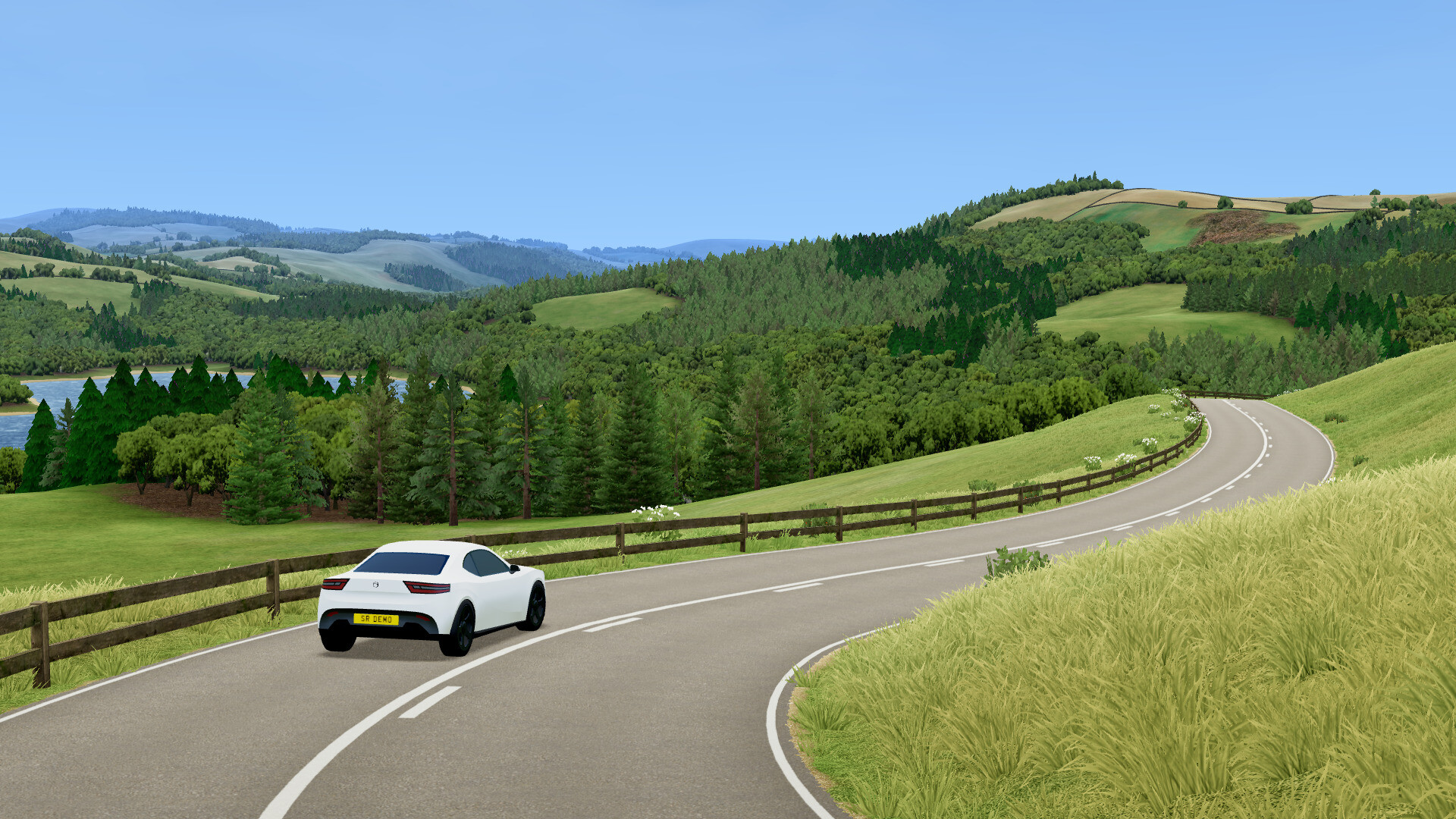
Slow Roads is essentially an endless scenic driving machine.
The game continuously generates roads and surrounding terrain while you drive, creating new valleys, forests, fields, coastlines, and other scenery ahead of you. You can change the road style, location, season, weather, time of day, and vehicle, then simply see what turns up around the next corner.
There is no requirement to reach first place because there is no first place. There is not even necessarily a destination.
That absence of pressure is the whole design.
Topograph describes the original idea as a reaction to rally games where the peaceful rhythm of driving was always interrupted by timers, damage, spectators, endings, and other demands. Slow Roads removes almost all of that until the drive itself becomes the game.
From browser experiment to viral driving game
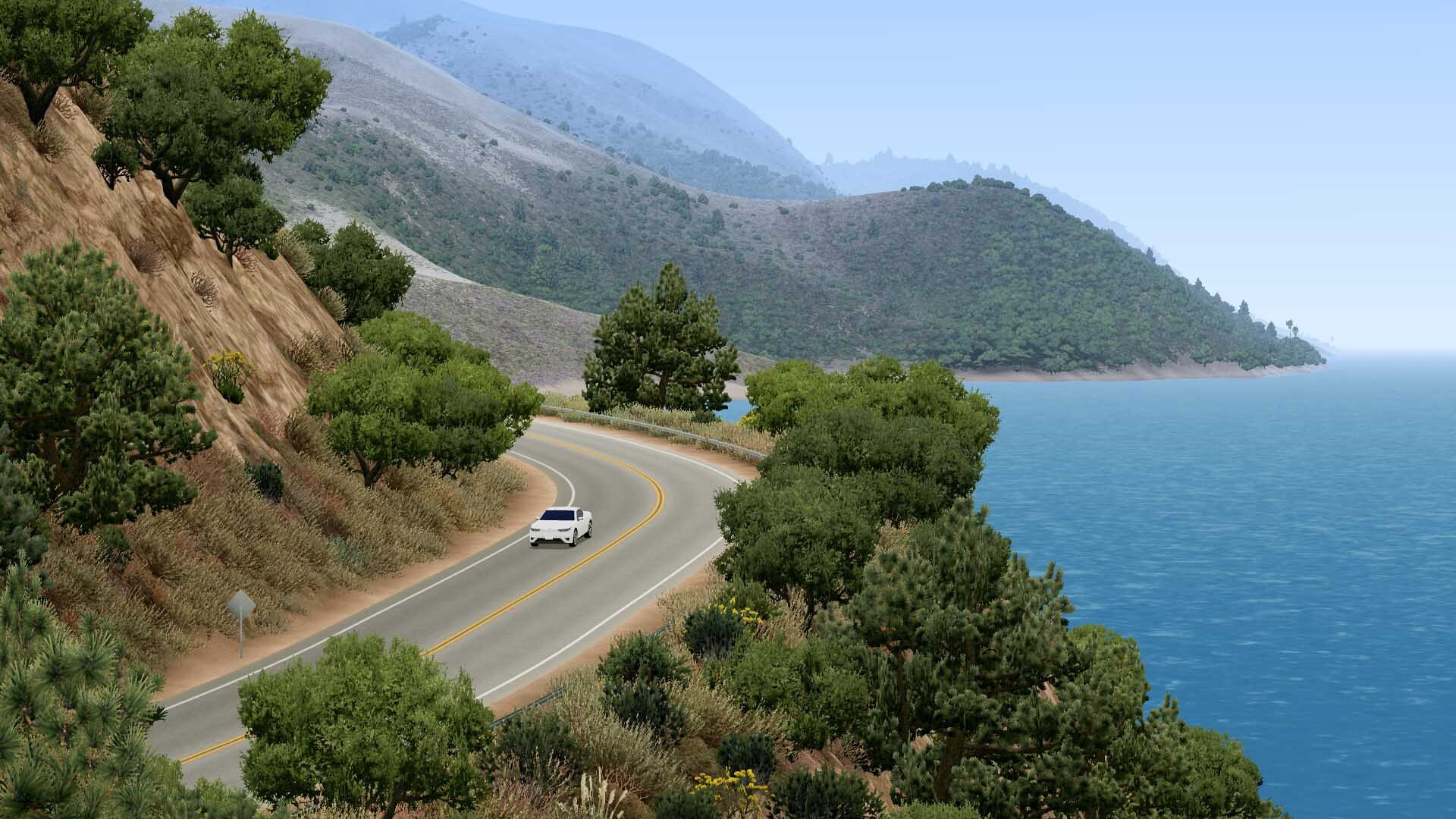
The fascinating part is that this was not originally designed as some giant commercial simulation project.
Development began in 2021 as an experiment in generating real-time 3D landscapes inside a browser. The first web version arrived in October 2022.
Then people showed up.
Topograph says the game passed one million players during its first two weeks. Years later, its core browser audience sits at around 75,000 daily players.
That makes the Steam launch more interesting than the usual story of an unknown indie appearing out of nowhere. Slow Roads already has an audience. Steam is effectively the expanded edition of something people have quietly been using to switch their brains off for years.
What the Steam version adds
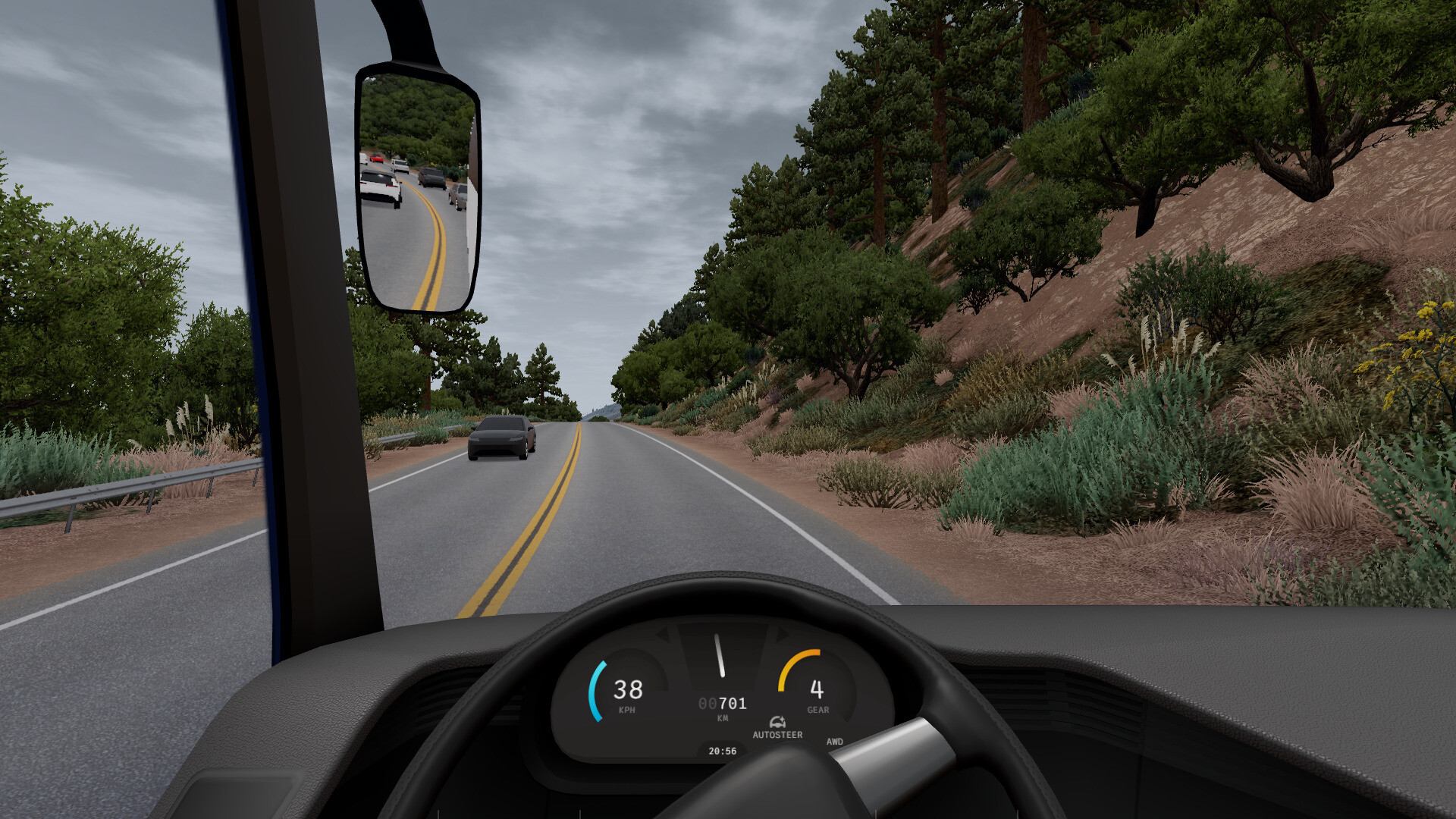
The paid Steam version keeps the minimalist idea intact, but surrounds it with much more control.
There are extra locations, including a California coast inspired by the Pacific Coast Highway, along with additional road types such as off-road trails. The vehicle selection grows too, with options ranging from a coupe and hatchback to a sports car, coach, and motorcycle.
Cars can be customized visually and mechanically. Colors, wheels, license plates, engines, handling settings, combustion or electric power, and manual or automatic transmission can all be adjusted.
Traffic can also be configured rather than simply tolerated. Density, speed, and lane behavior are adjustable, which fits the broader idea that Slow Roads should be whatever type of drive you feel like taking.
The game even includes a music interface for local files and public radio streams.
That may be the most honest feature in the whole project. Slow Roads knows plenty of players are going to use it as something between a driving sim, a relaxation tool, and an elaborate visualizer for whatever album they were going to listen to anyway.
Why endless roads actually work
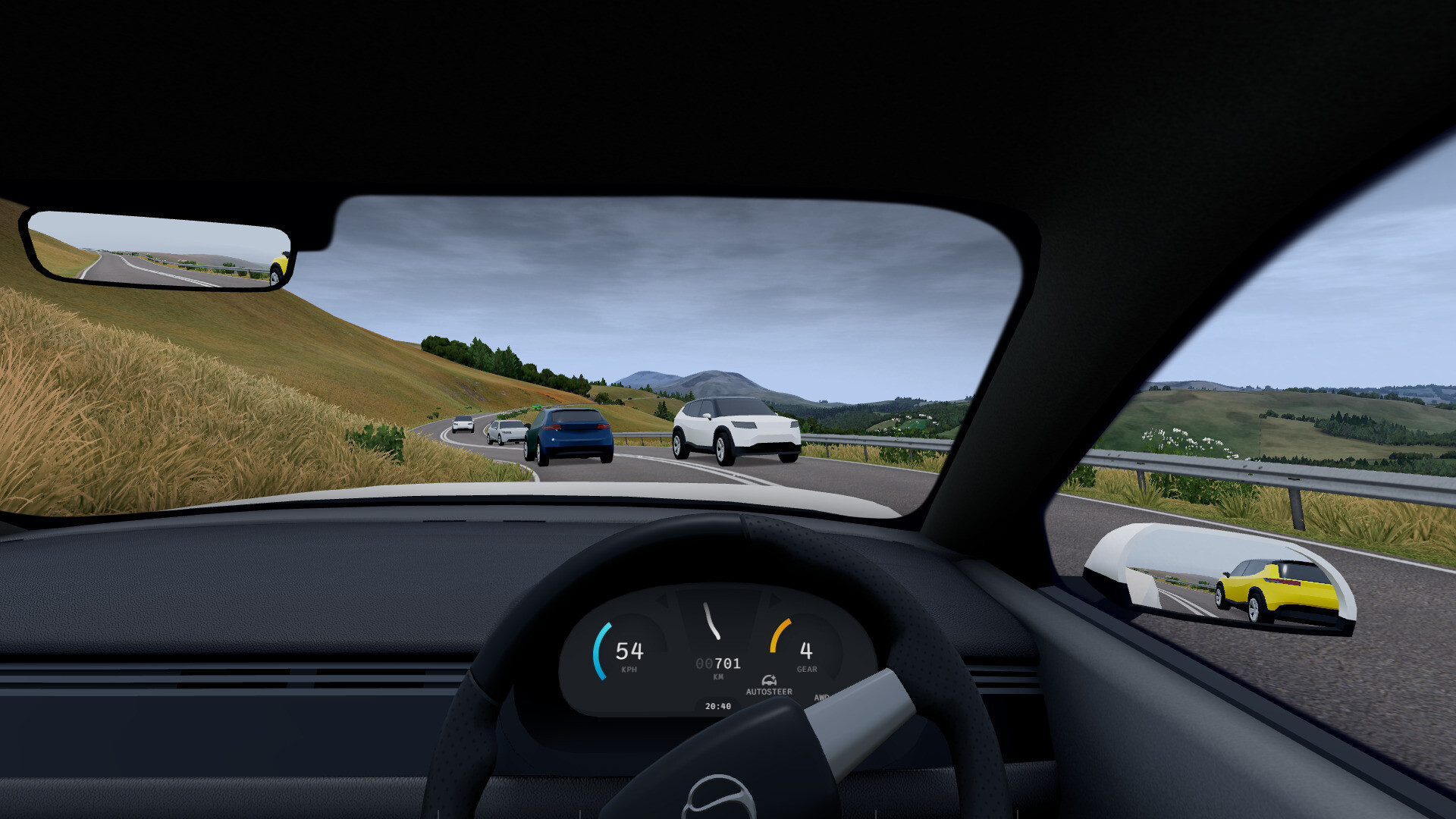
Procedural generation is doing more here than extending the map.
The roads are generated organically alongside the surrounding landscape. Different seeds can produce different routes, while particularly good roads can be revisited later using their seed.
You can choose anything from casual roads to narrow, winding routes or off-road trails. Then the environment layer changes the character of the trip again.
A road through the Peak District in the snow does not create the same mood as the California coast at sunset. Slow Roads even includes an Off-World environment for anyone who decides ordinary Earth has failed to provide sufficient distance from their inbox.
The important limitation is equally deliberate. This is not BeamNG.drive. The lightweight engine is built around continuously generating scenery, not elaborate crash simulation or stunt physics.
You can drive absurdly fast if you want, but the game is telling you what it is right there in the title.
Driving sim or digital screensaver?
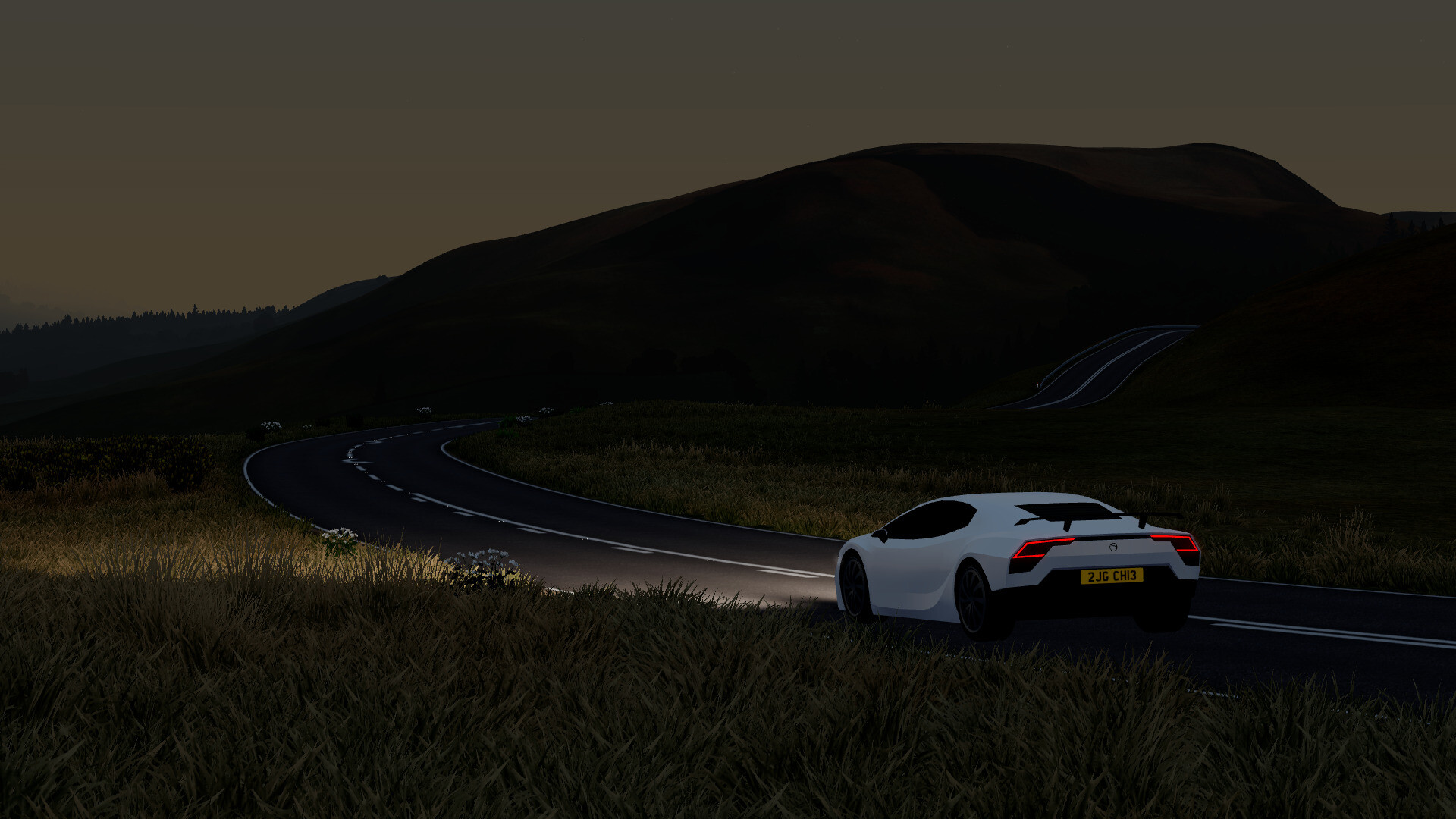
Both, depending on how much effort you want to put in.
Slow Roads offers steering assistance, configurable cameras, controller and wheel support, and cockpit driving for players who want something more involved.
At the other end of the spectrum, you can automate steering, speed, or the entire drive.
That means the experience can range from actually managing corners with a wheel to sitting back and watching a car carry you through an infinite countryside.
This is also what separates it from more structured relaxing driving games. Euro Truck Simulator 2 has deliveries, money, progression, and a transport business. Forza Horizon surrounds beautiful roads with races and activities. SnowRunner turns the road itself into an enemy.
Slow Roads is what remains when most of those systems disappear.
Planning to pick up Slow Roads on Steam?
You can also browse Steam gift card options on G2A.COM and add funds to a compatible Steam wallet.
G2A Plus
G2A Plus members earn Plus Points on eligible purchases that can be used to pay less on future orders. Premium also includes member pricing, bonus discounts of up to 10% on up to 10 eligible items each month, regular rewards, and priority post-purchase assistance.
Who should play Slow Roads?
Slow Roads is for people who sometimes open a driving game and then ignore the actual game.
If you have ever taken the long route in a racing game because the scenery looked nice, driven around GTA without doing a mission, listened to a podcast while hauling freight in Euro Truck Simulator, or used a game as background activity while music played, the appeal should be obvious.
Players looking for a campaign, traditional progression, collisions, competition, or detailed vehicle damage should look elsewhere. Slow Roads strips those incentives away on purpose.
For everyone else, the lack of a destination might be precisely the destination.
More relaxing games on G2A News
- 15 Best Cozy Games to Unwind – more games built around low-pressure routines and relaxation.
- 10 Best Simulator Games to Play Right Now – for more games that turn everyday activities into entire genres.
- Relaxing Games to Escape the Stress – more options when winning can wait.
The road goes on because that is the point
Slow Roads is an interesting reminder that removing mechanics can sometimes create a clearer game rather than a smaller one.
No championship. No final boss. No delivery deadline. No finish line waiting in the distance.
Just another corner.
And apparently, more than a million people already discovered that sometimes another corner is enough.