





It is the combination of a connected fantasy world, memorable dungeons, puzzle-solving, new tools that change what Link can reach, real-time combat, secrets, bosses, and a carefully directed adventure.
If that is the experience you want again, The Legend of Zelda: Skyward Sword HD is the closest overall match. Link’s Awakening is even stronger if classic dungeon-and-item progression matters more than perspective, while TUNIC is our best non-Zelda recommendation for players who miss Ocarina’s secrets, discovery, and sense that the world itself is one enormous puzzle.
This is not a general list of fantasy adventures. We scored every game against six specific parts of Ocarina of Time’s design, then looked at where each recommendation genuinely matches and where it does not.
Table of Contents
- What makes a game like Ocarina of Time?
- Closest Ocarina of Time alternatives ranked
- Pick based on what you loved most
- Skyward Sword HD
- Link’s Awakening
- TUNIC
- Darksiders Warmastered Edition
- Darksiders II: Deathinitive Edition
- Echoes of Wisdom
- Tears of the Kingdom
- Immortals Fenyx Rising
- Which game is closest?
- FAQ
What makes a game like Ocarina of Time?
Calling something a “Zelda-like” is easy. Actually matching Ocarina of Time is harder.
For this comparison, we broke the game down into six pieces of DNA:
- Dungeon progression: substantial designed spaces with puzzles, enemies, bosses, and a clear sense of progression.
- Puzzles and tools: obtaining items or abilities that change how you solve problems and access the world.
- Exploration and secrets: rewarding curiosity, backtracking, and poking suspicious corners of the map.
- Real-time combat: direct action combat in which enemies and bosses matter rather than existing as background obstacles.
- Fantasy adventure and story: a distinct world, characters, mythology, and a sense of an actual journey.
- Classic Zelda structure: the deliberate world → dungeon → new ability → expanded world rhythm that shaped older 3D Zelda games.
Each game receives 0-5 points in every category. All six criteria are weighted equally. The Match Score is the percentage of available points earned.
How we assessed this: This list is research-based, using official game information, current platform and marketplace checks, and editorial comparison against Ocarina of Time’s core design.
Closest Ocarina of Time alternatives ranked
| Game | Dungeons | Puzzles | Explore | Combat | Fantasy | Structure | Match |
|---|---|---|---|---|---|---|---|
| Skyward Sword HD | 5 | 5 | 4 | 5 | 5 | 5 | 97% |
| Link’s Awakening | 5 | 5 | 4 | 4 | 4 | 5 | 90% |
| TUNIC | 4 | 5 | 5 | 4 | 4 | 4 | 87% |
| Darksiders Warmastered | 5 | 4 | 3 | 5 | 4 | 4 | 83% |
| Darksiders II | 4 | 4 | 4 | 5 | 4 | 4 | 83% |
| Echoes of Wisdom | 4 | 5 | 4 | 3 | 4 | 4 | 80% |
| Tears of the Kingdom | 2 | 5 | 5 | 5 | 5 | 2 | 80% |
| Immortals Fenyx Rising | 2 | 4 | 5 | 5 | 4 | 2 | 73% |
Pick based on what you loved most about Ocarina of Time
1. The Legend of Zelda: Skyward Sword HD – 97% match
Why it matches: If Ocarina’s rhythm of exploring an area, entering a themed dungeon, solving puzzles, obtaining a new tool, and eventually facing a boss is what you want back, Skyward Sword HD is the obvious first stop.

Its surface areas are more deliberately designed than the huge open spaces of modern Zelda, and progression remains tightly connected to Link’s expanding toolkit. Dungeons are substantial authored adventures rather than one activity among dozens scattered around the map.
Biggest difference: Skyward Sword is noticeably more linear, and its directional sword combat gives fighting a different rhythm.
Best for: players who remember Forest Temple, Fire Temple, and Water Temple as the heart of Ocarina.
Skip if: your favorite part was simply riding Epona across a large connected Hyrule and choosing where to wander next.
Match Score: 97% – the strongest overall overlap in dungeons, puzzles, combat, story, and traditional Zelda progression.

2. The Legend of Zelda: Link’s Awakening – 90% match
Do not let the top-down camera fool you. Structurally, Link’s Awakening is closer to Ocarina of Time than plenty of modern third-person adventures.

You explore Koholint Island, collect new tools, reach areas that previously looked impossible to access, clear distinct dungeons, and hunt for magical instruments needed to complete Link’s larger quest.
Biggest difference: perspective. It feels much closer to Zelda’s 2D roots than Ocarina’s cinematic 3D world.
Best for: players who care more about item progression, compact world design, and dungeon puzzles than camera perspective.
Skip if: you specifically want another large third-person Hyrule-style adventure.
Match Score: 90% – less visually similar than Skyward Sword, but exceptionally close in progression philosophy.

3. TUNIC – 87% match
TUNIC is where this list becomes more interesting.
On the surface, it is an isometric action game starring a tiny fox. Underneath that, it understands one of Ocarina of Time’s best tricks: making the player feel as though knowledge itself is progression.
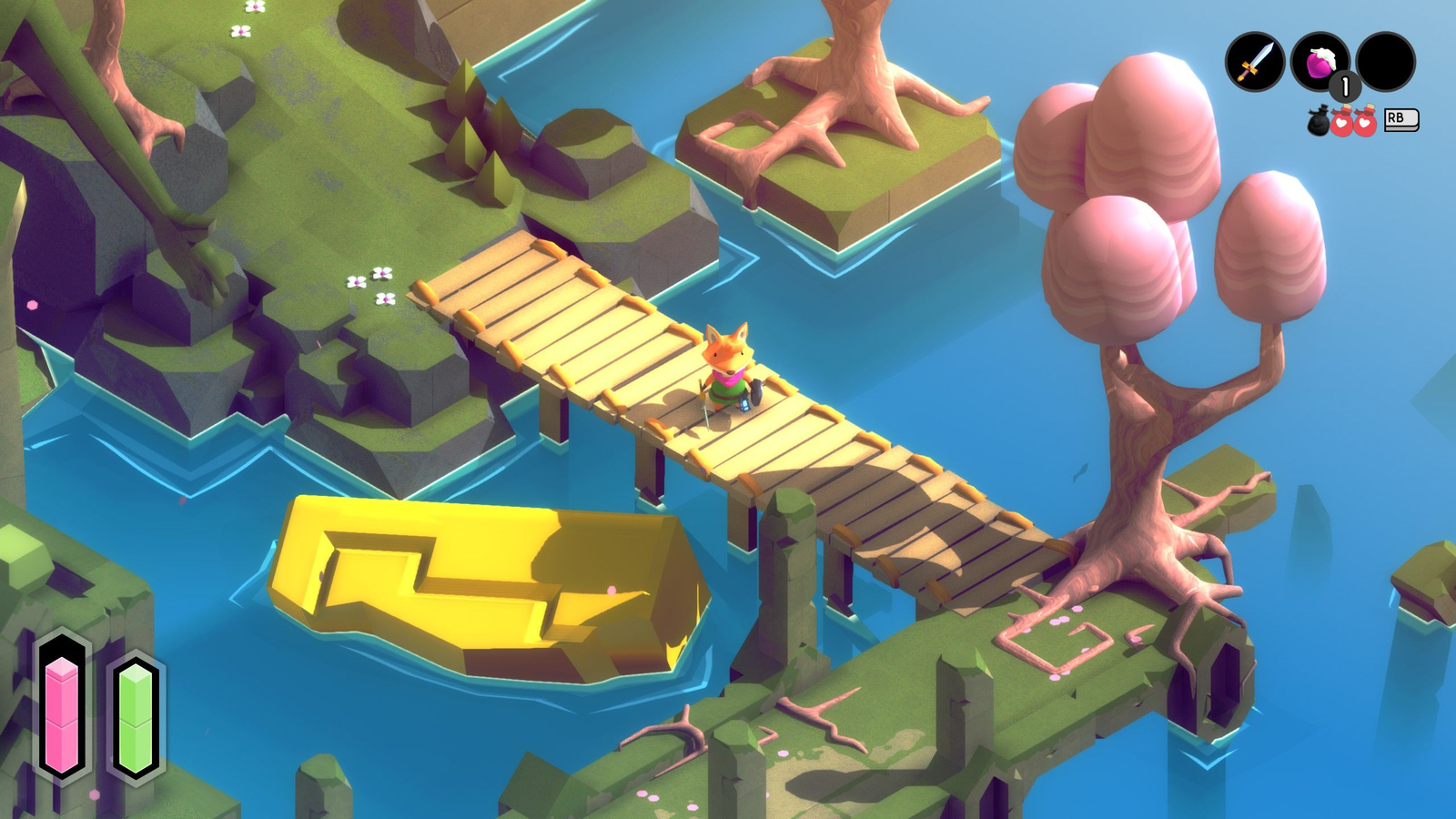
Exploration is full of shortcuts, hidden connections, strange symbols, puzzles, and secrets that may sit directly in front of you long before you understand what they mean.
There are dungeons and bosses, but the strongest similarity is psychological. TUNIC wants you to look at its world, remember details, and eventually realize that something you ignored hours ago mattered all along.
Biggest difference: tougher combat and a much more cryptic approach to storytelling and instruction.
Best for: anyone whose favorite Ocarina memories involve rumors, hidden grottos, strange clues, and learning how Hyrule works.
Skip if: you want Nintendo-style storytelling with clearly introduced characters and objectives.
Match Score: 87% – our strongest recommendation outside the Zelda franchise.

4. Darksiders Warmastered Edition – 83% match
There is a good reason the original Darksiders has spent years getting compared with Zelda.
War moves through connected areas, enters large dungeons, solves environmental puzzles, earns abilities and gear that open new possibilities, fights bosses, and repeatedly returns to places that make more sense once his toolkit expands.

The presentation could hardly be more different. Nintendo’s colorful fantasy kingdom becomes a ruined Earth caught between Heaven and Hell, and Link’s clean swordplay is replaced by much heavier action.
Biggest difference: darker tone, more aggressive combat, and much less of Ocarina’s fairy-tale warmth.
Best for: players who want Zelda-style dungeons but wish Link hit things like a truck.
Skip if: atmosphere and the whimsical side of Hyrule are essential to the experience for you.
Match Score: 83% – one of the clearest non-Nintendo examples of classic Zelda dungeon structure translated into a heavier action game.

5. Darksiders II: Deathinitive Edition – 83% match
Darksiders II keeps much of that Zelda-like skeleton and starts attaching action-RPG systems to it.

Death explores larger spaces than War, enters elaborate dungeons, climbs through environmental puzzles, fights bosses, and progressively expands what he can do. On top of that comes loot, equipment stats, skill choices, and a stronger RPG progression layer.
Biggest difference: loot and character builds matter far more than they ever do in Ocarina of Time.
Best for: players who want dungeon-based Zelda structure with an action-RPG progression loop.
Skip if: gear scores, loot drops, and build decisions sound like clutter rather than added depth.
Match Score: 83% – tied with the first Darksiders overall, but leaning more toward RPG progression and larger exploration spaces.

6. The Legend of Zelda: Echoes of Wisdom – 80% match
Echoes of Wisdom looks closer to Link’s Awakening than Ocarina of Time, but its relationship with the classic formula is fascinating.

Nintendo puts Princess Zelda in the lead and makes the Tri Rod’s Echo system central to both puzzles and combat. Zelda can reproduce objects and monsters she encounters, then combine them in ways the game may not explicitly demand.
That preserves the Zelda tradition of looking at an obstacle and asking, “Which tool solves this?”, but loosens the answer.
Biggest difference: Echoes replace much of Ocarina’s traditional fixed-item problem solving, and Zelda approaches combat very differently from Link.
Best for: people who loved solving puzzles more than swinging the Master Sword.
Skip if: traditional sword combat and strict item progression are the two things you most want preserved.
Match Score: 80% – unmistakably Zelda, but much more interested in creative solutions than Ocarina’s tightly authored item puzzles.

7. The Legend of Zelda: Tears of the Kingdom – 80% match
It sounds strange to rank one of Nintendo’s biggest Zelda games this low in an article about games like Zelda.
That is exactly why the methodology matters.

Tears of the Kingdom shares Hyrule, Link, exploration, fantasy, combat, puzzle-solving, familiar creatures, and much of the Zelda mythology. Structurally, though, it is almost the opposite of Ocarina.
Ocarina frequently asks, “Do you have the correct tool yet?” Tears asks, “What ridiculous solution can you invent with the tools already available?”
Its enormous sandbox gives players far more agency, but the cost is that the old dungeon → item → newly accessible world rhythm is no longer the backbone of the adventure.
Biggest difference: systemic sandbox freedom replaces much of the rigid progression that defined Ocarina.
Best for: players whose strongest Ocarina memory is the feeling of leaving Kokiri Forest and discovering that Hyrule suddenly existed around them.
Skip if: what you really want is Forest Temple → Fire Temple → Water Temple-style progression.
Match Score: 80% – extremely Zelda, surprisingly different from Ocarina.

8. Immortals Fenyx Rising – 73% match
Immortals Fenyx Rising is the broadest match on the list, but it earns its place for players who want exploration, fantasy combat, and puzzles without staying inside Nintendo’s ecosystem.

Its world is filled with traversal challenges, environmental puzzles, combat encounters, and mythological locations. There is plenty of that Zelda-like satisfaction of seeing something strange in the distance and deciding to investigate it.
The important caveat is that its structural inspiration sits much closer to modern open-world Zelda than Ocarina itself.
Biggest difference: open-world activity design takes priority over large traditional Zelda dungeons.
Best for: players who mainly want exploration, puzzles, and colorful fantasy action.
Skip if: “games like Ocarina of Time” means “give me another Water Temple.”
Match Score: 73% – a useful alternative for the exploration-and-puzzles crowd, but the least similar game here structurally.

Get more from G2A Plus
G2A Plus Free lets members earn Plus Points on purchases, while Premium adds lower member prices on eligible offers, additional rewards, and priority post-purchase support.
Which game is closest to Ocarina of Time?
Skyward Sword HD is the closest overall match.
It is the one recommendation here where almost every major part of the Ocarina formula survives at once: third-person Zelda combat, a directed fantasy story, major puzzle-heavy dungeons, boss encounters, equipment-based progression, and areas designed around Link’s growing abilities.

If perspective does not matter, Link’s Awakening is arguably an even purer example of classic Zelda progression.
If you specifically want something outside Nintendo, start with TUNIC. It understands the pleasure of discovery better than almost anything else on this list, even if it arrives there through secrets and player knowledge rather than Ocarina’s traditional item progression.
And if Hyrule itself was the thing you fell in love with, go straight to Tears of the Kingdom. Just do not expect it to behave like Ocarina. Modern Zelda wants you to break the puzzle. Classic Zelda wanted you to find its intended key.
More Zelda and adventure games on G2A News
- The Legend of Zelda: Ocarina of Time Remake Announced for Nintendo Switch 2 – catch up with Nintendo’s return to the classic.
- Games Like The Legend of Zelda: Breath of the Wild – if the modern open-world side of Zelda is more your thing.
- Games Like TUNIC – more secret-heavy action adventures and puzzle-driven exploration.
- Nintendo Direct June 2026 Recap – Ocarina of Time and the other major Switch 2 announcements.
Games Like Ocarina of Time FAQ
What is the closest game to Zelda: Ocarina of Time?
The Legend of Zelda: Skyward Sword HD is our closest overall match because it combines traditional 3D Zelda combat with puzzle-heavy dungeons, item progression, boss fights, and a strongly directed fantasy adventure.
What is the best non-Zelda game like Ocarina of Time?
TUNIC is our top non-Zelda choice. It differs in perspective and difficulty, but its secrets, puzzles, exploration, and knowledge-based progression capture the feeling of discovering how a mysterious world works.
Are Breath of the Wild and Tears of the Kingdom really like Ocarina of Time?
In theme and exploration, absolutely. Structurally, much less so. Ocarina is built around deliberate progression through dungeons and new items, while modern Zelda gives players much more freedom to approach the world and its problems in almost any order.
Should I play Skyward Sword HD or Link’s Awakening after Ocarina of Time?
Choose Skyward Sword HD if you want another third-person 3D Zelda with elaborate dungeons and sword combat. Choose Link’s Awakening if you care more about old-school item progression and compact dungeon design than perspective.
Classic Zelda never really disappeared
Ocarina of Time belongs to a particular branch of action-adventure design that modern games do not always follow anymore.
It wants a world big enough to feel mysterious, but controlled enough for every new item to change your understanding of it. It wants dungeons to be events rather than markers on a checklist. It wants the player to remember a strange obstacle, leave it alone, then return hours later holding exactly the tool needed to make everything click.
Skyward Sword HD preserves that structure most directly. Link’s Awakening proves it works from another perspective. TUNIC rebuilds the feeling around knowledge and secrets. Darksiders turns it into heavier action. And modern Zelda shows what happens when Nintendo decides to hand the keys to Hyrule over to the player.
Different answers, same basic itch: see something mysterious, figure out what it wants from you, and discover what is waiting on the other side.