




You do not need a gaming GPU to find games worth losing an entire weekend to. Some of the best PC games available in 2026 still run on integrated graphics, decade-old hardware or systems with only a few gigabytes of RAM.
Stardew Valley is our best low-end PC game overall because it combines extremely modest hardware requirements with progression, exploration, farming, relationships and multiplayer that can last hundreds of hours.
Balatro is even easier to run and is our best choice for seriously weak PCs, while Terraria offers the strongest sandbox experience. ANIMAL WELL is the standout newer pick if you want something modern that still officially supports integrated graphics.
Quick picks: choose Stardew Valley for the best overall package, Balatro for the weakest hardware, Terraria for sandbox progression, ANIMAL WELL for exploration, Vampire Survivors for quick action, Into the Breach for strategy and RimWorld for long-form management.
Updated: November 16, 2026.
What changed: the previous ranking was rebuilt from scratch. We added modern low-spec standouts including Balatro, ANIMAL WELL, Vampire Survivors, Brotato, Shogun Showdown and Dome Keeper, removed weaker legacy recommendations, re-ranked every entry and rechecked current PC requirements and marketplace availability.
Research basis: official Steam requirements, current publisher information, current game status and editorial comparison. Minimum specifications are a compatibility baseline, not a guarantee of a specific frame rate.
Best low-end PC games: category winners
- Best overall: Stardew Valley
- Best for extremely weak PCs: Balatro
- Best sandbox: Terraria
- Best modern low-spec game: ANIMAL WELL
- Best quick-session game: Vampire Survivors
- Best deckbuilder: Slay the Spire
- Best strategy game: Into the Breach
- Best management game: RimWorld
Table of Contents
How we ranked the best low-end PC games
For this list, “best” does not simply mean oldest or least graphically impressive. The ranking rewards four things: genuinely low hardware requirements, game quality, replay value and how useful the recommendation is to somebody using an old laptop, integrated graphics or an entry-level desktop.
Games with official integrated-GPU support rank especially well. We also gave extra weight to titles that remain appealing in 2026 instead of surviving only as historical curiosities. That is why a modern game like Balatro can rank ahead of something considerably older even though both are extremely lightweight.
Hardware accessibility: official RAM, GPU, CPU and API requirements matter most.
Quality and replay value: low requirements alone are not enough.
Variety: the list includes RPGs, roguelikes, strategy, management, action, sandbox and narrative games.
Current usefulness: every recommendation should still make sense to install today.
The 15 best low-end PC games compared
| Rank | Game | RAM | Graphics baseline | Best for |
|---|---|---|---|---|
| 1 | Stardew Valley | 2 GB | 256 MB VRAM, Shader Model 3.0+ | Long-term progression |
| 2 | Balatro | 1 GB | Integrated graphics, OpenGL 2.1 | Very weak PCs |
| 3 | Terraria | 2.5 GB | 128 MB VRAM, Shader Model 2.0+ | Sandbox progression |
| 4 | ANIMAL WELL | 1 GB | Integrated graphics | Exploration and secrets |
| 5 | Vampire Survivors | 1 GB | DX11/DX12 capable | Fast action runs |
| 6 | Slay the Spire | 2 GB | 1 GB VRAM, OpenGL 3.0+ | Deckbuilding |
| 7 | Into the Breach | 1 GB | Intel HD 3000+ | Turn-based strategy |
| 8 | Brotato | 4 GB | 128 MB, OpenGL 3+ | Short roguelite runs |
| 9 | RimWorld | 4 GB | Intel HD 4000+ | Colony management |
| 10 | Katana ZERO | 1 GB | GeForce 7600 GT | Fast action |
| 11 | Shogun Showdown | 1 GB | Intel HD 3000+ | Tactical roguelikes |
| 12 | Dome Keeper | 2 GB | OpenGL 3.3 | Mining and defense |
| 13 | Papers, Please | 2 GB | OpenGL 1.4+ | Narrative decisions |
| 14 | FTL: Faster Than Light | 1 GB | OpenGL 2.0, 128 MB dedicated recommended | Space strategy |
| 15 | Hotline Miami | 512 MB | 32 MB DirectX 8 compatible | Arcade action |
G2A Plus: both Free and Premium members can earn Plus Points on eligible purchases. Plus Premium also includes member prices with discounts of up to 10% on as many as 10 eligible items per month, a free game every month and priority post-purchase help.
Our top 5 low-end PC games
1. Stardew Valley: best low-end PC game overall
Stardew Valley takes first place because very few games offer this much on hardware this modest. Its official PC requirements ask for 2 GB of RAM, a 2 GHz processor and just 256 MB of video memory.

The important part is what you get for that tiny hardware footprint. Farming is only one layer. There is mining, combat, fishing, relationships, festivals, long-term upgrades and multiplayer. It can work as a relaxed game for twenty-minute sessions or become the only thing you play for months.
Why it ranks #1: the strongest combination of tiny requirements, depth and long-term replay value.
Main weakness: the early pace is deliberately slow.
Best for: players who want one lightweight game that can last hundreds of hours.

2. Balatro: best for extremely weak PCs
Balatro is the game to install when your laptop starts sweating at the sight of a modern 3D menu. The official minimum lists only 1 GB of RAM, an Intel Core i3 and integrated graphics with OpenGL 2.1 support.
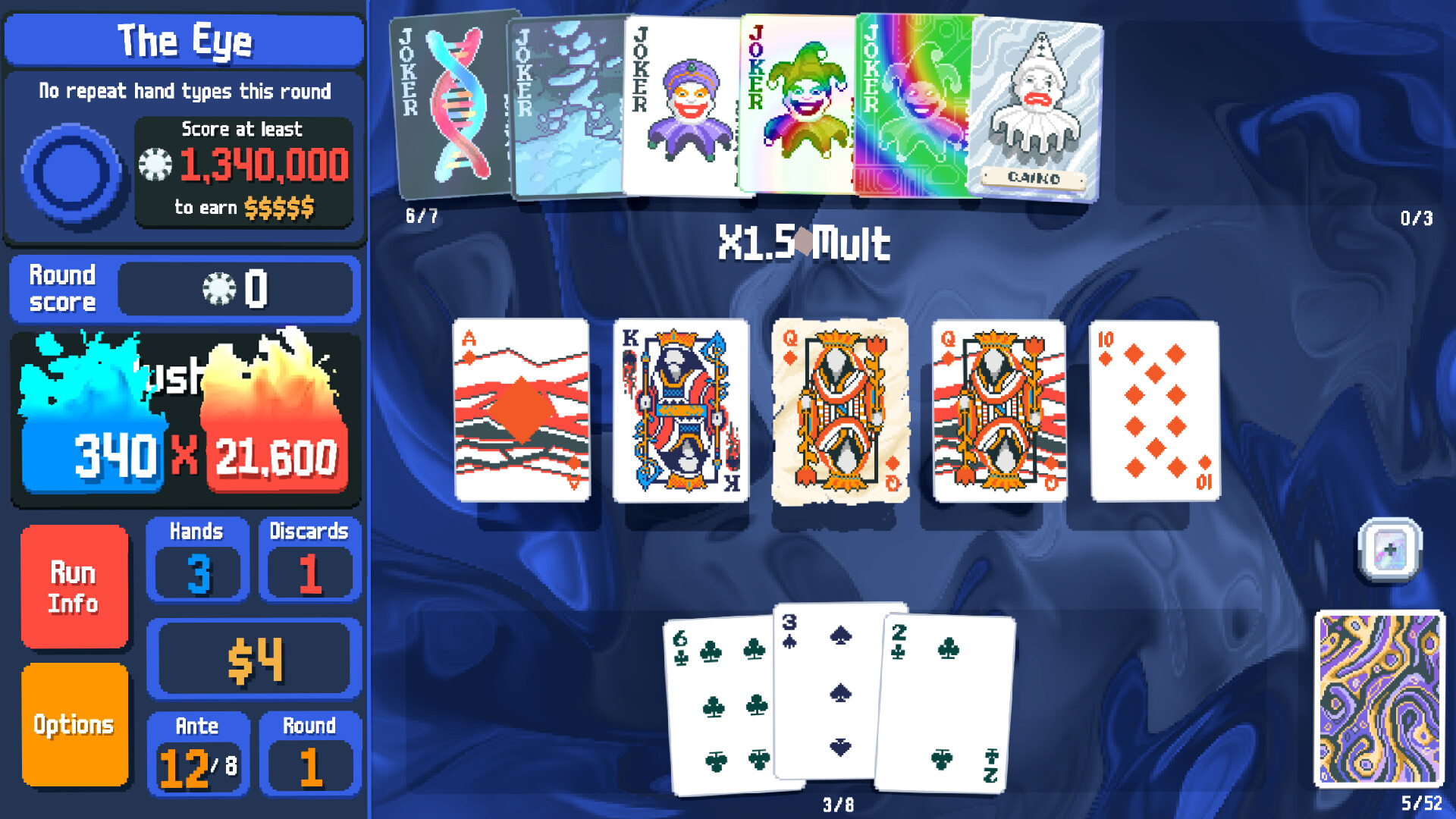
Its poker-inspired deckbuilding looks simple until Jokers, multipliers, deck manipulation and increasingly broken synergies start interacting. Runs are short enough for a commute but unpredictable enough to keep restarting immediately.
Why it ranks #2: one of the best modern games with explicit integrated-graphics support.
Why not #1: it is much narrower in scope than Stardew Valley.
Best for: old laptops, short sessions and anyone who loves finding ridiculous builds.

3. Terraria: best low-end sandbox
Terraria proves that low-spec does not have to mean small. Its official Windows minimum remains remarkably light, while the game itself contains crafting, bosses, exploration, classes, building and an enormous progression curve.

The biggest difference from Stardew Valley is momentum. Terraria becomes much more combat- and exploration-driven once its systems open up, and defeating bosses fundamentally changes the world around you.
Why it ranks #3: enormous sandbox depth with hardware requirements from another era.
Main weakness: new players may need a wiki more often than they expect.
Best for: exploration, crafting and boss-driven progression.

4. ANIMAL WELL: best modern low-spec adventure
ANIMAL WELL is the best proof on this list that “low-end game” does not have to mean something released ten years ago. Its official minimum asks for 1 GB of RAM, a 1 GHz processor and integrated graphics.

It uses that tiny technical footprint to build a dense puzzle-box world packed with secrets, strange creatures and tools that often have several completely different uses. The main path is accessible, but the deeper layers are designed for players who enjoy noticing suspicious details and pulling at them until the game reveals something new.

Core strength: modern design and atmosphere on integrated graphics.
Main weakness: players who want constant combat may find it too puzzle-focused.
Best for: exploration, secrets and nonlinear puzzle solving.
5. Vampire Survivors: best for quick action
Vampire Survivors asks for only 1 GB of RAM and a DX11- or DX12-capable graphics solution. That does not sound like much because technically it is not. What matters is how efficiently the game converts those requirements into increasingly ridiculous action.

You mostly move and choose upgrades. The weapons handle themselves. The fun comes from stacking evolutions and bonuses until your character becomes the center of an automated storm of projectiles.
Core strength: instant action and excellent replay value.
Main weakness: extremely busy late-game runs can be the hardest moments for truly ancient hardware.
Best for: quick runs, simple controls and explosive build progression.

Ranks 6-10
6. Slay the Spire: best low-end deckbuilder
Slay the Spire remains one of the best deckbuilding games because almost every decision affects the run. Each character begins with a different card pool, while relics, route choices, upgrades and events slowly push the deck toward something coherent or completely doomed.
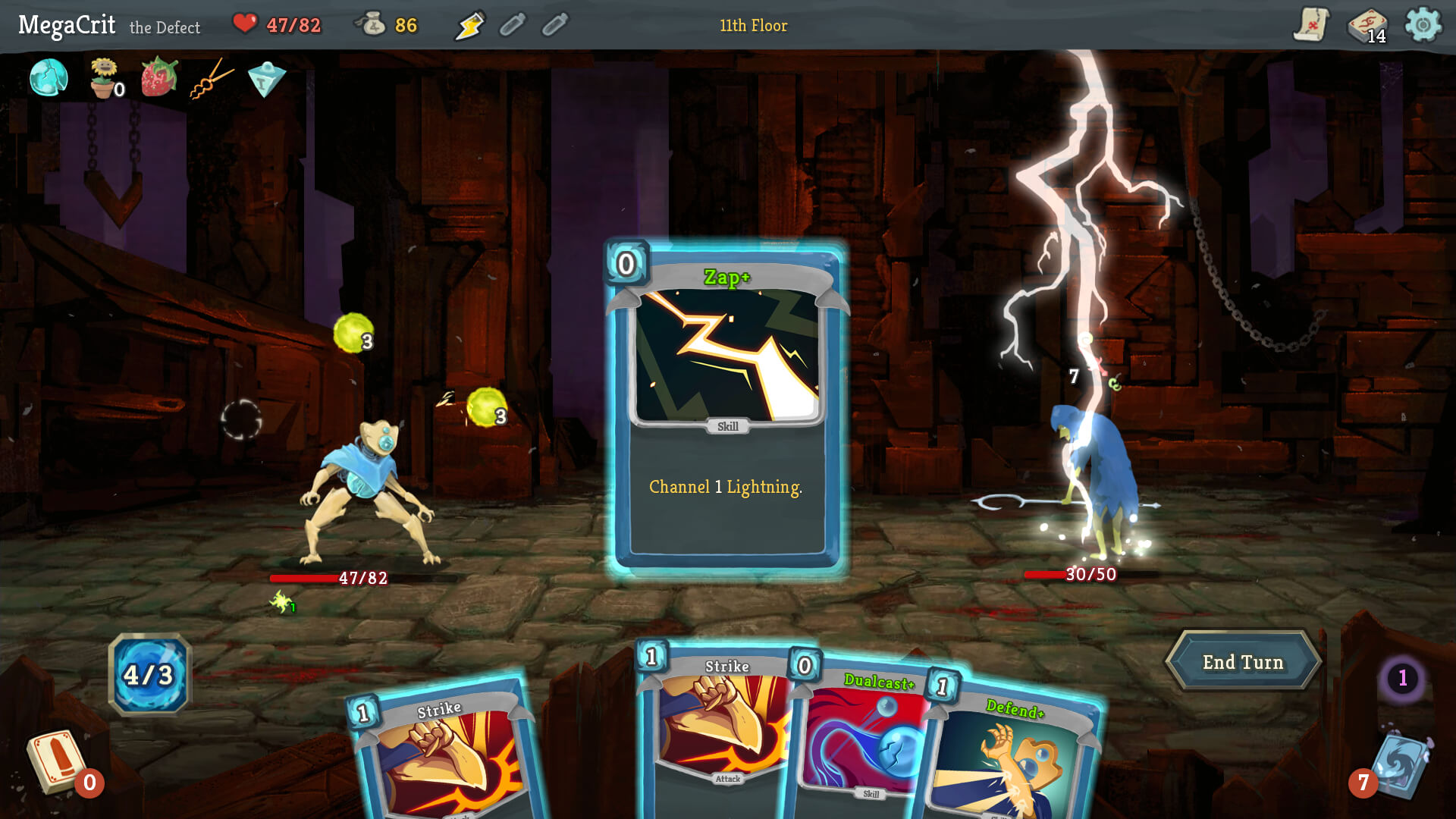
Its 2 GB RAM minimum is easy to meet, although its 1 GB video-memory requirement makes it slightly less forgiving than Balatro on truly weak integrated graphics.
Core strength: strategic depth and huge replay value.
Main weakness: less hardware-friendly than Balatro.
Best for: players who would rather think than react.

7. Into the Breach: best low-end strategy game
Into the Breach officially supports Intel HD 3000 graphics and needs only 1 GB of RAM. More importantly, its tiny battlefields contain more meaningful decisions than many games ten times its size.
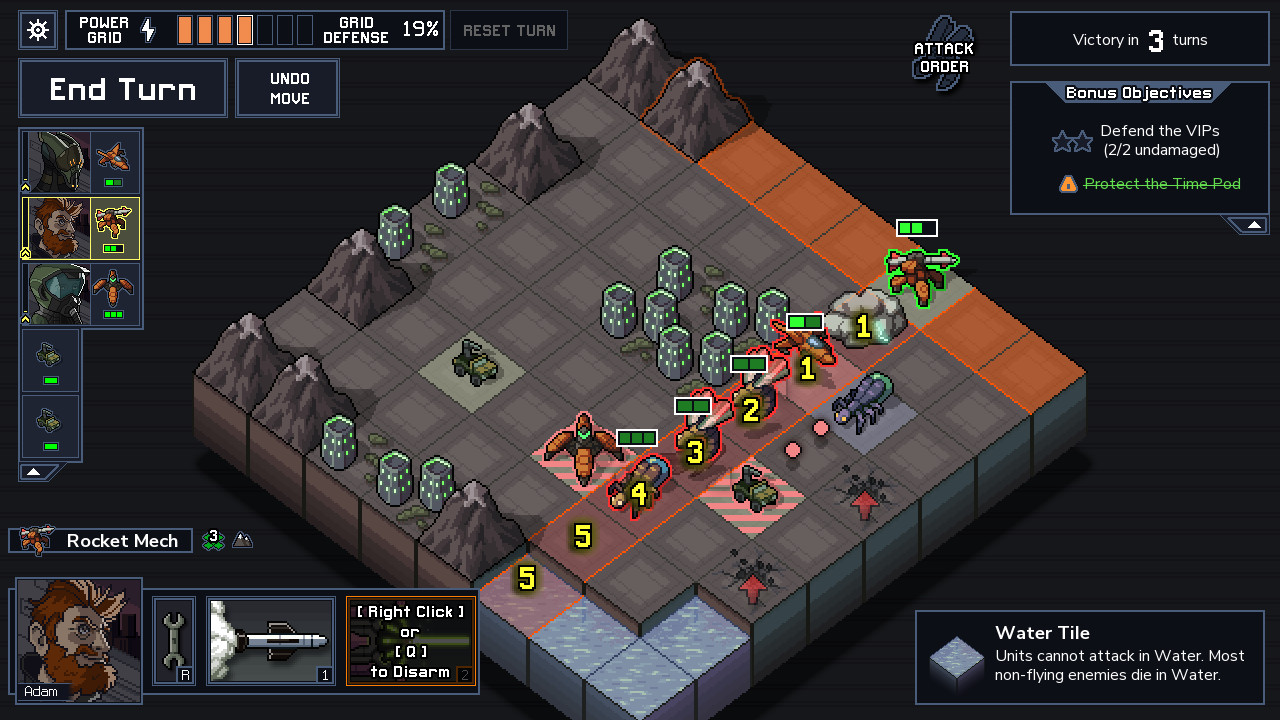
Enemy attacks are telegraphed before they happen. That transforms each turn into a tactical puzzle where pushing one enemy a single tile can save a building, block another attack and set up the next move at the same time.
Core strength: superb tactical clarity on officially supported old integrated graphics.
Main weakness: battles feel more like puzzles than traditional large-scale strategy.
Best for: turn-based tactics on very modest laptops.

8. Brotato: best lightweight wave-survival roguelite
Brotato takes the automated-action idea and makes the buildcraft more immediate. A run is built around short waves, fast shopping decisions and a character who can somehow carry six weapons while remaining recognizably potato-shaped.

It needs 4 GB of RAM, which keeps it below Vampire Survivors in this ranking, but its graphics requirement is still extremely light at 128 MB with OpenGL 3 support.

Core strength: quick runs and a huge number of build combinations.
Main weakness: higher RAM requirement than the lighter action picks above.
Best for: players who enjoy tuning stats between very short combat waves.
9. RimWorld: best low-end management game
RimWorld officially starts at Intel HD 4000 graphics and 4 GB of RAM, making it remarkably approachable for a colony simulator with this much happening under the surface.
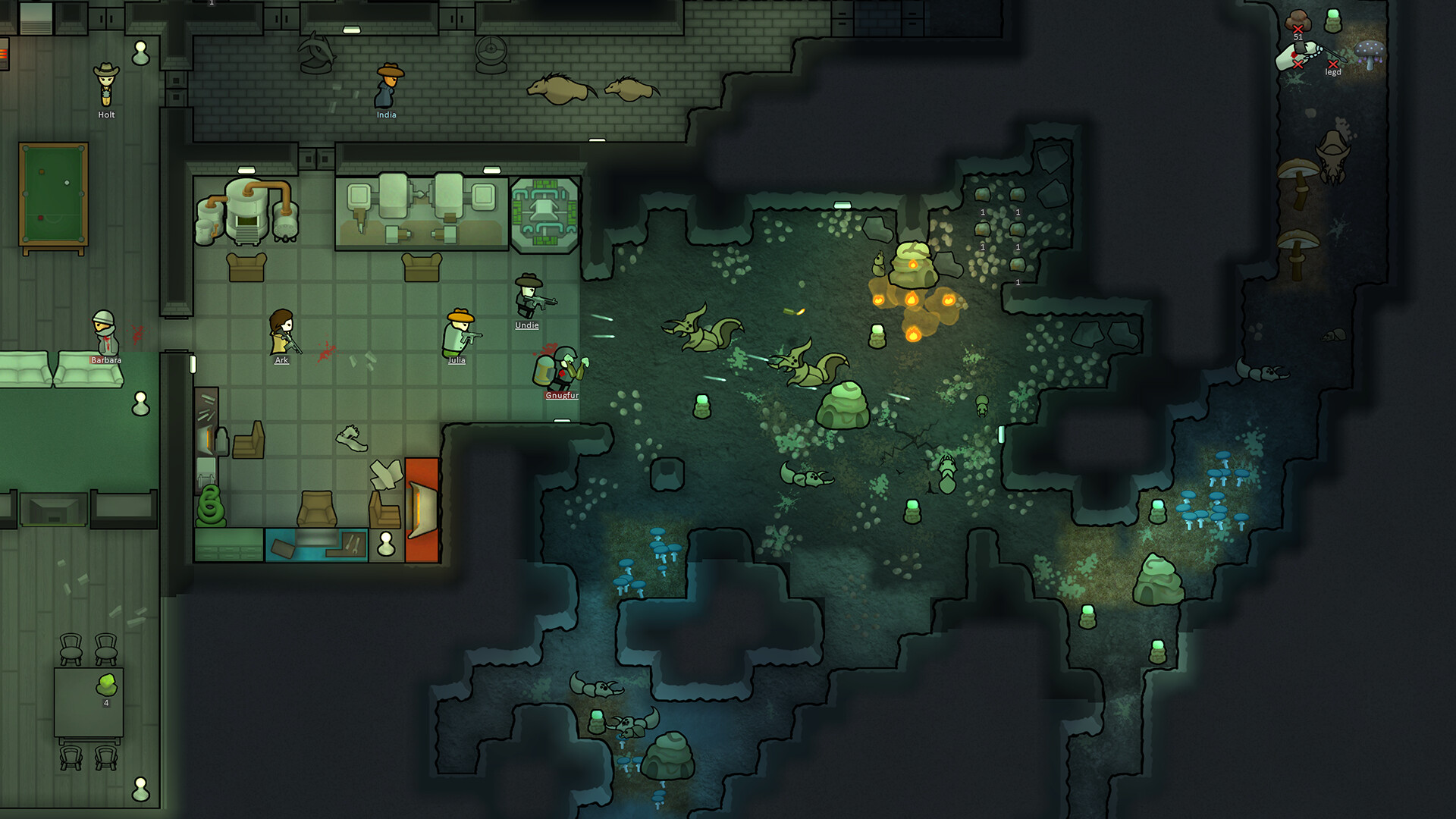
The draw is not constructing the perfect base. It is watching the base become a story generator. Colonists fall in love, start fights, lose limbs, tame animals, panic during raids and occasionally set something important on fire at the worst possible moment.

Core strength: extraordinary emergent storytelling.
Main weakness: huge colonies and heavy mod lists can become CPU-intensive.
Best for: players who want a low-spec game capable of becoming a thousand-hour hobby.
10. Katana ZERO: best fast-paced action pick
Katana ZERO turns one-hit deaths into momentum instead of frustration. Levels are short, restarts are nearly instant and success comes from turning each room into a carefully rehearsed burst of violence.

Its minimum asks for 1 GB of RAM and a GeForce 7600 GT-class GPU. That makes it a strong option for old desktops, although laptops with very old integrated graphics deserve a compatibility check first.

Core strength: speed, precision and immediate restarts.
Main weakness: its GPU baseline is less integrated-graphics-friendly than ANIMAL WELL or Into the Breach.
Best for: action players who want something lightweight but intense.
Ranks 11-15
11. Shogun Showdown: best tactical roguelike
Shogun Showdown is a newer game that behaves like it was designed specifically for old laptops. It officially supports Intel HD 3000 graphics and requires only 1 GB of RAM.

Combat is turn-based, but positioning and sequencing are everything. You upgrade attack tiles, build combos and manipulate a tiny battlefield until several actions resolve in one satisfying chain.

Core strength: modern tactical design on Intel HD 3000-class hardware.
Main weakness: deliberately small-scale compared with traditional strategy games.
Best for: Into the Breach fans who want more roguelike progression.
12. Dome Keeper: best mix of mining and base defense
Dome Keeper splits each run between digging underground for resources and sprinting back to defend your dome from attacking monsters.

Its official minimum asks for 2 GB of RAM, a 2.5 GHz processor and OpenGL 3.3 support. That is slightly more demanding than the ultra-light entries, but still modest enough for many older systems.

Core strength: satisfying tension between exploration, upgrades and defense.
Main weakness: OpenGL 3.3 support can exclude some truly ancient GPUs.
Best for: players who like resource loops with constant pressure.
13. Papers, Please: best narrative game for weak PCs
Papers, Please reduces its entire premise to a border-control booth and somehow turns checking documents into one of PC gaming’s most memorable moral pressure cookers.

The minimum asks for 2 GB of RAM, a 1.5 GHz Core 2 Duo and OpenGL 1.4. Your real hardware requirement is probably the ability to keep several dates, seals and contradictory stories in your head at once.

Core strength: narrative decisions emerge naturally from repetitive work.
Main weakness: the intentionally bureaucratic core loop will not appeal to everyone.
Best for: story-focused players using very modest hardware.
14. FTL: Faster Than Light: best low-spec space strategy game
FTL turns a small spaceship into an endless sequence of terrible decisions. Do you fight? Run? Spend scrap on shields? Repair oxygen? Send the mantis into the burning room? None of these decisions feel dramatic until several systems fail at once.

The official minimum lists only 1 GB of RAM and OpenGL 2.0 support. The one caveat is graphics compatibility: its Steam page recommends a dedicated card with 128 MB of memory and notes that some Intel HD chips work without being officially supported.

Core strength: deep strategy and emergent storytelling in a tiny package.
Main weakness: integrated Intel graphics are not universally guaranteed.
Best for: strategy players who enjoy permanent consequences.
15. Hotline Miami: best arcade action classic
Hotline Miami has the lowest raw requirements on the list: 512 MB of RAM, a 1.2 GHz processor and a DirectX 8-compatible card with 32 MB of video memory.
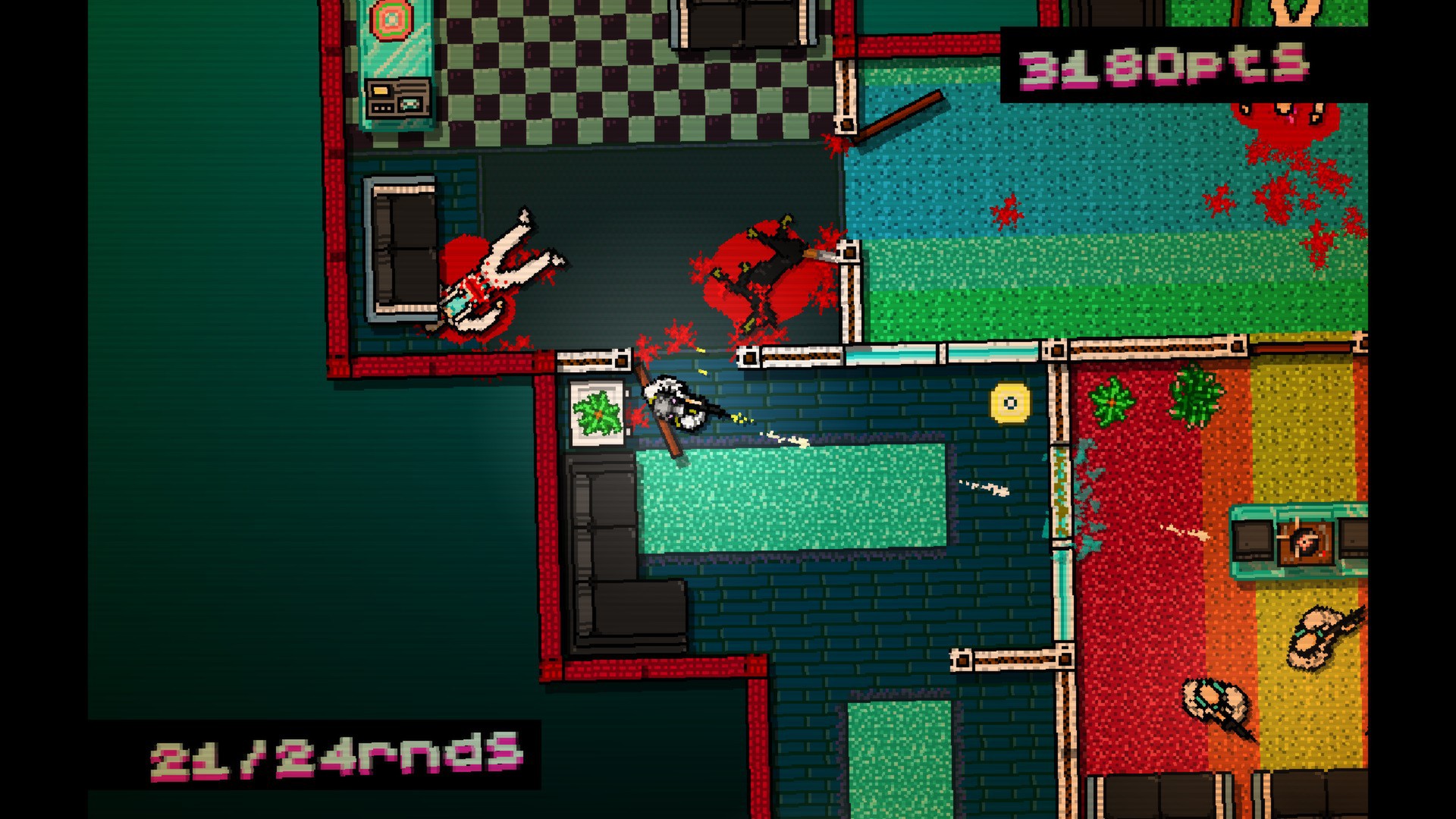
Its top-down combat is fast, violent and built around instant restarts. The reason it sits at #15 is not hardware. It is age and compatibility. Extremely old technical requirements do not automatically make an old PC game easier to run on every modern configuration.

Core strength: fantastic action with almost nonexistent hardware demands.
Main weakness: age and legacy compatibility matter more than raw specifications.
Best for: arcade action fans running very old hardware.
More games for integrated graphics
If your machine has integrated graphics rather than a dedicated GPU, these G2A News guides narrow the recommendations down further by hardware type:
- Can you game without a graphics card?
- Best games for integrated graphics
- Best games for Intel UHD Graphics 630
- Games for Intel HD Graphics 620
Low-end PC games FAQ
What is the best game for a very low-end PC?
Balatro is one of the safest modern choices because its official PC requirements list only 1 GB of RAM and explicitly support integrated graphics. Into the Breach and Shogun Showdown are also excellent choices for older Intel HD graphics.
Can you play good games without a dedicated graphics card?
Yes. Balatro and ANIMAL WELL explicitly support integrated graphics, while Into the Breach and Shogun Showdown list Intel HD 3000 and RimWorld lists Intel HD 4000 as minimum graphics baselines.
Are minimum system requirements a guarantee of smooth performance?
No. Minimum requirements are a baseline. Performance also depends on your CPU, memory configuration, drivers, operating system, cooling, display resolution and whether integrated graphics share system RAM.
A weak PC does not need a weak library
The biggest change in low-end PC gaming is that you no longer need to search exclusively through twenty-year-old classics. Balatro, ANIMAL WELL, Brotato and Shogun Showdown can sit beside Stardew Valley, Terraria, FTL and Hotline Miami without asking for modern gaming hardware.
Start by checking your CPU, RAM and graphics against the official requirements, then pick the genre you actually want to play. A weak GPU narrows the library. It does not make the library boring.