





They do not copy Capcom’s new Onimusha exactly, but each captures an important part of its appeal: precise swordplay, aggressive parries, supernatural enemies, dark fantasy atmosphere or intense boss encounters.
Sekiro is the closest overall match because its combat rewards timing, pressure and active defense more than almost anything else in the genre. Nioh 2 comes closest if you want samurai action mixed with yokai and deeper RPG systems, while Onimusha: Warlords is the obvious choice if you want to explore the series itself.
Onimusha: Way of the Sword launched in September 2026 and takes players to a corrupted version of Edo-period Kyoto, where a samurai wielding the Oni Gauntlet fights the Genma through brutal sword battles. That combination gives us a very specific set of traits to compare against.
Table of Contents
- How we picked games like Onimusha: Way of the Sword
- Quick comparison
- 1. Sekiro: Shadows Die Twice
- 2. Nioh 2
- 3. Wo Long: Fallen Dynasty
- 4. Black Myth: Wukong
- 5. Onimusha: Warlords
- 6. NINJA GAIDEN 4
- 7. Lies of P
- 8. Devil May Cry 5
- 9. Rise of the Ronin
- 10. Ghost of Tsushima Director’s Cut
- Pick based on what you liked most
- FAQ
How we picked games like Onimusha: Way of the Sword
We compared every recommendation against six parts of Onimusha: Way of the Sword’s core DNA:
- Swordplay precision – timing, spacing and deliberate melee combat.
- Parry and counter combat – active defense that creates offensive openings.
- Dark supernatural setting – demons, monsters, curses or mythological threats.
- Japanese and samurai identity – setting, weapons and warrior fantasy.
- Structured action-adventure design – focused encounters rather than pure sandbox play.
- Boss and duel intensity – fights that reward pattern recognition and execution.
Each category is scored from 0 to 5 and weighted equally. The Match Score below measures similarity to Onimusha, not overall game quality.
Games like Onimusha: Way of the Sword compared
| Game | Best for | Match Score |
|---|---|---|
| Sekiro: Shadows Die Twice | Parries and lethal sword duels | 97% |
| Nioh 2 | Samurai combat and yokai | 93% |
| Wo Long: Fallen Dynasty | Deflect-heavy combat | 90% |
| Black Myth: Wukong | Mythological bosses | 87% |
| Onimusha: Warlords | The original Onimusha DNA | 83% |
| NINJA GAIDEN 4 | Fast technical sword combat | 83% |
| Lies of P | Perfect Guard and boss timing | 83% |
| Devil May Cry 5 | Capcom action combat | 80% |
| Rise of the Ronin | Open-world samurai action | 73% |
| Ghost of Tsushima Director’s Cut | Cinematic samurai atmosphere | 67% |
1. Sekiro: Shadows Die Twice
Match Score: 97%
Why it matches: Sekiro is the closest overall alternative because both games reward players for standing their ground, reading an enemy attack and turning defense into offense. Sword fights are built around rhythm and confidence rather than constantly rolling away.

The supernatural Sengoku setting also helps. Sekiro may be darker and stranger in different ways, but its mix of historical Japan, corrupted warriors and monstrous enemies scratches much the same itch.
Biggest difference: Sekiro is significantly more demanding and centers almost its entire combat system around Posture and deflection.
Best for: players who loved parries, counters and one-on-one sword duels. The combat is a rhythmic masterpiece. It might be the hardest souls-like at first but when you get the flow you’re gonna love it.
Skip if: you want more weapon variety and a less punishing learning curve.

2. Nioh 2
Match Score: 93%
Why it matches: Nioh 2 is arguably the strongest thematic match. It gives you Sengoku-era Japan, yokai, swords, supernatural powers and brutal melee encounters where mastering enemy behavior matters.
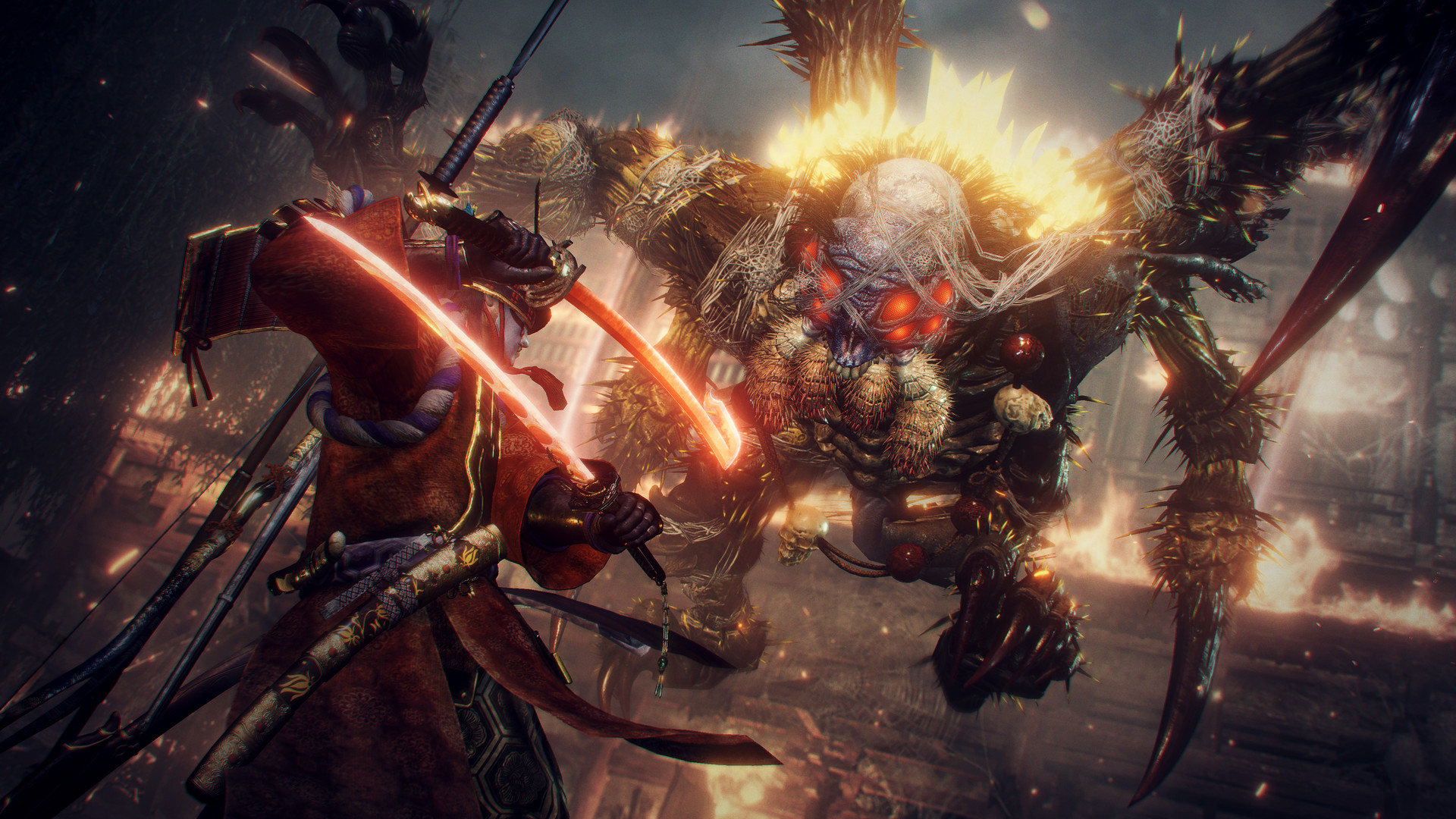
Its combat is much denser than Onimusha’s, with stances, Ki management, weapon skill trees, loot and extensive buildcraft. If Way of the Sword made you want an even deeper samurai action RPG, that complexity is the selling point.
Biggest difference: Nioh 2 is much more RPG-heavy and loot-driven.
Best for: players who want samurai combat, monsters and deep character builds.
Skip if: inventory management and constant equipment comparison get in the way of action for you.

3. Wo Long: Fallen Dynasty
Match Score: 90%
Why it matches: Wo Long is the strongest recommendation if the thing you want more of is active defensive combat. Its deflect system constantly encourages you to meet attacks head-on rather than wait passively for an opening.

The dark fantasy Three Kingdoms setting trades Japanese folklore for Chinese mythology, but the overall loop remains familiar: explore dangerous areas, fight supernatural enemies and learn the timing of increasingly aggressive bosses.
Biggest difference: the setting is Chinese rather than Japanese, and progression leans more heavily into RPG systems.
Best for: players who want more deflect-heavy sword combat.
Skip if: the samurai setting matters more to you than combat mechanics.

4. Black Myth: Wukong
Match Score: 87%
Why it matches: Black Myth: Wukong shares Onimusha’s love of supernatural creatures, dark mythology and cinematic boss encounters. It is especially strong when fights narrow down to reading a dangerous enemy and finding exactly when to commit.

The setting and weapon style are different, but both games make mythology feel physical and violent rather than distant background lore.
Biggest difference: Wukong uses staff-based combat and Chinese mythology rather than samurai swordplay.
Best for: players who want bigger mythological boss fights and a more cinematic action RPG.
Skip if: katana combat and Japanese atmosphere are essential. Also there’s no direct parry system, Wukong has a parry spell, yet it goes on cooldown after usage, so you can’t count only on this mechanic.

5. Onimusha: Warlords
Match Score: 83%
Why it matches: no game on this list is closer in terms of series DNA. Onimusha: Warlords gives you the Oni Gauntlet, Genma, dark supernatural Japan, soul absorption and the compact action-adventure structure that established the franchise.

It is lower in the ranking because Way of the Sword has substantially more modern combat. Warlords remains important, but you have to meet it on its own terms.
Biggest difference: older level design, more limited movement and much simpler combat presentation.
Best for: anyone who wants to understand where modern Onimusha came from.
Skip if: older survival-horror-style structure and controls are a deal-breaker.

6. NINJA GAIDEN 4
Match Score: 83%
Why it matches: NINJA GAIDEN 4 is the pick for players who want sword combat to become faster, more technical and more aggressive. It demands quick reactions, positioning and precise execution while filling encounters with enemies that can punish hesitation.

It lacks Onimusha’s heavier samurai-horror tone, but mechanically it delivers the same pleasure of learning what a melee system can really do.
Biggest difference: NINJA GAIDEN 4 is much faster and more combo-driven.
Best for: players chasing a higher mechanical skill ceiling.
Skip if: you prefer deliberate duels over high-speed crowd combat.

7. Lies of P
Match Score: 83%
Why it matches: Lies of P drops the samurai setting completely, but its defensive philosophy is a strong match. Perfect Guard rewards timing, staying close and learning enemy attack strings, especially in boss fights.

The game also shares Onimusha’s oppressive supernatural atmosphere and structured progression through deliberately designed areas.
Biggest difference: Belle Époque-inspired Krat has nothing to do with feudal Japan, and Lies of P is more clearly built around the soulslike formula.
Best for: players who want more perfect-guard combat and pattern-heavy bosses. Parry here is essential mechanic, just like in Sekiro or Onimusha. Bosses difficulty is scaling really high during the game, so if you’re looking for real challenge Lies of P and the Overture DLC is perfect title.
Skip if: Japanese folklore is a major part of the appeal.
For more options built around precise defense, see our Games Like Lies of P guide.

8. Devil May Cry 5
Match Score: 80%
Why it matches: Devil May Cry 5 represents the other side of Capcom’s action design. It shares the focus on demons, strong encounter design and combat systems that become more rewarding the better you understand them.

The difference is emphasis. Onimusha asks for deliberate sword exchanges, while DMC5 encourages style, improvisation and long offensive sequences.
Biggest difference: much more combo-focused and dramatically faster.
Best for: players who want more Capcom combat depth and supernatural action. The biggest difference is how we participate in combat. In DMC V we focus on combos, special moves and flawless performance. It’s fast, stylish and incredibly addicting.
Skip if: defensive timing matters more to you than stylish offense.

9. Rise of the Ronin
Match Score: 73%
Why it matches: Rise of the Ronin brings back the katana, Japanese history and timing-based counters, but places them inside a much larger open-world RPG.

Combat supports multiple weapon styles and emphasizes countersparks, making it a good fit if you enjoyed reacting to enemy attacks in Onimusha but now want more freedom between fights.
Biggest difference: open-world exploration and RPG systems dominate the structure.
Best for: players who want samurai combat across a much larger world. Rise of the Ronin is made by Team Ninja, just like Nioh, so if you liked any of the Nioh entries, Ronin is the same formula but in Japanese big open-world setting.
Skip if: you prefer Onimusha’s tighter pacing and more controlled encounters.

10. Ghost of Tsushima Director’s Cut
Match Score: 67%
Why it matches: Ghost of Tsushima is here for players who connected more strongly with Onimusha’s samurai fantasy than its demons. Jin Sakai’s combat revolves around parries, dodges, stance changes and fast lethal sword exchanges, while the world delivers one of gaming’s strongest cinematic interpretations of historical Japan.

It is deliberately grounded compared with Onimusha, which is why it ranks lower despite the obvious overlap.
Ghost of Tsushima is PEAK Samurai game. If you wondering why I’ve chosen it over Ghost of Yotei let me explain – Jin Sakai’s story is more emotional, combat is more grounded yet satisfying and the end of the story and choice you have to make stays with you for months.
Biggest difference: Ghost is an expansive historical open world with far less supernatural emphasis in its main campaign.
Best for: cinematic sword duels, exploration and samurai atmosphere.
Skip if: fighting Genma and other supernatural monsters is the part you want to preserve.
For more games built around this side of the samurai fantasy, see our Games Like Ghost of Yotei roundup.

Pick based on what you liked most about Onimusha: Way of the Sword
| If you liked Onimusha mostly for… | Play this next |
|---|---|
| Parries and counters | Sekiro: Shadows Die Twice |
| Samurai fighting supernatural monsters | Nioh 2 |
| Deflect-heavy combat | Wo Long: Fallen Dynasty |
| Huge mythological bosses | Black Myth: Wukong |
| Onimusha lore and Genma | Onimusha: Warlords |
| Faster sword combat | NINJA GAIDEN 4 |
| Perfect Guard timing | Lies of P |
| Capcom action combat | Devil May Cry 5 |
| Open-world samurai gameplay | Rise of the Ronin |
| Cinematic Japan and sword duels | Ghost of Tsushima |
Get more from G2A Plus
G2A Plus Free lets members earn Plus Points on purchases, while Premium can also provide lower member prices on eligible offers, additional rewards and priority post-purchase support.
Games Like Onimusha: Way of the Sword FAQ
What game is most similar to Onimusha: Way of the Sword?
Sekiro: Shadows Die Twice is the closest overall match. It shares the strongest overlap in precise sword combat, parries, counters, supernatural enemies and Japanese setting.
Is Onimusha: Way of the Sword a soulslike?
It shares some traits with soulslikes, particularly deliberate combat and dangerous enemies, but its overall structure and Capcom action heritage are broader than that label. That is why this list mixes soulslikes with character-action and traditional action-adventure games.
What should I play if I want more samurai games with demons?
Nioh 2 is the strongest recommendation. It combines Sengoku-era Japan with yokai, supernatural powers and demanding melee combat.
Should I play Onimusha: Warlords after Way of the Sword?
Yes, especially if you want to see the original series formula. Just expect older pacing, more limited movement and a much simpler combat system than Way of the Sword.
Sekiro is the closest overall match, but Nioh 2 may feel more like Onimusha’s world
If you want one answer, start with Sekiro: Shadows Die Twice. Its sword combat comes closest to recreating the satisfaction of reading an attack, committing to a counter and taking control of a duel through precision.
Nioh 2 is the better second choice if the real appeal was the combination of samurai and supernatural horror. Wo Long pushes defensive timing further, Black Myth: Wukong delivers the biggest mythological spectacle, while Onimusha: Warlords lets you go directly back to the series’ roots.
The lower-ranked games are deliberately more specialized. NINJA GAIDEN 4 is faster, Lies of P changes the setting but keeps the defensive rhythm, Devil May Cry 5 gives you more Capcom combat depth, and Rise of the Ronin and Ghost of Tsushima are better if the Japanese setting matters more than the Genma.
That makes the choice straightforward: pick the game that matches the part of Onimusha you actually want more of, rather than simply choosing another game with a katana on the cover.