


Quick definition
Damage Over Time (DoT) is a gameplay mechanic that deals damage gradually instead of all at once. After a DoT effect is applied, the target continues to lose health at regular intervals for a set duration.
Common DoT effects include poison, burn, bleed, curse, and corrosive damage.
Table of Contents
What does Damage Over Time mean in gaming?
In gaming, Damage Over Time, often shortened to DoT, refers to any ability, status effect, or attack that inflicts damage continuously after the initial hit.
Unlike direct damage, which is dealt instantly, DoT effects remain active for several seconds or longer. Players can often continue attacking, repositioning, or using other abilities while the effect keeps damaging the target.
DoT mechanics are common in:
- MMORPGs
- Action RPGs
- MOBAs
- Strategy games
- Hero shooters
Many games allow multiple DoT effects to exist at the same time, encouraging players to combine abilities for maximum effectiveness.
How Damage Over Time works
A DoT effect usually has three main components:
- Initial application – The attack or ability applies the effect.
- Duration – The amount of time the effect remains active.
- Damage ticks – Small amounts of damage dealt at regular intervals.
For example:
- A poison arrow hits an enemy.
- The enemy immediately takes a small amount of damage.
- For the next eight seconds, they lose additional health every second.
Different games feature different types of DoT effects, including:
- Poison
- Burning
- Bleeding
- Corruption
- Disease
- Radiation
Some games also allow DoT effects to stack, refresh their duration, or spread between nearby enemies.
Best game example: World of Warcraft
World of Warcraft is one of the best examples of Damage Over Time mechanics.
Many classes rely heavily on DoT abilities. For example, Affliction Warlocks specialize in applying multiple curses and damage-over-time spells that steadily drain enemies’ health, while Shadow Priests use lingering effects to pressure opponents over extended fights.
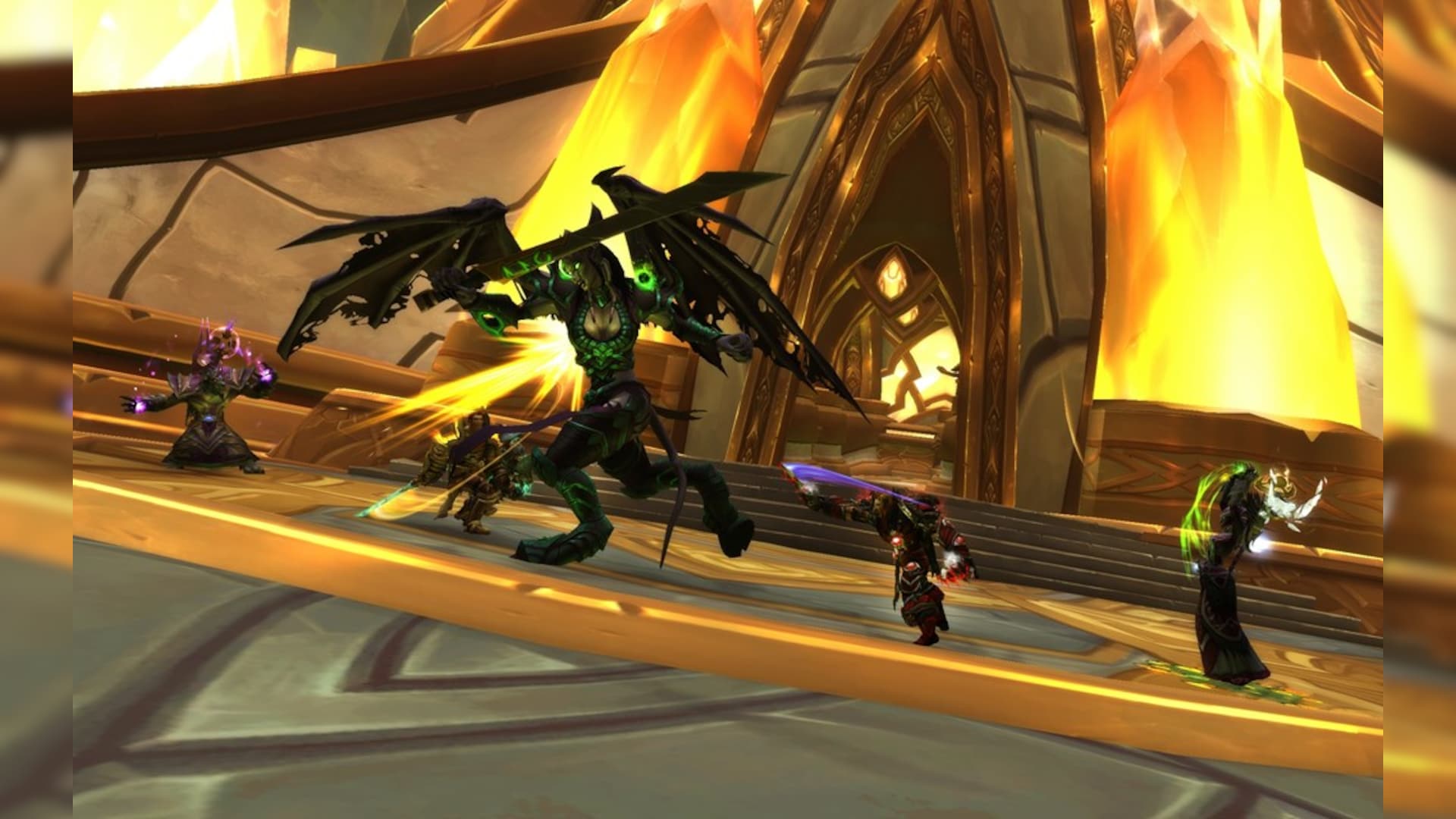
Managing DoTs is a major part of high-level gameplay. Players monitor durations, refresh effects before they expire, and balance multiple abilities to maximize damage throughout an encounter.
World of Warcraft is an excellent example because DoT management is a core part of several class rotations rather than just an occasional status effect.
How Damage Over Time differs between games
Different games use DoT mechanics in different ways.
World of Warcraft: Rotation management
Many classes maintain multiple DoT effects simultaneously, rewarding players who carefully manage their durations and timing.
World of Warcraft: Midnight
Release Date: March 02, 2026
Genres: Role-playing (RPG), Adventure
Diablo IV: Status-based builds
Poison, Bleeding, and Shadow damage can form the foundation of entire character builds, allowing players to weaken enemies over time while staying mobile.
Diablo IV
Release Date: October 17, 2023
Genres: Role-playing (RPG), Hack and slash/Beat 'em up
League of Legends: Champion abilities
Champions such as Teemo and Malzahar use poison or damage-over-time abilities to pressure opponents, force retreats, and secure eliminations even after direct combat ends.
Elden Ring: Status effects
Effects like Scarlet Rot and Poison slowly drain health after being inflicted, encouraging players to prepare with cures, resistances, or careful positioning.
Elden Ring
Release Date: February 25, 2022
Genres: Role-playing (RPG), Adventure
These examples show that DoT can be the centerpiece of a character build, a tactical combat tool, or a dangerous status effect players must learn to counter.
Why Damage Over Time matters
Understanding DoT helps players:
- Build more effective characters.
- Maximize sustained damage.
- Pressure enemies over long fights.
- Defeat highly durable opponents.
- Recognize dangerous status effects.
- Decide when to cleanse or heal.
Unlike burst damage, which focuses on defeating targets quickly, DoT rewards patience and long-term planning.
In multiplayer games, combining DoT effects with crowd control can be especially effective, as enemies continue taking damage while unable to escape.
Common mistakes or misunderstandings
DoT is not the same as Burst Damage
Burst damage is dealt almost instantly.
DoT deals damage gradually over several seconds.
Not every status effect deals damage
Effects such as slows, stuns, or silences may hinder enemies but do not necessarily cause Damage Over Time.
DoT effects may not stack
Some games allow multiple DoT effects to stack, while others simply refresh the existing duration.
DoT can secure eliminations
Even after an attacker stops dealing direct damage, an active DoT effect may continue damaging the target and finish them off.
Related gaming terms
Burst Damage
High damage dealt in a very short period.
Debuff
A negative effect applied to a target, including many DoT effects.
Poison
A common source of Damage Over Time.
Bleed
A status effect that causes continuous health loss.
Burn
Fire-based damage that continues after the initial attack.
Crowd Control (CC)
Effects that limit enemy actions and can be combined with DoT abilities.
FAQ
What does Damage Over Time mean in simple terms?
Damage Over Time is damage that continues for several seconds after an attack instead of being dealt all at once.
What is a DoT effect?
A DoT effect is any ability or status condition that repeatedly damages a target over time, such as poison or burning.
Which games use Damage Over Time?
Games such as World of Warcraft, Diablo IV, League of Legends, Elden Ring, and many RPGs feature DoT mechanics.
Is poison always a Damage Over Time effect?
Usually, yes. Poison is one of the most common examples of DoT in video games, though its exact behavior varies between titles.
What is the difference between DoT and burst damage?
Burst damage happens immediately, while DoT spreads the damage across several seconds or longer.