




I’ll spill the beans right away, and spend the rest of the article explaining myself: Zero Company is something tailor-made to suit my tastes.
Despite some technical issues and underserved areas, it was an excellent experience through and through, keeping me hooked as an XCOM fan, a Midnight Suns fan, and a Star Wars fan.

STAR WARS Zero Company
Release Date: August 27, 2026
Genres: Turn-based Strategy, Tactical
Table of Contents
A Star Wars fan
I consider myself a Star Wars fan, at least when it comes to screen-facing SW media. I’ve seen the movies, played the games, watched the shows. Especially the last part is relevant, because Zero Company, as a Star Wars story, is rooted quite deeply in the Clone Wars, and I mean both the era and the animated show.
Thankfully, the plot is by no means incomprehensible if you only know the basics of SW. The story largely operates on fairly common trope: a mercenary company made of lovable misfits is hired to do a job above their pay grade.
Sure, your accountant is a tall yellow alien, your quartermaster is a tall purple alien, your guns shoot plasma, and you’re chasing cultists with actual supernatural powers, but that’s just the aesthetics. If you’re not a Star Wars fan, the stories involved just need you to understand broad vibes and you’ll be fine.
If you are a fan, however, you’re in for a ride. As I was playing, it was crystal clear to me that people from the studio Bit Reactors are either fans themselves, or did their homework with excellent results and in good faith. There are so many references, allusions, small details that make the Star Wars side of Z-Com wonderful.
Take the Clones, for example. Not only do we have access, to several armour types, including the Command-pattern, but they will also be very familiar to the fans of The Clone Wars, with nicknames, small touches of personality in hairstyles or tattoos, etc. They are also, of course, voiced by indefatigable Dee Bradley Baker, and their faces look like a good blend of their movie appearance (played by Temuera Morrison) and their animation appearance. It’s quite remarkable, really.
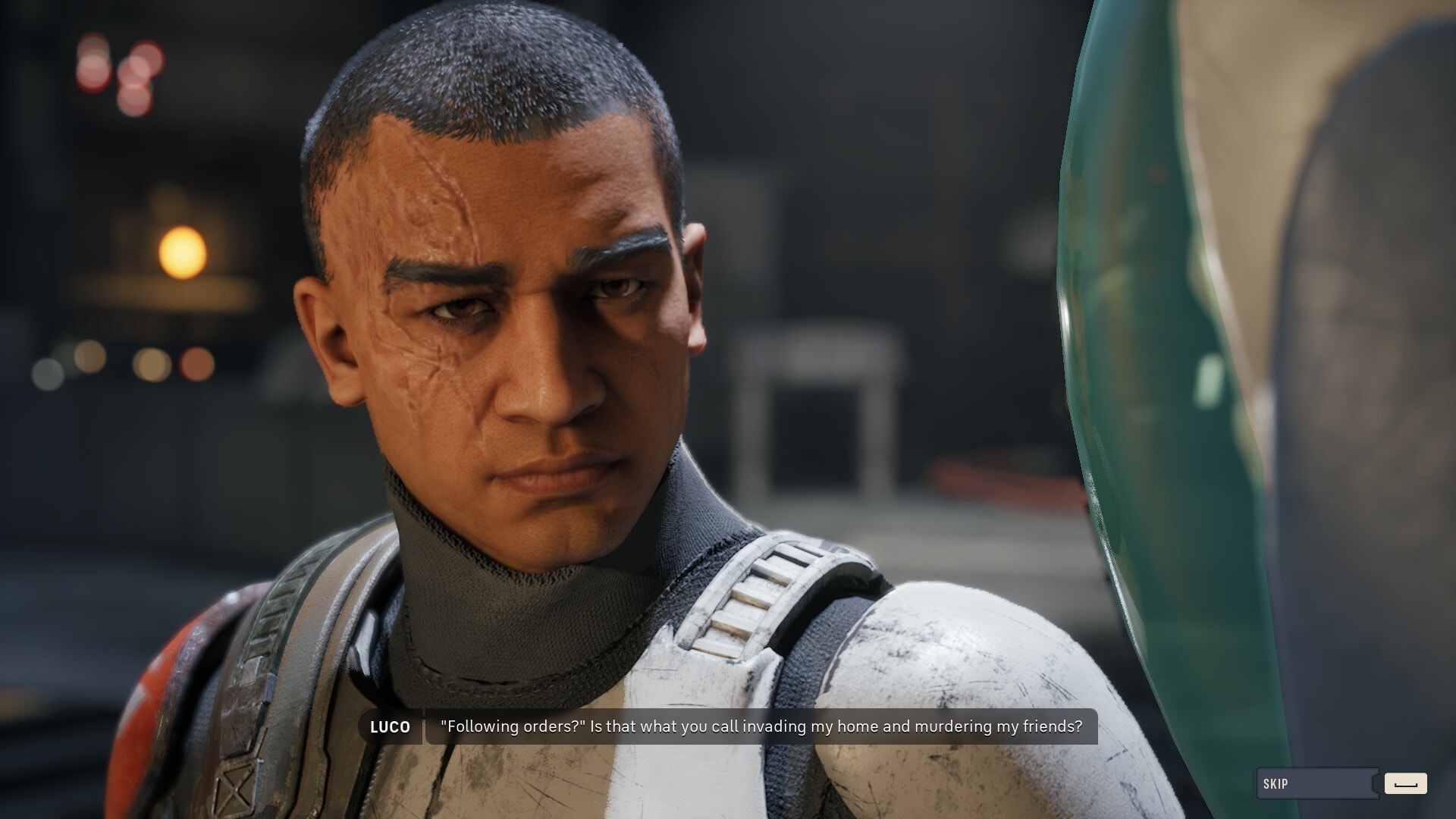
At various points of the main story progress, we get to listen to state news/propaganda transmissions and read datapads referring to events fans will readily recognize. The transmissions have the cadence and the style of writing that feel familiar enough if you’ve heard things like historical war-time radio announcements from the early 20th century.
Even our own protagonist, customizable Captain Hawks (he’s a Zabrak in my playthrough), has bits in their backstory that will ring a bell for people who watched some of the best episodes of The Clone Wars.
There is a lot of stuff like that, before we even get to design and production values, which are outstanding. But we’ll keep it for later.
Oh, and there are cameos. I won’t spoil them all, the trailers already did some of that, but I’ll say that they either delighted me or stressed me out (positively so) greatly. Which is pretty good track record.
Zero Company is very good at Star Wars.
An XCOM fan
As an XCOM fan, I felt both a little bit bamboozled (by own doing, admittedly), and quite satisfied, at the same time.
Extremely good pew-pew-pewing experience
The tactical combat side of Zero Company is excellent. It does things quite differently from XCOM, but I believe it’s for the better.
For one, it got rid of the grid: movement is now governed by raw distances, not squares, which makes things a lot more flexible and makes lines of sight both easier to establish and easier to dodge. The maps are still vaguely grid-friendly, although there’s no shortage of angles and arches breaking the rule.
Another break from XCOM traditions is a more flexible action point usage. There are three action points instead of two, and no action forcibly ends a character’s turn, so if you want to you can shoot a 1 AP gun, make one movement, launch a 1 AP ability, and then get a freebie from a droid or Hawks to do a fourth thing.
And then spend Advantage to do a few more things.
It’s fantastic. Your turn only ends when you run out of things you can squeeze out of your resources, not when the game arbitrarily decides an action is a turn-ender.
My Hawks, double-fisting Gunslinger and Assault classes, could rack up actions and kills like a mad-Zabrak.
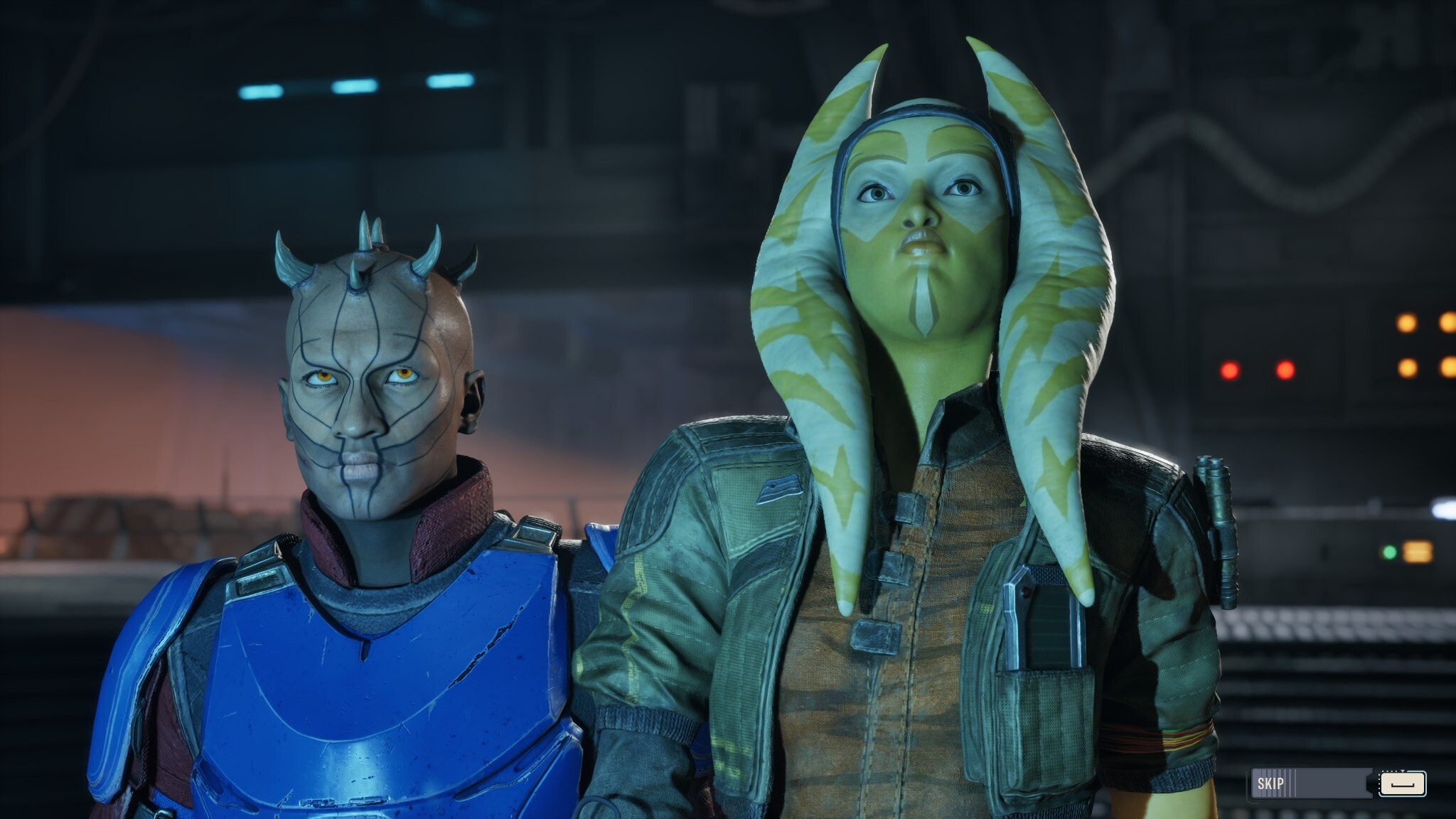
Put him in a room with some B1 Battle Droids and he’d be an unstoppable potshot taker generating silly amounts of Advantage, the shared resource needed to fire off the coolest abilities.
The action economy in Z-Com is nuts even without you trying to maximise it with your builds and team composition. Every class has something useful in its kit, and after a certain point you can have two of them at once, effectively letting you have all 8 classes at once in a four-person squad, at least when you aren’t using a Padawan or a Mandalorian for the given mission.
But you should, their abilities are excellent and you’d struggle to find a stronger combo than the Mandalorian bounty hunter’s electric darts and their detonation.
Our house, in the middle of Kafrene
On the other hand, I was quite disappointed with the base-wise layer of the game.
Our base is called The Den, repurposed from an old freighter docked on the Ring of Kafrene (previously known from Rogue-1), which gives your operation a lot of room to expand to… and it never does.
There are base upgrades to be bought certainly, split into three categories:
- Facilities – containing boosts of general functioning of the Company, like Medbay, sector influence, Black market access etc.
- Crew – improvements to your tactical team, such as Assist Damage bonuses, or generating Bond XP for idle crew members
- Weapons – for fairly simple weapon-type upgrades, like damage, movement distance, etc.
My problem is that these upgrades don’t really have any visual representation. We have a huge space you’ll frequently run around in to talk to NPCs or admire the details of a very lived-in spaces, and it’s completely static. My Den in the 30-something cycle, after several theoretical upgrades looked exactly the way it did in the first one, it just had more people in it.
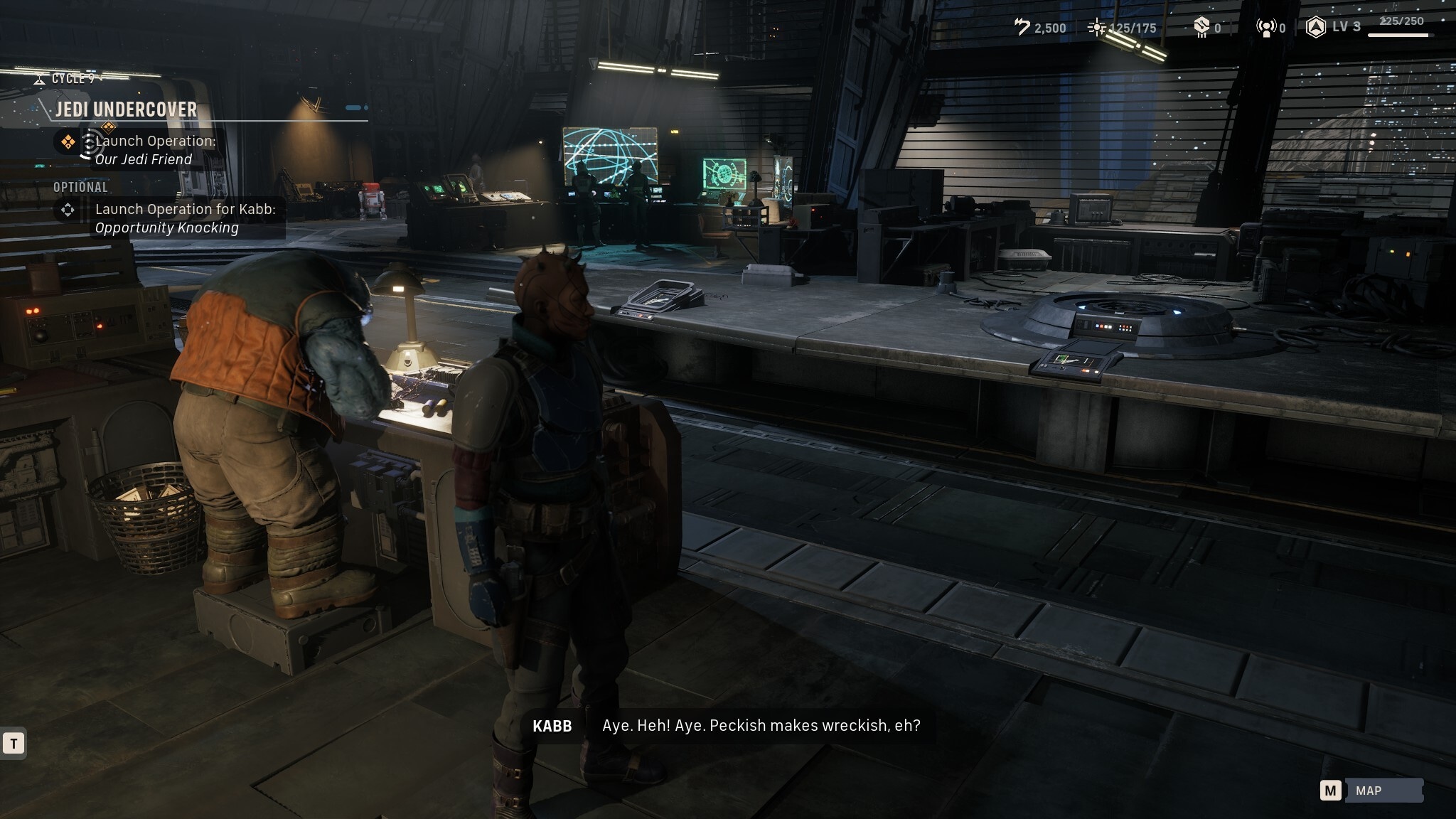
The management is also pretty simplistic, more than I would have preferred. No space to run out of, no energy to provide, no staff to shift from project to project. I was hoping this side of things would be much more XCOM-like than Midnight Suns-like, but that’s probably on me, I didn’t expect Z-Com to be that much of a light RPG. When my brain switched gears, it stopped being bothered that much.
Thankfully, the strategic layer is excellent, perfectly blending the two playstyles.
Gather ‘round the holotable
When we get to the galaxy map, it’s split into the Core and the Mid and Outer Rims, as lore intended. Each is further split into sectors, which matters for one of the three tabs you get to work with.
The Influence screen represents your team’s reputation. The sectors have three tiers of influence, each granting you a useful bonus, like a valuable item or a permanent upgrade. You get Influence from Base upgrades, completing Operations and Mission, and spending your very finite Contacts resource.
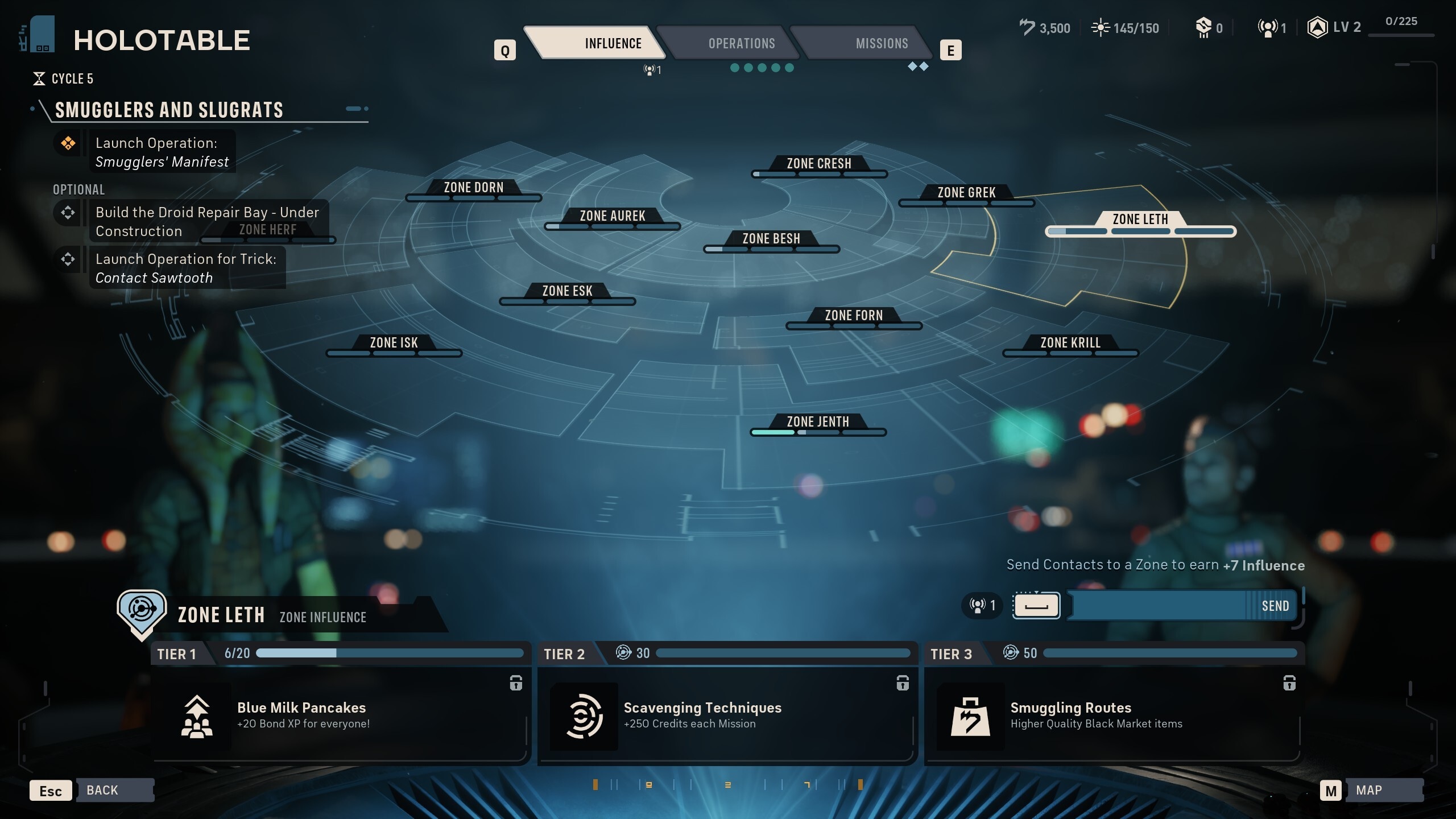
The Operations screen is where semi-narrative, non-tactical missions dwell. They cost different amounts of (not hugely abundant) Intel to activate, and in return they tend to yield pretty straightforward, easy rewards. All of them come with a pretty good flavour text, some with also ask you to make a narrative choice and/or send one or move operatives to handle the problem. Your choices will determine the reward you’ll get, so it’s not just fluff.
Finally there are Missions, which is where you pick the tactical deployments. You can only do one per cycle, so you’ll have to make some costly choices throughout the campaign, since both Ops and Missions can expire.
Well, most of them.
It’s time
While influence is forever, Operations and Missions have timers attached, ticking down after every cycle, corresponding roughly to a working day. You can ignore most of them, except for the plot-critical ones: When their timers run out, you’re locked out of starting other missions until you’ve dealt with the narratively pressing matters.
I like this system quite a bit. It keeps the pace in a good spot between giving you enough time to goof around with less consequential stuff, while also not letting you faff about so much you lose track of the story. As Z-Com is very plot-driven, I think it was a good choice.
And since everything’s on a timer, even choosing between the non-critical operations and missions involves trade-offs.
You have only so much Intel, so tagging every op is out of the question. You can only go on one mission per cycle, so some will fall by the wayside by necessity. In many cases, you’ll not only miss out on rewards, but you’ll also need to choose which of the two upgrades you’ll allow your enemies to make, because you can only prevent the development of one. Your foes are always getting stronger.
There are also companion quests, both in Operations and Missions, and they can time out too, which means you miss out on stories, bonds, EXP, unique rewards… you get the idea.
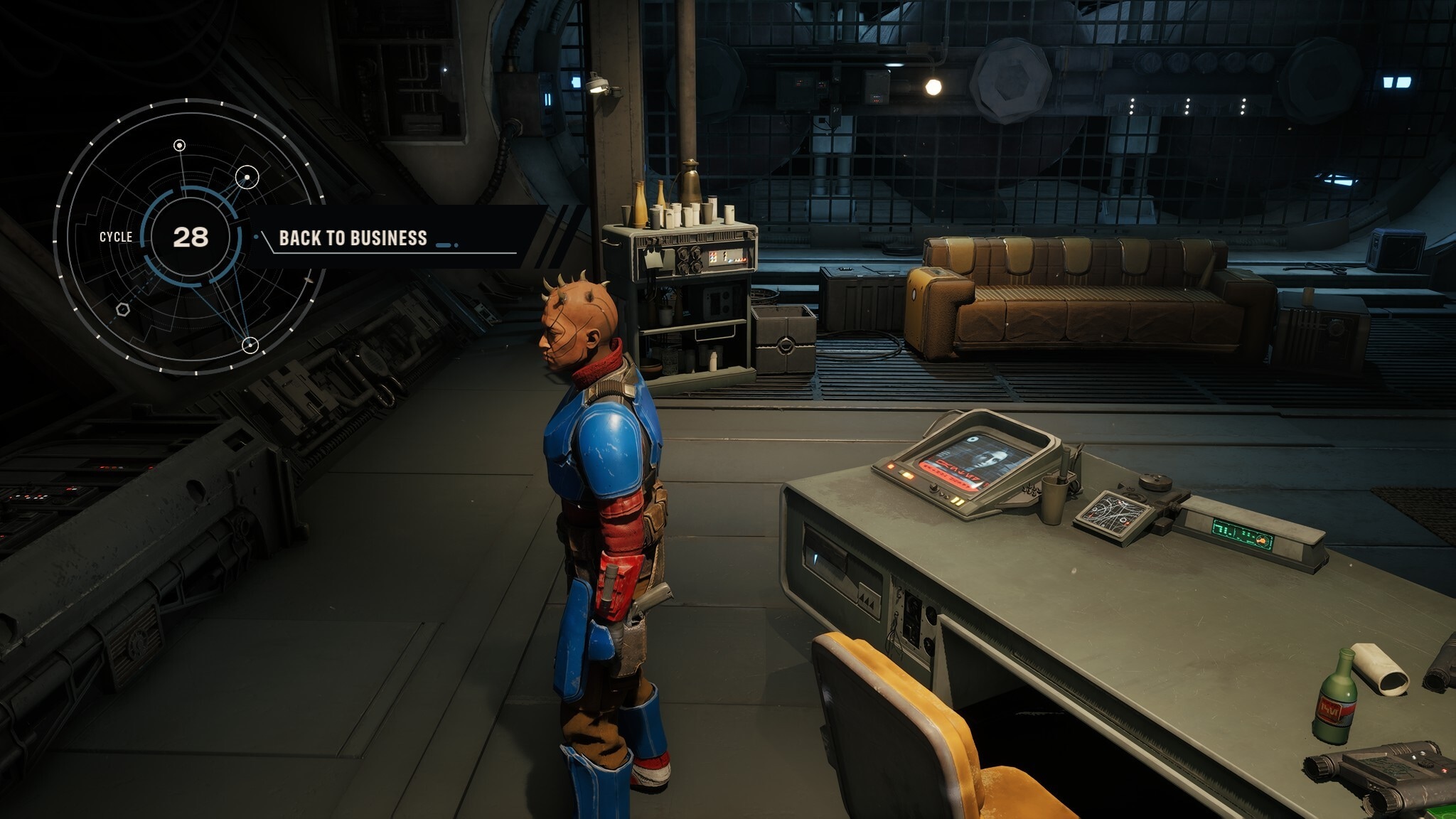
Due to technical issues I chose not to try fully extending the number of cycles in my playthrough to cram in as many missions as I could, but you’re most likely going to have about 40 tactical deployments to work with. Which is a fair number, but you’ll find it’s not nearly enough to max out everything you want to. Choices, choices.
The Foibles Awaken
I have two more elements to praise to high heavens, but I will use it to sandwich my complaints about the game before the final recommendation.
The big one
For the most part, Zero Company ran just about fine on my 3060Ti on mostly high settings with some mids where I didn’t care about the alleged improvements. Mostly stable 60fps, easy going.
Except the game kept severely crashing at random points.
And by crashing, I don’t even mean “crash to desktop”, that’s fine, annoying, but not a big problem. No, it would randomly turn both of my screens black with no recourse other than hard restart. Across about forty hours of my time with Z-Com I couldn’t spot any pattern to the crashes. Sometimes they happened during a mission, sometimes in the Den, sometimes in a cutscene, sometimes when nothing special was happening at all. Regardless of quality settings, chosen screen, or windowed/fullscreen status.
[A screenshot would go here, but it would have been a black screen. Use your imagination.]
It happened so often and so unpredictably, that I felt it severely affected how I played the game. I was worried one of the crashes would be the last, either for the game or my card, so I ended up trying the most direct ways to play. I wanted to get through battles as fast as I could, so some shenanigans I didn’t try at all, and I felt more frantic than a turn-based game should make me.
Room to improve
Much like The Den, I feel like the campaign could use a revamp and expansion somewhere down the line, if possible. The Big Dramatic Moment towards the end of the game felt like it should have had something spoken by more than static NPCs, for example. Sure, the game features Permadeath (as an option), but their silence felt not just odd, but also strongly at odds with their stories and the time I spent helping them.
Similarly, the final battle was very underwhelming. There are plenty of awesome missions in Z-Com, tightly designed, tense, thrilling. The battle against the core enemy was… just a battle. No gimmick, nothing special. Huge missed opportunity. The ending in general felt disappointingly rushed.
I hope the studio will be able to do more, with an update, and an Expansion.
Looks and sounds the part
Before the final bit, I want to quickly highlight the amazing production value of this game.
The graphics are obvious, you can see what it looks like on the screens throughout the review, I won’t restate the obvious. What isn’t obvious is how the game moves and how it sounds.
First of all: Zero Company implements an idea from a fantastic, if unreliable, mod from XCOM 2: Idle Suppression. Even outside their turns, units on both sides are firing blaster bolts from behind cover as in idle animation, making the battlefield feel much, much more dynamic.
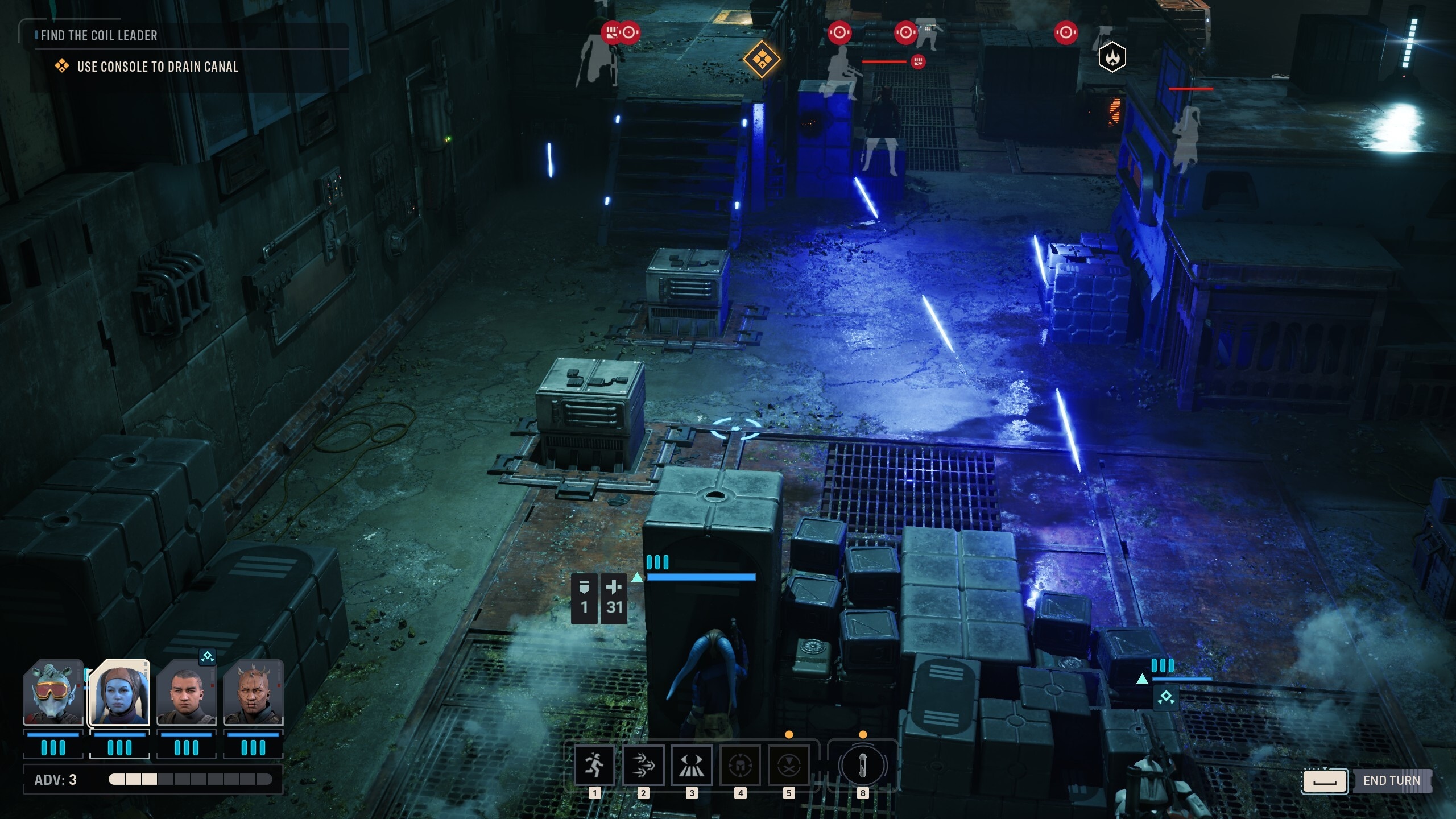
Secondly, the character animation is really damned good for both comedy and drama. I often chuckled at Runa’s playful expressiveness, or at Hawks making a stunned expression at a particularly… bold idea. But there’s also Bennic, our human liaison with the Republic, whose journey is satisfying to follow partially thanks to fantastic facial animations.
Something I was amazed to find out is that this level of detail even applies to the blasters. Each class has several appearance options,and they all come with different firing rhythms and sounds too! And their blaster bolts light the scenery up, so fights in darker locations look incredible, lit up with multi-coloured patches.
A dedicated paragraph is also needed for our Padawan companion, Tel. The Tognath Jedi wields her lightsaber with casual grace and flair I didn’t expect. Sometimes I would catch her deflect stray blaster bolts with a small flick of the lightsaber, other times she’d vault over an enemy to make her melee strike. Somebody on the team really liked animating her idles and actives.
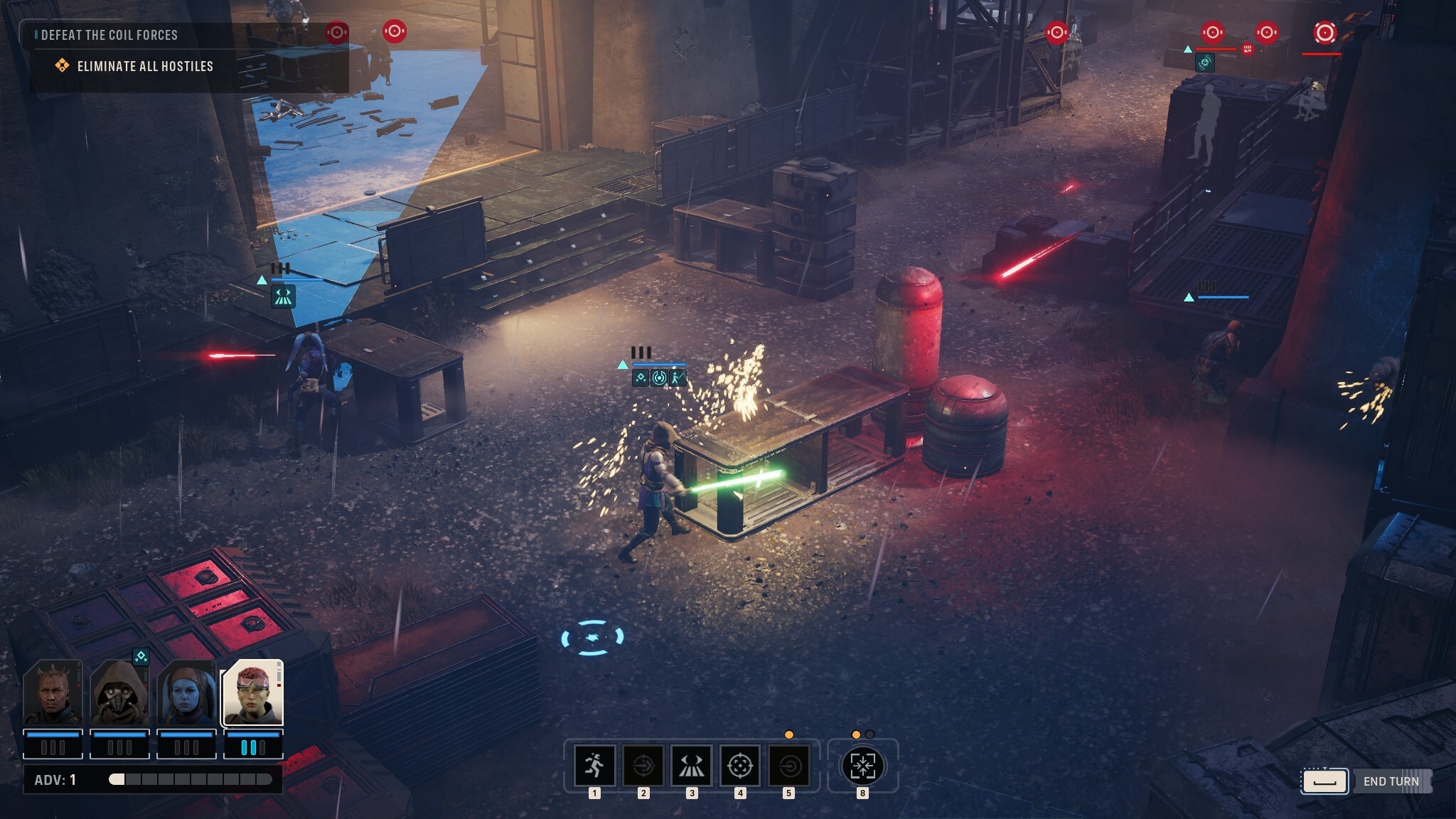
Finally, the voice acting is really good. Everybody delivered solid performances, but my special affection goes to JB Blanc’s Kabb Uppercut and Vic Michaelis’ Runa Blask, their lines I always listened to with great joy. There are also some voices familiar to other connoisseurs of animated Star Wars: Dee Bradley Baker once again plays Every Clone, while Matt Lanter returns to his old role. The custom character’s voicepacks are also top tier and full of personality.
A Midnight Suns fan
Finally, we get to the RPG, story-driven side of things, and I am delighted to tell you that I loved it too.
Zero Company is written really well, not just as a Star Wars thing, but also as a story about characters. No amount on convincing animation would’ve made me like Runa or Bennic if their writing wasn’t engaging on some level.
Thankfully, Runa, an ex-Separatist finance expert is funny, and also occasionally taken down a peg by Hawks, who has a lot of patience and not a lot of respect for her certain ideals. Bennic is an eager young officer who quickly bonds with the crew, making his future all the more compelling to witness. Kabb talks in an incredibly charming dialect somewhere between a rhyming slang and kennings, and fully earns the affectionate nickname the crew uses for him.
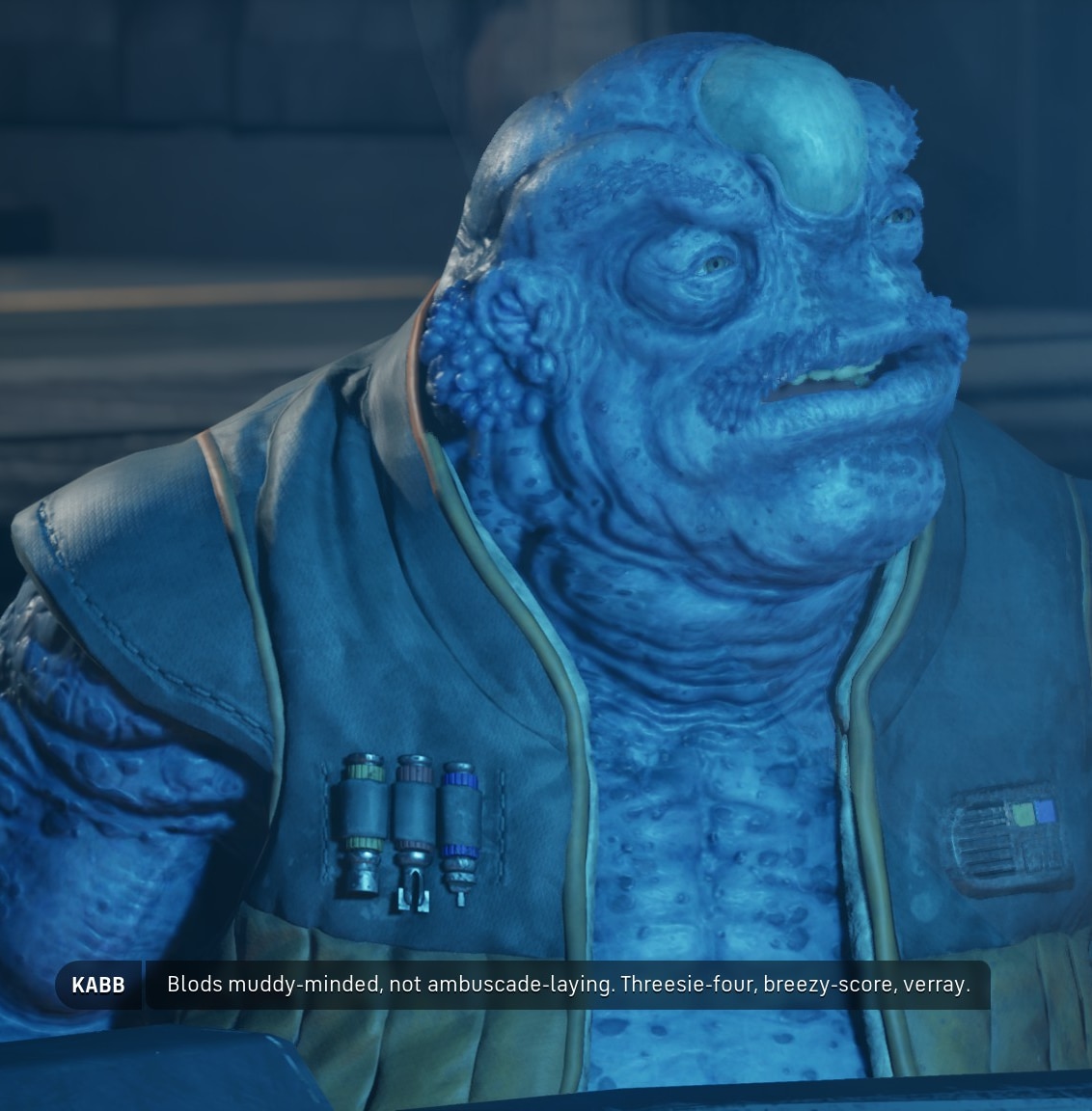
Z-Com’s writing is funny, charming, dramatic, and sincere all at appropriate moments, and it counts for a lot. I quickly found myself getting invested in the characters, and I don’t even mean the predefined ones!
The customs
While we get a good spread of named, set heroes provided by the game, Zero Company has a space for 20 soldiers, which means filling the gaps with lots of custom-made people, and I don’t mean Clones. I was surprised to see them brim with personality as well.
There are several voices available, each representing a different archetype. They always have something new to say after every mission, and often talk to each other, which you can overhear. I often chuckled at the cheeky lines given to the Rogue voice, and my custom-made Weequay scout kept reminding me of his criminal background as an experience nobody important.
It really sells the illusion of Zero Company being populated by real characters with backstories, perspectives, and opinions. It doesn’t go deep, but it does its job perfectly well regardless.
Bonds, team Bonds
Zero Company also expands on the team bonds mechanics, which was present in a less involved way in XCOM 2: War of the Chosen and Midnight Suns. This game really carries a lot of their DNA.
As company members go on missions and operations together, thy gain “Bond XP”, which steadily improves their relationships. It doesn’t seem to have much narrative purpose, but it’s a big part of the progression system.
Every time a bond levels up, both parties get an upgrade, independent from the stuff they get from buying their own class abilities. These boosts include max health increases, better Assist damage, reducing the risk of getting hit, and a lot of other handy things. It’s a great secondary progression track, although it has its dark side.
It incentivizes keeping the team small, so that you can maximise Bond gain within a small group of operatives. The more people you want to have on the roster, the proportionately fewer Bonds you can fully develop, which puts the intended gameplay at odds with even basic attempts at efficiency. I’m not a powergamer by any metric, and I still ended up ignoring most of the roster for most mission assignments.
Still, Bonds are great idea, a worthwhile source of upgrades, and since bonds apply to all active units, not just Hawks’ relationships, there’s something nice about forging a strong bond between characters who wouldn’t necessarily be friends. For instance an Umbaran, a Clone, and a Jedi, or a custom, wildly enthusiastic heavy with a laconic Mandalorian bounty hunter. Good stuff.
Let’s finish this
I’ve already written nearly 3k words about this game, and I still haven’t touched on everything I think is worth touching on.
I’ve written little about the story, which is about more than just taking down a weird cult. I haven’t highlighted the fantastic Assist mechanic which is not only cinematic, but also extremely handy for taking down difficulty targets. I haven’t said a word on how the game’s story at a certain point turns more serious, with a few hard-hitting lines.
It’s a great game, is my point, and I hope that its success was big enough to let Bit Reactor continue working on it, and perhaps make a sequel? In a truly tactical-Firaxis move the story ends with a perfect setup for at least one more story.
I really, really want to give it a 9/10, but for the technical mishaps that plagued my playthrough, some weaker or misguided designs elements, and the underbaked final stretch of missions, I’ll knock it down to 8.5
However, that’s with the understanding that nothing here is unfixable and I’ll happily bump it up to 9 or higher should some juicy updates come flowing. Please, let some juicy updates come flowing!
| Pros | Cons |
|---|---|
|
|