
A sequel can go wrong in two very predictable ways. It can play things too safe and feel like expensive DLC with a few extra systems stapled on. Or it can get so drunk on its own ambition that it forgets what made the first game work in the first place. Star Wars Jedi: Survivor manages the much rarer trick of mostly avoiding both.
It is larger, more confident, more playful, and, crucially, much better at the things Jedi: Fallen Order already did well.
More platforming. Better exploration. More involved traversal. More side content. More little ideas packed into every corner.
It feels like Respawn looked at the first game, circled all the good bits in red marker, and wrote “more of this, please” in the margins.
And that was exactly the right call. For the most part.
This is not The Force Unleashed 3. It is not the long-awaited Jedi Academy heir some people still seem to want from every modern Star Wars game. But it is, in my view, better than Jedi: Fallen Order.
Not just a little bit better, either. Better in the way a sequel should be: broader, richer, more comfortable in its own skin, and much more enjoyable to simply be inside.
Before we begin: I managed to play and beat the game on a potato laptop with a couple technical performance-enhancing mods (not sure if they actually helped). While JS obviously looked real bad on super low details, it performed better on my setup than the previous game!
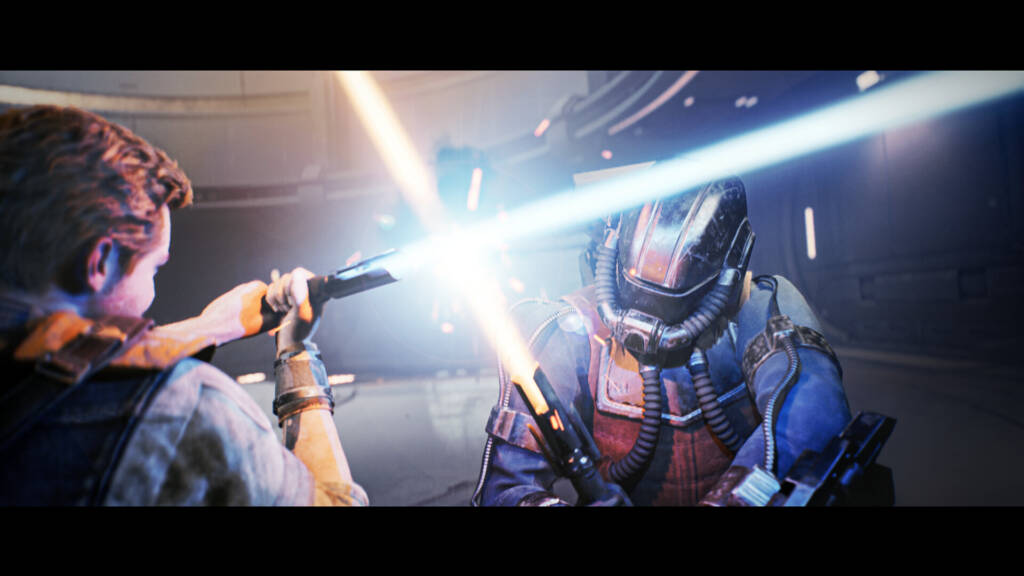 Credit: Respawn Entertainment
The good kind of bigger
The first thing Jedi: Survivor gets right is scale. Not the boring marketing-department version of scale, where a game is simply bigger because now there are 300 collectibles instead of 90. I mean scale in the good sense: the sense that the worlds are more fully realized, the paths more intricate, the movement more expressive, the whole adventure more willing to let you poke around and get pleasantly distracted.
Jedi: Fallen Order already had excellent traversal, but Survivor improves on it in almost every way. Cal is faster, looser, and more fun to move around as, and the level design clearly knows it. There is more wall-running, more climbing, more dashing, more grappling, more “I probably should not survive this jump but I’m going for it anyway” energy. The game builds lovely chains of movement that make traversal feel like a reward in itself.
And that is the thing I liked most about the first game, so naturally it is the thing I liked most here, too.
Survivor is very good at keeping the momentum going while still asking you to use your head every now and then.
Basically, it understands that jumping around old ruins should be fun. A shocking number of games miss this.
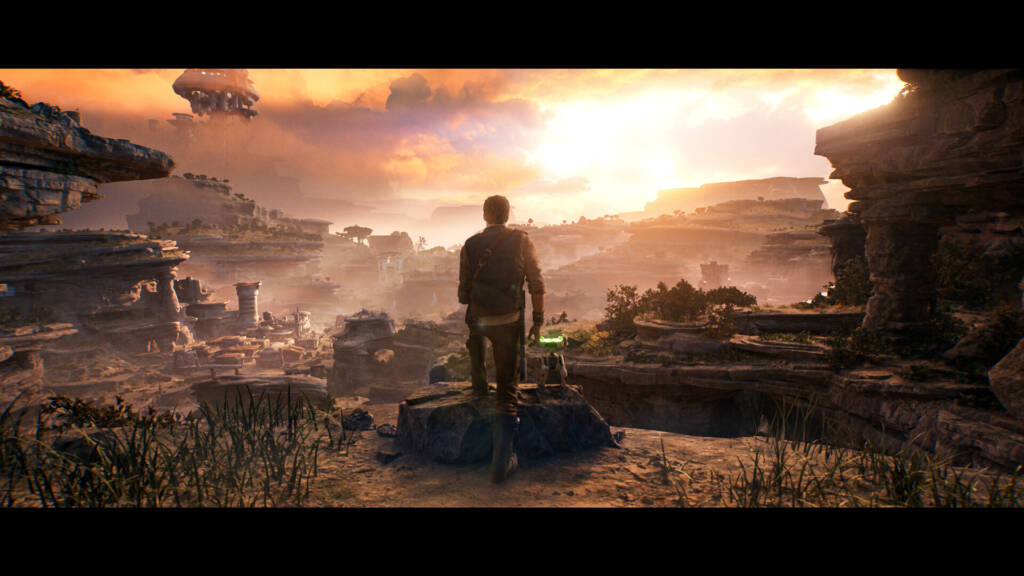
Koboh is the main event
If Fallen Order was a galaxy tour, Survivor feels much more rooted. And that is mostly thanks to Koboh, which quickly became sort of my favorite place in the game.
Koboh feels like home, that’s for sure.
Not “home” in the safe and boring sense. More “home” in the way a really good RPG hub feels like home: a place you return to often enough that it starts to gather emotional weight. A place where the overall vibe settles in. A place where the game’s personality really comes through. Rambler’s Reach, in particular, gives Survivor a warm, lived-in center that Fallen Order never quite had (not counting the Mantis, that is).
That sense of place matters more than it sounds. It gives the game rhythm. It makes all the larger adventure stuff feel anchored. You are not just hopping from dramatic cutscene to dramatic cutscene. You are returning somewhere. You start to recognize corners, routines, faces. The world feels less like a set of levels and more like an actual space.
And beyond Koboh, the other locales are excellent too. Survivor consistently delivers striking spaces to explore, and it is much better than the first game at making those spaces feel rewarding to wander through. The main path is great, but the game is constantly tempting you to veer off, check out a side route, chase some rumor, follow a platforming challenge into a hidden corner of the map. That sense of curiosity is one of its greatest strengths.
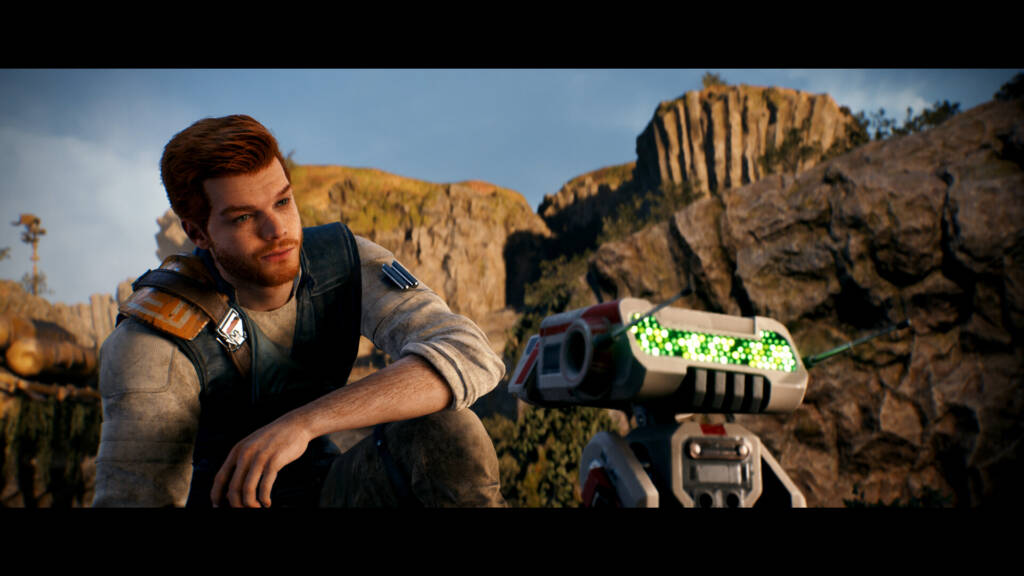
Story Mode, aka the correct difficulty
I should probably confess right here that I played the game mostly on Story difficulty.
Great decision. Would do that again.
This let me focus on the parts of Jedi: Survivor I actually care about most: movement, exploration, platforming, level design, environments, side paths, and all the little moments where you are just existing inside a really good Star Wars action-adventure playground.
I am not here to prove my combat prowess to anyone. I do not need a game to humble me like a Victorian boarding school. I am a gameplay guy, yes, but specifically the kind of gameplay guy who wants to get on with the climbing and rummaging around in ancient nonsense.
Story difficulty turns Survivor into a much breezier experience, and for me that made the whole thing better. Encounters stayed fun without overstaying their welcome and the game’s best qualities had more room to breathe.
If the thought of a tougher difficulty excites you, fair enough. You do you. But if, like me, you mostly want to get back to the good stuff after a fight, lowering the difficulty is less a compromise and more a quality-of-life feature.
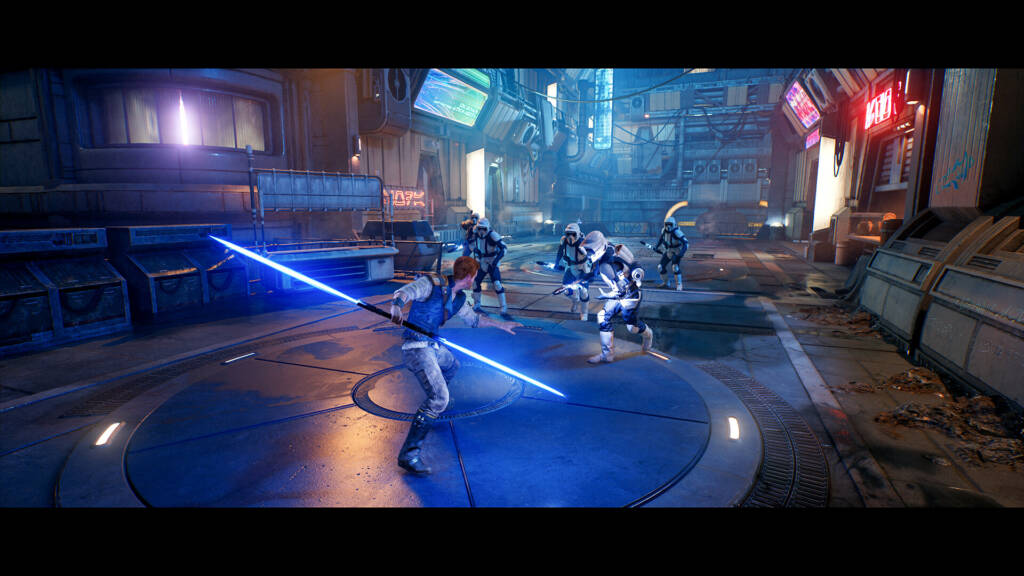
The combat is better. I still don’t love it.
To be fair, Survivor does expand the combat quite a bit. There is more variety, more options, and, yes, finally some blaster action. The blaster is a genuinely fun addition too, not least because it adds a little Han Solo swagger to Cal’s increasingly overloaded Jedi skillset. Mixing ranged shots with saber attacks is satisfying in a pulpy, “this is a very expensive toybox” sort of way.
But even so, the combat remains the area where this series and I maintain a respectful but emotionally distant relationship.
Part of that is on me. I am still coming to these games with Jedi Academy and The Force Unleashed rattling around in my skull like sacred texts. Those games let you do silly, joyous, cruelly funny things with Force powers. Push someone off a ledge. Yank them across a room. Turn a fight into a physics joke. In Survivor, I tried some of that. I really did. I shoved enemies, messed around near cliffs, attempted some impromptu slapstick. But it is still not as easy, as immediate, or as fun to do as it was in those older games.
Which means Survivor, like Fallen Order before it, still is not the all-powerful space wizard fantasy I occasionally want it to be.
That is not fatal. Clearly. I liked the game a lot. But it is still the one lingering “ah, shame” hanging over the combat for me. There is more going on this time, sure, and the blaster is cool, but I never fully shook the feeling that I was playing a very good modern action-adventure rather than the ideal Jedi sandbox living in my head.
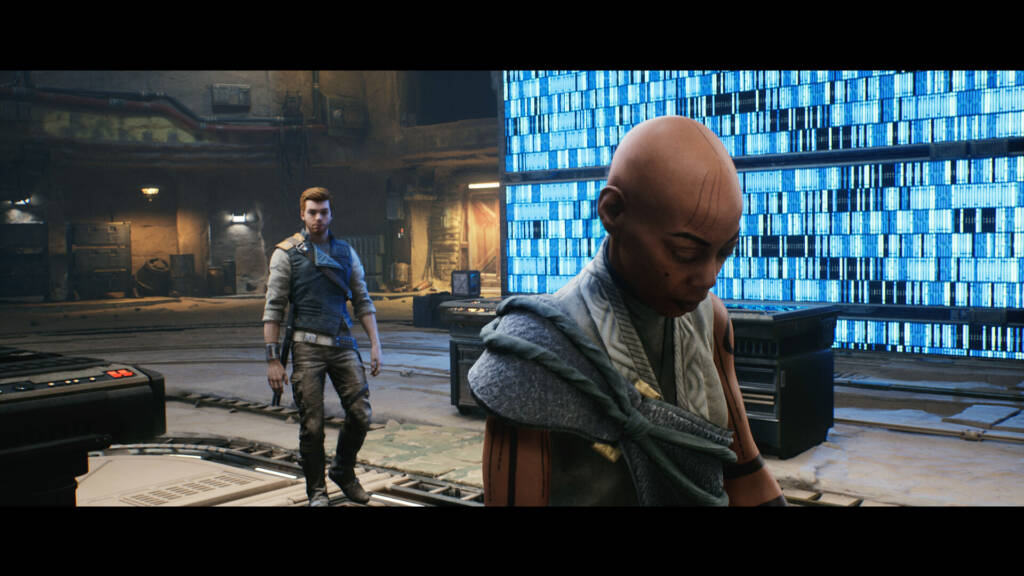
The story gets lost in its own robes
The story went in the opposite direction of the gameplay.
Where the traversal and exploration feel cleaner and more confident, the narrative gets more convoluted and, as it goes on, more tedious.
It keeps stacking complications, lore, revelations, and dramatic turns until it starts to feel like it is working far too hard to convince you of its own importance.
This would be a bigger problem if I cared more deeply about video game stories in general, but I don’t, really. I am a gameplay guy. Give me good movement, fun level design, interesting spaces, and a strong overall vibe, and I will forgive an awful lot of narrative self-seriousness.
So, while I do think Survivor’s story is noticeably messier than Fallen Order’s, I also don’t think it hurts the game in any way. And I do like all sorts of aspects of it.
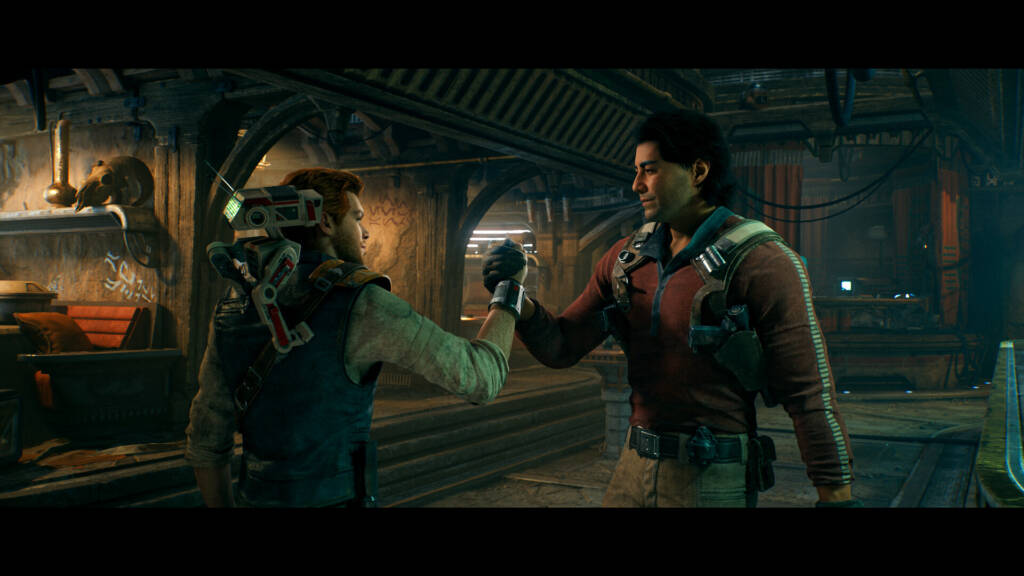
Side stuff that actually sounds worth doing
I focused mainly on the campaign, but even from what I saw, Survivor’s side content looks more varied than Fallen Order’s, which is another point in its favor. The first game was already enjoyable to explore, but a lot of optional content there came down to opening crates and vacuuming up cosmetics.
Survivor feels more interested in breaking that up with different activities and better reasons to wander.
That makes a difference. Even when you are not fully diving into every optional corner, you can feel the richer structure beneath the surface. There is more texture here. More to do. Bounty hunting, finding hidden music tracks, recruiting NPCs, going on all sorts of errands, even tending to your own rooftop garden – there’s plenty to do here aside from all the Star Wars swashbuckling.
In other words, it is the good kind of busy.
The soundtrack took some convincing
In Jedi: Fallen Order, Gordy Haab and Stephen Barton delivered a score that felt immediately, comfortably Star Wars.
Survivor takes a riskier approach. It pushes further from John Williams and into something that is more its own thing.
And early on I was not convinced that it was a good idea.
There is a lot more sound design in the score this time, especially in the opening stretch, and some of it genuinely made me think, “Hey, if this is Star Wars, then why am I hearing Zerg music?”
Action music, too, often feels less musically complex and intricate than in Fallen Order, leaning instead on scale and impact and blunt force epicness. And the guitar in Rambler’s Reach? No. Just no.
And then there’s this “Cal Kestis theme spam” thing going on. I understand. The composers are very proud of it (though it’s been actually composed by Samuel Kim, from what I gather). It’s the main theme of their work. But its use in Jedi: Fallen Order felt natural. It’s been weaved into the score seamlessly and flawlessly. Here, though? Not so much. Definitely a “quantity over quality” issue.
But then the score started winning me over.
Not all at once. Not immediately. But the more I sat with it, the more it clicked. This is not a safer repeat of Fallen Order’s music. It is stranger, broader, a little more adventurous, and when it lands, it really lands.
Some of the music has an Indiana Jones flavor to it this time around, which works surprisingly well. And when the score hits, it hits very hard indeed. “Unforgiving Sands” is superb. “The Ancients” is superb. There are cues here that absolutely soar. “Shattered Moon” basically blows Holst’s “Neptune” out of the water.
By the end, after getting over my initial grumbles, I came around to the view that this is still one of the best game scores in recent years. Odd at times, yes. But ambitious, distinctive, and packed with genuinely excellent material. I still think Fallen Order felt more classically Star Wars, musically and otherwise, but Survivor’s score ultimately earns its own place.
I wish Indiana Jones and the Great Circle had music this good.
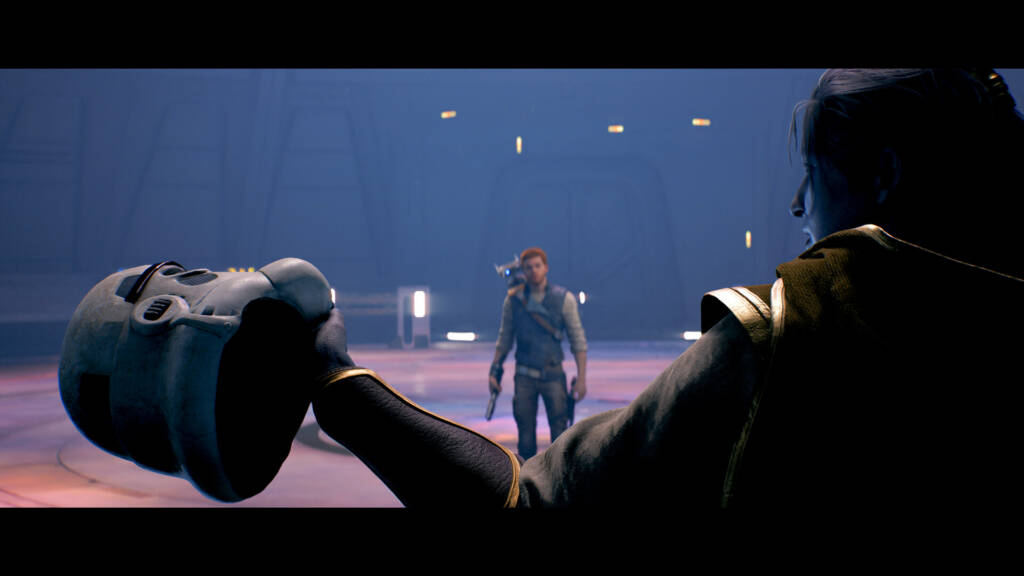
Better than Fallen Order
That is probably the best way to sum up Jedi: Survivor as a whole.
Jedi: Fallen Order may have felt a bit more “classic Star Wars” in its overall tone. Cleaner. Simpler. More straightforward.
Survivor is messier, stranger, more ambitious, and sometimes more willing to go off in its own direction. But it is also more fun to play, better to explore, richer in ideas, and much more successful at building a world I wanted to spend time in.
Platforming is better. Exploration is better. Side content seems better. Traversal is more enjoyable. Koboh is pretty much terrific as the centerpiece of the story. The blaster (so uncivilized) is a welcome addition. The story is more tedious as time goes on, yes, but I never cared enough about the narrative for that to seriously drag the game down.
And while it still is not the Force-powered sandbox of my dreams, it compensates by being very, very good at what it actually is.
Which is a bigger, more confident, more inviting Star Wars adventure.
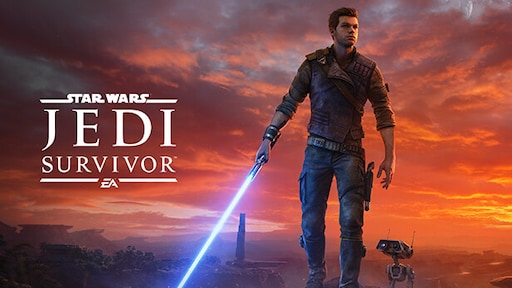
Star Wars Jedi: Survivor
Release Date: April 28, 2023
Genres: Action-adventure, Platform, Metroidvania, Souls-like
- Excellent platforming, as usual
- Its “space western” vibe is much different from the first game, but still unmistakably Star Wars
- Blaster and all sorts of side quests and activities are all fun additions to the gameplay
- Koboh works well as a central hub
- Wonderful soundtrack, as usual
- It simply feels different and more engaging compared to the already very good predecessor
- The story gets a bit too convoluted as it progresses
- I still prefer platforming and exploration over combat (though I’m not saying the latter is bad – it’s very good, in fact, especially if you’re a Dark Souls/Sekiro fan; this hasn’t changed from the first game, it’s only better)
- Once again the game doesn’t let you feel like the powerful Jedi you’re aiming to become (though if you switch to the lowest difficulty it can sometimes feel like Jedi Outcast or The Force Unleashed)