





A dog enters an unfamiliar village. To us, it’s streets, doors, and strangers. To the dog, it may be a map of scents: someone passed this way, another animal was here, danger might be nearby. How do you turn that experience into a video game when the player can’t smell any of it?
That’s the challenge facing Hounded, an upcoming third-person adventure from IMPRNT Studios, confirmed for PC and PlayStation 5 in 2027. Its hero, Duke, is a young Border Collie searching for his missing master, Artemys Fletcher, while being pursued by a relentless antagonist known as The Hunter.
His nose matters as much as his eyes, but turning that into interesting gameplay takes more than drawing a scent trail on the screen.
Hounded release date and platforms
Hounded is scheduled to launch in 2027 for PC and PlayStation 5. IMPRNT Studios and Silver Lining Interactive confirmed the PS5 version on November 17, 2026, alongside a developer diary introducing Duke and explaining how the team approached his animation.
An exact release date has not been announced. There is also no confirmed Xbox or Nintendo version at this stage.
Hounded story and setting
Hounded takes place in Anglodia, a fantasy world inspired by late-18th-century Britain. It’s a land where black-powder weapons, mysterious machinery, and ancient magic coexist, and where a rebellion is brewing against the ruling regime.
Duke, however, has considerably simpler priorities. His master, Artemys Fletcher, is involved in the resistance and has mysteriously disappeared. With his home destroyed and Fletcher nowhere to be found, Duke sets out to bring him back.
Unfortunately, someone else is looking for Fletcher. The Hunter is tracking Duke, hoping that the Border Collie will lead him straight to his target. The result is an adventure that combines exploration and environmental puzzles with tense pursuits.
Why Hounded is worth watching
The game isn’t simply putting a dog into a human adventure. IMPRNT is building movement, navigation, environmental interaction, scent tracking, and even Duke’s emotional performance around what a Border Collie can actually do.
Scent tracking: how do you make the invisible playable?
Most games tell us where to go through things we can see: a map marker, a highlighted ledge, a trail of footprints. A dog’s sense of smell isn’t a glowing GPS line. Scents overlap, fade, and linger, carrying information humans rarely notice.
In Hounded, the developers are building Sense Mode, Duke’s heightened wayfinding ability for tracking scents and investigating the environment. The system is intended to help him follow his master’s trail while also uncovering secrets and other things hidden in the world.
How much should it show? A bright trail would be easy to follow, but could reduce an extraordinary sense to another waypoint system. Make it too subtle and players may simply get lost.
Ideally, players should interpret clues rather than blindly follow instructions. That’s what turns an ability into meaningful gameplay.
Four legs change the rules
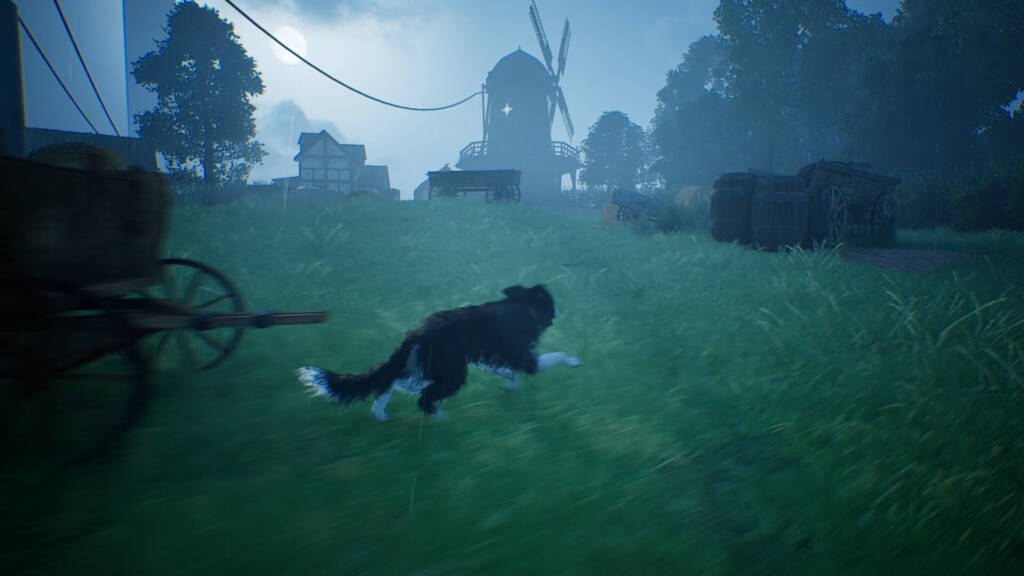
A human protagonist can pick up a key, climb a ladder, or pull a lever. A dog has paws, teeth, and a very different relationship with buildings. A locked gate might be a dead end for a person but irrelevant to an animal that can squeeze underneath it.
IMPRNT’s development updates describe work on Duke’s jumps, tight-space interactions, and digging under certain obstacles. The team has also been developing a handcrafted Motion Matching system in Unreal Engine so Duke can transition naturally between the movements expected from a Border Collie.
Even turning becomes a design problem on four legs. IMPRNT has been building Duke’s movement library from real-world references instead of simply adapting a human animation rig, with particular attention paid to the low, ready-to-run posture of a Border Collie.
The developers have taken a similar approach to Duke’s expressions. Rather than relying on dialogue, they use details such as ear movements and subtle changes in his muzzle to communicate emotions during cinematic scenes.
Stray approached the same broad problem from a feline angle. Its cat navigates rooftops and narrow spaces, while playful interactions make the world feel worth investigating. Those details change what players notice. A windowsill stops being decoration and becomes a possible route.
Should instinct ever overrule the player?
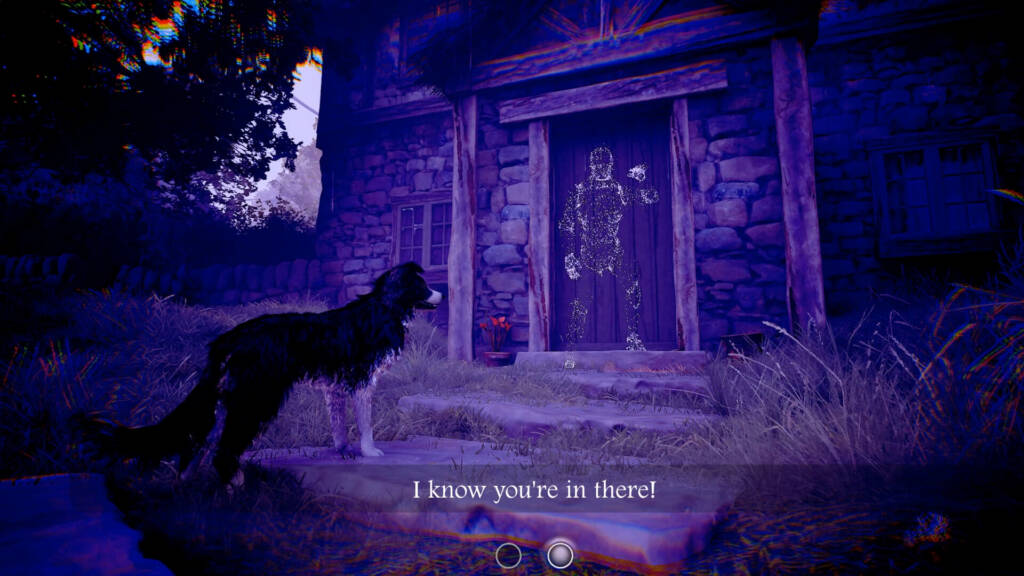
Real dogs get distracted. They chase interesting smells, react to sounds, and sometimes refuse to cooperate. In a game, however, an unresponsive character can feel less like a living creature and more like a broken controller. How much animal behavior is too much?
Other games make instinct part of the player’s priorities. In Endling: Extinction Is Forever, a mother fox must find food and protect her cubs in a landscape damaged by humans. In Shelter, keeping a family of animals alive changes what danger means. Losing a cub carries more weight than missing a collectible.
Neither game simulates every animal impulse. Instead, both give players reasons to think differently. Food becomes more than a resource. A safe route isn’t necessarily the fastest one. Survival is about responsibility for lives beyond your own.
Seeing the world without being human
There’s a compromise at the heart of animal games. We control their heroes with human hands, watch them through human eyes, and understand their goals through stories written for people. Even a sophisticated scent mechanic is a translation, not a direct window into a dog’s mind.
Hounded complicates that further with The Tide, a supernatural force running beneath its flintlock-fantasy world of Anglodia.
As revealed in the developer’s November 17 PlayStation Blog announcement, Duke can harness this magic to overcome obstacles, interact with technology, and uncover events from the past.
That means the game isn’t trying to be a literal dog simulator. It is building a fantasy adventure around canine instincts, then asking what happens when those instincts are combined with abilities humans in the same world do not have.
Yet even that translation can change how we play. We start noticing gaps beneath fences, sounds behind walls, scent trails, and the vulnerability of creatures following us. Familiar environments become strange again because our character interacts with them differently.
Animal adventures to play while you wait
Hounded isn’t due until 2027, but there are already a few games worth trying if the appeal is exploring a human-sized world from an animal’s perspective.

Why Hounded could stand out
Hounded is still in development, so whether all these ideas work together remains to be seen. The October development update described ongoing work on Sense Mode, Tideswell, The Hunter’s traps and hazards, Duke’s movement, and the story itself. November’s developer diary offered a closer look at the work going into Duke’s animation and personality.
But it raises a fascinating question. Perhaps making us think exactly like a dog is impossible. Making us realize how differently a dog might experience the same world is much more achievable.
If Hounded gets that right, Duke won’t stand out simply because he’s adorable. He’ll stand out because the game makes being a dog change how we read the world around us.