
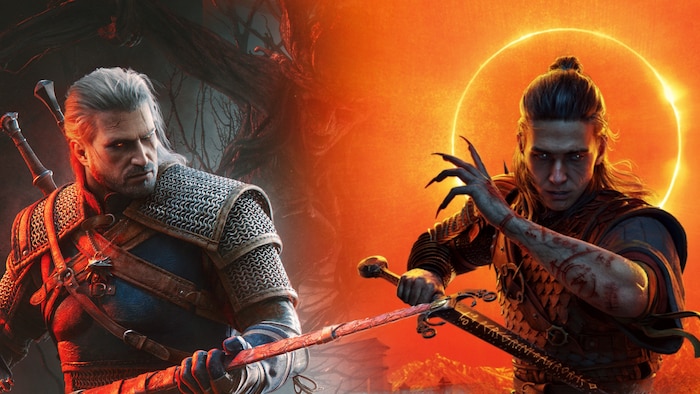
The Blood of Dawnwalker has invited comparisons with The Witcher 3: Wild Hunt from the moment it was revealed. That is hardly surprising. Rebel Wolves was founded by developers with experience at CD PROJEKT RED, and its first game is another third-person dark fantasy RPG built around quests, choices, monsters, and an open world.
The similarities are real, but Dawnwalker is not simply going to be “The Witcher 3 with vampires.” Its 30-day structure, day-and-night gameplay, more systemic quests, and half-human protagonist point toward a noticeably different kind of RPG.
TL;DR – Will Witcher 3 fans like The Blood of Dawnwalker?
| Story | Both center on a personal family rescue inside a much larger supernatural conflict. |
| Quests | Dawnwalker appears more systemic and less divided into traditional main and side content. |
| Combat | Both mix swordplay and supernatural abilities, but Coen changes significantly between day and night. |
| World | Both favor grounded European dark fantasy, but Dawnwalker’s Vale Sangora is denser and built around a reactive day-night cycle. |
| Biggest difference | Dawnwalker’s 30-day deadline forces you to choose what is worth your time. |
Table of Contents
- Why everyone compares Dawnwalker to The Witcher 3
- Story: two personal quests in dangerous worlds
- Gameplay and quest structure
- The biggest difference: time actually matters
- World design: the Continent versus Vale Sangora
- Geralt versus Coen
- The Blood of Dawnwalker vs The Witcher 3
- Will Witcher 3 fans enjoy Dawnwalker?
Of course, all information within is based on the available promotional material such as trailers, interviews, etc., it might turn out that after The Blood of Dawnwalker launches on September 3rd, 2026, even more similarities and differences come to light.
Why everyone compares Dawnwalker to The Witcher 3
The comparison is not just about forests, swords, monsters, and medieval-looking villages. Rebel Wolves was created by veteran RPG developers, including people who previously worked at CD PROJEKT RED, and the studio’s leadership includes developers closely associated with The Witcher series.
That shared background is visible in the priorities. Rebel Wolves talks about story, player choice, consequences, handcrafted worlds, and quests that exist to create memorable situations rather than simply fill the map.
Those are all things The Witcher 3 became famous for. CD PROJEKT RED built its open world around Geralt’s journey to find Ciri, but many of the game’s most memorable stories came from what initially looked like ordinary contracts, village disputes, investigations, and side quests.
Dawnwalker clearly comes from a similar school of RPG design. The difference is that Rebel Wolves is pushing harder toward what it calls a narrative sandbox: a story where the player decides which threads matter, which people receive help, and which opportunities are simply left behind.
Story: two personal quests in dangerous worlds
The basic setup of The Blood of Dawnwalker should immediately sound familiar to Witcher 3 players.
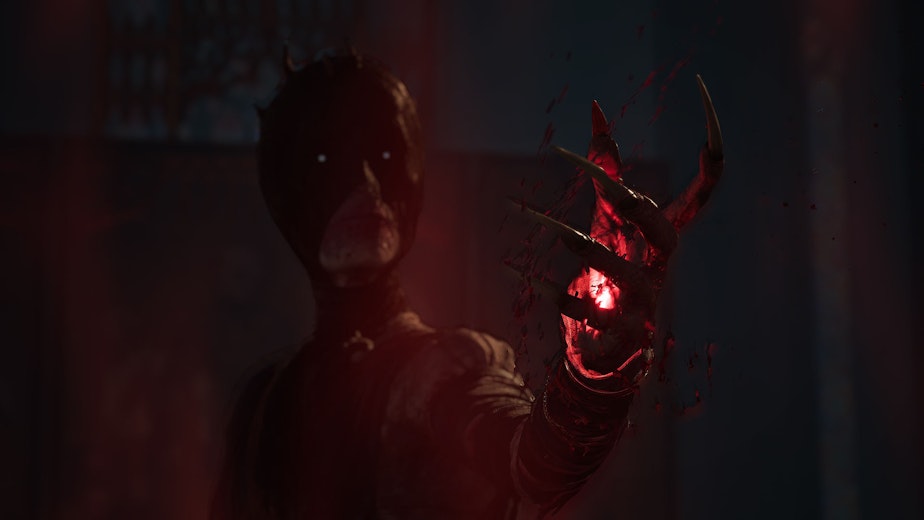
Coen is trying to save his family from Brencis and the vampires who have seized control of Vale Sangora. Geralt spends much of The Witcher 3 trying to find and protect Ciri while the Wild Hunt pursues her.
In both cases, the huge fantasy conflict is anchored by something personal. You are not initially trying to save civilization because a prophecy says you are the chosen hero. You are looking for people who matter to the protagonist.
The tone is similar too. The Witcher 3’s Continent is full of war, plague, poverty, political violence, monsters, and people making bad decisions for understandable reasons. Dawnwalker takes place in a fictional region of 14th-century Europe during the Black Death, at a moment when vampires have taken advantage of humanity’s weakness and openly seized power.
Where Dawnwalker may diverge is in how much control the player has over the structure of that story. Rebel Wolves says decisions and even inaction can reshape events. It is possible to ignore problems, lose opportunities, or allow characters to die and still continue toward the game’s central objective.
Gameplay and quest structure
The Witcher 3 has a recognizable RPG rhythm. Arrive somewhere new, collect quests, investigate using Witcher senses, prepare for monsters, fight, make dialogue choices, collect rewards, and gradually move through a mix of main quests, side stories, contracts, exploration, and treasure hunting.
Dawnwalker looks familiar at first. There is third-person exploration, dialogue, melee combat, supernatural abilities, investigations, NPCs to meet, and quests scattered across an open region.
But Rebel Wolves is trying to make the boundaries between those activities less rigid.
After the opening, the player can explore Vale Sangora broadly and decide what deserves Coen’s attention. The studio has described the game as a narrative sandbox rather than a conventional sequence of main and side quests. Areas can be approached in different orders, and the game is designed to keep moving even when quests fail.
Combat is also more distinct than the surface comparison suggests. Geralt has a stable toolset built around steel and silver swords, Signs, bombs, potions, oils, and dodging. Coen effectively has two overlapping combat identities.
During the day he is closer to a human swordsman, using weapons and magical runes. At night his vampire side becomes dominant, opening access to claws, Shadowstep, supernatural traversal, and other powers.
Rebel Wolves has also shown a directional melee system where reading attacks, blocking correctly, and countering matter more than simply cycling through light attacks and dodges.
The biggest difference: time actually matters
This may be the feature that determines whether a Witcher 3 fan immediately loves Dawnwalker or has to completely retrain their RPG instincts.
Geralt is supposedly in a hurry to find Ciri, but The Witcher 3 lets you spend weeks playing Gwent, clearing question marks, collecting armor diagrams, and helping strangers without meaningful pressure from the calendar.
Coen gets 30 days and 30 nights.
That does not mean a real-time clock is constantly ticking while you explore. Free roaming does not simply eat the deadline minute by minute. Instead, certain meaningful actions and quest decisions consume portions of Coen’s available time.
Think of time as another RPG resource.
You can investigate ruins, travel, explore, and learn about the world, but committing to particular story actions pushes the calendar forward. Choosing to help one person may mean there is no longer enough time to resolve someone else’s problem.
That is almost the opposite of The Witcher 3 completionist loop. In CDPR’s game, seeing every quest during one enormous playthrough is perfectly reasonable. Dawnwalker is intentionally designed around the idea that you should not be able to do everything.
For players who loved The Witcher 3 because choices had delayed and sometimes unexpected consequences, this could be one of Dawnwalker’s most appealing systems. For players whose favorite part was calmly clearing every icon before moving to the next region, it may require some adjustment.
World design: the Continent versus Vale Sangora
The Witcher 3 is huge. Velen, Novigrad, Skellige, Kaer Morhen, and later Toussaint have distinct geography, cultures, weather, architecture, enemies, and stories. Its strength comes from giving the impression that Geralt is traveling across a genuinely large part of a continent.

Dawnwalker appears more concentrated. Vale Sangora contains swamps, forests, mountains, caves, ruins, roads, settlements, and the major city of Svartrau, but Rebel Wolves has emphasized density and reactivity rather than simply producing a gigantic map.
The day-night split also affects more than lighting.
Svartrau can be a functioning medieval city during daylight, while nighttime opens rooftops and routes that suit Coen’s vampiric movement. Characters can react differently depending on what Coen has done, and some opportunities or approaches change according to the time of day.
So while The Witcher 3 often changes the player’s experience by sending Geralt into a new region, Dawnwalker seems interested in making the same place behave differently depending on when and how you visit it.

Geralt versus Coen
Geralt is one reason copying The Witcher 3 is nearly impossible. By the third game, he already has decades of relationships, history, grudges, romances, and baggage from Andrzej Sapkowski’s books and the previous games.
Players make decisions for Geralt, but he is never a blank slate. There are believable things Geralt might do and things that simply would not fit him.
Coen follows a similar authored-protagonist philosophy. He has a name, family, history, motivations, and a defined place in the world. This is not a character creator where you invent a completely anonymous vampire.
The major difference is his dual nature.
Coen is neither fully human nor fully vampire. His physical abilities change between day and night, and his blood hunger is a gameplay problem rather than just a story detail. Ignoring it can weaken him, while severe hunger can even lead to loss of control at disastrous moments.
That gives Dawnwalker something The Witcher 3 does not really have: the protagonist’s supernatural condition is itself part of the ongoing decision-making loop.
Geralt prepares to hunt monsters. Coen has to regularly decide how much of the monster inside himself he is willing to use.
As an added cheeky trivia, Coen is also the name of one of the witchers from Kaer Morhen, although in the books his name was written with an umlaut, like so: Coën. He never appeared in the games, since he wasn’t protagonistic enough to defy the book’s plot, but he’s mentioned in the first The Witcher.
The Blood of Dawnwalker vs The Witcher 3
Will Witcher 3 fans enjoy The Blood of Dawnwalker?
If your favorite part of The Witcher 3 was its storytelling, morally messy quests, grounded dark fantasy, and feeling that even small encounters could turn into meaningful stories, Dawnwalker looks like a very natural game to watch.
The Witcher influence is easy to see, but the most promising part is where Rebel Wolves stops following it.
The 30-day resource, day-and-night versions of Coen, vampire hunger, systemic quest failures, and emphasis on a smaller reactive world could make Dawnwalker less comfortable and more demanding than Geralt’s adventure.
That means it may not scratch every Witcher 3 itch. Players who mainly want hundreds of hours of consequence-free wandering might find its structure restrictive.
But if what you remember most about The Witcher 3 is standing in front of a difficult decision, wondering whether you have enough information to make the right call, then Rebel Wolves appears to be building directly on that feeling.
Check out The Blood of Dawnwalker
The Blood of Dawnwalker
Release Date: September 3, 2026
Genres: Action RPG, Open World, Dark Fantasy
Return to the Continent with The Witcher 3
The Witcher 3: Wild Hunt - Complete Edition
Release Date: May 18, 2015
Genres: Action RPG, Open World, Dark Fantasy
Looking for another RPG deal?
G2A Plus can unlock lower Plus prices on eligible marketplace offers, along with Plus Points, rewards, and additional membership benefits.