





Warhammer 40,000: Dawn of War IV launches on December 3, 2026, with Commander Edition players returning to Kronus three days earlier, on November 30. Base-building, massive armies, resource control, and spectacularly unpleasant ways to meet the Emperor are all back on the menu.
Developed by KING ART Games, the fourth mainline Dawn of War game returns to the real-time strategy formula that made the original such a beloved part of the Warhammer 40K gaming universe. Four playable factions, more than 70 campaign missions, 30 multiplayer maps, and the return of The Last Stand make this a particularly ambitious comeback.
And judging by the latest Commander Edition trailer, things could get considerably more chaotic in 2027.
Long story short
- Release date: December 3, 2026
- Commander Edition early unlock: November 30, 2026
- Preload: November 27, 2026
- Platform: PC (Steam)
- Genre: Real-time strategy
- Playable factions: Space Marines, Orks, Necrons, and Adeptus Mechanicus
- Campaign: Four faction campaigns with over 70 missions
- Game modes: Campaign, Skirmish, competitive multiplayer, and The Last Stand
- Developer: KING ART Games
- Publisher: Deep Silver / PLAION
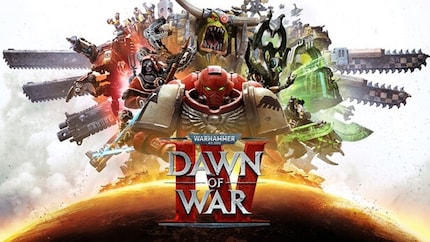

Another way to get Dawn of War IV
A Steam account offer can be a cheaper alternative to buying a game key. This is a different type of item, so make sure to read the item description carefully to understand how the offer works and how to use it.
Dawn of War IV release date and preload
Warhammer 40,000: Dawn of War IV officially launches on December 3, 2026. Players who pre-order the Commander Edition can start playing on November 30, three days ahead of the standard release.
The game was originally scheduled for September 2026 before KING ART moved the release to December, allowing additional time for performance optimization, bug fixes, gameplay adjustments, and feedback from playtesting.
Preloading begins on November 27 for both editions. Given the size of the installation, getting those files downloaded before deployment might be the smartest strategic decision you make all week.
Exact local unlock and preload times depend on your region.
Dawn of War IV pre-orders
Pre-orders for both the Standard Edition and Commander Edition are live. The publisher has announced a 10% pre-order promotion, while marketplace prices and individual seller offers may differ.
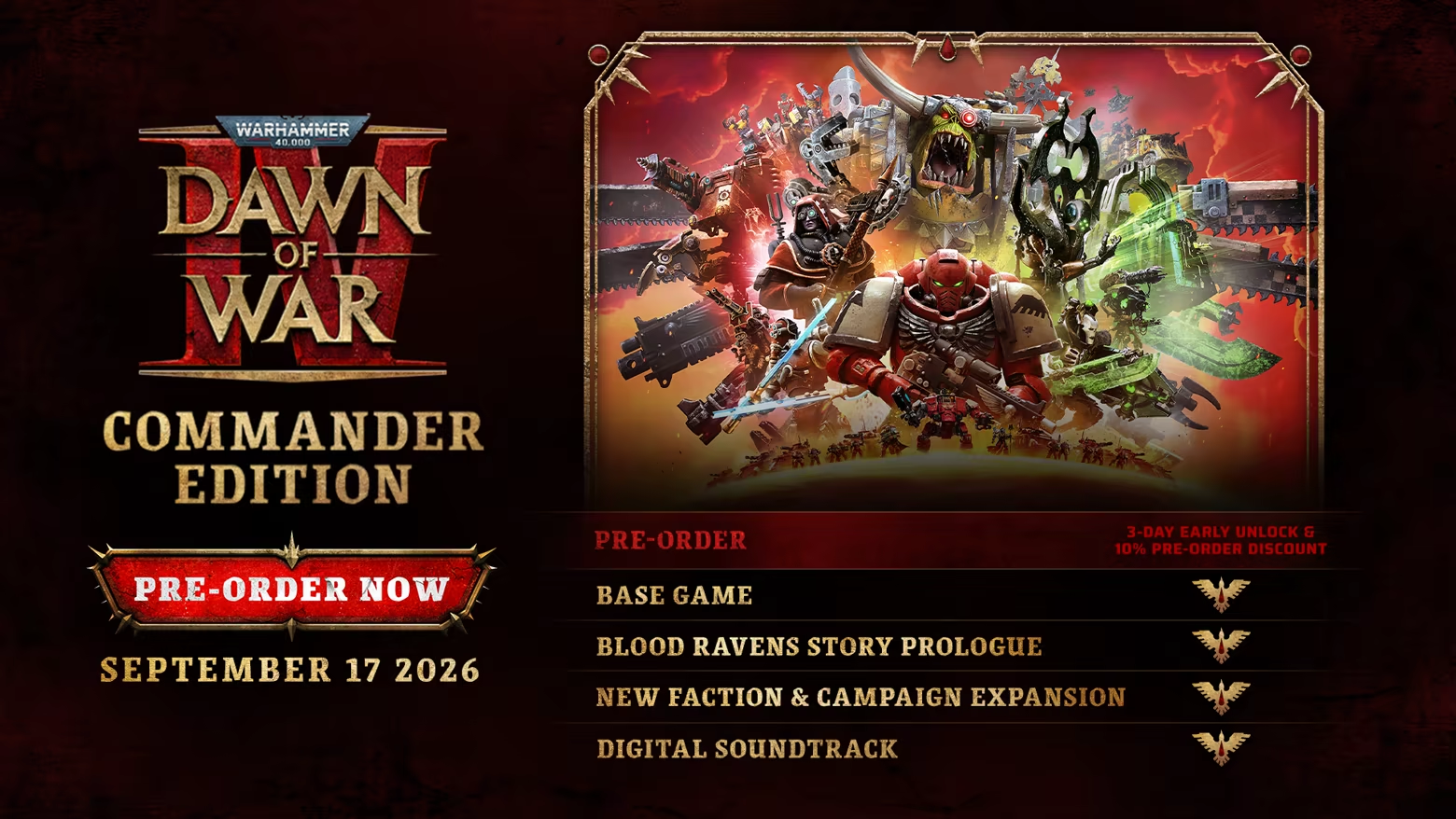
The most important decision is whether you want the base game or the complete Year One expansion package. Both editions contain all four launch factions, the full main campaign, and the core multiplayer modes.
Important pre-order note: The Commander Edition offers a three-day early unlock, but the delivery time of a marketplace pre-order depends on the individual offer and seller. Check the delivery terms before purchasing if playing on November 30 is particularly important to you.
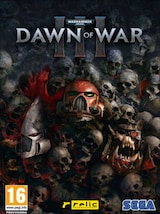
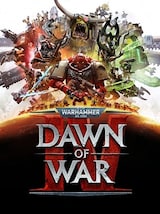
Standard Edition vs. Commander Edition
Dawn of War IV comes in two editions. The Standard Edition gets you onto Kronus with the complete base game. The Commander Edition gets you there earlier and ensures that your military commitments extend well into 2027.
*Early unlock applies to qualifying Commander Edition pre-orders. Listed MSRPs are publisher reference prices, not current G2A Marketplace prices.
Standard Edition – everything you need to start
The Standard Edition includes the entire base game. You get all four launch factions, their respective campaigns, multiplayer, Skirmish, The Last Stand, army customization, and access to the planned free updates.
If you’re primarily interested in seeing whether Dawn of War IV lives up to its predecessors, this edition makes the most sense. You can decide whether the paid expansions are worth adding once you’ve spent some time on Kronus.
Commander Edition – in it for the long war
The Commander Edition includes the base game, three-day early unlock for qualifying pre-orders, the digital soundtrack, and the Year 1 Expansion package.
The latter contains two major story expansions planned for 2027. One returns to the Blood Ravens’ past, while the other continues the main conflict and introduces a fifth playable faction.
Which edition should you buy? Pick Standard if you mainly want the launch experience. Commander makes more sense if you’re already planning to play both expansions, or if those three extra days of warfare are particularly important to you. You don’t need Commander Edition to receive the planned free content updates.
For a closer look at the latest expansion announcements, check out our article on the Dawn of War IV Commander Edition trailer and its mysterious faction reveal.
A return to classic Dawn of War
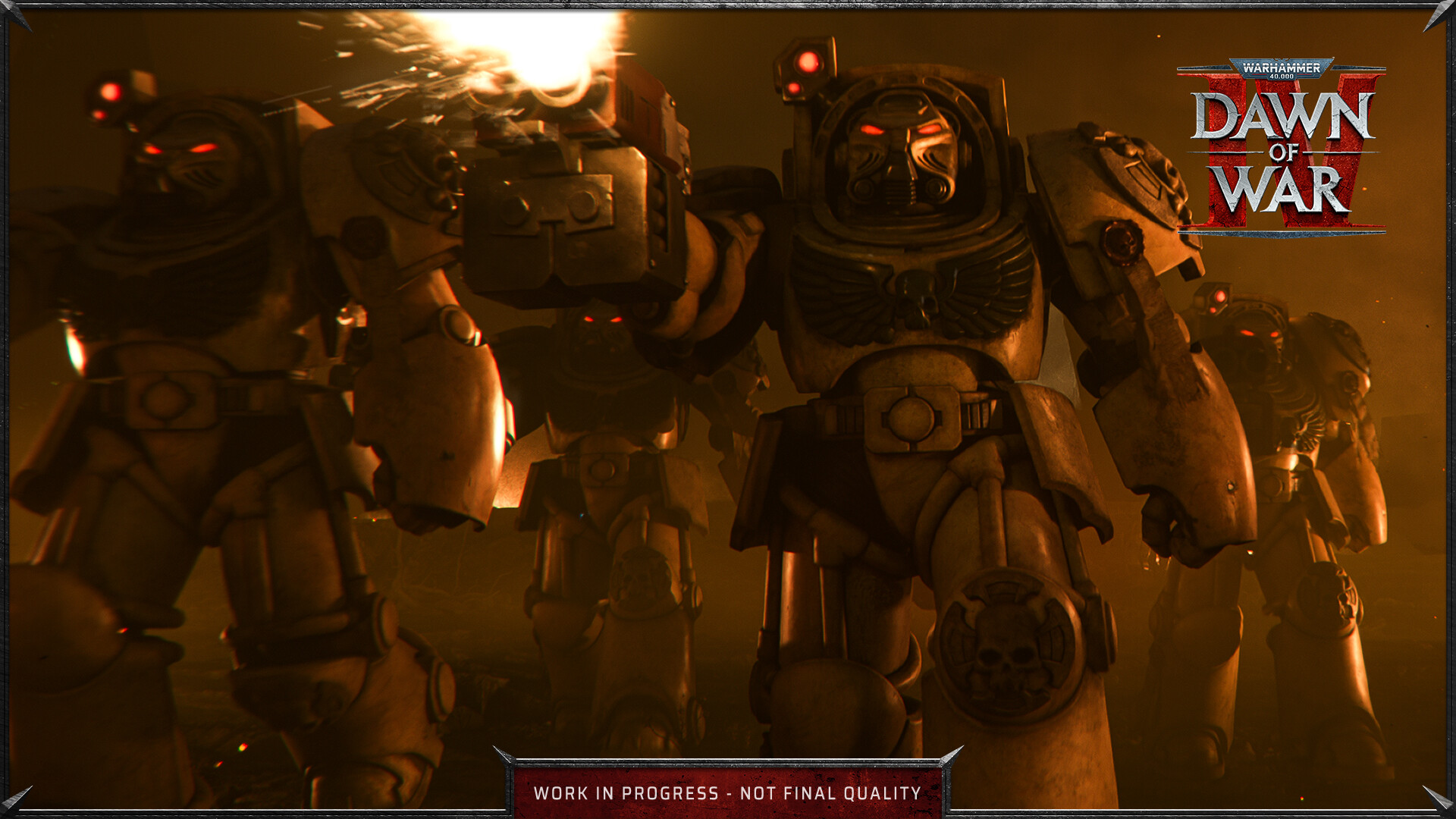
The Dawn of War series has undergone quite a few identity changes. The original was a traditional RTS with sprawling bases and armies fighting over territory. Dawn of War II put considerably more emphasis on small squads and tactical combat, while Dawn of War III experimented with powerful elite units and a different multiplayer structure.
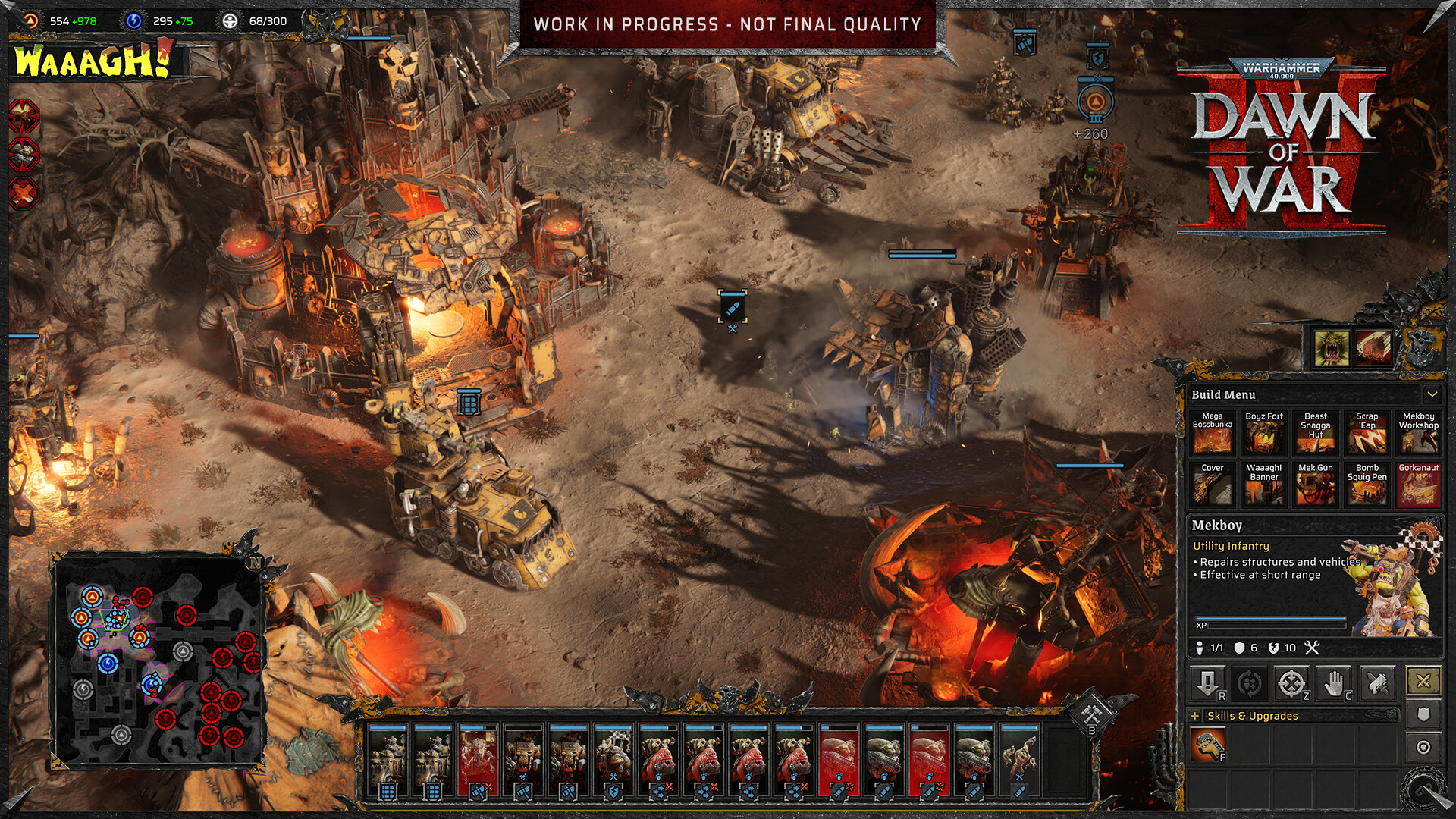
Dawn of War IV takes its biggest cues from the first game. You’re building bases, expanding your economy, recruiting armies, fighting over strategic positions, and upgrading your forces as the battle escalates.
That’s not to say the game is simply Dark Crusade with a fresh coat of paint. KING ART, the studio behind Iron Harvest, has introduced new faction-specific systems, branching campaign choices, expanded army customization, and a more elaborate approach to battlefield animations.
The important distinction is that you’re once again commanding an entire war effort rather than following a handful of particularly enthusiastic Space Marines around the battlefield.
Story and campaign setting
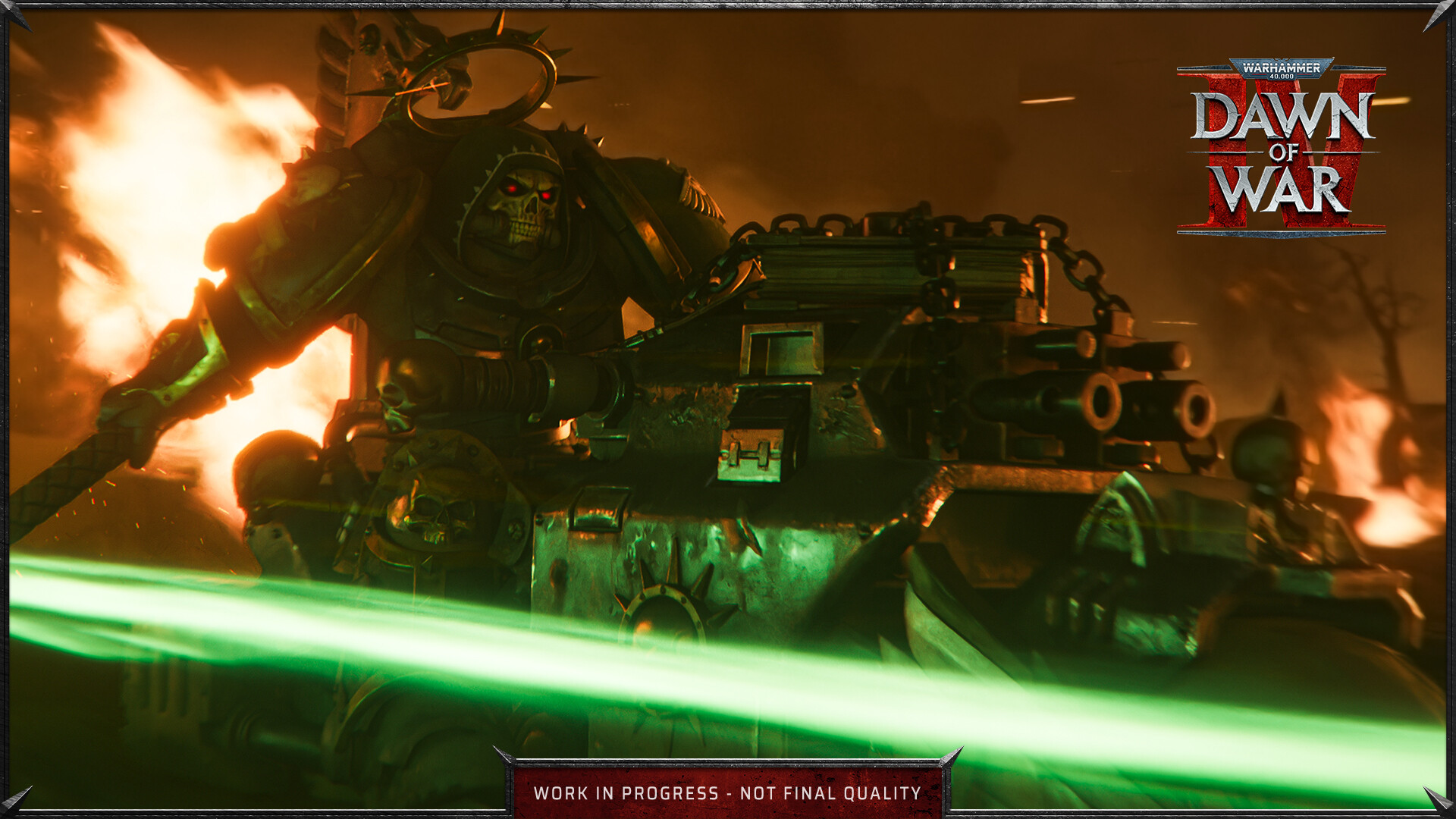
Dawn of War IV takes place on Kronus approximately 200 years after the events of Dawn of War: Dark Crusade. Apparently, two centuries weren’t enough for anyone to learn that fighting over this particular planet is a terrible idea.
The Blood Ravens are returning, Orks are looking for another good fight, the Necrons have their own ancient claims to the planet, and the Adeptus Mechanicus have arrived with an interest in its technological secrets.
Rather than following a single protagonist, the game tells its story through four faction campaigns. Each army approaches the conflict with different objectives, motivations, and its own understanding of what’s happening on Kronus.
Four campaigns, more than 70 missions
The campaigns collectively contain over 70 missions and feature branching choices. They’re also playable cooperatively, allowing you to experience the different sides of the conflict alongside a friend.
Returning characters include Cyrus, Jonah Orion, and Gorgutz, while the appearance of the Dark Angels and Lion El’Jonson connects the conflict to the wider events of the Warhammer 40,000 universe.
New to Dawn of War? You don’t have to start with Dark Crusade to understand why everyone is shooting at everyone else, but playing the original games will help you appreciate the returning characters, factions, and significance of Kronus.
Gameplay and strategy systems
The basic Dawn of War IV gameplay loop is familiar: establish a foothold, capture territory, build up your forces, and make life increasingly difficult for the opposing army.
The interesting part is how those systems interact, particularly when each faction has different ways of expanding its economy, supporting its troops, and controlling the battlefield.
Base-building is back
Constructing a base gives you the infrastructure needed to recruit units, access upgrades, and support a growing army. Protecting that infrastructure matters, but spending all your resources on a beautifully fortified headquarters won’t necessarily win you the war.
Your base supports your expansion. The territory you capture helps fund further construction, stronger armies, and technological upgrades. Neglect either side of that relationship and you’ll eventually find yourself facing a much better-equipped opponent.
Resource control and territorial warfare
Resource points encourage players to move out of their starting positions early and contest the map. Capturing and upgrading those points increases your economic strength, while denying them to your opponent limits what they can produce.
This creates decisions beyond simply sending your entire army toward the enemy headquarters. Do you defend your existing territory, launch a raid against their economy, or commit everything to an important central position?
The answer changes depending on your faction, your army composition, and what your opponent has been building.
Squad specialization and veterancy
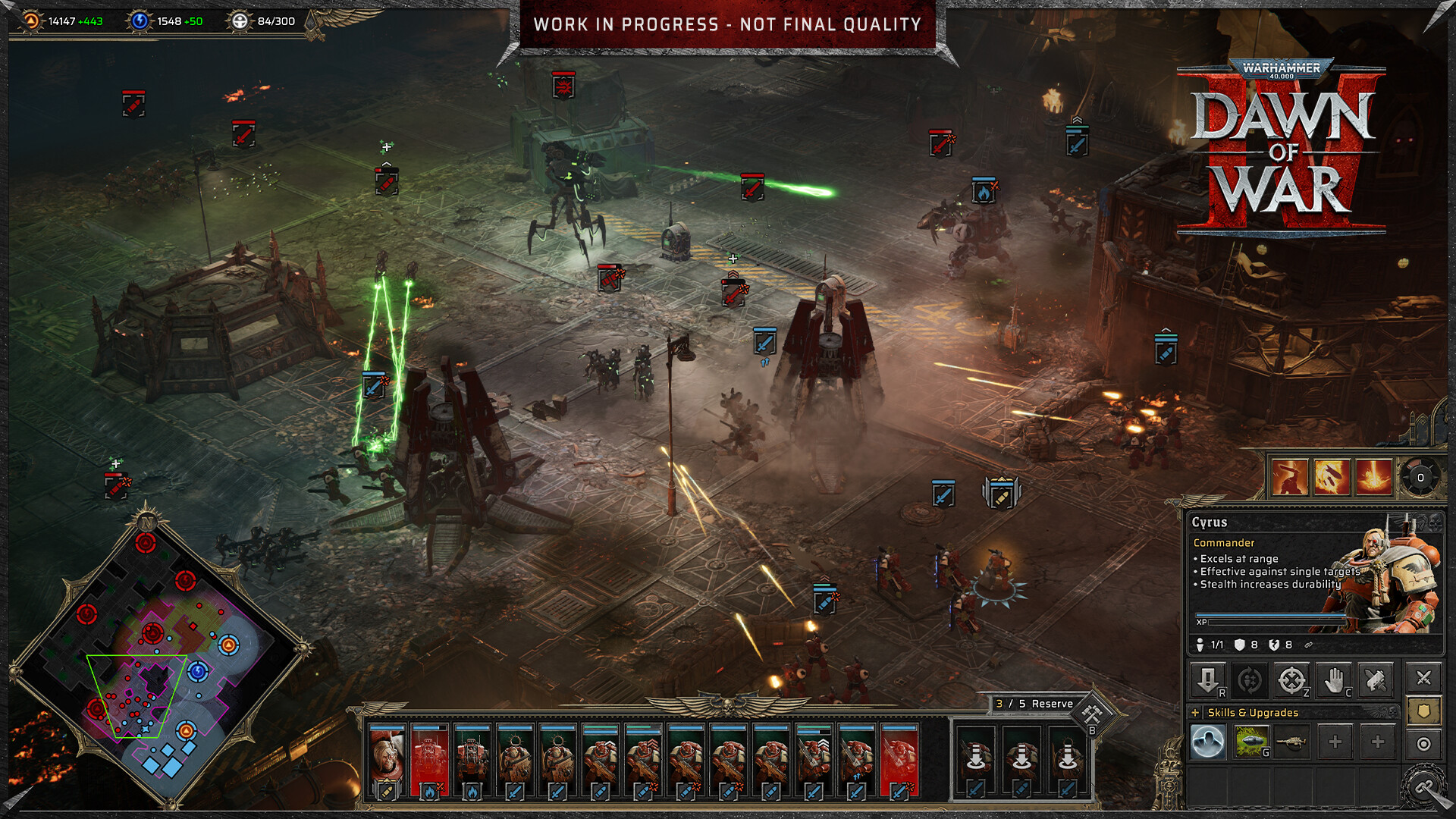
Squads can be equipped and developed to deal with different battlefield threats. An army that’s excellent at fighting infantry may suddenly run into trouble when an opponent starts fielding armored vehicles.
Unit veterancy also gives you a reason to keep experienced forces alive. Retreating a valuable squad, reinforcing it, and sending it back into battle can be more useful than replacing everything you’ve lost.
Unless you’re playing Orks, in which case the lads may have some objections to the whole retreating business.
Cover, garrisons, and positioning
Terrain and buildings provide opportunities to protect troops and establish defensive positions. Combined with squad specialization, this makes the composition and positioning of your army important alongside its raw size.
A well-positioned ranged force can make approaching a contested area difficult, while a mobile or melee-focused army may look for another route rather than charging directly into concentrated fire.
The Combat Director
Dawn of War has always had a talent for making its battles look suitably excessive. Dawn of War IV continues that tradition through its Combat Director system, which produces more elaborate interactions and animations between units during combat.
It’s particularly noticeable in close-quarters fighting, where the developers want individual engagements to look like recognizable Warhammer 40K battles rather than two groups of units politely exchanging damage numbers.
All playable factions explained
Dawn of War IV launches with four main factions: Space Marines, Orks, Necrons, and Adeptus Mechanicus. The Dark Angels also appear as a playable Space Marine sub-faction in the campaign.
The differences are more substantial than choosing which color of power armor you prefer. Each faction has its own economic systems, military strengths, and preferred way of making the enemy miserable.
Space Marines
The Emperor’s finest favor quality over quantity. Space Marine armies are built around relatively expensive, powerful troops that benefit from careful management, reinforcements, and veterancy.
Their flexibility makes them appealing if you like assembling balanced armies and adapting to an opponent’s strategy. Preserving experienced squads is particularly valuable when replacing lost units requires a substantial investment.
The Blood Ravens return as the familiar face of Dawn of War, while the Dark Angels provide another perspective on the conflict during the Space Marine campaign.
Pick Space Marines if: you prefer a smaller number of capable units, combined-arms tactics, and carefully managed engagements.
Orks
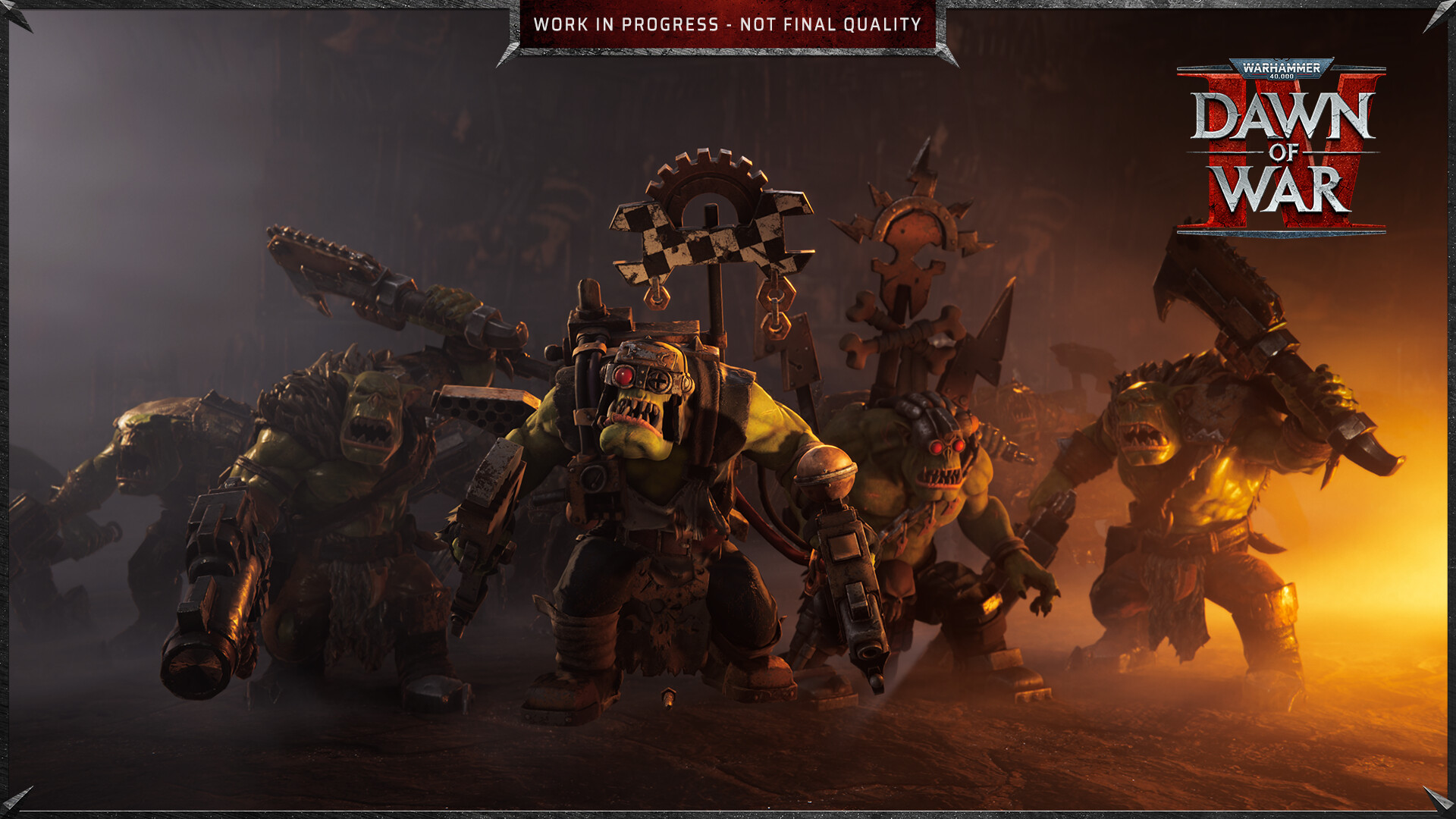
The Orks bring an admirably straightforward philosophy to warfare: if the problem hasn’t been solved, you probably haven’t sent enough Orks.
Their armies favor aggression, numbers, and territorial pressure. Waaagh! Banners support their expansion, while their ability to establish a strong presence across the map makes them dangerous when allowed to build momentum.
Where Space Marines might carefully preserve their expensive squads, the Orks are more comfortable forcing messy engagements and overwhelming opponents through sustained pressure.
Pick Orks if: you enjoy aggressive openings, constant harassment, large armies, and the occasional completely unnecessary Waaagh!
Adeptus Mechanicus
Making their debut as a playable Dawn of War faction, the Adeptus Mechanicus bring the technological zealotry of Mars to Kronus.
Their distinctive Noosphere Network influences their economy, upgrades, and battlefield capabilities. Establishing and expanding this network is an important part of developing their military strength.
The faction rewards players who enjoy planning their technological progression, establishing powerful ranged positions, and protecting valuable units from enemies that would rather settle matters with an axe.
Pick Adeptus Mechanicus if: you like technology-driven economies, specialized armies, powerful ranged units, and occasionally praying to your computer.
Necrons
The Necrons have been around for roughly 60 million years. They aren’t particularly interested in being told that someone else owns Kronus now.
Their military identity revolves around resilience, resurrection, and methodical battlefield control. Systems such as Resurrection Galleries, the Power Matrix, and translocation distinguish their approach to army management and territorial expansion.
Their ability to recover from losses makes prolonged battles particularly interesting. Rather than relying entirely on speed or early aggression, Necron players can develop a formidable military presence and make their advances increasingly difficult to stop.
Pick Necrons if: you enjoy durable armies, sustained engagements, strategic positioning, and the idea that death is more of an administrative inconvenience.
Game modes, multiplayer, and co-op
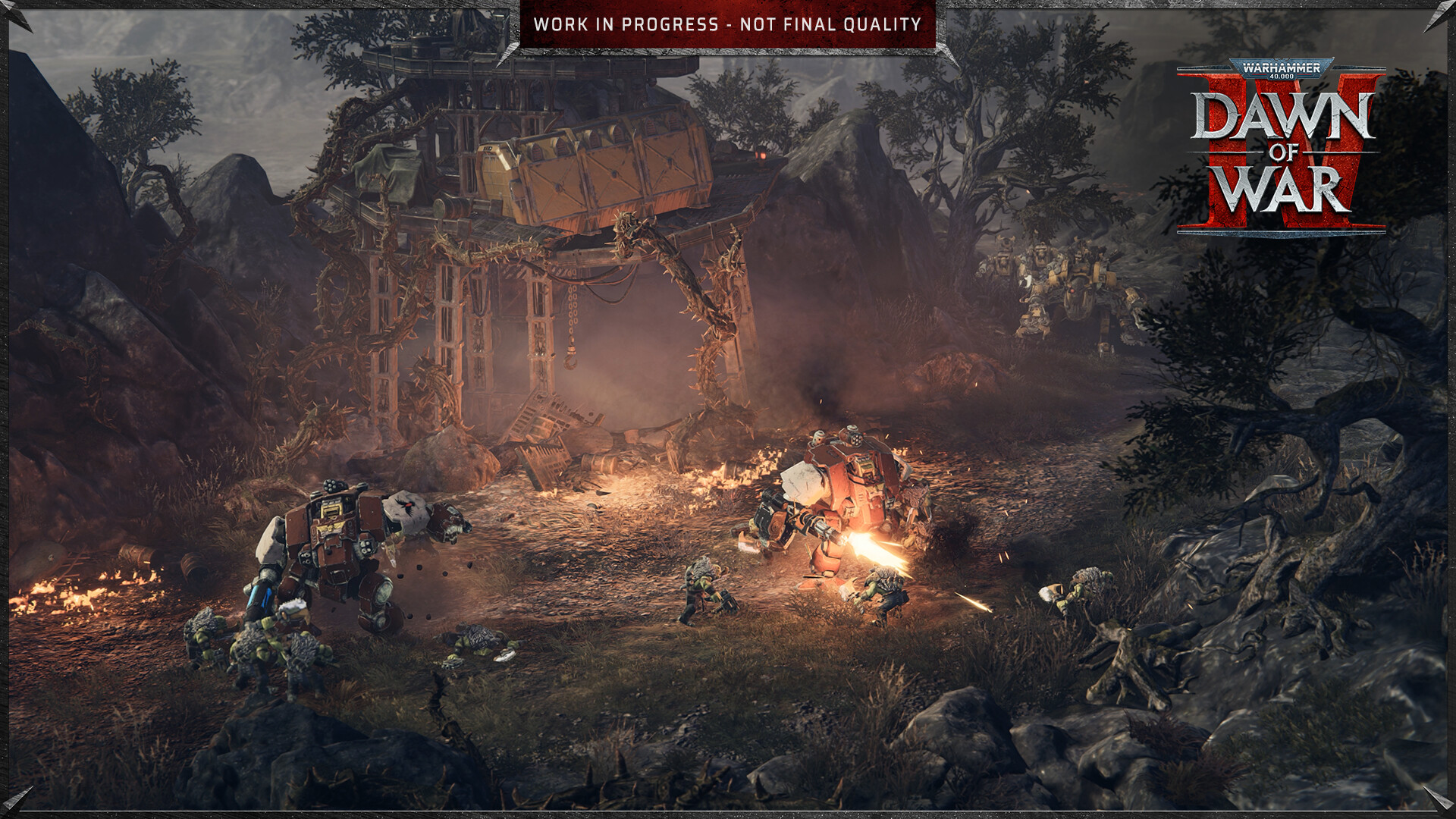
Dawn of War IV offers several ways to fight over Kronus. You can follow the main story, experiment with different factions against AI, challenge other players, or recruit a couple of friends to survive an increasingly ridiculous number of enemies.
Skirmish and competitive multiplayer
Skirmish is a useful place to familiarize yourself with the factions, experiment with army compositions, and work out why your economy keeps collapsing before the first major engagement.
With multiple game types and extensive customization options, it also provides an alternative to competitive matches for players who simply enjoy fighting AI armies.
Competitive multiplayer features 30 maps at launch. Learning how each faction expands, when its stronger units become available, and how to counter its preferred tactics should be a substantial part of the multiplayer experience.
Army Painter and customization
Painting your army is a huge part of the tabletop Warhammer experience, and Dawn of War IV gives virtual commanders plenty of opportunities to indulge in that particular obsession.
The expanded Painter tool offers customization of colors, decals, armor, equipment, and other visual details. It’s an opportunity to give your armies their own identity rather than sticking exclusively to the default faction appearance.
Best of all, accidentally getting red paint on the wrong shoulder pad won’t require another trip to the hobby shop.
The Last Stand returns
The Last Stand was one of the most memorable additions to Dawn of War II, and KING ART is bringing it back with some significant changes.
Three players cooperate to survive 20 increasingly difficult enemy waves. Each controls a Commander who can develop new abilities and acquire equipment during the run. The objective is to survive long enough to deal with whatever fresh nightmare the next wave has prepared.
The Last Stand at a glance
- Three-player cooperative survival.
- 20 increasingly difficult enemy waves.
- Five selectable Commanders at launch.
- Up to 30 Commander levels during a playthrough.
- Up to four Companion units in each player’s strikeforce.
- Unlockable skills, equipment, and unit specializations.
- Additional Commanders planned as free post-launch content.
You’re bringing more than one hero this time
The addition of Companion units is one of the biggest changes to The Last Stand. Instead of concentrating entirely on a single powerful character, each player can develop a small strikeforce supporting their Commander.
Those units have their own specializations, providing additional opportunities to combine abilities and create complementary builds with your teammates.
Players also need to manage battlefield positions and collect health supplies between waves. Survival involves more than equipping the biggest weapon available and hoping for divine intervention.
Five Commanders at launch
The initial Commander selection represents all four main factions, including separate Blood Ravens and Dark Angels representatives. More Commanders are planned through free updates, giving returning players additional strikeforce combinations to explore.
Platforms and cloud gaming
Warhammer 40,000: Dawn of War IV is launching on PC through Steam. There is no officially announced PlayStation, Xbox, or Nintendo console edition as of November 25, 2026.
The PC-focused release makes sense given the game’s large armies, base management, resource control, and simultaneous battlefield decisions.
Dawn of War IV on GeForce NOW
KING ART has also confirmed support for NVIDIA GeForce NOW. This gives players another way to experience the game through cloud streaming, subject to the service’s requirements and supported game-library access.
It’s particularly relevant if your computer struggles with modern strategy games once several hundred units start arguing over the same resource point.
PC system requirements
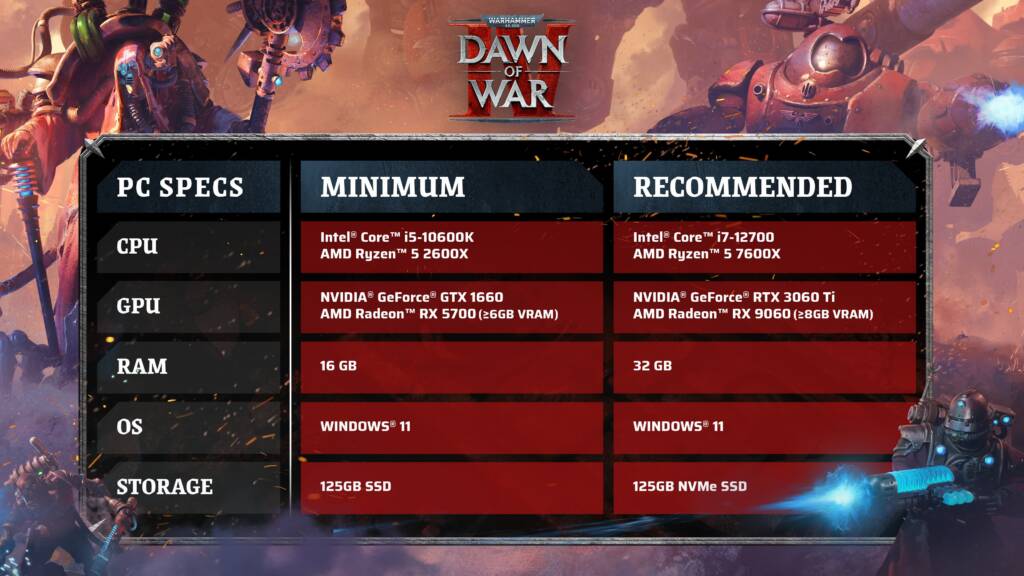
The official Dawn of War IV system requirements were revealed on November 12. The game officially supports Windows 11, requires at least 16 GB of RAM, and lists 125 GB of available storage space.
Why does Dawn of War IV need 125 GB?
KING ART clarified that the current game installation is approximately 100 GB, with around 25 GB dedicated to cutscenes. The listed 125 GB requirement leaves additional room for updates and downloadable content.
Do you really need 32 GB of RAM?
No. The official minimum is 16 GB. The recommended 32 GB provides additional headroom for the game, background applications, and other system processes. A system with 24 GB can also run the game, depending on available memory.
Will Dawn of War IV run on Windows 10 or Linux?
KING ART has confirmed that the game can run on Windows 10. Some beta players also reported successful experiences on Linux. However, neither operating system is officially supported, and the developer cannot guarantee compatibility with future updates.
For more information, see KING ART’s official system requirements announcement.
Year One roadmap and expansions
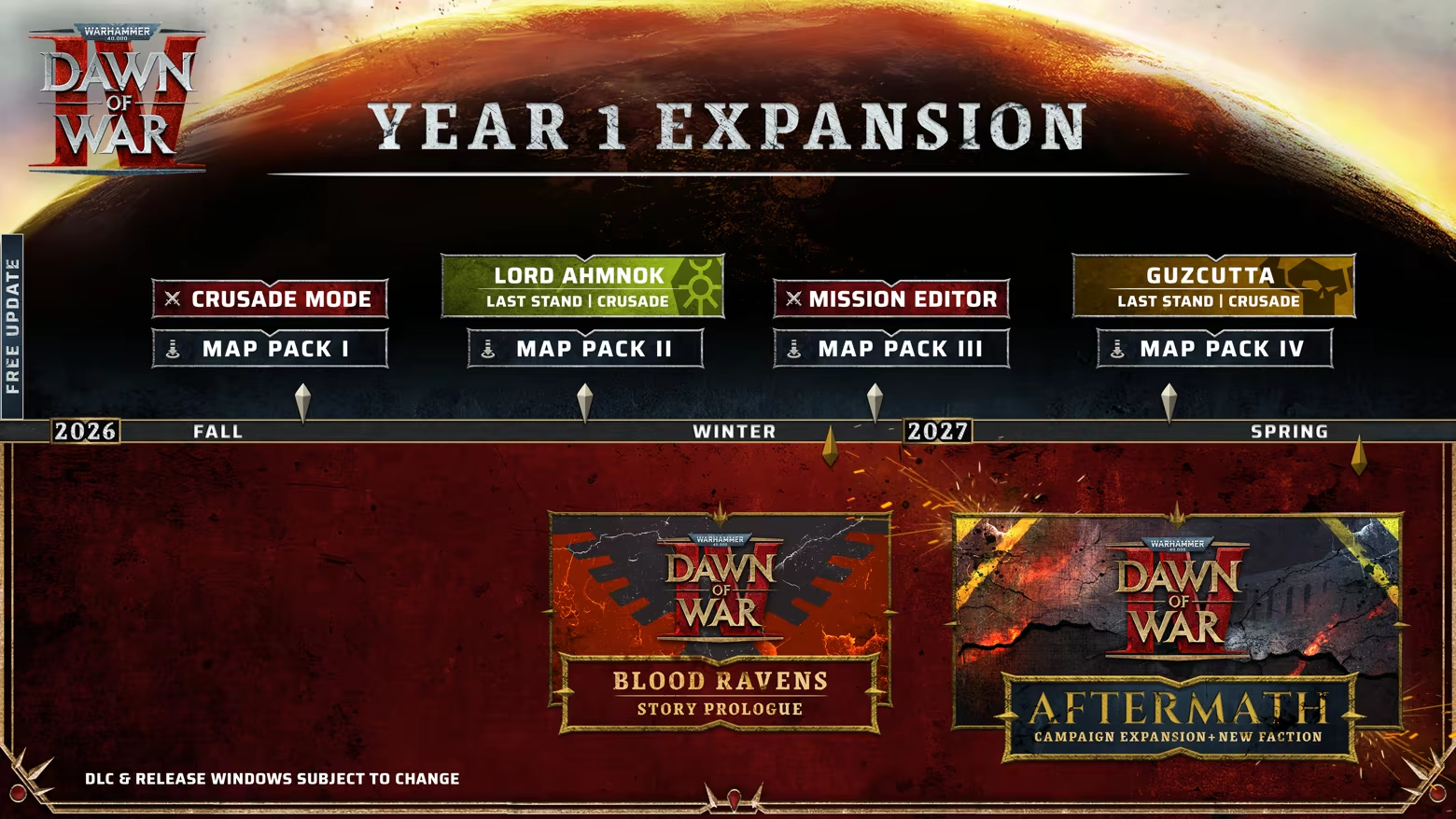
Apparently, bringing four armies to Kronus isn’t enough. KING ART has already outlined a substantial Year One content plan, including free updates and two paid story expansions.
The latest Commander Edition trailer, released on November 23, confirmed release windows for both expansions and offered a rather intriguing glimpse of what might come afterward.
Blood Ravens Story Prologue – spring 2027
The first paid expansion takes players to Aurelia, the lost homeworld of the Blood Ravens. A strike force searches for something vital to the Chapter’s future, setting in motion events that eventually lead to the renewed conflict on Kronus.
It’s a prequel to Dawn of War IV rather than a continuation of its ending. Long-time fans of the Blood Ravens should find plenty to be interested in, particularly given Aurelia’s significance in the earlier games.
Aftermath – summer 2027
The second expansion moves the story forward. As the battle for Kronus reaches its conclusion, another faction enters the conflict and brings a new chapter of warfare with it.
Aftermath adds a new playable faction alongside its campaign expansion and additional content across the game’s modes. The faction’s official identity has yet to be revealed.
Free updates for everyone
Players who purchase the Standard Edition aren’t being left behind. The planned free updates include Crusade Mode, additional maps, new modes, more Commanders for The Last Stand, and a Mission Editor.
The Mission Editor could be especially valuable to Dawn of War’s long-term community, giving players opportunities to create new scenarios beyond the official campaigns.
Is Vashtorr teasing a new faction?
The closing moments of the Commander Edition trailer reveal a pair of ominous mechanical eyes glowing in the darkness. Naturally, the Warhammer community immediately began examining every pixel for evidence.
The most prominent theory is that the mysterious figure is Vashtorr the Arkifane, a daemonic demigod associated with invention, infernal machinery, and technological corruption.
Vashtorr played a major role in the Arks of Omen storyline and has recently become much more relevant to Warhammer video games. He’s also the main antagonist of Warhammer 40,000: Boltgun 2, where Malum Caedo and Sister of Battle Nyra Veyrath find themselves dealing with the consequences of his destructive ambitions.
His appearance would make Chaos an interesting possibility for Aftermath’s new faction, particularly given Dawn of War’s history with the Chaos Space Marines.
Confirmed vs. speculation
Confirmed: Aftermath introduces a fifth playable faction and continues the story in summer 2027.
Community theory: The figure teased in the Commander Edition trailer is Vashtorr the Arkifane.
Not confirmed: Whether Vashtorr is actually the character shown, whether Chaos is the fifth faction, and what its potential roster might contain.
For now, resist the temptation to start planning your Chaos army composition. Even the forces of the Dark Gods have to wait for an official announcement.
Who should play Dawn of War IV?
Dawn of War IV looks particularly promising for fans of the original Dawn of War and its expansions. The return to base-building and territorial warfare brings the series closer to the style that defined it in the first place.
However, you don’t need to have spent the last two decades arguing about which Dawn of War game is best to find something interesting here.
Put Dawn of War IV on your radar if…
- You miss traditional RTS games: base construction, resource control, and large armies are central to the experience.
- You enjoy faction asymmetry: the four armies approach expansion, upgrades, and combat differently.
- You primarily play single-player: four campaigns with more than 70 missions provide substantial narrative content.
- You prefer co-op: the campaigns and The Last Stand offer ways to play alongside friends.
- You’re a Warhammer lore enthusiast: Kronus, returning characters, and the Adeptus Mechanicus give the story plenty of interesting material.
- You enjoy competitive RTS games: the different faction economies and 30 multiplayer maps provide a substantial foundation for competitive play.
If you mainly know Warhammer through Space Marine 2 or Boltgun, keep in mind that this is a different type of experience. You’re responsible for the entire army, its economy, and its infrastructure rather than personally delivering the Emperor’s judgment with a chainsword.
More games to play while waiting
There’s still time to brush up on your RTS skills, revisit Kronus, or explore some of the other excellent strategy games that make commanding armies so dangerously addictive.
The original Dawn of War remains the most relevant starting point, particularly Dark Crusade. Its territorial campaign introduces the planet and many of the faction rivalries that make returning to Kronus so interesting.
Dawn of War II is worth revisiting for a different approach to squad management and for the original incarnation of The Last Stand. KING ART’s Iron Harvest, meanwhile, offers another look at the studio’s approach to real-time strategy, large mechanical war machines, and battlefield positioning.
Explore more Dawn of War games
From the original battle for Kronus to the squad-focused conflicts of Dawn of War II, revisit the series before its next chapter begins.
Frequently asked questions
Ready to return to Kronus?
Compare Standard and Commander Edition Steam key offers on G2A Marketplace before deployment.
Back to war
The most exciting thing about Dawn of War IV isn’t necessarily its enormous mission count or the prospect of another faction joining the war in 2027. It’s that the series is returning to the kind of strategy game that made building a Barracks and capturing the nearest strategic point so addictive in the first place.
KING ART still has to demonstrate that its four factions are enjoyable to play, that the campaigns make good use of their scale, and that the multiplayer can sustain a healthy community. Those are questions the finished game will need to answer.
But between the return of classic RTS mechanics, the arrival of the Adeptus Mechanicus, and a considerably expanded version of The Last Stand, there’s plenty to look forward to.
Kronus has had approximately 200 years to recover from the last war. That seems like more than enough.