


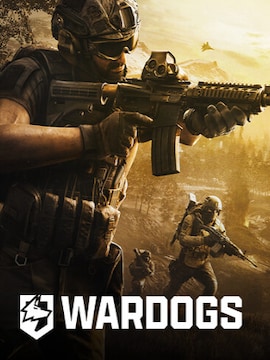

Gamers want their classics prettier and smoother, but narratively sacred – and based on 5,005 responses, 69% won’t let you touch the story while 80% demand visual overhauls. That contradiction defines the modern remake market.
Alright, the results of the survey regarding remasters and remakes of games are in! Gotta say you guys & gals answered generously. Here’s what we’ve found out based on your responses.
Spoiler: turns out gamers (based on our sample) generally love and play remasters and remakes. But how often do they play them? And what kind of re-imaginings of classic games do they want?
Our sample: 5,005 responses, all of which come from the users of the G2A.COM marketplace regardless of their country of origin.
The report has been divided into three parts:
- The first one concerns the “Who’s our respondent?” question. Y’know, age range, how often our respondents buy games, etc. – that kind of stuff.
- The second one concerns gamers’ general stance on playing remasters and remakes.
- The third one dives into the nitty gritty of what you expect from modern versions of older games.
Let’s dive right in, shall we?
The definition of “retro”
This probably depends on who you’re asking. People who grew up in the 90s will most likely say anything released in the 80s is retro.
- 2000s kids will add early 90s to the mix.
- 2010s kids will say it’s all the above + stuff from the 2000s.
At this point we can assume that anything older than, say, 15 years constitutes “retro,” though your mileage might vary.
What is a remaster and what is a remake?
Remaster is pretty much the original game, but with overhauled (audio)visuals, stuff like wide-screen support, compatibility fixes, updated control schemes, and various quality of life improvements. The game is virtually the same, but it looks and sounds better, closer to what we remember it being like back in the day.
Remake, on the other hand, is a complete re-imagining of the original. It can be built from the ground up, with new engine, new gameplay, new sounds, and so on, but still retaining the spirit of the original. Sometimes this might be limited to just rebuilt graphics and modernized gameplay, like in the case of Outcast: Second Contact, for example (the original script, music, and sounds were kept from the 1999 original).
Key Conclusions
- 80% demand updated graphics and 3D models – visual improvements dominate all other priorities by a massive margin
- 69% insist story and dialogue remain unchanged – narrative is sacred and untouchable, defining the emotional core of the experience
- 86% want original developer involvement (64% view it as mandatory, 22% as valuable but not required) – authenticity requires the original creators’ blessing












Table of Contents
Part One: Who’s our respondent?
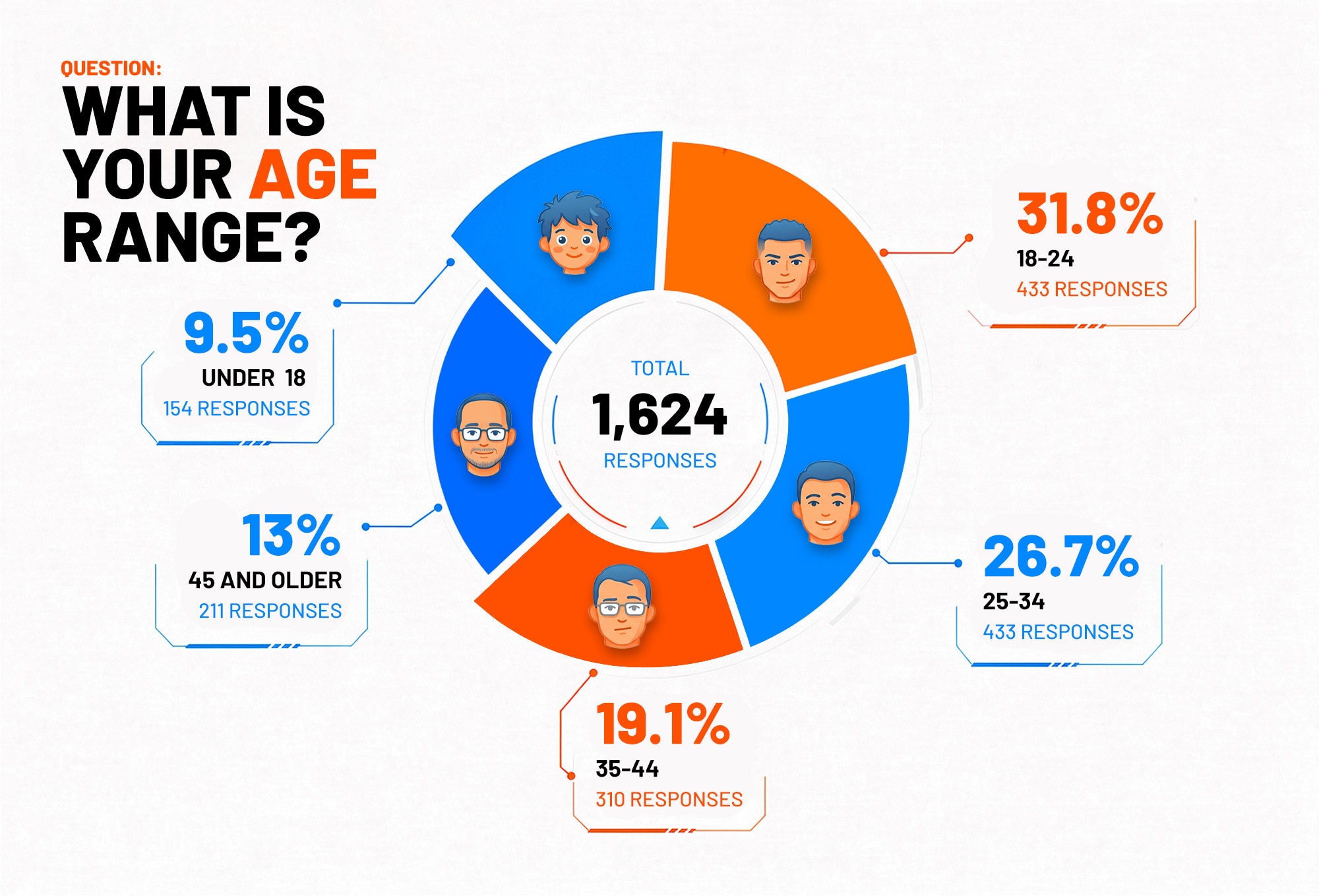
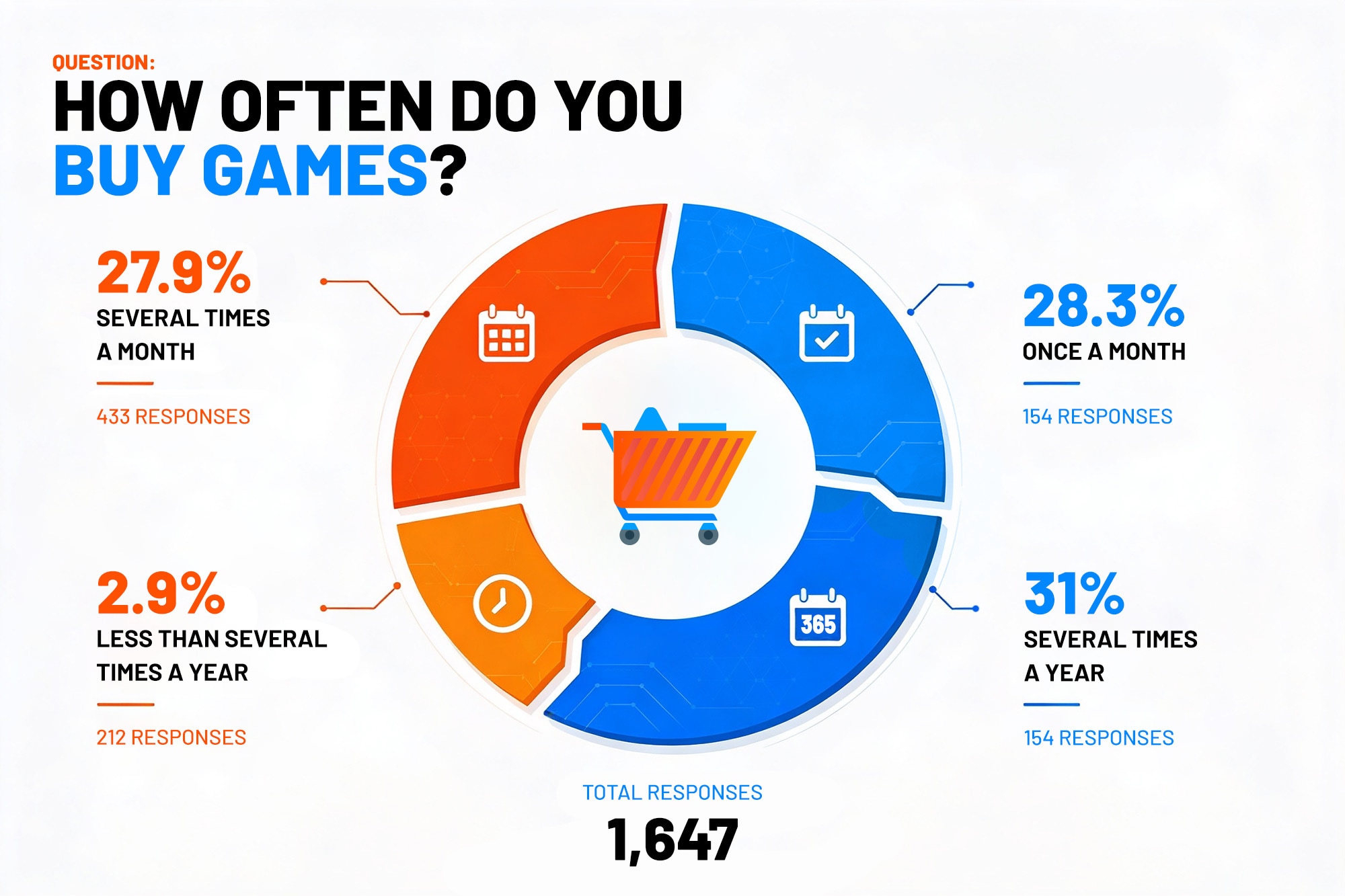
Turns out most of you folks fall within the 19-34 age range and buy games monthly, either once or several times a month.
Gender was not a factor in this survey.
Here’s a detailed breakdown:
Part Two: Do you play remasters and/or remakes?
Most respondents are very much on board with remasters and remakes. Not only have plenty of them played quite a few, but they also actively follow new ones and seem genuinely excited about modern returns of older games. The biggest reason is nostalgia, with upgraded visuals and the chance to finally experience classics they missed the first time also playing a major role.
At the same time, gamers seem pretty reasonable about it all: a well-made remake can absolutely stand in for the original, but people are still more comfortable paying moderate prices unless the game is a full-on, from-the-ground-up reimagining.
Remakes and remasters have strong market penetration, with over two-thirds of players having tried at least one. Distribution is fairly even: a quarter are heavy consumers (10-20 titles), another quarter moderate (3-10), and smaller groups casual or non-adopters (roughly a third haven’t played any).
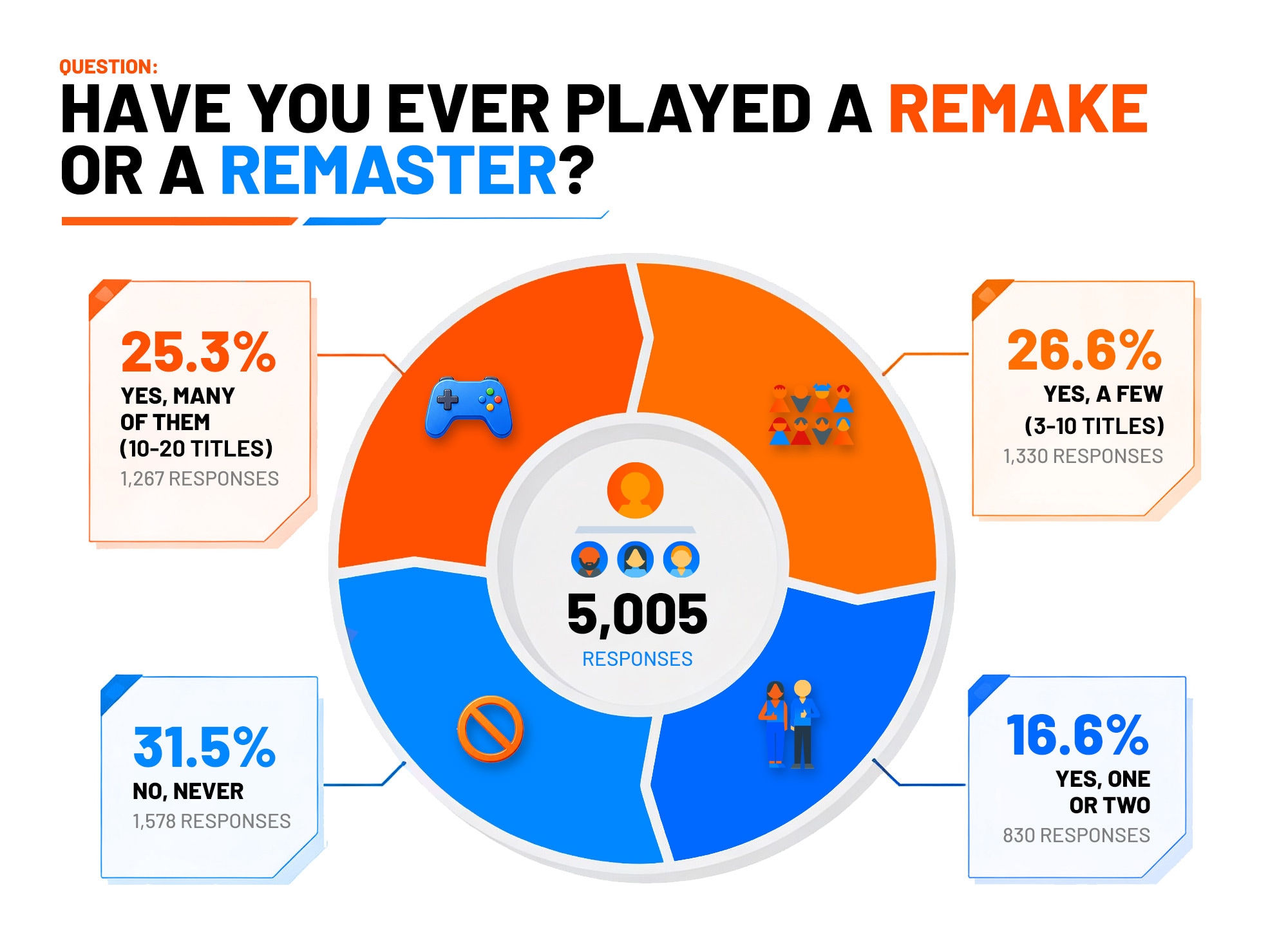
This broad engagement across player types shows these titles appeal beyond nostalgic hardcore fans, establishing remakes as a mainstream category with room to grow.
Interest in remakes and remasters is remarkably high: nearly 40% happily follow these releases, 30% actively seek them out, and another quarter pay casual attention – totaling roughly 70% with strong to moderate enthusiasm. Only about 5% express disinterest.
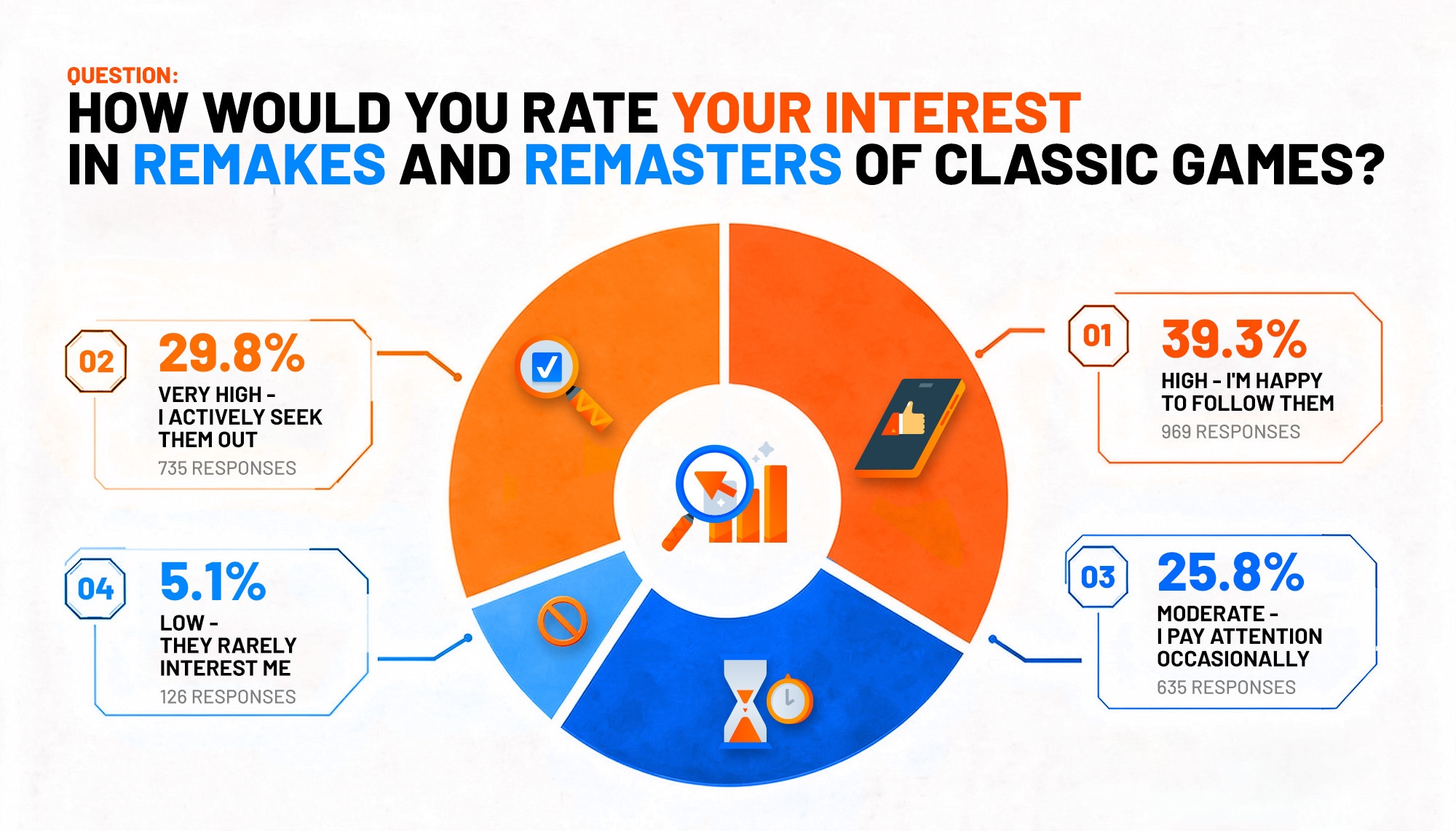
This reveals a market driven by genuine enthusiasm rather than passive acceptance, with many players actively hunting for announcements.
The combination of nostalgia and modern technical improvements creates broad appeal, making active rejection the exception rather than the norm.
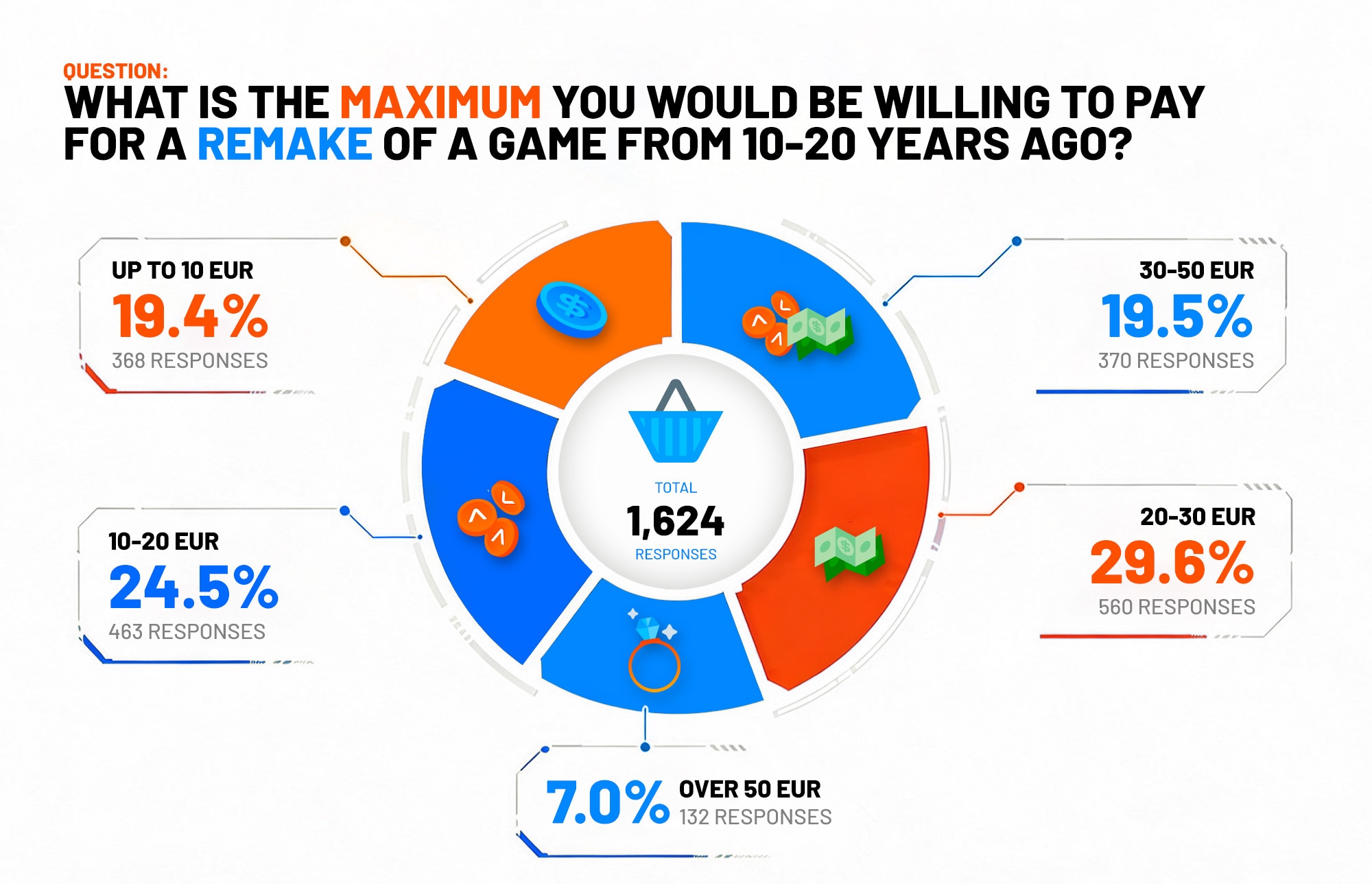
Price sensitivity shows clear boundaries: the 20-30 EUR range is the sweet spot, capturing nearly 30% of buyers.
About 44% won’t spend more than 20 EUR (split between 10 EUR and 20 EUR caps), while roughly 20% accept 30-50 EUR pricing, and only 7% would pay over 50 EUR.
Most gamers value remakes but expect them priced below contemporary releases. Publishers targeting the broadest audience should aim for the 20-30 EUR sweet spot.
Part Three: What would you like to see changed in the remaster/remake?
Players want meaningful updates to classic games—prioritizing better visuals, smoother performance, and modernized controls—while preserving the original’s soul through unchanged story, music, and core gameplay, ideally with original creators involved. However, the community is divided on approach: 42.8% prefer full remakes with contemporary design, while 24.8% favor faithful remasters with technical improvements. Notably, 26.3% say it depends on the specific game, and only 6.1% have no preference. This split reveals that while technical upgrades are universally desired, the depth of modernization remains contentious, with the game itself often determining the right treatment.
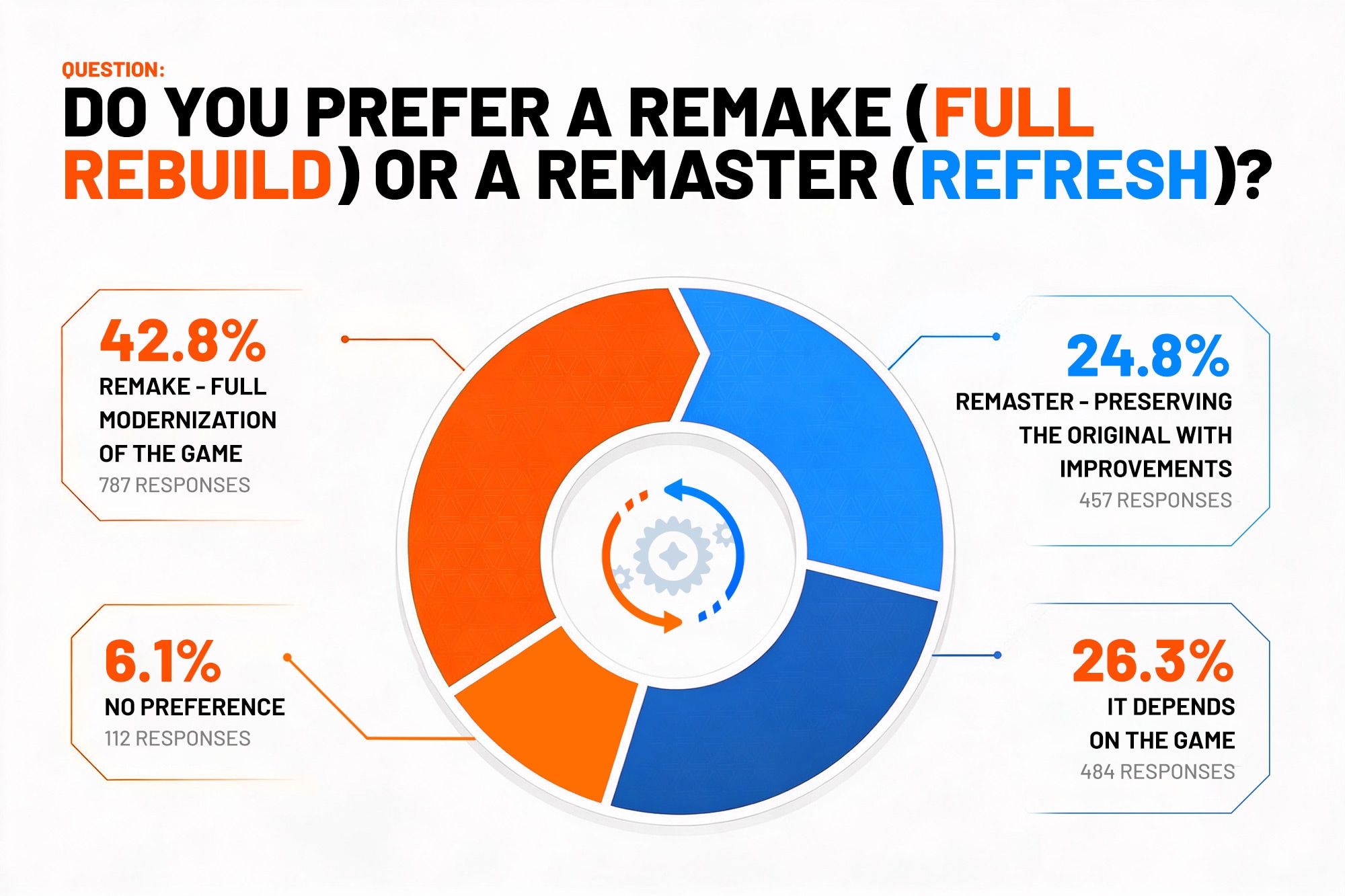
This divide reveals a fundamental tension in how gamers want nostalgia served, with remakes holding a clear plurality but not a majority. The substantial “it depends” group (26.3%) suggests publishers can’t rely on a one-size-fits-all strategy—the game itself must guide the approach.
While remake advocates outnumber remaster fans nearly 2:1, ignoring either camp or the context-driven middle ground risks missing key segments of the audience.
Visual improvements dominate at nearly 80%, far outpacing other priorities. Technical optimization follows at 51%. The middle tier shows tension: roughly half want modernized controls/UI (49%) and updated gameplay (49%), revealing a split on how deep changes should go. Audio upgrades and localization sit around 28%, while only 13% prefer keeping everything original.
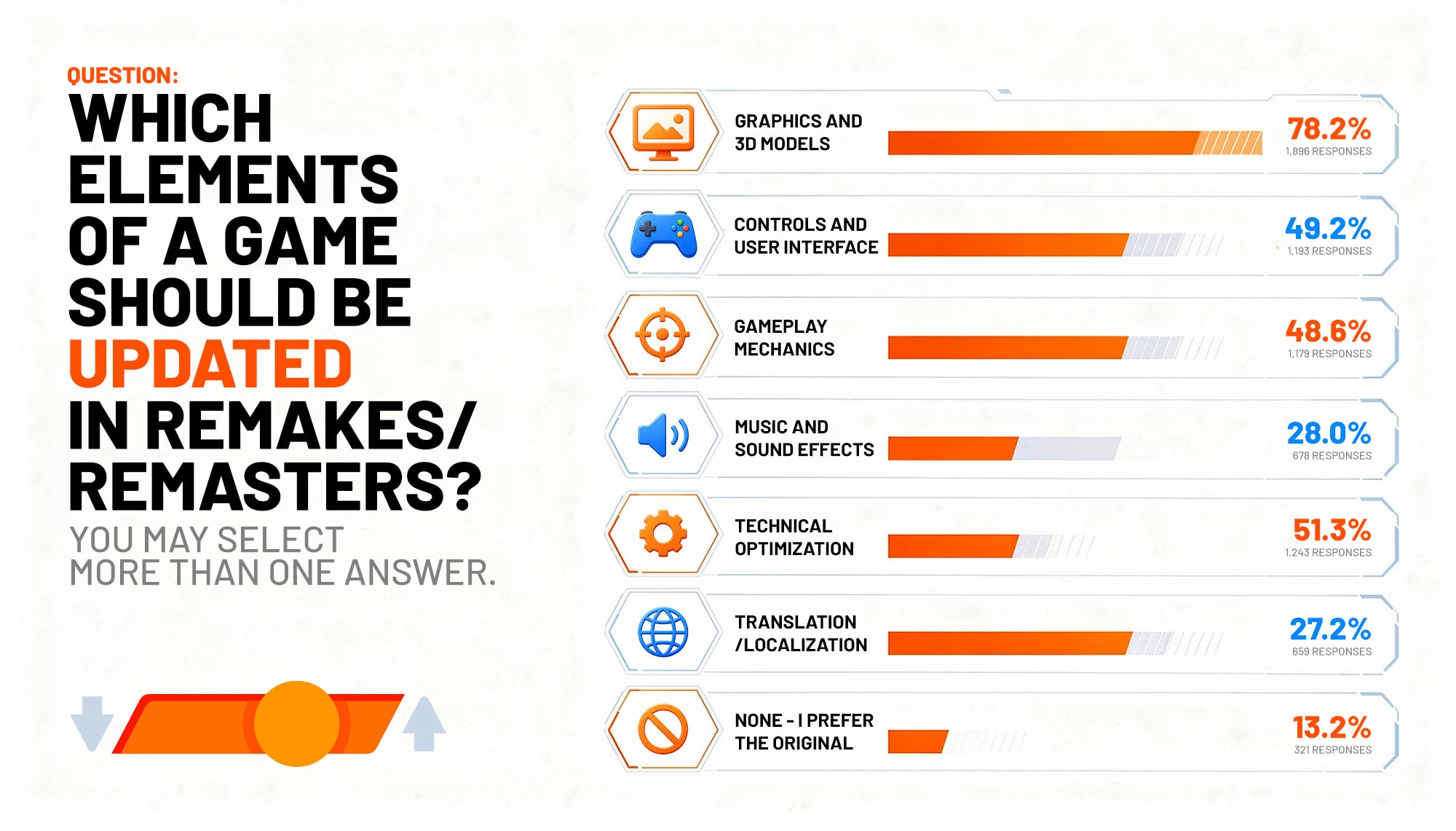
The hierarchy is clear: make it look contemporary and run smoothly first, modernize the interface second, then carefully weigh gameplay changes – knowing half the audience supports them while the other half may resist.
Story and dialogue are untouchable, with nearly 69% insisting narratives remain sacred – the emotional core that defines a game’s identity. Original music follows at 47%, showing strong attachment to iconic soundtracks. Core gameplay mechanics split the community at 43%, revealing debate about whether how a game plays should be preserved or improved. Art style (35%) and difficulty level (28%) draw moderate support, while only a quarter want pure preservation with technical upgrades alone.
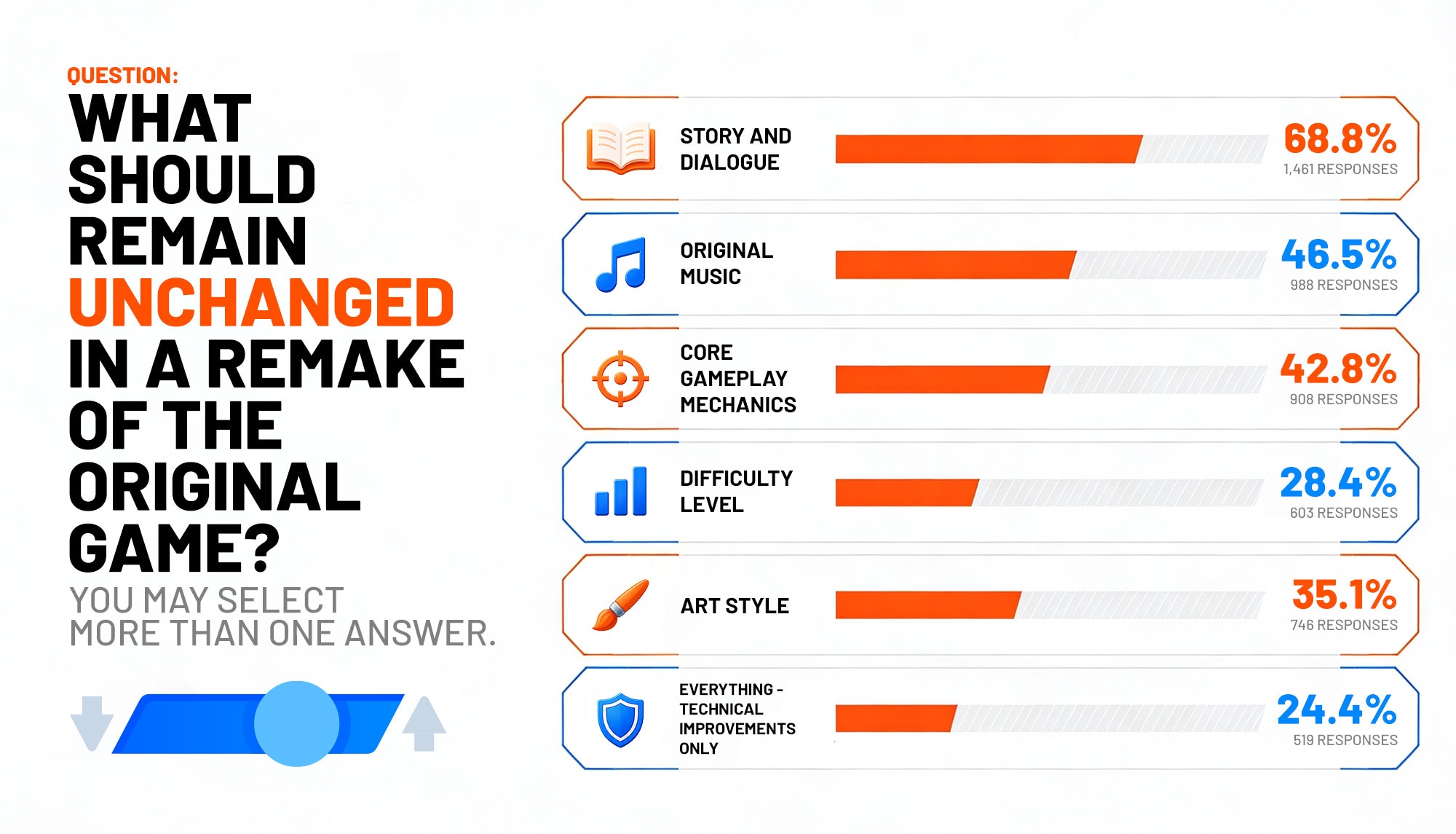
The message is clear: enhance graphics, optimize performance, modernize controls, but don’t touch the story and think carefully before changing music or core mechanics. Players want their memories enhanced, not rewrittenOld Games, New Lives: gamers speak out on remakes and remastersnostalgia lives in narrative and sound more than pixels or frame rates.
Original developer involvement matters significantly, with nearly 64% insisting the original team should participate in remakes and another 22% viewing it as valuable though not mandatory – bringing total support to roughly 86%. Only 11% are indifferent to who handles the project, while a mere 3.5% actively prefer fresh perspectives from new studios. This overwhelming preference suggests players view remakes as collaborative efforts requiring the original creators’ institutional knowledge and blessing for authenticity.
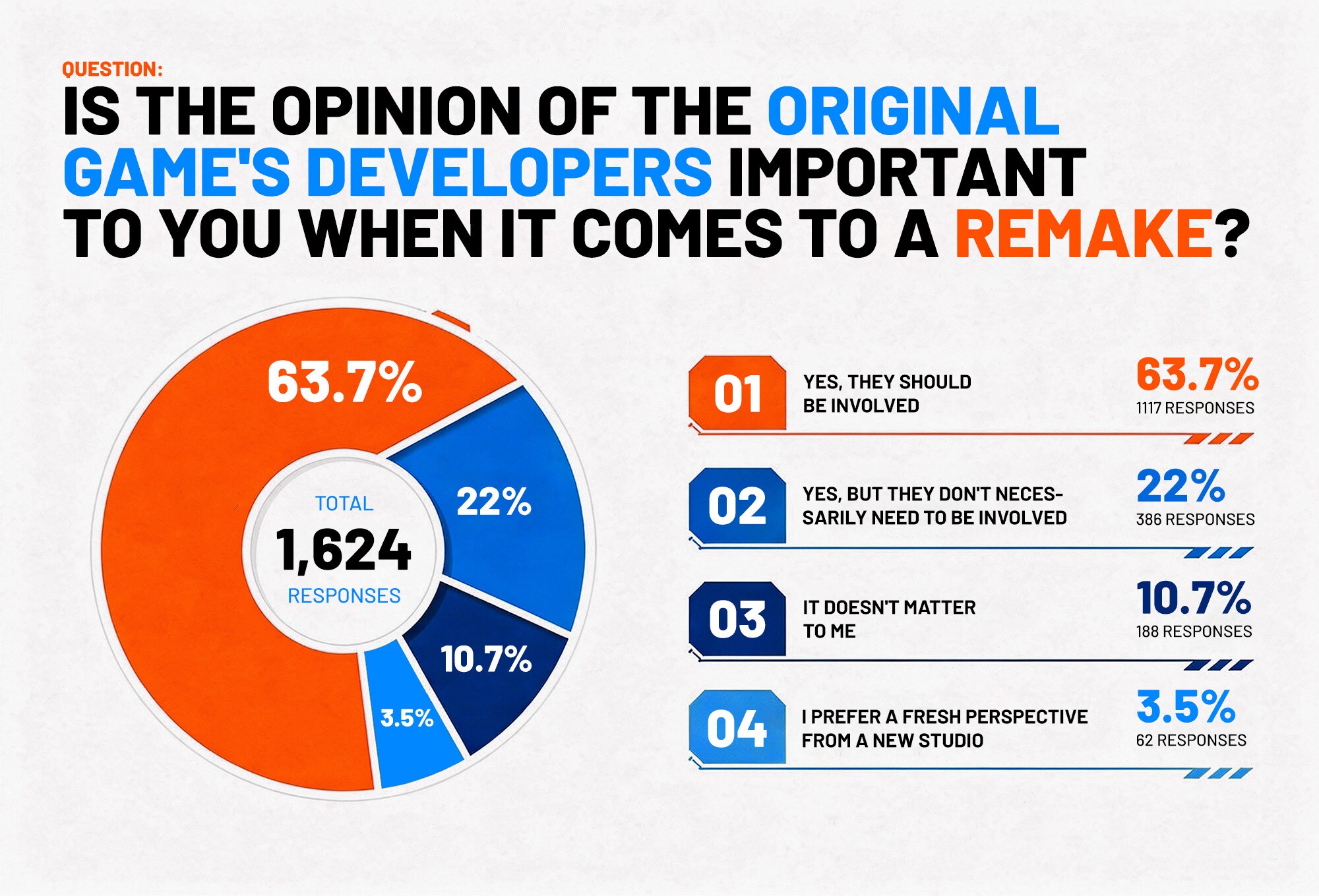
For publishers, securing original developer involvement becomes a powerful marketing asset, while going it alone risks skepticism from the vast majority who believe the people who built something should help rebuild it.
Conclusion
The data tells a clear story: remakes and remasters have firmly established themselves as a mainstream gaming category, not a niche nostalgia trip. With over two-thirds of players having experienced at least one and 70% actively following or seeking these releases, the market is both engaged and growing.
But success in this space demands nuance. Players want their classics modernized, not sanitized. Visual upgrades and smooth performance are non-negotiable, modernized controls are welcomed, but the emotional core—story, music, and the soul of the original gameplay—must remain untouched. The 42.8% remake vs. 24.8% remaster split, combined with the 26.3% who say “it depends,” proves there’s no universal formula. The game itself must guide the approach.
Publishers have a roadmap: target the 20-30 EUR sweet spot for maximum reach, prioritize visual and technical improvements, involve original developers (86% demand or value this), and most critically, understand which elements define a game’s identity before touching anything. Change the pixels, not the magic.
For gamers, the message is equally clear: the industry is listening. Your classics are coming back, enhanced but respectful, and your voices are shaping how they’re rebuilt. The golden age of gaming isn’t just being preserved—it’s being perfected.